
Note: This article contains affiliate links. If you click on these links and make a purchase, we may earn a small commission at no extra cost to you. This helps support our research and content. Read our full affiliate disclosure here.
Choosing the right dishwasher matters because it affects both how clean your dishes come out and how ready they are to put away. A dishwasher that excels at cleaning but leaves items wet adds time and frustration to daily chores, while a model that dries well but misses stubborn soils defeats the purpose. This guide focuses on dishwashers that balance powerful wash cycles with effective drying so you get hygienic, ready-to-use dishes after each run. Below you will find our shortlist of the seven top-performing dishwashers for cleaning and drying. We tested candidate features that influence real-world results, including spray coverage, cycle options, dry methods, and rack flexibility. Read on to see which machines match your kitchen habits and priorities.
Top Picks at a Glance
| Best Overall The best all-around choice for most situations | Midea Countertop Dishwasher |  |
| Best Quality Built to a higher standard if you want something more solid | Midea 18" Built-in Dishwasher |  |
| Best Value The sweet spot between price and what you get | COMFEE' Countertop Dishwasher CDC17P0AWB | 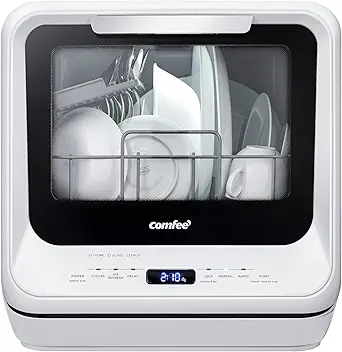 |
| Best Budget The cheapest option that still gets the job done reliably | ChuMaste Countertop Dishwasher CM-XWJ01 |  |
| Top Rated A top-rated pick with lots of positive feedback | AIRMSEN Countertop Dishwasher TDQR03 |  |
| Most Popular A crowd favorite that many people choose with confidence | BLACK+DECKER Countertop Dishwasher BCD6W |  |
| Best Seller A high-volume bestseller chosen again and again | NOVETE Countertop Dishwasher TDQR01 |  |
Midea Countertop Dishwasher

| Capacity | 2.77 gallons |
|---|---|
| Noise | 52 db |
| Voltage | 120 volts |
| Number Of Options Cycles | 7 |
| Water Consumption | 2.22 gph |
The Midea Countertop Dishwasher is a portable unit designed for small kitchens, dorms, and RVs that handles up to six place settings with a selection of wash cycles and an extra-dry option. It connects to a faucet via the included quick-connect inlet hose and uses a 360° spiral spray and power wash option to tackle soiled dishes while claiming a low noise level around 52 dB. Practical features include a delayed-start timer, child lock, and specialty cycles for delicate glassware; the extra drying raises rinse temperature and extends drying time for better results without towel-drying. Water consumption is modest and the tank fill design simplifies installation where a direct drain hookup is not available. Trade-offs are its compact capacity—best for 2 to 3 people—and plastic construction rather than a stainless tub, which may affect long-term durability and drying performance compared with larger built-in models. Installation to certain faucets may require adapters, and very large pots or oversized plates will not fit.
Best for: Buyers who need a compact, easy-to-install dishwasher that reliably cleans and dries everyday dishes in small kitchens, apartments, dorms, or RVs.
Less Ideal for: Households that regularly wash large cookware, frequent dinner-party hosts, or anyone who needs the capacity and durability of a full-size built-in dishwasher.
- Multiple wash cycles including delicate and quick options for flexible cleaning needs
- Extra Drying option that raises rinse temperature and extends drying time for drier dishes
- Portable countertop design with quick-connect inlet and simple installation for small spaces
- Low noise operation around 52 dB suitable for open or compact living areas
- Includes cutlery basket and drain hose so it is ready to run out of the box
- Holds only six place settings so it is not suited for larger households
- Interior uses plastic materials rather than a stainless steel tub which can affect long-term durability and heat retention
Verdict: Choose this Midea countertop dishwasher if you want a compact, low-noise unit that cleans effectively and offers an extra-dry cycle for better drying in small-space living.
Midea 18" Built-in Dishwasher

| Place settings | 8 Place Settings |
|---|---|
| Number of programs | 6 |
| Noise level | 52 db |
| Voltage | 120 volts |
| Water consumption | 15.5 gph |
The Midea 18-inch built-in dishwasher packs full-size cleaning features into a slim footprint, making it a practical choice for small kitchens. It offers six wash programs including Heavy, Normal, ECO, Delicate, Quick, and Rinse plus functions such as Heated Dry, Hi‑Temp and Sanitize for higher-temperature cleaning. The stainless steel tub and an intensive/high‑temp cycle that reaches sanitizing temperatures are useful for heavily soiled cookware and baby bottles, while adjustable racks and a removable cutlery basket help fit larger items like platters and pots. Controls are simple push buttons with an LED display and there is a 24‑hour delay start for flexible scheduling. Noise is listed at 52 dB, so it runs quietly enough for open-plan spaces. Trade-offs are the smaller 8-place capacity — it is not suited to large households — and the compact design means some bulkier items may require creative loading. For the purpose of cleaning and drying efficiently in a compact space, it provides solid performance-oriented features without unnecessary complexity.
Best for: Buyers who prioritize strong cleaning and drying performance in a compact dishwasher for small kitchens, apartments, or secondary kitchens and who value sanitize and heated‑dry options.
Less Ideal for: Not a good fit for large families or households that routinely need to wash very large loads or oversized cookware in a single cycle.
- High‑temperature sanitize and Hi‑Temp cycle for thorough cleaning
- Heated dry function reduces post‑wash towel drying
- Six wash programs covering heavy soil to delicate glassware
- Stainless steel tub improves durability and drying performance
- Slim 18" footprint fits tight or small kitchens
- Only 8 place settings capacity, limiting batch size for larger households
- Lower width may make loading very large cookware awkward
Verdict: Choose this slim Midea if you need solid, high‑temp cleaning and effective heated drying in a compact built‑in dishwasher.
COMFEE' Countertop Dishwasher CDC17P0AWB

| Installation Type | Countertop |
|---|---|
| Capacity | 5 liters |
| Cycle Options | Delicate, Fruit, Hygiene, Normal, Rapid |
| Noise | 62 db |
| Water Consumption | 1.32 gph |
This COMFEE' countertop dishwasher is designed for kitchens or small living spaces that need a full wash cycle without plumbing hookups. It uses a 5L internal water tank or an included faucet adapter, runs six program options (Normal, Rapid, Hygiene, Fruit, Glass, Air Refresh) and employs 360° dual spray arms plus a high-temp Hygiene mode that heats to about 162°F to sanitize dishes. The Air Refresh and extra-dry function help reduce moisture and odors after a cycle, and the unit claims low water use compared with handwashing. In practice it fits plates up to 9.5 inches and basic tableware for apartments, dorms, RVs, or small households, and the LED touch panel and adjustable rack make loading straightforward. Limitations are its compact capacity and plastic interior components, so very large pots or heavy-duty cookware will not fit or dry as well as in a full-size model, and noise at 62 dB is noticeable in open layouts.
Best for: Buyers who prioritize space-saving, hands-off cleaning in small kitchens, apartments, dorms, RVs or boats and want a plug-and-play dishwasher that sanitizes and minimizes water use.
Less Ideal for: Households that regularly wash large cookware, multi-course dinnerware for many people, or need a heavy-duty commercial-style machine should choose a larger built-in model instead.
- Built-in 5L water tank and included faucet adapter for no-plumbing setup
- High-temp Hygiene cycle (~162°F) for sanitizing baby dishes and heavily soiled items
- 360° dual spray arms for thorough cleaning coverage
- Air Refresh and extra-dry function to reduce moisture and odors after cycles
- Compact capacity limits load size and cannot handle large pots or oversized cookware
- Interior and racks are mostly plastic which may not be as durable as metal-lined units
Verdict: A ready-to-use countertop dishwasher ideal for small spaces that sanitizes effectively and avoids plumbing thanks to its built-in water tank.
ChuMaste Countertop Dishwasher CM-XWJ01

| Installation Type | Countertop |
|---|---|
| Capacity | 5 liters |
| Noise | 49 db |
| Controls Type | Touch |
| Energy Consumption | 0.42 kwh |
The ChuMaste CM-XWJ01 is a portable countertop dishwasher aimed at small households, apartments, RVs, and offices that need a hands-off way to wash and dry dishes. It fits a modest load — plates, bowls, cups, bottles, and cutlery — and offers five touch-select programs including an economy mode and a 29-minute quick wash. The unit uses upper and lower double spray arms with a 360-degree spiral high-pressure spray for thorough coverage and includes a hot-air drying mode to reduce residual moisture and odors. Setup is straightforward thanks to the built-in water tank and included hoses, and the stainless-steel interior helps with durability. Expect typical countertop limitations: capacity is limited to light-to-moderate loads and filter/spray arms need occasional cleaning to prevent clogs. Noise runs around 49 dB, so it is noticeable but not loud. Energy and water usage are modest for the category, making it suitable when space or plumbing options are constrained.
Best for: Buyers who need an affordable, space-saving dishwasher that cleans and dries everyday dishware in tight kitchens, dorms, or mobile living spaces and prioritize convenience over large capacity.
Less Ideal for: Large families, heavy cookware users, or anyone who needs to run full-size loads in one cycle should consider full-size built-in models instead.
- Built-in water tank and inlet/drain hoses allow countertop placement without permanent plumbing
- 360-degree upper and lower spray arms for thorough cleaning coverage
- Hot-air drying function helps reduce leftover moisture and odors
- Touch controls with five program options including a 29-minute quick wash
- Stainless-steel interior for improved durability and hygiene
- Small 5-liter capacity limits load size so larger pots and many dishes will require multiple cycles
- Hose connection may need an adapter for some faucet types
- Spray arm rotation can be obstructed by poor loading or buildup if not cleaned regularly
Verdict: A budget-friendly, compact countertop dishwasher that reliably cleans and dries small daily loads when space or plumbing options are limited.
AIRMSEN Countertop Dishwasher TDQR03

| Installation Type | Countertop |
|---|---|
| Capacity | 1.2 gallons |
| Number of settings | 6 |
| Noise | 50 db |
| Energy Consumption | 950 watts |
The AIRMSEN TDQR03 is a self-contained countertop dishwasher aimed at apartments, small households, and RV use where a permanent hookup is impractical. It washes up to a family of 2–4 worth of dishes using a built-in 5-liter tank or an optional faucet connection, and offers six cycles including baby care and glass modes. The unit uses 14 spray nozzles with upper and lower spray arms and reaches high wash temperatures for tougher soils, while providing an extra 60-minute heated dry and a 72-hour ventilated storage function to keep dishes dry and hygienic. Touch controls and an angled LED display make cycle selection straightforward, and the transparent door with interior lighting helps monitor cleaning. Trade-offs are the 50 dB noise level and the compact internal space that requires angling larger plates, so it is not a substitute for a full-size dishwasher when you need to load many large items at once. For focused cleaning and built-in drying in spaces without plumbing access, it performs well.
Best for: Buyers who need a dependable countertop dishwasher that reliably cleans and dries everyday tableware in small kitchens, apartments, or mobile living spaces without a permanent water hookup.
Less Ideal for: Households that regularly wash many large pots, pans, or full loads where a standard built-in dishwasher's capacity and quieter operation are required.
- Built-in 5-liter water tank allows operation without faucet hookup
- High-temperature wash and 14 nozzles with 360° spray for thorough cleaning
- Heated 1-hour dry plus 72-hour ventilated storage to keep dishes dry
- Touch controls with angled LED display and interior light for easy monitoring
- Compact interior may require angling 12-inch plates and limits large-item capacity
- Noise level around 50 dB is noticeable compared with quieter models
Verdict: Choose this dishwasher when you want a reliable countertop unit that cleans thoroughly and includes built-in heated drying without needing a faucet hookup.
BLACK+DECKER Countertop Dishwasher BCD6W

| Installation Type | Countertop |
|---|---|
| Number of settings | 7 |
| Noise | 60 db |
| Inner Material | Stainless Steel |
| Recommended Uses For Product | Residential, Small kitchens, RVs |
The BLACK+DECKER BCD6W is a portable countertop dishwasher designed for kitchens with limited space that need a full-featured cleaning cycle without permanent plumbing. It connects to a standard faucet with the included quick-connect hose, accepts powder, tablet, or pod detergents, and holds up to six place settings in a slide-out rack with a removable cutlery basket. The stainless steel interior and three-stage filter assembly help resist stains and improve drying, while seven wash programs plus delay-start let you tailor cycles for glassware, intensive soils, or quick rinses. Electronic touch controls and an LED display make cycle selection simple and a child lock adds safety for family use. Expect typical countertop noise around 60 dB and routine filter cleaning if you run the unit daily. Because it drains to a nearby sink, you will need a faucet and a place to route wastewater, and capacity is limited compared with full-size dishwashers, so larger cookware may not fit.
Best for: Buyers who need dishwasher cleaning performance in small spaces and prioritize a familiar, well-reviewed appliance that hooks up temporarily to an existing faucet.
Less Ideal for: Households that regularly wash large cookware, have no nearby faucet to connect, or want the quieter operation and larger capacity of an installed full-size dishwasher.
- Stainless steel interior for easier cleaning and better heat retention during drying
- Quick connect faucet hookup requires no permanent plumbing
- Seven wash programs including Eco, Glass, and Rapid for flexible cleaning needs
- Accepts powder, tablet, and pod detergents and includes a removable utensil basket
- Limited to a 6-place setting capacity so larger pots and pans may not fit
- Produces around 60 dB of noise, louder than many built-in models
Verdict: A practical countertop dishwasher that delivers flexible cleaning cycles and a stainless interior for small kitchens and temporary hookups.
NOVETE Countertop Dishwasher TDQR01

| Installation Type | Countertop |
|---|---|
| Capacity | 1.3 gallons |
| Cycle Options | Baby Care/Heavy, Heated Dry, Normal, Soft/Fruit, Speed |
| Water Consumption | 5 liters |
| Energy Consumption | 950 watts |
The NOVETE countertop dishwasher is a space-saving portable unit designed to clean and dry small loads without permanent plumbing. It holds about four place settings and fits up to 12-inch plates loaded at an angle, and offers five programmed cycles including a high-temperature Baby Care/Heavy mode that reaches up to 167°F for sanitizing. The machine includes a built-in 5 L water tank so it can run without connecting to a faucet, or you can attach the included inlet hose for continuous supply. Controls are simple via the LED touch panel and the clear dual-layer door with interior lamp lets you monitor cycles. A dedicated Dry/Storage mode adds 60 minutes of hot-air drying and an automatic ventilation feature cycles air every 75 minutes for up to 72 hours to prevent odors. Practical downsides are modest capacity compared with full-size dishwashers and some residual water after testing is expected per the manufacturer, so occasional manual draining or airing may be needed. Noise is rated around 50 dB, making it reasonable for open kitchens.
Best for: Buyers who prioritize a compact, easy-to-use dishwasher that sanitizes and dries well for apartments, RVs, or small households and who prefer a unit that works without permanent plumbing.
Less Ideal for: Large households or anyone who regularly needs full-size capacity or wants a built-in permanently plumbed dishwasher.
- Built-in 5 L water tank allows use without faucet hookup
- Five wash programs including a high-temperature Baby Care mode for sanitizing
- 60-minute hot-air Dry/Storage mode plus automatic ventilation to keep dishes dry and odor-free
- Compact footprint fits under most cabinets and holds four place settings
- Includes inlet and drain hoses and multiple racks and baskets for flexible loading
- Smaller capacity than standard dishwashers limits load size for families
- Manufacturer notes some residual water may remain after cycles
Verdict: A compact countertop dishwasher that sanitizes at high temperature and adds hot-air drying, ideal for small kitchens that need reliable cleaning and dry storage without plumbing.
Choosing the Right Dishwasher for Cleaning and Drying: Key Factors to Consider
Wash System and Spray Coverage
How water is delivered determines how well dried-on food and grease are removed. Multiple spray arms, rotating nozzles, and targeted jets reach different zones inside the tub, reducing the need to pre-rinse or rewash items. Soil sensors and variable-pressure pumps adjust water flow and cycle length to the load, which directly affects cleaning outcomes.
When evaluating wash systems, think about where you typically place heavily soiled pots and how the spray pattern will reach them. A dishwasher that directs water to lower and upper racks, and has targeted spray for silverware baskets and corner zones, will produce more consistent cleaning across mixed loads.
Drying Method and Post-Wash Handling
Drying approaches vary and each has tradeoffs. Heated drying accelerates moisture removal but increases energy use and can bake on odors if not ventilated. Condensation drying uses a cooler exterior surface to pull moisture from dishes and is typically more energy-efficient but slower. Fan-assisted or vented systems speed drying without extreme heat and often pair well with rinse aid.
Consider how you store dishes after a cycle. If you need dishes ready to store immediately, prioritize models with stronger active drying, fan boost, or proven heated options. If you usually let items air-dry in the machine before unloading, energy-efficient condensation dryers may be acceptable.
Cycle Variety and Temperature Control
Different soils and load types need different cycles. High-heat sanitize and heavy-duty cycles are important for baked-on grime and sterilizing baby items, while quick or eco cycles save time and energy for lightly soiled loads. Precise temperature control affects both cleaning efficacy and the ability of the dishwasher to sanitize.
Look for a dishwasher that offers adjustable cycles and the option to boost temperature or extend dry time. Flexible cycle programming matters when your household runs a mix of pots, glassware, plastics, and delicate items.
Rack Layout and Loading Flexibility
How the racks are designed determines how many items fit and whether water and drying airflow can reach them. Adjustable tines, fold-down sections, third racks for utensils, and movable stemware supports increase real-world usability. Poor rack geometry can create shadowed zones where soils accumulate and where drying is ineffective.
Assess the types of items you wash most often and ensure the rack features support them. A dishwasher that lets you tilt or remove racks for oversized cookware will reduce the chance of rewash and improve overall drying performance by allowing better airflow.
Rinse Aid Compatibility and Detergent Performance
Rinse aids and compatible detergents play a significant role in preventing spotting and improving drying. Rinse aid reduces surface tension on water droplets so they sheet off dishes rather than bead, which speeds drying and reduces spots on glass and flatware. Some dishwashers have dedicated rinse aid dispensers and dosage controls that improve repeatable results.
Consider whether you are willing to use rinse aid regularly. If you prefer minimal consumables, prioritize models with drying technologies that perform well with standard detergents. Otherwise, a machine that works well with rinse aids will deliver noticeably better dry results for glassware and plastics.
Noise Levels and Daily Convenience
Noise during cycles affects where and when you run the dishwasher. Quieter machines are better for open-plan homes or for running overnight, while louder units may be acceptable in separated kitchen spaces. Noise also correlates with motor design and insulation, which can influence long-term vibration and potential wear.
Think about when you typically run the dishwasher and how disruptive hum and motor noise would be during meals or work-from-home activities. Lower decibel machines usually include better vibration damping and may provide a more pleasant daily experience.
How Different Drying Technologies Work
Drying approaches fall into a few common categories, each with different implications for speed, energy use, and suitability for certain dish types. Heated drying uses an internal heater to raise the air temperature and evaporate moisture faster. This delivers faster unloading times but increases energy consumption and can stress some plastics.
Condensation drying relies on temperature differentials between the hot interior and cooler stainless steel tub walls to pull moisture off dishes. It is energy-efficient and gentle on plastics but typically takes longer. Fan-assisted or vented drying adds airflow to speed moisture removal without relying solely on high heat, offering a middle ground between speed and efficiency.
- Heated drying: fastest, higher energy use, risk to some plastics
- Condensation drying: energy-efficient, slower, works best with stainless tubs
- Fan-assisted/vented: balances speed and energy, often best for mixed loads
- Rinse aid compatibility improves effectiveness across all systems
Practical Loading Tips for Better Results
How you load the dishwasher affects both cleaning and drying performance. Avoid nesting bowls and plates so that spray reaches all surfaces. Place larger, heavily soiled items on the bottom rack where most machines concentrate stronger spray, and angle glassware to encourage water runoff.
Leave space between items to permit airflow during the dry cycle. Use the top racks for plastics if the machine uses strong heat, or reserve plastics for the bottom with lower-heat cycles when appropriate. Utilize adjustable tines and third racks to separate utensils and prevent water pooling.
- Face soiled surfaces toward spray arms
- Avoid stacking similar-shaped items together
- Tilt glasses and cups to shed water
- Use utensil trays to keep flatware separated
When to Use Sanitizing and High-Temperature Cycles
Sanitizing cycles and high-temperature options are useful for heavily soiled cookware, baby bottles, and to reduce bacterial loads on dishes. Higher wash temperatures improve grease breakdown and help detergent perform better, but they can also increase energy use and lengthen cycle times.
Reserve high-temp cycles for when you need additional cleaning power or a validated sanitize process. For everyday loads, eco or standard cycles with proper loading and detergent are often sufficient. Consider how often you will need sanitize cycles because frequent use affects operating cost and may influence long-term component wear.
- Use sanitize for baby items, illness recovery, or greasy cookware
- High temp improves cleaning but increases energy and cycle time
- Eco cycles save energy for light soils
Energy Use and Real-World Operating Costs
Energy consumption depends on wash temperature, heated drying, and cycle length. Models that rely on heated drying will typically have higher per-cycle electricity use than condensation-based units. Cycle selection matters: quick and eco modes use less energy but may not perform as well on very dirty loads.
To estimate operating cost, consider how often you run heavy cycles versus light cycles, whether you use heated drying or air-dry options, and whether you use rinse aid. Efficient machines with good cleaning and drying balance can reduce the need for rewash, which saves both water and energy over time.
- Heated dry increases energy draw
- Condensation dry is more energy efficient
- Cycle length impacts water and power use
Maintenance Steps That Improve Cleaning and Drying
Regular maintenance keeps spray nozzles, filters, and door seals working properly, which preserves cleaning effectiveness and prevents poor drying from reduced airflow or blocked drainage. Clean the filter and check spray arms for clogs at least monthly, or more often with heavy use.
Wipe door seals and run a maintenance wash occasionally to remove residue and mineral buildup. Refill rinse aid as recommended and use detergents suited to your water hardness to minimize spotting and improve drying.
- Clean filters and check spray arms monthly
- Use appropriate detergent for your water hardness
- Refill rinse aid and wipe seals to prevent odors
How We Chose the Best Dishwasher for Cleaning and Drying
We limited our selection to full-featured dishwashers whose designs and published specs address both soil removal and drying performance. We prioritized measurable, user-facing features that influence cleaning and drying rather than marketing claims. Our evaluation focused on wash system design, dry system type, flexible loading and rack geometry, cycle variety and temperature control, and noise and energy characteristics that affect practical use. Specifically, we checked for wash performance indicators such as spray arm configuration, targeted jets, and soil-sensing options; dry performance such as heated drying, condensation drying, fan-assist, or enhanced rinse aids; and loading features like adjustable tines, third racks, and utensil trays that reduce rewash risk. We also considered cycle customization, high-temperature sanitize options, and energy efficiency ratings because these affect both cleanliness and operational cost. We excluded compact or countertop units and dishwashers designed only for light-duty or commercial use, since they're outside the scope of typical home kitchen needs. Models that lack basic rinse-and-drain cycles or any drying provision were also filtered out. The remaining picks represent balanced choices that address common homeowner pain points around both cleaning and drying.
Our full evaluation process is outlined in our review methodology.
FAQ
Does using rinse aid significantly improve drying?
Yes, rinse aid reduces surface tension, helping water sheet off dishes rather than bead. It often improves drying results noticeably, especially on glassware and flatware, and is recommended for most drying systems.
Are heated-dry cycles necessary for most households?
Not always. Heated-dry cycles speed up unloading but use more energy. For many households, condensation or fan-assisted drying plus a rinse aid provides acceptable results while saving energy.
How can I reduce spotting and cloudiness on glassware?
Spotting often comes from mineral content in water. Use a rinse aid, check detergent dosing, and consider higher rinse temperatures for glass cycles. Regularly cleaning the filter and spray arms also helps prevent redepositing minerals.
Will loading patterns affect clean and dry outcomes?
Yes. Poor loading can block spray and trap water, leading to missed soils and wet spots. Space items for spray access and airflow, angle cups to allow runoff, and avoid nesting similar items.
How often should I run maintenance cycles?
Run a maintenance or high-temp cleaning cycle every few weeks if you use the dishwasher frequently. Clean filters and check spray arms monthly to maintain cleaning power and drying performance.
Final Verdict
Prioritize the features that match how you wash and how quickly you need dishes ready. If immediate unloading is important, favor models with active drying methods or fan assistance and ensure they work well with rinse aid. If energy efficiency and gentle treatment of plastics matter more, condensation-style drying with good cycle options will be a better fit. Balancing spray coverage, cycle temperature control, and rack flexibility yields the best real-world results. Use the tradeoffs outlined here to choose a dishwasher that reduces rewash and shortens the time between cycle end and storage.