
Note: This article contains affiliate links. If you click on these links and make a purchase, we may earn a small commission at no extra cost to you. This helps support our research and content. Read our full affiliate disclosure here.
If your home has weak municipal supply or a long run of plumbing that limits flow, a standard dishwasher can struggle to clean and complete cycles. Choosing a dishwasher designed to handle low water pressure matters because it keeps dishes sanitary, prevents repeat cycles, and avoids service calls. This guide shortlists the top options suited for low-pressure conditions and explains the technical tradeoffs you should expect. We evaluated wash effectiveness, water-use efficiency, inlet and pump design, and cycle reliability to assemble these picks. Read on for practical buying criteria and clear guidance to match a dishwasher to a slower water supply.
Top Picks at a Glance
| Best Overall The best all-around choice for most situations | COMFEE' Countertop Dishwasher CDC17P2AWW |  |
| Best Quality Built to a higher standard if you want something more solid | Hamilton Beach Portable Dishwasher HBDW1922 |  |
| Best Value The sweet spot between price and what you get | EUHOMY Countertop Dishwasher DW002-5 |  |
| Best Budget The cheapest option that still gets the job done reliably | Knwigoe Mini Countertop Dishwasher |  |
| Top Rated A top-rated pick with lots of positive feedback | FOHERE TDQR01 Countertop Dishwasher |  |
| Most Popular A crowd favorite that many people choose with confidence | COMFEE' Countertop Dishwasher CDC22P1BBB | 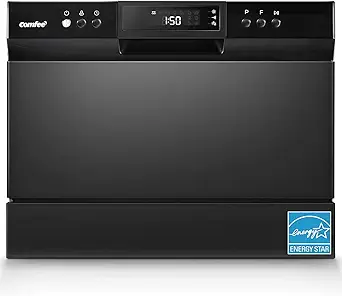 |
| Best Seller A high-volume bestseller chosen again and again | AIRMSEN Countertop Dishwasher TDQR03 |  |
COMFEE' Countertop Dishwasher CDC17P2AWW

| Installation Type | Countertop |
|---|---|
| Water Consumption | 1.58 gph |
| Energy Consumption | 0.35 kwh |
| Noise | 62 db |
| Cycle Options | Baby Care, Delicate, Fruit, Normal, Rapid |
This COMFEE' countertop dishwasher is designed for small kitchens, dorms, RVs, and other places where a full-size unit or plumbing hookup is impractical. It can run either from its built-in 6 liter tank or by hooking to a faucet via the supplied quick-connect hose, and offers five main wash programs plus two enhanced functions including a high-temperature hygiene cycle and UV sanitation. The interior is sized to fit plates up to 10.5 inches and uses a 360° spray system with 11 nozzles to tackle typical food soil while consuming about 6 liters of water and 0.35 kWh per cycle. Auto-open door and a turbofan improve drying speed, and safety features include a child lock and leak-detection cutoff. Expect practical, space-saving cleaning and good sanitation for baby items, but accept that noise is moderate at 62 dB and capacity remains limited compared with full-size dishwashers, so you will still need to run cycles more often for larger households.
Best for: Buyers who need a compact, no-install dishwasher that still delivers hygienic, high-temp cleaning for small households, apartments, RVs, or dorm rooms and prioritize water and energy efficiency.
Less Ideal for: Large families or anyone who wants to load a full day of dishes at once should choose a full-size built-in model instead.
- Built-in 6L water tank allows operation without a permanent faucet hookup
- High-temp hygiene cycle and UV program for sanitizing baby bottles and utensils
- Auto-open door and built-in fan improve drying performance
- Uses roughly 6 liters of water and 0.35 kWh per cycle for energy and water savings
- Limited internal capacity compared with standard dishwashers, requiring more frequent cycles for larger households
- Moderate operating noise at about 62 dB which can be noticeable in small spaces
Verdict: Choose this compact COMFEE' countertop dishwasher when you need a portable, low-water-use unit that still offers high-temp and UV sanitation for spotless, hygienic results in tight spaces.
Hamilton Beach Portable Dishwasher HBDW1922

| Installation Type | Countertop |
|---|---|
| Capacity | 5 cubic feet |
| Cycle Options | Normal, Rinse, Heavy, Delicate, Quick Wash |
| Energy Consumption | 200 kilowatt hours per year |
| Water Consumption | 3.1 gph |
The Hamilton Beach HBDW1922 is a compact portable dishwasher designed for kitchens that need a movable, full-function dishwashing solution. It connects to a standard kitchen tap and rolls on wheels for easy placement, making it handy where built-in units are not possible. The stainless steel interior resists staining and helps with drying, while five cycle options including Normal, Heavy, Delicate, Quick Wash and Rinse give flexibility for different soil levels. With a stated low water consumption and an 8-place setting capacity it fits a small household or an apartment and can be tucked under most cabinets. Controls are push-button simple, and the freestanding form factor means no permanent installation is required. Limitations include its smaller footprint compared with full-size models and the obvious dependence on a faucet connection rather than hard plumbing, which can be less convenient for continuous heavy use in larger households. Noise is listed unusually low which may be optimistic, so expect typical portable dishwasher sound in practice.
Best for: Buyers seeking a movable, space-saving dishwasher that delivers real cleaning cycles and low water use for apartments or homes with limited or low water pressure.
Less Ideal for: Large households that need high-capacity, continuously available built-in dishwashers or users who prefer a hard-plumbed installation.
- Portable on wheels for easy placement and storage
- Resistant stainless steel interior improves durability and drying
- Multiple cycle options for different soil levels including quick wash
- Designed to fit under most cabinets to save space
- Low water consumption suitable where water use is a concern
- Requires a faucet connection rather than hard plumbing hookup
- Smaller capacity and footprint than full-size built-in dishwashers
Verdict: Choose this portable Hamilton Beach when you need a movable, low-water-use dishwasher that cleans effectively in small kitchens with limited water pressure.
EUHOMY Countertop Dishwasher DW002-5

| Installation Type | Countertop |
|---|---|
| Capacity | 5 liters |
| Noise | 40 db |
| Controls Type | Touch |
| Cycle Options | Extra Dry, Glass, Fruit, Self Cleaning, Dry, Strong/Baby Mode, Normal, ECO, Quick |
The EUHOMY DW002-5 is a countertop dishwasher intended for small households and apartments that do not have a direct plumbing hookup or that experience weak faucet pressure. It offers a built-in 5 liter water tank plus an option to connect to a faucet, and eight program choices including a high-temperature Baby Care mode (up to 167°F), Quick 29-minute cycle, Glass and Self-Clean modes. Dual 360° rotating spray arms and an LED touch display aim to deliver even coverage across racks that hold more than 30 items. Practical touches include a child lock, delay start, and an extended ventilation dry option that continues airing dishes for up to 73 hours to prevent odors. At 40 dB it runs quietly for countertop use, but the compact footprint limits load size compared with full-size machines and it requires dishwasher-specific detergent to perform optimally. The dual water-supply design and built-in tank make it a good fit where water pressure is inconsistent, though you will trade greater capacity and faster commercial-grade drying for portability and space savings.
Best for: Buyers who need a compact, countertop dishwasher that works without reliable faucet pressure and value flexible water options and multiple wash modes for small household loads.
Less Ideal for: Large families or anyone who needs full-size dishwasher capacity and faster cycle throughput should look at standard built-in models instead.
- Built-in 5L water tank plus faucet hookup for use when inlet pressure is low
- Eight wash programs including high-temperature Baby Care and a 29-minute Quick cycle
- Dual 360° spray arms for broader coverage and improved cleaning
- Quiet operation rated at 40 dB suitable for countertop placement
- Extended ventilation dry option to keep dishes dry and reduce odors
- Compact interior limits load size compared with full-size dishwashers
- Requires specific faucet adapter in some setups and dishwasher detergent for best results
- Drying relies on extended ventilation rather than powerful built-in heating
Verdict: Choose the EUHOMY DW002-5 when you need a portable countertop dishwasher that can run from its own tank or a faucet and still handle reliable cleaning on low water pressure.
Knwigoe Mini Countertop Dishwasher

| Capacity | 8 liters |
|---|---|
| Controls Type | Touch |
| Noise | 50 db |
| Rated Power | 1200W |
| Number of settings | 3 |
This compact countertop dishwasher is built for small kitchens and portable living, using an internal 8L water tank and three touch-controlled wash cycles (standard, fast, powerful) to clean everyday plates, bowls, and cutlery. It sprays water 360 degrees and offers a hot-air drying function that reaches 75°C, so dishes come out drier than with simple air-dry units. The stainless steel racks and basket improve durability compared with plastic-only interiors, and the 1200W motor gives the unit enough heat and pressure to run short cycles that still handle light-to-moderate soiling. Practical limits are its small capacity and reliance on the included water inlet hose and an adapter for many faucets, which means it is not suited for large loads or heavy grime without pre-rinsing. Noise is listed around 50 dB, so it is reasonably quiet for countertop use, but the unit does require a 110V connection and a compatible water source. For small households, dorms, or RVs needing a self-contained dishwasher that uses little water, this covers the basics well.
Best for: Buyers on a tight budget who need a compact, low-water countertop dishwasher for apartments, dorms, or small RVs and prioritize portability and basic automated cleaning over large capacity.
Less Ideal for: Large households, heavy cookware, or anyone who wants a full-size built-in dishwasher or frequent large loads.
- Self-contained 8L water tank so it can run without permanent plumbing
- Three touch-controlled wash programs including a fast option
- Stainless steel racks and basket for better durability
- Hot-air drying up to 75°C reduces residual moisture after cycles
- Small capacity limits load size to roughly 15–24 pieces per cycle
- May need a faucet adapter (hose inner thread 1/2") for some sinks
Verdict: A budget-friendly, self-contained countertop dishwasher that saves water and fits small kitchens while delivering basic, effective cleaning for light loads.
FOHERE TDQR01 Countertop Dishwasher

| Capacity | 5 liters |
|---|---|
| Noise | 50 db |
| Number of settings | 6 |
| Voltage | 240 volts |
| Display | LED |
The FOHERE TDQR01 is a portable countertop dishwasher designed for small kitchens, RVs, and renters who need a no-install cleaning solution. It offers six settings including Normal, Speed (29 minutes), ECO, Baby Care (167°F high-temp wash), Fruit, and Delay Start up to 6 hours, and uses dual 360° spray arms with 14 high-pressure jets to improve cleaning coverage. You can run it from the included faucet hose or use the internal 5L tank when a direct water hookup is not available, making it flexible for low-pressure or temporary water situations. The unit features an LED display, touch controls, and a PTC hot air drying cycle plus 72-hour ventilation to keep dishes fresh after the cycle. Practical downsides are its small 5L capacity that limits load size to about 4 place settings and a reported 50 dB noise level that is noticeable in very quiet spaces. For buyers who need a compact, portable washer that conserves water and avoids installation, this model delivers straightforward operation and useful high-temp and quick-wash options.
Best for: Buyers who need a reliable, installation-free dishwasher that conserves water and can operate from an internal tank or a faucet, ideal for renters, RV users, or small households prioritizing ease and flexibility.
Less Ideal for: Large families or households that require frequent full-size loads or faster throughput should choose a larger built-in model instead.
- Dual water options: built-in 5L tank or faucet hookup for flexible placement
- 360° dual spray arms with 14 high-pressure jets for thorough coverage
- Baby Care 167°F cycle for sanitizing bottles and heated drying to reduce towel drying
- Compact footprint that fits small kitchens, RVs, and dorms while holding ~4 place settings
- Touch LED controls with delay start for scheduled, convenient operation
- Limited capacity suitable for 2–3 people rather than larger households
- Runs at about 50 dB which can be noticeable in very quiet rooms
Verdict: Choose the FOHERE TDQR01 if you want a reliable, water-efficient countertop dishwasher that runs from its own tank or a faucet for flexible use in low-pressure or rental situations.
COMFEE' Countertop Dishwasher CDC22P1BBB

| Installation Type | Countertop |
|---|---|
| Capacity | 6 liters |
| Number of settings | 8 |
| Noise | 52 db |
| Voltage | 120 volts |
The COMFEE' CDC22P1BBB is a portable countertop dishwasher aimed at small kitchens, dorms, and RVs that need a full wash cycle without a hard plumbing hookup. It fits up to six place settings and includes eight programs such as Heavy, Baby-Care, ECO, Glass and a 45-minute Speed cycle, plus an extra-dry function for faster drying. Installation is simple: use the included inlet and drain hoses or hook it to a faucet with the supplied adapter for a near plug-and-play setup. Performance-wise the unit uses 12 washing nozzles and a 360° spiral spray combined with wash temperatures up to 154°F to tackle greasy or baked-on food, while rated water use and Energy Star efficiency keep operating costs low. The machine runs at about 52 dB, which is noticeable but not disruptive in a small space. Limitations include its compact 6-place capacity that makes it impractical for large families and a design intended for countertop placement rather than full built-in integration.
Best for: Buyers who value a space-saving, plug-and-play dishwasher for small households, apartments, RVs, or dorms and who prefer a proven, feature-rich portable unit with multiple wash modes.
Less Ideal for: Those who need high capacity or a built-in undercounter dishwasher for a full-size kitchen or who require near-silent operation in open living spaces.
- Portable countertop design with included inlet/drain hoses and faucet adapter for easy installation
- Eight wash programs including a 45-minute Speed cycle and Baby-Care option for flexible cleaning needs
- 12 nozzles and 360° spiral spray with high-temperature wash up to 154°F for strong grease removal
- Energy Star rated with low water consumption for cost and resource savings
- Six-place setting capacity is too small for larger households or heavy entertaining
- Noise level around 52 dB is noticeable in very quiet environments
Verdict: A compact, Energy Star portable dishwasher that delivers strong wash power and flexible cycles for small kitchens and renters who need an easy, no-plumbing solution.
AIRMSEN Countertop Dishwasher TDQR03

| Installation Type | Countertop |
|---|---|
| Capacity | 1.2 gallons |
| Number of settings | 6 |
| Noise | 50 db |
| Energy Consumption | 950 watts |
The AIRMSEN TDQR03 is a portable countertop dishwasher designed for apartments, RVs, and kitchens without a permanent hookup. It can run from its built-in 5 liter (1.2 gallon) water tank or connect to a faucet using the included hoses, and offers six program options including baby, delicate, fruit, normal, and speed cycles. The unit uses multiple spray nozzles and dual spray arms with high-temperature washing (up to 167°F) to tackle stuck-on food, and includes a 1-hour hot air dry and a 72-hour ventilated storage mode to keep dishes hygienic. Controls are simple touch buttons with an angled LED display and an interior LED light so you can monitor cycles. Practical benefits include water savings compared with handwashing, plug-and-play setup for users without plumbing access, and a compact footprint that fits small counters. Trade-offs are its countertop form factor and limited capacity relative to full-size dishwashers, and the 50 dB noise level which is noticeable in very small spaces.
Best for: Buyers who prioritize a simple, low-risk appliance that works out of the box without plumbing changes and who need reliable cleaning for a small household or RV.
Less Ideal for: Households that regularly wash large quantities of dishes, oversized cookware, or need a fully integrated undercounter dishwasher solution.
- Built-in 5L water tank allows operation without faucet hookup
- Multiple wash programs including baby and delicate for hygiene-sensitive items
- High-temperature wash and 14 nozzles with 360° spray for effective cleaning
- Touch controls with angled LED display and interior light for easy monitoring
- Compact countertop design fits small kitchens and RVs
- Smaller internal capacity than full-size dishwashers so large loads require multiple cycles
- 50 dB operating noise may be noticeable in very small or quiet rooms
Verdict: Choose this unit if you want a turnkey countertop dishwasher that delivers hygienic high-temperature cleaning and runs without a water hookup.
Choosing the Right Dishwasher for Low Water Pressure: Key Factors to Consider
Minimum Inlet Pressure Rating
The manufacturer-stated minimum inlet pressure tells you whether a dishwasher can accept your household water supply without requiring modifications. If a unit lists a low minimum pressure, it often means internal controls and valves are calibrated to open and fill reliably under weak flow.
Matching the dishwasher's minimum inlet pressure to measured house pressure prevents long fill times and repeated refill attempts. It also reduces stress on inlet valves and control electronics that can be damaged by repeated failed fill cycles.
Integrated Pump or Booster Capability
Some dishwashers include a stronger internal circulation pump or a built-in boost mode to compensate for low inlet pressure. These systems pull water through the dishwasher more effectively than units that depend entirely on the household supply and external pressure.
An integrated pump improves spray intensity and can maintain rinse performance even when the incoming flow is weak. Knowing whether the model has a robust pump and serviceable pump components helps you anticipate maintenance needs and long-term reliability.
Spray Arm and Wash Zone Design
Spray-arm layout, number of wash zones, and how water is routed determine how well soil is dislodged when flow is limited. Designs that recirculate water through multiple smaller jets or that concentrate spray on heavily soiled areas can make up for lower pressure.
Look for models with multiple spray loops, targeted nozzles, or a separate zone for pots and pans. These features reduce dependence on raw inlet flow and can keep cleaning consistent across different load types.
Cycle Options and Adaptive Fill Controls
Flexible cycles—such as extended soak, recirculation, and multi-rinse programs—help with low-pressure scenarios by giving detergent and water more contact time. Adaptive fill or sensor-driven controls that adjust to slower fills can prevent incomplete cycles.
Programmable delays and longer wash phases are practical when your supply fills slowly. Models that detect insufficient fill and either extend fill time or alert you are preferable to models that simply abort the cycle.
Water-Use Efficiency and Soil Management
Efficient water use reduces the volume needed from the supply while still achieving cleaning. Dishwashers that optimize recirculation and use targeted rinses can perform effectively with less incoming flow.
Efficient soil-management features such as filters, soil sensors, and rinsing patterns are important because when water is scarce, mechanical action and detergent effectiveness do more of the cleaning work. Prioritizing efficiency can also cut overall water consumption if your low pressure is paired with water-use restrictions.
Serviceability and Valve Quality
In low-pressure settings, inlet valves and sensors see more duty and may be the first components to fail. A dishwasher with accessible service points, replaceable inlet valves, and clear diagnostic codes reduces downtime and repair complexity.
Choosing a model with good parts availability and straightforward access to the pump, valves, and control board makes maintenance easier and less costly over the unit's life, particularly when your installation stresses those components.
Measuring Your Home's Water Pressure
Before shopping, measure static and dynamic pressure at the location nearest the dishwasher supply. Static pressure is the reading with faucets closed; dynamic pressure is measured while a faucet runs. A simple pressure gauge that threads onto a hose bib will give a quick baseline.
If dynamic pressure drops significantly when appliances run, plan for a dishwasher that tolerates variable inlet flow. Record typical daytime and peak-use pressures so you can compare them to the dishwasher's minimum inlet rating.
- Test pressure both with no fixtures running and with a typical fixture on
- Measure at the same point where the dishwasher will connect if possible
- Note whether pressure fluctuates during peak household use
When to Install a Booster Pump
An external booster pump is a valid solution if measured inlet pressure is below the lowest acceptable rating for available dishwashers or if multiple fixtures suffer low flow. Pumps can raise incoming pressure but add cost, installation complexity, and a new maintenance item.
Consider booster pumps only after checking models with strong internal circulation. If you opt for a booster, consult a plumber about placement, noise, and freeze protection to avoid creating new issues.
- Booster pumps raise supply pressure but require electrical connection
- They can introduce noise and need freeze protection in cold climates
- Weigh pump cost and upkeep against buying a model designed for low pressure
Installation Tips for Low-Pressure Setups
Use the shortest possible supply line with minimal fittings to reduce pressure drop between the main and the dishwasher. Flexible braided lines and multiple elbows add resistance that worsens already low pressure. A direct, straight run with a single shutoff valve helps preserve flow.
Check that the shutoff valve is fully open and that any in-line water-saving devices or aerators near the source are not restricting flow. During installation, confirm inlet strainers are clean and sized correctly to avoid limiting supply further.
- Prefer straight, short supply runs to minimize losses
- Ensure shutoff valve is compatible and fully open during operation
- Clean inlet strainers after installation to prevent blockages
How Detergent and Rinse Additives Affect Low-Flow Cleaning
When water flow is reduced, mechanical action and detergent chemistry take on more importance. Choosing detergents formulated for low-water environments or that dissolve quickly helps maintain soil removal when rinse volumes are lower.
Rinse aids that reduce spotting and promote sheeting can compensate for lighter rinses caused by weak inlet flow. However, overuse of additives is not a substitute for proper spray intensity and circulation.
- Prefer fast-dissolving detergents for shorter or lower-flow cycles
- Use rinse aid sparingly to improve sheeting and reduce spotting
- Avoid detergent overload, which can leave residues when rinse volumes are limited
Signs Your Dishwasher Is Struggling With Pressure
Watch for long fill times, repeated fill attempts, frequent aborts with error codes, or poor rinsing and spotting after cycles. These are common symptoms that the unit is not getting sufficient inlet flow or that its internal systems are compensating unsuccessfully.
Also monitor for unusual pump noises, which can indicate cavitation when pumps draw against inadequate inlet pressure. Addressing these issues early prevents longer-term damage to valves and circulation components.
- Excessive fill times or repeated fill attempts
- Persistent spots or film after rinses
- Unusual pump noises or frequent diagnostic errors
How We Chose the Best Dishwasher for Low Water Pressure
To build this list we focused on features and specifications that directly affect performance when incoming water pressure is limited. Primary evaluation criteria included minimum recommended inlet pressure, integrated pump or boost capability, wash-system design that compensates for lower flow, cycle options for multiple soak and recirculation phases, and proven water-use efficiency. Durability and serviceability were also considered, since frequent stalls or blocked valves are common failure points in low-pressure installations. We excluded models that require external booster pumps as a hard requirement because many buyers need a solution that works with existing plumbing. We also filtered out units that list high minimum inlet pressures or that rely solely on high-flow rinse arms. Our selection prioritized dishwashers that maintain cleaning performance at lower inlet pressures by using stronger internal circulation pumps, multiple spray zones, adaptive fill controls, and efficient detergency cycles. The resulting picks represent models that balance cleaning power, reliability, and sensible water use in low-pressure environments.
Our full evaluation process is outlined in our review methodology.
FAQ
What is the minimum water pressure a dishwasher needs to run?
Minimum needs vary, but many dishwashers specify a recommended inlet pressure range. Often the critical figure is dynamic inlet pressure under load. Check your measured pressure against the unit's minimum inlet rating to be sure it will operate reliably.
Can I use a pressure booster instead of buying a low-pressure rated dishwasher?
Yes, a booster can raise supply pressure and allow use of a broader range of units. But boosters add installation complexity, noise, and maintenance. Choosing a dishwasher built to work at your measured pressure can be simpler and cheaper over time.
Will low water pressure affect drying performance?
Drying is mainly influenced by cycle type, heating elements, and airflow, but inadequate rinsing caused by low pressure can leave water on dishes that prolongs drying. Improving rinse performance usually helps drying results.
Are there installation changes that improve performance without replacing the dishwasher?
Yes. Shortening the supply line, removing unnecessary fittings, ensuring the shutoff valve is fully open, and cleaning inlet strainers can improve flow. These steps often make a noticeable difference for units operating near the minimum pressure threshold.
How do I know if my dishwasher's inlet valve needs replacement due to low pressure?
If the dishwasher repeatedly fails to fill, shows fill-related error codes, or cycles the valve frequently without successful fills, the valve or its filter may be clogged or worn. A technician can test the valve's operation and flow rate to determine if replacement is necessary.
Final Verdict
Focus first on matching a dishwasher's minimum inlet pressure and internal circulation capability to the pressures you measured at the install point. Prioritize models with stronger pumps, targeted spray designs, and adaptive cycle controls when incoming flow is inconsistent. Tradeoffs typically involve slightly higher energy or water-use strategies to preserve cleaning performance or the added complexity of a booster pump. Use the evaluation criteria in this guide to choose the option that balances reliability, ease of maintenance, and cleaning results for your low-pressure situation.