
Note: This article contains affiliate links. If you click on these links and make a purchase, we may earn a small commission at no extra cost to you. This helps support our research and content. Read our full affiliate disclosure here.
Picking the right drinking water filter for home use matters for health, taste, and household convenience. Many homeowners want clear evidence a filter will remove specific contaminants, fit existing plumbing, and stay easy to maintain over years of daily use. This guide shortlists the most suitable drinking water filters for home use, focusing on real-world concerns like contaminant reduction, filter life, and installation options. Below you will find the top picks followed by the evaluation criteria used to select them, practical buying factors, and answers to common homeowner questions to help you choose confidently.
Top Picks at a Glance
| Best Overall The best all-around choice for most situations | iSpring RCC7AK-BN Reverse Osmosis System |  |
| Best Quality Built to a higher standard if you want something more solid | Big Berkey 2.25-Gallon Water Filter |  |
| Best Value The sweet spot between price and what you get | Waterdrop WD-10UA Under Sink Filter | 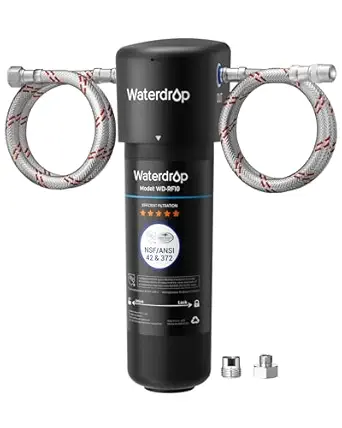 |
| Best Budget The cheapest option that still gets the job done reliably | BRITA Metro 6-Cup Pitcher |  |
| Top Rated A top-rated pick with lots of positive feedback | Aigerri Countertop RO TJYJ001 |  |
| Most Popular A crowd favorite that many people choose with confidence | ZeroWater 22-Cup Ready-Read Dispenser |  |
| Best Seller A high-volume bestseller chosen again and again | Brita Metro 6-Cup Pitcher |  |
iSpring RCC7AK-BN Reverse Osmosis System

| Purification Method | Reverse Osmosis, Alkaline, Activated Carbon, Carbon block |
|---|---|
| Power Source | No Power Needed |
| Maximum Flow Rate | 284 liters_per_day |
| Supported Water TDS Level Maximum (PPM) | 750 |
| Filter Life Cycle | 6 months |
The iSpring RCC7AK-BN is an under-sink reverse osmosis system that uses six stages of filtration, including sediment, carbon, RO membrane, and an alkaline remineralization stage to deliver low-TDS drinking water with restored minerals. It installs beneath the sink and supplies water through the included brushed nickel top-mounted faucet; the patented top-mounted fastener simplifies countertop installation by allowing the faucet nut to be tightened from above. The system is NSF/ANSI 58 certified for the full system, runs without electricity, and has a transparent first-stage housing so you can visually check the sediment filter. Typical use is daily drinking and cooking water with occasional tank refills; replacement filters are available in 6-month to multi-year kits depending on the stage. Practical benefits include strong contaminant reduction (TDS, lead, PFAS, chlorine), an alkaline mineral boost for taste and pH, and DIY-friendly push-fit connections plus online installation videos. Important limitations are that under-sink space and a storage tank are required and regular filter changes are necessary to maintain performance and capacity limits around 75 gallons per day under ideal conditions.
Best for: Buyers who want thoroughly filtered drinking water with mineral restoration and verified certification, and who are comfortable with a one-time under-sink installation and routine filter maintenance.
Less Ideal for: Renters or households that cannot accommodate an under-sink tank or prefer a countertop/electric countertop solution should consider other formats.
- Full six-stage filtration including RO membrane and alkaline remineralization for improved taste and lower TDS
- NSF/ANSI 58 system certification for verified contaminant reduction
- Transparent first-stage housing for easy visual monitoring of sediment buildup
- Does not require electricity and uses push-fit connections for DIY-friendly installation
- Includes brushed nickel faucet and storage tank with convertible feed water adapter for common plumbing fittings
- Requires under-sink space and a storage tank that may be bulky for small cabinets
- Needs periodic filter and membrane replacements to retain certification-level performance
Verdict: Choose this system if you want a certified, electricity-free under-sink RO that restores minerals for better-tasting, low-TDS drinking water.
Big Berkey 2.25-Gallon Water Filter

| Purification Method | Unique Black Berkey proprietary filter media |
|---|---|
| Power Source | Gravity |
| Maximum Flow Rate | 0.03 gpm |
| Capacity | 8.5 liters |
| Material Type | Stainless Steel |
The Big Berkey 2.25-gallon system is a gravity-fed countertop filter designed to turn tap or collected fresh water into drinking water for everyday use or light travel. You fill the top stainless steel chamber and gravity draws water through the two included Black Berkey BB9-2 elements into the lower chamber for dispensing via the spigot. The system is constructed from polished AISI 304 stainless steel and requires no electricity, installation, or tools, making it simple to set up and move. Black Berkey elements are lab-tested and claimed to reduce over 200 common contaminants and each pair is rated for up to 6,000 gallons before replacement is recommended, which keeps operating costs low. Practical limitations include a modest 2.25 gallon capacity that suits small households but will require frequent refilling for larger families, and a low maximum flow rate that means slower dispensing compared with active pump or connected systems. The unit also needs occasional cleaning and filter re-priming during heavy use. For buyers prioritizing contaminant reduction and off-grid reliability, this is a straightforward, durable option.
Best for: Buyers who want a durable, low-maintenance countertop filter that reliably reduces a broad range of contaminants without plumbing or electricity, especially those focused on long-term performance and low per-gallon cost.
Less Ideal for: Households that need high daily throughput or instant high-flow dispensing should consider larger or mains-connected filtration systems instead.
- Gravity-fed design requires no electricity or plumbing
- Black Berkey BB9-2 elements are third-party tested and target a wide range of contaminants
- Durable AISI 304 stainless steel construction suitable for countertop use
- Low running cost with each pair of elements rated up to 6,000 gallons
- Compact footprint that is easy to move and use for travel or small kitchens
- Small 2.25 gallon capacity may need frequent refills for larger households
- Slow maximum flow rate compared with powered filtration or connected systems
Verdict: Choose the Big Berkey 2.25-Gallon if you want a proven, no-electricity countertop system that delivers broad contaminant reduction and very low operating cost per gallon.
Waterdrop WD-10UA Under Sink Filter

| Purification Method | Activated Carbon |
|---|---|
| Maximum Flow Rate | 2.5 gpm |
| Filter Life Cycle | 1 years |
| Supported Water TDS Level Maximum (PPM) | 700 |
| Other Special Features of the Product | NSF/ANSI 42&372, PFAS, PFOA/PFOS and Chlorine Reduction |
The Waterdrop WD-10UA is an under-sink activated carbon filter built for everyday drinking and cooking water improvement in homes and small offices. It installs directly to standard 3/8" or 1/2" cold water lines using push-to-connect fittings and a twist-and-lock cartridge for tool-free swaps, with a stated filter life of up to 12 months. The system is NSF/ANSI 42 and 372 listed and is marketed to reduce PFAS, PFOA/PFOS, lead, chlorine, and tastes and odors while retaining beneficial minerals. With a tested flow rate around 0.75 gpm (and up to 1.33 gpm from the 3/8" outlet), it provides steady water for drinking, cooking, and small kitchen tasks without a separate faucet. Practical features include a compact footprint for easy under-sink mounting and a replaceable WD-RF10 cartridge that keeps running costs lower than many competitors. Limitations: it is intended for cold, municipal water only and does not reduce TDS or substitute for systems that remove bacteria or require ultra-fine filtration for well water or microbiological risks.
Best for: Buyers who want a straightforward, low-maintenance under-sink filter that improves taste and removes common chemical contaminants from municipal cold tap water with minimal fuss.
Less Ideal for: Those needing filtration for well water, bacterial contamination, hot water lines, or who require TDS reduction and ultrafiltration should consider other systems.
- NSF/ANSI 42 and 372 listed for chlorine, taste, odor, and certain contaminant reduction
- Easy push-to-connect and twist-and-lock design for quick installation and fast cartridge changes
- Compact under-sink footprint that fits tight cabinets and works with standard 3/8" or 1/2" lines
- Long single-cartridge life of up to 12 months for typical municipal water use
- Designed only for cold, municipal water and not suitable for well water or hot water usage
- Does not lower TDS or provide ultra-fine microbiological filtration
Verdict: Choose the WD-10UA if you want an easy-to-install, NSF-listed under-sink filter that reliably improves taste and reduces common chemical contaminants on municipal cold water with low upkeep.
BRITA Metro 6-Cup Pitcher

| Filter Life Cycle | 2 months (40 gallons) |
|---|---|
| Supported Water TDS Level Maximum (PPM) | 500 |
| Material Type | Plastic |
| Capacity | 6 cups |
The BRITA Metro 6-cup pitcher delivers straightforward tap-to-glass filtration for small kitchens, dorm rooms, or anyone who wants an easy way to improve tap water taste. It uses Brita Standard filters (one included) that are WQA NSF/ANSI certified to reduce chlorine taste and odor, copper, mercury, and cadmium, and the SmartLight indicator tells you when the filter has reached its 40-gallon life span—about two months for typical household use. The pitcher's slim, fridge-door-friendly shape and easy-fill lid make refilling and storage simple, and Brita says one Standard filter can replace up to 300 single-use 16.9 oz bottles, which lowers ongoing bottled-water costs and waste. Limitations are its small 6-cup capacity, so it requires frequent refills for larger households, and it does not filter every possible contaminant or provide the flow rate of a plumbed system. For buyers prioritizing affordability and convenient countertop filtration, the Metro is a low-friction, reliable option.
Best for: Buyers who want an inexpensive, no-installation way to improve tap water taste and cut bottled-water costs, especially for single users, couples, or dorm rooms.
Less Ideal for: Households needing high daily filtered volume, under-sink plumbed filtration, or removal of a wider range of contaminants should consider larger or more advanced systems.
- WQA NSF/ANSI certified reductions for chlorine taste and odor plus select metals
- SmartLight filter indicator provides a clear reminder to change the filter
- Compact, fridge-door-friendly design with easy-fill lid
- Includes one Standard filter and fits most Brita filters for ongoing value
- Small 6-cup capacity means frequent refills for larger households
- Does not reduce all contaminants that more advanced systems target
Verdict: A budget-friendly, compact pitcher that reliably improves tap water taste and lowers bottled-water waste for small households.
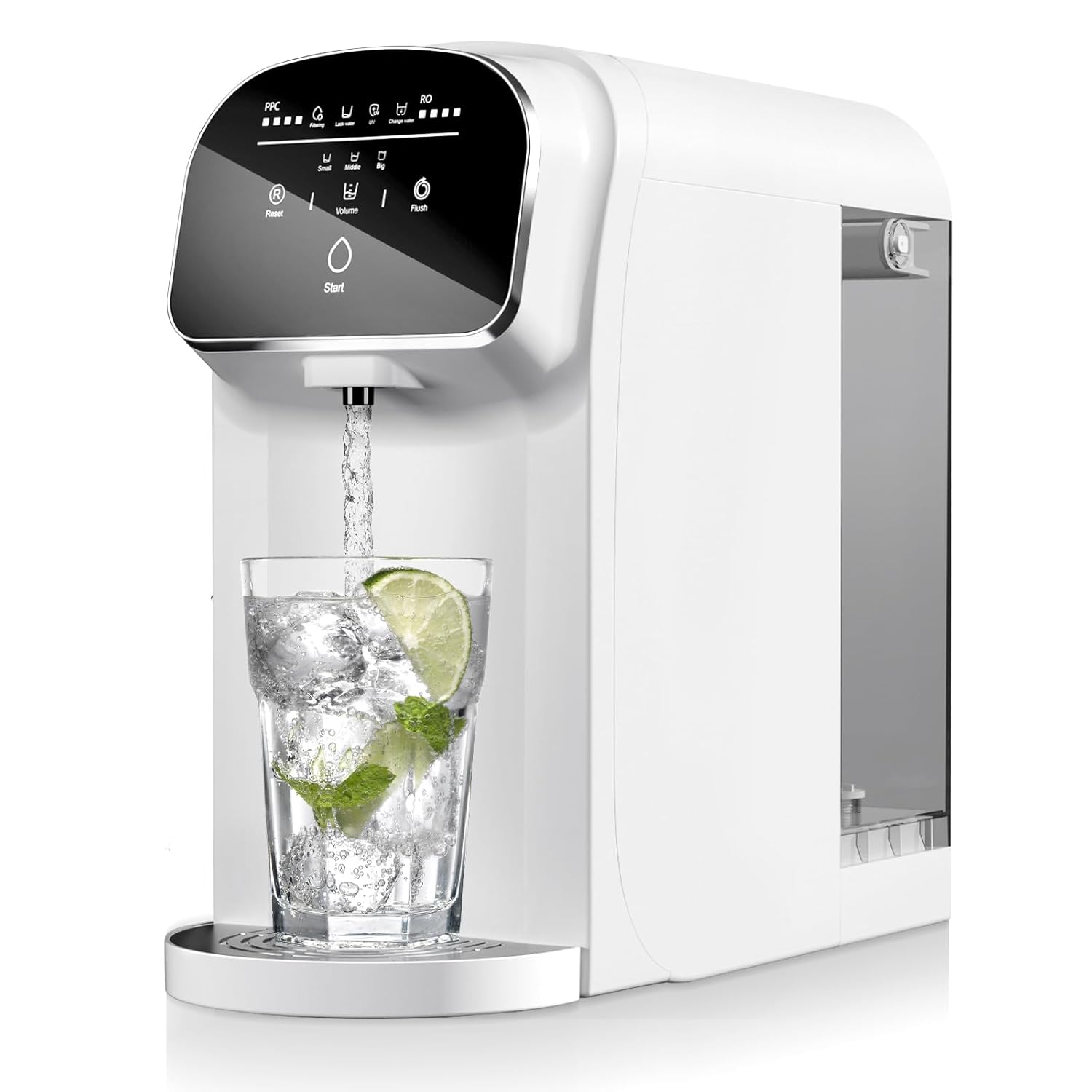
Aigerri Countertop RO TJYJ001
| Purification Method | Reverse Osmosis |
|---|---|
| Capacity | 5 liters |
| Other Special Features of the Product | 5 Stages RO Filter,5L Water Tank,5:1 Pure to Drain,Self Cleaning, Reduce TDS, Reduce PFAS,Water Volume Options, Change Filter Indicator |
| Installation Type | Countertop |
This countertop RO unit provides multi-stage purification without plumbing work — fill the 5L feed tank, plug it in, and the system delivers purified water to a separate purified-water tank. It uses a 5-stage process including PPC prefiltration, an RO membrane, and UV treatment, which together reduce TDS, PFAS, and other common contaminants while improving taste. The 5:1 pure-to-drain ratio is notably efficient for an RO unit and helps reduce wastewater compared with typical RO systems. The compact, countertop design and included pre-installed filters make setup simple for apartments, kitchens, offices, or RVs. Practical limitations include the need to refill the feed tank for larger households and occasional filter changes; the unit is portable but not intended for permanent under-sink installation. Expect routine filter maintenance and periodic UV component checks to keep performance reliable over time.
Best for: Home users who prioritize straightforward, reliable purified drinking water without plumbing changes and prefer a countertop, portable system that is easy to set up and maintain.
Less Ideal for: Large households or users wanting a permanently plumbed under-sink solution should consider built-in RO systems with higher flow and larger storage instead.
- Multi-stage purification combining PPC, RO membrane, and UV for broad contaminant reduction
- Plug-and-play countertop design requires no plumbing or professional installation
- 5:1 pure-to-drain ratio offers better water efficiency than many RO systems
- 5 liter feed tank plus separate purified-water tank provides ready access to chilled or ambient water
- Pre-installed filters simplify initial setup and first use
- 5L feed tank means frequent refills for larger families or high daily use
- Unit is countertop-only and not designed for permanent under-sink integration
Verdict: If you want a reliable, no-plumbing countertop RO system that delivers multi-stage purification and better-than-average water efficiency, this Aigerri unit is an easy plug-and-play choice.
ZeroWater 22-Cup Ready-Read Dispenser

| Capacity | 5.2 liters |
|---|---|
| Purification Method | Ion Exchange |
| Included Components | 22-Cup Dispenser, 5-Stage Filter, TDS Meter |
| Supported Water TDS Level Maximum (PPM) | 1 |
The ZeroWater 22-Cup Ready-Read dispenser is a countertop pitcher-style system that uses a five-stage ion-exchange filter to remove total dissolved solids and reduce contaminants like lead, chromium, PFOA/PFOS and mercury. It is used like a large water pitcher: fill the top reservoir, let water pass through the five-stage cartridge into the lower tank, and pour from the spout. The integrated TDS meter provides an instant readout so you can monitor when the filter needs replacing, and the ergonomic handle and 22-cup capacity make it suitable for families or small offices. Because filtration targets TDS and heavy metals, the result is very low dissolved solids and a noticeably cleaner taste compared with basic carbon pitchers. Limitations include the need to replace cartridges periodically and that flow rate depends on filter load, so refills are not instantaneous. The dispenser is plastic and countertop-focused rather than an under-sink or plumbed solution, which matters if you want a hands-off, high-throughput system.
Best for: Buyers who prioritize measurable contaminant reduction and want a countertop system offering clear, verifiable water quality results for household drinking use.
Less Ideal for: People seeking a plumbed, under-sink, or whole-house high-flow solution should consider a dedicated plumbed system instead.
- Five-stage ion-exchange filtration that targets total dissolved solids for very low TDS output
- Built-in TDS meter gives a simple, objective way to know when the filter needs changing
- Large 22-cup capacity reduces refill frequency for families or small offices
- IAPMO certification for reduction of lead, PFOA/PFOS, chromium and mercury
- Requires regular replacement filters and ongoing filter cost
- Slower fill-through rate compared with plumbed or fast-flow dispensers
Verdict: Choose this dispenser when you want a countertop filter that delivers very low TDS water with an easy-to-read TDS meter for confidence in contaminant reduction.
Brita Metro 6-Cup Pitcher

| Filter Life Cycle | 2 months |
|---|---|
| Maximum Flow Rate | 9.7 milliliters_per_second |
| Supported Water TDS Level Maximum (PPM) | 500 |
| Upper Temperature Rating | 85 °F |
| LowerTemperature Range | 32 °F |
The Brita Metro 6-cup pitcher delivers straightforward filtration for everyday drinking water needs. It uses a standard Brita filter (included) to reduce chlorine taste and odor, copper, mercury and cadmium, and the SmartLight change indicator times replacements to about every 40 gallons or two months under average use. Its space-saving shape and easy-fill lid make it fridge- and dorm-friendly, and the pitcher accepts most Brita standard filters and Elite options for longer life. Because it is a simple freestanding, no-power device, setup is instant and maintenance is limited to periodic filter swaps and rinsing. The practical downsides are obvious: capacity is modest for larger households and filtration is limited to the substances the filter is certified to reduce, so it is not a substitute for point-of-entry systems when broader contaminant removal is required. For everyday tap water taste and convenience, though, the Metro is a reliable, low-effort choice that keeps single-use bottles out of rotation.
Best for: Buyers who want a simple, low-maintenance way to improve tap water taste and reduce select contaminants without installing equipment or using electricity.
Less Ideal for: Homes needing whole-house or advanced contaminant removal, very large households that want higher capacity, or users who require certified removal of contaminants beyond the filter's scope should consider other systems.
- WQA and NSF/ANSI certified reductions for chlorine, copper, mercury and cadmium
- SmartLight filter indicator gives a precise reminder to replace the filter
- Compact, fridge-friendly design with easy-fill lid for convenient daily use
- Compatible with standard and Elite Brita filters for flexible replacement intervals
- Small 6-cup capacity may require frequent refills for families
- Does not remove all contaminants; performance limited to certified reductions
Verdict: A compact, certified pitcher that reliably improves tap water taste and reduces select heavy metals and chlorine with minimal fuss.
Choosing the Right Drinking Water Filter for Home Use: Key Factors to Consider
Filtration Technology and Certification
Different filtration media target different contaminants. Activated carbon is effective for chlorine, VOCs, and improving taste and odor, while reverse osmosis and specialized media handle dissolved solids and certain heavy metals. If microbial contamination is a concern, look for systems that address bacteria and cysts specifically.
Certifications from third-party labs or recognized standards bodies indicate that a system has been independently tested for specific reduction claims. Verification matters because manufacturers sometimes use broad language; certified claims give you measurable expectations about what contaminants will be reduced and by how much.
Installation Type and Home Compatibility
Filters come as countertop units, under-sink systems, faucet-mounted devices, and whole-home setups. Under-sink and under-counter systems keep the filter out of sight and usually supply a dedicated faucet, while countertop and faucet-mounted units are simpler to set up and require no permanent plumbing changes.
Consider available space, whether you can shut off the cold-water supply under the sink, and whether you prefer a permanent install. Some homes need adapters or minor plumbing work; others will only accept non-invasive solutions. Matching the installation type to your plumbing and lifestyle reduces surprises and additional labor.
Filter Life, Replacement Frequency, and Ongoing Cost
Filter cartridges have rated lifespans often given in gallons or months. A longer-rated filter reduces replacement frequency but may cost more upfront. You should estimate your household water use to project replacement intervals and annual costs.
Also check for ease of sourcing replacement cartridges and whether the system uses proprietary parts. Systems that require uncommon or expensive proprietary replacements raise long-term ownership costs and inconvenience.
Flow Rate and Household Capacity
Flow rate matters when multiple people use water at once or when you need water for cooking quickly. Point-of-use devices like under-sink filters and faucet attachments usually provide adequate flow for drinking and cooking, while whole-home systems must keep up with showers and laundry without pressure loss.
Check the system's rated flow at typical operating pressures and compare that to your household needs. Oversized capacity is not always necessary, but undersized units can cause frustration and interrupt routine tasks.
Maintenance Requirements and Ease
Maintenance involves filter changes, occasional sanitizing, and inspecting seals or hoses. Systems with tool-free access or twist-off cartridges reduce the time and likelihood of user error. Consider whether routine tasks like flushing, backwashing, or using sanitizing solutions are required and whether you are comfortable performing them.
Simpler maintenance reduces the chance of bacterial buildup and ensures the system continues to perform as rated. Clear manufacturer instructions and available customer support are practical benefits to look for.
Taste, Odor, and Practical Performance
Beyond lab metrics, a good home drinking water filter should noticeably improve taste and odor if those are issues in your supply. Activated carbon and blended media excel at removing chlorine and organic tastes, while membrane systems improve the perception of clarity and purity.
Practical performance also includes how the filter handles sediment or visual discoloration. Systems with pre-filters can extend the life of downstream media by catching larger particles first, which matters in homes with older plumbing or well water.
Common Contaminants Found in Home Tap Water
Tap water can contain a range of impurities depending on local source water and plumbing. Common concerns include chlorine, taste and odor compounds, sediment, lead and other heavy metals, volatile organic compounds, and microbial cysts. Knowing which issues are present in your supply guides the filter technology you should prioritize.
Obtain a recent water quality report from your supplier or use an at-home test to identify the most relevant contaminants. For private wells, professional testing is advisable because well water is more likely to have bacteria, nitrates, or high mineral content that need targeted treatment.
- Chlorine and chloramine affect taste and require specific media to remove.
- Lead and heavy metals need filtration media or membranes certified for those contaminants.
- Sediment and particulates are best addressed with pre-filters to protect finer media.
How Installation Choices Affect Daily Use
Installation determines the system's visibility, convenience, and permanence. Countertop and faucet-mounted units are easy to set up and ideal for renters or kitchens where alterations are not desired. Under-sink systems are more discreet and often provide higher capacity and dedicated faucets.
Whole-home systems protect every outlet but require more space, professional installation, and higher upfront effort. Think about how often you use filtered water for cooking, drinking, or beverage-making to decide if a single point-of-use is sufficient or if whole-house treatment is justified.
- Under-sink: permanent, often higher capacity, requires plumbing access.
- Countertop/faucet-mounted: simple install, portable, limited capacity.
- Whole-home: extensive coverage, professional install, treats showers and laundry.
Estimating Replacement Costs and Planning Maintenance
Estimate annual replacement costs by calculating your household water use and the filter's rated capacity. If a cartridge is rated for X gallons, divide that by your monthly use to determine when you will need replacements. Also account for any additional costs like seal kits or pre-filter replacements.
Set a maintenance schedule and mark calendar reminders for cartridge changes and periodic sanitizing. Regular upkeep prevents performance degradation and protects against bacterial growth inside housings and lines.
- Track gallons used or set calendar reminders based on months.
- Inspect seals and housings during each cartridge change to prevent leaks.
- Keep spare cartridges on hand if shipping delays are possible.
Point-of-Use Vs Whole-House: Matching Scope to Need
Point-of-use systems focus on drinking and cooking water and are cost-effective for improving taste and reducing specific contaminants at a single tap. Whole-house systems treat all incoming water and are better when issues affect bathing, appliances, or multiple fixtures.
Decide based on the severity and location of contaminants. For example, if the issue is chlorine taste in drinking water only, a point-of-use device is usually sufficient. If you have scale or iron issues affecting plumbing and laundry, whole-house solutions may be more appropriate.
- Point-of-use: lower cost, simpler maintenance, targeted treatment.
- Whole-house: broader protection, higher complexity, addresses plumbing-wide problems.
Water Testing and When to Involve a Professional
A basic at-home test kit can identify pH, hardness, chlorine, and some contaminants, but it may not detect low-level heavy metals or certain organic compounds. Use municipal water quality reports as a starting point and supplement with targeted lab testing when anomalies appear.
If testing reveals bacteria, high lead, or unexplained chemical contaminants, consult a water-treatment professional to determine appropriate system sizing and pre-treatment needs. Professionals can also advise on plumbing changes needed for under-sink or whole-house installations.
- Start with local water quality reports, then use targeted testing for specific concerns.
- Bring samples to a certified lab for accurate heavy-metal and organic contaminant analysis.
- Hire a professional for complex contamination or large whole-house systems.
How We Chose the Best Drinking Water Filter for Home Use
We prioritized filters that deliver reliable contaminant reduction, straightforward installation, and predictable ongoing costs. Our selection filtered for verified filtration technologies and certifications that address common home water issues such as sediment, chlorine taste and odor, heavy metals, and microbial risk. We also weighed flow rate and capacity so products are suitable for typical household demand without frequent interruptions. Practical maintenance factors were emphasized, including filter life, replacement frequency, and ease of access. We excluded systems that require frequent proprietary servicing, unclear filtration claims, or complex municipal plumbing alterations. Durability and materials that resist corrosion and bacterial buildup were considered, along with clear manufacturer guidance for replacement parts. Finally, we considered compatibility with common home setups, including under-sink, countertop, and whole-home options, and favored solutions that balance performance with reasonable upkeep. The result is a shortlist aligned with the scoring criteria below and useful for most households seeking improved tap water quality.
Our full evaluation process is outlined in our review methodology.
FAQ
How often should I replace filter cartridges in a home drinking water filter?
Replacement frequency depends on the cartridge rating and household water use. Many cartridges are rated by gallons or months; typical home use often leads to replacements every 3 to 12 months. Track your consumption and follow the manufacturer's guidance to maintain performance.
Can a drinking water filter for home use remove lead and other heavy metals?
Some filtration technologies and certified systems can reduce lead and certain heavy metals. Look for systems with independent certification for the specific contaminant you are concerned about, and verify the reduction claims before assuming a system will address heavy-metal issues.
Is professional installation necessary for under-sink or whole-house filters?
Under-sink installations are often doable for homeowners comfortable with basic plumbing, but whole-house systems typically require professional installation due to complexity and the need to maintain proper pressure. Professional help ensures correct sizing and proper connections to avoid leaks or performance issues.
Will a countertop or faucet-mounted filter impact water pressure?
Point-of-use devices usually have minimal impact on flow at a single tap, but very fine membrane systems or clogged cartridges can reduce pressure. Whole-house systems or undersized units are more likely to affect household water pressure if they are not properly matched to demand.
How can I tell if my filter is no longer working effectively?
Indicators include a return of unpleasant taste or odor, visible sediment in filtered water, significantly reduced flow, or reaching the recommended cartridge life. Regular testing or following a replacement schedule helps ensure continued effectiveness.
Final Verdict
Focus first on the contaminants you need to remove and the best filtration technology for those risks. Match the installation type to your household plumbing and daily habits, then evaluate ongoing costs and maintenance requirements to ensure the system remains effective over time. Prioritize certified reduction claims, reasonable filter life, and straightforward maintenance to get the most reliable long-term performance from a drinking water filter for home use.