
Note: This article contains affiliate links. If you click on these links and make a purchase, we may earn a small commission at no extra cost to you. This helps support our research and content. Read our full affiliate disclosure here.
If you make coffee at home, a grinder that is simple to disassemble and clean saves time and preserves flavor. The right easy-to-clean coffee grinder reduces leftover grounds, prevents stale-oil buildup, and keeps grind settings accurate from one batch to the next. This guide highlights seven shortlisted grinders that balance accessible maintenance with reliable grind performance. We evaluated each option for how quickly it comes apart, how thorough cleaning can be without tools, and whether parts are dishwasher-safe or wipe-clean. Read on to see the picks and the criteria we used to judge cleanup effort, grind consistency, and long-term maintenance needs.
Top Picks at a Glance
| Best Overall The best all-around choice for most situations | OXO Brew Conical Burr Grinder |  |
| Best Quality Built to a higher standard if you want something more solid | Baratza Encore Grinder ENCORE |  |
| Best Value The sweet spot between price and what you get | KRUPS F203 Electric Coffee Grinder |  |
| Best Budget The cheapest option that still gets the job done reliably | Amazon Basics Electric Coffee Grinder |  |
| Top Rated A top-rated pick with lots of positive feedback | Breville Smart Grinder Pro BCG820BSS | 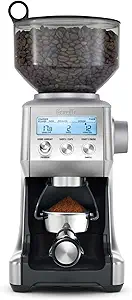 |
| Most Popular A crowd favorite that many people choose with confidence | Hamilton Beach Fresh Grind 80335 |  |
| Best Seller A high-volume bestseller chosen again and again | CEVING Mini Manual Coffee Grinder MCG-01 | 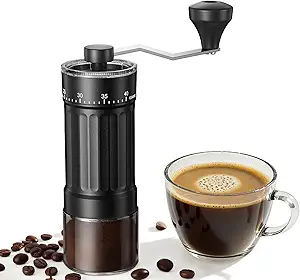 |
OXO Brew Conical Burr Grinder

| Capacity | 12 ounces |
|---|---|
| Burr Type | 40 mm stainless steel conical burrs |
| Grind Settings | 15 settings plus micro-adjustments |
| Power Source | DC power supply |
| Voltage | 120 volts |
The OXO Brew Conical Burr Grinder is a countertop electric grinder built around 40 mm stainless steel conical burrs and a user-friendly timed dial. It handles whole beans in its 12-ounce UV-tinted hopper and offers 15 grind settings with fine micro-adjustments so you can dial from espresso to French press. Operation is simple: choose a grind size, push the one-touch start and the grinder remembers your last timed setting for fast repeatability. The DC motor is designed for low vibration and relatively quiet mornings, and the removable hopper and grounds container make it straightforward to empty and wipe clean. Practical benefits include consistent, uniform grounds for better extraction and a large hopper so you refill less often. Important limitations are that it is an electric, countertop unit that needs countertop space and power, and very fine tuning beyond the provided micro-adjustments may still require trial and error for specialty brewing. Overall it is a reliable, easy-to-use grinder for everyday brewing that balances performance and convenience.
Best for: Buyers who want a straightforward, easy-to-clean electric grinder that delivers consistent daily performance across espresso to coarse brew methods and values repeatable, low-fuss operation.
Less Ideal for: People who need a portable or manual grinder for travel or those seeking a highly technical grinder with ultra-fine stepped electronic calibration.
- 40 mm stainless steel conical burrs for uniform grounds and consistent extraction
- 15 grind settings with micro-adjustments for a wide range of brew methods
- Large 12 oz removable hopper reduces refills and keeps beans protected with UV tint
- One-touch timed dial that remembers the last setting for quick, repeatable grinds
- Low-vibration DC motor designed to run quietly during morning use
- Requires countertop space and mains power so not suited to travel or purely manual setups
- Very fine incremental dialing for specialty extractions can still need trial and error
Verdict: A user-friendly conical burr grinder that balances consistent, cafe-style grounds with simple, easy-to-clean operation for everyday home brewing.
Baratza Encore Grinder ENCORE

| Wattage | 70 watts |
|---|---|
| Capacity | 5 ounces |
| Voltage | 120 volts |
The Baratza Encore is a straightforward conical-burr grinder built for consistent, everyday grinding across many brew styles. It uses 40mm commercial-grade conical steel burrs driven by a DC motor and offers 40 grind settings so you can dial in textures from French press to pour-over and near‑espresso coarse to fine ranges. Controls are simple: an on/off switch and a front-mounted pulse button for short bursts, which makes it easy to flush out grounds and keep things tidy during use. The hopper and grounds bin are removable for basic cleaning and the small footprint suits most countertops. Limitations include a modest 5 ounce capacity and a basic control scheme without timed dosing or built-in scales, so it is less convenient for hands-free espresso dosing or high-volume commercial work. For home brewers who value reliable grind consistency and simple maintenance, the Encore is a durable, no-frills choice.
Best for: Home brewers who prioritize consistent grind quality and straightforward, easy-to-clean operation over automated dosing features.
Less Ideal for: Users who need high-capacity hoppers, timed/programmable dosing, or a grinder optimized for heavy commercial use should look elsewhere.
- 40mm conical steel burrs provide consistent grind distribution for many brew methods
- Simple controls with pulse button make short cleaning bursts and flushing easy
- Compact footprint fits most kitchen counters
- Durable DC motor and quality burrs backed by manufacturer support
- No timed dosing or programmable settings for repeatable single-dose workflow
- Relatively small 5 ounce hopper limits batch size
Verdict: Choose the Encore if you want a dependable, easy-to-clean burr grinder that delivers consistent home-brewing results without fiddly automation.
KRUPS F203 Electric Coffee Grinder

| Wattage | 200 watts |
|---|---|
| Capacity | 85 g |
| Voltage | 240 volts |
The KRUPS F203 is a small, no-frills electric blade grinder aimed at everyday home use. It uses a 200W motor and stainless steel blades to pulverize beans or spices in seconds; grind time controls coarseness, so pressing a few seconds yields coarse grounds for French press while longer runs approach finer textures. The removable lid and simple open chamber make it quick to wipe out or brush clean after use, which is useful when switching between coffee and spices. Safety is built in with a lid-activated switch so the blades only run when closed. Its 3 ounce (85 g) capacity is convenient for up to about a dozen cups or for batch spice prep, but it is small if you regularly grind for large groups. As a blade grinder it cannot match burr grinders for uniform particle size, so expect some fines with finer settings. For buyers prioritizing easy cleaning and straightforward, reliable grinding for household batches, this unit delivers consistent daily performance in a compact footprint.
Best for: Buyers who want a compact, easy-to-clean grinder for daily home use and occasional spice prep and who value speed and simplicity over ultra-precise grind uniformity.
Less Ideal for: Users who need perfectly uniform grinds for espresso or who routinely grind large quantities for groups should consider a larger capacity burr grinder instead.
- Powerful 200W motor and stainless steel blades deliver fast grinding for beans and spices
- Removable lid and simple grinding chamber are easy to wipe or brush clean between uses
- One-touch operation with lid-activated safety makes it simple and safe to use
- Compact footprint fits on counters or stores easily in cabinets
- Blade grinder design produces less uniform grind size compared with burr grinders
- Small 3 oz capacity may require multiple batches for larger servings
Verdict: Choose this KRUPS if you want a fast, compact grinder that is easy to clean and ideal for everyday household coffee and spice grinding.
Amazon Basics Electric Coffee Grinder

| Capacity | 2.1 ounces |
|---|---|
| Voltage | 120 volts |
This compact Amazon Basics electric coffee grinder is a straightforward blade grinder for home use that handles coffee beans, spices, herbs, grains, and nuts. It grinds up to about 2.1 ounces (roughly 30 grams) in a single batch and can produce a usable grind for drip coffee in around 10 seconds, making it handy for quick morning brews or single-cup preparations. The stainless steel body and heavy-duty stainless steel blade feel durable and the clear safety lid makes it easy to watch progress and avoid over-grinding. Cleanup is simple because the grinding chamber is small and accessible, though like all blade grinders it does not produce consistently uniform particle sizes for precise brewing methods. It is small enough to store easily and runs on standard 120V power. The main compromises are batch size and grind consistency compared with burr grinders, but for buyers prioritizing easy cleaning, low cost, and fast single-batch grinding, it performs well.
Best for: Buyers who want an inexpensive, no-frills grinder for quick single-cup coffee, basic spice grinding, and easy cleanup rather than precision espresso or specialty brewing.
Less Ideal for: Enthusiasts seeking very consistent grind size for espresso, pour-over, or large batches should choose a burr grinder or larger-capacity model instead.
- Simple, fast grinding—can process ~30 g/1 oz in about 10 seconds
- Stainless steel blade and exterior for durability
- Clear safety lid lets you monitor grind progress
- Compact footprint that is easy to store and clean
- Blade grinder design yields uneven particle size compared with burr grinders
- Small capacity limits use to single cups or small batches
Verdict: A budget-friendly, easy-to-clean electric blade grinder that delivers fast single-batch grinding for everyday drip coffee and spices.
Breville Smart Grinder Pro BCG820BSS

| Wattage | 165 |
|---|---|
| Voltage | 120 |
| Capacity | 1.1 pounds |
| Bean Hopper Capacity | 18oz |
The Breville Smart Grinder Pro is a countertop conical burr grinder built for consistent, repeatable dosing across brew methods from espresso to French press. It grinds directly into a portafilter or an airtight container and uses a clear LCD to show grind setting, timed dose and number of shots or cups. The unit offers 60 distinct grind settings and precision digital timing adjustable in 0.2 second increments, so you can fine-tune dose and extraction without guesswork. Included portafilter cradles, a sealed grounds container and a brush make routine cleaning straightforward, and the stainless steel exterior wipes clean easily. At 165 watts with an 18 oz hopper it handles daily home use reliably, though the conical burr design and removable parts mean you should expect occasional disassembly to remove oily fines if you switch beans often. For buyers prioritizing dependability and easy maintenance, the Smart Grinder Pro balances precise control with simple cleaning steps, but professional shops may need a heavier duty commercial grinder.
Best for: Home users who want consistent, repeatable grinding and value a grinder that is straightforward to clean and maintain for daily use.
Less Ideal for: High-volume commercial operations or users who need a heavy-duty grinder built for continuous cafe throughput.
- Wide 60-step grind range for everything from espresso to French press
- Precision digital dosing adjustable in 0.2 second increments for repeatable shots
- Grinds directly into portafilter or airtight container for flexible use
- Stainless steel exterior and included brush/containers make daily cleaning simple
- Not a commercial-grade grinder for high-volume cafe use
- Requires occasional disassembly to remove oily buildup when switching beans
Verdict: If you want a reliable, easy-to-clean home burr grinder that delivers precise, repeatable dosing across brew methods, this Breville is a top choice.
Hamilton Beach Fresh Grind 80335

| Capacity | 4.5 ounces |
|---|---|
| Wattage | 125 watts |
| Power Source | AC |
| Material Type | Plastic, Stainless Steel |
The Hamilton Beach Fresh Grind is a small, straightforward blade grinder designed for everyday home use. It grinds coffee beans, spices, and seeds using stainless steel blades and a removable grinding bowl that lifts out for easy filling, pouring, and dishwasher cleaning. Its one-button press-and-release operation is intuitive for quick single-cup or full-pot prep, and the bowl holds enough grounds to brew up to twelve cups. Built-in cord storage keeps counters tidy and the 125-watt motor provides adequate power for typical beans and softer seeds. Because it is a blade grinder, grind size is less consistent than with burr grinders, so it is best for drip, French press, or general spice use rather than precision espresso. The compact footprint and quiet operation make it convenient for kitchens with limited space, and the durable stainless steel bowl and lid simplify cleanup compared with nonremovable designs.
Best for: Buyers who prioritize easy cleanup and simple daily use and want a compact grinder for drip coffee, French press, and kitchen spice prep backed by many positive user experiences.
Less Ideal for: Serious espresso drinkers or anyone needing very precise, uniform grind sizes for specialty brewing should consider a burr grinder instead.
- Removable stainless steel grinding bowl is dishwasher-safe for easy cleanup
- Simple one-button operation for quick, no-fuss grinding
- Compact design with hidden cord storage keeps counters tidy
- Stainless steel blades handle coffee, spices, and seeds
- Blade grinder produces less consistent grind size compared with burr grinders
Verdict: Choose this grinder when you want a compact, easy-to-clean everyday grinder that handles coffee and spices with minimal fuss.
CEVING Mini Manual Coffee Grinder MCG-01

| Material Type | Ceramic |
|---|---|
| Capacity | 30 g |
| Power Source | manual winding |
The CEVING Mini Manual Coffee Grinder is a small, travel-friendly hand mill that grinds beans with ceramic conical burrs and an external 40‑setting adjustment ring. You use it by loading up to 30 g of beans, turning the handle, and selecting grind size from fine to coarse for espresso, pour‑over, or French press. The external adjustment makes changes quick and keeps grounds contained compared with internal mechanisms, and the ceramic burrs reduce heat and produce a consistent grind for better flavor preservation. It disassembles into three main parts plus a lid, so brushing out grounds is straightforward and cleaning avoids water per the manufacturer's guidance. The trade-offs are its limited 30 g capacity and manual operation, which means slower grinding and smaller batches compared with electric grinders, and ceramic burrs can be more fragile than steel if dropped. For customers prioritizing portability and easy maintenance, this grinder offers precise, low‑heat grinding in a compact package.
Best for: Buyers who want a reliable, low‑maintenance grinder for travel or occasional home use and value precise, easy-to-adjust grind settings without electricity.
Less Ideal for: People who routinely grind large daily quantities or need fast, hands‑free grinding should consider a larger electric grinder instead.
- External 40‑step grind adjustment for quick, visible setting changes
- Ceramic conical burrs deliver uniform grind and lower heat generation
- Simple three‑part disassembly makes dry cleaning and brushing easy
- Compact, lightweight design suited for travel and small kitchens
- 30 g capacity limits batch size for larger households
- Manual winding is slower and requires physical effort compared with electric models
Verdict: Choose this grinder if you want a compact, easy-to-clean manual mill with precise external grind adjustment and ceramic burrs for flavor-preserving results.
Choosing the Right Easy-to-Clean Coffee Grinder: Key Factors to Consider
Disassembly and Access
How easily the grinder comes apart determines how often you will actually clean it. A design that requires only a few twists or one release button encourages routine maintenance while models that need screwdrivers or technical steps usually get neglected.
Good access means the hopper, burr set or blade, and grounds catcher can be removed without tools. That reduces the risk of damaging small fasteners and makes it practical to clean after each use if you prefer. Consider also whether the manufacturer provides a simple diagram or labeling to guide disassembly.
Burr Type and Serviceability
Burr geometry and how the burrs are mounted affect how easily oils and fines are removed. Conical and flat burrs both trap oils differently, and designs that allow the burr set to lift out are easier to clean thoroughly.
Look for grinders where the burrs are not permanently enclosed or glued into place, and where replacement burrs or rebuild kits are accessible. Serviceable burrs extend useful life and let you restore peak performance without replacing the whole unit.
Containment of Fines and Static
Fine particles and static cling create extra cleanup work. Grinders that channel grounds into a sealed cup or portafilter holder reduce mess on the countertop. Anti-static materials or coatings and well-shaped chutes minimize cling and spillage when you remove the grounds container.
Evaluate how the grinder collects and releases grounds during normal use and after cleaning. Models that leak fines around seals or into crevices will demand more frequent deep cleaning.
Materials and Finish
The materials used in removable parts determine how easy they are to clean and how they age with repeated washing. Stainless steel, hard plastics with smooth finishes, and anodized aluminum resist oil staining and are less likely to retain odor.
Avoid textured plastics or porous materials in areas that contact grounds. Dishwasher-safe parts can simplify cleaning but check that finishes and seals are rated for repeated dishwasher cycles to prevent warping or seal failure.
Maintenance Requirements and Tools
Some grinders include brushes or packing tools to help remove stuck grounds, while others rely on compressed air or disassembly. Consider the routine maintenance steps the design expects and whether those steps fit your habits.
If the grinder requires specialized tools or routine calibration after cleaning, factor that into your decision. Simpler maintenance routines lead to more consistent real-world use and lower lifetime hassle.
Adjustment Stability
A grinder that holds its setting after cleaning is less frustrating to use. If disassembly or reassembly shifts the calibration or requires re-tuning, you will spend more time dialing in grind size and less time brewing.
Look for clear indexing marks, positive stops, or mechanisms that separate the adjustment ring from removable components so you can clean without altering your preferred setting.
Cleaning Frequency: Daily Wipe Vs Deep Clean
Daily maintenance usually consists of emptying the grounds container and giving exposed surfaces and the chute a quick brush or wipe. This prevents accumulation of stale oils and keeps the grinder ready for the next use without a full teardown.
Deep cleaning should be performed on a schedule based on how often you grind and the roast level you use. Oily dark roasts will require more frequent deep cleans than light roasts. Deep cleaning includes removing the burrs or blade, brushing or rinsing removable parts, and checking seals for wear.
- Daily: Empty grounds container, brush chute, wipe hopper exterior
- Weekly: Remove hopper and wipe inside, brush burrs
- Monthly or as needed: Remove burrs for a full brush and inspection, wash removable cups
Tools and Consumables That Make Cleaning Easier
A small stiff brush sized for burrs, a soft-bristled brush for chutes, and a microfibre cloth are the core tools for routine cleaning. Some owners also keep a can of compressed air for stubborn fines, though air can push grounds into crevices if used carelessly.
Neutral dish soap and warm water are usually sufficient for washable parts, but always confirm compatibility. Food-safe cleaning powders or tablets exist for removing coffee oils from removable plastic parts; follow manufacturer guidance on compatibility and frequency.
- Burr brush sized to the grinder
- Microfibre cloth and mild detergent
- Compressed air for blowout jobs, used sparingly
Drying and Reassembly Best Practices
After washing removable parts, ensure full drying before reassembly to avoid moisture contacting stored beans or grounds. Use a lint-free towel and allow parts to air dry upright if possible.
When you reassemble, confirm seals and gaskets sit in their grooves and that burrs or blades are seated correctly. Take note of any indexing marks so you return the adjustment to the prior setting. A quick test grind after reassembly verifies that everything is aligned and operating smoothly.
- Dry all parts completely before reassembly
- Check seals and indexing marks
- Run a short test grind to confirm settings
When to Replace Wear Parts
Even the easiest-to-clean grinders have wear parts that need eventual replacement. Burr edges dull over time and gaskets or seals can harden or tear, increasing leakage and making containment less reliable. Tracking changes in grind uniformity, increased fines, or unusual noise can indicate it is time to service the unit.
Designs that offer user-replaceable burrs or simple spare gaskets extend the lifetime of the grinder. Keep an eye on part availability and how easy it is to source replacements when evaluating long-term ownership costs and effort.
- Monitor grind consistency for dullness
- Inspect gaskets and seals periodically
- Plan for eventual burr replacement
Balancing Cleanup and Performance
The easiest-to-clean grinders are not always the lowest maintenance in terms of performance. Some designs trade a tightly enclosed burr chamber for improved containment, which can complicate access. Consider how much cleaning you are willing to do to achieve the grind quality you need.
If you prioritize minimal downtime and quick cleanup, favor models with tool-free removable burrs and smooth internal finishes. If you prioritize espresso-level uniformity and do not mind a slightly more involved cleaning routine, be prepared to accept a deeper teardown schedule.
- Tool-free removable parts speed cleanup
- Enclosed designs improve containment but may need more steps to clean
- Match cleanup effort to your brewing routine and desired grind quality
How We Chose the Best Easy-to-Clean Coffee Grinder
We selected grinders that prioritize rapid, repeatable cleaning without sacrificing grind consistency. Core evaluation criteria included how easily the burrs or blades are accessed for brushing and rinsing, whether critical parts detach without tools, the presence of materials resistant to oil buildup, and the availability of replaceable or washable components. We also considered how well a grinder keeps grind settings stable after cleaning and whether manufacturers provide clear cleaning instructions or included cleaning tools. Products were excluded if maintenance required specialist tools, if internal parts were permanently sealed with no realistic cleaning access, or if cleaning steps routinely risked voiding the warranty. We favored designs with clear serviceability: removable hoppers, burrs that lift out, catch cups that detach for rinsing, and finishes that resist retaining fine grounds. Durability under routine cleaning and the ability to restore near-new performance after a full cleanup were key decision drivers.
Our full evaluation process is outlined in our review methodology.
FAQ
How often should I deep clean my coffee grinder?
It depends on use and roast level. For daily use with dark roasts, deep cleaning every 2 to 4 weeks is common. Lighter roasts and less frequent use can extend that interval. Regular quick brushing helps reduce the need for full teardowns.
Can I wash grinder parts in the dishwasher?
Some removable parts are dishwasher-safe, but many manufacturers recommend hand washing to avoid warp and seal damage. Always check which components are rated for the dishwasher before placing them inside.
Will cleaning change my grind settings?
Proper cleaning should not permanently alter grind settings if the adjustment mechanism is separate from removable parts. However, disassembly and reassembly can shift calibration if parts are not reseated correctly, so note indexing marks and run a test grind after cleaning.
Can I use compressed air to clean my grinder?
Compressed air can blow out trapped fines but should be used carefully. It can push grounds into inaccessible crevices if aimed improperly. Use short bursts and combine with brushing for best results.
What signs show my burrs need replacing?
Signs include a decline in grind uniformity, more fines than before, longer grading times, or unusual noise during grinding. If cleaning does not restore consistent particle size, burr wear is likely and replacement should be considered.
Final Verdict
Prioritize grinders that make routine access and burr removal straightforward, because ease of cleaning directly affects performance and how often you maintain the unit. Balance containment features that reduce countertop mess with the practicality of reaching and servicing internal parts. Finally, favor designs that keep adjustment settings separate from removable components so you can clean without constant re-tuning. By focusing on serviceability, materials, and adjustment stability, you can choose an easy-to-clean coffee grinder that keeps your coffee tasting fresh with minimal hassle.