
Note: This article contains affiliate links. If you click on these links and make a purchase, we may earn a small commission at no extra cost to you. This helps support our research and content. Read our full affiliate disclosure here.
If you want fresh homemade bread without a steep learning curve, an Easy-to-Use Bread Maker can make the process straightforward and repeatable. You will get dependable mixing, kneading, rising, and baking with minimal fiddling so you can focus on ingredients and timing rather than complex programming. This guide presents seven shortlisted, top-rated machines chosen for simplicity, consistent loaf results, and straightforward maintenance. Below we explain the practical reasons ease of use matters, outline the features we prioritized, and show which models perform best for quick weekday baking, hands-off weekend baking, and small-kitchen setups.
Top Picks at a Glance
| Best Overall The best all-around choice for most situations | Zojirushi Home Bakery Supreme BB-CEC20 |  |
| Best Quality Built to a higher standard if you want something more solid | Breville Custom Loaf BBM800XL | 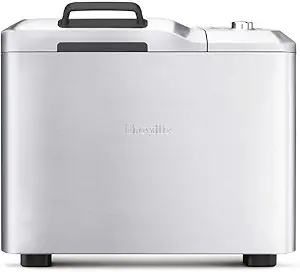 |
| Best Value The sweet spot between price and what you get | KITCHENARM 29‑in‑1 Bread Machine |  |
| Best Budget The cheapest option that still gets the job done reliably | Elite Gourmet Programmable Bread Maker |  |
| Top Rated A top-rated pick with lots of positive feedback | Zojirushi Home Bakery Virtuoso Plus BB-PDC20BA |  |
| Most Popular A crowd favorite that many people choose with confidence | Cuisinart Bread Maker CBK-110P1ES |  |
| Best Seller A high-volume bestseller chosen again and again | OSIPOTO 2LB Bread Maker BM8205 | 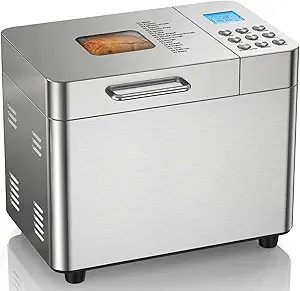 |
Zojirushi Home Bakery Supreme BB-CEC20

| Capacity | 2 pounds |
|---|---|
| Wattage | 700 watts |
| Voltage | 120 volts |
| Number of Programs | 10 |
The Zojirushi Home Bakery Supreme is a straightforward, well-built bread maker aimed at home bakers who want reliable results without fuss. It handles a wide range of recipes — basic and whole wheat loaves, cakes, dough, jam, and even sourdough starter — using ten preset programs and a quick-bake option for faster results. The 2-pound rectangular pan produces even, tall loaves with adjustable crust shade and a nonstick interior that eases removal and cleanup. The easy-to-read LCD and 13-hour delayed start make it simple to schedule fresh bread for mornings or dinner, and the unit's 700-watt motor is powerful enough for consistent kneading. Practical limitations include a single loaf pan shape and a relatively heavy, larger footprint that may not suit very small counters, and some users prefer manual control for artisan-style loaves. For everyday use the Home Bakery Supreme balances convenience, versatility, and dependable baking performance.
Best for: Buyers who want an easy-to-use, dependable all-purpose bread maker that handles everything from basic loaves to jam and dough with straightforward controls and reliable results.
Less Ideal for: If you prioritize small countertop appliances, need multiple loaf shapes, or bake artisan-style breads that require manual shaping and ovens, this unit is not the best fit.
- Versatile program set including bread, cake, jam, dough and sourdough starter
- Adjustable crust shade for customized browning
- 2-pound capacity for family-size loaves
- Nonstick inner pan simplifies loaf removal and cleaning
- 13-hour timer and clear LCD for convenient delayed baking
- Only a single rectangular loaf shape is available
- Relatively heavy and sizable footprint may limit countertop placement
Verdict: A reliable, easy-to-use all-purpose bread maker that delivers consistent 2-pound loaves and flexible preset baking for everyday home baking.
Breville Custom Loaf BBM800XL

| Capacity | 2.5 pounds |
|---|---|
| Wattage | 830 watts |
| Number of Programs | 13 |
| Voltage | 120 volts |
The Breville Custom Loaf BBM800XL is a feature-rich bread machine aimed at people who want control over loaf results without manual oven baking. It offers 13 programs including gluten-free, jam, dough, and two knead/bake program modes plus nine custom settings you can save for repeat recipes. A collapsible kneading paddle mixes ingredients on a platform and folds away before baking so the finished loaf has fewer holes, and an automatic fruit and nut dispenser times mix-ins precisely. The clear LCD makes it easy to monitor progress and the unit includes 60 minutes of power-backup protection if your electricity dips. In practice it produces consistent crust color across three settings and handles both basic and specialty loaves well, though the machine is fairly heavy and takes up counter space. Care requires hand washing a few parts. If you want a controllable, dependable automatic maker that produces bakery-style loaves with minimal fuss, this model delivers; if you need the lightest or most compact option, consider smaller machines instead.
Best for: Buyers who prioritize consistent, bakery-style loaves and want program flexibility with the ability to create and save custom recipes without hands-on oven work.
Less Ideal for: People who need an ultra-compact or lightweight machine for small kitchens or who prefer fully dishwasher-safe parts should look elsewhere.
- Wide selection of automatic programs plus nine custom recipe slots for repeatable results
- Collapsible kneading paddle that folds away to reduce holes in the finished loaf
- Automatic fruit and nut dispenser for timed mix-ins
- Clear LCD that shows program progress and settings
- 60 minutes of power interruption protection to preserve in-progress bakes
- Relatively heavy and takes significant counter space
- Some parts require hand washing rather than full dishwasher convenience
Verdict: Choose the Breville Custom Loaf BBM800XL if you want a high-performance, programmable bread maker that produces bakery-quality loaves with minimal hands-on effort.
KITCHENARM 29‑in‑1 Bread Machine

| Voltage | 120 volts |
|---|---|
| Capacity | 2 pounds |
| Wattage | 550 watts |
| Number of Programs | 29 |
This KITCHENARM bread machine is built to make home baking simple for both beginners and more experienced users. It offers 29 automatic programs covering basic breads, whole wheat, gluten free, plus non-bread options like cake and jam, and a HOME MADE menu that lets you program cycle-level times for knead, rest, rise, and bake. Practical conveniences include three loaf sizes (2 lb, 1.5 lb, 1 lb), three crust color settings, a 15-hour delay timer, a 1-hour keep-warm function, and alarms for adding nuts or removing the paddle. The 2.5-inch LCD and saved presets make repeat batches essentially one-press operations once you dial in a recipe. The stainless steel housing and a food-grade nonstick pan make cleaning and durability straightforward, though the pan requires hand washing. This model runs on 120V at 550W and is ETL certified for North American use. Its strengths are ease of use, wide program variety, and advanced customization for users who want to tweak results; it is less suitable if you need a fully dishwasher-safe machine or a very compact footprint.
Best for: Buyers who want an easy-to-use machine that also offers room to customize recipes and streamline repeat baking, prioritizing functionality and consistent results.
Less Ideal for: People who need a very small or fully dishwasher-safe bread maker or those who require a 230V European power model.
- Wide selection of 29 automatic menus including gluten free and specialty breads
- HOME MADE programmable menu allows cycle-level customization for custom recipes
- Three loaf sizes and three crust color settings for flexible batch control
- Saved presets and large LCD make repeat baking quick and effectively one-press
- ETL certified and stainless steel build for safe everyday kitchen use
- Bread pan requires hand washing rather than being dishwasher-safe
- Relatively heavy and not the most compact option for small counters
Verdict: Choose this machine if you want a straightforward, beginner-friendly bread maker that also gives you advanced program customization and saved presets for repeatable homemade loaves.
Elite Gourmet Programmable Bread Maker

| Capacity | 2 pounds |
|---|---|
| Wattage | 550 watts |
| Number of Programs | 19 |
| Voltage | 120 volts |
The Elite Gourmet Programmable Bread Maker is a straightforward countertop machine that handles kneading, rising, and baking with minimal fuss. You add ingredients, pick one of 19 programs (including gluten-free, whole wheat, dough, and jam), set the loaf size and crust darkness, and the unit completes the cycle; a 15-hour delay timer and 60-minute keep-warm feature let you time fresh bread for breakfast. The 2 lb maximum loaf and three size options make it flexible for singles or families, and the nonstick pan plus included measuring tools simplify cleanup and setup. At 550 watts it uses far less energy than a full oven, and the aluminum construction keeps the price and weight down. Limitations include basic controls without a touchscreen and fewer advanced customization options for serious bakers, and larger or artisan-style loaves are not supported. For budget-minded cooks who want reliable, everyday homemade bread without a steep learning curve, this machine delivers consistent results.
Best for: Buyers seeking an affordable, easy-to-use machine that consistently produces fresh bread with minimal hands-on time and simple settings.
Less Ideal for: Bakers who want full manual control over knead/rise cycles, large artisanal loaves, or a premium touchscreen interface should look at higher-end models.
- Wide range of 19 one-touch programs including gluten-free and dough settings
- Three loaf size options up to 2 pounds for portion flexibility
- 15-hour delay timer and 60-minute keep-warm for scheduled baking
- Energy-efficient compared with using a full oven
- Includes nonstick pan and basic measuring accessories for easy setup
- Controls are basic push-button style without advanced customization
- Not suitable for large or artisan-style loaves
Verdict: A budget-friendly, easy-to-use bread maker that reliably bakes everyday loaves with one-touch presets and a convenient delay timer.
Zojirushi Home Bakery Virtuoso Plus BB-PDC20BA

| Capacity | 2 pounds |
|---|---|
| Wattage | 700 watts |
| Voltage | 120 volts |
| Number of Programs | 7 |
The Zojirushi Home Bakery Virtuoso Plus is a straightforward, reliable breadmaker designed to produce consistently well-browned, 2-pound loaves with minimal fuss. You add measured ingredients, choose from seven programs using the clear LCD control panel, and the machine handles mixing, dual-blade kneading, rising, and baking. Dual heaters in the lid and base give even browning and a better crust, and the unit offers specialty settings such as gluten-free, whole wheat, rapid whole wheat, and vegan plus three crust shade options. A 13-hour delay timer and rapid cycles (as fast as about 2 hours 25 minutes) make it easy to have fresh bread on a schedule, and the removable nonstick pan and included measuring tools simplify cleanup and setup. At 700 watts it bakes reliably but is a heavier countertop appliance, so it sits best in a permanent spot. It does not replace an oven for very large or artisan loaves, but for everyday home baking where ease of use and consistent results matter, it performs admirably.
Best for: Buyers who want a no-nonsense, dependable machine that produces consistent, bakery-style 2-pound loaves with preset programs and a simple control panel.
Less Ideal for: Bakers seeking a lightweight, highly portable unit or those who want to make larger or non-rectangular artisan loaves should look elsewhere.
- Dual heaters and double kneading blades for even baking and thorough dough development
- Multiple preset programs including gluten-free and whole wheat for versatile, healthy loaves
- 13-hour delay timer and rapid bake option for scheduled or fast bread baking
- Large viewing window and user-friendly LCD for easy monitoring and selection
- Relatively heavy and bulky compared with compact countertop models
- Limited to rectangular 2-pound loaves so not suitable for larger or artisan-shaped breads
Verdict: Choose this Zojirushi if you want an easy-to-use, reliable breadmaker that consistently produces well-browned 2-pound loaves with minimal intervention.
Cuisinart Bread Maker CBK-110P1ES

| Capacity | 2 pounds |
|---|---|
| Wattage | 550 watts |
| Number of Programs | 12 |
| Voltage | 120 volts |
The Cuisinart CBK-110P1ES is a compact, fully automatic bread machine that mixes, kneads and bakes up to a 2-pound loaf with minimal hands-on time. You pick a program on the LCD and the machine runs a full cycle — options include basic, whole wheat, dough, cake and gluten-free among 12 preset menus — and you can select three crust shades and three loaf sizes. Practical touches include an audible cycle beep, a 60-minute keep-warm and a 13-hour delay-start so bread can be ready when you want it. The vertical nonstick pan is removable for easier cleaning and the unit's footprint is small enough for most countertops. Limitations are typical for vertical loaf machines: the shape is tall and narrow compared with artisan oven loaves, and you may need to tweak recipes or hydration for very dense or specialty breads. For everyday home loaves, quick breads and doughs, it delivers reliable, easy results with straightforward controls.
Best for: Buyers who want an easy, reliable machine to produce fresh home loaves with minimal fuss and clear controls, and who value proven performance and straightforward presets.
Less Ideal for: Bakers focused on wide, artisan-style freeform loaves or users who need a multi-appliance countertop unit with extra baking capacity.
- 12 preprogrammed menus cover basic, whole wheat, gluten-free, dough and cake functions
- Three loaf sizes and three crust color settings for customization
- 13-hour delay-start and 60-minute keep-warm let you time fresh bread for meals
- Compact footprint fits most counters and has a removable nonstick pan for easier cleanup
- Vertical loaf shape is narrower and taller than oven-baked artisan loaves
- Requires recipe adjustments for some specialty or very wet doughs
Verdict: Choose this Cuisinart if you want a compact, easy-to-use bread maker that reliably produces customizable home loaves with minimal effort.
OSIPOTO 2LB Bread Maker BM8205

| Capacity | 2 pounds |
|---|---|
| Wattage | 600 watts |
| Number of Programs | 17 |
| Voltage | 120 |
The OSIPOTO BM8205 is a beginner-friendly bread machine that automates mixing, kneading, rising, and baking with minimal input. You add ingredients, choose one of 17 programs (including basic, whole wheat, gluten-free, jam, and cake), and the unit handles the rest; it also supports three loaf sizes and three crust darkness settings for simple customization. The 600 W motor claims 360 degree heat distribution for even crust color and the unit includes a 15-hour delay timer plus a keep-warm function so you can schedule fresh bread for morning or evening. Practical touches include a removable nonstick pan for easier cleanup, an LCD display and straightforward controls aimed at first-time users, and built-in overheat protection. The machine is compact but makes full 2 lb loaves, though it does require hand washing for some parts and produces modest noise during operation. For buyers who want an uncomplicated way to bake a variety of loaves without mastering baking technique, it delivers dependable, repeatable results.
Best for: Buyers who prioritize a simple, reliable appliance that walks them through every step and delivers consistent home-baked loaves with minimal fuss.
Less Ideal for: Experienced bakers who want full manual control over fermentation and shaping or users seeking a fully silent appliance for overnight operation.
- 17 preset programs cover basic, whole wheat, gluten-free, jam, cake and more for flexible baking
- Large 2 lb capacity with three loaf size and crust color options for family-sized loaves
- 15-hour delay timer and keep-warm function let you schedule fresh bread when needed
- Removable nonstick pan simplifies cleanup and loaf removal
- Stainless steel exterior and overheat protection improve durability and safety
- Some parts require hand washing rather than being dishwasher-safe
- Produces moderate operational noise around 50 decibels during use
Verdict: A straightforward, safety-minded bread maker that makes fresh, family-sized loaves with minimal effort, ideal for risk-averse home bakers.
Choosing the Right Easy-to-Use Bread Maker: Key Factors to Consider
Control Layout and Presets
A simple control layout reduces mistakes and shortens the learning curve. Look for clearly labeled buttons, an easy-to-read display, and a handful of useful presets such as basic white, whole wheat, French, and quick-bake. Presets that match common recipes let you skip manual time and temperature adjustments and get a good loaf with minimal effort.
Controls that provide visual feedback during mixing and rising help you spot problems early. If a machine uses icons instead of text, verify the manual explains each icon plainly.
Kneading and Mixing Reliability
Reliable mixing produces even gluten development and a uniform crumb. Check that the machine's paddle or kneading mechanism engages securely and turns without binding. A well-designed paddle minimizes dough clinging and leaves fewer nooks where flour and dough can accumulate.
The kneading profile matters for ease of use because machines that overwork or underwork dough require recipe tweaks. A consistent, middle-ground knead cycle will yield good results for most simple bread recipes without forcing you to experiment extensively.
Loaf Size and Shape Options
Different households want different loaf sizes. A machine that offers at least two loaf-size settings gives flexibility for single cooks or family-sized loaves. Size options affect rise behavior and baking time, so machines with clear loaf-size choices make it easier to pick the appropriate preset.
Shape is also a consideration when you plan to slice bread for sandwiches or toast. Machines that produce a predictable rectangular loaf save time when you are preparing meals and help ensure consistent slices.
Cleaning and Removable Parts
Easy-to-remove pans and paddles make cleanup fast and reduce the dread factor that keeps machines unused. Nonstick coatings speed cleanup, but verify that the coating is durable and can withstand routine washing. Removable parts that are dishwasher safe or rinse clean under warm water simplify maintenance.
Consider how easy it is to access tight areas where dough can hide. Machines with fewer seams and simple pan attachment mechanisms are faster to clean and keep hygienic in everyday use.
User Documentation and Recipe Support
Clear manuals and a helpful recipe booklet shorten the trial-and-error period. Good documentation explains preset choices, ingredient order, and troubleshooting tips for common issues like dense loaves or collapsed rises. Recipes adjusted for the specific machine take the guesswork out of hydration and timing, which is especially valuable for beginners.
Online resources such as downloadable recipe cards or community-shared programs are a bonus, but a straightforward printed guide should be the baseline for an Easy-to-Use model.
Noise, Footprint, and Daily Convenience
Noise level and physical size affect whether you will use the machine regularly. Quieter motors make early-morning cycles less disruptive, while a compact footprint helps in small kitchens where counter space is limited. Consider how easy it is to store the machine and whether it has handles or a light weight for moving it in and out of cabinets.
Convenience features such as a delayed start timer, keep-warm function, and an audible end signal can make the machine integrate better into daily routines without adding complexity.
Why Ease of Use Matters for Home Bread Baking
Simple operation lowers the barrier to baking regularly. If you can program a loaf in under a minute and trust the machine to handle timing and temperature, you are more likely to bake fresh bread often. Ease of use reduces mistakes that lead to dense or underbaked loaves, saving time and ingredients.
Plain controls also help when you want to experiment. When the base functions are intuitive, you can focus on ingredient changes like flour blends or add-ins without struggling with the machine's menu system.
- Fewer steps reduce user error
- Clear presets speed routine baking
- Straightforward cleanup encourages frequent use
Quick-Bake and Timing Considerations
Quick-bake cycles are handy when you need a loaf within a few hours, but they often require different hydration or ingredient timing. Machines that label quick-bake options and adjust knead and bake profiles accordingly will produce better results with less guesswork.
Delayed-start timers are useful for scheduling baking so fresh bread is ready at mealtime. Make sure you understand how long perishable ingredients like milk or eggs can safely sit in the pan when using delayed start, and follow the manufacturer's guidance for unattended cycles.
- Use quick-bake for time-sensitive needs
- Delayed start needs care with perishable additives
- Plan for cooling time before slicing
Cleaning Tips to Keep an Easy Machine Easy
Remove the loaf pan as soon as it cools enough to handle and loosen the paddle while the bread is warm to reduce stuck dough. Soak pans briefly if dough residue has hardened, then wipe clean with a soft sponge. Avoid abrasive cleaners that can damage nonstick surfaces.
Wipe the interior and exterior after each use to prevent flour buildup. Check the manufacturer's guidance for dishwasher-safe parts; even if parts are dishwasher safe, hand washing often preserves coatings longer.
- Loosen paddle while warm for easier removal
- Avoid abrasive sponges on nonstick pans
- Wipe interior to prevent flour buildup
Simple Recipe Adjustments for Reliable Results
Small adjustments to flour hydration, yeast amount, or mix-in timing can rescue a loaf that is too dense or too crumbly. If a loaf is consistently heavy, try slightly reducing flour or increasing liquid in small increments. For better rise, check yeast freshness and consider a warmer proofing spot in cool kitchens.
When adding seeds, nuts, or dried fruit, use the machine's add-in beep if available. Otherwise, add these mix-ins toward the end of the kneading cycle to prevent them from breaking down or causing uneven texture.
- Tweak hydration in 5 percent steps
- Use add-in beep or add late in knead cycle
- Keep yeast fresh for predictable rise
Storage and Small Kitchen Strategies
If counter space is limited, choose a compact model that fits under cabinets or on a pantry shelf. Look for a machine with a weight you can lift comfortably and consider one with a flat top that doubles as a temporary prep surface.
For occasional bakers, store the machine in an accessible spot rather than tucked away in a hard-to-reach place. Easy access increases the likelihood of regular use and preserves the convenience that made you buy the machine in the first place.
- Prefer compact footprint for small kitchens
- Choose manageable weight for easy storing
- Store where you will actually use it
How We Chose the Best Easy-to-Use Bread Maker
We evaluated machines through a buyer-focused filter that prioritizes real-world ease of use and consistency. Key evaluation criteria included control simplicity and presets, how reliably each machine produced even loaves across different recipes, and the clarity of user interfaces and documentation. We also considered cleaning and maintenance complexity, since machines that are easy to keep clean stay easy to use over time. Build quality and durability were assessed with attention to components that affect everyday operation such as paddle attachment design and loaf pan stability. Finally, we checked program flexibility for basic variations like crust darkness, loaf size, and quick-bake options so the machine is usable by cooks with different needs. We excluded overly complex models with steep programming requirements, specialty machines designed only for unconventional doughs, and units lacking clear user guidance. The resulting list favors reliable, user-friendly designs that make fresh bread simple for home bakers.
Our full evaluation process is outlined in our review methodology.
FAQ
Can I use fresh yeast or instant yeast in an Easy-to-Use Bread Maker?
Both fresh and instant yeast can work, but instant yeast is more forgiving for machine cycles because it mixes directly with dry ingredients. If using fresh yeast, dissolve it properly and follow recommended quantities since machine cycles are tuned for standard yeast performance.
How often should I clean the paddle and pan?
Clean the pan and paddle after each use to prevent dough buildup and off flavors. Wipe the interior after each bake and perform a deeper clean periodically to remove any stuck residue and keep moving parts working smoothly.
Will quick-bake cycles produce the same quality as standard cycles?
Quick-bake cycles save time but often sacrifice some crumb development and crust complexity. They are useful for urgent needs, but for best texture and flavor you will usually get superior results from the standard cycle.
Is it safe to leave a delayed-start timer running overnight?
Delayed-start timers are convenient, but avoid using perishable ingredients with long unattended delays. Many manufacturers advise against leaving dairy or eggs in the pan overnight. Check guidance for safe unattended times and stick to dry-ingredient recipes for long delays.
What causes a loaf to be too dense in a bread maker?
Dense loaves often stem from incorrect flour-to-liquid ratios, old yeast, or insufficient kneading. Room temperature and humidity also affect dough behavior. Troubleshoot by checking yeast freshness, adjusting hydration slightly, and confirming the knead cycle is completing without interruptions.
Final Verdict
Prioritize machines that make the core baking steps effortless: intuitive controls, reliable kneading, and easy cleanup. Expect to trade some advanced customization for simplicity, but look for models that still offer essential presets and loaf-size options so the machine adapts to your household. Focus on consistent loaf results and maintenance ease when choosing an Easy-to-Use Bread Maker so you will actually bake often and with confidence. If simplicity and repeatability are your primary goals, choose a model that minimizes setup and cleanup while giving predictable loaves. That approach keeps fresh bread practical rather than intimidating.