
Note: This article contains affiliate links. If you click on these links and make a purchase, we may earn a small commission at no extra cost to you. This helps support our research and content. Read our full affiliate disclosure here.
If you spend time on a patio, deck, or covered porch, the right outdoor electric heater can turn chilly hours into comfortable evenings. Choosing the best electric heater for outdoor use matters because outdoor conditions change rapidly and safety, weather resistance, and consistent heat delivery are essential for reliable performance. This guide shortlists the top-rated electric heaters for outdoor use and evaluates each option against practical homeowner needs like heat output, weatherproofing, and installation simplicity. Read on to see which models match different installation scenarios and usage patterns, plus the key factors we considered when narrowing the list.
Top Picks at a Glance
| Best Overall The best all-around choice for most situations | Briza Infrared Patio Heater IT-HEQQ-1831 |  |
| Best Quality Built to a higher standard if you want something more solid | Heliosa 66 Black Patio Heater |  |
| Best Value The sweet spot between price and what you get | shinic Milkhouse Heater FW606-15CG |  |
| Best Budget The cheapest option that still gets the job done reliably | Dura Heat EUH1465 Portable Heater |  |
| Top Rated A top-rated pick with lots of positive feedback | MOMOKOVA Tabletop Patio Heater |  |
| Most Popular A crowd favorite that many people choose with confidence | Dr. Infrared Heater DR-968 |  |
| Best Seller A high-volume bestseller chosen again and again | AEROZY SH03 Patio Heater |  |
Briza Infrared Patio Heater IT-HEQQ-1831
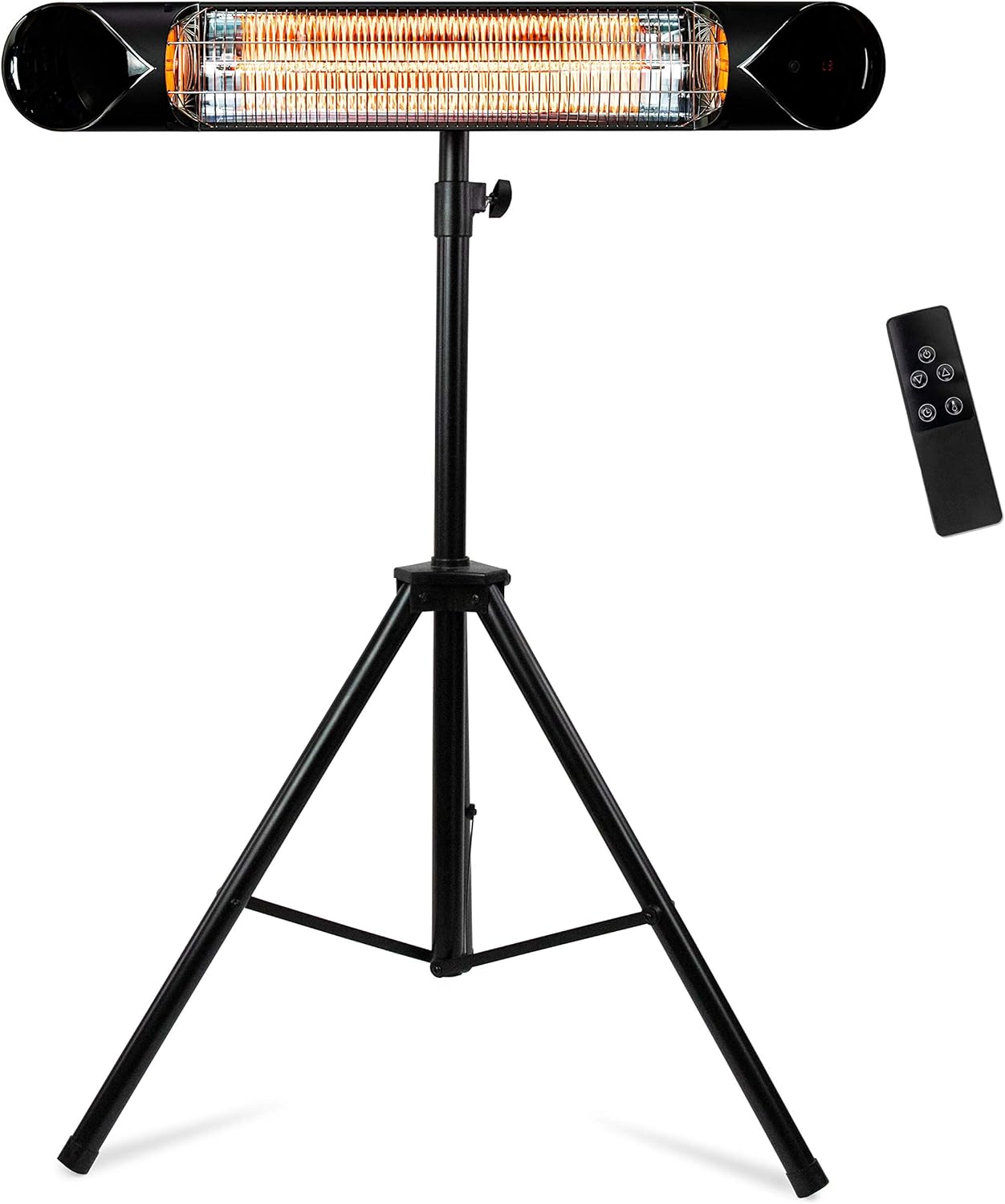
| Heating Method | infrared heating |
|---|---|
| Heat Output | 1500 watts |
| Heating Coverage | 800 – 1000 ft² (indoor), 100 (outdoor) |
| Power Source | Corded Electric |
| IP Rating | IP55 |
This Briza infrared heater delivers direct radiant warmth using carbon infrared technology and is designed for flexible placement outdoors or in garages and patios. It offers three power settings (900W, 1200W, 1500W) so you can dial output to conditions, and the included remote and 1–9 hour timer make it easy to control from a distance. Mounting hardware plus an adjustable tripod stand mean you can install it on a wall or ceiling or use it freestanding for short- to medium-range spot heating. The unit is IP55 rated for dust and water resistance, which helps it stand up to outdoor conditions, and a tip-over safety sensor adds protection when used on the tripod. Practical limitations are its focused radiant coverage rather than whole-patio convection heating and the corded design that requires a nearby outlet, but for close-range outdoor seating or garage tasks it provides quick, sun-like warmth without combustion or exhaust.
Best for: Buyers who want a versatile, weather-resistant electric heater for focused outdoor or garage use and who value easy remote control and multiple mounting options.
Less Ideal for: Those needing to warm a large, open patio or group seating area evenly should consider higher-capacity or forced-air solutions instead.
- Three heat levels (900W/1200W/1500W) for adjustable warmth
- Includes remote control and 1–9 hour timer for convenient operation
- Mounting hardware plus tripod stand provide wall, ceiling, or freestanding use
- IP55 rating for resistance to rain, dust, and outdoor elements
- Radiant design provides focused spot heating rather than broad-area convection warming
- Requires a nearby 120V outlet and is limited by cord placement
Verdict: A flexible, weather-resistant infrared heater that gives quick, controllable spot warmth with multiple mounting options for outdoor and garage use.
Heliosa 66 Black Patio Heater

| Heating Method | Infrared |
|---|---|
| Heat Output | 5150 BTU |
| Voltage | 120 volts |
| Amperage | 12.5 A |
| Heating Coverage | 160 |
The Heliosa 66 Black is a hardwired or 120V plug‑in wall‑mount infrared heater built to deliver fast, focused radiant warmth for patios, restaurant terraces, and similar semi‑enclosed areas. It uses a halogen heating element and a heat‑resistant safety glass that reduces visible glare while directing heat outward, so it feels like immediate, directional warmth rather than blowing hot air. The unit is IPX5 water resistant and constructed from rugged cast aluminum, which makes it suitable for wet outdoor conditions and commercial use. At a suggested 9–10 foot mounting height the manufacturer rates coverage near 160 square feet and the supplied bulb life is around 7,000 hours with replaceable bulbs. Expect instant heat and a neat, low‑profile wall installation, but keep in mind infrared radiant heaters warm people and surfaces directly rather than rapidly changing ambient air temperature, so placement and aiming matter for comfort.
Best for: Buyers who prioritize strong, immediate radiant warmth for outdoor seating areas or commercial terraces and want a robust wall‑mounted heater that handles weather exposure.
Less Ideal for: People seeking rapid whole‑space air heating for large open areas or those who prefer convection blowers for circulating warm air should consider other heater types.
- Instant radiant heat that feels warm on skin and surfaces
- Water resistant IPX5 rating suitable for outdoor use
- Reduced glare safety glass for more comfortable evening use
- Can be plug‑in or hardwired for flexible installation
- Rugged cast aluminum build aimed at commercial durability
- Radiant design warms people and objects directly so overall air temperature change is limited
- Replacement halogen bulbs have a finite life (about 7,000 hours)
Verdict: Choose the Heliosa 66 Black when you need a durable, weather‑rated wall‑mounted infrared heater that delivers immediate, high‑intensity radiant warmth for semi‑enclosed outdoor seating.
shinic Milkhouse Heater FW606-15CG

| Power | 1500W (high) / 1300W (low) |
|---|---|
| Heating coverage | 200 square_feet |
| Heating method | Forced Air |
| Safety features | Tip-over and Overheat Protection |
| Voltage | 120 volts |
The Shinic Milkhouse Heater is a compact, rugged portable utility heater designed to deliver quick forced-air warmth for garages, workshops, greenhouses, and similar indoor workspaces. It offers two heat settings (1500W high and 1300W low) plus a fan-only mode and an adjustable rotary thermostat so you can dial in comfort for a 180 to 250 sq ft area. The all-metal cabinet and stay-cool carry handle make it easy to move around jobsite areas, and the grounded 3-prong cord with ETL listing and automatic tip-over and overheat shutoffs add basic safety for everyday use. Practical controls and a powerful fan mean the unit heats up rooms faster than small ceramic heaters, but it is a straightforward, no-frills heater without smart controls, timers, or remote operation. Also, because it is designed for indoor utility spaces, it is not weatherproof and should not be left outdoors exposed to moisture. For someone who needs a durable, portable heat source for garage or greenhouse work, this heater is a solid, utilitarian choice.
Best for: Buyers who prioritize a sturdy, worksite-ready heater to quickly warm garages, workshops, or greenhouses and who value straightforward, manual controls over smart features.
Less Ideal for: People who need a weatherproof outdoor heater for patio use or those who want programmable scheduling and remote connectivity should look elsewhere.
- Rugged metal housing and carry handle for durable portability
- Two heat settings plus fan mode and adjustable thermostat for simple temperature control
- Safety features include 3-prong grounded plug, tip-over shutoff, and overheat protection
- Designed to heat roughly 180–250 sq ft quickly with a powerful fan-driven output
- Not rated or protected for outdoor exposure or wet conditions
- No advanced features such as Wi-Fi, timers, or remote control
Verdict: A tough, no-frills portable heater that reliably warms garages and workspaces for buyers who want durable, fast heat without smart features.
Dura Heat EUH1465 Portable Heater

| Heat Output | 5120 BTU |
|---|---|
| Power | 1500 Watts |
| Voltage | 120 volts |
| Heating Coverage | 250 sq ft |
| Cord Length | 6 Ft |
The Dura Heat EUH1465 is a small, rugged 1500W forced-air heater that uses a PTC ceramic element and high-velocity fan to warm areas up to about 250 square feet. It is typically used in garages, workshops, basements, or covered outdoor work areas where a standard 120V outlet is available; the built-in thermostat and single heat setting let you dial in and maintain a steady temperature while the fan-only mode doubles as an air circulator. The steel cabinet, carry handle, and included base make it easy to move and position, and safety features such as overheat shut-off add peace of mind during extended use. Because it runs on a household outlet and draws about 12.5 amps, it provides fast spot heating without special wiring but will not replace whole-house or large-patio heaters. Also note the unit is intended for indoor and sheltered use and lacks explicit weatherproofing, so it should not be left exposed to rain or open outdoor conditions.
Best for: Buyers wanting an affordable, portable heater to quickly warm garages, workshops, or sheltered outdoor workspaces where cost and simple plug-in operation are the priority.
Less Ideal for: People who need a weatherproof patio or open-air outdoor heater, whole-area heating for large spaces, or multiple precise heat levels should look elsewhere.
- 1500W PTC ceramic element provides quick, efficient spot heating for small areas
- Rugged steel body and compact build make it durable and easy to move
- Built-in adjustable thermostat and fan-only mode for temperature control and air circulation
- Overheat shut-off and polarized 6 ft cord add practical safety and placement flexibility
- Not weatherproof so unsuitable for exposure to rain or fully outdoor use
- Single heat speed limits fine-grained output control compared with multi-speed models
Verdict: A low-cost, portable plug-in heater that delivers fast spot heat for small, sheltered work areas where affordability and mobility matter.
MOMOKOVA Tabletop Patio Heater

| Power | 1500 watts |
|---|---|
| Heating Method | Radiant (carbon/halogen) |
| Indoor Outdoor Usage | Indoor, Outdoor |
| Waterproof Rating | IP55 |
| Heating Coverage | 330 SQ.FT |
This MOMOKOVA tabletop patio heater uses a 1500W carbon/halogen infrared element to deliver near-instant radiant warmth for small outdoor areas. It is meant to sit on tables or other flat surfaces and is useful for patio dinners, balcony chill-outs, or small covered porches where targeted warmth is needed. Key features include IP55 weatherproofing for rain and dust resistance, a fast-heating infrared element advertised to cover up to 330 sq ft with a 2–3 m radius, and safety systems such as 45 degree tip-over detection and automatic shutoff. The compact lamp-style form makes it easy to move and position for direct heat, and the quiet operation is convenient for conversations and evening use. Expect efficient, focused warmth rather than whole-yard heating; the tabletop format and radiant element work best when people are sitting nearby. If you need wider-area or freestanding coverage, a larger tower or propane unit will be more suitable.
Best for: Buyers who prioritize dependable, weather-resistant outdoor heating for small to medium seating areas and want a compact, safety-focused heater that can be placed on tables or patios.
Less Ideal for: People seeking whole-patio or large open-area heating, or those who need a permanent freestanding heater for wide coverage.
- IP55 waterproof and dustproof rating for reliable outdoor use
- 1500W carbon/halogen infrared element provides fast, focused heating
- Built-in tip-over detection and auto shutoff for safer operation
- Compact tabletop design is easy to move and place where needed
- Quiet operation suitable for conversations and evening use
- Tabletop form limits effective coverage compared with freestanding or tower heaters
- Not intended to heat large open areas despite advertised square-foot figure
Verdict: Choose this compact, weatherproof tabletop infrared heater when you want reliable, safety-minded spot heating for outdoor seating and small patios.
Dr. Infrared Heater DR-968

| Power | 1500 Watts |
|---|---|
| Heating coverage | 576 square feet |
| Number of speeds | 3 |
| Voltage | 120 |
| Amperage | 12.5 A |
The Dr. Infrared Heater DR-968 is a portable 1500-watt infrared space heater designed to warm indoor rooms quickly by combining a quartz infrared tube with a PTC element and a high-velocity low-noise blower. You use it freestanding on caster wheels and set a target temperature via the electronic thermostat or the remote, or let Auto mode cycle between high and low to maintain comfort while saving energy. Notable features include tip-over and overheat shutoffs, a 12-hour timer, three power modes (Auto, Low 1000W, High 1500W), and a long power cord for flexible placement. In practical use it heats objects and surfaces as well as the air, which tends to feel more immediate than convection-only heaters and helps reduce drying of room air. The unit is UL certified and relatively quiet at the blower noise levels listed, but it is intended for indoor use only and not rated for outdoor exposure, so you should not rely on it for patios or uncovered outdoor spaces. It is moderately heavy but the wheels and remote make it easy to move and operate from across the room.
Best for: Buyers seeking a reliable indoor space heater that delivers quick, object-focused warmth with safety features and easy operation backed by lots of customer feedback.
Less Ideal for: People looking for an outdoor-rated heater for patios, covered porches, or damp environments should choose a product specifically rated for outdoor use instead.
- Dual heating system (quartz infrared + PTC) for faster, more direct heat
- Electronic thermostat with Auto mode for set-and-forget temperature control
- Built-in safety features including tip-over and overheat protection
- Remote control and caster wheels for convenient placement and operation
- Quiet high-pressure blower for broader heat distribution with low noise
- Designed and rated for indoor use only, not weatherproof for outdoor use
- Relatively heavy compared with small portable heaters
Verdict: A well-reviewed indoor-only infrared heater that heats rooms quickly and safely, best for buyers who prioritize efficient, immediate warmth and strong safety features.
AEROZY SH03 Patio Heater

| Heat Output | 1500 watts |
|---|---|
| Heating Method | Radiant |
| Number of Speeds | 9 |
| Oscillation | 60 degrees |
| Power Source | ac |
The AEROZY SH03 is a freestanding infrared tower heater designed to warm patios and other outdoor spaces. It delivers 1500 watts of radiant heat and can sweep a 60-degree arc with its oscillation to spread warmth across seating areas, while nine heat settings and a 9-hour timer let you dial in runtime and comfort. A remote and child safety lock add convenience and safety for family settings, and the heater is portable enough to move where you need it. Because it uses infrared radiant heating, it warms people and objects directly rather than heating the air, which is useful outdoors or in drafty spots. Important limitations are that it is mains-powered only so you need an outdoor-rated outlet and extension if required, and like most infrared towers it provides directional coverage rather than evenly heating large open areas. Maintenance is simple—keep the reflector and grille clear—and built-in tip-over and overheat protections improve peace of mind for risk-conscious buyers.
Best for: Buyers who prioritize straightforward, safe outdoor heating for patios or covered outdoor rooms and want easy controls and family-friendly safety features.
Less Ideal for: Not a good choice for heating large open-air patios or areas without convenient AC power access where a propane or hardwired solution would be more practical.
- 1500W infrared output for direct radiant warmth
- 60-degree oscillation for broader coverage
- Nine heat settings plus a 9-hour timer for flexible control
- Remote control and child safety lock increase convenience and safety
- Requires a nearby outdoor-rated AC power source and may need an extension cord for some setups
- Directional radiant heating is less effective for very large or fully open outdoor spaces
Verdict: Choose the AEROZY SH03 when you want a portable, family-friendly infrared tower heater that gives controllable, directional warmth for small to medium outdoor seating areas.
Choosing the Right Electric Heater for Outdoor Use: Key Factors to Consider
Heat Output and Coverage Area
Heat output determines how quickly a heater can raise the temperature in an outdoor seating area. Look for clear wattage ratings and any stated coverage area in square feet. Higher wattage usually means faster or broader heating, but actual comfort depends on placement and wind exposure.
Consider how many people you want to warm and whether the heater will be near walls, under awnings, or in open air. A unit that performs well in a covered patio may not be adequate on a windy deck. Matching output to real coverage needs prevents undersized heaters that run constantly and oversized units that waste energy.
Weather Resistance and Durability
Outdoor heaters need protection from moisture, temperature swings, and dust. Check for IP ratings or manufacturer guidance on damp or wet locations to ensure safe outdoor placement. Corrosion-resistant materials and protective finishes help extend service life in coastal or humid climates.
Durability matters if the heater will remain mounted year-round. Units designed for occasional outdoor use behind a roofline are different from those intended for exposed patios. Better weather resistance reduces maintenance and the risk of electrical faults caused by moisture infiltration.
Installation and Mounting Options
Installation flexibility affects where and how you can use the heater. Common mounting options include wall brackets, ceiling mounts, pole stands, and freestanding bases. Think about the mounting height and angle needed to direct heat toward seating zones rather than heating empty space.
Ease of installation also influences whether you can DIY the setup or need professional help for hardwired connections. If temporary placement is important, look for portable or freestanding designs with stable bases and simple power connections.
Energy Use and Operating Cost
Electric heaters vary in efficiency and run-time cost depending on wattage and how they deliver heat. Infrared heaters, for example, warm people and surfaces directly, which can feel more efficient for spot heating than convection-style units.
Consider the typical duration and frequency of use. A more efficient heater or one you can zone for targeted warming will reduce energy consumption over time. Also check whether the heater allows multiple power settings or thermostatic control to avoid running at full power unnecessarily.
Safety Features and Controls
Safety features reduce the risk of accidents, especially in outdoor settings where heaters can be bumped or exposed to moisture. Look for tip-over shutoff, overheat protection, and clearly rated electrical components for damp environments. Sturdy guards around heating elements and stable mounts help prevent contact burns.
Controls should be accessible and intuitive. Timers, remote switches, and thermostatic control enhance safety by reducing time spent handling the unit directly. Confirm that any hardwired installations follow local electrical codes and use suitable outdoor-rated wiring and disconnects.
Maintenance and Serviceability
Routine maintenance keeps outdoor heaters operating safely and efficiently. Consider how easy it is to clean reflectors, replace elements or bulbs, and access electrical connections. Removable guards or access panels simplify upkeep and reduce downtime.
Also check whether replacement parts like bulbs or elements are standard and readily available. A design that makes basic servicing straightforward will extend useful life and lower long-term ownership friction.
Choosing Between Infrared and Radiant Elements
Not all electric outdoor heaters heat in the same way. Infrared or radiant-style elements produce directional heat that warms people and nearby surfaces directly, which is effective for targeted spot heating on patios and under awnings. These heaters often feel warmer at lower ambient air temperatures because they bypass the need to heat large volumes of air.
Convection-style electric heaters warm the surrounding air and can be useful in more sheltered outdoor rooms. When selecting an element type, consider typical wind exposure and whether you need to warm a specific seating area or a more enclosed space.
- Infrared: direct, immediate feeling of warmth; best for open-air but targeted zones
- Radiant panels: low glare, often suitable for covered patios
- Convection: better for semi-enclosed porches where air can retain heat
Mounting Height and Heat Direction
Mounting height affects effective coverage and perceived warmth. Lower mounts deliver heat more directly to seating but can reduce coverage breadth. Higher mounts distribute heat over a wider area but may require greater output to produce the same perceived warmth.
Angle and reflector design also shape heat dispersion. Adjustable mounts or swivel brackets let you aim heat where it is needed and avoid heating walkways or empty space.
- Typical wall or ceiling mounts are 6 to 8 feet high for seated areas
- Use adjustable brackets to fine-tune aim and avoid glare
- Consider reflector shape to concentrate or spread warmth
Wiring and Power Considerations
Electric heaters have different power requirements. Some plug into standard outdoor outlets while others require dedicated circuits or hardwiring. Verify voltage and circuit needs before installation to ensure safe operation and to avoid tripping breakers during use.
For permanent installations, follow local electrical codes and use weatherproof junctions, conduit, and GFCI protection where required. If you plan to relocate a heater seasonally, look for a model that safely supports corded outdoor use and is easy to disconnect.
- Check wattage and circuit load to avoid overloads
- Use GFCI-protected outlets for outdoor plug-in units
- Hire a licensed electrician for hardwired installations
Placement and Wind Mitigation
Wind dramatically reduces the effective range of outdoor heaters. When possible, place heaters near windbreaks such as walls, railings, or landscaping to retain heat. Overhead coverings and partial enclosures help keep warm air and radiant heat in the seating area.
If wind cannot be fully mitigated, choose a unit with stronger directional heat and place it closer to occupants. For open patios, consider multiple lower-wattage units positioned around the seating area instead of a single distant source.
- Position heaters near typical seating and away from prevailing winds
- Use multiple units for even coverage in open layouts
- Combine heaters with windbreaks or overhead covers for best results
Seasonal Storage and Winter Care
Even weather-rated heaters benefit from seasonal care. If a unit is removable, store it in a dry, temperature-stable place over the winter to protect electrical components and finishes. For permanently mounted systems, perform annual inspections for corrosion, loose fasteners, and moisture intrusion.
Follow manufacturer guidance for cleaning reflectors and replacing worn parts. Proper off-season storage or protective covers will extend the unit's functional life and maintain reliable performance.
- Inspect mounts, wiring, and element housings annually
- Store portable units indoors in winter to protect components
- Use covers for permanently mounted heaters when possible
How We Chose the Best Electric Heater for Outdoor Use
We focused on features and specifications that most directly affect real-world outdoor performance and safety. Primary evaluation metrics included heat output and coverage area to assess how effectively a heater warms typical outdoor seating, build quality and weather resistance to determine durability in damp or variable conditions, and installation versatility so heaters could be mounted, freestanding, or used on patios and covered porches. We also evaluated energy efficiency and running characteristics to reflect operating cost and practical daily use, plus safety features such as tip-over protection, overheat cutoff, and IP ratings for electrical components. We excluded units intended only for indoor use or those without meaningful moisture resistance. We also screened out heaters that lacked clear performance specs or necessary safety protections for outdoor placement. The resulting shortlist prioritizes systems that balance effective warmth, durable outdoor construction, straightforward installation, and sensible safety features. These criteria guided our score labels and the relative importance of each dimension when assessing suitability for outdoor environments.
Our full evaluation process is outlined in our review methodology.
FAQ
Can I use an electric outdoor heater in a partially covered patio?
Yes. Many electric heaters are suitable for partially covered patios, but you should choose a unit rated for damp or covered outdoor locations. Covered areas retain radiant heat better, so lower wattage units may be sufficient compared with fully exposed spaces.
Do electric outdoor heaters need a dedicated circuit?
It depends on wattage. Lower-wattage plug-in models often run on standard circuits, while higher-output or multiple-unit installations may require a dedicated circuit or hardwiring. Verify the electrical requirements and consult an electrician for permanent installations.
How does wind affect outdoor heater performance?
Wind reduces perceived warmth by carrying heat away and cooling surfaces. Directional radiant heaters perform better in windy conditions when aimed directly at occupants. Placing heaters near windbreaks or using multiple units can improve comfort on breezy evenings.
Are infrared heaters safe for outdoor use?
Infrared heaters are commonly used outdoors because they warm people directly rather than heating large volumes of air. Safety depends on correct installation, adequate clearance from combustible materials, and outdoor-rated components. Choose units with appropriate safety cutoffs and weather protection.
What maintenance do outdoor electric heaters need?
Routine checks include cleaning reflectors, inspecting wiring and mounts for corrosion or looseness, and replacing worn elements or bulbs. Regular maintenance helps prevent failures and keeps heat output consistent over time.
Final Verdict
When choosing an electric heater for outdoor use, prioritize the combination of heat output, weather resistance, and installation type that matches your space. Tradeoffs are common: more powerful units cover larger areas but may require stronger wiring and higher running cost, while lower-wattage or infrared options can be more efficient for focused spot heating. Decide first on where you will mount or place the heater and whether the area is exposed to wind or mostly sheltered. From there, balance durability and safety features against energy use and installation complexity to pick the most practical, long-lasting solution for your outdoor comfort needs.