
Note: This article contains affiliate links. If you click on these links and make a purchase, we may earn a small commission at no extra cost to you. This helps support our research and content. Read our full affiliate disclosure here.
When you spend time working or tinkering in a detached shed, a purpose-built electric heater for shed space can make the difference between a usable workshop and an uncomfortable one. You need a heater that warms a small, often poorly insulated area quickly while minimizing fire and electrical risks. This guide shortlists the top options built for shed use and evaluates them on heat output, safety, and ease of installation. Below are the best electric heaters for sheds, chosen for common shed layouts and typical winter use. Read on to see which features matter most for your space and which heater styles match your routine.
Top Picks at a Glance
| Best Overall The best all-around choice for most situations | Heat Storm Phoenix HS-1500-PHX-WIFI |  |
| Best Quality Built to a higher standard if you want something more solid | DREO Smart Wall Heater DR-HSH017S |  |
| Best Value The sweet spot between price and what you get | GiveBest Portable Space Heater PTC-SH905S |  |
| Best Budget The cheapest option that still gets the job done reliably | Amazon Basics Ceramic Space Heater |  |
| Top Rated A top-rated pick with lots of positive feedback | DREO Space Heater HSH006 |  |
| Best Seller A high-volume bestseller chosen again and again | VOCRS PTC-903B 1500W Heater |  |
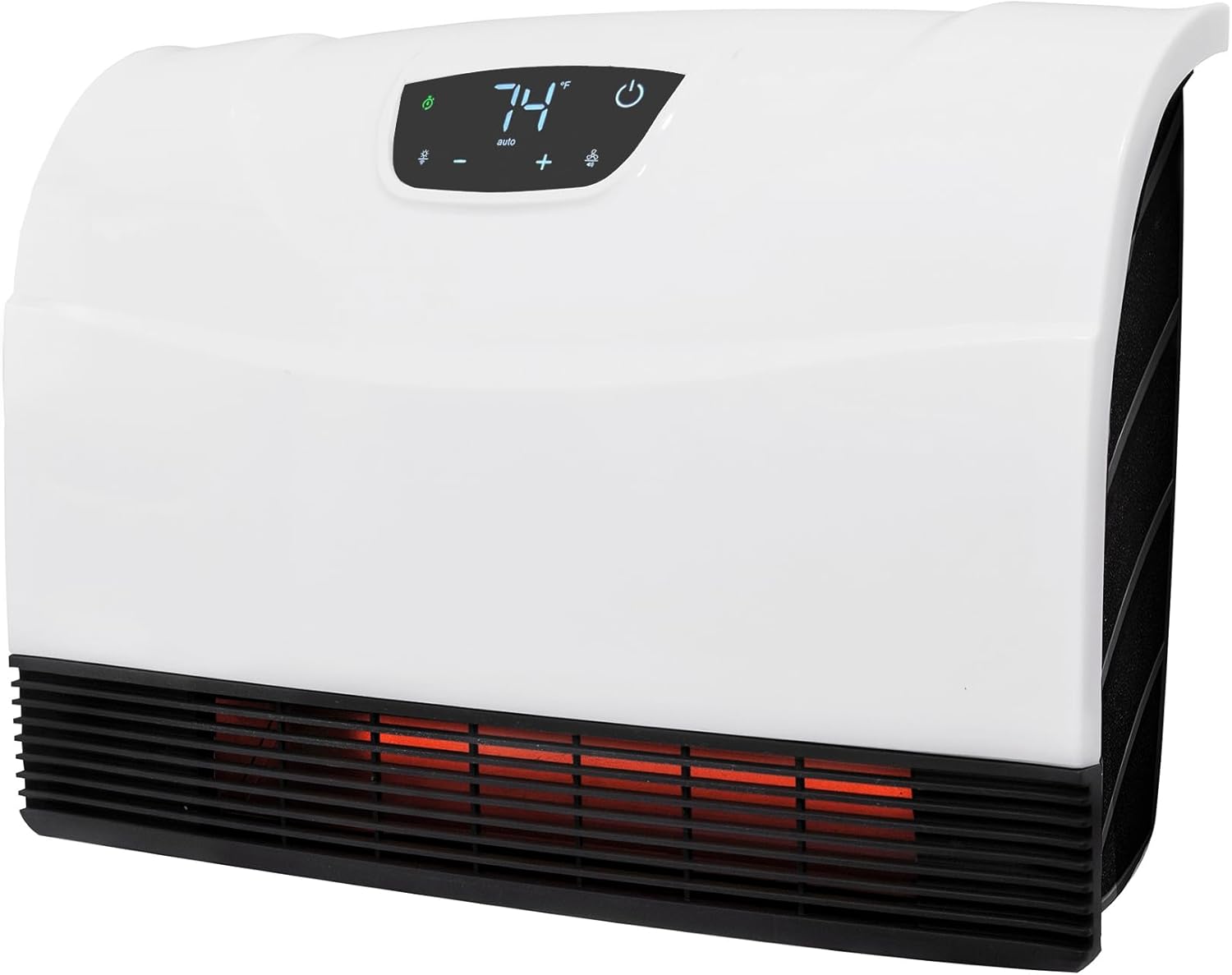
Heat Storm Phoenix HS-1500-PHX-WIFI
| Power | 1500 watts |
|---|---|
| Voltage | 110 volts |
| Heating Coverage | 150 ft² primary, 750 ft² secondary |
| Max Temperature Setting | 99 °F |
| Special Features | Wall Mountable, washable filters, Wi-Fi |
The Heat Storm Phoenix HS-1500-PHX-WIFI is a compact wall-mounted infrared heater intended to provide targeted zone heat in small rooms, garages, or sheds where floor space is limited. It delivers 1500 watts of radiant heat and is rated to primary-heat about 150 sq ft or supplementally cover larger areas, with a digital touch thermostat and remote for simple control. Built-in Wi‑Fi and one-touch Bluetooth setup let you start or schedule heat from a phone, which is handy for preheating a workspace before you arrive. The unit mounts over an outlet so the cord can be concealed and its exterior stays cool to the touch, improving safety in tighter spaces. Practical features include washable filters and tip-over safety in the freestanding configuration, though this is the wall-mounted model. Expect effective, direct warmth for a single-zone shed or small garage but not enough output to heat large, poorly insulated structures on its own. Installation is straightforward for anyone comfortable with wall mounting and the Wi‑Fi makes routine heating convenient.
Best for: Buyers who want a compact, wall-mounted heater to warm a single-zone shed, small garage, or workshop on demand and value remote scheduling and space-saving installation.
Less Ideal for: People needing to heat large, uninsulated workshops or whole-house spaces should choose a higher-capacity heating solution instead.
- 1500W infrared output suitable for targeted zone heating in small spaces
- Wall-mount design saves floor space and allows cord concealment when mounted over an outlet
- Wi‑Fi and one-touch Bluetooth let you remote control and schedule heating
- Digital touch thermostat and included remote provide easy temperature adjustments
- Washable filter adds a simple maintenance option to keep airflow clear
- Not powerful enough as the sole heat source for large or poorly insulated sheds
- Designed primarily for wall mounting so feet and full portability are limited
Verdict: A compact, Wi‑Fi enabled 1500W wall heater that provides convenient, space-saving zone heating for small sheds and workshops.
DREO Smart Wall Heater DR-HSH017S

| Heat Output | 1500 watts |
|---|---|
| Heating Method | Forced Air, PTC |
| Heating Coverage | 150 square feet; 750 square feet |
| Number of Speeds | 3 |
| Min-Max Temperature | 41 °F – 95 °F |
This DREO wall-mounted heater is a 1500W PTC forced-air unit designed to deliver fast, controllable warmth to single rooms. It mounts on a wall and uses a strong 11.5 ft/s airflow plus 30 degree manual oscillation to move heat across a space while operating quietly at about 28 dB, which makes it suitable for quieter environments. Smart features include app control, Alexa voice commands, and an included remote so you can change temperature and modes without accessing the unit. The digital thermostat and ECO mode let you dial in target temperatures between 41 and 95 F for steady, energy-aware operation, and the unit includes overheat protection and flame-retardant materials for safety. For a shed, workshop, or garage used intermittently, the heater functions well as a primary source for a small insulated area or as supplemental heat in a larger space. Installation requires wall mounting and a power connection, so it is less portable than plug-in space heaters and depends on proper mounting and insulation to reach its listed coverage efficiently.
Best for: Buyers who want a performance-focused, permanently mounted heater that delivers fast, controllable warmth with smart controls for a small workshop or insulated shed.
Less Ideal for: People needing a temporary or movable heater for multiple locations should prefer portable plug-in units instead.
- 1500W PTC forced-air output for rapid room warm-up
- Smart controls including app, remote, and Alexa voice support
- Quiet operation around 28 dB suitable for low-noise settings
- Adjustable digital thermostat with ECO mode for efficient temperature control
- Requires wall mounting and a fixed power connection, not portable
Verdict: A powerful wall-mounted smart heater that gives performance-focused buyers precise, quiet, and remotely controlled warmth for a small insulated shed or workshop.
GiveBest Portable Space Heater PTC-SH905S

| Heating Coverage | 200 sq.ft |
|---|---|
| Power Levels | 1500W / 750W |
| Number of Speeds | 3 |
| Power Source | Corded Electric |
| Special Features | Tip-Over Protection |
The GiveBest portable space heater is a small PTC ceramic tower unit that delivers two heat levels (1500W and 750W) plus a cool fan setting, and a built-in thermostat to hold a set temperature. It is designed for spot-warming a single room or enclosed workspace and claims coverage up to about 200 square feet, making it useful for sheds or small workshops where you want targeted heat quickly. Safety features include tip-over shutoff, overheat protection, and flame-retardant ABS construction, and the unit is light and easy to move using the integrated handle. Practical benefits are fast warm-up from the ceramic element, three fan speeds for adjusting output and noise, and an auto on/off thermostat that avoids constant manual adjustments. Limitations to note are the two power steps rather than a stepless output and the typical constraints of a plug-in unit: it will not replace permanent heating or handle very large, poorly insulated sheds without supplemental insulation or a higher-capacity heater.
Best for: Buyers who want an affordable, portable heater to quickly warm a single shed, workshop, or small workspace and prefer a compact unit with basic safety features and a simple thermostat.
Less Ideal for: People needing whole-building or heavy-duty heating for large, poorly insulated sheds or who require precise, variable power control should look at higher-capacity or hardwired heater options.
- Two heat settings plus a cool fan mode for year-round use
- Built-in thermostat for automatic on/off to maintain temperature
- Multiple safety features including tip-over and overheat shutoffs
- Portable tower form with integrated carry handle for easy relocation
- Only two fixed heat levels rather than variable power control
- Designed for small spaces and may struggle in large or uninsulated sheds
Verdict: A compact, safety-minded portable heater that provides quick spot heating for small sheds and workshops.
Amazon Basics Ceramic Space Heater

| Heat Output | 1500 watts |
|---|---|
| Heating Coverage | 161.4 square_feet |
| Number of Speeds | 3 |
| Heating Method | Convection |
This Amazon Basics ceramic space heater is a small, portable tabletop unit designed to warm personal spaces quickly. It uses a 1500W ceramic heating element with three settings — high (1500W), low (900W), and fan-only — so you can tailor output for quick spot heating or gentle circulation. The unit is light and compact, making it easy to move between a shed, garage, or home office, and the convection design warms air rather than relying on radiant panels. Safety features include tip-over and overheat protection plus a power indicator light, which is useful in an unattended work space. Noise is modest at about 43 dB so it will not be disruptive while you work. Limitations are its small coverage area (listed around 161 square feet) and the absence of oscillation, so it works best for localized heating rather than warming large or drafty areas. It also should not be used in damp environments.
Best for: Buyers wanting an inexpensive, portable heater to warm a small shed, workshop, or single work area quickly and safely.
Less Ideal for: People needing to heat large, poorly insulated sheds or multiple zones at once should choose a higher-capacity or whole-space heater instead.
- 1500W ceramic element provides fast, efficient spot heating
- Three settings including fan-only for circulation
- Built-in tip-over and overheat protection for safer unattended use
- Compact and lightweight for easy portability between spaces
- Limited heating coverage not ideal for large or very drafty sheds
- Non-oscillating design concentrates heat in one direction
Verdict: A budget-friendly, portable 1500W ceramic heater that delivers quick, safe spot heating for small sheds and workspaces.
DREO Space Heater HSH006

| Heat Output | 1500 watts |
|---|---|
| Heating Element | PTC Ceramic |
| Heating Coverage | 200 sq.ft |
| Voltage | 120 volts |
| Min-Max Temp | 41 °F – 95 °F |
The DREO HSH006 is a compact tower heater that delivers fast, forced-air warmth using a 1500W PTC ceramic element and an adjustable thermostat that ranges from 41 to 95°F in 1°F steps. It is typically used to heat small spaces such as a shed, workshop, office, or bedroom where spot heating is needed rather than whole-building heat. Notable features include a brushless DC motor and winglet fan for reduced turbulence and a low 34 dB noise level, a 12-hour timer, remote control, multiple heat modes including ECO and fan-only, and safety protections such as tip-over detection, overheat cutout and flame-retardant materials. In practice the unit gives quick, controllable warmth and the fine thermostat increments help avoid overheating small spaces while saving energy. The trade-offs are that its 1500W output is best for areas up to roughly 200 sq. ft., so larger or poorly insulated sheds may need a higher-capacity heater or supplemental insulation, and it requires a standard 120V outlet and appropriate electrical circuit for safe continuous use.
Best for: Someone who needs a reliable, safe, and quiet portable heater to provide controlled spot heating for a small shed, workshop, or workspace and values precise temperature control and built-in safety.
Less Ideal for: People who need to heat larger sheds, uninsulated outbuildings, or whole garages should choose a higher-capacity heater or a permanent heating solution instead.
- 1500W PTC ceramic element provides fast, consistent heat
- Precise thermostat with 1°F increments for tight temperature control
- Multiple safety features including tip-over detection and overheat protection
- Quiet operation (around 34 dB) thanks to brushless DC motor and winglet fan
- Convenience extras like remote control and 12-hour timer
- Rated coverage (~200 sq. ft.) may be insufficient for large or poorly insulated sheds
- Requires a 120V circuit and draws up to 12.5 A, limiting placement in some outbuildings
Verdict: A compact, safety-focused 1500W heater that gives quiet, controllable warmth for reliably heating small sheds and workspaces.
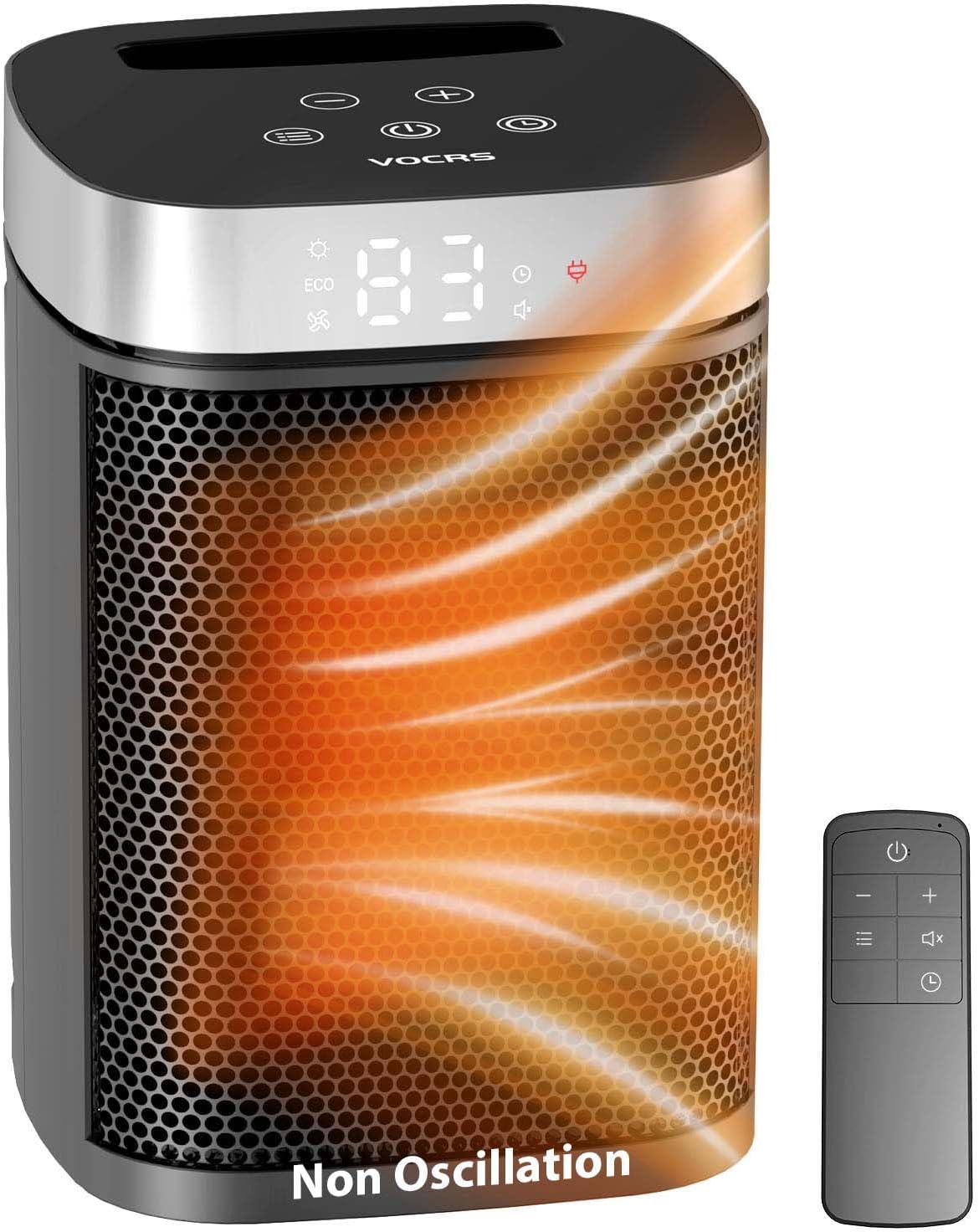
VOCRS PTC-903B 1500W Heater
| Heat Output | 1500 watts |
|---|---|
| Heating Coverage | 200 sq.ft |
| Number of Speeds | 3 |
| Power Source | AC |
| Special Features | Timer, Overheat Protection, Remote Control |
The VOCRS PTC-903B is a small ceramic tower heater that delivers up to 1500 watts of heat and three power settings (700W, 1000W, 1500W) to warm a single room or enclosed workspace. It uses a PTC ceramic element and fan-based radiant flow to move heat quickly, and the digital display plus thermostat make it easy to set and monitor a target temperature. The unit includes a 1–12 hour timer, an included remote for hands-free control, and common safety features such as overheat protection and tip-over shutoff, which reduce risk during unattended use. Its compact footprint and carry handle make it easy to move between a shed, garage workspace, or small bedroom, but like most portable electric heaters it is best for spot heating only and will not heat large or poorly insulated structures efficiently. For buyers prioritizing straightforward operation and built-in safety, this model offers a sensible, low-complexity choice for supplemental heat in small enclosed spaces.
Best for: Someone who wants a simple, moveable electric heater with clear controls and safety features to warm a single enclosed workspace or small shed on a cautious, low-risk basis.
Less Ideal for: People needing to heat large, uninsulated sheds or multiple rooms who should consider higher-capacity or hardwired heating solutions instead.
- Three power settings (700W/1000W/1500W) for adjustable warmth
- Digital thermostat and clear display for easy temperature control
- Remote control and 1–12 hour timer for convenient hands-off use
- Built-in safety features including overheat protection and tip-over shutoff
- Intended for small rooms or spot heating and not effective for heating larger or poorly insulated sheds
Verdict: A compact, safety-focused portable heater that provides reliable spot heating for small enclosed sheds and workspaces.
Choosing the Right Electric Heater for Shed: Key Factors to Consider
Heat Output and Coverage
How many square feet a heater can comfortably warm matters because sheds vary widely in size and insulation. A heater rated for a small enclosed space may not perform if your shed has poor insulation or high ceilings.
Consider the heater's wattage and whether it offers multiple power settings or a thermostat. These features let you adapt output to the space and avoid short cycling. For very small sheds, lower-wattage or ceramic-style units can be sufficient; for larger or uninsulated spaces, higher-output units or supplemental insulation will be required.
Safety Features
Sheds often have exposed wiring, dust, and less frequent supervision, so safety features are critical. Look for automatic shutoff for overheating, tip-over protection for portable units, and cool-touch housings where hands or tools might brush against the heater.
Also check for thermal fuses and adequate ingress protection against dust. Built-in timers and reliable thermostats reduce the chance of continuous unattended operation at maximum output, which helps prevent overheating and reduces electrical strain.
Installation and Mounting Options
Decide whether you need a portable heater, a wall-mounted unit, or a permanently wired solution. Portable heaters offer flexibility and can be moved where needed, but they require a safe place to sit and a nearby circuit. Wall-mounted or hardwired units free up floor space and can be positioned to deliver more even heat distribution.
Installation considerations include available wall studs, proximity to tools and flammable materials, and the electrical capacity of the shed's circuit. If you plan to hardwire, ensure the heater's electrical requirements match your shed wiring or plan for a qualified electrician to install an appropriate circuit.
Energy Use and Controls
Electric heaters can draw significant power, so pay attention to efficiency and control options. Units with precise thermostats, programmable timers, or multiple heat settings let you maintain comfort while limiting runtime and energy consumption.
Consider whether the heater has eco modes or adaptive thermostats that cycle power to maintain temperature without running at full capacity continuously. For sheds with limited electrical service, choose models that can run effectively on a single standard circuit to avoid tripping breakers.
Durability and Maintenance
Shed environments expose equipment to dust, humidity changes, and workshop debris. Choose heaters with robust housings, sealed controls, and filters or designs that minimize dust buildup on heating elements.
Regular maintenance needs such as easy access for dusting and the availability of replaceable parts will extend service life. Corrosion-resistant finishes or powder coatings help protect units in damp backyard outbuildings.
Noise and User Convenience
Noise level matters if you use the shed for focused tasks or audio work. Fan-forced models provide fast heat but can be audible. Radiant or convection-style electric heaters are usually quieter but may not ramp temperature as quickly.
Other convenience features to consider include remote controls, digital displays, and simple user interfaces. These small comforts can make daily use easier, especially when you want to adjust settings from across the workshop.
Sizing Your Shed and Estimating Wattage
To choose the right electric heater for shed space, first estimate the volume and insulation quality. A well-insulated small shed may need 10 to 20 watts per square foot, while an uninsulated or drafty shed might require 20 to 30 watts per square foot or more.
Measure floor area and ceiling height, then adjust the wattage estimate based on insulation. If your shed is only used intermittently, slightly higher output helps reach comfortable temperatures quickly. For continuous low-level heating, prioritize controllable thermostats to avoid wasted energy.
- Calculate square footage and multiply by an insulation factor to estimate wattage needs
- Account for high ceilings or large doors when estimating heat loss
- Plan for a margin of extra capacity if you use the shed for prolonged winter projects
Portable Versus Mounted Heaters
Portable heaters are flexible and simple to set up, making them a good choice if you move between work areas. They are best placed on stable, level surfaces away from flammable materials and should include tip-over protection.
Mounted heaters free floor space and can direct heat where it is most effective. Consider permanent mounting when the shed has a consistent layout and when wiring for a dedicated circuit is practical. Mounted units often provide more even room heat and reduce the risk of accidental contact.
- Portable: easy repositioning, requires safe placement and reachable outlets
- Mounted: consistent heat distribution, may require professional installation
Electrical Requirements and Circuit Safety
Most shed heaters run on standard household circuits, but high-wattage models may need a dedicated 20-amp line. Check the heater's amperage and ensure your shed circuit can handle the load along with other tools or lighting you might use concurrently.
Avoid running extension cords for extended periods, as they can overheat. If you are uncertain about your shed wiring capacity, consult an electrician to confirm circuit ratings and install additional breakers or outlets as needed.
- Confirm amperage draw and compare to existing circuit capacity
- Prefer fixed wiring or short, heavy-duty cords for long-term use
- Install ground-fault protection in damp or outdoor-adjacent installations
Managing Moisture and Ventilation
Electric heaters do not produce combustion byproducts, but they can concentrate humidity and dust. Ensure adequate ventilation to prevent condensation on tools and insulated walls, especially during rapid temperature changes.
If your shed lacks ventilation, use periodic airing or install vents to balance humidity. In damp environments, choose heaters with corrosion-resistant components and avoid models with exposed heating coils that can attract moisture and debris.
- Provide occasional ventilation to reduce condensation
- Select corrosion-resistant finishes for humid sheds
- Keep heater clear of combustibles and debris to maintain airflow
Noise Considerations and Work Habits
Think about how you use the shed. If you do concentrated work or record audio, quieter convection or radiant heaters are preferable. If you need rapid heating for short tasks, fan-forced units offer faster warm-up at the cost of more noise.
Balance the need for speed versus quiet. A timer or programmable thermostat can reduce runtime, which also limits fan noise in models that cycle on and off frequently.
- Choose convection for quiet, steady heat
- Choose fan-forced for quick warm-up when noise is acceptable
- Use timers to minimize runtime and noise during focused work
How We Chose the Best Electric Heater for Shed
We focused on criteria that matter for small, semi-exposed workspaces where ventilation and wiring can be limited. Primary evaluation points included measured heat output relative to shed volume, verified safety systems for unattended operation, and compatibility with common shed electrical circuits. We also weighed installation flexibility, looking for both portable and permanently mountable options that fit typical shed walls and mounting points. Other filters removed unsuitable choices such as heaters requiring specialized wiring or those without overheat protection. We prioritized models that offer accurate thermostatic control and reliable tip-over or thermal cutoff mechanisms because sheds often see intermittent use. Long-term durability and resistance to dust or workshop debris were considered, as was the simplicity of controls for quick, reliable operation. Excluded from consideration were models intended solely for large open areas or designs that assume robust home HVAC connections. Our final list favors practical, safe, and maintainable electric heaters that align with the realities of shed environments.
Our full evaluation process is outlined in our review methodology.
FAQ
Can I run an electric shed heater on a standard 120V outlet?
Often yes for lower-wattage units. Many portable shed heaters are designed to run on a single 120V circuit, but high-output models may draw more current and require a dedicated 20-amp circuit.
Is a radiant heater better than fan-forced for a shed?
It depends on use. Radiant heaters are quiet and heat objects directly, suitable for focused work areas. Fan-forced heaters warm the air faster and distribute heat more evenly in small rooms but can be noisier.
Do electric heaters pose a fire risk in a workshop environment?
Electric heaters have lower fire risk than combustion heaters when used properly, but risks remain if placed near flammable materials or if dust accumulates on heating elements. Choose models with tip-over and overheat protection and maintain clearances around the unit.
How can I keep heating costs down when warming a shed?
Improve insulation and seal gaps to reduce heat loss, use a heater with a programmable thermostat or timer, and select a model with multiple settings so you can run lower output between active work sessions.
Are there heaters made to withstand dusty workshop conditions?
Yes, some electric heaters feature sealed controls and dust-resistant housings designed for workshop use. Look for units with durable finishes and designs that limit dust buildup on internal components.
Final Verdict
Choose a shed heater by matching output to your shed size and insulation while prioritizing safety features that suit a workshop environment. Think through installation needs and circuit capacity before deciding between portable or mounted units. Balance fast warm-up against noise and long-term durability when you plan for regular use. Focus on accurate thermostatic control, robust safety cutoffs, and installation that minimizes electrical strain. A properly sized and installed electric heater will keep your shed comfortable and safe for winter projects without unnecessary energy waste.