
Note: This article contains affiliate links. If you click on these links and make a purchase, we may earn a small commission at no extra cost to you. This helps support our research and content. Read our full affiliate disclosure here.
If you want continuous hot water without a bulky storage tank, an electric tankless water heater can save space and cut standby energy loss. Choosing the right unit matters because household hot-water demands, incoming ground temperature, and electrical service limits determine performance more than labels alone. This guide shortlists seven leading electric tankless water heaters suited to a range of home sizes and installation situations. We evaluate each pick on real-world delivery metrics like flow and recovery, electrical compatibility, and energy efficiency. Read on to find a compact, reliable on-demand option that fits your plumbing and electrical setup.
Top Picks at a Glance
| Best Overall The best all-around choice for most situations | WINTEMP WN27 27kW Tankless Water Heater |  |
| Best Quality Built to a higher standard if you want something more solid | Rheem RTEX-24 Tankless Electric |  |
| Best Value The sweet spot between price and what you get | Titan N-85 Tankless Water Heater |  |
| Best Budget The cheapest option that still gets the job done reliably | xwdzswgs 110V Tankless Water Heater | 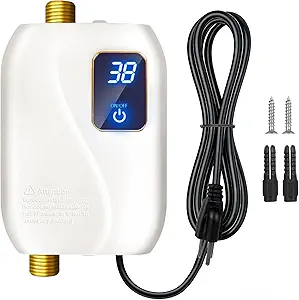 |
| Top Rated A top-rated pick with lots of positive feedback | Stiebel Eltron Tempra 29 Plus |  |
| Most Popular A crowd favorite that many people choose with confidence | EcoSmart ECO 11 Tankless Heater |  |
| Best Seller A high-volume bestseller chosen again and again | Rheem RTEX-18 Tankless Electric Water Heater |  |
WINTEMP WN27 27kW Tankless Water Heater

| Wattage | 27000 watts |
|---|---|
| Voltage | 240 volts |
| Flow Rate | 6.5 gpm |
| Maximum Temperature | 140 °F |
| Mount Type | Wall |
The WINTEMP WN27 is a compact wall‑mounted electric tankless heater built to supply continuous hot water for typical household needs. It heats water on demand using self‑modulating technology that adjusts power to incoming water temperature and flow, which helps maintain stable output temperatures and reduce energy use when demand is low. The unit supports up to 6.5 gallons per minute, making it suitable for showers and common domestic fixtures in mild to moderate climates, and it includes an LED display, temperature lock, multiple safety protections, ETL certification, and WiFi control for remote temperature adjustments. Installation requires substantial electrical capacity—three 40 A double‑pole breakers and three 8 AWG lines are listed—so professional electrical work is normally needed. The heater is space saving compared with tanks and wastes no standby energy, but the high amperage requirement and need for a robust household service may add upfront installation cost and complexity for many homes.
Best for: Buyers who want a compact, energy‑efficient whole‑house electric tankless heater that delivers steady hot water for typical household use and are prepared to arrange professional electrical installation.
Less Ideal for: Homes with limited electrical service or buyers unwilling to upgrade wiring and breakers should consider lower‑power units or alternatives that match their existing electrical capacity.
- High 27 kW output delivers up to 6.5 GPM for continuous hot water
- Self‑modulating control for stable temperature and improved energy efficiency
- Compact wall‑mounted design saves space compared with tank heaters
- Built‑in safety features and ETL certification for leak, overheat, and dry‑fire protection
- WiFi remote control and LED display for convenient temperature adjustments
- Requires significant electrical capacity and multiple 40 A breakers, increasing installation complexity
- May be oversized or unnecessary for very small homes or single‑fixture use
Verdict: A powerful, space‑saving tankless heater that provides reliable on‑demand hot water and energy savings for buyers who can support its substantial electrical requirements.
Rheem RTEX-24 Tankless Electric

| Wattage | 24 KW |
|---|---|
| Voltage | 240 volts |
| Flow Rate | 5.9 gpm |
| Maximum Temperature | 140 °F |
| Mount Type | Wall |
The Rheem RTEX-24 is a high‑output electric tankless unit meant for whole‑home use where robust flow and consistent temperature matter. It uses self‑modulating power control and a digital temperature display to maintain setpoint while supplying up to 5.9 GPM, which in warm climates can handle two showers plus sinks simultaneously. The compact, wall‑mounted stainless steel design saves space and requires no venting, but installation needs significant electrical capacity — three 40A double‑pole breakers and roughly 200A household service are recommended. Practical benefits include near‑instant hot water without standby heat loss, energy modulation that scales power to demand, and a clear LED readout for easy adjustment. Limitations are the high electrical requirements that may force panel upgrades and the unit's flow performance depends on incoming ground water temperature, so output will be lower in cold climates. For buyers prioritizing on‑demand performance, the RTEX-24 is a powerful electric option when your home can support the needed circuitry.
Best for: Buyers who need a performance‑focused electric tankless heater that can supply continuous hot water for multiple fixtures and are prepared to accommodate the required electrical upgrades.
Less Ideal for: Homes without sufficient electrical service or buyers who cannot or prefer not to upgrade breakers and panel capacity should consider lower‑power or gas alternatives.
- High 24 kW heat output for strong flow rates up to 5.9 GPM in warm conditions
- Self‑modulating power control improves efficiency by using only required energy
- Compact wall‑mounted stainless steel design saves space and needs no venting
- Digital temperature control and LED display for precise setpoint adjustment
- Requires substantial electrical capacity and three 40A double‑pole breakers
- Flow rate and temperature rise depend on incoming water temperature, so cold climates reduce usable GPM
Verdict: Choose the RTEX-24 if you want a powerful, whole‑home electric tankless heater that delivers strong on‑demand flow when your electrical service can support it.
Titan N-85 Tankless Water Heater

| Wattage | 8500 watts |
|---|---|
| Voltage | 240 volts |
| Flow Rate | 2.5 gpm |
| Efficiency | 99.5% |
The Titan N-85 is an electric tankless water heater built for small-point-of-use or limited-demand whole-house setups where space is tight. It heats water on demand with an 8.5 kW (8500 W) element at 240 V and is thermostatically controlled for consistent outlet temperature. The unit mounts to the wall and advertises very high thermal efficiency, so it wastes little energy while idling. With a rated flow of about 2.5 gallons per minute it is suitable for a single shower or sink combination rather than multiple simultaneous high-flow fixtures. Installation requires a 240 V, 38 A-capable circuit and proper electrical protection, so expect electrician labor if your home wiring is not already compatible. The heater's small depth and indoor orientation make it unobtrusive in utility rooms or closets, and a titanium heating element suggests corrosion resistance for longer life. The main compromise is limited flow and the electrical capacity needed to reach higher temperatures at higher flow rates, so match its output to your typical hot water demand before buying.
Best for: Buyers who want a space-saving, energy-efficient on-demand heater for a single bathroom or point-of-use installation and who prioritize predictable temperature control and long component life.
Less Ideal for: Homes needing simultaneous hot water for multiple showers or large tubs, or buyers without access to a 240 V, 38 A electrical circuit and professional installation resources.
- Compact wall-mount design saves space and fits small utility areas.
- Thermostatic control provides steady outlet temperatures for user comfort.
- High stated efficiency reduces standby energy loss.
- Titanium heating element resists corrosion for durability.
- Sufficient for single-shower or point-of-use applications.
- Low maximum flow rate limits use with multiple fixtures at once.
- Requires a dedicated 240 V, high-amperage circuit and proper electrical installation.
Verdict: Choose the Titan N-85 when you need a compact, efficient tankless heater for single-point hot water use with reliable temperature control.
xwdzswgs 110V Tankless Water Heater
| Power Source | ac |
|---|---|
| Maximum Temperature | 131 °F |
| Heat Output | 10236 british thermal units |
| Special Features | Dry Combustion Protection, LED Display, Lightweight |
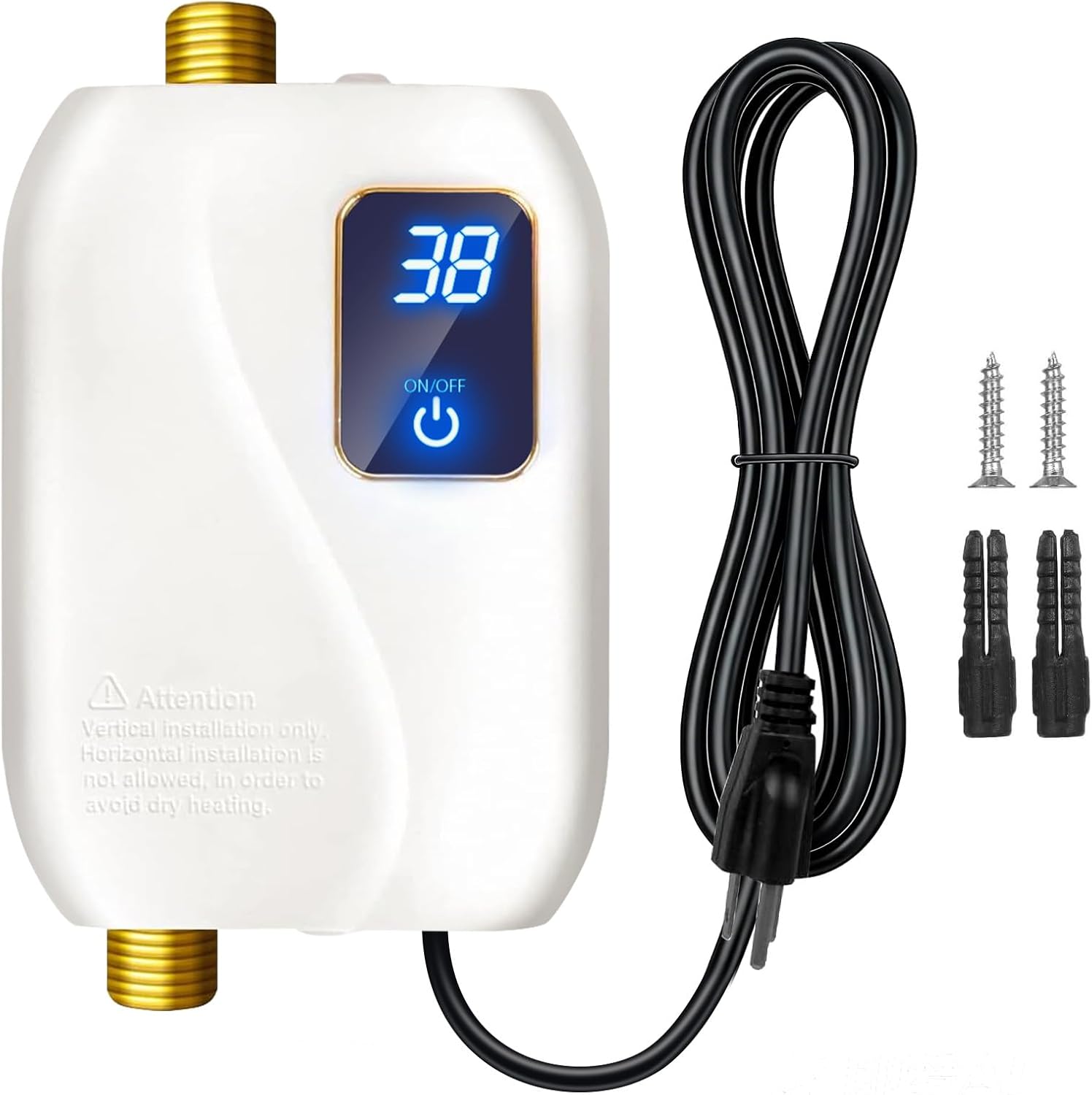
This compact 110V tankless unit delivers instant hot water at small fixtures without a storage tank, using a 3000W heater and an LED display to set and monitor outlet temperature in Celsius or Fahrenheit. It mounts vertically and is aimed at point-of-use applications like kitchen sinks, utility sinks, RVs, and small apartments where space is limited and preheating a tank would be wasted. The unit includes safety features such as IPX4 splash resistance, leakage and dry-heating protection, over-temperature shutoff, and a filterable inlet to reduce clogging. Installation is straightforward with 1/2 inch NPT connections and predrilled mounting holes, but it requires a dedicated circuit and heavier gauge wiring and is not suitable for supplying showers or multiple large fixtures because flow rate strongly affects output temperature. For buyers on a budget this model offers a low-cost, energy-efficient way to get near-instant hot water at a single sink, provided you follow the vertical-installation and electrical recommendations.
Best for: Buyers who need an inexpensive, space-saving way to get hot water at a single sink or small point-of-use location and who prioritize upfront affordability and energy efficiency over high flow rates.
Less Ideal for: Homes needing whole-house hot water, bathroom showers, or multiple simultaneous hot outlets should choose a higher-capacity or 240V model instead.
- Compact, wall-mounted point-of-use design saves space under sinks and in small rooms
- Instant heating with 3000W power and LED temperature control for quick setpoint adjustments
- Multiple built-in safety protections including IPX4, leakage, dry-heating, and over-temperature shutoff
- Simple plumbing connections with 1/2 inch NPT fittings and included mounting hardware
- 110V/3000W output limits flow and makes it unsuitable for showers or supplying multiple fixtures
- Requires vertical installation and a dedicated electrical circuit with heavier gauge wiring
Verdict: A budget-friendly, compact point-of-use tankless heater that delivers instant hot water for a single sink while keeping installation and operating costs low.
Stiebel Eltron Tempra 29 Plus

| Wattage | 28.8 KW |
|---|---|
| Voltage | 240 volts |
| Flow Rate | 3 gpm |
| Maximum Pressure | 150 psi |
| Power Source | Hard Wiring Required |
The Stiebel Eltron Tempra 29 Plus is a wall‑mounted electric tankless water heater built for steady, whole‑home hot water. It uses self‑modulating German engineering to adjust power to demand, maintaining a consistent set temperature while minimizing energy use, and the unit includes an LED display and two temperature memory presets for easy daily operation. Typical use is feeding multiple bathrooms, laundry, and kitchen fixtures without a storage tank; at its rated 28.8 kW output it can support several simultaneous showers in warm climates. Installation requires hard‑wired 240V service and three dedicated 40A breakers, so electrical upgrades are often needed but the compact, vent‑free design keeps it space efficient. Practical benefits include high efficiency, on‑demand supply, and a small footprint that avoids standby losses, while limitations are the significant electrical service requirement and the need to size the unit to your incoming water temperature and household demand. For buyers who prioritize dependable, factory‑quality tankless performance, this model delivers a robust solution.
Best for: Homeowners who want a reliable, factory‑engineered electric tankless heater that delivers consistent on‑demand hot water and are prepared to meet the electrical service requirements.
Less Ideal for: Those without sufficient electrical capacity or who prefer a low‑cost drop‑in replacement without wiring upgrades should consider other options.
- High 28.8 kW output supports multiple simultaneous hot water uses
- Self‑modulating technology maintains set temperature under varying flow
- Compact, wall‑mounted design with no venting required
- LED display and two temperature memory presets for simple control
- Requires substantial electrical service (three 40A breakers and minimum 200A household service)
- May need electrical upgrades and professional hard‑wired installation
Verdict: Buy this if you need a durable, high‑output electric tankless heater that reliably delivers steady hot water for whole‑home use and you can provide the required electrical service.
EcoSmart ECO 11 Tankless Heater

| Wattage | 13000 watts |
|---|---|
| Voltage | 220 volts |
| Flow Rate | 3.1 gpm |
| Maximum Temperature | 140 °F |
| Heat Output | 11 KW |
The EcoSmart ECO 11 is a wall-mounted, 13 kW electric tankless heater built for point-of-use needs like a bathroom, small sink or office breakroom. It heats water on demand using self-modulating technology and a digital temperature control, which keeps output within about one degree of the set temperature while reducing standby energy loss. In real-world use the unit is easy to tuck into small spaces and provides between roughly 1.3 and 3.1 gallons per minute depending on incoming water temperature, so it can reliably support a single shower in mild climates or a sink and low-flow shower in warmer areas. Installation requires appropriate electrical capacity (this model is configured for 240 V and draws high amperage), so a qualified electrician is typically needed. The LED display and compact footprint make daily use straightforward, but its flow rate limits mean it is not suitable as a whole-house replacement in colder climates or for simultaneous high-flow fixtures. For buyers who size it correctly, the ECO 11 offers efficient, consistent on-demand hot water at the point of use.
Best for: Buyers who prioritize energy-efficient on-demand hot water for a single bathroom, sink, or other point-of-use location and want a compact, reliable unit backed by widespread customer use.
Less Ideal for: Homes that need whole-house hot water in cold-climate conditions or households that routinely run multiple showers or high-flow appliances simultaneously should choose a higher-capacity model.
- Compact wall-mounted design saves floor space and fits tight installs
- Self-modulating technology only uses required power, improving energy efficiency
- Digital temperature control and LED display for precise setpoint adjustments
- Provides on-demand hot water that avoids tank standby heat loss
- Limited maximum flow rate makes it unsuitable for multiple full-flow fixtures at once
- Requires substantial dedicated electrical circuit and professional installation
Verdict: Choose the ECO 11 when you need a compact, energy-efficient point-of-use electric tankless heater that reliably delivers single-fixture hot water on demand.
Rheem RTEX-18 Tankless Electric Water Heater
| Power Source | AC Power |
|---|---|
| Wattage | 18000 watts |
| Voltage | 240 volts |
| Flow Rate | 4.4 gpm |
| Efficiency | 99.8% |
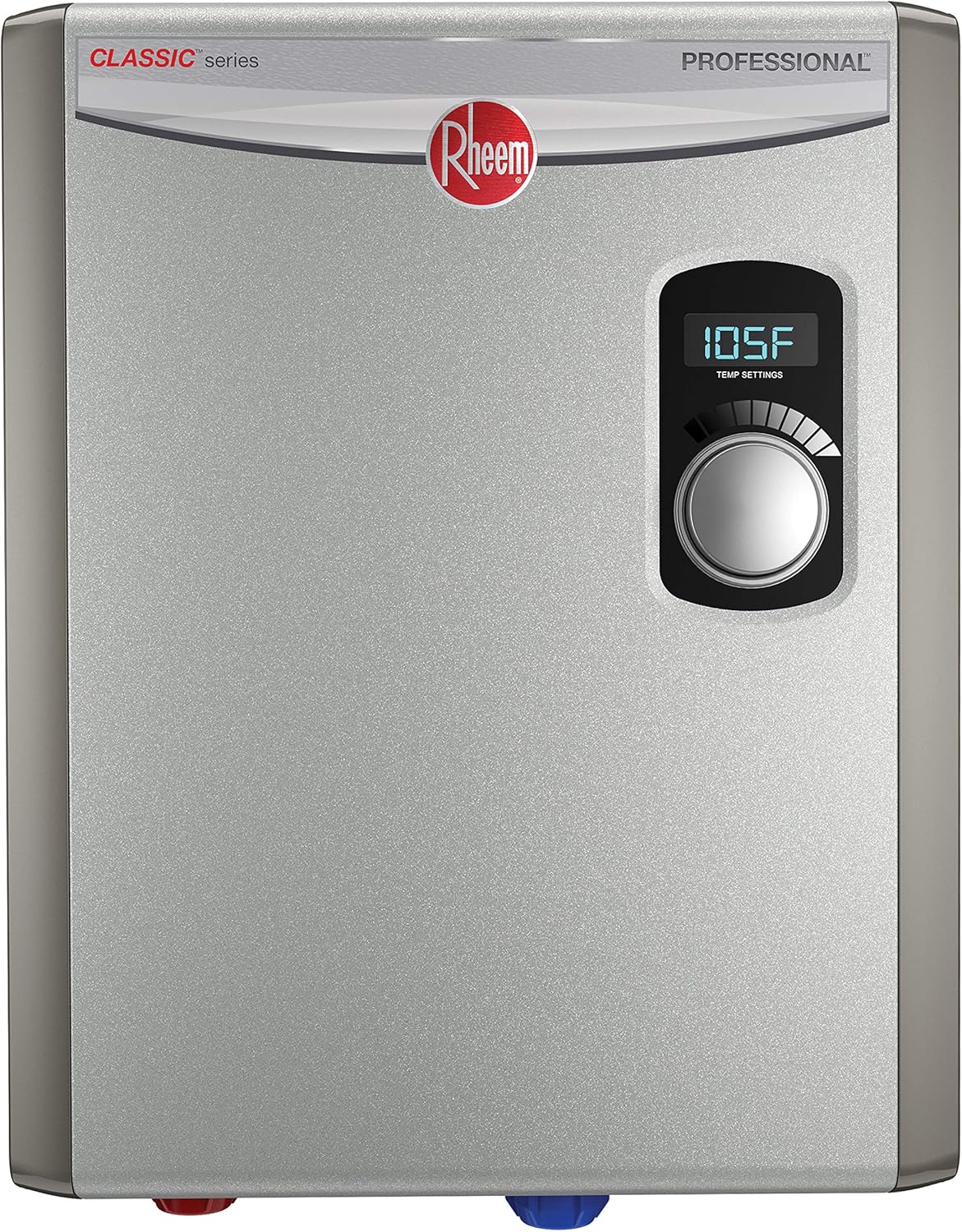
The Rheem RTEX-18 is a compact, wall-mounted tankless electric unit that supplies on-demand hot water for mid-range whole-home applications. It uses self-modulating technology and two field-serviceable copper immersion heating elements to adjust power to actual hot water demand, which helps reduce energy use compared with a traditional tank. A front LED digital thermostat lets you set outlet temperature to within about one degree and the unit supports flow rates up to 4.4 gallons per minute, suitable for a single shower and additional fixtures in warmer inlet conditions. Installation is straightforward for a licensed electrician and plumber because the unit requires 240V power and 3/4 inch NPT water connections and does not need venting. Practical limitations include the 4.4 GPM max flow, which may not sustain multiple high-demand fixtures in cold-climate homes, and the need for substantial electrical circuit capacity to support an 18 kW load. For buyers seeking a space-saving, energy-smart replacement for a conventional tank where demand is moderate, the RTEX-18 is a dependable choice.
Best for: Buyers who prioritize reliable on-demand hot water with energy efficiency and want a compact, wall-mounted electric solution for moderate whole-home use.
Less Ideal for: Homes with very high simultaneous hot-water demand or properties without adequate 240V electrical capacity and breaker space should consider higher-capacity options or gas models.
- Self-modulating 18 kW output adjusts energy use to match demand
- Digital LED thermostat with +/-1 degree accuracy for precise temperature control
- Compact wall-mounted design saves space and requires no venting
- Field-serviceable dual copper heating elements for easier maintenance
- Maximum flow rate of 4.4 GPM may be insufficient for simultaneous high-demand fixtures in cold inlet conditions
- Requires substantial 240V electrical capacity and proper breakers for installation
Verdict: Choose the RTEX-18 if you want a space-saving, energy-smart electric tankless heater that reliably delivers continuous hot water for moderate household demand.
Choosing the Right Electric Tankless Water Heater: Key Factors to Consider
Flow Rate and Temperature Rise
Flow rate and temperature rise determine whether a tankless heater can meet simultaneous hot-water demands. Manufacturers publish flow-versus-rise charts showing how many gallons per minute the unit can supply at different incoming water temperatures. For example, a higher required temperature rise reduces available flow, so pay attention to local ground temperature when sizing a unit.
Undersizing for flow leads to low hot-water pressure or mixed lukewarm outputs during peak use. Properly matching expected simultaneous fixtures and typical incoming cold-water temperature ensures the heater maintains target setpoints without cycling or thermal cutouts.
Electrical Service and Wiring Requirements
Electric tankless units can demand significant continuous amperage and may require dedicated circuits or multi-breaker connections. Confirm your home's service capacity, panel space, and whether new wiring or disconnects are needed. The difference between a unit that needs a single 50-amp breaker and one that requires three 40-amp breakers has major cost and feasibility implications.
Also consider wire gauge, breaker type, and whether your installer must upgrade grounding or add a new subpanel. Planning ahead avoids installation delays and ensures the heater operates safely under full load.
Energy Efficiency and Operating Cost
Electric tankless heaters avoid standby losses associated with storage tanks, which can reduce energy use for households with intermittent hot-water needs. Efficiency for electric units is typically high, but realistic operating cost depends on how often and how long hot water is used, plus local electricity rates.
Look for unit controls that allow temperature setbacks or demand-based features to minimize energy use. Good thermal management and precise thermostatic control reduce cycling and keep electricity consumption predictable over time.
Installation Location and Plumbing Compatibility
Where you install the unit affects performance and serviceability. Units placed far from point-of-use fixtures add lag time and may need recirculation solutions. Wall-mounted, compact designs save floor space but require solid backing, proper clearances, and accessible shutoff valves.
Check pipe fittings, required dielectric unions, and whether any water-softening or pre-treatment is recommended for your water quality. Plumbing connections and venting (when applicable) must match local code and facilitate future maintenance.
Durability, Materials, and Maintenance Needs
Materials in contact with water, quality of heating elements, and corrosion protection determine longevity. Units with replaceable heating elements and clear descaling procedures simplify long-term upkeep, especially in hard-water areas.
Regular maintenance tasks such as flushing, filter cleaning, and element checks keep performance stable. Consider access for service and availability of spare parts when choosing a unit to reduce lifecycle downtime and repair complexity.
Sizing a Unit for Your Home
Sizing starts with estimating peak simultaneous demand in gallons per minute and the expected temperature rise. Add the flow rates of fixtures you expect to use at the same time, then consult the unit's flow-versus-rise chart to find a match. If you live where incoming groundwater is cold, the same desired output temperature requires a larger capacity.
When in doubt, choose a slightly larger capacity to cover occasional simultaneous uses or future household additions. Oversizing slightly helps avoid mixed-temperature showers during busy periods but may increase initial electrical demands.
- Calculate simultaneous fixture demand (showers, dishwasher, laundry).
- Check local groundwater temperature to determine required temperature rise.
- Factor in a safety margin for future household changes.
Electrical Upgrades and Safety Considerations
Plan electrical work early. Many electric tankless models require dedicated multi-breaker circuits or service upgrades. Ensure your installer verifies breaker sizing, wire gauge, and whether a new subpanel or service change is necessary.
Prioritize safety devices such as appropriately rated disconnects, ground fault protections where required, and clear labeling for service personnel. Proper overcurrent protection and compliance with local electrical code keep the unit reliable and reduce fire risk.
- Confirm amperage draw at full load before purchase.
- Hire a licensed electrician to assess panel capacity and wiring.
- Install required disconnects and follow grounding instructions.
Managing Hard Water and Scale
Scale buildup shortens the life of heating elements and reduces thermal transfer efficiency. In areas with hard water, regular descaling or softening is essential to maintain performance. Some manufacturers provide flushing kits or recommend service intervals to remove mineral deposits.
If you cannot install a full water-softening system, implement a maintenance schedule to flush and inspect elements more frequently. Using inline filters and accessible shutoffs simplifies routine maintenance chores and helps avoid emergency repairs.
- Schedule regular flushing to remove scale.
- Consider inline sediment filters to protect internal components.
- Keep maintenance access clear for element replacement.
Point-of-Use Vs Whole-House Placement
A point-of-use unit close to a single fixture reduces lag and can be more energy-efficient for sporadic usage. Whole-house units are sized to supply multiple simultaneous fixtures and are typically mounted near the main plumbing riser. Choose placement by balancing installation cost, hot-water lag time, and expected simultaneous demand.
If you have widely separated bathrooms, multiple point-of-use units or a combination of a central unit with small local boosters may yield better comfort and system resilience.
- Use point-of-use for a single bathroom or remote sink.
- Select whole-house models for multiple simultaneous users.
- Combine strategies for large homes with distributed demand.
Controls and User Interface
Precise digital thermostats, adaptive temperature controls, and remote connectivity can make daily use simpler and reduce wasted energy. Look for units with accurate temperature readouts and easy adjustment of maximum setpoints.
Lockable temperature settings and diagnostic indicators help households avoid scald risks and make troubleshooting easier for technicians. Good user interfaces reduce the learning curve and improve satisfaction with on-demand hot water systems.
- Prefer digital temperature control with clear readouts.
- Look for diagnostic codes or status LEDs for easier troubleshooting.
- Consider remote-control features if you want scheduling or monitoring.
How We Chose the Best Electric Tankless Water Heater
We started by focusing on products designed specifically as whole-house or point-of-use electric tankless water heaters that are available for typical residential installations. Selection filtered for units with clear, manufacturer-published flow and temperature-rise charts, declared energy efficiency or heat-rise ratings, and documentation of electrical requirements. We prioritized models that offer robust safety and control features such as adjustable temperature setpoints, overheat protection, and proper grounding or bonding instructions. Key evaluation dimensions included measured hot-water flow at common temperature rises, required electrical service and wiring complexity, durability and materials in contact with water, and ease of installation and service access. We excluded units intended solely for commercial or industrial use, models that lack basic performance data, and any heater without clear electrical installation specifications. The resulting shortlist emphasizes dependable delivery of hot water under realistic household load patterns, manageable installation demands for typical residential electricians, and longevity factors that reduce maintenance downtime.
Our full evaluation process is outlined in our review methodology.
FAQ
How do I know what size electric tankless water heater I need?
Estimate the simultaneous hot-water flow you expect in gallons per minute and determine the required temperature rise based on incoming water temperature and desired output. Match that demand to a unit's published flow-versus-rise chart. When unsure, pick a slightly larger capacity to accommodate peak use.
Will a tankless unit work with my existing electrical panel?
It depends on the model's amperage requirements and your panel capacity. Many electric units need dedicated circuits or multiple breakers. Have a licensed electrician check service capacity, breaker slots, and wiring before purchase to avoid surprise upgrades.
How often should I perform maintenance on an electric tankless heater?
Maintenance frequency depends on water hardness and use. In hard-water areas, descaling and flushing every 6 to 12 months is common. Softer water or lower use can extend intervals. Regular inspection of heating elements and filters helps prevent efficiency loss.
Can an electric tankless water heater supply a whole house?
Yes, suitably sized electric tankless units can supply whole-house needs, but they require higher electrical capacity and careful sizing for simultaneous demand. For larger homes, you may also consider distribution strategies like multiple units or point-of-use boosters.
Do electric tankless heaters save money compared with tank-style heaters?
They eliminate standby losses, which can reduce energy use for households with intermittent hot-water needs. Actual savings depend on hot-water usage patterns and electricity rates. Consider lifecycle maintenance and any electrical upgrade costs when evaluating total cost of ownership.
Final Verdict
Choosing an electric tankless water heater comes down to matching flow capacity and temperature-rise capability to your household's peak demand while ensuring your electrical system can safely supply the unit. Prioritize accurate sizing, manageable installation requirements, and materials that resist scale if you have hard water. Balance upfront installation complexity against ongoing energy savings and reduced space needs. With correct sizing and routine maintenance, an electric tankless water heater can provide reliable on-demand hot water and long service life.