
Note: This article contains affiliate links. If you click on these links and make a purchase, we may earn a small commission at no extra cost to you. This helps support our research and content. Read our full affiliate disclosure here.
If you regularly make iced lattes at home, the right espresso machine makes the difference between watery, diluted drinks and bright, flavorful cold shots. An espresso machine optimized for iced lattes focuses on fast, stable extraction and control over dose and temperature so shots stay lively when poured over ice. This guide shortlists five machines that perform well for iced cold drinks and explains the setup and features that matter most. Below you will find the top picks for iced-latte-friendly machines plus the decision factors we used to evaluate them, practical setup tips, and answers to common questions about brewing cold espresso at home.
Top Picks at a Glance
| Best Quality Built to a higher standard if you want something more solid | Breville Barista Touch BES880BSS |  |
| Best Budget The cheapest option that still gets the job done reliably | XIXUBX CM510 Espresso Machine |  |
| Top Rated A top-rated pick with lots of positive feedback | Breville Barista Express BES870XL |  |
| Most Popular A crowd favorite that many people choose with confidence | CASABREWS CM5418 Espresso Machine |  |
| Best Seller A high-volume bestseller chosen again and again | Ninja Luxe Café ES601 |  |
Breville Barista Touch BES880BSS

| Operation Mode | Fully Automatic |
|---|---|
| Wattage | 1680 watts |
| Human Interface Input | Touchscreen |
| Coffee Input Type | whole_beans |
| Filter Type | Reusable |
The Breville Barista Touch combines an integrated conical burr grinder, touchscreen controls, and an automated milk texturing system to make café-style espresso and milk drinks with minimal fuss. You load whole beans, select a program on the bright touchscreen and the machine grinds, doses and extracts using a low-pressure pre-infusion followed by a 9 bar extraction for fuller flavor. The Auto MilQ steaming wand textures milk automatically to a silky microfoam suitable for lattes and iced lattes, while the ThermoJet heating system brings the group head up to temperature quickly for fast shot-to-shot turnaround. Practical benefits include consistent dosing from the 30-setting grinder, touch presets that speed routine drinks, and a stainless steel jug and included dosing tools for repeatable results. Expect a learning curve if you like fully manual control and occasional cleaning of the grinder and steam path; the machine is substantial in footprint and requires regular descaling and maintenance to keep performance steady. For iced lattes the precise dosing, quick heatup and reliable milk texture make it an excellent choice when you want consistent chilled espresso-based drinks.
Best for: Buyers who prioritize consistent, café-quality espresso and predictable milk texture for regular iced lattes and want a machine that automates grinding and steaming without fully manual workflow.
Less Ideal for: People wanting a compact, ultra-simple single-purpose espresso maker or those who prefer fully manual lever-style control and minimal maintenance.
- Built-in conical burr grinder with 30 grind settings for precise dosing
- Touchscreen presets speed up routine drink preparation
- Auto MilQ system textures milk automatically for consistent microfoam
- ThermoJet heating system delivers fast heat-up for quick shot-to-shot timing
- Requires routine maintenance and cleaning to sustain performance
Verdict: A performance-focused home espresso machine that automates grinding and milk texturing to deliver consistent, barista-style iced lattes with minimal guesswork.
XIXUBX CM510 Espresso Machine

| Output Pressure | 3.5 bar |
|---|---|
| Wattage | 800 watts |
| Operation Mode | Semi-Automatic |
| Coffee Input Type | Ground |
| Capacity | 240 ml |
The XIXUBX CM510 is a small semi-automatic espresso machine built for simple, everyday espresso and milk drinks. It uses a gentle 3.5 bar extraction paired with an 800W heater to reach brew-ready temperature quickly and produce a smoother, less bitter cup; brewing is controlled with a single dial that selects Brew, Steam, or Off. The integrated steam wand and cool-touch silicone grip let you texture milk for lattes and cappuccinos and the package includes a Tritan cup, tamper, filter and portafilter so you can start making drinks right away. The unit is very compact and lightweight, so it fits tight counters, dorms, and offices, and the safety lock and BPA-free cup are useful around kids. Expect simple mechanical controls and straightforward maintenance rather than precision commercial features, and note the lower output pressure compared with higher-end machines which limits extraction intensity for very concentrated shots. For casual iced lattes and milk-based drinks this machine delivers fast, consistent results without a steep learning curve.
Best for: Buyers who want an affordable, no-fuss machine for making milky espresso drinks and iced lattes quickly in small spaces and without barista training.
Less Ideal for: Serious home baristas seeking high-pressure extraction, advanced temperature control, or metal-built commercial-grade machines should consider higher-end models.
- Fast 800W heat-up for quick morning drinks
- One-knob control keeps operation simple for beginners
- Included steam wand produces microfoam suitable for lattes and iced lattes
- Compact, lightweight footprint fits small counters and portable setups
- Includes starter accessories: portafilter, tamper, Tritan cup
- Low 3.5 bar output pressure limits the intensity and crema compared with higher-pressure machines
- Mostly plastic construction may feel less durable than metal-bodied units
Verdict: A compact, budget-friendly espresso maker that speeds up morning iced lattes with simple controls and a built-in steam wand.
Breville Barista Express BES870XL

| Wattage | 1600 watts |
|---|---|
| Voltage | 120 |
| Coffee Input Type | whole_beans |
| Filter Type | Reusable |
| Operation Mode | Manual |
The Breville Barista Express is a manual, semi-automatic espresso machine that grinds beans and brews shots in a single workflow, then steams milk for lattes and cappuccinos. Day-to-day use centers on its integrated conical burr grinder with 16 grind settings and dose control, which feeds freshly ground beans into a 54mm portafilter for single or double shots. Temperature is managed by a thermocoil heating system with digital control for consistent extraction, and the powerful steam wand produces microfoam suitable for pouring latte art or texturing milk for iced lattes when cooled and combined with ice. Practical benefits include a large water tank, reusable filters, and included tamping and trimming tools that make routine preparation and maintenance straightforward. The machine is manual, so it requires some learning and regular cleaning to keep grinder and group components performing reliably, and it is a one-cup workflow rather than a multi-cup commercial setup. For buyers who want repeatable espresso-based drinks and control over grind and milk texture, this machine balances performance with approachable controls.
Best for: Buyers who prioritize a reliable, consistent home espresso workflow and want control over grind-to-shot variables to make café-style hot and iced milk drinks.
Less Ideal for: People seeking a fully automatic or hands-off machine that requires minimal technique, or those who need high-volume commercial output.
- Integrated conical burr grinder with 16 grind settings for fresh dose-controlled shots
- Thermocoil heating and digital temperature control for consistent extraction
- 54mm portafilter and included tamping tools support professional-style shots
- Powerful steam wand that creates microfoam suitable for latte art and textured milk
- Manual operation requires skill and regular cleaning to maintain consistent performance
Verdict: Choose this machine if you want a reliable, grinder-integrated home espresso system that delivers consistent shots and professional-style milk texturing for iced lattes.
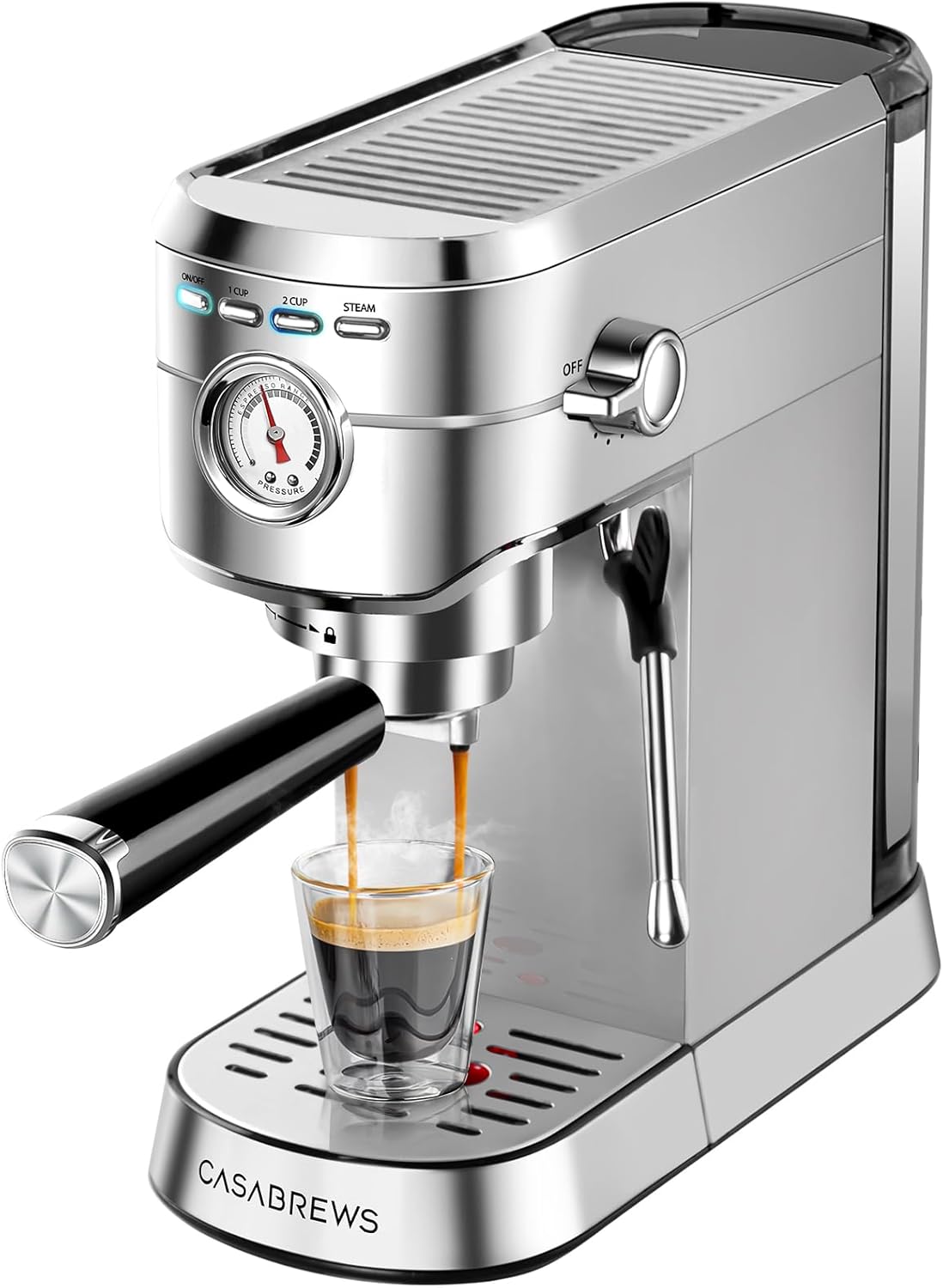
CASABREWS CM5418 Espresso Machine
| Operation Mode | Semi-Automatic |
|---|---|
| Wattage | 1350 watts |
| Output Pressure | 20 bar |
| Coffee Input Type | ground_coffee |
| Filter Type | Reusable |
The CASABREWS CM5418 is a countertop semi-automatic espresso maker aimed at home baristas who want café-style shots and milk drinks. It uses a 20-bar Italian pump with pre-infusion and a built-in pressure gauge so you can dial grind and tamp to improve extraction, and the 51mm portafilter and reusable filters support single or double shots. A powerful steam wand textures milk for cappuccinos and lattes and the top cup warmer and removable 34 oz water tank make daily use convenient. The machine runs on 1350W and offers button controls for one- and two-shot volumes, though it has a single boiler so you must wait between steaming and brewing to avoid the machine entering over-temperature protection. Practical benefits include compact stainless steel styling that fits small counters, easy cleanup with a removable drip tray, and guided troubleshooting in the manual and videos. Expect a slight learning curve to get grind, dose, and tamp right and occasional cooldown pauses when switching from steaming to brewing, which affect speed for back-to-back iced latte prep.
Best for: Buyers who value visible pressure control and a strong steam wand for milk-based drinks and are comfortable tuning grind and tamp to improve espresso quality.
Less Ideal for: People who need quick consecutive drinks or fully automatic, hands-off operation should consider dual-boiler or automatic alternatives.
- 20-bar pump with built-in pressure gauge for visible extraction feedback
- Powerful steam wand capable of producing microfoam for milk drinks
- Compact stainless steel body with removable 34 oz water tank for easy refills
- Removable drip tray and cup warmer improve everyday convenience
- Single-boiler design requires cooling time between steaming and brewing, slowing consecutive drinks
- Requires manual grind/dose/tamp adjustments to reach consistent results
Verdict: A compact, pressure-visible espresso machine with a strong steam wand that rewards users willing to dial grind and tamp for café-style milk drinks.
Ninja Luxe Café ES601

| Operation Mode | Fully Automatic |
|---|---|
| Wattage | 1650 watts |
| Human Interface Input | Buttons |
| Coffee Input Type | Ground, Whole Bean |
| Filter Type | Reusable |
The Ninja Luxe Café ES601 is a full-featured countertop machine designed to simplify café-style drinks at home, especially iced lattes and other cold-pressed beverages. It combines a conical burr grinder with 25 settings, weight-based automatic dosing, and an assisted tamper to produce consistent espresso shots, while its rapid cold brew and cold-pressed espresso modes let you make smooth, flavorful iced drinks without long steep times. The dual froth system pairs an automated steamer with a spinning whisk so you can pour milk, select a froth style, and walk away for hands-free microfoam or cold foam. Barista Assist guides you through settings and automates temperature and pressure adjustments, which lowers the guesswork for beginners. Practical touches include a removable 70 oz water reservoir, self-purging steam wand, reusable filter, and onboard accessory storage. At 1650 watts and with many automated features, it is sizable and aimed at people who want reliable, repeatable iced lattes without learning complex manual techniques, but those seeking a compact or purely manual prosumer espresso rig may prefer a simpler machine.
Best for: Buyers who want dependable, café-quality iced lattes at home without mastering manual espresso techniques and who value automation and consistent results.
Less Ideal for: Minimalist users who need a compact, lightweight brewer or experienced baristas who prefer a fully manual or prosumer espresso setup.
- 3-in-1 functionality: espresso, drip coffee, and rapid cold brew for versatile iced drink options
- Built-in conical burr grinder with 25 grind settings and weight-based dosing for consistent extraction
- Hands-free dual froth system that produces steamed milk, microfoam, and cold foam automatically
- Barista Assist automation reduces guesswork with guided tamping, dosing, and active temperature/pressure control
- Removable 70 oz water reservoir and built-in accessory storage for convenient daily use
- Relatively large and heavy for smaller countertops
- Many automated settings add complexity that may be unnecessary for users who prefer a simple machine
Verdict: If you want fuss-free, repeatable iced lattes and cold-pressed espresso at home, this automated 3-in-1 machine delivers café-style results with minimal skill required.
Choosing the Right Espresso Machine for Iced Lattes: Key Factors to Consider
Extraction Control and Dose Flexibility
Accurate dose and tamping control let you dial in shorter, stronger shots that stand up to ice. For iced lattes, single or double shots often need a different grind and dose than hot drinks, so a machine that responds predictably to small changes in dose, grind size, and water volume will yield better flavor.
Machines with consistent pressure profiles and adjustable extraction parameters reduce guesswork. If the machine has pre-infusion or programmable shot volumes, you can optimize yield and concentration for iced drinks without compromising cup clarity.
Temperature Management and Cooling Behavior
Temperature stability matters because over-extracted, overly hot shots can taste bitter once chilled. Machines with good boiler control, PID regulation, or quick heat-up and recovery help maintain the ideal extraction temperature across multiple iced drinks in a session.
Also consider how quickly a shot loses heat when poured over ice. Some workflows benefit from slightly cooler brewing temperatures or rapid shot delivery to preserve acidity and prevent harsh extraction once the espresso contacts ice.
Cold-Drink Convenience and Workflow
Iced-latte preparation often requires a faster workflow than hot drinks because ice dilutes espresso quickly. Features that improve convenience include quick recovery between shots, programmable shot volumes, and a steam wand or alternative frothing system that can texture milk cold or at a lower temperature.
Space for an ice-filled glass under the brew head, easy-access portafilters, and straightforward shot timers reduce prep time. When a machine supports preparing concentrated shots or has an integrated cooling step, it makes a noticeable difference in the finished drink.
Milk Steaming and Cold Texture
Good milk texture matters for iced lattes even though milk is served cold. Microfoam that is well incorporated and slightly denser than hot latte foam holds up better over ice and mixes into the espresso smoothly. A steam wand with responsive control or a dedicated milk frother that can produce chilled textured milk will improve mouthfeel.
Consider how skillful you need to be to produce consistent cold-textured milk. Some systems offer automatic or assisted frothing that reduces variability, while traditional steam wands demand technique but offer more control.
Ease Of Cleaning And Maintenance
Frequent iced-latte making increases exposure to milk residue and sticky sugars. Machines that disassemble easily, offer removable drip trays and accessible group heads, and have straightforward backflush or self-cleaning features will save time and reduce foul flavors.
Replaceable seals and accessible service points make long-term upkeep easier. Regular cleaning prevents flavor carryover that is more noticeable in chilled drinks, where subtle off-flavors are not masked by heat.
Size, Counter Fit, And Noise
Your kitchen layout and tolerance for noise influence daily use. Compact machines that still provide necessary features are better for small counters, while larger units may offer more capacity and faster recovery.
Noise level matters if you make drinks early in the morning or in shared spaces. Consider how much steam and pump noise you can accept, and whether the machine's footprint fits comfortably with your other appliances and glassware for an efficient cold-drink workflow.
Setting Up Shots Specifically for Iced Lattes
Start by dialing in a slightly higher concentration than you would for a hot latte. Shorter shot yields, a slightly finer grind, or a modest increase in dose can help the espresso remain flavorful after dilution from ice. Use a consistent dosing method and measure shots by weight when possible.
Pull shots directly into a chilled container or over a few ice cubes to cool them quickly. Rapid cooling preserves bright notes and limits prolonged heat exposure that can drive bitterness. If you prefer to avoid direct ice contact, cool shots in a small metal pitcher placed in an ice bath for a few seconds before combining with milk.
- Target a thicker, more concentrated shot to compensate for ice dilution.
- Weigh shots for repeatability instead of relying on time alone.
- Chill the cup or pour shots over ice to lock in acidity and aroma.
Milk Techniques for Cold Drinks
Iced lattes need milk that blends smoothly without large bubbles. For best integration, texture milk to be slightly denser than hot milk microfoam so it holds up when combined with cold espresso and ice. If you do not have a steam wand, use chilled milk and a handheld frother to achieve acceptable texture.
Experiment with milk temperature and fat content. Whole milk gives creamier mouthfeel while lower-fat milks can taste thinner once chilled. For plant-based milks, test brands and formulations as they vary widely in how they froth and mouthfeel when cold.
- Texture milk to be smooth and slightly denser than hot foam.
- Use a chilled pitcher or pre-chilled milk to reduce melting when combining.
- Try different milk types to find the best cold mouthfeel.
Minimizing Dilution Without Compromising Flavor
To reduce excessive dilution, use concentrated shots, larger ice cubes, or chilling techniques that cool espresso rapidly. Large-format ice melts slower and keeps a better balance in the finished drink. Alternatively, try brewing directly over a small amount of ice to both cool and slightly dilute to taste.
Adjust the ratio of espresso to milk and ice based on your preference. A slightly stronger espresso-to-milk ratio will preserve flavor, but avoid over-concentration that tastes harsh when cold.
- Use large ice cubes or metal chilling stones to slow melt.
- Brew stronger shots rather than adding less ice.
- Cool espresso quickly to maintain bright flavors.
Maintenance Tips for Frequent Iced-Latte Makers
Clean milk wands and frothing accessories immediately after use to prevent buildup. Wiping and purging steam wands after each use prevents protein films that are harder to remove later and can taint cold drinks.
Backflush or run cleaning cycles on the brew group at regular intervals to avoid stale oils and coffee residues. Keep water and milk lines flushed if your machine has a closed milk system, and empty drip trays and knock boxes daily.
- Purge and wipe steam wand after every use.
- Backflush group head weekly or as recommended.
- Keep a cleaning schedule for milk components and water circuits.
Accessories That Make Iced Lattes Easier
A few well-chosen accessories smooth the workflow. A quality scale helps you dose consistently, a metal milk pitcher chills quickly and transfers heat efficiently, and a tamper that fits your portafilter promotes uniform extraction. Having a set of large ice molds or reusable metal chilling stones reduces melt rate and preserves flavor.
Consider a small pitcher or shot glass designed for rapid cooling and transfer. These reduce the time between extraction and assembly, which is especially helpful if you are preparing multiple iced drinks in succession.
- Use a scale for consistent dosing.
- Choose large ice molds to slow dilution.
- Keep spare pitchers and tampers for faster prep.
How We Chose the Best Espresso Machine for Iced Lattes
We prioritized traits that directly affect iced-latte quality in everyday home use. Key evaluation criteria included extraction control, which measures the machine's ability to produce consistent shots at lower yields suitable for iced drinks; temperature management, reflecting boilers, PID stability, or shot cooling that keeps flavors bright when cooling occurs; and flow and pressure consistency, which influence crema and solubles extraction under quick brewing cycles. We also assessed cold-drink convenience, covering features such as fast recovery between shots, steamer or milk-frothing performance for cold-textured milk, and any built-in or compatible cooling workflows that reduce dilution when pouring over ice. Ease of cleaning and maintenance were considered because sticky milk and frequent iced-drink routines increase upkeep. Durability and parts accessibility were looked at to ensure long-term reliability for daily iced-latte use. Products were excluded if they lacked basic pressure control, offered no reliable steam or milk texture control, or were clearly designed solely for low-volume or novelty use. We focused on machines that give home users repeatable results and practical features for making cold espresso-based drinks.
Our full evaluation process is outlined in our review methodology.
FAQ
Should I pull shorter shots for iced lattes?
Often yes. Shorter, more concentrated shots help the espresso maintain flavor after ice dilution. Adjust grind and dose carefully and measure by weight to keep results repeatable.
Can I use the same milk steaming technique as for hot lattes?
You can, but slightly denser textured milk works better for iced lattes. Aim for small, tight bubbles and a slightly thicker body so the milk blends smoothly with cold espresso.
Does brewing temperature need to be different for iced drinks?
Not always, but slightly lower brew temperatures can preserve delicate acidity that tastes better when chilled. Consistent temperature control matters more than chasing a specific degree.
How do I prevent my iced latte from tasting watered down quickly?
Use concentrated shots, larger ice cubes or chilling stones, and cool shots rapidly before combining. Also adjust the espresso-to-milk ratio to maintain flavor balance.
How often should I clean milk parts when making iced lattes daily?
Clean milk wands and components after each use and run a deeper cleaning or backflush routine on the brew group weekly. Frequent cleaning prevents off-flavors that are more noticeable in cold drinks.
Final Verdict
Prioritize machines that offer consistent extraction control and reliable temperature management when choosing an espresso machine for iced lattes. Cold-drink convenience features, good steam or milk-texturing capability, and easy maintenance will affect your day-to-day experience more than one-off spec advantages. Decide which tradeoffs matter most to you: compact size and low noise for small kitchens, or faster recovery and more control for repeated iced-drink sessions. Focus on extraction predictability and a workflow that reduces dilution to make consistently satisfying iced lattes at home.