
Note: This article contains affiliate links. If you click on these links and make a purchase, we may earn a small commission at no extra cost to you. This helps support our research and content. Read our full affiliate disclosure here.
Picking the right espresso machine for offices matters because workplace coffee affects morale, productivity, and everyday routines. In an office setting you need equipment that consistently pulls good shots, stands up to heavy daily use, and is easy to maintain so nonbaristas can operate it reliably. This guide presents our seven shortlisted espresso machines for offices that meet those needs and explains the attributes that make each a practical choice. Read on to understand how we evaluated reliability, throughput, and upkeep to find machines suited to real workplace use.
Top Picks at a Glance
| Best Overall The best all-around choice for most situations | Ninja Luxe Café Premier ES601 |  |
| Best Quality Built to a higher standard if you want something more solid | Breville Barista Pro BES878BSS |  |
| Best Value The sweet spot between price and what you get | CASABREWS 3700 Essential |  |
| Best Budget The cheapest option that still gets the job done reliably | IMUSA 4-Cup Espresso Maker |  |
| Top Rated A top-rated pick with lots of positive feedback | Breville Barista Express BES870XL |  |
| Most Popular A crowd favorite that many people choose with confidence | Nespresso Vertuo ENV135GY | 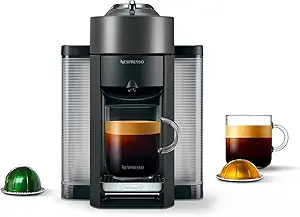 |
| Best Seller A high-volume bestseller chosen again and again | atatix EM3111 Espresso Machine |  |
Ninja Luxe Café Premier ES601

| Operation Mode | Fully Automatic |
|---|---|
| Wattage | 1650 watts |
| Coffee Input Type | Ground, Whole Bean |
| Filter Type | Reusable |
| Power Source | Electric |
The Ninja Luxe Café Premier ES601 is designed to replace multiple machines in a shared workspace by offering espresso, drip coffee, and rapid cold-brew functions in one unit. It guides users with Barista Assist technology, uses a built-in conical burr grinder with 25 grind settings and weight-based dosing, and includes an assisted tamper and a self-cleaning steam wand for hands-free frothing. In everyday office use it can make single cups, travel-mug drip coffee, or multi-serve cold brew without extra equipment, and the removable 70 oz water reservoir eases refills for moderate-volume environments. The dual froth system produces consistent microfoam for lattes and cappuccinos with minimal skill required. Trade-offs are its substantial countertop footprint and weight compared with simpler office brewers, and the machine's many features add complexity that may be unnecessary for teams that only want basic drip coffee. Maintenance like descaling and regular cleaning of grinder and wand is required to keep performance consistent in a busy office.
Best for: Teams or offices that want café-style variety and consistent drinks without hiring a trained barista and value a guided, all-in-one system that minimizes per-drink hands-on work.
Less Ideal for: Small offices with very limited counter space or groups that only need simple drip coffee and prefer a lower-maintenance, lighter-weight brewer.
- Three-in-one functionality covers espresso, drip coffee, and rapid cold brew from one machine
- Integrated conical burr grinder with 25 settings and weight-based dosing for consistent extraction
- Hands-free dual froth system and self-cleaning steam wand simplify milk drinks
- 70 oz removable water reservoir and built-in accessory storage suit shared use
- Includes helpful accessories like assisted tamper, portafilter, cleaning kit, and double basket
- Larger and heavier than single-purpose office brewers, requiring substantial counter space
- Feature set and complexity may be more than needed for teams that only want basic drip coffee
Verdict: If your office needs one machine to reliably produce espresso, drip, and cold-brew drinks with guided, low-skill operation, the Ninja Luxe Café Premier ES601 delivers a true all-in-one cafe solution.
Breville Barista Pro BES878BSS

| Wattage | 1680 watts |
|---|---|
| Voltage | 120 |
| Coffee Input Type | whole bean, ground |
| Capacity | 2 liters |
| Filter Type | Reusable |
The Breville Barista Pro pairs an integrated conical burr grinder with a fast ThermoJet heating system and PID temperature control to produce café-style espresso quickly. In practice it grinds and doses beans with 30 grind settings and delivers consistent 9-bar extraction through a 54mm portafilter, while the high-power steam wand textures milk for microfoam suitable for lattes and cappuccinos. The intuitive LCD display guides grind and extraction so users can learn tamping and pull shots reliably, and included accessories like dual-wall filters, a milk jug, and dosing tool keep the workflow efficient. Because it is a manual, semi-automatic machine there is hands-on prep and a learning curve for dialing in grind, dose, and tamp, and it requires regular cleaning and maintenance to stay consistent. The machine's stainless steel build and reusable filter make it durable, and the quick heat-up time makes it a practical choice for moderate-volume office use where staff want fast, high-quality espresso and milk drinks without a commercial setup.
Best for: A performance-focused buyer who wants near-café espresso and milk drinks in an office without investing in full commercial equipment, and who values control over convenience.
Less Ideal for: Large offices or high-traffic breakrooms that need hands-off, high-capacity brewing solutions should choose a commercial or super-automatic machine instead.
- Integrated conical burr grinder with 30 grind settings for on-demand freshness
- ThermoJet heating with PID offers fast, stable brew temperature
- Powerful steam wand capable of producing smooth microfoam for latte art
- 54mm portafilter and dual/single-wall filters support full-flavored shots
- Includes practical accessories like milk jug, dosing tool, and cleaning kit
- Manual operation requires practice to consistently dial in shots
- Not designed for high-throughput commercial environments
Verdict: A fast, grinder-equipped semi-automatic that delivers café-quality shots and textured milk for offices that prioritize performance over fully automatic convenience.
CASABREWS 3700 Essential

| Output Pressure | 20 bar |
|---|---|
| Operation Mode | Semi-Automatic |
| Wattage | 1350 watts |
| Coffee Input Type | Ground |
| Capacity | 43.9 fluid ounces |
The CASABREWS 3700 Essential is a compact semi-automatic espresso machine built to deliver café-style shots and steamed milk for lattes and cappuccinos in small office settings. It uses a 20-bar Italian pump and PID temperature control to keep extraction consistent, while a stainless-steel housing and 51mm portafilter give a more durable, pro-style feel. The removable 43.9 oz tank and removable drip tray make refills and cleaning straightforward, and the steam wand creates microfoam for milk-based drinks. User controls are simple button inputs with programmable single- and double-shot volumes, and a cup warmer on top helps keep drinks hot. Expect a short warm-up time so multiple coworkers can grab espresso quickly, though it is a single-boiler machine so brewing immediately after steaming requires a brief cooldown to avoid over-temperature protection. For an office that wants better-than-basic coffee without a complex machine, this model balances performance, footprint, and useful features well.
Best for: Office teams that need a compact, user-friendly machine to produce consistent espresso and milk drinks throughout the day without requiring a dedicated barista.
Less Ideal for: Large offices that demand continuous high-volume throughput or users who need simultaneous brewing and steaming for back-to-back commercial-level service.
- 20-bar pump and PID temperature control for consistent extraction and crema
- Powerful steam wand capable of producing microfoam for lattes and cappuccinos
- Removable 43.9 oz water tank reduces refills and simplifies cleaning
- Compact stainless-steel body that fits small office counters and includes a cup warmer
- Programmable single and double shot volume for repeatable results
- Single boiler design requires waiting after steaming before brewing again to avoid over-temperature protection
- No pressure gauge for direct pump pressure feedback
Verdict: A compact, office-friendly semi-automatic that delivers consistent espresso and barista-style milk steaming while minimizing counter footprint.
IMUSA 4-Cup Espresso Maker

| Capacity | 4 cups |
|---|---|
| Wattage | 800 watts |
| Operation Mode | Semi-Automatic |
| Filter Type | Permanent |
The IMUSA 4-Cup Espresso Maker is a compact semi-automatic machine designed to brew espresso and produce milk foam for cappuccinos and lattes. It uses a permanent filter and a 3-position selector knob to pull espresso into a transparent glass carafe, while an 800-watt heater and a steam nozzle create thick froth for milk-based drinks. Its removable drip tray and cool-touch carafe handle make daily cleanup and pouring straightforward, and the matte plastic exterior keeps the unit lightweight and countertop-friendly. With a four-cup capacity this model suits small teams or occasional office use rather than continuous heavy commercial demand. Practical limitations include modest 5-bar pressure that will not match higher-end machines for crema and extraction, and a plastic exterior that is less durable than metal-bodied units. For teams wanting an affordable way to offer espresso-style drinks and basic cappuccinos without complex setup, this machine delivers simple operation and easy maintenance.
Best for: Buyers who need a low-cost, easy-to-use espresso solution for a small office or shared workspace and prioritize simple operation and straightforward maintenance.
Less Ideal for: Large offices or heavy-use environments that need commercial-grade extraction, continuous workflow, or metal-bodied durability should choose a more robust machine.
- Compact footprint fits small countertops
- Built-in steam nozzle for milk frothing
- Permanent filter and removable drip tray simplify use and cleaning
- Transparent glass carafe with cool-touch handle for safe pouring
- Limited 5-bar pressure yields less crema than higher-end machines
- Plastic exterior is less robust for heavy continuous use
Verdict: A budget-friendly, compact espresso maker that lets small offices brew basic espresso and froth milk without complicated setup.
Breville Barista Express BES870XL

| Wattage | 1600 watts |
|---|---|
| Voltage | 120 |
| Coffee Input Type | whole_beans |
| Capacity | 1 cups |
| Water Tank | 67 oz |
The Breville Barista Express BES870XL combines a built‑in conical burr grinder, 54mm portafilter, thermocoil temperature control, and a manual steam wand into one compact semi‑automatic espresso machine. It grinds beans directly into the portafilter and offers 16 grind settings plus dose control so users can make single or double shots without a separate grinder, while low‑pressure pre‑infusion and PID temperature regulation help extract balanced espresso. The steam wand produces microfoam for lattes and cappuccinos but requires some technique to master. Practical benefits for an office include consistent shot temperatures, reusable filter baskets, and a 67 oz water tank that reduces refill frequency. Expect a learning curve for dialing in grind size and tamping for repeatable results, and because it is manual, it is best suited to environments with one or two trained users rather than high‑volume, untrained traffic. The stainless steel build is durable and the included tamping tools and cleaning accessories make routine maintenance straightforward.
Best for: Buyers who prioritize reliable, café‑quality espresso and are willing to train one or two staff members to operate a semi‑automatic machine for consistent results in a small office.
Less Ideal for: Large offices that need hands‑free, high‑throughput brewing or teams that cannot dedicate time to learn tamping and milk‑texturing techniques.
- Integrated conical burr grinder with dose control eliminates need for a separate grinder
- PID thermocoil maintains stable brewing temperature for consistent extractions
- Powerful steam wand capable of producing microfoam for latte art
- Reusable filter baskets and included tools make maintenance and dosing easier
- Manual operation requires practice to produce consistent shots across multiple users
- Not designed for very high‑volume office use where push‑button automation is preferred
Verdict: A durable semi‑automatic package with an integrated grinder and temperature control that delivers reliable, café‑quality espresso when used by trained operators in small office settings.
Nespresso Vertuo ENV135GY

| Operation Mode | Fully Automatic |
|---|---|
| Wattage | 1350 watts |
| Coffee Input Type | capsules |
| Compatible Coffee Pods | Nespresso Vertuo Espresso |
| Capacity | 1597 ml |
The Nespresso Vertuo ENV135GY is a capsule-based single-serve machine built for quick, consistent coffee and espresso without manual tamping. It uses Centrifusion extraction and barcode reading to select brewing parameters, so users get preset results for 5 oz and 8 oz coffees plus single and double espressos at the push of a button. The machine heats up in about 15–25 seconds, automatically ejects used capsules into a container, and has an energy-saving auto shutoff to reduce idle power. A large removable water tank and adjustable cup tray make it convenient for back-to-back uses typical in small offices, and the included starter capsules let teams test different blends. Limitations are the dependence on Nespresso Vertuo capsules, which restricts roast and supplier choice, and the machine is designed for single-serve output rather than high-volume continuous brewing, so very large offices will need a different solution. Cleaning is straightforward but capsule costs add to ongoing operating expense compared with ground-coffee systems.
Best for: Small offices or teams that value consistent, easy single-serve coffee and espresso with minimal training and tidy cleanup.
Less Ideal for: Large office locations that need high-volume continuous brewing or teams wanting to use ground coffee or a wide range of third-party pods.
- Fast heat-up time for quick service between users
- Automatic capsule ejection and removable container for tidy, low-effort maintenance
- Brews four preset cup sizes with barcode-driven extraction for consistent results
- Large water reservoir suitable for several consecutive brews without frequent refilling
- Requires proprietary Nespresso Vertuo capsules, limiting vendor and roast flexibility
- Not intended for heavy commercial throughput in large offices
Verdict: For small offices that want fast, fuss-free single-serve coffee and espresso with consistent results, the Vertuo ENV135GY delivers reliable, low-effort brewing.
atatix EM3111 Espresso Machine

| Output Pressure | 20 bar |
|---|---|
| Wattage | 1350 watts |
| Operation Mode | Semi-Automatic |
| Coffee Input Type | Whole Bean |
| Filter Type | Reusable |
The atatix EM3111 is a semi-automatic espresso maker aimed at delivering cafe-style shots and milk drinks without a large footprint. It uses a 20 bar pump with dual-wall filters to stabilize extraction and an NTC + PID system to hold brew temperature in the 90–96°C range, so shots tend to be more consistent than on basic hobby machines. A powerful steam wand produces dense microfoam suitable for lattes and cappuccinos, and the stainless steel top can warm cups. The machine includes a removable 45 oz water tank, one- and two-cup filters, portafilter, tamper and a reusable filter, making it ready to use in an office kitchen. Practical limits are the semi-automatic workflow and manual tamping, which require a bit of practice for repeatable results, and the compact size means a smaller boiler system than prosumer machines. For risk-averse buyers the precise temperature control and included accessories reduce setup guesswork, but anyone wanting hands-off, push-button single-serve automation should look elsewhere.
Best for: Buyers who want a compact, reliable machine that produces consistent espresso and milk drinks for a small office and prefer a near turn-key setup with temperature control and included accessories.
Less Ideal for: Large offices that need high-volume, fully automatic push-button operation or teams that want a maintenance-free single-serve system.
- PID temperature control for steadier extraction and faster warm-up
- Powerful steam wand that creates fine microfoam for lattes and cappuccinos
- Compact footprint with a removable 45 oz water tank for easy refill and cleaning
- Comes with portafilter, single- and double-shot filters, tamper and scoop so it is ready to use
- Semi-automatic operation requires manual dosing and tamping for consistent results
- Smaller, compact boiler system may limit back-to-back use in high-traffic office settings
Verdict: A compact, office-friendly semi-automatic that uses PID temperature control and a strong steam wand to deliver café-style espresso and milk drinks with minimal setup.
Choosing the Right Espresso Machine for Offices: Key Factors to Consider
Shot Consistency and Temperature Stability
Consistent extraction and stable brewing temperature are essential in an office because multiple users will expect repeatable results. Machines with reliable thermostats, PID control, or heat-exchange systems produce more uniform shots throughout the day.
When a machine holds temperature well and regulates pressure consistently, you spend less time troubleshooting sour or bitter shots and more time serving employees. For offices, prioritize equipment that minimizes the variability between the first and tenth shot during busy periods.
Throughput and Recovery Time
Throughput refers to how many drinks the machine can produce in a given hour without performance degradation. In an office, peak demand can come in short bursts around breaks or meetings, so recovery time between shots and steam availability are critical.
Look for larger boilers, dual boilers, or heat-exchange designs that allow steaming while brewing. Faster recovery reduces queues and prevents staff from crowding around the machine during rush minutes.
Durability and Serviceability
Office machines see heavier use than home units, so robust construction and accessible service points matter. Metal components, commercial-grade pumps, and reinforced portafilters tend to last longer under continuous cycles.
Also consider how easy it is to access wear items like gaskets, group heads, and water filters for replacement. Machines that are simpler to service reduce downtime and the need for specialized technicians.
Ease of Use and Controls
Many office users will be nonexperts, so the interface should reduce complexity and user error. Clear button layouts, programmable dosing, and guided menus make it easier for staff to produce acceptable espresso without training.
Automation options, such as one-touch presets or volumetric dosing, speed preparation and lower variability between users. However, retaining a manual override is useful for occasional adjustments or staff who want more control.
Maintenance Requirements and Cleaning
Routine cleaning and descaling are unavoidable. Machines that simplify daily cleaning—removable drip trays, self-rinsing cycles, and easily accessible group heads—will be handled more consistently by office staff.
Consider how often consumables like water filters or descaling treatments are needed and whether the machine has reminders or automated maintenance cycles. Lower ongoing maintenance time preserves productivity and keeps the machine in service longer.
Water Supply and Filtration Needs
Water quality directly impacts flavor and machine longevity. In offices, connecting to a plumbed water line or using a high-capacity external filter reduces manual refilling and mineral buildup.
Assess local water hardness and plan for appropriate filtration to protect internal components. Machines that accept standard filter housings or have integrated filtration systems make it easier to maintain consistent water quality across the team.
Commercial Vs Prosumer Models for Offices
Not all machines labeled as heavy-duty are the same. Commercial designs focus on robustness and continuous operation, while prosumer models bring café-style performance in a smaller footprint. For many offices, a prosumer machine with commercial-grade components hits the right balance between size, cost of ownership, and performance.
Consider whether the office needs continuous catering-level output or just reliable quality for a moderate number of daily users. If space is limited but you still want café-style shots, a prosumer unit with a strong pump and solid build can be more practical.
- Commercial units excel at sustained peak output.
- Prosumer machines often offer better shot quality per dollar in small offices.
- Footprint and water supply options influence installation feasibility.
Installation and Plumbing Options
Some machines require a plumbed-in water connection while others operate with a refillable reservoir. A plumbed-in setup reduces manual refilling and is preferable for larger staff populations, but it requires planning for routing and a suitable inlet.
If plumbing is not feasible, choose a machine with a large, easily accessible reservoir and plan for frequent refills or an automated refill solution. Also verify whether the machine needs a dedicated electrical circuit or specific outlet type to avoid installation surprises.
- Plumbed-in supply minimizes daily maintenance but needs installation.
- Reservoir machines are flexible but need refill routines.
- Check power requirements before deciding on placement.
Training Office Staff and Creating Simple Routines
A short, practical training plan keeps machines in good working order and ensures consistent drinks. Cover basic operation, tamping technique if applicable, steam wand use, and daily cleaning tasks in a five- to ten-minute demonstration for new staff.
Post clear, concise instructions near the machine and assign a rotating daily or weekly maintenance duty. Simple routines—for example, a morning group-head flush and end-of-day backflush—prevent neglect and extend the machine's lifespan.
- Use checklists for daily, weekly, and monthly tasks.
- Record maintenance activities to spot recurring issues early.
- Offer a quick troubleshooting sheet with common fixes.
Consumables and Ongoing Costs to Plan For
Beyond the machine itself, factor in ongoing needs like water filters, cleaning tablets, replacement group gaskets, and routine descaling supplies. Budgeting for these consumables avoids service interruptions and preserves espresso quality.
Estimate supply usage based on the number of daily drinks and set reorder thresholds. For offices with variable use, keep an emergency spare kit of critical parts to reduce downtime between service calls.
- Track filter and tablet replacement intervals.
- Keep spare gaskets and group-head seals on hand.
- Plan for periodic professional servicing if recommended.
Workflow Tips to Keep Lines Moving
Organize the coffee station to match typical traffic patterns. Place grounds, tamping tools, milk containers, cups, and waste bins so that multiple people can perform different tasks without interfering with the operator pulling shots.
Batch steaming or using a separate milk steamer can prevent bottlenecks during peak times. For offices without a dedicated barista, designate a primary user during high-demand windows to maintain faster throughput.
- Arrange station components for left-to-right workflow.
- Use multiple steaming pitchers for faster milk prep.
- Consider scheduling short staffed intervals for peak breaks.
How We Chose the Best Espresso Machine for Offices
We focused on machines designed to serve multiple users across a workday, prioritizing features that matter in an office environment. Key evaluation criteria included shot consistency under repeated use, brew throughput and speed, durability of key components, and how easy routine maintenance and cleaning are for nontechnical staff. We also considered user interface clarity and the flexibility of brewing options to accommodate different preferences. We excluded single-serve consumer units and machines intended only for home hobbyists because they typically lack the throughput and serviceability needed in offices. Our process filtered for commercial-grade or prosumer designs with documented durability features, clear maintenance paths, and controls that reduce operator error. The final list emphasizes dependable daily performance, straightforward upkeep, and the ability to sustain consistent espresso quality during peak periods.
Our full evaluation process is outlined in our review methodology.
FAQ
How many employees can a typical office espresso machine serve?
It depends on the machine's throughput and how many drinks each person requests. Machines with larger boilers or dual-boiler designs can serve dozens of drinks per hour, while smaller reservoir units are better for lower-volume offices. Estimate peak usage and choose a machine with enough recovery capacity to avoid long lines.
Do office machines need a water filter or plumbed connection?
Water filtration is recommended to protect the machine and improve flavor. Plumbed connections reduce refill hassles for larger offices, but machines with large removable reservoirs are suitable for smaller teams. Match the water option to your office size and local water hardness.
How often should office staff perform maintenance tasks?
Daily tasks like group-head flushing and knocking out spent pucks should be done every workday. Backflushing and detergent cleaning are usually weekly, and filter replacements or descaling depend on water quality and usage. Maintain a clear schedule to keep performance consistent.
Can nonbaristas operate an office espresso machine reliably?
Yes. Machines with programmable dosing and simplified controls allow nonexperts to produce consistent drinks after brief training. Including a simple operation guide near the machine reduces user error and helps maintain quality across multiple operators.
What should I budget for ongoing parts and consumables?
Budget items include water filters, cleaning tablets, replacement seals, and occasional professional servicing. Costs vary with drink volume and water quality. Planning for these items prevents sudden downtime and preserves machine longevity.
Final Verdict
For office environments the right espresso machine balances consistent shot quality, sufficient throughput, and minimal maintenance overhead. Prioritize machines that deliver temperature stability and fast recovery if you serve many drinks in short periods. Also factor in serviceability, water filtration, and straightforward controls so nontechnical staff can keep the machine running reliably. With those tradeoffs in mind, choose the model that best matches your daily volume and the level of hands-on maintenance your team is willing to perform.