
Note: This article contains affiliate links. If you click on these links and make a purchase, we may earn a small commission at no extra cost to you. This helps support our research and content. Read our full affiliate disclosure here.
Picking the right espresso machine under $800 matters because that price band can deliver true home-barista capability without the complexity or footprint of commercial gear. You want reliable extraction, good temperature stability, and a user-friendly milk system if you plan to make lattes and cappuccinos. This guide shortlists the top machines in the under-$800 bracket that balance extraction quality, durability, and daily usability. Each pick has been evaluated for brewing consistency, steam performance, maintenance needs, and long-term build concerns so you can find a machine that fits your routine and kitchen.
Top Picks at a Glance
| Best Overall The best all-around choice for most situations | Ninja Luxe Café ES601 |  |
| Best Quality Built to a higher standard if you want something more solid | Breville Barista Express Impress BES876BSS |  |
| Best Value The sweet spot between price and what you get | De'Longhi Dedica EC680M |  |
| Best Budget The cheapest option that still gets the job done reliably | IMUSA 4-Cup Espresso Maker |  |
| Top Rated A top-rated pick with lots of positive feedback | Breville Barista Express BES870XL |  |
| Most Popular A crowd favorite that many people choose with confidence | Nespresso Essenza Mini EN85B |  |
| Best Seller A high-volume bestseller chosen again and again | CASABREWS CM5418 Espresso Machine |  |
Ninja Luxe Café ES601

| Wattage | 1650 watts |
|---|---|
| Operation Mode | Fully Automatic |
| Coffee Input Type | Ground, Whole Bean |
| Filter Type | Reusable |
| Capacity | 70 oz water reservoir |
The Ninja Luxe Café ES601 combines an integrated conical burr grinder, assisted tamper, and hands-free dual frothing system to deliver café-style drinks with minimal guesswork. It functions as an espresso maker, a drip brewer with multiple size options, and a rapid cold brew system, so you can pull double or quad espresso shots, brew full-strength drip coffee, or make cold-pressed espresso for iced drinks and cocktails. Barista Assist guides dosing, tamping, temperature, and pressure while a 70 oz removable water reservoir and built-in accessory storage keep daily use tidy. The automatic steam wand self-purges after each use and the grinder offers 25 settings for grind control. Practical benefits include consistent shots without deep barista knowledge, a broad drink range from espresso to cold brew, and easy cleanup with included maintenance tools. Limitations are its footprint and weight for smaller counters and that fully automatic features reduce hands-on control sought by advanced espresso hobbyists.
Best for: Buyers who want a single, easy-to-use appliance that reliably makes espresso, milk drinks, drip coffee, and cold brew without a steep learning curve.
Less Ideal for: If you prioritize a compact, lightweight unit for small kitchens or you want a fully manual, high-control espresso rig, this is not the best fit.
- 3-in-1 versatility: espresso, drip coffee, and rapid cold brew in one machine
- Built-in conical burr grinder with 25 settings and weight-based dosing
- Assisted tamper and Barista Assist guide make consistent shots easier for beginners
- Hands-free dual froth system and self-cleaning steam wand simplify milk drinks
- Large removable 70 oz water reservoir and onboard accessory storage for convenience
- Relatively heavy and sizable so it needs substantial counter space
- Fully automatic guidance limits manual tweaking for experienced baristas
Verdict: Choose the Ninja Luxe Café ES601 if you want a single, guided machine that reliably delivers espresso, drip coffee, and cold brew with minimal fuss.
Breville Barista Express Impress BES876BSS

| Wattage | 1600 watts |
|---|---|
| Voltage | 120 volts |
| Coffee Input Type | ground, whole bean |
| Filter Type | Reusable |
| Capacity | 2 liters |
The Breville Barista Express Impress is a performance-focused semi-automatic espresso machine that takes you from beans to textured milk in one counter-ready unit. It uses an integrated conical burr grinder with 25 grind settings and intelligent dosing to deliver consistent doses, while the Impress Puck System provides assisted tamping for a tidy puck and less mess. A Thermocoil heating system with PID-style control and 9 bar extraction supports stable temperature and full-flavored shots, and the powerful steam wand lets you hand-texture silky microfoam for latte art. Typical use is daily home brewing of single or double shots and milk drinks, with presets for shot volume and adjustable brew temperature to fine-tune extraction. Practical benefits include reduced guesswork on dose and tamping, wide grind adjustment for different beans, and a full accessory kit that includes a 54mm portafilter and milk jug. Expect a learning curve to dial in grind and tamp settings and routine cleaning and descaling to maintain performance, and the unit is fairly large and weighty compared with compact machines.
Best for: Buyers who prioritize café-quality shots and hands-on control will appreciate this machine’s dosing, tamping assistance, and steam performance for daily specialty coffee at home.
Less Ideal for: Those who want a compact, low-maintenance pod or fully automatic machine with one-button convenience should consider simpler alternatives.
- Integrated conical burr grinder with 25 grind settings for precise control
- Assisted Impress Puck System for consistent dosing and cleaner operation
- Thermocoil heating with controlled temperature and 9 bar extraction for stable shots
- Powerful steam wand capable of producing fine microfoam for latte art
- Comes with full accessory set including 54mm portafilter and milk jug
- Large and heavy for limited counter space
- Requires regular cleaning and descaling to sustain peak performance
Verdict: Buy this if you want a near-pro-level home espresso setup that combines an adjustable built-in grinder, assisted tamping, and a steam wand to consistently deliver café-style shots and microfoam.
De'Longhi Dedica EC680M
| Output Pressure | 15 bar |
|---|---|
| Wattage | 1450 watts |
| Coffee Input Type | ground, pod |
| Capacity | 1 liters |
| Power Source | electric |
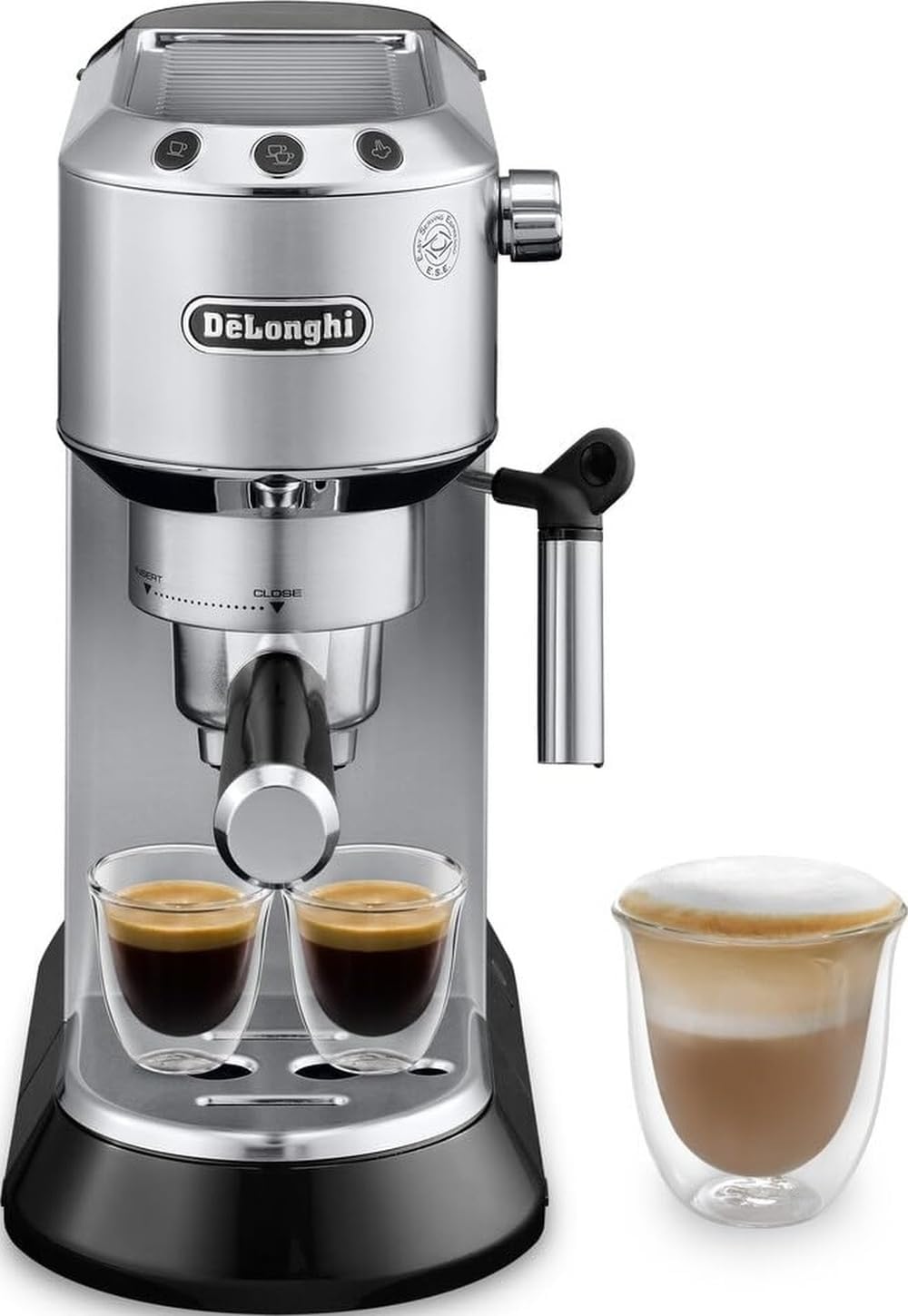
The De'Longhi Dedica EC680M packs a professional-style espresso setup into a slim 6-inch countertop footprint, using a 15-bar pump and fast-heating thermoblock so shots are ready in about 40 seconds. It accepts ground coffee and ESE pods via a 3-in-1 filter holder and offers a flow-stop for single or double shots, letting you control shot volume without programming. The manual steam wand produces dense milk foam for cappuccinos and lattes, and the adjustable drip tray accommodates cups up to 5 inches tall. Practical touches include a removable water tank and dishwasher-safe parts for easier cleanup. Expect a hands-on, semi-automatic experience: you will need to tamp, time shots, and froth milk manually, so it is not a push-button super-automatic. Also the steam wand requires some learning to get consistently microfoam. For buyers who want compact footprint, quick heat-up, and full control over extraction and milk texture within a modest budget, the Dedica delivers reliable, cafe-style results in a small package.
Best for: Buyers who want a compact, hands-on machine that delivers cafe-style espresso and milk drinks while maximizing counter space and value.
Less Ideal for: People who want fully automatic, one-touch brewing and milk steaming or those who prefer a maintenance-free, push-button experience.
- Very slim 6-inch footprint saves counter space
- 15-bar pump and thermoblock heat-up provide quick, consistent brewing temperature
- 3-in-1 filter holder supports single, double, or ESE pod brewing
- Manual steam wand produces rich froth for cappuccinos and lattes
- Removable water tank and dishwasher-safe parts simplify cleaning
- Manual operation requires practice to dial in shot timing and milk frothing
- No programmable profiles or automatic milk system for hands-off brewing
Verdict: Choose the Dedica EC680M if you want a compact, fast-heating manual espresso machine that delivers real cafe-style shots and milk foam without taking up much counter space.
IMUSA 4-Cup Espresso Maker

| Capacity | 4 cups |
|---|---|
| Wattage | 800 watts |
| Operation Mode | Semi-Automatic |
| Filter Type | Permanent |
The IMUSA 4-Cup Espresso Maker is a compact, countertop-friendly semi-automatic machine aimed at home espresso and cappuccino preparation. It brews up to four cups using a permanent filter and 5-bar pressure, and the included steam nozzle produces thick froth for cappuccinos, lattes, and similar drinks. A three-option selector knob simplifies operation and the removable drip tray and cool-touch carafe handle make cleanup and pouring safer and easier. At 800 watts the unit heats consistently for everyday use, and the matte plastic exterior keeps it lightweight and easy to move. Expect good results for basic espresso-based drinks but not the precision of higher-end machines: there is limited pressure control and small capacity for larger households, and the permanent filter means no paper filters for finer filtration. For buyers seeking a budget-friendly way to make cafe-style beverages at home, this offers straightforward brewing and a useful frother in a compact package.
Best for: Buyers prioritizing an affordable, space-saving machine that makes straightforward espresso and milk-based drinks at home without needing advanced features or heavy-duty build quality.
Less Ideal for: Users who want commercial-style pressure control, larger capacity for entertaining, or advanced programmability should look at higher-end machines.
- Compact four-cup capacity suitable for small kitchens or single households
- Built-in steam nozzle milk frother for cappuccinos and lattes
- Permanent filter and removable drip tray simplify daily use and cleaning
- 800-watt heating provides consistent extraction and steaming power
- Cool-touch glass carafe handle improves safe pouring
- Limited to a small 4-cup capacity which may not suit larger households
- 5-bar pressure and simple controls limit fine-tuning and professional-level extraction
Verdict: A budget-friendly, compact espresso maker that delivers simple espresso and creamy froth for home use without the complexity of higher-end machines.
Breville Barista Express BES870XL

| Wattage | 1600 watts |
|---|---|
| Voltage | 120 |
| Coffee Input Type | whole_beans |
| Filter Type | Reusable |
| Capacity | 1 cups |
The Breville Barista Express BES870XL is a semi-automatic espresso machine that grinds, doses and brews espresso from whole beans at the counter. It combines an integrated conical burr grinder with 16 grind settings and a dose-control system that grinds directly into a 54mm portafilter, so you can go from beans to shot quickly. Digital temperature control via a thermocoil (PID) helps keep extraction temperature steady for balanced flavor, and the powerful steam wand produces microfoam for lattes and cappuccinos. Typical use involves adjusting grind and dose, tamping the puck, pulling single or double shots and steaming milk manually, which gives experienced users control over every step. Notable benefits are the built-in grinder, stainless steel construction, and a full set of included tools like a tamper and razor dose-trimming tool. Limitations include a learning curve to dial in grind and milk technique, and the machine requires regular cleaning and descaling to maintain long-term reliability.
Best for: Buyers who prioritize a reliable, long-lasting home espresso setup and want hands-on control to craft consistent shots and textured milk without needing multiple separate components.
Less Ideal for: Buyers who want fully automatic, push-button convenience or who prefer a machine requiring minimal hands-on operation and maintenance.
- Integrated conical burr grinder with adjustable grind settings for fresh dosing
- Thermocoil PID temperature control for consistent extraction
- Powerful steam wand capable of producing microfoam for latte art
- Stainless steel build and included barista tools for a complete setup
- Manual operation requires practice to consistently produce café-quality shots
- Needs routine cleaning and descaling to preserve performance
Verdict: Choose the Barista Express if you want a durable, all-in-one semi-automatic machine that grinds and controls extraction for consistent, café-style espresso at home.
Nespresso Essenza Mini EN85B

| Output Pressure | 19 bar |
|---|---|
| Wattage | 1150 watts |
| Coffee Input Type | Capsule |
| Capacity | 0.6 liters |
| Compatible Coffee Pods | Nespresso Original |
The Nespresso Essenza Mini EN85B is a very small, capsule-based espresso machine designed for simple daily use. It accepts Nespresso Original pods, heats up in about 25 seconds, and offers two programmable cup sizes for espresso and lungo, making single-serve brewing fast and repeatable. The 19 bar pump delivers the pressure needed for crema, and a removable 0.6 liter water tank keeps the unit slim enough for small counters. Controls are straightforward button operation and the reusable filter offers basic convenience for those who prefer not to dispose of paper filters. Practical benefits include fast startup, compact footprint for tight kitchens, and consistent drinks with minimal learning curve. Limitations are the capsule-only system that locks you into pods, a small water tank that requires frequent refills for multiple drinks, and plastic construction that feels less robust than larger metal-bodied machines. There is no built-in milk frother, so it is not a one-stop solution for milk-based drinks without a separate frother.
Best for: Buyers who value a reliable, low-effort espresso routine and need a high-quality single-serve machine that fits very small countertops and delivers consistent results.
Less Ideal for: Those who want full control over grind and dose, need a built-in milk frother, or plan to brew multiple drinks back-to-back without refilling.
- Very compact footprint for small kitchens or dorms
- Fast 25 second heat-up for quick single-serve brewing
- 19 bar pump produces consistent pressure and crema
- Two programmable cup sizes for repeatable espresso or lungo shots
- Uses Nespresso Original capsules only, limiting coffee choice and increasing ongoing cost
- Small 0.6 L water tank requires frequent refilling for multiple consecutive drinks
Verdict: If you want a fast, compact, and reliable capsule espresso machine that delivers consistent espresso shots in tight spaces, the Essenza Mini is a smart pick.
CASABREWS CM5418 Espresso Machine
| Operation Mode | Semi-Automatic |
|---|---|
| Wattage | 1350 watts |
| Output Pressure | 20 bar |
| Coffee Input Type | ground_coffee |
| Filter Type | Reusable |
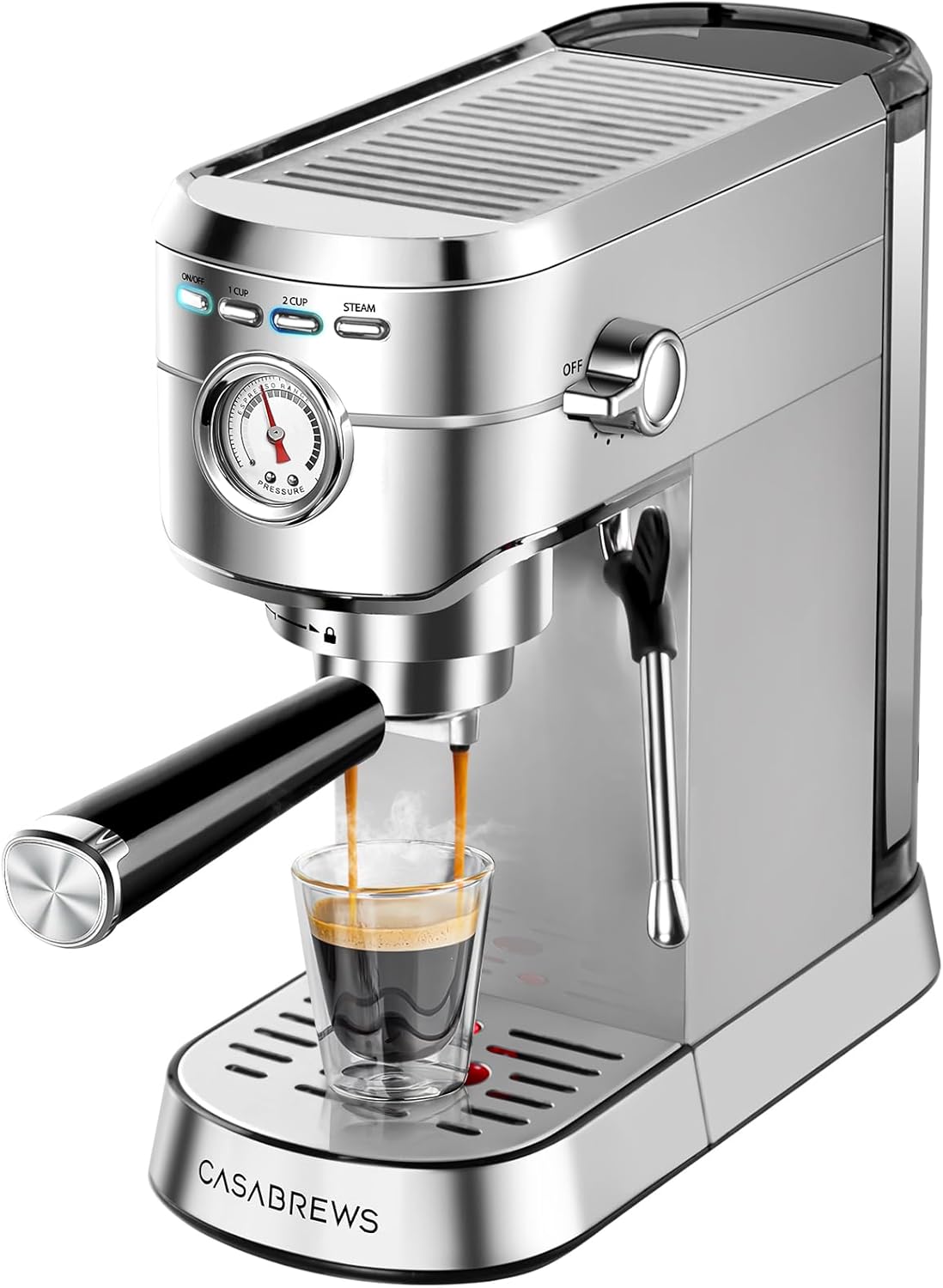
The CASABREWS CM5418 is a compact semi-automatic espresso machine aimed at home users who want hands-on control over their shots. It uses a 20-bar Italian pump with a built-in pressure gauge and pre-infusion to help achieve a rich crema and more balanced extraction, and the machine accepts ground coffee via a 51mm portafilter with single- and double-shot filter baskets. A powerful steam wand textures milk into microfoam for lattes and cappuccinos, and a top cup warmer plus a removable 34 oz water tank add everyday convenience. Practical touches include a removable drip tray for taller cups and reusable filter baskets. Expect some learning curve: tamping, grind size, and cooling after steaming affect performance, and the single-boiler design requires brief cooldowns between steaming and brewing. For buyers prioritizing a compact machine with gauge feedback and manual control, the CM5418 delivers impressive features for the money, but it is best for users comfortable with routine adjustments and maintenance rather than those who want fully automatic one-touch drinks.
Best for: Buyers who want a compact, hands-on home espresso machine with visual pressure feedback and a real steam wand, and who prefer a device they can tune rather than a push-button, fully automatic brewer.
Less Ideal for: People who need rapid back-to-back drinks, want push-button one-touch specialty drinks, or prefer a maintenance-free automatic machine.
- 20-bar Italian pump with built-in pressure gauge for visual extraction feedback
- Powerful steam wand capable of producing microfoam for latte and cappuccino milk texturing
- Compact stainless steel body with removable 34 oz water tank and cup warmer for countertop convenience
- Includes 51mm portafilter, single- and double-shot baskets, and tamper so you can start brewing right away
- Single boiler requires cooldown between steaming and brewing which slows consecutive drink prep
- Semi-automatic operation needs consistent tamping and grind adjustments to get repeatable shots
Verdict: If you want an affordable, compact home espresso machine that gives manual control, pressure feedback, and a true steam wand for milk drinks, the CM5418 is a practical, risk-conscious choice.
Choosing the Right Espresso Machine: Key Factors to Consider
Extraction Control
Extraction control determines how well the machine converts ground coffee into balanced espresso. This factor covers features such as pressure profiling, programmable shot volumes, pre-infusion options, and the stability of pump pressure during a shot.
Good extraction control helps you dial in dose, grind, and tamp to avoid under- or over-extraction. For home users, a machine that offers at least basic programmability or consistent manual control makes it much easier to reproduce the same flavor day after day.
Steam Capability and Wand Design
Steam capability affects how quickly and effectively you can texture milk for lattes and cappuccinos. Important details include boiler size or single/multi-boiler architecture, rated steam pressure, and the steam wand's reach and articulation.
A wand that delivers strong, dry steam and gives you good control over microfoam will shorten milk prep time and broaden the drinks you can make. For many buyers in this price range, a powerful steam system paired with a comfortable wand is a major convenience and a core part of the machine's daily usefulness.
Temperature Stability
Temperature stability influences extraction consistency and overall cup quality. Machines that maintain consistent brew temperature across repeated shots reduce variance in flavor and crema.
Look for machines with thermal management systems such as PID controllers, thermoblocks tuned for steady output, or dedicated boilers. Even if a machine lacks advanced electronics, a design that minimizes temperature swings between shots will be easier to use and deliver more predictable espresso.
Water Handling and Scale Management
Water quality and scaling are primary causes of performance decline in espresso machines. Consider reservoir capacity, ease of refilling, and whether the machine supports inline or onboard filtration. Accessibility of descaling cycles or removable components for cleaning matters too.
Good water handling reduces maintenance frequency and improves taste stability. Machines that make filter replacement and descaling straightforward lower the long-term ownership burden and help protect internal parts from premature wear.
Ease of Use and Daily Workflow
Ease of use covers control layout, programmability, portafilter ergonomics, and how the machine fits into your morning routine. Machines with intuitive buttons, clear indicators for status, and straightforward shot programming reduce frustration during daily use.
A workflow-friendly machine will also have sensible layout for steam wand access, cup clearance, and drip tray removal. Prioritizing these human factors ensures you spend more time making coffee and less time troubleshooting small annoyances.
Serviceability and Parts Availability
Serviceability affects long-term value because espresso machines are repairable appliances with replaceable wear parts. Consider whether the machine uses standard components, the accessibility of commonly replaced parts like gaskets and shower screens, and how easy it is to reach service points.
A machine designed for straightforward maintenance will typically cost less to keep running over several years and will retain performance longer compared with a hard-to-service unit.
Single Boiler Vs Heat-Exchange and Dual-Boiler Designs
Understanding boiler architecture helps you pick a machine that matches your priorities. Single-boiler machines often provide compact footprints and lower cost but require cooldowns between brewing and steaming. Heat-exchange and dual-boiler systems let you brew and steam without waiting, which is valuable for back-to-back drinks.
For home users focused on occasional milk drinks, a well-engineered single boiler with good steam pressure can be a sensible compromise. If you regularly make multiple milk-based drinks in one session, prioritize designs that separate brew and steam duties to avoid temperature and workflow issues.
- Single boilers: compact, cost-effective, may need cool-down between functions
- Heat-exchange: lets you brew and steam nearly simultaneously, often in a compact package
- Dual-boiler: best temperature isolation for brew and steam, usually larger and heavier
Grind and Dose: Why Your Grinder Matters
Even the best espresso machine will be limited by an inconsistent grinder. A stable, fine grind and consistent dosing are prerequisites for the machines in this price bracket to shine. If you are upgrading an older grinder, match the machine's extraction capability with a burr grinder that can produce a fine, even distribution.
Pay attention to dosing methods: a precise, repeatable dose simplifies dialing in. Whether you use a portafilter scale, a calibrated doser, or a basket that resists channeling, improving your grind and dose technique will have a dramatic impact on shot quality.
- Aim for a quality burr grinder that can hold a consistent fine setting
- Consider dosing tools or scales for repeatability
- Use distribution techniques to reduce channeling
Maintenance Routine That Extends Machine Life
Establish a simple daily and monthly maintenance checklist to protect extraction quality. Daily tasks typically include backflushing if the machine supports it, wiping the group head gasket area, and purging the steam wand after each use. Monthly or periodic tasks include descaling as needed, replacing water filters, and inspecting gaskets and shower screens.
Machines that make these tasks easy will stay in service longer and perform more consistently. Look for removable drip trays, accessible reservoirs, and clear guidance for backflushing and descaling to reduce friction in maintenance.
- Daily: flush group head, clean steam wand, empty drip tray
- Weekly/Monthly: backflush, inspect seals and screens, replace filters
- Periodic: descale according to water hardness and usage
Matching Machine Size to Kitchen Layout
Physical footprint and weight matter for installation and routine use. Measure available counter space and consider cup clearance under the group head for taller cups or travel mugs. Heavier machines may feel more stable but are harder to move for cleaning or servicing.
Ventilation and access behind the machine are also practical concerns. Machines with rear-fill reservoirs may require additional clearance, while front-fill units are more flexible in tight spaces.
- Measure counter depth and above-cabinet clearance before buying
- Decide between front-fill versus rear-fill based on placement
- Consider weight and how often you will need to move the machine
Control Interfaces and Programmability
Control interfaces range from simple levers and dials to multi-button programmable units with shot timers and PID temperature readouts. Choose an interface that matches your barista skill level and willingness to tweak settings. Advanced controls are useful if you plan to experiment with dose and extraction profiles.
For many home baristas, clear indicators for ready status and a single-button programmable shot volume are sufficient. If you prefer manual hands-on control, look for responsive paddle or lever actions that provide tactile feedback during extraction.
- Simple interfaces: quick to learn, less fiddly for daily routines
- Programmable units: better for repeatability and experimenters
- Manual levers: offer direct pressure control for experienced users
How We Chose the Best Espresso Machine
We focused on machines that deliver repeatable shot quality and built-in features useful for everyday home use. Our editorial filters prioritized extraction control, steam power, and temperature stability because these directly affect crema, flavor balance, and milk texture. Durability and serviceability were considered by checking build materials, warranty coverage details, and the presence of serviceable components like removable boilers or accessible pump assemblies. Ease of use and maintenance were weighed to reflect real-world ownership: simple controls, straightforward cleaning cycles, and available replacement parts matter over the life of the machine. We also evaluated water handling, including reservoir capacity and filtration compatibility, since consistent water quality impacts taste and scaling. Exclusions: we excluded prosumer and commercial machines that exceed the price cap, single-serve capsule-only systems, and compact consumer units with known reliability issues. The result is a list that favors machines with measurable technical strengths and practical daily usability.
Our full evaluation process is outlined in our review methodology.
FAQ
Can I get cafe-quality shots from an espresso machine under $800?
Often yes. Machines in this bracket can deliver excellent shots when paired with a good grinder and correct technique. Prioritize temperature stability and consistent pressure to get the best results.
How important is a PID controller for home espresso?
A PID helps hold brew temperature steady, which reduces shot-to-shot variance. It is useful if you want predictable extraction, though solid passive thermal designs can also perform well without PID electronics.
Do I need a separate milk frother if the machine has a steam wand?
Not usually. A capable steam wand will produce textured milk suitable for lattes and cappuccinos. A separate electric frother can be convenient but is not required for quality milk-based drinks.
How often should I descale an espresso machine under $800?
It depends on water hardness and usage. Many owners descale every 3 to 6 months, but machines with inline filtration or softer water will require less frequent descaling. Follow the manufacturer's maintenance recommendations.
Will a compact machine sacrifice steam performance?
Compact machines can still offer strong steam, but smaller boilers or single-boiler designs may require short waits between brewing and steaming. If you routinely prepare multiple milk drinks, consider machines designed for stronger continuous steam output.
Final Verdict
When shopping for an espresso machine under $800, prioritize the technical strengths that affect daily cup quality: extraction control, temperature stability, and steam capability. Match machine features to your typical routine, whether that means prioritizing milk performance for lattes or compact single-boiler designs for limited counters. Remember that a good grinder and consistent maintenance are critical to getting the most from any machine in this price range. Focus on the tradeoffs you are willing to accept and choose the machine that best supports your workflow and drink preferences.