
Note: This article contains affiliate links. If you click on these links and make a purchase, we may earn a small commission at no extra cost to you. This helps support our research and content. Read our full affiliate disclosure here.
If you spend time working, storing projects, or spending hot afternoons in a garage, the right evaporative cooler can make that space noticeably more comfortable without big electricity bills. A garage-focused cooler needs robust airflow, enough cooling coverage for the room size, and easy water and maintenance handling for infrequent users. This guide shortlists seven top evaporative coolers for garages, chosen for durability, coverage, and day-to-day ease of use. Read on for the practical evaluation criteria we used and clear guidance to help you pick the best unit for your garage layout and usage.
Top Picks at a Glance
| Best Overall The best all-around choice for most situations | YougetTech 3000CFM Evaporative Cooler | 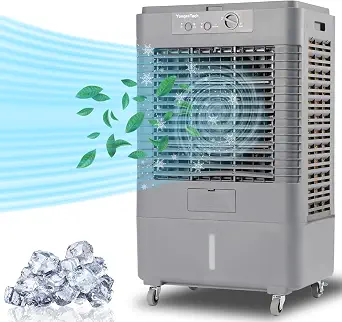 |
| Best Quality Built to a higher standard if you want something more solid | OEMTOOLS 23969 Evaporative Cooler |  |
| Best Value The sweet spot between price and what you get | Tehanld Evaporative Cooler 100l3 |  |
| Best Budget The cheapest option that still gets the job done reliably | Tiptop Home Portable Evaporative Cooler |  |
| Top Rated A top-rated pick with lots of positive feedback | Hessaire MC37M Evaporative Cooler |  |
| Most Popular A crowd favorite that many people choose with confidence | SYUDTY GDS-820 Evaporative Cooler |  |
| Best Seller A high-volume bestseller chosen again and again | Uthfy 41" Swamp Cooler |  |
YougetTech 3000CFM Evaporative Cooler

| Air Volume | 3000 CFM |
|---|---|
| Capacity | 8 gallons |
| Wattage | 160 watts |
| Noise | 55 db |
| Number of Power Levels | 3 |
The YougetTech 3000CFM evaporative cooler is a rollable swamp cooler designed to move cool, humidified air through garages, patios, workshops, and other large open areas. It uses three-sided 3D honeycomb cooling pads and a built-in 8‑gallon tank that can be filled manually or hooked to a garden hose for auto refill, allowing long runtime without constant attention. Controls are mechanical push buttons and a dial for fan speed and 120° oscillation, so operation is straightforward and durable for workshop use. Mobility is strong thanks to four 360° casters (two lockable) and side handles, while the top toolbox and included dust bag add practical storage and off-season protection. At 160 watts and high airflow efficiency, it offers noticeably lower energy draw than refrigerated air conditioners. Limitations include reduced effectiveness in high-humidity or fully enclosed spaces since it relies on evaporative cooling, and it adds humidity to the environment, which may not suit all garage setups.
Best for: Buyers who want an energy-efficient, portable cooling solution for open or semi-open garages and workshops and who prioritize airflow and long unattended runtime over refrigerated dehumidified cooling.
Less Ideal for: People needing strong cooling in small, enclosed, or already humid garages should choose a refrigerated air conditioner or a dehumidifying unit instead.
- High 3000 CFM airflow suitable for large open garages and patios
- Large 8‑gallon tank with manual or garden-hose auto refill for long run times
- 3D honeycomb cooling pads for improved evaporative efficiency
- Easy mobility with four 360° casters and lockable wheels plus side handles
- Simple mechanical controls and built-in toolbox for workshop convenience
- Not effective in high-humidity or fully enclosed spaces because it depends on evaporative cooling
- Adds moisture to the air which can be undesirable in some garage environments
Verdict: A high‑airflow, energy‑efficient swamp cooler built for mobile garage and workshop use where evaporative cooling is effective.
OEMTOOLS 23969 Evaporative Cooler

| Air Flow Capacity | 5300 cfm |
|---|---|
| Reservoir Capacity | 14.6 gallons |
| Floor Area | 1600 square_feet |
| Wattage | 430 watts |
| Noise | 68 db |
The OEMTOOLS 23969 is a high-airflow portable evaporative cooler intended for garages, workshops, and outdoor work areas in dry climates. It pushes up to 5300 CFM using a 1/3 HP, three-speed motor and relies on three high-density media panels and a 14.6 gallon reservoir to lower air temperature via evaporation. Practical touches for garage use include large casters for moving the unit, a built-in tool tray, and a GFCI plug for job-site safety. At 430 watts it uses substantially less power than a refrigerated AC, and the design is best where humidity stays below about 60 percent. Noise is moderate at 68 dB, so it is noticeable in small enclosed spaces but typical for this power class. The unit is freestanding and manually controlled with simple knobs, so it is straightforward to operate and service but lacks remote or automatic humidity control. If you need robust, energy-efficient airflow for a dry garage or shop, this cooler delivers strong performance with easy mobility.
Best for: Buyers who prioritize raw cooling power and mobility for large, dry garages or commercial workspaces and want a rugged, low-energy alternative to air conditioning.
Less Ideal for: People in humid climates or those who need quiet, thermostat-controlled indoor cooling should consider other options.
- Very high airflow at 5300 CFM suitable for large garages and workshops
- High-density media panels increase evaporation surface for stronger cooling
- Large reservoir (14.6 gallons) reduces refill frequency during heavy use
- Built-in tool tray and large casters make it practical for garage/worksite use
- GFCI plug adds electrical safety for workshop environments
- Performance depends on low ambient humidity so effectiveness drops in humid climates
- Manual controls only, no thermostat or automatic humidity sensing
Verdict: Choose this unit if you need powerful, portable evaporative cooling and rugged garage-friendly features for large dry workspaces.
Tehanld Evaporative Cooler 100l3

| Cooling Power | 1 KW |
|---|---|
| Noise | 39 db |
| Wattage | 60 watts |
| Capacity | 5.3 gallons |
This Tehanld evaporative cooler is built for cooling large, dry spaces like garages and workshops by moving a lot of air while using little electricity. It delivers up to 1700 CFM airflow with 120 degree horizontal oscillation and adjustable louvers to spread cool, dampened air across a wide area, and the 5.3 gallon tank plus included ice packs extend runtime between refills. Controls are simple: a top touch panel and a 28 foot remote let you switch three speeds and three modes, set a 12 hour timer, and enable a quiet sleep mode. Practical details such as top-fill access, a water-level window, bottom drain plug, and caster wheels (two with brakes) make refilling, cleaning, and moving the unit straightforward. The unit runs on about 60 watts so operating costs stay low, but because it is an evaporative cooler it performs best in dry climates under about 50 percent humidity and will not match a refrigerated air conditioner in very humid conditions.
Best for: Buyers who want an energy-efficient, high-airflow cooling solution for garages, workshops, or large dry rooms and value easy maintenance and mobility.
Less Ideal for: People in humid climates or buyers who need air conditioning-level cooling for small indoor rooms should look at refrigerated AC options instead.
- High airflow (1700 CFM) and 120° oscillation for wide coverage in large spaces
- Large 5.3 gallon tank with top-fill design and ice packs for extended runtime
- Low power draw (around 60W) for energy-efficient continuous use
- Dual control via touch panel and 28 ft remote plus 12-hour timer and sleep mode
- Mobility features include caster wheels with two brakes and a bottom drain for easy maintenance
- Effectiveness drops in high-humidity environments since it is an evaporative cooler
- Not a refrigerated air conditioner so it cannot achieve very low temperatures on humid days
Verdict: A low-power, high-airflow evaporative cooler designed to efficiently cool large, dry garages and workshops with minimal fuss.
Tiptop Home Portable Evaporative Cooler

| Reservoir Capacity | 1000 ml |
|---|---|
| Number of Speeds | 3 |
| Controls Type | Touch |
| Noise | 55 db |
| Form Factor | Personal |
This small evaporative cooler is designed as a personal cooling solution for tight spaces rather than whole-room air conditioning. It offers three fan speeds, two mist modes, and a 1000 ml top-fill reservoir that can run roughly 6 to 10 hours per fill, making it easy to use on a desk, in a garage workbench area, or inside a car or tent. Controls are touch-based and it includes a timer and an RGB light you can disable. The unit is USB-powered and portable with a leather-style handle, so it moves between locations without a vent or window installation. Practical benefits include quiet operation under 55 dB, simple maintenance with a transparent tank, and the option to add ice for an extra cooling boost. Important limitations are that it is an evaporative cooler, so performance depends on ambient humidity and it will not match a refrigerated air conditioner for cooling large, poorly ventilated garage spaces, and it requires manual refilling and a USB power source rather than battery operation.
Best for: Buyers seeking an affordable, portable spot-cooling solution for small garage work areas or benches who prioritize low cost, portability, and simple operation over whole-space cooling.
Less Ideal for: People who need to cool large, poorly ventilated garages, lower humidity throughout a workspace, or who want a ducted or vented refrigerated air conditioner.
- Combines fan, humidifier, and evaporative cooling in one compact unit
- 1000 ml top-fill tank runs 6–10 hours per fill with visible water level
- Portable USB-powered design with leather-style handle for easy relocation
- Touch controls, timer, and quiet operation under 55 dB for overnight or workspace use
- Cooling effectiveness depends on dry ambient conditions and is limited in high humidity
- Not intended to cool large garage spaces or replace a refrigerated air conditioner
- Requires access to a USB power source and periodic refilling
Verdict: A budget-friendly, portable evaporative cooler that delivers quiet, short-range cooling for small garage benches and workspaces.
Hessaire MC37M Evaporative Cooler

| Air Flow Capacity | 3100 cfm |
|---|---|
| Reservoir Capacity | 10.3 gallons |
| Floor Area | 950 square_feet |
| Wattage | 250 watts |
| Noise | 59 db |
The Hessaire MC37M is a freestanding evaporative cooler built to move a large volume of air for cooling dry, open spaces like garages. It uses three high-density media panels and a 3100 CFM axial fan to pull hot air through water-soaked pads and push cooled air across a wide area, while oscillating louvers help distribute airflow. Operation is simple: fill the 10.3-gallon tank or attach a garden hose for continuous fill, choose one of three speeds with a knob, and let the unit run. The polypropylene cabinet and caster wheels make it durable and easy to reposition, and the float valve plus pump reduce the need for frequent refills. It runs at about 59 dB and draws 250 watts, so it is much cheaper to operate than a refrigerated air conditioner but works best in low-humidity environments. Limitations include manual controls with no remote or programmable timer and reduced effectiveness in humid climates, so it is best for ventilated garage spaces rather than sealed, humid rooms.
Best for: Someone who wants a robust, no-frills cooling solution for a ventilated garage or workshop and values dependable, easy-to-service equipment.
Less Ideal for: People who need sealed-room air conditioning, automated scheduling, or effective cooling in humid climates should look at alternative systems.
- High airflow capacity at 3,100 CFM suitable for large garage areas
- Large 10.3-gallon reservoir with float valve and garden-hose adapter for extended runtime
- Durable polypropylene construction and caster wheels for portable, outdoor-capable use
- Simple, reliable knob controls and a roomy media design that are easy to maintain
- No remote control, timer, or digital features for automated operation
- Performance drops significantly in high-humidity environments
Verdict: Choose the MC37M when you need a rugged, high‑CFM evaporative cooler that reliably cools ventilated garages and workshops with minimal fuss.
SYUDTY GDS-820 Evaporative Cooler

| Air Flow Capacity | 3000 cfm |
|---|---|
| Reservoir Capacity | 6.87 gallons |
| Wattage | 150 watts |
| Noise | 52 db |
| Number of Speeds | 3 |
The SYUDTY GDS-820 is a windowless evaporative cooler intended to deliver fast, portable cooling in dry indoor spaces. It uses a high-density cooling pad, a large 6.87 gallon reservoir and a 2026-upgraded motor to push up to 3000 CFM of air, and it offers three fan speeds plus four modes (Normal, Natural, Sleep, Cooling). Controls are available on a top touch panel or via the included remote, and a 1–15 hour timer and 120° oscillation help distribute airflow across a room. Setup is simple: add water or ice packs to the tank, snap on the four 360° casters and plug it in, then adjust fan speed or mode. Practical benefits include added humidity in dry climates, lower energy draw compared with standard portable ACs, and easy mobility between rooms. Important limitations are that this is an evaporative cooler, so performance drops in high-humidity environments and it will not dehumidify or match the low temperatures of compressor-based air conditioners; it also produces noticeable noise at higher fan speeds.
Best for: Buyers who want an energy-efficient, mobile cooling option for dry climates and value easy setup and proven user feedback when choosing cooling gear.
Less Ideal for: People in humid regions or anyone who needs true refrigerated air conditioning or room dehumidification should consider compressor-based ACs instead.
- Very high airflow (3000 CFM) for fast air movement
- Large 6.87 gallon reservoir reduces refill frequency
- Multiple modes, 3 speeds and 120° oscillation improve distribution and comfort
- Remote and touch controls plus 1–15 hour timer add convenience
- Effectiveness decreases in high-humidity climates because it relies on evaporation
- Does not cool to same low temperatures as refrigerated portable air conditioners
- Noise can reach around 52 dB on higher settings
Verdict: Pick the SYUDTY GDS-820 if you need a high-airflow, energy-efficient windowless cooler that moves a lot of air and is easy to set up and move around in dry indoor spaces.
Uthfy 41" Swamp Cooler

| Air Flow Capacity | 4800 cfm |
|---|---|
| Reservoir Capacity | 10.6 gallons |
| Floor Area | 1200 square_feet |
| Wattage | 200 watts |
| Noise | 45 db |
This Uthfy 41" swamp cooler is an evaporative cooler built to cool large, semi-open spaces like garages, workshops, and covered patios. It uses a copper motor and large fan blades to deliver up to 4800 CFM through three-sided high-density cooling pads, and includes three ice boxes to intensify the evaporative effect in dry conditions. Controls are simple push buttons for three speeds, cooling pump, and 120° side-to-side oscillation, while manual louvers let you tilt airflow vertically. The 10.6 gallon tank supports long runtime and can be top-filled or connected to a hose for automatic refill, which is handy if you want low-maintenance operation overnight. The sheet-metal body and heavy-duty caster wheels make it durable and easy to move, but remember evaporative coolers work best where ambient humidity is low and they will raise local humidity when used in closed, high-humidity spaces. Noise is moderate at about 45 dB and the unit draws roughly 200 watts, so it costs much less to run than a refrigerant air conditioner but will not dehumidify or cool as effectively in humid climates.
Best for: Buyers who want a reliable, low-energy blower-style cooler for ventilated garages, workshops, or covered outdoor work areas and prefer simple, no-frills operation and durable construction.
Less Ideal for: People seeking a room air conditioner that lowers humidity or performs well in sealed, high-humidity garages should consider refrigerant-based AC instead.
- Very high airflow (4800 CFM) suitable for large garages and open workshops
- Large 10.6 gallon tank with top-fill and hose hookup for long, low-maintenance runtimes
- Durable sheet-metal body and heavy-duty caster wheels for outdoor or garage use
- Simple button controls and 120° oscillation make aiming and operating the unit straightforward
- Effectiveness depends on low ambient humidity and open ventilation, so performance drops in humid or fully enclosed spaces
- Large footprint and weight can be awkward in very tight garage layouts
Verdict: A high-airflow, durable evaporative cooler that delivers affordable, low-power cooling for ventilated garages and workshops.
Choosing the Right Evaporative Cooler for Garages: Key Factors to Consider
Airflow and Coverage
How much air the cooler can move and the square footage it effectively cools is the top practical concern. Garages can be large, open, and poorly insulated, so a unit rated for small rooms may not produce noticeable relief. Look for measured airflow numbers and stated coverage area to match your bay size.
Airflow also affects how the unit performs when doors are open for ventilation or when you need targeted airflow across a workbench. Stronger airflow helps evaporative cooling work more effectively by exchanging moist air. Consider models that state cubic feet per minute or provide multiple fan speeds so you can tailor airflow to conditions.
Water Tank Capacity and Runtime
Tank size determines how long the unit can run before a refill, which matters if you use the garage for multi-hour projects. A small tank may be fine for occasional use, but workshops or long car-detailing sessions benefit from larger reservoirs or external-water-connection options.
Also consider how easy the tank is to fill and whether the unit supports a gravity feed or a continuous-fill adapter. Runtime interacts with airflow and ambient humidity; higher airflow and hot dry conditions will consume water faster, so prioritize capacity that matches typical session lengths.
Durability and Dust Resistance
Garages are dustier and often harsher environments than living rooms, so the cooler needs durable construction and materials that handle grit and temperature swings. Look for corrosion-resistant casings, sealed electrical components, and washable or replaceable cooling pads that tolerate periodic cleaning.
Durable units reduce maintenance effort and extend service life in a garage. Check for design features that limit dust ingress to internal components and for user-accessible panels that make routine cleaning straightforward.
Portability and Mounting Options
Think about whether you will move the cooler between locations or keep it mounted. Portable units with caster wheels and handles are convenient if you reposition the unit for different tasks. Wall- or window-mountable options free up floor space but require a semi-permanent installation.
Also evaluate the weight when filled with water and whether the unit offers secure mounting brackets or attachment points. Portability influences ergonomics for a single user moving a heavy water-filled unit versus a shop that can install one unit in a fixed place.
Energy Use and Noise
Garages often need extended runtime, so energy efficiency matters for ongoing operating cost and for those running the unit from a workshop circuit. Evaporative coolers are generally more efficient than refrigeration-based air conditioning, but fan motors and pump wattage vary. Choose a unit with reasonable power consumption for your usage patterns.
Noise level is also a functional factor. Loud fans can interfere with phone calls, radio use, or concentration while working. Review decibel specifications when available, and consider multiple speed settings that let you balance cooling performance with quieter operation.
Sizing Your Cooler to Garage Layout
Measure the total volume of the garage to estimate the airflow you'll need. Square footage alone is a start, but ceiling height affects how much air the unit must move to refresh the occupied zone. For workshops with high ceilings, aim for a unit with higher cubic feet per minute so the occupied work area benefits from the cooling.
Placement matters. Position the cooler where it can draw fresh air and direct airflow across the work zone rather than against closed walls. If your garage has cross-ventilation opportunities, align the unit to take advantage of natural air exchange for better evaporative performance.
- Calculate volume: floor area × ceiling height
- Aim airflow at the occupied zone, such as a workbench
- Avoid placing the unit directly behind large obstacles that block airflow
Managing Humidity in an Enclosed Garage
Evaporative cooling works best in dry climates because it adds moisture to the air while lowering temperature. In enclosed or already-humid garages, effectiveness diminishes and can leave surfaces damp. Consider whether the garage has any ventilation to exhaust humid air and whether supplemental fans can help.
If humidity is a concern, prioritize coolers with higher airflow and quicker exchange rates rather than relying on a small unit to lower temperatures. Regularly inspect for condensation on tools or stored materials and adjust runtime or ventilation accordingly.
- Use exhaust fans or open doors periodically to remove humid air
- Monitor for condensation on metal surfaces after prolonged use
- Reduce runtime if humidity levels rise noticeably
Maintenance Habits for Garage Use
Routine maintenance keeps performance steady in dusty environments. Clean or replace cooling pads per the manufacturer schedule, flush the sump and change water to prevent mineral buildup, and vacuum dust from grills and inlets. Units used in dusty garages require more frequent pad cleaning than indoor models.
Store the unit empty and dry during winter or long idle periods to prevent mold and corrosion. If you expect heavy dust exposure, choose models with accessible filters or screens that you can clean quickly between jobs.
- Inspect cooling pads every 1 to 3 months depending on dust levels
- Drain and dry the tank for storage
- Keep intake screens clear to maintain airflow
Power and Electrical Considerations
Confirm the unit's electrical requirements match your garage circuits. Larger units may draw more current and may be better suited to dedicated workshop outlets. Check cord length and whether hardwiring is recommended for fixed installations.
If you plan extended runtime while running power tools, factor cumulative load on the circuit to avoid tripping breakers. Energy-efficient units reduce strain and let you run other equipment concurrently in many cases.
- Verify voltage and amperage against your garage outlet
- Consider dedicated circuit for heavy-use workshops
- Shorter cords or near-outlet placement reduces extension cord hazards
Accessories and Enhancements
Certain accessories can improve garage performance. External water hookup adapters eliminate frequent refilling for long projects. Directional louvers let you focus airflow where needed. Some units accept easily swapped cooling pads to adapt to seasonal conditions or water quality.
Also evaluate caster quality, locking mechanisms, and available covers for off-season protection. Small upgrades can extend service life and make daily use more convenient.
- Look for continuous-fill or external-water adapter options
- Choose units with adjustable louvers for targeted airflow
- Consider covers and spare pads to simplify maintenance
How We Chose the Best Evaporative Cooler for Garages
We narrowed the list by prioritizing features that have the biggest real-world impact in garages. Primary evaluation criteria included cooling coverage and airflow, because garages vary from small single-car bays to larger workshop spaces and effective air movement is essential. We assessed water tank capacity and runtime to ensure units can operate long enough between refills during typical garage activities. Build quality and weather resistance were considered to handle dusty, occasionally damp, or temperature-variable garage environments. Portability and mounting options were included for buyers who need to move a unit between spaces or install it in a fixed location. Finally, we considered energy use and fan noise since garages often lack insulation and noise can be disruptive in shared homes. Units were excluded if their specifications suggested they were intended only for indoor home cooling of living spaces rather than garage or workshop use, or if they lacked concrete airflow or coverage specs. Our selection emphasizes measurable specs and user-focused durability over marketing claims. The scoring labels reflect these priorities and guided editorial judgment when shortlisting the seven units presented.
Our full evaluation process is outlined in our review methodology.
FAQ
Will an evaporative cooler work in a closed garage?
It depends. Evaporative coolers add moisture as they cool, so in a closed, humid garage their effectiveness is limited. They work best when some ventilation or periodic exhaust is available to remove humid air and allow fresh, dry air to enter.
How often do I need to refill the water tank?
Refill frequency depends on tank size, fan speed, and ambient conditions. In hot, dry weather a medium tank might need refilling every few hours at high fan speed, while lower settings or larger tanks run longer. Choose capacity based on typical session length.
Can I run a cooler while using power tools?
Usually yes, but check the combined load on your garage circuit. Larger fans and pumps draw more current, and running multiple high-draw tools simultaneously can trip breakers. If you rely on several tools, consider a dedicated circuit or a lower-power fan setting.
How do I prevent mold and mineral buildup?
Drain and dry the tank when the unit is not in use for extended periods, and follow the maintenance schedule for cleaning pads and the sump. Using filtered or softened water can reduce mineral deposits, and regular flushing helps prevent scale and mold growth.
Is a portable unit better than a mounted one for garages?
That depends on your needs. Portable units are flexible and allow you to move cooling to different zones, while mounted units save floor space and can provide more permanent coverage. Consider weight when filled and whether you need to reposition the unit frequently.
Final Verdict
When choosing an evaporative cooler for a garage, prioritize airflow and adequate coverage for the garage volume, plus sufficient water capacity to match how long you work. Durability and dust resistance are important for maintenance intervals, while portability and mounting options determine how the unit fits your workflow. Balance energy use and noise against desired cooling performance to find a solution that suits your typical garage tasks. With those tradeoffs in mind, you can confidently pick a cooler that delivers practical, low-energy comfort for your garage.