
Note: This article contains affiliate links. If you click on these links and make a purchase, we may earn a small commission at no extra cost to you. This helps support our research and content. Read our full affiliate disclosure here.
If you or someone in your home struggles with seasonal or year-round allergy symptoms, the right fan can make indoor air feel noticeably fresher. A fan for allergies does more than move air: it helps dilute and direct airborne particles, works with filters or filtration systems, and supports ventilation patterns that reduce dust and pollen buildup. This guide covers our seven shortlisted fans selected specifically for allergy-prone households. We evaluated airflow delivery, filtration compatibility, noise levels, and how easy each unit is to keep clean. Read on to find options that balance performance and everyday usability, followed by practical buying guidance to match a fan to your room and symptoms.
Top Picks at a Glance
| Best Overall The best all-around choice for most situations | Dyson Purifier Cool PC1 TP11 |  |
| Best Quality Built to a higher standard if you want something more solid | DREO DR-HPF008S Pedestal Fan |  |
| Best Value The sweet spot between price and what you get | Lasko 2520 Oscillating Pedestal Fan | 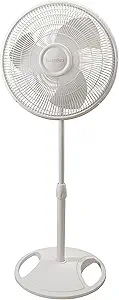 |
| Best Budget The cheapest option that still gets the job done reliably | Amazon Basics 28" Tower Fan DC1663 |  |
| Top Rated A top-rated pick with lots of positive feedback | Vornado 660 Air Circulator |  |
| Most Popular A crowd favorite that many people choose with confidence | Honeywell TurboForce HT-900 |  |
| Best Seller A high-volume bestseller chosen again and again | DREO Tower Fan 307 |  |
Dyson Purifier Cool PC1 TP11

| Filter Type | HEPA H13 + Activated carbon |
|---|---|
| Floor Area | 101 square_feet |
| Particle Retention Size | 0.3 micron |
| Noise Level | 61.4 db |
| Oscillation | 350° |
The Dyson Purifier Cool PC1 is a combined HEPA air purifier and bladeless tower fan designed to capture fine particles and circulate purified air across a room. It uses a fully sealed H13-grade HEPA filter to capture 99.97% of particles down to 0.3 microns while an activated carbon layer reduces odors and volatile gases, and Air Multiplier technology projects a steady airflow with up to 350 degrees of oscillation for broad coverage. Built-in sensors and an LCD plus the MyDyson app provide live air-quality feedback, scheduled operation, and remote or voice control, and Night mode dims the display and runs quietly for overnight use. Practical benefits include powerful whole-room circulation that doubles as a cooling fan, easy filter-change notifications, and a magnetized remote for neat storage. Trade-offs are its relatively high noise level at top speeds and the premium brand positioning, which may matter if you need ultra-quiet operation or a lower-cost purifier for occasional use.
Best for: Buyers who want a high-performance purifier that also doubles as a fan and value real-time air-quality feedback and app control will appreciate this unit for everyday allergy relief and whole-room circulation.
Less Ideal for: People seeking the quietest possible purifier for bedrooms at maximum speed or those who need additional climate functions like heating or humidifying should consider other solutions.
- HEPA H13 sealed filtration captures 99.97% of particles down to 0.3 microns.
- Activated carbon layer removes odors and certain gases including VOCs.
- Air Multiplier airflow with 350° oscillation delivers broad whole-room circulation.
- App, voice and remote control let you monitor and schedule air cleaning remotely.
- Night mode and filter-change notifications simplify overnight use and maintenance.
- Noise can be noticeable at higher fan speeds compared with ultra-quiet purifiers.
- No built-in heating or humidifying functions if those are desired in addition to purification.
Verdict: Choose the Dyson Purifier Cool PC1 when you want a premium, app-connected HEPA purifier that also provides strong fan airflow for whole-room allergy relief.
DREO DR-HPF008S Pedestal Fan

| Power Source | dc |
|---|---|
| Number of Speeds | 9 |
| Air Flow Capacity | 1000 cfm |
| Noise Level | 28.2 db |
| Control Method | App, Remote, Touch |
The DREO DR-HPF008S is a smart pedestal air circulator aimed at moving air through medium rooms while offering app and voice control. It delivers up to 1000 CFM with a DC motor and 9 speeds plus 6 preprogrammed modes, so you can dial in quiet background airflow or use Turbo mode for a quick burst of circulation. The fan oscillates both horizontally and vertically (position-based 3D oscillation) and has an adjustable pedestal and tilt, which helps aim air toward ceilings or across a room to improve whole-room mixing. Controls are flexible: onboard touch, included remote, or the DREO app and Alexa voice commands, and an LED RGB light and timer add convenience. The DC motor keeps noise low relative to comparable AC fans, and the plastic body is easy to wipe down, though it is not an air purifier and offers no filtration for allergens. For allergy-focused buyers this fan helps move and dilute indoor air but should be paired with a true HEPA purifier for particle removal.
Best for: Buyers who prioritize strong, controllable airflow and smart controls to actively circulate air in bedrooms or living spaces while minimizing noise.
Less Ideal for: People seeking air cleaning or particle removal should choose a dedicated HEPA air purifier rather than this fan alone.
- High airflow up to 1000 CFM for strong whole-room circulation
- DC motor with multiple speeds for quieter operation and efficient performance
- 3D oscillation (horizontal and vertical) and adjustable height/tilt for targeted air distribution
- Multiple control options: app, remote, touch, and voice for remote adjustments
- Built-in timer and modes including Auto and Turbo for hands-free comfort management
- No built-in air filtration or HEPA filter for removing allergens
- Plastic construction may feel less premium than metal alternatives
Verdict: Choose this smart pedestal fan when you want powerful, quiet, and precisely controlled whole-room airflow to improve air circulation in living spaces.
Lasko 2520 Oscillating Pedestal Fan

| Blade Length | 16 inches |
|---|---|
| Number of Speeds | 3 |
| Wattage | 91 watts |
| Power Source | Corded Electric |
| Motor Type | AC |
The Lasko 2520 is a straightforward pedestal fan that delivers adjustable, room-level airflow for bedrooms and living spaces. It uses a 16" plastic blade and an AC motor with three speed settings, plus widespread oscillation and a tilt-back head so you can aim a steady breeze where you need it. Setup requires no tools and the fully adjustable stand extends to 47" for higher circulation; controls are manual with a pull chain or push button. Built-in safety features include Blue Plug technology that cuts power if a fault is detected, and the unit is ETL listed. For allergy-conscious households this fan helps circulate air when used alongside a dedicated air purifier or with windows configured for cross-ventilation, but it does not include a filter so it will not remove allergens on its own. The fan is lightweight and portable for moving between rooms, and its simple three-speed control keeps operation intuitive, though those wanting variable speed control, remote operation, or integrated filtration will need a different model.
Best for: Buyers who prioritize a reliable, no-frills fan to improve room air circulation and want a portable unit that is easy to move and operate.
Less Ideal for: If you need an integrated air purifier, precise variable-speed control, or remote/timer features, this basic pedestal fan is not the best choice.
- Adjustable height and tilt for targeted airflow
- Widespread oscillation to move air across a room
- Simple tool-free assembly and lightweight portability
- Built-in Blue Plug safety feature and ETL listing
- No built-in air filtration so it does not remove allergens
- Only three manual speed settings and no remote control
Verdict: A simple, portable pedestal fan that reliably boosts room circulation for practical cooling and ventilation needs.
Amazon Basics 28" Tower Fan DC1663

| Power Source | Corded Electric |
|---|---|
| Number of Speeds | 3 |
| Wattage | 35 watts |
| Special Features | Oscillating |
The Amazon Basics 28" Tower Fan is a no-frills oscillating tower designed to move air in small to medium rooms. It offers three straightforward speed settings controlled by mechanical push buttons on the top, and the fan head oscillates to spread airflow across a room rather than a single spot. With a 35-watt motor and three plastic blades, it runs efficiently without complicated menus or remote controls, making it easy to use for bedroom, living room, or home office cooling. The compact footprint and lightweight design let you place it in corners or next to furniture, and the painted finish keeps the look unobtrusive. Expect steady, audible airflow rather than whisper-quiet operation, and the basic plastic construction means it is functional but not premium-feeling. There are no timers, remote, or app features, so if you want automated schedules or quieter performance you will need a higher-end model. For buyers seeking a straightforward, affordable tower fan that circulates air reliably, this covers the essentials well.
Best for: Buyers looking for an inexpensive, easy-to-use tower fan to provide straightforward room circulation without extra features or complexity.
Less Ideal for: Users who want silent operation, smart controls, timers, or a premium build should consider higher-end models instead.
- Three simple speed settings for easy adjustments
- Oscillating head provides wide airflow coverage across a room
- Low power draw at 35 watts for economical operation
- Compact, lightweight design fits small spaces and is easy to move
- Basic plastic construction feels inexpensive compared with premium fans
- No remote, timer, or advanced quiet mode for overnight use
Verdict: A budget-friendly, easy-to-use oscillating tower fan that delivers reliable room circulation with minimal fuss.
Vornado 660 Air Circulator
| Number of Speeds | 4 |
|---|---|
| Noise Level | 54 db |
| Wattage | 45 watts |
| Air Flow Capacity | 584 cfm |
| Motor Type | Brushless |
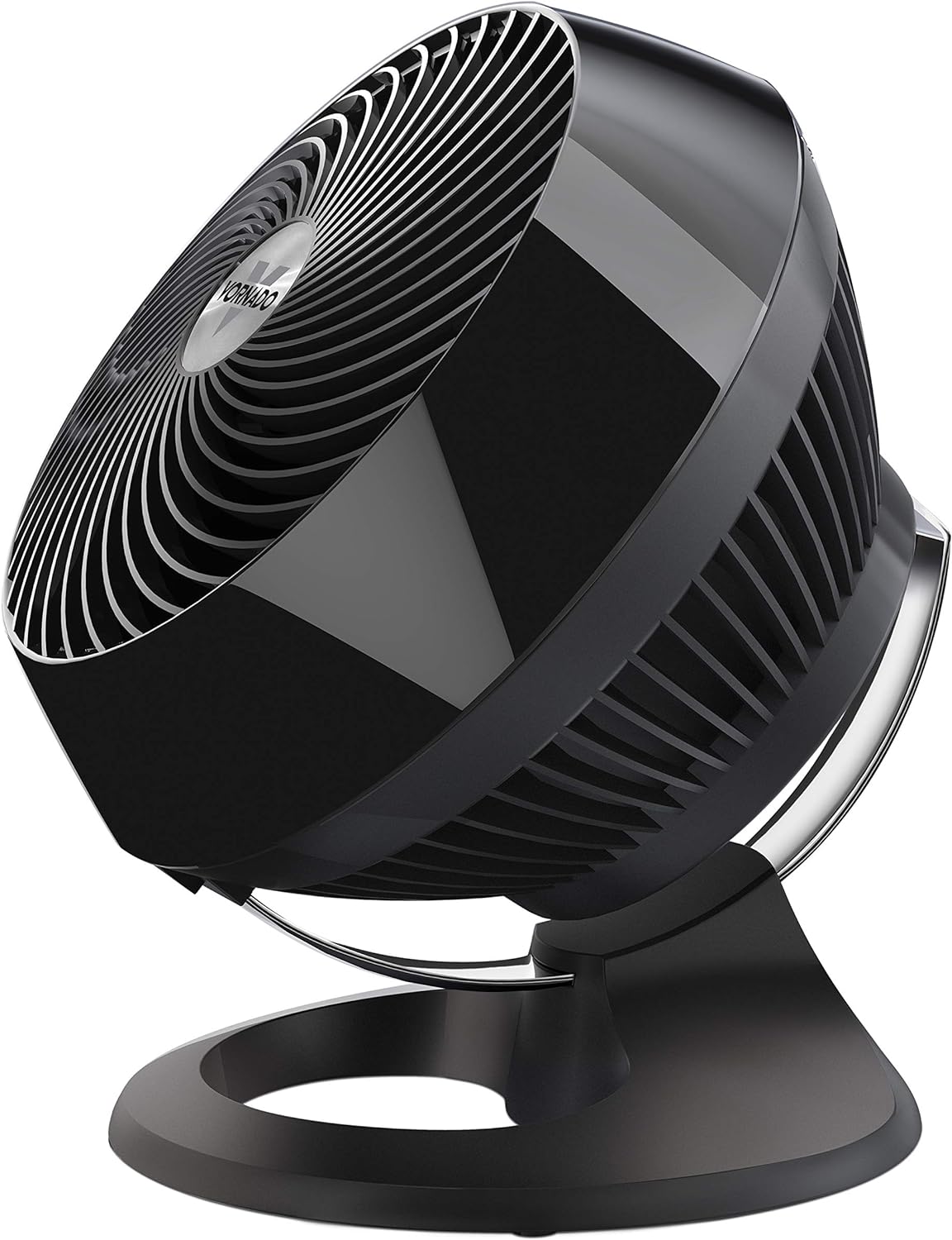
The Vornado 660 is a purpose-built whole-room air circulator that uses Vortex airflow to move air across a room rather than just creating a local breeze. It offers four push-button speed settings from quiet to powerful and a chrome glide bar that lets you tilt the head 90 degrees to aim airflow where needed. The deep-pitched three blades, inlet guide cone and spiral grill are designed to push air up to 100 feet, making the unit effective for circulating air in bedrooms, offices, or dorm rooms. The front grill is removable for cleaning and the brushless motor is rated for indoor use on standard 120V power, which helps long-term reliability and quieter operation. Trade-offs are that it is a dedicated circulator rather than an air purifier so it does not filter allergens, and its plastic housing and grille mean you should clean it regularly to prevent dust buildup. For allergy concerns it can help move air toward a purifier or out a window, but it is not a substitute for filtration.
Best for: Buyers who prioritize a reliable, long-lasting fan to keep air moving continuously in living spaces and who want a durable circulator to complement allergy control strategies.
Less Ideal for: Anyone looking for an integrated air purifier or built-in allergen filtration should look elsewhere, as this unit only circulates air and does not remove particles.
- Vortex whole-room circulation design that moves air far into a room.
- Four-speed push-button control from whisper-quiet to high output.
- Removable front grill for easier cleaning and maintenance.
- Brushless motor for quieter operation and improved durability.
- 90-degree tilt via chrome glide bar to precisely direct airflow.
- Does not include any air filtration or HEPA capability.
- Plastic construction can collect dust and needs periodic cleaning.
Verdict: Choose the Vornado 660 when you need a dependable, durable whole-room circulator to keep air moving reliably as part of an allergy-focused setup.
Honeywell TurboForce HT-900
| Power Source | Corded Electric |
|---|---|
| Number of Speeds | 3 |
| Air Flow Capacity | 185 cfm |
| Motor Type | brushless |
| Installation Type | Tabletop or Wall Mount |
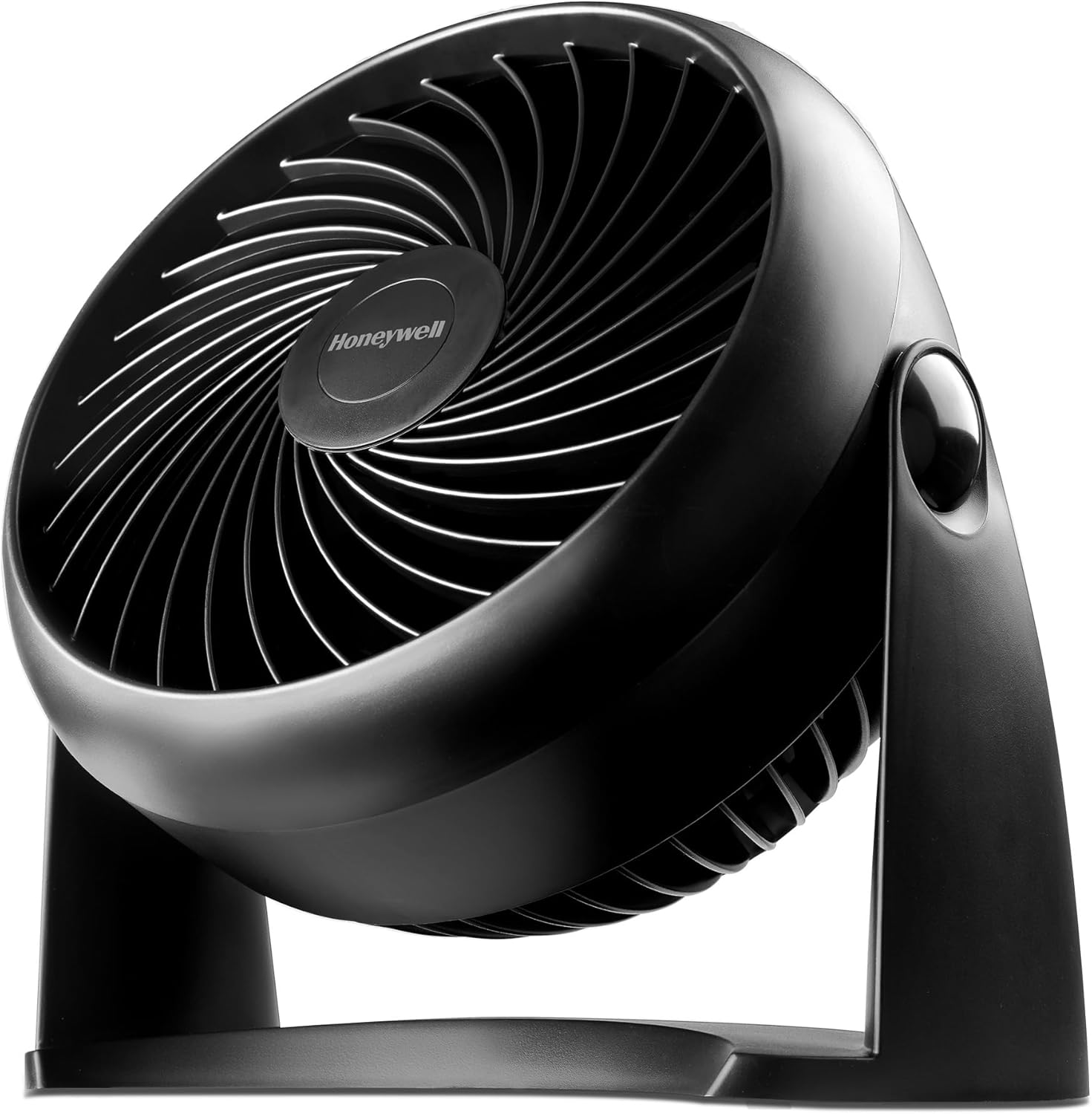
The Honeywell TurboForce HT-900 is a small, portable air circulator meant for desks, bedside tables, or wall mounting to improve room airflow. It uses an aerodynamic turbo design and a brushless motor to push air up to about 25 feet, and three push-button speeds plus a 90-degree pivoting head let you aim a steady stream where you need it. The fan is lightweight plastic with three blades and a standard corded plug, so it is easy to move or mount; its low reported noise level makes it suitable for bedrooms or home offices. For allergy-conscious users it helps boost air circulation so filters and open-window ventilation work more effectively, but it does not include a built-in filter or purifier so it will not remove allergens on its own. The HT-900's simple manual controls and compact footprint make it a reliable, no-frills choice when you need directed airflow without extras, though those seeking true filtration or smart controls will need a separate air purifier or a different fan model.
Best for: Buyers who value proven performance and many user reviews and want an affordable way to increase room circulation to help their existing filtration or ventilation work better.
Less Ideal for: People who need an integrated air purifier or automated/smart controls should choose a combined fan/purifier or a smart fan instead.
- Compact and portable for tabletop or wall mounting
- Aerodynamic TurboForce design produces strong directed airflow
- Three speeds and 90-degree pivot let you aim airflow precisely
- Brushless motor and low reported noise suitable for bedrooms or offices
- No built-in air filtration or allergen removal
- Basic push-button controls with no timers or smart features
Verdict: A compact, well-reviewed tabletop circulator that reliably boosts room airflow to support allergy control efforts when used alongside filtration.
DREO Tower Fan 307

| Number of Speeds | 8 |
|---|---|
| Modes | Normal, Natural, Sleep, Auto |
| Oscillation | 90° |
| Wattage | 36 watts |
| Motor Type | brushless DC motor |
The DREO Tower Fan 307 is a compact 36-inch oscillating floor fan built around an upgraded brushless DC motor that pushes strong airflow while keeping noise low. It offers eight speed settings and four modes including Normal, Natural, Sleep, and Auto, so you can dial in anything from a gentle bedroom breeze to a higher-velocity boost; the unit supports remote and touchpad control for easy adjustments. With 90 degree oscillation and a claimed airflow capacity for broad room coverage, it pairs well with an air conditioner to circulate cool air more effectively. Practical touches include a timer, removable rear grille and impeller for easier cleaning, and ETL safety certification. On the downside the fan runs on standard corded power and lists voltage at 240 volts which may matter for some regions, and the plastic construction means it is lightweight but less premium-feeling than metal alternatives. For buyers focused on quiet, adjustable oscillating cooling in bedrooms or living rooms, this model balances airflow and low noise in a small footprint.
Best for: Buyers who want a quiet, adjustable tower fan that delivers wide oscillating coverage and easy remote control for bedrooms and living spaces backed by strong customer feedback.
Less Ideal for: People seeking a heavy-duty, industrial-strength fan or a premium metal build should consider sturdier floor or bladeless alternatives.
- Brushless DC motor for efficient, high-velocity airflow with lower noise
- Eight speed levels and four modes for flexible comfort settings
- 90° oscillation spreads air across a wide area for better room coverage
- Includes remote and touch controls plus a timer for convenient operation
- Removable rear grille and impeller simplify cleaning and maintenance
- Plastic construction feels less durable compared with metal fans
- Corded operation and listed voltage may limit regional compatibility
Verdict: A feature-rich, quiet oscillating tower fan that gives flexible speeds and modes for effective bedroom and living-room cooling.
Choosing the Right Fan for Allergies: Key Factors to Consider
Airflow & Coverage
Airflow determines how effectively a fan dilutes and disperses airborne allergens across a room. Strong, well-directed airflow helps move pollen, dust, and pet dander away from breathing zones and toward a return or filter, reducing peak exposure.
When assessing airflow, consider both cubic feet per minute estimates and how the fan distributes air. A unit that produces a narrow jet of air may cool but not circulate the whole room. Oscillation and adjustable tilt expand coverage and are especially useful in larger rooms or open layouts.
Filtration Compatibility
A fan alone cannot capture fine particles; pairing with filtration or positioning to work with an air cleaner increases effectiveness. Some fans accept clip-on or integrated filters, while others are sized to complement portable air cleaners by improving room circulation.
Verify whether a fan design allows safe attachment of filter media, or plan to place the fan to draw air toward a separate filtration unit. Consider filter MERV ratings or HEPA compatibility when combining devices to ensure they capture the allergen sizes relevant to your symptoms.
Noise Level
Fans used continuously for allergy control must balance airflow with acceptable sound. High speeds often produce more noise, which can interfere with sleep or concentrate stress during work-from-home hours.
Look for models with measured decibel ratings or distinct low-speed modes. A quieter fan that runs longer at low speed can be more effective overall than a loud unit that is used sparingly. Features like brushless motors and aerodynamic blades tend to reduce audible turbulence.
Ease of Cleaning
Accumulated dust and trapped pollen on grills and blades reduce airflow and can reintroduce allergens into the room. Fans that are easy to disassemble for regular cleaning help maintain performance and indoor air quality.
Prioritize models with tool-free grills, washable surfaces, and accessible blade assemblies. Consider the frequency of recommended cleaning and whether replacement parts or washable covers are readily serviced to maintain long-term utility.
Placement & Mounting Options
Where you place a fan influences how well it reduces allergen exposure. Floor units, pedestal fans, tower fans, and wall-mounted models each fit different room layouts and airflow objectives.
A fan that can be mounted or elevated helps create vertical circulation that moves contaminants toward filters or exhaust points. Consider whether the model offers multiple mounting positions, adjustable height, or oscillation angles to target typical sources like bedding or pet areas.
Operational Controls & Scheduling
Control features affect how easily you can tailor airflow to varying allergy triggers throughout the day. Timers, multiple speed steps, and programmable operation let you run the fan during high-risk periods without manual intervention.
Smart or remote control options add convenience, but basic intuitive dials or buttons are often sufficient. Evaluate whether the control scheme supports gradual fan ramps, preset modes for nighttime use, and simple overrides for temporary boosts.
How Fans Help During Allergy Season
Fans reduce allergen exposure primarily by increasing air movement and preventing particle buildup in stagnant zones. They do not replace filtration but can make filtration more effective by moving contaminated air toward a filter or exhaust.
Using a fan strategically can lower immediate concentrations of pollen or dander in sleeping and living areas. For persistent indoor sources like pet dander or dust, constant low-level circulation paired with routine cleaning delivers the best results.
- Use oscillation to sweep air across wider areas
- Place fans to create directional flow toward filters or windows
- Run low speeds continuously rather than short high-speed bursts
Best Placement Strategies in Bedrooms and Living Rooms
In bedrooms, position a fan to promote cross-ventilation without directing strong streams at the sleeper. A fan that circulates room air gently reduces particle concentration without causing discomfort.
In living rooms, identify the primary allergen sources and aim airflow to sweep contaminants toward a central filter or an open window on low-pollen days. High ceilings and open-plan spaces may require fans with broader coverage or multiple units working together.
- Bedroom: low oscillation aimed along the foot of the bed
- Living room: elevated placement to distribute air across seating areas
- Near pet zones: use directed airflow to move dander toward extraction or filtration
Maintenance Routines That Reduce Reintroduced Allergens
Regular cleaning prevents a fan from becoming a secondary source of allergens. Wipe grills and vacuum or wash blades monthly if the fan runs frequently. Remove and launder any washable covers according to manufacturer guidance.
If you pair a fan with a clip-on or integrated filter, replace or clean that filter on the schedule recommended for the filter type and your home environment. Keep a simple maintenance log to avoid skipped cleanings during busy seasons.
- Monthly wipe-downs for grills and blades
- Quarterly filter checks when used with filter attachments
- Inspect motor housings for dust buildup and vacuum gently
Combining Fans With Other Allergy Controls
Fans are most effective when part of a layered approach to allergy management. Combine them with source control tactics such as regular vacuuming with a HEPA-equipped cleaner, bedding encasements, and humidity control to limit dust mite growth.
Use fans to enhance the performance of active air cleaners by positioning them to move room air toward the cleaner�s intake. On low-pollen days, timed window ventilation with a fan can flush indoor air quickly; avoid open windows during high-pollen periods.
- Coordinate fan placement with standalone air cleaners
- Avoid open windows during peak outdoor pollen counts
- Maintain indoor humidity between 40 and 50 percent to limit dust mites
Quiet Operation Tips for Nighttime Use
Select lower-speed settings and enable night modes where available to minimize waking from noise while maintaining circulation. Fans with smooth, balanced blades and brushless motors tend to be quieter at similar airflow levels.
White-noise benefits aside, excessive vibration or tonal noises can disturb sleep. Position the fan on a stable surface and check for loose grills or mounting hardware that can produce intermittent sounds.
- Use night or sleep mode when available
- Tighten mounting hardware to prevent rattle
- Favor continuous low-speed operation over intermittent high-speed bursts
How We Chose the Best Fan for Allergies
We focused on features that matter most for controlling airborne allergens indoors. Key evaluation dimensions included measurable airflow output and distribution, compatibility or integration with filtration accessories, ease of cleaning to remove trapped dust and pollen, and operational noise that affects night and daytime use. Durability and construction were considered to ensure long-term performance in homes that need frequent operation. We also checked control flexibility, such as multiple speeds, timer functions, and oscillation, because adjustable airflow patterns help target problem areas. Products were excluded if they lacked clear airflow specifications, were not serviceable for regular cleaning, or had no practical means of integrating with common air filters or filter housings. We prioritized units with documented maintenance paths, accessible grills, and user-friendly controls. The resulting list reflects a balance between allergen-focused performance and everyday convenience for continuous home use.
Our full evaluation process is outlined in our review methodology.
FAQ
Can a fan remove pollen and fine particles on its own?
A fan alone moves air but does not capture fine particles. It helps dilute and redistribute pollen and dust, so pairing a fan with filtration or positioning it to move air toward an air cleaner improves particle removal.
How often should I clean a fan if I have allergies?
Clean grills and blades at least monthly when running regularly, and inspect any attached filter media on a schedule appropriate to the filter type. Homes with pets or heavy dust may need more frequent cleaning.
Is a quieter fan always less effective for allergy control?
Not necessarily. Some quiet fans are engineered to produce high airflow with low noise through blade design and motor technology. Evaluate both airflow specifications and decibel ratings rather than assuming noise equals performance.
Where should I place a fan relative to an air cleaner?
Place the fan so it moves room air toward the air cleaner intake without creating turbulence that bypasses the unit. Angling airflow across the cleaner's intake improves circulation through the filter and reduces stagnant zones.
Can running a fan increase dust circulation?
If a fan blows directly onto dusty surfaces, it can temporarily lift settled particles. Aim fans to create general room circulation or draw air toward filters, and remove surface dust regularly to avoid re-suspension.
Final Verdict
When choosing a fan for allergies, prioritize consistent room circulation, how the unit integrates with filtration, and whether you can keep it clean without hassle. Noise and control features matter because a fan you can run continuously will outperform an ideal-looking unit that sits unused. Balance coverage and airflow patterns with practical maintenance needs. Pick a model that you will actually operate daily, place it to support filtration or exhaust, and follow a simple cleaning routine to sustain allergen reduction over time.