
Note: This article contains affiliate links. If you click on these links and make a purchase, we may earn a small commission at no extra cost to you. This helps support our research and content. Read our full affiliate disclosure here.
A well-chosen fan can make bedroom nights cooler, quieter, and more comfortable without cranking the thermostat. When you pick the right fan for cooling bedroom spaces you get steady airflow where it matters, low noise for sleep, and efficient circulation that removes hot spots. This guide shortlists the seven best options for cooling bedrooms and explains the practical criteria we used, including measured airflow, noise output, and how each design fits typical bedroom layouts. Read on to see which styles and features matter most for cooler nights.
Top Picks at a Glance
| Best Overall The best all-around choice for most situations | PELONIS 40-Inch Tower Fan PFT40A4AGB |  |
| Best Quality Built to a higher standard if you want something more solid | DREO TurboPoly Pedestal Fan DR-HPF008S |  |
| Best Value The sweet spot between price and what you get | Amazon Basics Air Circulator FT26-16A |  |
| Best Budget The cheapest option that still gets the job done reliably | KopBeau Tower Fan DFT04-1 |  |
| Top Rated A top-rated pick with lots of positive feedback | DREO DR-HPF013 Pedestal Fan |  |
| Most Popular A crowd favorite that many people choose with confidence | Levoit Classic 36-inch Tower Fan |  |
| Best Seller A high-volume bestseller chosen again and again | Honeywell TurboForce HT-900 |  |
PELONIS 40-Inch Tower Fan PFT40A4AGB

| Number of Speeds | 3 |
|---|---|
| Noise Level | 27 db |
| Wattage | 50 watts |
| Oscillation | 90° |
| Timer | 15 hours |
The Pelonis 40-inch tower fan is a straightforward room cooler built for bedroom and living-room use. It delivers a strong airflow (advertised at 26 ft/s and 1200 CFM) with 90° oscillation to move air across a wide area, and it offers three speeds plus multiple modes including natural and sleep for quieter nighttime operation. Controls can be made at the top LED panel or with the included remote, and a 15-hour timer helps limit runtime. The fan uses a brushless motor and a safety-certified design, so it runs efficiently and with fairly low measured noise around 27 dB on low settings. Practical benefits include easy freestanding placement, simple push-button controls, and remote convenience for adjusting settings from bed. Limitations are the modest speed range (only three discrete speeds) and basic feature set compared with smart or multi-speed DC models, and the unit is plastic-bodied so it prioritizes affordability over premium materials. For typical bedroom cooling it balances power, quiet operation, and convenience without advanced smart integrations.
Best for: Buyers who want a reliable, no-frills tower fan that delivers broad, quiet airflow for bedrooms and living spaces and values simple controls and a timer.
Less Ideal for: Users who need fine-grained speed control, smart home integration, or a metal/premium-finish unit should consider other options.
- Wide 90° oscillation spreads airflow across a room for even cooling
- Includes remote control and LED panel for easy adjustments from a distance
- Brushless motor and ETL certification for efficient, reliable operation
- Low-noise operation on sleep settings suitable for bedrooms
- Only three speed settings limit fine-grained airflow control
- Plastic construction is economical but not premium-feeling
Verdict: A practical, quiet 40-inch tower fan that balances strong room airflow and simple remote controls for comfortable bedroom cooling.
DREO TurboPoly Pedestal Fan DR-HPF008S

| Power Source | dc |
|---|---|
| Number of Speeds | 9 |
| Noise Level | 28.2 db |
| Air Flow Capacity | 1000 cfm |
| Control Method | App, Remote, Touch |
The DREO TurboPoly pedestal fan is built to move air across a bedroom using a DC motor, nine speeds, and 3D oscillation that sweeps horizontally and vertically to cover more of the room. It is typically used as a freestanding bedroom fan controlled by the included remote, by touch, or through the DREO app and voice assistants for hands-off operation; the app adds timers, modes, and a Turbo boost for short bursts of high airflow. The fan claims up to 1000 CFM and a long throw, and the adjustable pedestal and tilt make targeting a bed or doorway straightforward. Practical benefits include a very quiet DC motor for night use, a wide range of speed settings for fine tuning, and an RGB light when you want low-level illumination. Important limitations are that the body is plastic so it will not feel as heavy-duty as metal pedestal fans, and advanced smart features require the app and a Wi-Fi setup to access voice control and automated modes.
Best for: Buyers who prioritize strong, quiet cooling and flexible control in a bedroom and who want a fan that can be tuned precisely for sleep or active cooling.
Less Ideal for: Anyone seeking a heavy-duty, metal-built industrial fan or users who need a purely offline, non‑smart unit without app or voice dependence.
- Wide coverage from combined horizontal and vertical oscillation for whole-room circulation
- Quiet, efficient DC motor suitable for bedroom use
- Nine speed levels plus multiple modes and Turbo for precise airflow control
- App, remote, touch, and voice control give flexible control options
- Adjustable pedestal and tilt for aimed airflow
- Plastic construction is less substantial than metal alternatives
- Smart features require Wi-Fi and app setup to access full functionality
Verdict: Choose this DREO pedestal fan if you want powerful, quiet, whole‑room airflow with precise multi-speed control and smart app or voice operation for bedroom cooling.
Amazon Basics Air Circulator FT26-16A

| Number of Speeds | 3 |
|---|---|
| Wattage | 70 watts |
| Noise Level | 30 db |
| Power Source | Corded Electric |
| Indoor Outdoor Usage | Indoor |
This Amazon Basics air circulator is a small, no-frills table fan designed to move air in bedrooms and home offices. It uses three 11-inch plastic blades driven by a 70-watt motor and offers three speed settings controlled by a rear rotary knob, so you can select quiet low airflow for sleeping or higher output for cooling on warmer nights. The head tilts up to 90 degrees to direct breeze where you need it and the lightweight design makes it easy to move between surfaces. Practical features include a tabletop mount and simple controls that are easy to operate in the dark, and the fan's modest noise level is suitable for sleeping spaces. The plastic construction keeps it affordable but means it is less robust than metal alternatives, and there are no advanced features like oscillation, timers, remote control, or smart integration. For straightforward spot cooling in a bedroom, it delivers effective airflow without complexity.
Best for: Buyers who prioritize simple, effective spot cooling in a bedroom and want an affordable, portable fan with easy manual controls.
Less Ideal for: People looking for feature-rich or automated bedroom fans with oscillation, remote control, or app integration should look elsewhere.
- Three speed settings let you match airflow to sleep or active use
- 90-degree adjustable tilt lets you aim airflow precisely
- Compact, lightweight design is easy to move and fits on bedside tables
- Relatively low noise level suitable for bedrooms
- Plastic construction is less durable than metal-bodied fans
- No oscillation, timer, remote, or smart features for automated comfort control
Verdict: A budget-friendly, portable table fan that provides straightforward, quiet spot cooling for bedrooms without extra features.
KopBeau Tower Fan DFT04-1
| Power Source | Corded Electric |
|---|---|
| Number of Speeds | 3 |
| Noise Level | 25 db |
| Wattage | 40 watts |
| Special Features | 12H Timer, 60° & 110° oscillating |
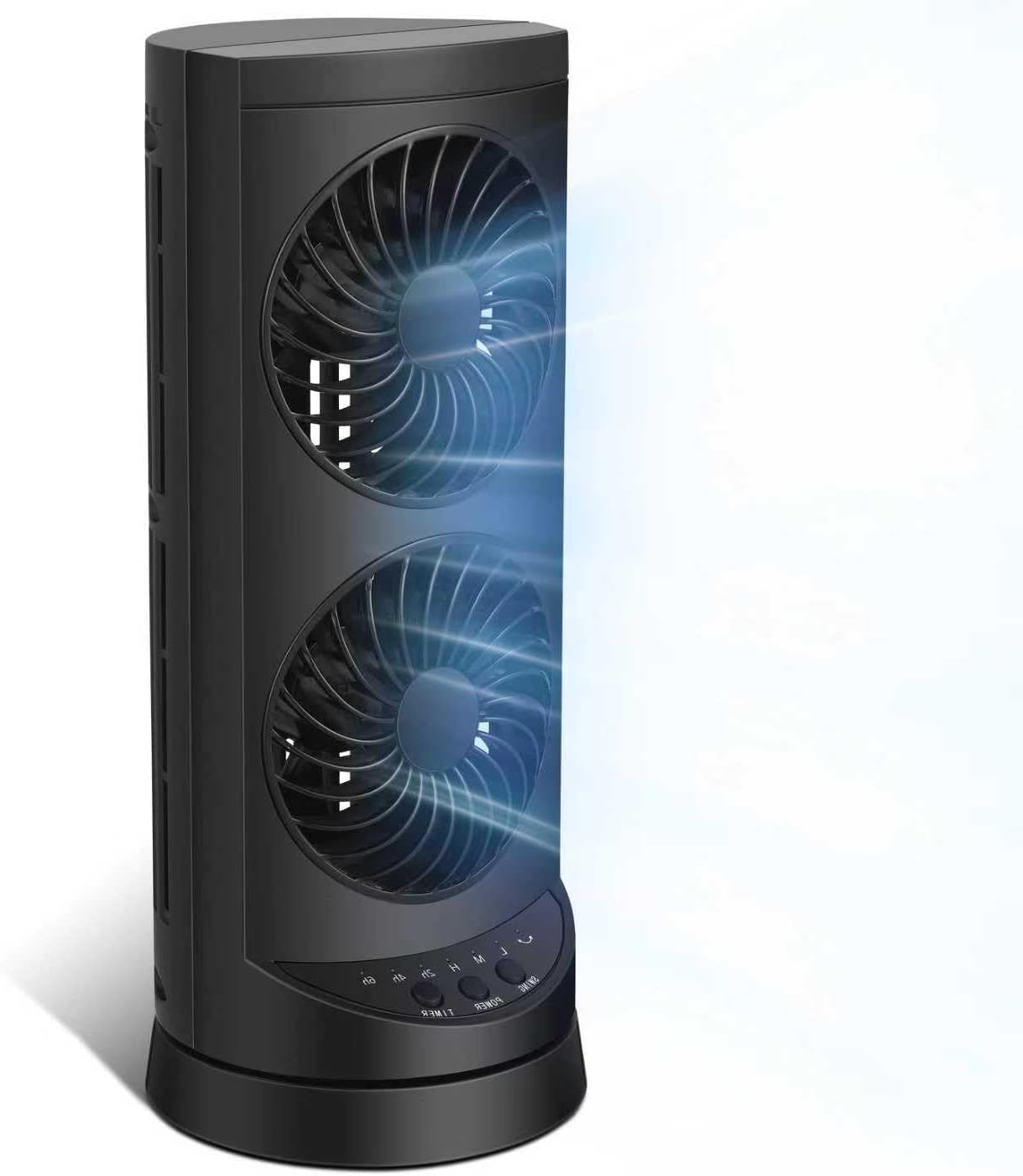
This KopBeau tower fan is a compact, budget-friendly option for bedroom cooling that delivers focused airflow up to about 24 ft/s using a 40W motor and a bionic blade design. It runs on three speed settings with push-button controls and offers two oscillation widths (60° for targeted cooling and 110° for broader room circulation), plus a 12-hour on/off timer for scheduled use. Noise is kept low (listed around 25 dB at quieter settings), so it is suitable for sleeping or working. The fan is lightweight and portable with a tabletop or floor-standing form factor and a simple plug-and-play setup. Trade-offs are its basic plastic construction and limited feature set—there is no remote or app control, no multi-speed precision beyond three levels, and it is best for small to medium bedrooms rather than large open areas. For shoppers prioritizing quiet, straightforward cooling on a tight budget, it covers the essentials without extras.
Best for: Buyers seeking an inexpensive, quiet bedroom fan that is simple to operate and portable between rooms.
Less Ideal for: Anyone needing smart features, remote control, or powerful airflow for large or open-plan rooms should consider a different model.
- Three easy-to-use speed settings for simple cooling control
- Dual oscillation angles (60° and 110°) for targeted or room-wide airflow
- 12-hour timer for scheduled operation and energy savings
- Low-noise operation suitable for bedrooms and night use
- Basic plastic build with no remote or smart controls
- Only three power levels may lack fine-grain speed adjustment
Verdict: A quiet, no-frills tower fan that delivers effective bedroom cooling and scheduled operation at a budget-friendly price.
DREO DR-HPF013 Pedestal Fan

| Power Source | Corded Electric |
|---|---|
| Number of Speeds | 8 |
| Noise Level | 28.2 db |
| Air Flow Capacity | 1000 cfm |
| Motor Type | Brushless |
The DREO DR-HPF013 is a freestanding air circulator built to move a lot of air quietly across a bedroom or living space. It uses a brushless DC motor and a three-blade TurboPoly design to deliver up to 1000 CFM and a claimed 90 ft throw, with eight speeds, three modes and an auto mode that adjusts fan speed as room temperature rises. Height and tilt are adjustable and the head oscillates 90 degrees horizontally; the fan also has an 8-hour timer, muteable beeps and a detachable grille for easier cleaning. Control is available via the top touch panel or the included remote, which makes nighttime adjustments convenient. At 36 watts and a reported 28.2 dB noise level, it balances strong airflow with low operating noise for bedroom use. The practical downsides are that it is plastic-bodied and lacks app or voice control, so it is a straightforward, no-frills circulator rather than a smart-home hub. For buyers prioritizing steady, quiet performance it focuses on core cooling performance rather than extra connectivity bells and whistles.
Best for: Buyers who want a dependable, quiet bedroom fan that prioritizes consistent air circulation and simple controls over smart features.
Less Ideal for: If you want integrated smart-home control, advanced app scheduling, or a metal-bodied premium build, look at models with those specific features instead.
- High airflow capacity up to 1000 CFM for whole-room circulation
- Brushless DC motor for quieter, efficient operation
- Multiple speeds, auto mode and 8-hour timer for flexible daily use
- Remote and top touch controls for convenient adjustments
- Detachable front and rear grill for easier cleaning
- Plastic construction may feel less durable than metal alternatives
- No smart app or voice control for remote scheduling or integrations
Verdict: Choose this fan if you need a reliable, quiet pedestal circulator that delivers strong whole-room airflow with simple, dependable controls.
Levoit Classic 36-inch Tower Fan

| Number of Speeds | 5 |
|---|---|
| Noise Level | 28 db |
| Wattage | 39 watts |
| Air Flow Capacity | 1044 cfm |
| Control Method | Remote |
The Levoit Classic 36-inch tower fan is a floor-standing bladeless fan designed for bedroom use that delivers adjustable airflow across five speeds and four modes including Normal, Turbo, Sleep, and Auto. It is typically used for overnight cooling or whole-room circulation thanks to a wide oscillation and a turbo setting for quick cooling; the Auto mode uses a built-in temperature sensor to change fan speed as the room warms or cools. Practical features include a 12-hour timer, remote control, touchpad controls, and an LED display that can be turned off in Advanced Sleep mode for minimal disturbance. With a quoted noise level of 28 dB on low and a 39-watt AC motor it balances quiet operation with reasonable power use. The fan is lightweight plastic construction and the back grille is removable for cleaning, but it lacks smart home integration and the plastic build is less premium than metal alternatives. It is best when you want a quiet, simple bedroom fan with temperature-adaptive airflow rather than a high-end connected appliance.
Best for: Buyers who prioritize a quiet, easy-to-use bedroom fan with remote control and temperature-adaptive airflow for overnight comfort and simple whole-room circulation.
Less Ideal for: People who need smart-home integration, a heavy-duty metal build, or fans designed for large open-plan spaces should consider other options.
- Quiet low-speed operation suitable for bedrooms (rated 28 dB).
- Auto mode with built-in temperature sensor adjusts airflow automatically.
- Five-speed control plus Turbo and Sleep modes give flexible airflow choices.
- Includes remote and 12-hour timer for convenient bedside control.
- Made of plastic so it does not feel as durable or premium as metal fans.
- No smart home or app connectivity for voice or remote scheduling.
Verdict: A very quiet, temperature-aware 36-inch tower fan that delivers easy bedside control and effective bedroom cooling.
Honeywell TurboForce HT-900
| Power Source | Corded Electric |
|---|---|
| Number of Speeds | 3 |
| Air Flow Capacity | 185 cfm |
| Motor Type | brushless |
| Installation Type | Tabletop or Wall Mount |
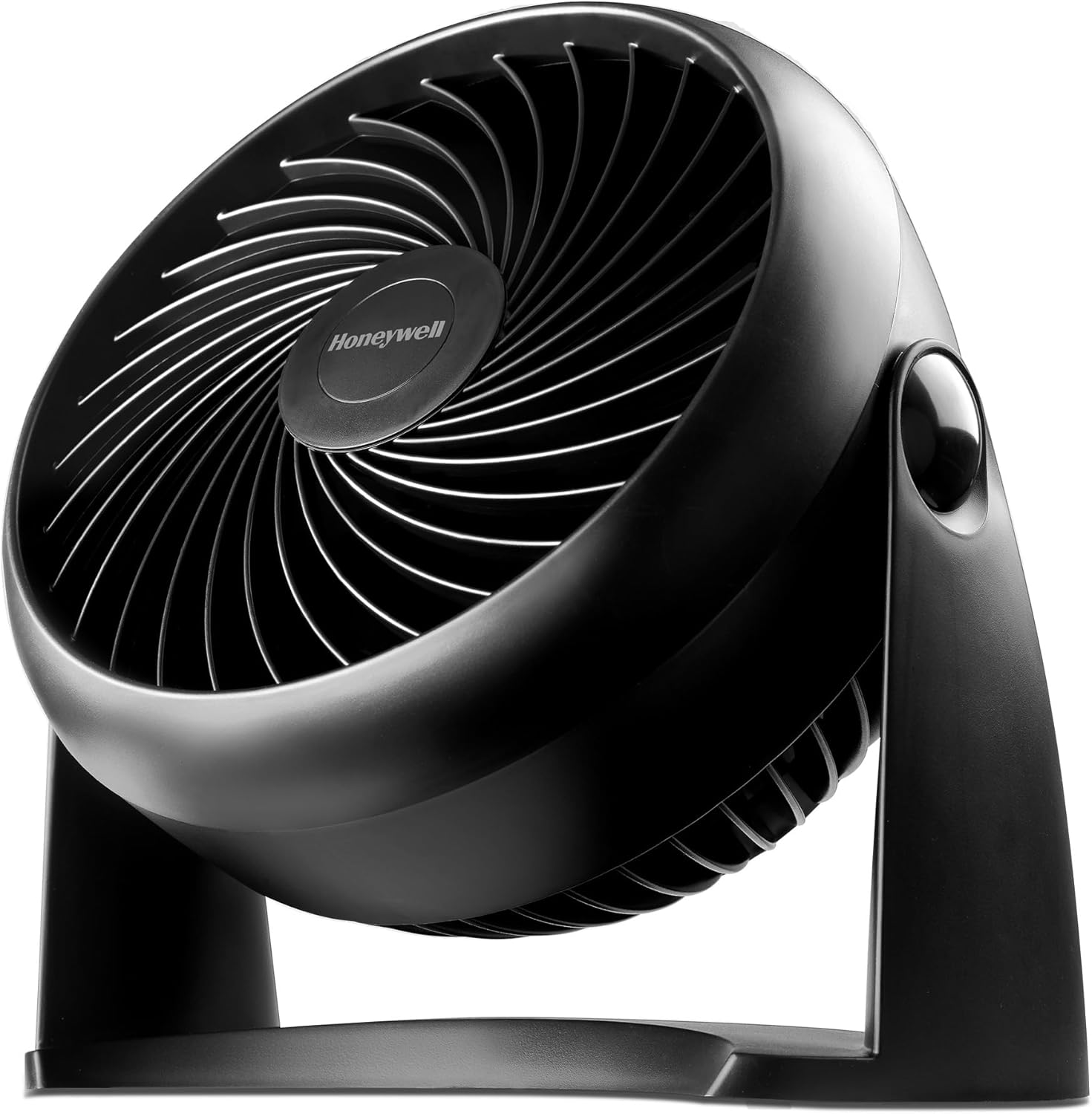
The Honeywell TurboForce HT-900 is a compact tabletop air circulator built to move a surprising amount of air for its size. It runs on a corded electric connection and offers three push-button speed settings, a 90-degree pivoting head for targeted airflow, and a brushless motor that helps keep operation steady. With an advertised airflow of 185 cfm and a design that can project breeze across a room, it works well on a desk, nightstand, or mounted on a wall to supplement bedroom cooling or improve circulation from an AC. The fan is plastic-bodied and lightweight, making it easy to reposition or store, and Honeywell claims quieter operation than comparable units which matters in a sleeping space. Expect basic manual controls rather than smart features or timers, and because it is small it is optimized for spot cooling rather than replacing an AC in large rooms. For buyers who prioritize reliable, no-frills cooling in bedrooms or home offices, the HT-900 is a practical, low-risk choice.
Best for: Buyers who want a dependable, easy-to-use bedside or desk fan that provides direct cooling and quiet operation without complicated features or setup.
Less Ideal for: People who need whole-room cooling for large bedrooms or want smart controls, timers, or remote operation should look elsewhere.
- Compact and lightweight for easy placement and storage
- Three speeds and 90-degree pivot let you direct airflow where needed
- Brushless motor for steady operation and longevity
- High advertised airflow (185 cfm) for a small fan
- Quieter operation suitable for bedroom use
- No timer, remote, or smart control features
- Plastic construction may feel less premium than metal fans
Verdict: A compact, no-nonsense bedside or desk fan that delivers strong, quiet spot cooling for bedrooms where reliability matters.
Choosing the Right Fan for Cooling Bedroom: Key Factors to Consider
Airflow Output
Airflow output determines how quickly and effectively a fan cools a bedroom. Look for fans that deliver steady cubic feet per minute (CFM) or visibly strong airflow at mid and high speed settings. Higher output moves heat away from your body and evens out room temperature, but very high airflow can increase noise; the balance depends on bedroom size and how close the fan sits to where you sleep.
Consider the placement relative to the bed and any doors or windows. A fan with focused, directional airflow can create a strong cooling breeze for a single sleeper, while a model with wider spread is better for cooling larger areas or two sleepers.
Noise Level
Noise level is critical for overnight use because even low hums can disrupt light sleepers. Check measured decibel ratings when available, and note whether a fan lists a dedicated 'night' or low-noise mode. Blade type, motor quality, and housing design all influence how much sound a fan produces at each speed.
Keep in mind that perceived noise varies by frequency as well as volume. Lower-frequency airflow sounds are often less disturbing than high-pitched whines. If you are a sensitive sleeper, prioritize fans with documented quiet operation at the speeds you expect to use.
Coverage & Oscillation
Coverage and oscillation affect how well a fan spreads cool air across a bedroom. Oscillating models sweep air across a wider area and are useful when you want even circulation rather than a narrow stream. Adjustable tilt and multiple oscillation patterns let you direct airflow toward a bed, foot of the bed, or an entryway to promote cross-ventilation.
If you plan to pair a fan with an open window, consider models that can blow air out or draw cooler air in; reversible airflow or multiple directional settings expand placement options and improve overall cooling performance.
Size and Placement
The fan's physical size and mounting options dictate where it can sit in a bedroom and how effective it will be. Tower and pedestal fans occupy less floor space and are easier to tuck into corners, while box or floor fans can be aimed directly at a bed. Ceiling fans provide whole-room circulation but require proper installation and ceiling height consideration.
Also consider ease of moving the fan between rooms or storage. Lighter, compact designs are handy if you plan to relocate the fan seasonally, while heavier bases are more stable for taller pedestal units.
Controls, Timer, and Convenience Features
Controls and convenience features determine how easy the fan is to use through the night. Look for variable speed ranges, a timer for automatic shutoff, and a remote or app control if you prefer not to get out of bed. Preset modes like 'sleep' or 'eco' simplify operation and often combine lower noise with efficient airflow.
Other useful conveniences include memory functions that recall your last setting, easy-to-read displays for nighttime use, and cordless or rechargeable options for areas without nearby outlets.
Energy Use and Durability
Energy use affects operating cost when a fan runs all night. Fans with efficient motors or brushless DC motors typically use less electricity for a given airflow compared with older motor designs. Check the wattage at typical speed settings to estimate nightly energy consumption.
Durability and build quality influence long-term satisfaction. Sturdy housings, reliable switches, and accessible cleaning features help a fan stay effective year after year. If a fan will run frequently, prefer models with proven motor longevity and easy maintenance access.
Best Fan Types for Different Bedrooms
Different fan designs suit different bedroom layouts and needs. Tower fans are compact and good for corners or narrow spaces, while pedestal fans provide adjustable height and stronger direct airflow. Box and floor fans are simple and often deliver robust airflow for the price, and ceiling fans offer whole-room circulation if you have the right ceiling height and mounting options.
Think about how you want air to move. For targeted cooling at the bed, a pedestal or floor fan with directional tilt works well. For steady, whole-room circulation that reduces overall room temperature, a ceiling fan or oscillating tower is better.
- Tower fans: space-saving, broad coverage
- Pedestal fans: adjustable height, strong direct airflow
- Box/floor fans: simple, powerful for open placement
- Ceiling fans: continuous whole-room circulation when installed
Placement Tips to Maximize Cooling
Where you position a fan has a big impact on perceived cooling. Placing a fan near the foot of the bed or angled across the mattress creates a direct breeze for sleeping comfort. If you have cross-ventilation, use fans to push cooler night air into the room and direct warmer air toward an open window or door.
Avoid placing fans behind heavy furniture or too close to walls where airflow is obstructed. For ceiling fans, set the rotation direction appropriate to the season so airflow helps create a cooling effect rather than circulating warm air.
- Aim fans at the sleeper for direct cooling
- Use oscillation to spread air when cooling multiple sleepers
- Pair with open windows for night-time cross-ventilation
- Keep intake and exhaust clear of obstructions
Features That Improve Sleep Comfort
Night modes, low-noise presets, and gradual speed ramps help maintain cooling without disturbing sleep. Dimmable or non-illuminated displays prevent light pollution in a dark bedroom. Remote controls and timers let you set the fan to turn off after you fall asleep.
Some fans include built-in air-cleaning features or ionizers. These can be helpful for allergy-prone sleepers but may add noise or require filter maintenance. Prioritize features that contribute to quieter operation and easier overnight use.
- Night mode and low-noise presets
- Timer and automatic shutoff
- Remote control or app-based adjustments
- Minimal or dimmable displays
Maintenance and Cleaning
Regular cleaning preserves airflow and reduces noise. Choose fans with easy-access grills or tool-free disassembly to remove dust from blades, housings, and air intakes. Accumulated dust reduces efficiency and can lead to motor strain over time.
If a model uses filters, follow the manufacturer schedule for cleaning or replacement. Well-maintained fans run quieter and provide more consistent cooling over their service life.
- Look for removable grills or tool-free access
- Wipe housings and blades regularly to maintain airflow
- Check and clean filters when present
- Lubricate or service motors per maintenance guidance when needed
Safety Considerations for Bedroom Use
Safety matters in spaces where people sleep. Stable bases prevent tipping, and grills or bladeless designs reduce the risk of accidental contact, especially in homes with children or pets. Cord management and placement away from bedding and curtains reduce fire and entanglement risks.
For ceiling fans, ensure secure installation and appropriate clearance from the ceiling and fixtures. Follow electrical safety guidance and use a qualified installer if you are unsure about mounting hardware or wiring.
- Prefer stable, low-tipping designs in floor and pedestal fans
- Keep cords secured and away from walking paths
- Choose enclosed or bladeless designs where safety is a concern
- Verify proper installation for ceiling fans
How We Chose the Best Fan for Cooling Bedroom
We focused on features that directly affect overnight comfort and day-to-day usability in bedroom settings. First, we prioritized measured airflow or airflow estimates for a bedroom-sized footprint, since moving enough air is the primary function of a fan for cooling bedroom use. Second, we evaluated noise output at typical speed settings because low audible disturbance is essential for sleep. Third, we considered oscillation and coverage—how well a fan spreads air across a bed and seating area. Fourth, energy efficiency and motor type were factored in to estimate running cost and longevity. Fifth, build and control quality—features like variable speeds, a timer, remote control, and stable stands or mounts—were included because they affect daily convenience. Products were excluded if they lacked published performance data, had ergonomics that limit bedroom placement, or relied on novelty rather than sustained airflow. We also filtered out units that would be clearly undersized for typical bedroom square footage. The resulting picks balance measurable airflow, low noise, useful controls, and safe, quiet operation for sleeping environments.
Our full evaluation process is outlined in our review methodology.
FAQ
What fan speed should I use to sleep comfortably?
Many sleepers find a low to medium speed is best because it balances airflow and noise. If you prefer a direct breeze, medium settings are common; choose a dedicated night or low-noise mode if available to reduce disturbance.
Can a fan actually lower my bedroom temperature?
A fan does not lower room temperature by itself, but moving air increases evaporative cooling on your skin and evens out hot spots. Combined with nighttime ventilation, a fan can make the room feel significantly cooler.
Are bladeless fans quieter for bedroom use?
Bladeless designs can reduce perceptible buffeting and offer smoother airflow, which some sleepers find less intrusive. Noise performance still depends on motor and airflow level, so check rated noise levels or reviews when quiet operation matters.
How important is oscillation for bedroom cooling?
Oscillation helps spread air across a wider area and is useful for cooling multiple sleepers or circulating air around a room. If you only need airflow directed at one spot, oscillation is less critical.
Should I use a ceiling fan and a floor fan together?
Using both can improve circulation and create a stronger cooling effect, especially in larger rooms. Position the floor or pedestal fan to augment the ceiling fan's airflow pattern and avoid conflicting air directions.
How often should I clean my bedroom fan?
Clean external grills and blades every few weeks if you run the fan frequently, and perform a deeper cleaning or filter maintenance seasonally. Regular cleaning preserves airflow and reduces noise over time.
Final Verdict
Focus on the tradeoffs between airflow and noise when choosing a fan for cooling bedroom spaces. Prioritize models that deliver sufficient airflow for your room size while maintaining low noise levels and useful controls like timers and night modes. Also consider placement, ease of maintenance, and safety features to ensure long-term comfort. Choose a fan that matches how you sleep and how you plan to use it overnight. If quiet operation is most important, favor lower-noise designs even if airflow is slightly reduced. If strong direct cooling is the goal, pick a model with higher output and directional control.