
Note: This article contains affiliate links. If you click on these links and make a purchase, we may earn a small commission at no extra cost to you. This helps support our research and content. Read our full affiliate disclosure here.
Choosing the right fan for your living room matters because this is where people relax, entertain, and spend long stretches of time. A fan that delivers even airflow, runs quietly, and suits the room layout can improve comfort without dominating the space. This guide highlights six shortlisted fans that excel in airflow coverage, noise control, and ease of use for living-room settings. We explain the practical tradeoffs and evaluation criteria so you can match a fan to your room size, seating arrangement, and aesthetic needs. Read on for focused guidance that leads into the top picks.
Top Picks at a Glance
| Best Quality Built to a higher standard if you want something more solid | DREO TurboPoly Pedestal Fan DR-HPF008S |  |
| Best Value The sweet spot between price and what you get | Amazon Basics 16-Inch Pedestal Fan |  |
| Best Budget The cheapest option that still gets the job done reliably | Lasko 2520 Oscillating Pedestal Fan | 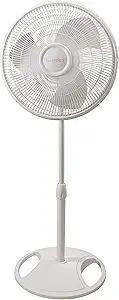 |
| Top Rated A top-rated pick with lots of positive feedback | Vornado 660 Air Circulator |  |
| Most Popular A crowd favorite that many people choose with confidence | DREO Tower Fan 307 |  |
| Best Seller A high-volume bestseller chosen again and again | Honeywell TurboForce HT-900 |  |
DREO TurboPoly Pedestal Fan DR-HPF008S

| Power Source | dc |
|---|---|
| Number of Speeds | 9 |
| Air Flow Capacity | 1000 cfm |
| Noise Level | 28.2 db |
| Control Method | App, Remote, Touch |
The DREO TurboPoly pedestal fan is built to move a lot of air across a living room while staying quiet and flexible. It uses a DC motor and a three-blade head to deliver up to 1000 CFM and a claimed 100 ft coverage, with combined horizontal and vertical oscillation for wide area circulation. Control options include the DREO app, voice assistants, touch controls, and the included remote, and you get nine speeds, six modes (including automatic temperature-based Auto Mode), Turbo for bursts of power, an 8 hour timer, and RGB lighting. The adjustable pedestal and tilt make it easy to aim airflow or lift it toward ceilings for whole-room circulation, and the fan is designed for straightforward cleaning. Trade-offs are that the housing is plastic and the listed noise level is around 28 dB at lower settings but will rise on high and Turbo, and advanced smart features require app setup and a Wi-Fi connection. For living rooms that need strong, directional airflow and smart control options, this fan balances performance and convenience well.
Best for: Buyers who prioritize strong, adjustable airflow and smart control in a living room setting and want a fan that can both target and circulate air throughout a medium to large space.
Less Ideal for: People who need a heavy-duty metal fan for rugged use or those who prefer a purely manual plug-and-play fan without any app or Wi-Fi dependency.
- High airflow capacity (1000 CFM) for whole-room circulation
- 3D oscillation (horizontal + vertical) spreads air across large spaces
- Wide control options: app, voice, remote, and touch
- Nine speeds and multiple modes including Auto and Turbo for flexible performance
- Plastic construction rather than metal may feel less premium
- Smart features require Wi-Fi and initial app setup
Verdict: Choose this fan when you want a quiet, high‑airflow pedestal fan with wide 3D oscillation and smart app/voice control to move air across a living room.
Amazon Basics 16-Inch Pedestal Fan

| Power Source | Corded Electric |
|---|---|
| Number of Speeds | 3 |
| Wattage | 60 watts |
| Motor Type | AC |
| Controller Type | Remote Control |
This Amazon Basics 16-inch pedestal fan is a straightforward floor fan designed to move air in medium to large living spaces. It uses a 60W AC motor and dual-layered plastic blades to generate a steady breeze across three speed settings and three preset modes (normal, nature, sleep). The head tilts and the stand adjusts in height so you can direct airflow where you need it, and the oscillation feature helps spread air across a room. The included remote and timer make it easy to change settings from the couch, and the AC motor is described as quiet and energy-efficient for continuous use. As a budget-focused standing fan, it delivers practical cooling without advanced features like app control, variable-speed increments beyond three levels, or an inverter motor. Assembly and the plastic blade construction keep weight and cost down, but heavier-duty materials or more precise speed control are not part of this design.
Best for: Buyers who prioritize a straightforward, no-frills fan that reliably circulates air in living rooms and values easy control from a distance.
Less Ideal for: Those seeking precise speed variability, premium materials, smart-home integration, or ultra-quiet high-end motors should consider other options.
- Adjustable height and tilt let you aim airflow where needed
- Oscillating head spreads air across medium to large rooms
- Remote control and timer offer convenient, hands-off operation
- Energy-efficient 60W AC motor provides steady airflow with relatively low noise
- Only three fixed speed levels limit fine-grained airflow control
- Plastic blades and mostly plastic construction are less durable than metal alternatives
Verdict: A functional, budget-friendly pedestal fan that delivers easy-to-direct airflow for living rooms with simple remote control and energy-efficient operation.
Lasko 2520 Oscillating Pedestal Fan

| Blade Diameter | 16 inches |
|---|---|
| Number of Speeds | 3 |
| Motor Type | AC |
| Wattage | 91 watts |
The Lasko 2520 is a straightforward pedestal fan that delivers usable airflow for living rooms and bedrooms without extra bells and whistles. It has a 16" blade, three quiet speed settings, widespread oscillation, and a tilt-back head so you can point circulation where it is needed; the stand adjusts up to 47" to match different seating arrangements. Manual rotary controls and a simple pull-chain or push-button switch keep operation intuitive, and tool-free assembly makes it easy to move or set up for temporary cooling. It uses a dependable AC motor and includes safety features like Blue Plug fault protection and ETL listing. Expect solid basic performance for cooling people in small to medium living spaces, but do not expect advanced features such as remote control, timers, or app connectivity; the fan is also plastic-bodied, which helps keep the cost down but can feel less premium than metal alternatives.
Best for: Buyers seeking an affordable, no-frills living room fan that provides adjustable airflow and easy setup for everyday cooling needs.
Less Ideal for: If you want smart features, precise speed control, or a heavy-duty metal high-velocity fan for large rooms, consider other options.
- Adjustable height and tilt to aim airflow where needed
- Widespread oscillation for room-scale circulation
- Three quiet speed settings suitable for sleeping or daytime use
- ETL-listed with Blue Plug safety cutoff for electrical faults
- Tool-free assembly and lightweight for easy portability
- No remote, timer, or advanced controls
- Plastic construction may feel less durable than metal fans
Verdict: A budget-friendly pedestal fan that gives reliable, adjustable airflow for small to medium living rooms without unnecessary extras.
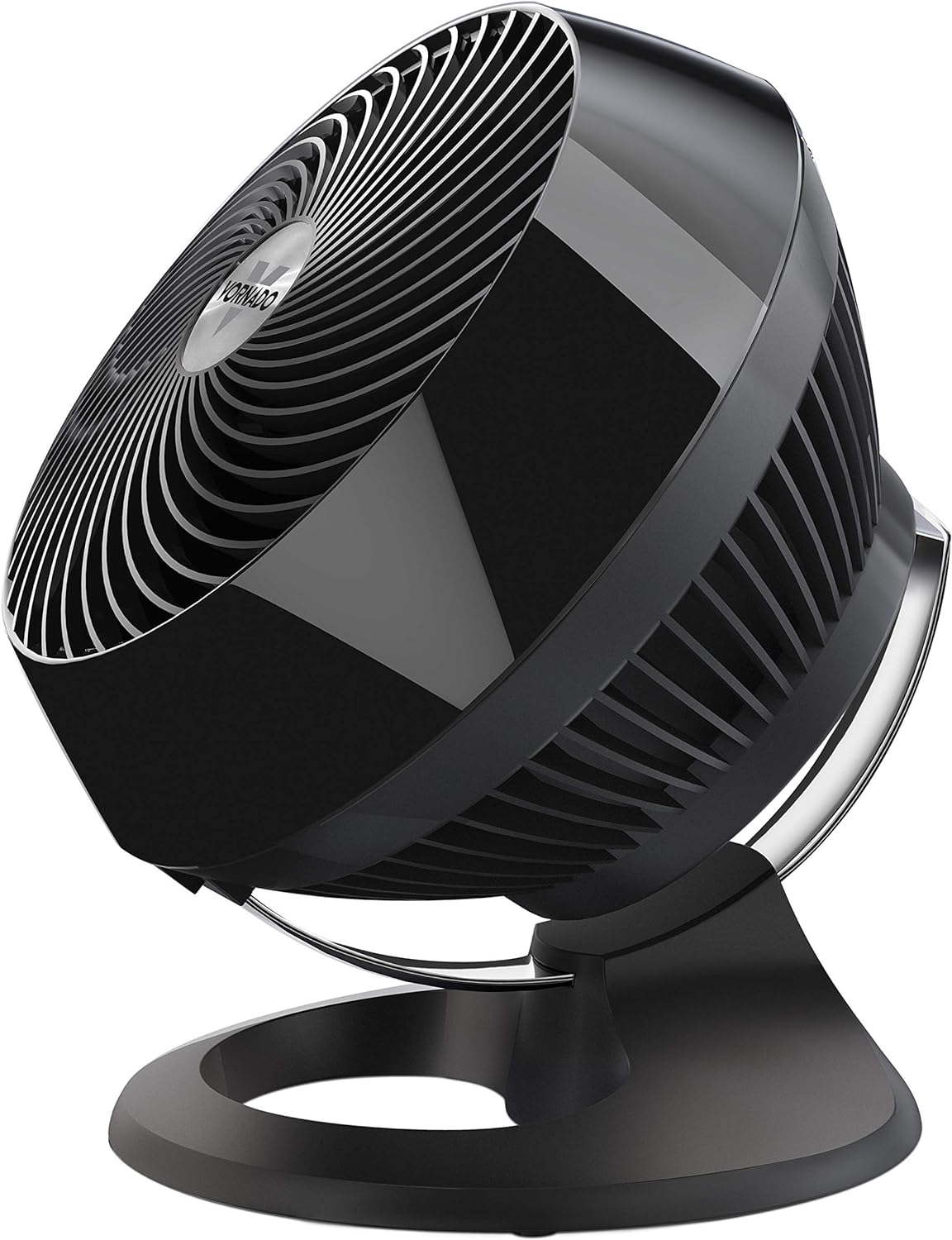
Vornado 660 Air Circulator
| Number of Speeds | 4 |
|---|---|
| Noise Level | 54 db |
| Wattage | 45 watts |
| Air Flow Capacity | 584 cfm |
| Motor Type | Brushless |
The Vornado 660 is a floor/table air circulator built to push continuous airflow across a room rather than just local breezes. It uses deep-pitched plastic blades, an inlet guide cone and spiral grill to produce Vortex circulation that the listing rates at up to 584 cfm and reach as far as 100 feet in ideal conditions. Four push-button speed settings and a chrome glide bar with 90-degree tilt make it easy to direct air where you need it, and the removable front grill simplifies cleaning. With a brushless motor and a relatively low 45-watt draw the unit aims for efficient, long-running performance and the brand backs it with a five-year warranty. Expect noticeable whole-room circulation in living-room-sized spaces and quiet enough operation on low settings for background use, though the manufacturer lists a noise level of 54 db at higher speeds. The fan is a straightforward plug-in design with no remote or smart controls, so if you want simple, durable air movement and easy maintenance this model delivers, but it lacks advanced controls or programmability some buyers may prefer.
Best for: Buyers who prioritize dependable, long-lasting whole-room air circulation for living rooms and want a straightforward, service-backed fan that runs efficiently without fancy controls.
Less Ideal for: Avoid this model if you need app control, scheduling, or a premium metal-bodied decorative fan for a formal living-room focal point.
- Designed for whole-room Vortex circulation to move air long distances
- Four speed settings and 90-degree tilt for directed airflow
- Brushless motor and 45W power draw for efficient, sustained use
- Removable front grill for easier cleaning and maintenance
- Five-year manufacturer support for long-term reliability
- No remote control or smart connectivity for remote adjustments
- Main components are plastic which may feel less premium than metal alternatives
Verdict: Choose the Vornado 660 when you want a reliable, service-backed whole-room circulator that delivers steady, efficient airflow for living rooms.
DREO Tower Fan 307

| Number of Speeds | 8 |
|---|---|
| Modes | Normal, Natural, Sleep, Auto |
| Oscillation | 90° |
| Wattage | 36 watts |
| Motor Type | brushless DC motor |
The DREO Tower Fan 307 is a compact 36-inch oscillating floor fan built around an upgraded brushless DC motor that pushes strong airflow while keeping noise low. It offers eight speed settings and four modes including Normal, Natural, Sleep, and Auto, so you can dial in anything from a gentle bedroom breeze to a higher-velocity boost; the unit supports remote and touchpad control for easy adjustments. With 90 degree oscillation and a claimed airflow capacity for broad room coverage, it pairs well with an air conditioner to circulate cool air more effectively. Practical touches include a timer, removable rear grille and impeller for easier cleaning, and ETL safety certification. On the downside the fan runs on standard corded power and lists voltage at 240 volts which may matter for some regions, and the plastic construction means it is lightweight but less premium-feeling than metal alternatives. For buyers focused on quiet, adjustable oscillating cooling in bedrooms or living rooms, this model balances airflow and low noise in a small footprint.
Best for: Buyers who want a quiet, adjustable tower fan that delivers wide oscillating coverage and easy remote control for bedrooms and living spaces backed by strong customer feedback.
Less Ideal for: People seeking a heavy-duty, industrial-strength fan or a premium metal build should consider sturdier floor or bladeless alternatives.
- Brushless DC motor for efficient, high-velocity airflow with lower noise
- Eight speed levels and four modes for flexible comfort settings
- 90° oscillation spreads air across a wide area for better room coverage
- Includes remote and touch controls plus a timer for convenient operation
- Removable rear grille and impeller simplify cleaning and maintenance
- Plastic construction feels less durable compared with metal fans
- Corded operation and listed voltage may limit regional compatibility
Verdict: A feature-rich, quiet oscillating tower fan that gives flexible speeds and modes for effective bedroom and living-room cooling.
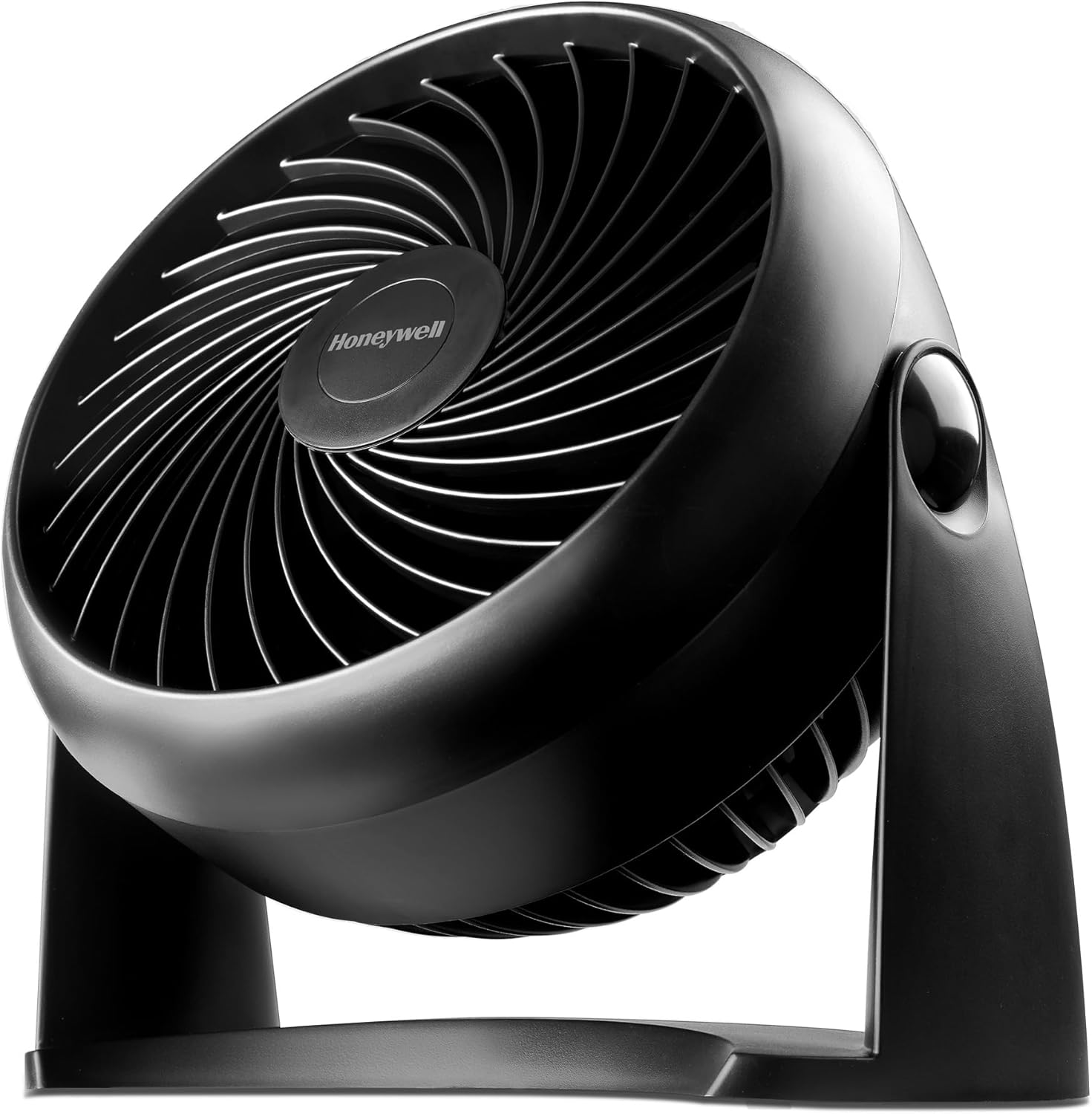
Honeywell TurboForce HT-900
| Power Source | Corded Electric |
|---|---|
| Number of Speeds | 3 |
| Air Flow Capacity | 185 cfm |
| Motor Type | brushless |
| Connector Type | NEMA 1-15 or Type B plug |
The Honeywell TurboForce HT-900 is a small, corded tabletop fan designed to move air efficiently in bedrooms, living rooms, or home offices. It uses an aerodynamic turbo design and a brushless motor to produce strong airflow (listed at 185 cfm) while remaining relatively quiet, and the 90-degree pivoting head plus three push-button speed settings let you aim and tune the breeze where you need it. The unit can be wall-mounted or used on a desk and is light and portable for moving between rooms. Practical benefits include improved air circulation to supplement air conditioning and targeted cooling at a workstation or seating area, plus straightforward controls with a NEMA plug. Limitations are its small physical size and single-head design, which mean it is best for spot cooling or circulating air in small to medium spaces rather than cooling large living rooms by itself.
Best for: Buyers who want a reliable, easy-to-use personal or supplemental fan to improve airflow in living areas and prefer a straightforward, low-risk purchase backed by a familiar brand.
Less Ideal for: People seeking a primary cooling solution for large open-plan living rooms or those who need smart features like remote control or programmable timers.
- Aerodynamic turbo design and brushless motor deliver strong airflow for a compact fan
- Three simple speed settings and a 90-degree pivoting head for precise, directed cooling
- Quiet operation suitable for bedrooms and living areas
- Can be used on a tabletop or wall-mounted for flexible placement
- Small footprint limits effectiveness as the sole cooling source in large living rooms
- Basic controls lack timers or remote convenience
Verdict: A compact, dependable personal air circulator that delivers targeted, quiet airflow to improve comfort in small to medium living rooms.
Choosing the Right Fan for Living Rooms: Key Factors to Consider
Room Size and Airflow Needs
Matching a fan to your living room size determines whether it will move enough air to be effective. A small oscillating fan can be adequate for a compact den or reading nook, while a larger pedestal or ceiling fan is better for open-plan living areas. Consider ceiling height and furniture placement because obstructed airflow reduces real-world performance.
Also think about whether you need localized cooling for seating areas or whole-room circulation. Fans with adjustable tilt or oscillation can provide targeted airflow when you are seated, and wider-blade or higher-CFM designs work for full-room mixing.
Noise and Acoustic Comfort
Living rooms host conversations, media playback, and relaxation, so fan noise is a critical factor. Look for manufacturers' noise specifications and features that reduce turbulence, such as aerodynamic blade shapes, enclosed motor housings, or variable-speed motors that run quietly on low settings.
Consider the type of noise as well. A steady, low hum is often less distracting than intermittent rattles or whines. Fans with multiple speed steps or a whisper mode let you choose a compromise between airflow and quiet operation depending on the activity in the room.
Control Options and Ease of Use
How you control the fan affects daily convenience. Remote controls, wall switches, smartphone apps, or simple onboard controls each have advantages depending on your living room setup. A remote or app control is handy if the fan is mounted high or placed behind furniture, while a wall-switch-compatible model integrates with existing room controls.
Programmable timers and schedules can coordinate fan operation with HVAC cycles or evening routines. Ergonomic and intuitive controls reduce friction for guests and family members who may not be familiar with advanced settings.
Installation, Placement, and Footprint
Consider how the fan will be installed and how much floor, table, or ceiling space it occupies. Pedestal and tower fans require floor space and a nearby outlet, while clip-on or table fans are compact but may provide limited reach. Ceiling fans need appropriate mounting points and correct blade clearance from the ceiling and walls.
Also evaluate the visual footprint. A fan that visually blends with your living-room decor is less likely to feel intrusive. Portability and whether the fan can be moved easily between rooms are other practical aspects to weigh.
Energy Use and Efficiency
Fans are generally energy-efficient compared with air conditioning, but some designs use less power for the same perceived cooling. Look for efficient motor types and multiple speed settings that allow low-power operation when full airflow is unnecessary.
If you plan to run the fan for long periods, lower-wattage models and features such as an eco or sleep mode will reduce running costs and heat output. Consider how the fan integrates with your overall home energy use, especially in rooms with HVAC thermostats that respond to circulating air.
Maintenance and Durability
Living-room fans should be easy to keep clean and serviceable because dust buildup worsens noise and reduces airflow. Removable grills, washable blades, and accessible motor housings make routine cleaning straightforward.
Durable construction and replaceable parts extend the life of the fan. Check for stable bases on floor models and secure mounting hardware for ceiling installations so the fan remains safe and steady over years of use.
Choosing Between Ceiling, Pedestal, and Tower Fans
Ceiling, pedestal, and tower fans each serve different living-room needs. Ceiling fans excel at whole-room circulation and freeing up floor space, but they require proper mounting and enough ceiling clearance. Pedestal fans offer strong directional airflow and adjustable height, making them good for targeted cooling near seating areas. Tower fans are compact and visually discreet, often providing wide, even airflow with a small footprint.
When deciding between types, weigh installation complexity, the available floor or ceiling space, and how you plan to use the fan day to day. Portability and the typical seating layout will influence which form factor fits your lifestyle best.
- Ceiling fans: best for whole-room mixing and freeing floor space
- Pedestal fans: strong directional airflow and adjustable height
- Tower fans: compact, visually minimal, good for tight spaces
Placement Tips for Maximum Comfort
Position the fan so airflow reaches primary seating areas without blowing directly into people at high speeds. For pedestal fans, aim slightly above seated head height with a gentle downward angle. For tower fans, place them near open walkways or between furniture groupings to encourage cross-room circulation.
Avoid placing fans where large furniture blocks airflow. If you have multiple fans, stagger them to create a gentle flow rather than opposing streams that cause turbulence.
- Aim airflow above head height for seated comfort
- Use oscillation or adjustable tilt to cover a wider area
- Keep at least a few feet of clearance from walls and furniture
Integrating Fans with Room Design and Lighting
A fan should complement living-room decor rather than dominate it. Look for finishes and simple lines that match existing fixtures. For ceiling fans, coordinate blade style and motor housing with lighting elements to create a cohesive look.
Consider combined units with integrated lighting if you need an additional light source. Make sure lighting controls and fan controls are easily accessible and that the combined unit meets your illumination and airflow needs without conflict.
- Match finishes to existing hardware and lighting
- Integrated light/fan units can save space but check functionality
- Choose neutral designs for flexibility with redecorating
When to Use Oscillation and Draft Modes
Oscillation spreads airflow across a wider area and is ideal for cooling multiple seating positions without moving the fan. Draft or direct modes give stronger, focused airflow for quick relief or for ventilating a specific spot.
Using lower speeds with oscillation often produces the most comfortable sensation for groups because it avoids overpowering any single person while still improving perceived cooling. Reserve high-speed direct airflow for short-term use or when you need to move air quickly.
- Oscillation: best for multi-seat coverage
- Direct draft: targeted, short-term cooling
- Combine low speed with oscillation for comfortable long-term use
Smart Features and Remote Operation
Smart controls and remote operation add convenience, especially for ceiling or high-mounted fans. Features to look for include timed schedules, quiet night modes, and compatibility with home automation for voice or routine-based control.
If multiple people use the living room, pick simple control schemes that guests can operate. Battery-backed remotes and physical controls ensure the fan remains usable even if networked features are unavailable.
- Remote controls increase convenience for high or hard-to-reach fans
- Timers and schedules help coordinate with HVAC and evening routines
- Prefer simple fallbacks like onboard buttons for guests
How We Chose the Best Fan for Living Rooms
Our shortlist focuses on fans that balance airflow performance, acoustic comfort, and home-friendly features for living-room use. We prioritized models with measured airflow coverage and adjustable speeds so they can handle both whole-room circulation and spot cooling. Noise performance was a strong filter because living rooms are used for conversation, TV viewing, and relaxation. Ease of operation and control options were included to ensure the fan is convenient for daily use and for guests. We also considered installation and footprint: fans that fit common living-room layouts, offer multiple mounting or placement methods, and minimize visual clutter scored higher. Durability and ease of maintenance were evaluated through design cues such as accessible grills and washable components. We excluded specialty fans intended only for industrial, workshop, or outdoor use, and we did not consider models lacking basic safety certifications or indoor suitability. The final list represents products that matched these concrete, buyer-focused criteria.
Our full evaluation process is outlined in our review methodology.
FAQ
How big of a fan do I need for a typical living room?
Fan size depends on room square footage and ceiling height. Small living rooms may be fine with compact tower or pedestal fans, while open-plan or larger living rooms benefit from larger-diameter ceiling fans or high-CFM pedestal models.
Will a fan reduce my cooling bills?
Fans circulate air to increase perceived comfort, which can allow you to raise thermostat settings and lower cooling energy use. Fans do not lower room temperature by themselves, but they are much lower power than air conditioning when used correctly.
Are quieter fans less effective?
Not necessarily. Some designs move substantial air quietly through efficient motors and aerodynamic blades. Look for models that list both airflow and noise specs, and consider adjustable speeds to balance performance with acoustic comfort.
How often should I clean my living-room fan?
Clean visible blades and grills every few weeks in dusty environments, and perform a deeper cleaning every few months. Regular maintenance preserves airflow, reduces noise, and improves indoor air quality.
Can I use a fan in a room with multiple seating zones?
Yes. Oscillating fans and units with wide airflow coverage are well suited to multi-zone living rooms. For distributed comfort, use one centrally placed ceiling fan or multiple smaller fans coordinated to create gentle cross-flow.
Final Verdict
Prioritize the combination of airflow coverage and low noise when choosing a fan for a living room. Match the fan type to your room layout and usage patterns: ceiling fans for whole-room circulation, pedestal fans for targeted airflow, and tower fans for compact, unobtrusive performance. Balance control convenience and installation constraints with long-term maintenance needs. By focusing on airflow, acoustic comfort, and practical controls, you can pick a fan that improves comfort without drawing attention to itself.