
Note: This article contains affiliate links. If you click on these links and make a purchase, we may earn a small commission at no extra cost to you. This helps support our research and content. Read our full affiliate disclosure here.
If you want weekday meals on the table faster, a fast induction pressure cooker can transform how you cook. These cookers combine rapid induction heating with high-pressure sealed cooking to cut active time and cook tough ingredients quickly. For people who use induction cooktops or who prioritize short heat-up windows, choosing the right model matters for both performance and safety. This guide covers six shortlisted induction pressure cookers recommended for fast, reliable results. We evaluated units for heat-up speed, pressure stability, sealing system, and user controls so you can pick the cooker that best fits your kitchen and workflow. Read on for the evaluation approach and practical buying guidance before the product list.
Top Picks at a Glance
| Best Overall The best all-around choice for most situations | Magefesa Dynamic 6.3-Quart |  |
| Best Quality Built to a higher standard if you want something more solid | Kuhn Rikon Duromatic Classic NEO 7 L |  |
| Best Value The sweet spot between price and what you get | Prestige Alpha Deluxe Pressure Pan 5L |  |
| Top Rated A top-rated pick with lots of positive feedback | T-fal Clipso 6.3 Quart Pressure Cooker |  |
| Most Popular A crowd favorite that many people choose with confidence | Hawkins 4 Litre Pressure Cooker |  |
| Best Seller A high-volume bestseller chosen again and again | T-Fal Secure 6.3-Quart Pressure Cooker |  |
Magefesa Dynamic 6.3-Quart
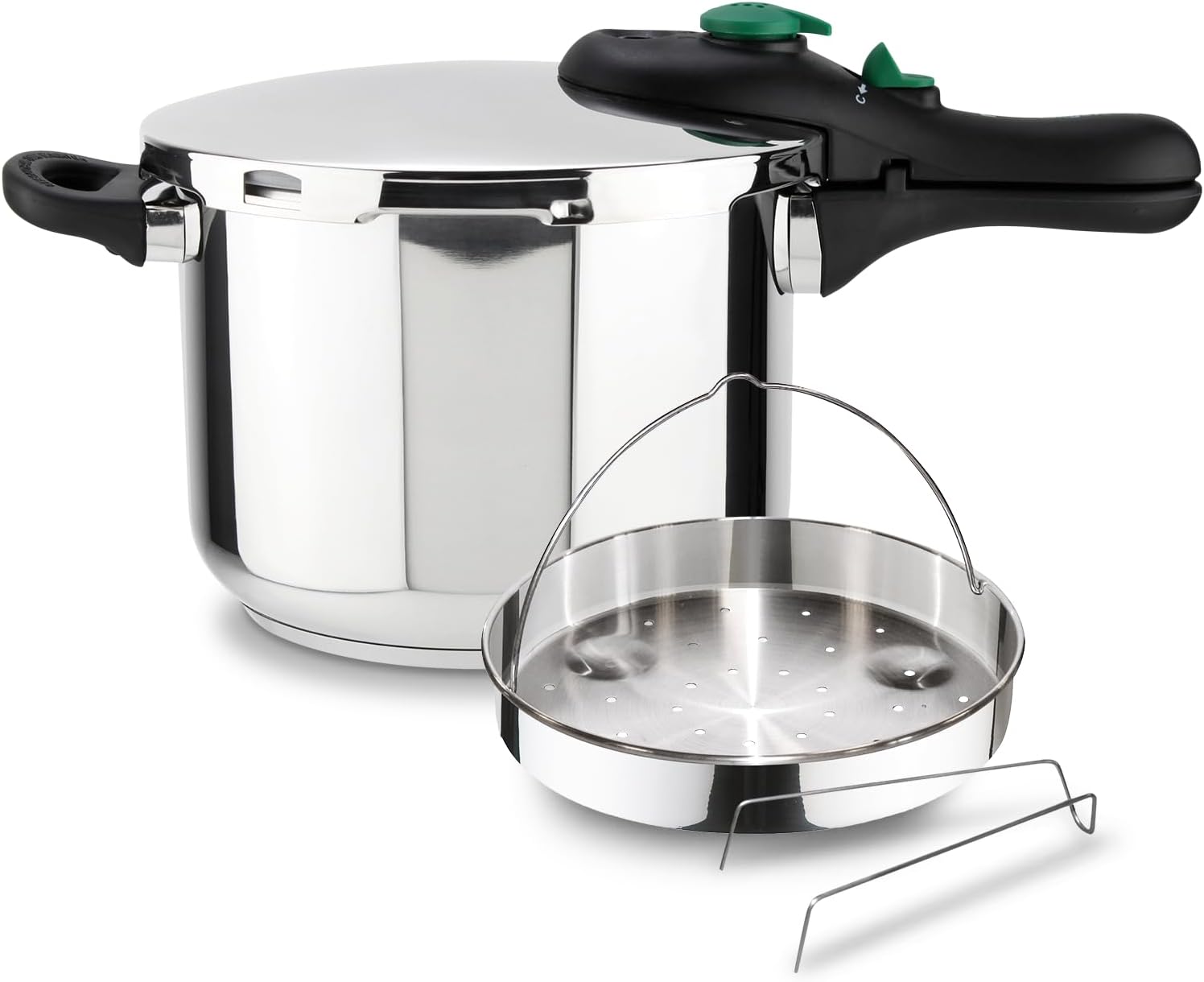
| Capacity | 6.3 quarts |
|---|---|
| Material | 18/10 stainless steel |
| Special Features | Induction compatible base |
| Included Components | Steam Basket |
The Magefesa Dynamic is a 6.3-quart stainless steel pressure cooker built for quick, energy-efficient stovetop cooking and works on all cooktops including induction. It uses an encapsulated five-layer thermo-diffuser base to spread heat evenly and speed up pressure build time, and the included stainless steel steam basket makes it convenient for steaming vegetables and fish. The lid has a patented easy-close mechanism and the unit incorporates five safety systems — pressure sensor, locking mechanism, working valve, safety valve, and window — which simplify safe use and cleaning. Because the body is 18/10 stainless steel it resists wear and is dishwasher-safe, though the brand recommends hand washing the lid to protect the safety components. Practical benefits include faster cook times that save energy and retained nutrients in food compared with long simmering, plus induction compatibility for modern kitchens. Trade-offs are that control is manual rather than digital and some buyers may prefer a different capacity or electric model for precise programmed cooking.
Best for: Buyers who want a fast, energy-efficient stovetop pressure cooker that performs reliably on induction and other cooktops for everyday family meals.
Less Ideal for: People who prioritize digital controls, programmable cooking cycles, or who need a very different capacity than 6.3 quarts.
- Five-layer thermo-diffuser base for fast, even heat and induction compatibility
- Includes stainless steel steam basket for versatile steaming and cooking
- Constructed from 18/10 stainless steel for durability and easy cleaning
- Multiple built-in safety systems including pressure sensor and locking mechanism
- Lid contains safety components that require hand washing rather than dishwasher cleaning
- Manual touch/hand control operation lacks programmable digital presets
Verdict: A fast, durable stovetop pressure cooker that pairs energy-efficient performance with robust safety features for balanced everyday cooking.
Kuhn Rikon Duromatic Classic NEO 7 L

| Capacity | 7 liters |
|---|---|
| Material | Stainless steel |
| Special Features | Induction compatible base |
| Controller Type | Mechanical knob |
The Kuhn Rikon Duromatic Classic NEO 7 L is a heavy-duty stainless steel pressure cooker designed for fast, large-batch cooking on gas, electric, and induction ranges. Its super-thermic sandwich base spreads heat evenly and accelerates bring-up times, so soups, braises, beans, and whole cuts finish far quicker than in conventional pots. The side-handle design and mechanical control knob make it simple to set and monitor pressure while the described four-part safety system manages steam release and prevents accidental opening. In practice this cooker is most useful for families, meal prep, and anyone who values consistent results and reduced energy use; the thick base also helps avoid hot spots when browning before pressure cooking. The unit is robust and built for frequent use, but its large size means it is less convenient for single portions and requires stove space and storage room. If you need a fast, reliable induction-capable pressure cooker that handles big batches, this model delivers strong performance and safety features.
Best for: Buyers who prioritize fast, consistent results and energy-efficient performance for large meals or frequent batch cooking on induction or other stovetops.
Less Ideal for: Those who rarely cook for more than one or two people or need a compact, lightweight cooker for small kitchens.
- Super-thermic sandwich base for fast, even heating and good induction performance
- 7 liter capacity suited to large families and batch cooking
- Robust stainless-steel construction built for frequent use
- Advanced four-part safety system for controlled steam release and secure closure
- Large footprint makes it less practical for single-person cooking or small kitchens
- Heavier construction increases handling effort and storage requirements
Verdict: Choose this cooker if you need a fast, durable induction-capable pressure cooker built for large batches and reliable performance.
Prestige Alpha Deluxe Pressure Pan 5L

| Capacity | 5 liters |
|---|---|
| Material | Stainless steel |
| Wattage | 1000 watts |
| Control Method | Touch |
| Included Components | Sealing Ring, Regulator |
The Prestige Alpha Deluxe is a heavy stainless steel 5‑liter pressure pan built for fast, even cooking on induction or gas. Its Alpha base is a steel‑aluminum‑steel sandwich meant to spread heat uniformly and save energy, so soups, stews, and beans reach pressure quickly and cook more evenly. The cooker uses an outer‑lid design with a visible pressure indicator, a precision weight valve, a controlled gasket release system, and a metallic safety plug for layered safety when pressure rises. Handles are double‑screwed for a sturdy grip and the pan shape gives more usable volume for one‑pot meals. Included sealing ring and regulator make it ready to use out of the box. The tradeoffs are typical of heavy stainless units: it is heavier to handle than lightweight models and lacks electric timers or digital controls, so you must monitor heat and time on the stovetop. For buyers focused on fast induction performance and reliable mechanical safety, this delivers practical value without extra electronics.
Best for: Buyers who want a fast, stovetop induction pressure cooker that prioritizes even heat distribution and dependable mechanical safety for everyday one‑pot cooking.
Less Ideal for: Those who prefer lightweight travel cookers, programmable electric pressure cookers, or models with digital timers and automated cooking programs.
- Alpha induction base for even heat distribution and faster heating on induction and gas
- Multiple mechanical safety features including pressure indicator, precision weight valve, CGRS, and metallic safety plug
- Stainless steel body and double‑screw handles for durability and a sturdy grip
- Pan shape provides usable volume for a variety of one‑pot recipes
- Heavier construction makes lifting and handling more effort compared with lightweight models
- No built‑in electronic controls or timers, so stove monitoring is required
Verdict: A robust 5L stainless steel stovetop pressure pan with an induction‑ready alpha base and layered mechanical safety for fast, reliable cooking on induction or gas.
T-fal Clipso 6.3 Quart Pressure Cooker

| Capacity | 6.3 quarts |
|---|---|
| Material | Stainless steel |
| Compatibility | All stovetops including induction |
| Special Features | Dishwasher Safe |
| Voltage | 110 volts |
The T-fal Clipso 6.3 Quart pressure cooker is a traditional stovetop unit built for speed and everyday reliability. It uses stainless-steel construction with an encapsulated base for even heat distribution and works on all cooktops including induction, so it heats quickly and cooks up to about 70 percent faster than conventional methods. The one-hand opening system, secure lock that prevents opening under pressure, and adjustable steam-release valve make it straightforward and safe to use for stews, braises, grains, and batch cooking. It ships with a steam basket and recipe booklet to support multi-level steaming and larger meals. The pot is dishwasher safe (with certain parts removed) which simplifies cleanup, though the gasket and valve require manual attention. At its size it is well suited to family meals and meal prep, but the manual controls mean you need to watch timing and pressure rather than relying on automatic programs. Overall this is a solid, no-nonsense pressure cooker focused on durable materials and practical safety features rather than smart automation.
Best for: Buyers who prioritize a dependable, well-built stovetop pressure cooker for frequent family meals and faster weeknight or batch cooking. They value straightforward safety features and proven materials over electronic automation.
Less Ideal for: If you want a fully automated electric pressure cooker with preset programs, Wi-Fi, or hands-off cooking, this manual stovetop model is not the right choice.
- Durable stainless-steel pot with encapsulated base for even heating and induction compatibility
- One-hand easy-open lid and secure locking system that prevents opening under pressure
- Adjustable steam-release valve and included steam basket for controlled, multi-level cooking
- Dishwasher-safe pot (with removable gasket/valve) for easier cleanup
- Includes recipe booklet to help with pressure cooking techniques and meal planning
- Manual control requires monitoring timing and pressure since there are no automatic programs
- Gasket and pressure valve need removal and rinsing rather than full dishwasher cleaning
Verdict: A robust, induction-ready stainless-steel pressure cooker built for fast, reliable family cooking with practical safety features.
Hawkins 4 Litre Pressure Cooker

| Capacity | 4 liters |
|---|---|
| Material | Stainless steel (AISI 304) |
| Closure Type | Inner Lid, Outer Lid |
| Included Components | Pressure Cooker, Whistle, Gasket |
The Hawkins 4 Litre Pressure Cooker is a simple, stovetop pressure cooker built from 18Cr/8Ni AISI 304 food-grade stainless steel with a heavy sandwich bottom for even heating on induction and conventional ranges. It is used like a traditional manual cooker: add ingredients, seal the inner lid, bring to pressure, then regulate heat and vent with the included whistle and gasket. The thick base helps prevent hot spots and bulging when cooking at high heat, and the stainless interior resists pitting and corrosion for long-term hygiene. Practical benefits include fuel savings from an improved pressure regulator and the ability to brown or shallow-fry before pressure cooking thanks to the sturdy base. Limitations are that it is a manual model without electronic controls or preset programs, so it requires some attention to maintain pressure and timing, and the 4-liter capacity is best for small families or batch sizes rather than large crowds.
Best for: Buyers who want a durable, no-frills induction-compatible pressure cooker that emphasizes reliable construction and long-term performance over electronic features. Ideal for cooks who value proven design and straightforward manual control.
Less Ideal for: Those who prefer electric or programmable pressure cookers with automatic timers and multiple presets, or anyone who regularly needs to cook for large groups.
- Food-grade 304 stainless steel resists corrosion and is hygienic.
- Extra-thick sandwich bottom provides even heating and prevents bulging.
- Improved pressure regulator conserves fuel and maintains steady pressure.
- Suitable for induction cooktops and safe for light frying before pressure cooking.
- Manual operation requires monitoring and skill to control pressure and timing.
- 4-liter capacity may be too small for larger families or big batch cooking.
Verdict: A rugged, induction-ready 4‑liter stainless steel pressure cooker that delivers even heating and dependable manual performance for small households.
T-Fal Secure 6.3-Quart Pressure Cooker
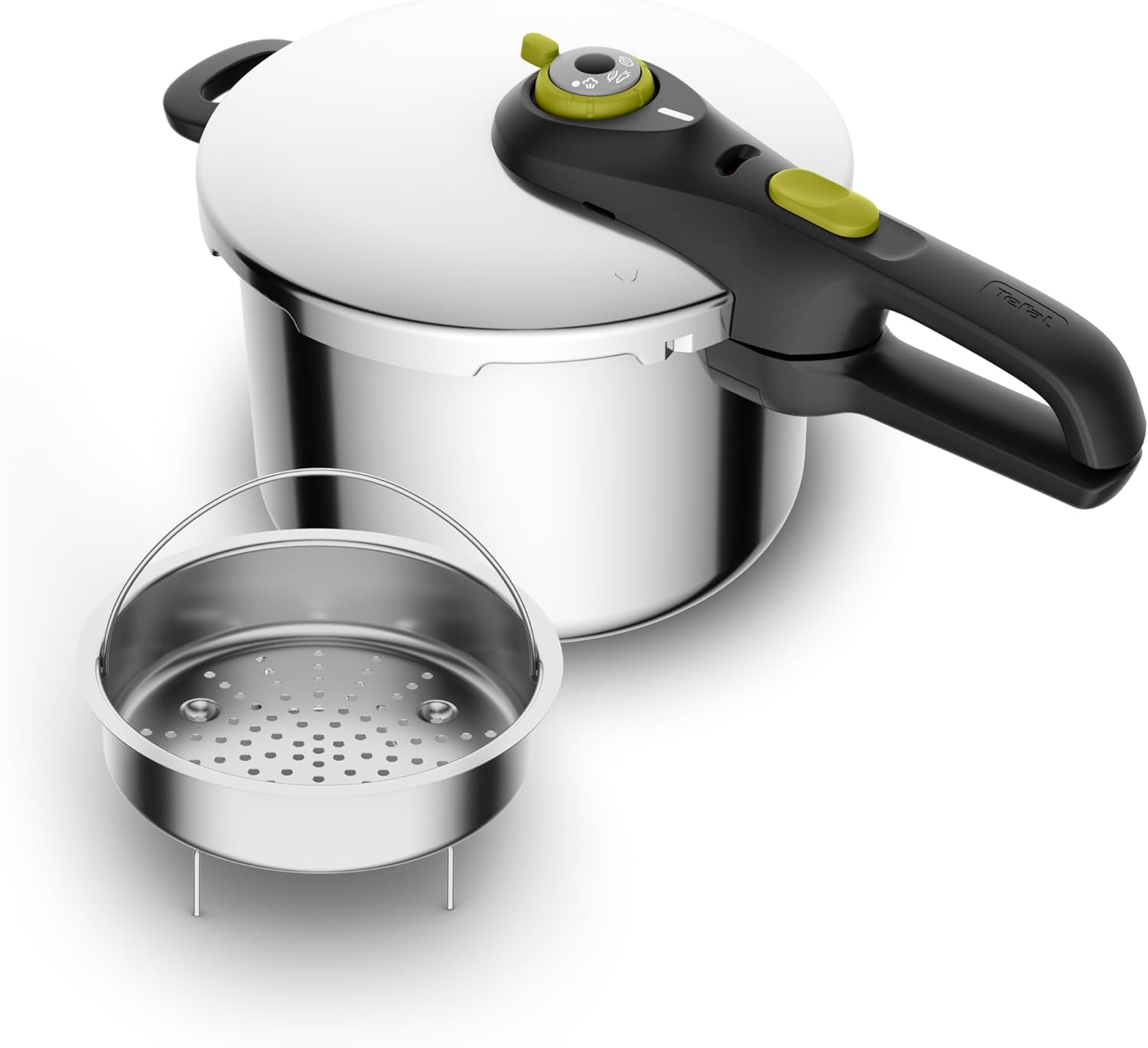
| Capacity | 6.3 quarts |
|---|---|
| Material | Stainless steel |
| Wattage | 1000 watts |
| Control Method | Touch |
| Operation Mode | Manual |
The T-Fal Secure 6.3-quart pressure cooker is a stovetop unit designed to speed up home cooking while prioritizing safety and durability. It offers two dedicated pressure programs—one tuned for vegetables and one for meats—which simplify everyday use and help retain nutrients and moisture without constant monitoring. Built from stainless steel, the pot works on all cooktops including induction and comes with a steam basket to expand steaming and side-dish options. The lid uses a five-point safety locking system and an audible click on lock that gives clear feedback when the unit is sealed, which helps reduce user worry during high-pressure cooking. The body is dishwasher-safe for easier cleanup, and the cookware feels solid and long-lasting. On the downside, it is a manual stovetop cooker rather than an electric multicooker, so it requires attention to stovetop heat and does not offer programmable timers or slow-cook functions found on some electric models. Still, for cooks who want a fast, reliable induction-compatible pressure cooker with strong safety features, this is a practical choice.
Best for: Buyers who prioritize safety and reliable, fast stovetop pressure cooking on induction or other cooktops and prefer straightforward preset programs over complex electronic controls.
Less Ideal for: People seeking an all-in-one electric multi-cooker with programmable timers, Wi-Fi, or slow-cook and sauté functions should consider an electric model instead.
- Two dedicated pressure programs for vegetables and meat simplify cooking and help preserve nutrients
- Stainless-steel construction delivers even heat distribution and long-term durability
- Compatible with all cooktops including induction, increasing versatility
- Five-point safety locking system with audible lock gives clear confirmation when sealed
- Dishwasher-safe body and included steam basket add convenience and cooking options
- Manual stovetop operation lacks built-in timers and automated controls of electric pressure cookers
- No multi-function modes like slow cook or sauté integrated into the unit
Verdict: A fast, induction-compatible stovetop pressure cooker built for safety-conscious cooks who want reliable, no-frills pressure cooking.
Choosing the Right Fast Induction Pressure Cooker: Key Factors to Consider
Induction Compatibility and Base Design
Induction cooktops require ferromagnetic bases and flat contact surfaces to transfer energy efficiently. A pressure cooker designed for induction will heat faster and more evenly, reducing the time needed to reach pressure. The thickness and material of the cooker base affect heat distribution; a well-engineered base minimizes hotspots and helps the cooker move quickly from cold to high pressure.
If the cooker is intended for a home induction range, check that the base is specified for induction use and that the manufacturer notes consistent performance at typical induction power levels. Poor base fit or thin construction will increase heat-up time and reduce the overall speed benefit of an induction-capable pressure cooker.
Sealing System and Gasket Quality
A reliable sealing system is essential for fast operation because pressure cannot build quickly if steam leaks around the lid. Look for robust lid locks, well-fitting gaskets, and simple mechanisms that can be inspected or replaced. Gasket materials vary, and higher-quality elastomers maintain a tight seal longer under repeated high-heat cycles.
Beyond initial sealing performance, consider how easy it is to remove and reseat the gasket for cleaning and replacement. A design that requires minimal fiddling to seat the lid will save time each use and reduce the risk of user error that lengthens the cooking cycle.
Pressure Control and Monitoring
Fast doesn't only mean reaching pressure quickly; it also means holding it predictably. Precise pressure control prevents long recovery times when pressure dips. Look for cookers with clear pressure indicators, consistent venting or weighted regulators, and intuitive controls for selecting target pressure levels.
Digital pressure control can shorten setup and remove guesswork, but mechanically simple indicators are often more durable. Consider how the cooker signals when it reaches pressure and how easy it is to adjust or maintain that pressure during multi-stage recipes.
Safety Features for Rapid Operation
High-speed cooking increases the need for dependable safety systems. Fast induction pressure cookers should include redundant safety features such as automatic pressure release, lock indicators that prevent opening under pressure, and built-in overpressure vents. These systems protect against user error and equipment faults that are more consequential at elevated spin-up speeds.
Also evaluate the clarity of instructions and the accessibility of emergency release mechanisms. A cooker that builds pressure fast but has poorly labeled or hard-to-reach safety controls can create risk and slow you down when a rapid release is needed.
User Interface and Cleaning Ease
A simple, easy-to-read interface saves time during setup and while monitoring a cook. Controls with straightforward presets or clear manual settings reduce the time you spend adjusting and guessing. Physical controls should be reachable and usable with damp hands or oven mitts.
Cleaning matters because frequent use benefits from minimal downtime. Removable, dishwasher-safe components and an easy-to-clean lid design shorten turnaround between meals. If a cooker requires disassembly or fiddly cleaning steps, the cumulative time penalty reduces the net speed advantage.
Why Induction Speeds Pressure Cooking
Induction cooktops heat cookware directly through magnetic coupling, so energy goes into the pot rather than first heating an element or air. That direct transfer produces faster boil times and swifter pressure buildup when compared with non-induction heat sources.
For pressure cooking, the faster you reach the target pressure, the less total time the recipe takes. Efficient heat transfer also helps maintain stable pressure during simmering phases, so you spend less time compensating for dips or restarting the cycle.
- Direct heating reduces time to pressure.
- Even heat distribution helps avoid localized scorching during fast cycles.
- Responsive power adjustments on induction support tighter pressure control.
Setting Up for Fast, Reliable Results
To get the quickest results, start with a hot induction surface and use the cooker on a compatible, flat cooktop zone. Preheating the empty pot briefly is unnecessary for most recipes, but adding a small amount of liquid and using a moderate-high power setting can speed the initial steam generation.
Always check the gasket and lid fit before sealing. A clean, well-seated gasket prevents steam loss that otherwise lengthens time to pressure. Familiarize yourself with the cooker's pressure indicators so you know whether the unit is building and holding steam as expected.
- Use the correct amount of liquid called for by the recipe.
- Ensure the lid clicks or locks fully before applying power.
- Start at a higher power to build pressure, then reduce once stable.
Maintenance Tips to Preserve Speed Over Time
Regular maintenance keeps a fast cooker performing like new. Inspect the gasket for cracking, flattening, or residue that impairs sealing and replace it per the manufacturer's recommended interval. Clean steam vents and pressure indicators after each use to prevent buildup that can slow venting.
Store the lid slightly ajar when not in use if recommended, so the gasket does not remain compressed. Periodically check screws, handles, and locking mechanisms for tightness so nothing loosens and causes leaks or slower pressure build-up.
- Wipe and dry the lid and gasket after each use.
- Clear the vent path of food debris promptly.
- Replace worn gaskets to maintain fast sealing.
Common Mistakes That Slow Down Pressure Cooking
Overfilling the pot is a frequent culprit that slows or prevents reaching pressure because insufficient headspace traps steam or forces longer venting cycles. Follow maximum fill lines and recipe guidance for high-starch ingredients that expand during cooking.
Using low-surface-area burners, poor cookware contact, or incompatible induction zones can dramatically lengthen heat-up time. Also avoid lowering power too early; close monitoring during the initial pressurization phase preserves the speed advantage.
- Do not overfill with solids or liquids above recommended levels.
- Avoid using small-diameter cooktop zones for large pots.
- Do not remove or adjust the lid while the cooker is pressurizing.
Recipe Adjustments for Quick Pressure Cooking
Some recipes benefit from small technique changes to match the fast nature of induction pressure cooking. Cut ingredients into smaller, uniform pieces to reduce the time required to become tender. For dried beans or legumes, a brief pre-soak or a short blanch can shorten pressure time significantly.
When adapting stovetop pressure recipes to induction, reduce preheating steps and follow tested pressure time reductions cautiously. Remember that very short pressure times rely on accurate pressure maintenance, so stay close during first trials with a new cooker.
- Reduce ingredient sizes for more uniform cook times.
- Soak beans ahead to reduce pressure time.
- Test reduced times carefully when switching appliances.
How We Chose the Best Fast Induction Pressure Cooker
We focused on attributes that directly affect how fast and reliably an induction pressure cooker performs in everyday home use. Key evaluation criteria included heat-up speed on induction cooktops, how consistently the unit reaches and maintains target pressure, the effectiveness and durability of the sealing mechanism, and user controls that reduce setup and monitoring time. We also considered build quality and safety features that matter when operating at higher pressure and temperature for rapid cycles. Products were excluded if they lacked clear induction compatibility or if their design required extensive manual adjustments that negate time savings. We prioritized units with straightforward lid locking and pressure release systems, robust seals or gaskets, and clear indicators for pressure and readiness. Additional filters removed units without adequate safety venting, poor user feedback on sealing longevity, or unclear specifications for induction performance. The result is a focused list of fast, safe, and practical induction pressure cookers suitable for busy kitchens.
Our full evaluation process is outlined in our review methodology.
FAQ
Can I use any induction-compatible pressure cooker for rapid cooking?
Often, yes; induction compatibility is the baseline for fast heat transfer. However, speed also depends on gasket condition, lid sealing design, and how well the base matches your cooktop zone. A listed induction-capable unit may still be slower if sealing or base construction is subpar.
How much faster is induction pressure cooking compared with other heat sources?
It usually heats and reaches pressure noticeably faster because energy transfers directly into the pot. Exact time savings vary depending on cooktop power, pot base quality, and the recipe, but many cooks see substantially shorter warm-up times on induction.
What maintenance keeps an induction pressure cooker fast over time?
Regularly clean steam vents and pressure indicators, inspect and replace the gasket when it shows wear, and keep the base free of debris. Proper storage and routine checks of locking mechanisms also preserve sealing performance and speed.
Are digital controls necessary for fast operation?
Digital controls can simplify setup and reduce guesswork, but they are not strictly necessary for speed. Mechanical regulators and clear visual indicators can be equally fast and often more durable. Choose the control style that matches your comfort and the reliability you expect.
Is it safe to try rapid pressure cycles frequently?
Frequent rapid cycles are safe provided the cooker has proper safety features and is well maintained. Ensure you follow the manufacturer's guidance on maximum cycles, gasket replacement, and vent cleaning to avoid wear-related failures.
Final Verdict
When speed is the priority, focus on induction compatibility, a tight sealing system, and clear pressure controls. Those elements determine how quickly a cooker reaches and maintains pressure and how consistently it performs over time. Balance rapid heat-up with safety features and easy maintenance. Prioritize units with durable gaskets, reliable locking mechanisms, and straightforward controls so you gain genuine time savings in everyday cooking without sacrificing safety or longevity.