
Note: This article contains affiliate links. If you click on these links and make a purchase, we may earn a small commission at no extra cost to you. This helps support our research and content. Read our full affiliate disclosure here.
If you maintain epoxy-coated floors, selecting the right floor scrubber matters for both cleaning efficiency and long-term coating health. Epoxy surfaces look great when they are clean, but aggressive scrubbing, the wrong pads, or excess solution can dull the finish, create micro-scratches, or introduce unwanted residue. This guide focuses on the top shortlisted floor scrubbers suited for epoxy floors and explains how they perform on cleaning power, pad compatibility, and surface safety. You will get clear, practical criteria to compare machines and pick one that keeps epoxy looking its best. Read on for our top picks and the evaluation factors we used to judge cleaning results, surface protection, and ease of upkeep.
Top Picks at a Glance
| Best Overall The best all-around choice for most situations | SUNMAX RT35 17" Floor Scrubber |  |
| Best Quality Built to a higher standard if you want something more solid | SUNMAX RT50 Floor Scrubber |  |
| Best Value The sweet spot between price and what you get | Prolux Core 15" Floor Buffer | 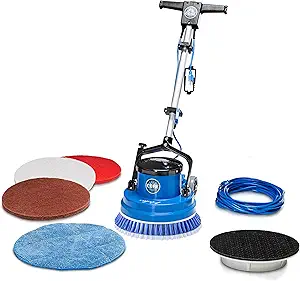 |
| Top Rated A top-rated pick with lots of positive feedback | Prolux Core 13" Floor Buffer |  |
| Most Popular A crowd favorite that many people choose with confidence | Bissell BigGreen Hercules BGFS650 |  |
SUNMAX RT35 17" Floor Scrubber

| Brush/Pad Scrubbing Path | 17 inches |
|---|---|
| Squeegee Vacuuming Width | 22 inches |
| Battery Capacity | 24V/45Ah |
| Continuous working time | Up to 2.5 hours |
| Solution Tank Capacity | 7.9 gallon |
The SUNMAX RT35 is a battery-operated walk-behind floor scrubber built for routine commercial maintenance in smaller to mid-size spaces. It uses a 17-inch rotary disc brush and a 22-inch squeegee to scrub, wash, buff, polish, and dry hard surfaces in a single pass, and the dual tanks let you apply solution and recover dirty water without frequent refills. The 24V/45Ah battery gives up to about 2.5 hours of runtime and recharges in roughly eight hours, which is convenient for a single shift of spot cleaning or scheduled runs. Its 200 RPM brush speed and 300 W brush motor are appropriate for sealed concrete, tile, epoxy, and similar hard finishes, while the included heavy-duty brush, pads, and replacement squeegee blades make it ready to use out of the box. Expect a 7.9-gallon solution tank and 9.2-gallon recovery tank, so the machine balances capacity and compact footprint for classrooms, small warehouses, and retail aisles. The trade-offs are battery charging time and the 2.5-hour continuous runtime if you need full-day use without swapping batteries, and the machine's weight and size require care when transporting or storing.
Best for: Facility managers seeking a balanced, ready-to-run scrubber for routine maintenance of epoxy and other hard floors in classrooms, small retail spaces, and light industrial areas.
Less Ideal for: Large facilities that need all-day cleaning without battery swaps or operations that require very wide cleaning paths and higher hourly coverage.
- 17-inch rotary disc brush and 22-inch squeegee let you scrub and recover in one pass
- Battery-powered cordless design provides mobility for areas without convenient power access
- Includes brush, pads, battery, charger, and squeegee so it is ready to operate out of the box
- Large recovery and solution tanks reduce stops during medium-size cleaning runs
- Up to 2.5 hours runtime and an 8-hour charge time may limit continuous, full-day operation without a spare battery
Verdict: A compact, battery-ready scrubber that balances cleaning power and onboard capacity for routine epoxy floor maintenance in small to medium commercial spaces.
SUNMAX RT50 Floor Scrubber

| Scrubbing Width | 22 inches |
|---|---|
| Suctioning Width | 31 inches |
| Vacuum Motor Power | 0.7 HP / 550 W |
| Continuous working time | 5 hours |
| Clear Water Tank Capacity | 13.2 gallon |
The SUNMAX RT50 is a cordless walk-behind floor scrubber built for daily commercial cleaning of sealed hard floors such as epoxy, tile, concrete, and VCT. It uses a 22-inch brush to agitate soils while a 31-inch squeegee and a 550 W vacuum motor pick up dirty solution so floors are left ready for use after one pass. The machine runs on a 24 V/200 Ah rechargeable battery with up to 5 hours continuous operation and an 8-hour full charge cycle, which fits multi-aisle routes or routine cleaning shifts without tethering to a cord. Included brush and three pad types let you match agitation to surface sensitivity, and the 13.2-gallon solution and 14.5-gallon recovery tanks reduce refill frequency on larger areas. Practical limits are its substantial weight and the need for indoor storage and battery charging infrastructure, and you should follow low-foaming, neutral-pH cleaner guidance to protect internal components. For epoxy floors the RT50 delivers strong scrubbing pressure and selectable pads for safe, streak-free results when used with proper pads and chemicals.
Best for: Facility managers and maintenance teams who need a robust, cordless scrubber that cleans sealed commercial floors quickly and lets crews complete large daily routes without a cord.
Less Ideal for: Small businesses with tight storage or very narrow doorways, and operations that cannot accommodate long battery charge times or the weight of a commercial machine.
- Scrubs and dries in one pass with a 22" brush and 31" squeegee for faster cleaning cycles
- Battery-powered cordless operation supports up to 5 hours continuous use for route flexibility
- Comes with heavy-duty brush plus white, red, and black pads to tune cleaning aggressiveness
- Large solution and recovery tanks reduce refill and empty cycles during medium-to-large jobs
- 550 W brush and vacuum motors provide strong agitation and suction for embedded soils
- Heavy unit that requires adequate storage space and handling when moving or servicing
- Full recharge takes about 8 hours, which may require multiple batteries or scheduling for nonstop shifts
Verdict: Choose the SUNMAX RT50 when you want a cordless commercial scrubber that reliably scrubs and leaves epoxy floors dry in a single pass.
Prolux Core 15" Floor Buffer
| Speed | 150 rpm |
|---|---|
| Amperage | 2.5 A |
| Voltage | 120 volts |
| Maximum Power | 300 watts |
| Power Source | AC |
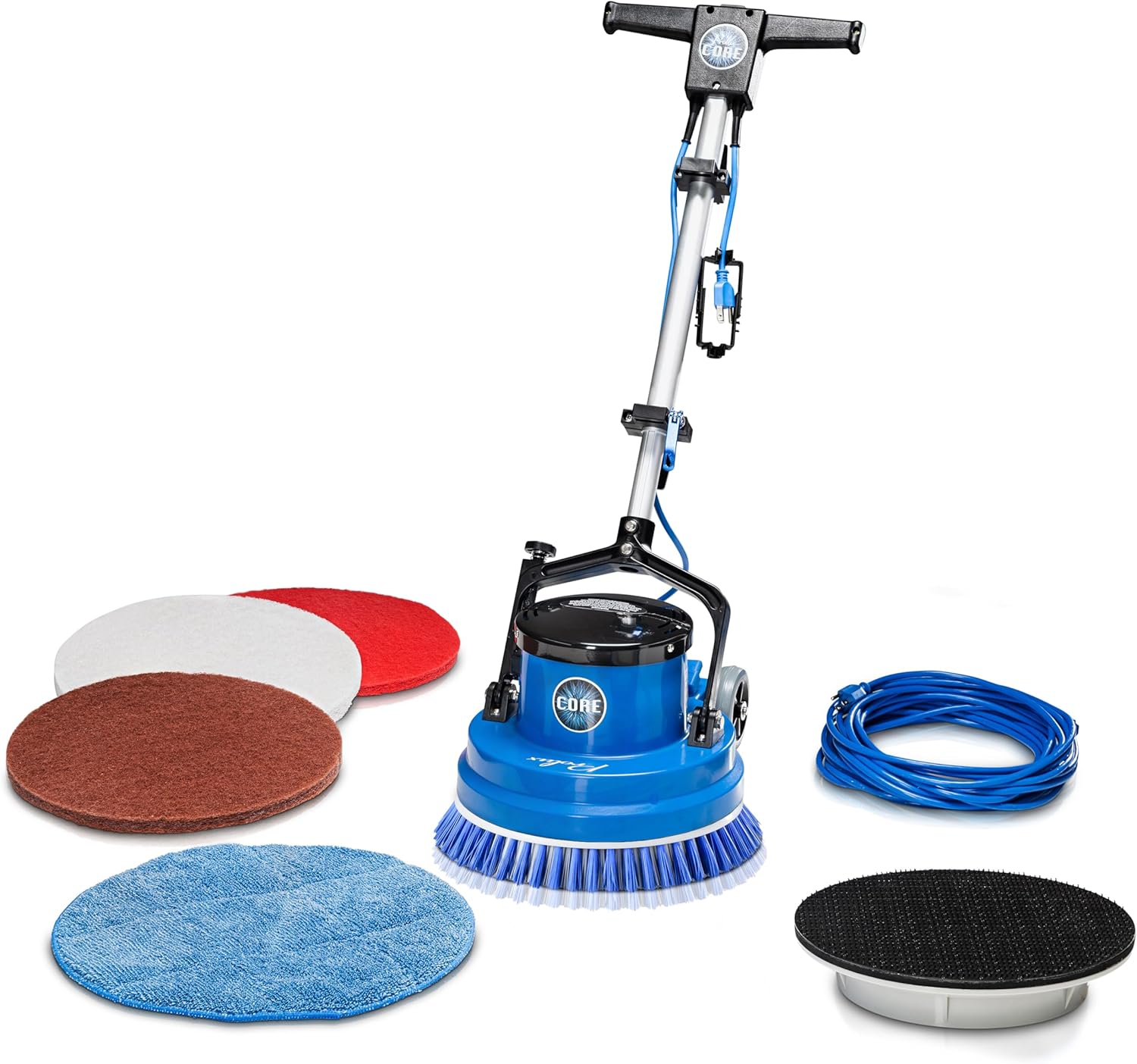
The Prolux Core 15" is a heavy, low-speed floor buffer built to deep-clean a wide range of floor surfaces using a 15-inch rotating pad and five included scrubbing/polishing pads. It runs on AC power with a 150 RPM, high-torque motor and a removable 50-foot extension cord so you can cover large areas without swapping cords. The telescoping T-handle and large rubber wheels make the unit easier to maneuver despite its purposeful weight, and the two-direction scrubbing action is intended to remove soil without leaving swirl marks. Practical users will appreciate the multiple pad types for scrubbing, polishing, waxing and light stripping and the replaceable brush and pad accessories. Expect a tool that excels at deep cleaning and maintenance rather than rapid, high-speed buffing; its low RPM favors agitation and grime removal but makes it slower per pass than high-speed polishers. The unit is aimed at demanding residential or commercial jobs where durability and cleaning power matter more than compactness or light weight.
Best for: Buyers who prioritize durable, effective deep cleaning for demanding floors and who want a tool built to last rather than a lightweight, occasional-use machine.
Less Ideal for: Anyone seeking a lightweight, highly portable buffer for small or infrequent jobs or a high-speed polisher for quick shine work should look elsewhere.
- Heavy, low-speed high-torque motor for deep cleaning
- Includes five pads and a scrub brush for multiple floor maintenance tasks
- Removable 50 ft extension cord for large-area cleaning without changing cords
- Telescoping T-handle and large rubber wheels improve control and transport
- Intentionally heavy design makes it less convenient for frequent portable use
- Lower 150 RPM speed means slower coverage compared with high-speed polishers
Verdict: Choose the Prolux Core 15" when you need a durable, low-speed buffer that delivers deep, two-direction scrubbing for heavy-duty floor maintenance.
Prolux Core 13" Floor Buffer

| Power Source | AC |
|---|---|
| Speed | 150 rpm |
| Cleaning Width | 13 inch |
| Included Pads | 5 |
The Prolux Core 13" is a heavy-duty floor buffer built to scrub, polish, wax, strip and buff a range of floor surfaces using a low 150 RPM high-torque motor and a set of five interchangeable pads. It is typically used by pushing the T-style telescoping handle across floors while the dual-direction head works both ways to remove grime without leaving swirl marks, and the large rubber wheels and removable 50 ft extension cord help cover bigger rooms without frequent repositioning. Notable features include the two-direction cleaning head for deeper agitation, multiple pads for different tasks, an adjustable handle for operator comfort, and a deliberately heavy build to press cleaning force into the surface. Practical benefits are faster cleaning than hand-scrubbing or lightweight machines and the ability to tackle grout, sealed concrete, tile, and finish work with one tool. Important limitations are the unit weight and size, which make it less convenient to lift or store, and the fixed low-speed design that prioritizes torque over high-speed buffing effects required for some finish jobs.
Best for: Buyers who prioritize a durable, purpose-built machine that consistently delivers deep cleaning and long-term reliability for frequent use on hard floors.
Less Ideal for: If you need a lightweight, highly portable buffer for occasional touch-ups or a high-speed burnisher for gloss restoration, this heavy low-RPM scrubber is not the best choice.
- Low 150 RPM high-torque motor for deeper cleaning and reduced swirl marks
- Includes five pads for scrubbing, buffing, polishing and light stripping tasks
- Telescoping T-handle and large rubber wheels improve operator comfort and maneuverability
- Removable 50 ft extension cord lets you reach larger areas without swapping cords
- Heavier, bulkier construction can be cumbersome to lift and store
- Fixed low-speed operation limits high-speed polishing or burnishing effects
Verdict: Choose the Prolux Core 13" when you want a rugged, reliability-focused scrubber that delivers deep, repeatable cleaning on hard floors.
Bissell BigGreen Hercules BGFS650

| Brush Speed (Rpm) | 2200 Rpm |
|---|---|
| Included Components | Brush, Pads |
| Form Factor | Cannister |
| Warranty Description | 1 Year Limited |
The Bissell BigGreen Hercules BGFS650 is a lightweight scrub-and-clean floor machine aimed at delivering professional-looking results on hard floors. It runs a 2200 rpm brush that agitates dirt and polish, and its compact, mobile design makes it easy to maneuver into tight areas and around furniture. The machine includes a protective bumper, adjustable handle, and comes with brush and pads so you can begin cleaning and polishing floors out of the box. For epoxy floors, its high-speed brush can help remove surface dirt and prepare the surface for polishing or a new topcoat, though you should use gentle pads and appropriate solutions to avoid scuffing the finish. Its light weight improves control during extended use but also means it is less heavy-duty than large commercial buffers, so it is best for routine maintenance rather than heavy stripping jobs. Overall it is a practical choice when you need a portable, easy-to-handle scrubber that brings a shine without the bulk of a full-size floor machine.
Best for: Buyers looking for a portable, easy-to-maneuver scrubber to maintain and lightly polish hard or epoxy floors who prioritize manageable weight and effective surface cleaning.
Less Ideal for: Facilities needing a heavy-duty, high-mass buffer for large areas or intensive stripping and deep restoration work should consider larger commercial machines instead.
- High 2200 rpm brush speed for effective scrubbing and polishing
- Lightweight, compact design for easier maneuvering and storage
- Adjustable handle and protective bumper improve control and protect walls
- Includes brush and pads so it is ready to use out of the box
- Not as heavy-duty as full-size commercial buffers for large-scale stripping or deep cleaning
- Requires care with pad and solution selection to avoid damaging delicate epoxy finishes
Verdict: Choose the Bissell BigGreen Hercules when you want a lightweight, ready-to-use scrubber that delivers strong surface cleaning and shine for routine maintenance of epoxy and other hard floors.
Choosing the Right Floor Scrubber for Epoxy Floors: Key Factors to Consider
Cleaning Performance
How well a scrubber removes soil, scuff marks, and light stains from epoxy depends on motor torque, brush design, and head speed. A machine that combines steady torque with soft, nonabrasive pads will lift dirt without relying on harsh abrasion.
For epoxy floors you typically want even cleaning across the entire head rather than spot-focused agitation. Consistent contact pressure and good solution distribution reduce the need for repeat passes, which lowers the risk of surface wear. Consider machines that advertise controlled RPM and sufficient torque for flat, sealed coatings.
Pad and Brush Compatibility
Epoxy coatings require soft or medium nonwoven pads and nylon brushes rather than abrasive brushes or steel scrapers. Confirm the scrubber accepts a variety of pad grades and that compatible soft-bristle or nonwoven heads are readily available.
Interchangeable pad drivers make it easier to switch from routine maintenance pads to heavier nonabrasive cleaning pads when needed. Avoid machines that limit you to a single aggressive head type or those that lack clear manufacturer guidance on pad selection for epoxy surfaces.
Surface Safety Controls
Machines that allow you to adjust downforce, brush speed, or orbital action give you control over how aggressively the floor is worked. Lower speeds and reduced downforce minimize the chance of dulling or micro-scratching the epoxy finish.
Look for clear, tool-free adjustments and settings intended for finished surfaces. Built-in safety features like soft-start motors and pressure-limiting designs protect both the coating and the operator during use.
Water and Solution Management
Excess water or incorrect cleaning chemistry can weaken epoxy gloss and leave streaks. A scrubber with meterable solution delivery and an efficient recovery/vacuum system helps you keep the floor damp rather than soaked, which speeds drying and reduces chemical exposure to the coating.
Choose models that let you control flow rate and that include a recovery tank with sufficient capacity and good suction performance. Easy-to-clean tanks and accessible filters matter for ongoing hygiene and consistent results.
Maneuverability and Stability
Epoxy floors are usually installed in large contiguous areas where operator fatigue and consistent coverage are concerns. A scrubber with good steering, manageable weight, and a low center of gravity provides stable, uniform cleaning without the need for frequent rework.
Consider the turning radius, handle ergonomics, and transportability. Machines that track straight and maintain consistent head contact across turns give better, more predictable results on expansive epoxy surfaces.
Maintenance and Parts Accessibility
Routine upkeep keeps a scrubber reliable and prevents contaminants from being redeposited on epoxy floors. Easy access to tanks, filters, and pad drivers shortens service time and encourages proper maintenance.
Check for tool-free removal of wear items and widely available replacement pads and seals. Machines that require minimal routine maintenance reduce downtime and the risk of using worn components that could scratch or mar the floor.
Why Epoxy Floors Need Special Care
Epoxy coatings are durable and glossy but can be sensitive to abrasive cleaning methods and improper chemical selection. Over time, abrasive pads, high-pressure scrubbing, or harsh solvents can dull the finish or create micro-scratches that trap dirt. Using a scrubber designed for sealed surfaces helps maintain the protective and aesthetic qualities of the coating.
A scrubber that balances cleaning force with gentle contact and controlled solution application will remove soils while preserving gloss. Understanding the interaction between pad type, machine action, and cleaning chemistry is the first step toward long-lived epoxy floors.
- Soft pads and low-speed action protect gloss
- Controlled solution delivery prevents over-wetting
- Even pressure and stable operation reduce uneven wear
Choosing the Right Pad and Chemistry Combination
Selecting the correct pad grade and cleaning solution is as important as the machine itself. Nonwoven or soft nylon pads work well for regular maintenance. For slightly heavier soils choose a denser nonabrasive pad rather than an abrasive brush. Always verify that the pad material is compatible with epoxy coatings.
Use neutral-pH or epoxy-safe cleaning solutions to avoid film buildup or chemical attack. Test any new chemistry in an inconspicuous area and follow recommended dilution rates. Proper rinsing or recovery will prevent residue that dulls the floor.
- Start with neutral-pH cleaners labeled for sealed floors
- Prefer soft nonwoven pads for routine cleaning
- Perform a small-area test when changing chemicals
Operating Techniques to Preserve Finish
Technique can be as important as equipment. Work methodically in overlapping passes and avoid repeated high-force passes over the same spot. Maintain steady forward or backward strokes and let the machine do the work instead of forcing extra pressure from the handle.
Keep solution flow low enough that the recovery system removes residual water. Allow the floor to dry completely between passes if you are switching pad types or checking results. Consistent technique prevents streaking and uneven gloss levels.
- Use overlapping passes for even coverage
- Avoid applying extra manual pressure on the head
- Let the machine's recovery system remove most moisture
Transport, Storage, and Winter Care
How you store and transport a scrubber affects its longevity and performance. Drain tanks and allow them to dry before storage to prevent smells and bacterial growth. In colder climates, protect tanks and internal lines from freezing which can crack components.
Keep spare pads and brushes stored clean and flat to maintain their shape. Regularly inspect seals, squeegees, and hoses for wear to prevent leaks and maintain suction performance.
- Drain and dry tanks before long-term storage
- Protect components from freezing in winter
- Store pads flat and clean to avoid deformation
Small Areas Versus Large Open Spaces
Floor scrubber designs vary for confined spaces versus large open areas. Compact, walk-behind units are easier to maneuver in tight aisles and around obstacles, while wider-path machines cover large areas faster with fewer passes. Choose a size that matches the footprint you need to maintain.
Balance path width against storage and transportation constraints. For mixed environments, a medium-width machine may offer the best compromise between coverage rate and maneuverability.
- Compact units for tight or cluttered spaces
- Wider-path machines for large open floors
- Consider storage and transport dimensions before selecting
How We Chose the Best Floor Scrubber for Epoxy Floors
We compiled this list by prioritizing features that matter for cleaning and preserving epoxy floors. Primary considerations were cleaning performance on smooth sealed surfaces, pad and brush compatibility for nonabrasive maintenance, and adjustable pressure or speed settings to avoid surface damage. We also evaluated water and solution control to prevent over-wetting, machine stability and maneuverability for even cleaning across large flat areas, and filter and recovery systems that reduce residue and streaking. We excluded machines that rely on aggressive abrasive heads or unregulated orbital action likely to abrade epoxy coatings. Units with poor solution metering, weak recovery, or limited pad options were also left out. Our editorial filters favored scrubbers that offer clear adjustment of pad pressure and rotational speed, have compatible soft pad or brush options, and include effective recovery so the coating dries clean and streak-free. Durability of key components and straightforward maintenance were additional selection criteria to ensure long-term care of epoxy floors.
Our full evaluation process is outlined in our review methodology.
FAQ
Can a regular floor scrubber be used on epoxy floors?
Often, yes, provided the scrubber uses soft pads and offers controlled speed and pressure settings. Avoid units that rely on harsh abrasive heads or uncontrolled high-speed rotations that can abrade the epoxy.
What pad type is safest for routine epoxy maintenance?
Soft nonwoven pads or soft nylon brushes are usually safest for routine maintenance because they lift dirt without abrading the coating. Reserve denser nonabrasive pads for heavier soils and avoid metal or wire brushes.
How important is solution choice for epoxy floor care?
Very important. Neutral-pH or floor-safe cleaners reduce the risk of residue and chemical attack. Strong acids, alkalis, or solvent-based cleaners can damage the finish and should be avoided unless specifically recommended for epoxy.
Will repeated scrubbing shorten the life of an epoxy floor?
It depends. Repeated use of abrasive pads or excessive downforce can accelerate wear. Using a properly configured scrubber with gentle pads and controlled application will minimize wear while keeping the floor clean.
How do I prevent streaks and water marks after scrubbing?
Use a scrubber with good recovery suction and meter the solution flow so the floor is not overly wet. Work in consistent overlapping passes and ensure squeegees and recovery tanks are clean and functioning properly to avoid redepositing residue.
Final Verdict
When choosing a floor scrubber for epoxy floors, prioritize machines that allow control over pad type, speed, and downforce while providing reliable solution metering and recovery. Those features reduce the risk of surface damage and deliver consistent cleaning across large areas. Balance cleaning performance with surface protection and ease of maintenance. Focus on scrubbers that accept soft pad options, offer adjustable settings for finished floors, and have straightforward upkeep. That approach will keep your epoxy floors clean and glossy without compromising the coating.