
Note: This article contains affiliate links. If you click on these links and make a purchase, we may earn a small commission at no extra cost to you. This helps support our research and content. Read our full affiliate disclosure here.
If you care about clean, safe tile surfaces, the right floor scrubber for tile floors makes routine maintenance faster and more thorough than mopping alone. Tile and grout trap dirt and bacteria in high-traffic areas, and using a purpose-built scrubber lets you lift embedded grime, reduce streaking, and cut the time you spend on hands-and-knees work. This guide shortlists the top options for tile floors across common home and light-commercial needs. We evaluated models on cleaning effectiveness, handling on grout lines, water management, and ease of upkeep so you can pick a unit that fits how and where you clean. Read on for the key factors we used and practical buying guidance before the product list.
Top Picks at a Glance
| Best Overall The best all-around choice for most situations | Shark Steam & Scrub S8001 |  |
| Best Quality Built to a higher standard if you want something more solid | Bissell BigGreen Hercules BGFS650 |  |
| Best Value The sweet spot between price and what you get | BLONEX Electric Spin Mop BSM01 |  |
| Top Rated A top-rated pick with lots of positive feedback | BISSELL PowerFresh Steam Mop 1940A |  |
| Most Popular A crowd favorite that many people choose with confidence | Bomves Electric Spin Scrubber CB-04 |  |
| Best Seller A high-volume bestseller chosen again and again | TUYU Electric Spin Scrubber KS-2640C | 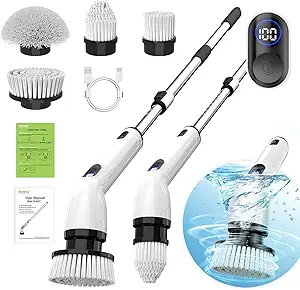 |
Shark Steam & Scrub S8001

| Wattage | 1120 watts |
|---|---|
| Power Source | ac_dc |
| Voltage | 120 |
| Tank Volume | 11.83 fluid ounces |
| Form Factor | Stick |
The Shark Steam & Scrub S8001 combines steam cleaning with motorized rotating pads to tackle stuck-on messes on sealed hard floors. It uses three steam modes—Light, Normal, and Deep—so you can dial back for quick touchups or boost steam for tougher stains, while LED headlights help spot debris. The mop's automatic scrubbing head rotates at over 150 scrubs per minute and ships with four Dirt Grip soft scrub pads and a filling flask for easy refills. With an 11.83 fl oz tank and 1120-watt power, it delivers sustained steam for typical room cleaning and aims to sanitize without chemicals when used per the owner's guide. Practical benefits include effortless pad-driven scrubbing that reduces manual elbow grease and swivel steering for better maneuverability around furniture. Limitations to note: it is intended for sealed hard floors only so it is not suitable for unsealed concrete, and the tank size means very large areas require refills more often than larger-capacity steamers.
Best for: Buyers who want a powered steam mop that scrubs as it steams and prefer a user-friendly, maneuverable stick design for routine deep cleaning of sealed hard floors.
Less Ideal for: Those needing a steam solution for unsealed concrete, large commercial spaces, or long continuous cleaning sessions without refilling should consider a heavier-duty or larger-capacity steam cleaner instead.
- Rotating automatic scrubbing head delivers over 150 scrubs per minute for deeper stain removal
- Three steam modes let you match steam output to soil level
- LED headlights reveal hidden debris for more thorough cleaning
- Includes four Dirt Grip soft scrub pads and a filling flask for immediate use
- Small 11.83 fl oz water tank requires refills during large cleanups
- Designed only for sealed hard floors, not for unsealed concrete or other porous surfaces
Verdict: If you want a maneuverable, powered steam mop that scrubs away stuck-on stains on sealed hard floors, the Shark Steam & Scrub S8001 is a practical, easy-to-use choice.
Bissell BigGreen Hercules BGFS650

| Brush Speed (Rpm) | 2200 Rpm |
|---|---|
| Form Factor | Cannister |
| Included Components | Brush, Pads |
| Manufacturer | Bissell BigGreen Commercial |
The Bissell BigGreen Hercules BGFS650 is a compact scrub-and-clean floor machine built for routine maintenance and spot restoration on tile and other hard floors. It uses a 2200 rpm rotating brush to scrub surface dirt and, when paired with Bissell floor polish, can boost shine on sealed floors. The unit is notably lightweight and has an adjustable handle and protective bumper that make it easy to maneuver around furniture and into tighter areas. Included brush and pads let you start basic cleaning right away, and the canister form factor keeps the machine relatively simple to store. Expect a workmanlike commercial-grade cleaning rather than aggressive deep extraction; the machine is optimized for scrubbing and polishing rather than wet-drying large wet soils. For household or small commercial tile maintenance the Hercules offers good mobility and finish results, but users wanting heavy-duty stripping, large-area water pickup, or integrated solution tanks should consider different equipment.
Best for: Buyers who need a performance-focused scrubber for regular tile and hard-floor maintenance and who prioritize mobility and finish over heavy-duty extraction.
Less Ideal for: Not a good fit for facilities that require large-area wet recovery, deep stripping, or high-volume commercial extraction work.
- High brush speed (2200 rpm) for effective surface scrubbing
- Lightweight, compact design improves maneuverability around furniture
- Adjustable handle and protective bumper for easier control and safer use
- Includes brush and pads so you can begin cleaning immediately
- Not designed for heavy water pickup or deep-extraction cleaning
- No integrated large-capacity solution or recovery tanks shown
Verdict: Choose the Hercules BGFS650 when you want a lightweight, high-speed scrubber that delivers strong surface cleaning and polished results on tile and hard floors.
BLONEX Electric Spin Mop BSM01

| Battery runtime | Up to 50 minutes |
|---|---|
| Water tank capacity | 250 ml |
| Included pads | 3 pairs reusable microfiber pads |
| Headlight | LED headlights |
The BLONEX Electric Spin Mop is a cordless, self-propelled floor scrubber aimed at making routine cleaning faster and less physically demanding. It uses dual rotating motors and high-speed microfiber pads to scrub tile, hardwood, laminate, and marble, while an on-demand spray from a detachable 250 ml semi-transparent tank supplies cleaning solution where needed. The mop is lightweight and easy to steer due to its forward propulsion, and the built-in LED headlights help locate dirt under furniture and in dim corners. BLONEX includes three pairs of reusable, machine-washable pads, a charger, and a battery indicator; a single charge delivers about 50 minutes of continuous use, long enough for most whole-house jobs. Practical features like a measuring cup, quiet operation, and reachable flexible head add convenience. Limitations to note are the modest water tank capacity which requires refilling for very large areas and that it is not a steam mop, so it relies on liquid spray and mechanical action rather than heat for deep sanitizing.
Best for: Buyers who want a time-saving, low-effort scrubber for regular tile and hard-floor maintenance and value cordless convenience and reusable pads.
Less Ideal for: Those needing heavy-duty commercial scrubbing, large open-floor jobs without breaks for refilling, or users who require steam sanitizing for disinfection.
- Self-propelled dual-spin motors reduce pushing effort and speed cleaning
- Cordless design with up to 50 minutes runtime covers most homes on one charge
- Detachable semi-transparent 250 ml water tank for easy refills and visible level
- Built-in LED headlights and flexible head reach under furniture and into corners
- Includes multiple reusable machine-washable microfiber pads for ongoing use
- 250 ml tank can require frequent refills on very large tiled areas
- Not a steam mop, so it does not sanitize with heat
Verdict: A lightweight cordless scrubber that speeds up tile cleaning with self-propelled dual-spin action and reusable pads, making regular maintenance quicker and easier.
BISSELL PowerFresh Steam Mop 1940A

| Wattage | 1500 watts |
|---|---|
| Heat Time | 30 seconds |
| Power Source | Corded Electric |
| Maximum Temperature | 212 °F |
| Tank Volume | 16 fluid ounces |
The BISSELL PowerFresh 1940A is an upright steam mop designed for routine floor cleaning and spot-scrubbing on sealed hard surfaces like linoleum. It heats in about 30 seconds and offers three steam settings so you can dial back moisture for delicate floors or boost steam for stuck-on messes, while a flip-down Easy Scrubber tackles grout and dried spills without extra tools. An XL removable 16 oz tank reduces refills during larger sessions and the 23-foot power cord gives good reach across rooms. Microfiber pads are reusable and launderable, and optional scent discs add a fresh smell during cleaning. Because it is corded and produces continuous steam, expect steady performance but limited mobility compared with cordless units, and you must avoid oversaturating unsealed or water-sensitive flooring. The unit is best used for regular maintenance, sanitizing with steam, and periodic targeted scrubbing rather than heavy wet extraction or deep carpet cleaning.
Best for: Buyers who prioritize efficient, low-effort maintenance for sealed linoleum and want adjustable steam plus a built-in scrubber for occasional grout or stuck-on spots.
Less Ideal for: Those needing a cordless, lightweight solution for many small rooms or anyone with unsealed, warped, or highly water-sensitive floors should consider other cleaning methods.
- Three steam settings let you adjust moisture for delicate linoleum or tougher grime.
- Flip-down Easy Scrubber breaks up dried-on messes and grout without separate tools.
- XL removable 16 oz water tank cuts down on frequent refills during larger areas.
- Reusable microfiber pads are washable and work for everyday cleaning and spot deepening.
- Long 23-foot power cord provides extensive reach without changing outlets.
- Corded design limits mobility compared with cordless steamers.
- Not suitable for unsealed or water-sensitive flooring since it applies steam directly.
- Tank capacity requires occasional refills during very large cleaning jobs.
Verdict: A practical, adjustable steam mop with a built-in scrubber that makes sealed linoleum maintenance faster and more sanitary.
Bomves Electric Spin Scrubber CB-04

| Battery capacity | 3000 mAh |
|---|---|
| Run time | Up to 90 minutes |
| Speeds | 300 RPM and 500 RPM |
| Adjustable lengths | 12in, 43in, 54in |
| Brush heads included | 7 replaceable heads |
The Bomves Electric Spin Scrubber is a cordless cleaning brush aimed at making routine scrubbing easier without bending or kneeling. It ships with an extendable handle that adjusts across three lengths and a set of replaceable brush heads for different surfaces, so you can switch between grout, tile, glass, and vehicle cleaning. The unit runs on a 3000 mAh rechargeable battery that the brand rates for up to 90 minutes of use and offers two speeds (about 300 and 500 RPM) to match light or heavier scrubbing. Practical touches include an IPX5-style water-resistant design for wet cleaning and a compact, L-shaped head that reaches corners. Expect quieter operation compared with corded machines but also moderate torque at high speed, so persistent grout staining may take extra passes. The package includes multiple heads, a charging cable and hook, but the main body should not be fully immersed in water and the charging port needs protecting from moisture. For tile floors this tool reduces fatigue and speeds up light-to-moderate cleaning jobs, while tougher heavy-duty grout restoration will still benefit from stronger, professional equipment.
Best for: Buyers who want a low-effort, cordless scrubber to speed up routine tile and bathroom cleaning and who value ergonomic reach and multiple brush heads over professional-grade power.
Less Ideal for: Those needing a heavy-duty, high-torque machine for deep grout restoration or commercial-scale floor stripping should look at professional scrubbers instead.
- Cordless, rechargeable design with claimed up to 90 minutes runtime for extended cleaning sessions
- Three adjustable handle lengths let you clean floors and high areas without bending
- Includes multiple replaceable brush heads to handle tile, grout, glass and vehicle surfaces
- Two speed settings let you choose gentle or more aggressive scrubbing
- IPX5-style water resistance allows wet cleaning of brush heads and bathroom use
- Not intended for full immersion so care is needed around charging port and internal electronics
- Motor speed (300/500 RPM) provides cleaning power for light-to-moderate soils but may require more passes on heavy buildup
Verdict: A convenient cordless scrubber that cuts bending and speeds routine tile and bathroom cleaning with multiple heads and long battery life.
TUYU Electric Spin Scrubber KS-2640C

| Motor speed | Low 350 RPM / High 450 RPM |
|---|---|
| Waterproof rating | IPX7 |
| Runtime | Up to 90 minutes |
| Charging | Type-C, 3–4 hour full charge |
| Handle | Stainless steel extendable 26–45 inches |
The TUYU Electric Spin Scrubber is a handheld cordless cleaning brush designed to speed up scrubbing on tile, grout, tubs, glass, and other hard surfaces. It uses a high-performance motor that spins brushes at roughly 350 to 450 RPM and includes four interchangeable heads to reach grout lines, corners, and flat surfaces. The extendable stainless steel handle (26 to 45 inches) and lightweight construction make it easy to clean floors and walls without kneeling, and the IPX7 rating lets you rinse the unit after use. A Type-C charge port and LED battery display simplify charging and monitoring, and TUYU claims up to 90 minutes of runtime after a 3 to 4 hour charge. For tile floors the rotating action plus detergent helps break up soap scum and grime faster than manual scrubbing, but the motor speed is moderate compared with heavy-duty floor machines so it is best for routine deep cleaning rather than stripping thick coatings. The included heads are reusable and designed to avoid scratching finished tiles, though replacing heads over time will be necessary for very frequent use.
Best for: Buyers who want an easy, lower-effort way to clean tile and grout at home without hoses or big equipment and who prefer a ready-to-use cordless tool that minimizes bending.
Less Ideal for: People needing a commercial-grade floor machine for large areas or contractors who must remove heavy coatings or deep-set industrial grime should choose a more powerful, professional scrubber.
- Cordless, rechargeable design with Type-C charging and LED battery level display
- IPX7 waterproofing allows rinsing the unit after cleaning
- Extendable stainless steel handle reaches high and low areas without bending
- Four interchangeable brush heads for grout, corners, and flat surfaces
- Up to 90 minutes runtime on a full charge for longer cleaning sessions
- Motor speed (350–450 RPM) is moderate and not suited for heavy commercial stripping
- Brush heads will wear with frequent use and require replacement over time
Verdict: A lightweight, cordless spin scrubber that makes routine tile and grout cleaning faster and easier for homeowners who want a risk-free, user-friendly option.
Choosing the Right Floor Scrubber for Tile Floors: Key Factors to Consider
Cleaning Power and Brush Type
The brush system and motor output determine how effectively a floor scrubber removes soil from tile and grout. Stiffer brushes or dual-rotation pads dislodge embedded dirt better than soft pads, but they can be harsher on delicate tiles.
Choose a brush or pad configuration that matches your tile finish. For heavily soiled grout, look for scrubbers with adjustable downforce or oscillating brushes that concentrate cleaning action without excessive water use.
Water Delivery and Recovery Capacity
Effective cleaning requires the right balance of water and detergent with fast recovery to avoid residue and long dry times. Tanks that meter solution and separate clean and dirty water improve results because they prevent reapplying soiled liquid to the floor.
Also consider the size and placement of the recovery tank and the strength of the vacuum system. Higher recovery rates speed drying and reduce the risk of slippery surfaces after cleaning.
Grout Performance and Edge Cleaning
Grout is often the hardest part of tile cleaning because it is textured and porous. Machines with narrow brushes, focused scrubbing heads, or variable brush pressure typically do a better job freeing grime from grout lines.
Inspect how the machine handles edges and corners. Units with detachable narrow heads or additional hand-scrub attachments let you target grout without over-wetting surrounding trim or baseboards.
Maneuverability and Reach
A scrubber that is easy to steer reduces operator fatigue and lets you do a more consistent job, especially in rooms with furniture, cabinets, or tight transitions. Swivel heads, low-profile brush decks, and responsive controls all improve navigation.
Corded models need adequate cord length or convenient plug access, while cordless models must offer enough runtime for the area you typically clean. Consider the turning radius and whether the handle adjusts for comfortable operation.
Ease of Maintenance and Serviceability
Regular upkeep keeps a floor scrubber working reliably. Look for machines with accessible tanks, simple brush or pad change systems, and parts that can be cleaned without tools. Filters, hoses, and seals are wear items; designs that make those components easy to inspect and replace save time.
Clear maintenance steps and accessible service points also reduce downtime and the cost of ownership over the life of the machine.
Noise, Weight, and Storage
Noise level matters when cleaning occupied homes or commercial spaces. Quieter motors and vibration-damping designs improve comfort during extended use. Weight affects portability and whether you can comfortably carry or lift the unit onto cleaning carts or storage racks.
Consider how and where you will store the machine. Compact folding handles or vertical storage capability help in tight closets. If you expect to move the scrubber between floors, factor in weight and handle ergonomics.
Tile Types and Which Scrubber Features Matter
Different tile materials and finishes react differently to scrubbing. Glazed ceramic and porcelain can tolerate firmer brush action, while natural stone and some textured tiles need gentler pads and lower downforce to avoid surface wear.
Assess the tile finish and grout condition before choosing a scrubber. If you have mixed tile types, select a machine with adjustable brush pressure and the option to swap pads so you can match cleaning aggressiveness to each surface.
- Smooth glazed tile: firmer brushes or rotary pads for efficient soil removal
- Textured tile: oscillating or agitation-style heads to reach into microgrooves
- Natural stone: soft pads and pH-neutral cleaning solutions to protect the surface
Cleaning Solutions and Chemical Compatibility
Not all cleaning chemicals are appropriate for every tile or grout. Check that the scrubber's tanks and seals are compatible with the detergents you plan to use. Using the wrong chemistry can damage tanks or void warranties.
For routine cleaning, many users prefer diluted neutral cleaners. For stain or heavy grease removal, higher-strength solutions may help but should be used sparingly and rinsed thoroughly to avoid residue.
- Confirm chemical compatibility with tank materials and hoses
- Rinse thoroughly after stronger treatments to prevent buildup
- Use manufacturer-recommended dilution rates for safe operation
Corded Versus Cordless: Tradeoffs to Weigh
Corded scrubbers provide continuous power for long cleaning sessions, while cordless units offer greater mobility without plug constraints. Cordless systems are convenient for multi-room cleaning but require sufficient battery capacity and charging time planning.
If your cleaning route includes large open areas, corded machines may be more practical. For spot cleaning or frequent moves between rooms, a cordless model with swappable batteries can be a better fit.
- Corded: unlimited runtime, dependent on cord management
- Cordless: freedom of movement, need for battery runtime planning
- Consider hybrid solutions that allow short runs on battery plus quick plugging for extended jobs
Maintenance Routines That Extend Machine Life
Simple daily and weekly maintenance keeps a scrubber operating effectively. Empty and rinse recovery tanks after each use, clean brushes or pads, and inspect squeegees and seals for wear. These small steps prevent buildup that degrades performance.
Schedule deeper inspections monthly to check hoses, filters, and battery health if applicable. Keeping spare wear parts on hand reduces downtime when a squeegee or brush needs replacement.
- After each use: rinse tanks and brushes, dry components
- Weekly: inspect filters and squeegees, tighten fittings
- Monthly: test battery condition and inspect hoses for cracks
Safety and Floor Protection Best Practices
Use caution with water volume and detergent concentration to avoid over-wetting grout and underlayment. Excessive water can cause discoloration or weakening of grout over time, especially in older installations.
Protect nearby wood trim and baseboards from splashback. Use floor-safe mats or temporary barriers during aggressive cleaning to keep water away from sensitive finishes.
- Avoid excess water on grout and porous tile
- Use recommended detergents at specified dilution rates
- Dry floors thoroughly before reopening cleaned areas to foot traffic
How We Chose the Best Floor Scrubber for Tile Floors
We prioritized features that directly affect how well a floor scrubber performs on tile surfaces and grout. Cleaning power and brush configuration were primary filters because brush type, pressure, and rotation determine soil removal and grout lift. Water delivery and recovery efficiency were included to limit residue and speeding dry time on porous tile. Maneuverability and weight were assessed for real-world handling in rooms with fixtures, thresholds, and tight corners. Durability and serviceability were evaluated by checking build quality, availability of replaceable parts, and ease of routine maintenance. Battery runtime or cord length and motor cooling were considered for continuous cleaning without interruptions. We excluded units designed only for carpets or heavy industrial concrete work, as those use different brush systems and water flow. We also filtered out models lacking basic safety features such as splash protection and secure tank seals. The final list favors machines that balance effective grout cleaning, straightforward upkeep, and dependable water management so buyers get reliable results on tile floors.
Our full evaluation process is outlined in our review methodology.
FAQ
How often should I use a floor scrubber on tile floors?
It depends on foot traffic and soil levels. High-traffic areas may need weekly scrubbing, while low-traffic rooms can be cleaned monthly. Spot-treat spills and heavily soiled grout as needed between scheduled sessions.
Can I use a floor scrubber on sealed natural stone tile?
Often yes if you use soft pads and neutral pH cleaners. Avoid abrasive brushes and harsh chemicals that can etch or dull the finish. Test a small, inconspicuous area before full cleaning.
Will a scrubber damage grout or tile?
Properly configured scrubbers should not damage tile or grout. Damage typically results from excessive downforce, overly abrasive brushes, or improper chemicals. Match brush aggressiveness and solution strength to the surface.
How do I prevent streaking or residue after scrubbing?
Use correct dilution rates, maintain effective recovery to remove dirty solution, and perform a final clean-water pass when needed. Ensure squeegees and recovery systems are clean and functioning to remove as much liquid as possible.
Is it better to scrub with hot or cold water?
Warm water can improve detergent performance on grease and oily soils, but most cleaning chemistry is formulated for room-temperature use. Avoid very hot water on heat-sensitive tiles or adhesives.
Final Verdict
Pick a floor scrubber for tile floors by prioritizing the features that match your cleaning environment. Focus first on brush configuration and water recovery because those have the biggest impact on grout lift and drying time. Then consider maneuverability, battery or cord logistics, and how easy the unit is to maintain. Accept that more aggressive cleaning setups speed soil removal but may require gentler settings for delicate tile or aged grout. Choose a machine that offers adjustable cleaning intensity and simple upkeep so you can keep tile surfaces clean with minimal effort and downtime.