
Note: This article contains affiliate links. If you click on these links and make a purchase, we may earn a small commission at no extra cost to you. This helps support our research and content. Read our full affiliate disclosure here.
If you want reliably smooth almond butter, the right food processor makes a big difference. Home machines vary in motor strength, bowl size, blade design, and heat management, all of which affect how long nuts take to break down and whether the result becomes oily, grainy, or perfectly spreadable. This guide covers seven carefully shortlisted food processors for making almond butter and explains the evaluation criteria we used, so you can match a machine to the batch size and frequency you expect. Below are the top picks for different needs and kitchens, followed by practical buying guidance and troubleshooting tips to help you get consistently creamy almond butter at home.
Top Picks at a Glance
| Best Overall The best all-around choice for most situations | Cuisinart 14-Cup Food Processor DFP-14BCNY |  |
| Best Quality Built to a higher standard if you want something more solid | Breville Sous Chef 9 Cup |  |
| Best Value The sweet spot between price and what you get | Hamilton Beach Stack & Snap 12-Cup |  |
| Best Budget The cheapest option that still gets the job done reliably | Cuisinart Mini-Prep Plus DLC-2ABC |  |
| Top Rated A top-rated pick with lots of positive feedback | Ninja Professional Plus BN601 |  |
| Most Popular A crowd favorite that many people choose with confidence | Hamilton Beach Food Processor 70730 |  |
| Best Seller A high-volume bestseller chosen again and again | Ganiza Food Processor GC10 |  |
Cuisinart 14-Cup Food Processor DFP-14BCNY

| Wattage | 720 watts |
|---|---|
| Bowl Capacity | 14 cups |
| Number of Speeds | 1 |
| Power Source | Corded Electric |
The Cuisinart 14-Cup Food Processor is a full-size, stainless steel machine built around a 720-watt motor and a large work bowl for batch prep. It comes with a stainless steel chopping blade plus medium shredding and 4mm slicing discs, and uses on and off/pulse controls for simple operation. In everyday use it handles vegetables, cheeses, dough and coarse purees quickly and the extra-large feed tube speeds through whole produce. Dishwasher-safe parts and a removable disc stem make cleanup straightforward. For making nut butters like almond butter it can puree nuts to a coarse or smooth texture in small to moderate batches, though it lacks variable speed settings so finer texture control depends on pulsing and run time. The unit is substantial and stable on the counter, but its single-speed control and relatively heavy cast design mean it is less convenient for continuous small jobs or for buyers who want fine-grain speed adjustment.
Best for: Buyers who want a reliable, full-size processor for frequent meal prep and batch cooking that can handle nuts, dough, and large quantities without fuss.
Less Ideal for: Those who need precise variable-speed control for small-batch nut butters or who prioritize a lightweight, compact unit for occasional use.
- Powerful 720-watt motor capable of handling heavy-duty prep tasks
- Large 14-cup bowl for batch processing and larger quantities
- Stainless steel blades and discs for durable slicing and shredding
- Dishwasher-safe removable parts and detachable disc stem for easier cleanup
- Only a single speed plus pulse limits fine control over puree texture
- Relatively heavy and bulky, taking significant counter or storage space
Verdict: A heavy-duty, 14-cup processor with a strong 720W motor that is well suited for balanced home cooks needing reliable batch processing, including making almond butter in small to medium batches.
Breville Sous Chef 9 Cup
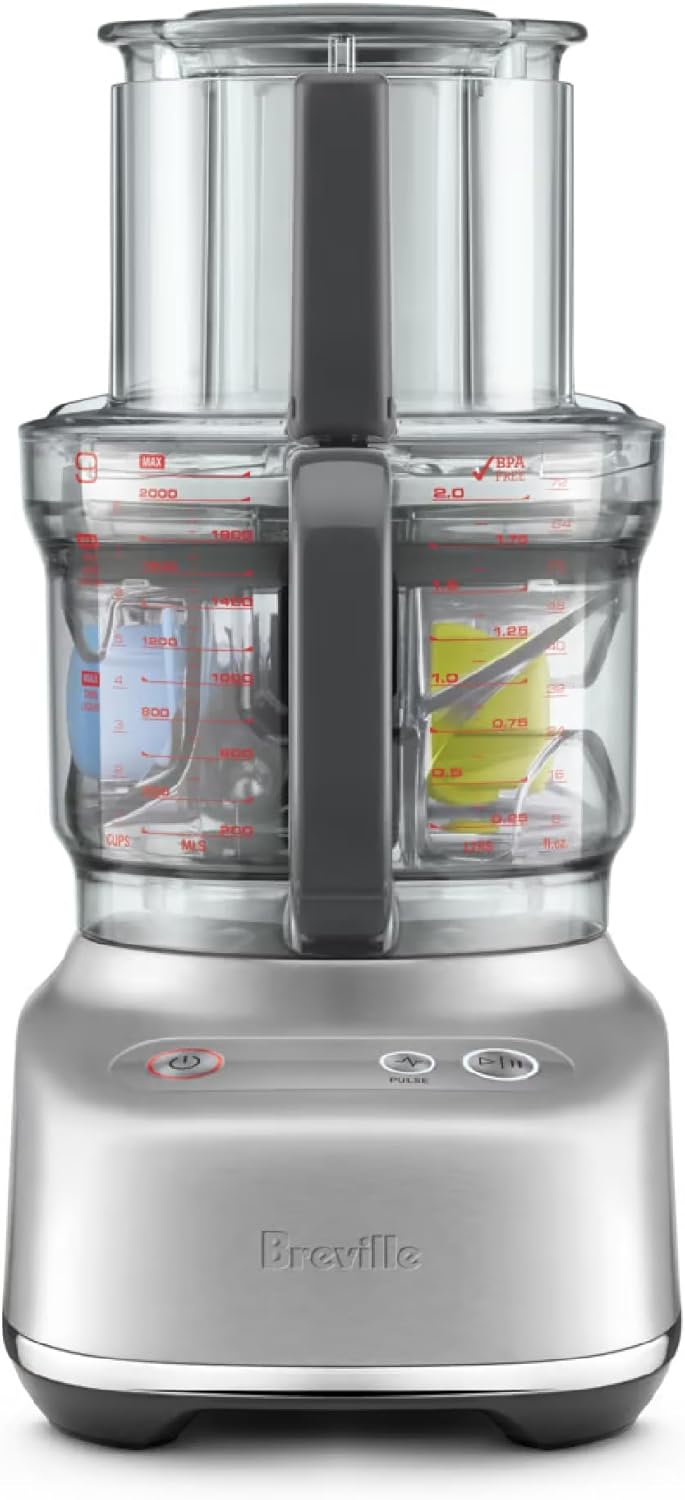
| Wattage | 625 watts |
|---|---|
| Bowl Capacity | 9 cups |
| Voltage | 120 volts |
| Material | Brushed Stainless Steel |
The Breville Sous Chef 9 Cup is a compact, heavy-duty food processor built for precise, repeatable prep work. It uses a high-torque induction motor and stainless steel S-blade plus a reversible shredder and adjustable slicer to chop, slice, shred, and knead ingredients quickly. Onboard storage keeps the color-coded attachments and blades organized inside the bowl, while the wide 4.7 inch feed chute accepts larger items without pre-cutting. In practice it handles coarse chopping, fine shredding, and dough work with little fuss, and the durable, dishwasher-safe bowl and lid simplify cleanup. For making nut butters like almond butter the strong induction motor and robust S-blade give the sustained power and cutting surface needed to break down nuts into a paste, though you should process in batches and scrape the bowl occasionally for even texture. Limitations include a single speed with pulse rather than multiple continuous speed settings, and the 9-cup bowl is smaller than larger commercial units so very large batches will require multiple runs.
Best for: Buyers who prioritize motor strength and consistent cutting for demanding prep like nut butters and frequent chopping will appreciate this compact, performance-focused processor.
Less Ideal for: If you need very large single-run batches or fine variable-speed control for delicate emulsions, consider a larger-capacity or variable-speed model instead.
- Powerful 625W induction motor offers sustained torque for tough jobs
- Robust stainless steel S-blade and included shredding/slicing attachments for versatile prep
- Onboard storage caddy keeps attachments organized and accessible
- Wide 4.7 inch feed chute reduces pre-cutting and speeds preparation
- Dishwasher-safe removable parts simplify cleaning
- Only a single speed with pulse control rather than variable continuous speeds
- 9-cup bowl limits single-run batch size for large-volume tasks
Verdict: Choose this compact, high-torque 9-cup processor when you want a durable motor and sturdy blades that can reliably grind nuts into almond butter in small to medium batches.
Hamilton Beach Stack & Snap 12-Cup

| Wattage | 450 watts |
|---|---|
| Bowl Capacity | 12 cups |
| Number of Speeds | 2 |
| Blade Material | Stainless Steel |
| Power Source | ac_dc |
The Hamilton Beach Stack & Snap 12-Cup is built for straightforward prep work and everyday batch processing. Its 12-cup sealed bowl and big-mouth chute let you handle whole vegetables and larger volumes without pre-cutting, while the included S-blade and reversible shredding/slicing disc cover chopping, pureeing, shredding, and slicing tasks. The 450-watt motor provides enough torque for making nut butters in small batches if you pulse and scrape, and the sealed center bowl helps avoid leaks during wet processing. Stack & Snap assembly makes setup and takedown fast, and most removable parts are dishwasher safe for easy cleanup. Limitations include a midrange motor that can struggle with very dense or continuous heavy-duty nut grinding compared with high-torque processors, and the unit has only two speed settings plus pulse so fine control for ultra-smooth nut butter may take extra time and attention. For routine kitchen prep and occasional almond butter in modest batches this processor is a practical, no-frills choice.
Best for: Home cooks who want a dependable, easy-to-use processor for regular chopping, slicing, and occasional small-batch nut butters without needing professional-level torque.
Less Ideal for: People who plan to make large quantities of almond butter or grind very hard nuts frequently and need a high-torque, commercial-style machine.
- 12-cup sealed bowl handles larger batches and reduces leaks
- Big-mouth chute accepts whole produce to save prep time
- Stack & Snap design for quick assembly and disassembly
- Stainless steel S-blade and reversible slicing/shredding disc included
- Dishwasher-safe removable parts for easier cleanup
- 450-watt motor is midpower and can be slow or require pulsing for very dense nut butters
- Only two speeds plus pulse limits fine speed control for ultra-smooth textures
Verdict: A practical, easy-to-clean 12-cup processor that handles everyday prep well and can make modest batches of almond butter with some pulsing and patience.
Cuisinart Mini-Prep Plus DLC-2ABC

| Wattage | 250 watts |
|---|---|
| Bowl Capacity | 1.5 pounds |
| Number of Speeds | 1 |
| Power Source | Corded Electric |
The Cuisinart Mini-Prep Plus is a small, simple food processor built for quick prep tasks like chopping herbs, making dressings, and grinding small amounts of hard cheese or nuts. It uses a 250-watt motor driving a patented reversible stainless-steel blade that switches between a sharp edge for chopping and a blunt side for grinding, and its 24-ounce work bowl is sized for single-portion jobs. Controls are minimal—one-button operation—so it is easy to use and clean, with dishwasher-safe bowl and lid and a wipe-clean base. For making almond butter, the motor is modest and the bowl capacity limits batch size, so you can expect to make small jars or single servings rather than large quantities; the reversible blade helps achieve both chopped and ground textures but may require stopping to scrape and reprocess to reach a smooth butter. The unit is lightweight and stores easily, making it handy for kitchens with limited space, but it is not intended for heavy continuous use or very large batches.
Best for: Buyers looking for an affordable, space-saving processor to make small batches of nut pastes, pestos, dressings, and everyday chopping where low cost and simplicity matter.
Less Ideal for: Anyone who needs to produce large quantities of almond butter, who wants a very smooth, single-batch nut butter, or who expects heavy-duty continuous processing should look at higher-powered, larger-capacity models.
- Compact 24-ounce bowl fits small kitchens and single-serve prep
- Reversible stainless-steel blade gives both chopping and grinding actions
- Dishwasher-safe bowl and lid simplify cleanup
- Simple one-button control makes operation straightforward
- 250-watt motor is underpowered for large or continuous nut-butter batches
- Small capacity requires multiple cycles for larger quantities
Verdict: A budget-friendly, compact choice for making small batches of almond butter and other spreads when you prioritize low cost and easy storage.
Ninja Professional Plus BN601

| Wattage | 1000 watts |
|---|---|
| Bowl Capacity | 4.5 pounds |
| Number of Speeds | 3 |
| Power Source | AC adapter |
The Ninja Professional Plus BN601 is a sturdy, mid-size food processor built around a 1000-peak-watt motor and Auto-iQ preset programs that simplify common tasks like chopping, slicing, pureeing, and mixing dough. In everyday use it handles vegetable prep, shredding cheese, and making sauces quickly, and the included dough blade lets you mix small to medium batches of dough without switching appliances. The 9-cup bowl is large enough for family-sized batches and the stainless steel blades deliver even results; removable parts are BPA-free and dishwasher-safe which keeps cleanup simple. For making nut butters like almond butter this unit can process small to moderate batches thanks to its strong motor and solid blade design, though fully smooth, large-quantity nut butters may require intermittent scraping and longer processing times. Controls are straightforward and built-in safety interlocks prevent operation unless assembled correctly. If you want a reliable, easy-to-use processor for regular kitchen prep and occasional nut butter, this model is a practical choice.
Best for: Buyers who prioritize a dependable, no-fuss processor for frequent meal prep and occasional homemade nut butters and who value simple presets and durable construction.
Less Ideal for: Users who plan to make very large quantities of smooth almond butter regularly or who need extremely fine speed control for specialty tasks should consider a high-capacity, dedicated nut grinder or commercial-style processor.
- Powerful 1000-peak-watt motor for tackling tougher ingredients
- Auto-iQ preset programs for one-touch chopping, slicing, pureeing, and dough
- 9-cup bowl suitable for family-sized batches and meal prep
- Stainless steel precision blades and a dedicated dough blade included
- Removable BPA-free parts are dishwasher safe for easy cleaning
- May need longer processing and periodic scraping to reach very smooth nut-butter textures in large batches
- Limited to three manual speeds beyond the presets, so fine speed control is constrained
Verdict: A reliable, powerful 9-cup processor with Auto-iQ presets that makes small to medium batches of almond butter and everyday prep straightforward and fuss-free.
Hamilton Beach Food Processor 70730

| Wattage | 450 watts |
|---|---|
| Bowl Capacity | 10 cups |
| Number of Speeds | 2 |
| Power Source | Wall outlet |
The Hamilton Beach 10-cup food processor is built for everyday prep: chopping, shredding, slicing and pureeing using a 450-watt motor, S-blade and a reversible slicing/shredding disc. The standout is the built-in bowl scraper that keeps ingredients moving toward the blade so you spend less time stopping to push things down, which helps when making small batches of nut butter where you want the mixture to stay near the blade. Two speeds plus pulse give straightforward control for longer pureeing runs, and the large feed chute reduces pre-cutting for vegetables and fruit. Removable parts are dishwasher safe and the stainless steel blade handles hard items like carrots or cheese. Limitations: the 450-watt motor and 10-cup capacity mean it is not optimized for very large or continuous heavy-duty nut butter production, and the two-speed control is less flexible than multi-speed, high-torque models specifically marketed for nut butters. For occasional almond butter and general kitchen prep it is a practical, easy-to-clean option.
Best for: Buyers who want a reliable, easy-to-use processor for everyday prep and occasional homemade nut butters and who prioritize proven performance and positive user feedback when choosing a small appliance.
Less Ideal for: Do not choose this if you plan to make large batches of almond butter frequently or need a high-torque, commercial-style processor designed for continuous heavy-duty nut grinding.
- Built-in bowl scraper keeps ingredients near the blade for more even processing
- 450-watt motor handles tough ingredients like carrots and hard cheeses
- Includes S-blade plus reversible slicing/shredding disc for multiple prep tasks
- Dishwasher-safe, BPA-free removable parts for easy cleanup
- Motor and capacity are modest for extended, heavy nut-butter runs
- Only two speeds plus pulse limits fine control for very smooth nut butters
Verdict: A user-friendly 10-cup processor with a bowl scraper and 450W motor that’s a sensible pick for occasional almond butter and everyday kitchen tasks.
Ganiza Food Processor GC10

| Wattage | 450 watts |
|---|---|
| Capacity | 0.95 gallons |
| Voltage | 120 volts_of_alternating_current |
| Material Type | Stainless Steel, Glass |
| Power Source | AC |
The Ganiza GC10 is a compact food processor designed for everyday chopping, grinding and light pureeing tasks. It ships with two 8-cup bowls (glass and stainless steel), two sets of S-shaped stainless blades and a 450W copper-core motor that runs on two speeds for coarse or finer results. In use it handles vegetables, nuts, and small amounts of meat quickly; the paired bowls let you keep ingredients separate for hygiene or different textures. Safety features include spring-loaded blades that stop when the motor is disengaged and an overheating protection cutoff that requires brief cool-down pauses during heavy use. For making nut butter like almond butter the 450W motor and stainless blades can process nuts to a paste in short bursts, though you may need to scrape and run it in intervals. Removable blades and bowls are easy to clean, but frequent long runs will trigger the thermal protection and lengthen total processing time. Build materials are stainless steel and glass with an AC power supply; overall it is a practical, budget-friendly choice for small batches rather than continuous commercial use.
Best for: Someone who wants a safe, easy-to-use countertop processor for small to medium kitchen jobs and prefers clear safety features and removable parts for cleaning.
Less Ideal for: People who need to make large, continuous batches of nut butter or run heavy-duty grinding for extended periods should choose a higher-power, commercial-grade unit.
- Two 8-cup bowls (glass and stainless steel) for hygienic separation of tasks
- 450W full-copper motor for stronger, longer-running performance than typical hobby units
- Two-speed control for both coarse chopping and finer pureeing
- Safety features include spring-loaded blade stop and overheating protection
- Removable blades and smooth bowls that are straightforward to clean
- 450W motor is adequate for small-batch nut butters but may require intermittent pauses due to thermal protection
- Not intended for continuous heavy-duty or commercial grinding sessions
Verdict: A practical, safety-minded small-batch processor that can make almond butter in short runs thanks to its 450W motor and dual bowls.
Choosing the Right Food Processor for Making Almond Butter: Key Factors to Consider
Motor Power and Torque
Higher continuous wattage and strong torque matter because nuts are dense and require sustained force to break down. Machines with modest peak numbers but weak continuous ratings can stall or overheat during long nut-processing cycles.
When evaluating power, consider how often you will make almond butter and whether you process whole nuts or pre-roasted ones. Higher torque reduces processing time and helps achieve a smoother texture with fewer stops to scrape the bowl.
Bowl Capacity and Shape
Bowl size determines how much almond butter you can make in a single run. Larger capacities let you batch produce for meal prep or gifting, while smaller bowls are fine for occasional use or small households.
The bowl shape matters, too. A wider, shallower bowl promotes faster circulatory movement and more even processing. Tall, narrow bowls can trap nuts and require more scraping, increasing total processing time and wear on the motor.
Blade Design and Material
Efficient blades crush and shear nuts into a fine paste rather than simply chopping them into coarse bits. Look for robust, well-angled stainless steel blades that resist bending and maintain a sharp edge after repeated abrasive use.
A blade assembly that promotes circulation helps move nuts toward the cutting zone instead of allowing them to compact at the bottom. Removable or dishwasher-safe blade components also make cleanup safer and faster.
Heat Management and Duty Cycle
Grinding nuts generates heat, which can change flavor and texture or risk damaging the motor. Models with good ventilation, thermal protection, and conservative duty-cycle ratings let you process longer runs without forced cooling breaks.
If you plan frequent or large-batch almond butter, favor machines with clear guidance on continuous run times and built-in protection that pauses or throttles to prevent overheating.
Ease of Cleaning and Maintenance
Sticky nut butter can cling to bowls and blade hubs, so easy disassembly and dishwasher-safe parts save time and reduce the chance of hidden rancidity. Smooth bowl interiors and fewer nooks around the blade simplify cleaning by hand.
Long-term maintenance includes checking seals and motor vents. Machines designed for straightforward upkeep will stay reliable and hygienic for nut butter production.
Stability and Noise
Processing dense ingredients makes the unit work hard, so a stable base with non-slip feet prevents movement and reduces stress on controls. Heavier, well-balanced machines tend to vibrate less during long cycles.
Noise varies by motor size and build. If you will be running the processor early mornings or late nights, consider models with reasonable sound levels or plan processing times accordingly.
Batch Size and Processing Strategy
Decide whether you want to make small jars for daily use or larger batches to store. For frequent consumers, making larger batches reduces per-serving prep time but requires a machine with both sufficient capacity and cooling. For occasional use, a smaller-capacity processor may be more space-efficient.
When processing, use short pulses at the start to break nuts into coarse crumbs, then run longer bursts while scraping down the sides. This staged approach reduces motor stress and promotes even particle reduction.
- Start with pulses to avoid motor bogging
- Alternate processing and scraping to keep material moving
- Let motor rest if the unit becomes warm to the touch
Roasting and Moisture Tips for Better Texture
Roasting almonds before processing releases oils and helps achieve creamier butter. Roast evenly at moderate heat and cool completely before processing to avoid steam and excess moisture in the bowl. Avoid adding liquids early; the nuts should break down to their own oils first.
If the mixture appears dry, a small neutral oil or a few drops of vegetable oil can smooth the texture near the end of processing. Add sparingly to maintain flavor balance and shelf stability.
- Cool nuts fully after roasting
- Add oil only after nut particles begin to clump
- Avoid water-based liquids which can cause separation
Preventing Overheating and Motor Strain
Watch the processor for signs of stress: unusual smells, loss of power, or tripping thermal cutouts. Work in cycles and allow cooling intervals for prolonged runs. If a model includes a recommended duty cycle, follow it to protect long-term motor health.
Position the machine where vents have clear airflow and avoid enclosing it during use. Clean vents regularly to prevent dust buildup that impairs cooling.
- Use short processing cycles with rest periods
- Keep vents unobstructed and clean
- Follow manufacturer duty-cycle guidance when provided
Cleaning and Storing Nut Butter Machines
Disassemble the blade and bowl promptly after use to prevent nut oils from setting. Warm, soapy water loosens residue effectively. If parts are dishwasher-safe, place them on the top rack to avoid heat damage from the heating element.
Wipe the motor base with a damp cloth and keep the lid gasket and blade hub free of trapped food. Store with components dry to prevent off-odors and prolong seals.
- Clean immediately after processing for easiest results
- Dry all parts fully before storage
- Inspect seals periodically for wear
Simple Recipes and Add-Ins
Once you can make smooth almond butter, experiment with small additions for flavor. Cinnamon, a touch of sea salt, or a hint of vanilla can enhance the natural almond taste without compromising texture. Add dry spices during the final processing stage so they disperse evenly.
Sweeteners like honey or maple syrup should be added sparingly and toward the end of processing. For a crunchy variation, reserve some coarsely chopped nuts and fold them in after the butter reaches the desired creaminess.
- Add spices late to avoid clumping
- Fold in crunchy bits by hand for texture contrast
- Taste and adjust seasonings in small increments
How We Chose the Best Food Processor for Making Almond Butter
We selected machines that consistently handle dry, abrasive tasks like grinding nuts without overheating or stalling. Our filters prioritized motor power and torque, because almond butter requires sustained force to break cell walls and release oil. We also looked at bowl capacity and shape to match common batch sizes and reduce the need for multiple runs. Blade design and material were included to ensure efficient cutting and even particle size reduction. Durability and cooling features were considered to prevent motor strain during long processing times. Finally, we evaluated ease of cleaning and everyday usability since frequent maintenance affects whether you will actually make nut butter often. We excluded machines intended solely for light prep tasks or mini choppers with insufficient motor capacity. We also set aside products without clear cooling or overload protection features. The shortlist reflects appliances that balance raw power, usable capacity, and practical cleanup for making almond butter at home.
Our full evaluation process is outlined in our review methodology.
FAQ
How long does it take to make almond butter in a food processor?
Processing time varies by motor strength and batch size, but expect 5 to 15 minutes of active work including intermittent scraping. Stronger motors and wider bowls will generally finish faster.
Should I roast almonds before making almond butter?
Roasting usually improves flavor and helps release oils for a creamier texture. Make sure nuts are fully cooled first to avoid steam and added moisture during processing.
Can I use a small food processor or mini chopper for almond butter?
Mini choppers often lack the continuous power and heat management required for smooth almond butter. They can work for tiny batches but may overheat or produce uneven results for larger quantities.
How do I fix almond butter that is too grainy?
Continue processing in short bursts, scraping down the bowl frequently. If the mixture remains dry, add a teaspoon of neutral oil and process until the texture smooths out.
How should I store homemade almond butter?
Store in a clean, airtight container in the refrigerator for maximum freshness, or at cool room temperature for short-term use. Stir before using if oil separation occurs; refrigeration slows separation.
Final Verdict
Choosing the right food processor for making almond butter comes down to matching motor strength, bowl capacity, and blade efficiency to your batch sizes and frequency. Prioritize continuous torque and good heat management if you plan regular or large-batch production. For occasional use, a moderate-capacity model with easy cleanup can be more practical. Balance processing power against ease of maintenance and available kitchen space. Follow recommended duty cycles and simple processing techniques to protect the motor and get the smoothest almond butter possible.