
Note: This article contains affiliate links. If you click on these links and make a purchase, we may earn a small commission at no extra cost to you. This helps support our research and content. Read our full affiliate disclosure here.
A freestanding trash compactor can cut the volume of household waste dramatically, reduce the number of times you take out the bin, and keep your kitchen tidier between pickups. If you have limited space or generate a lot of compressible refuse, the right compactor makes day-to-day cleanup easier and reduces bag usage. This guide covers seven shortlisted freestanding trash compactors chosen for broad home use. We focus on real-world decision points like compaction force, usable capacity, ease of loading and maintenance, and how the unit fits into a typical kitchen workflow. Read on for the criteria we used and what matters most when picking a freestanding trash compactor.
Top Picks at a Glance
| Best Overall The best all-around choice for most situations | TAMP-IT Next Gen Manual Trash Compactor |  |
| Best Quality Built to a higher standard if you want something more solid | Rattleware Trash Masher |  |
| Best Value The sweet spot between price and what you get | BINGOX Manual Trash Compactor |  |
| Best Budget The cheapest option that still gets the job done reliably | Mrhbyl 20" Manual Trash Compactor |  |
| Top Rated A top-rated pick with lots of positive feedback | Waste Smasher Manual Trash Compactor |  |
| Most Popular A crowd favorite that many people choose with confidence | Joseph Joseph Titan Trash Compactor |  |
| Best Seller A high-volume bestseller chosen again and again | AMENER Manual Trash Compactor |  |
TAMP-IT Next Gen Manual Trash Compactor
| Power Source | Manual |
|---|---|
| Installation Type | Freestanding |
| Material Type | Plastic or Lightweight Metal |
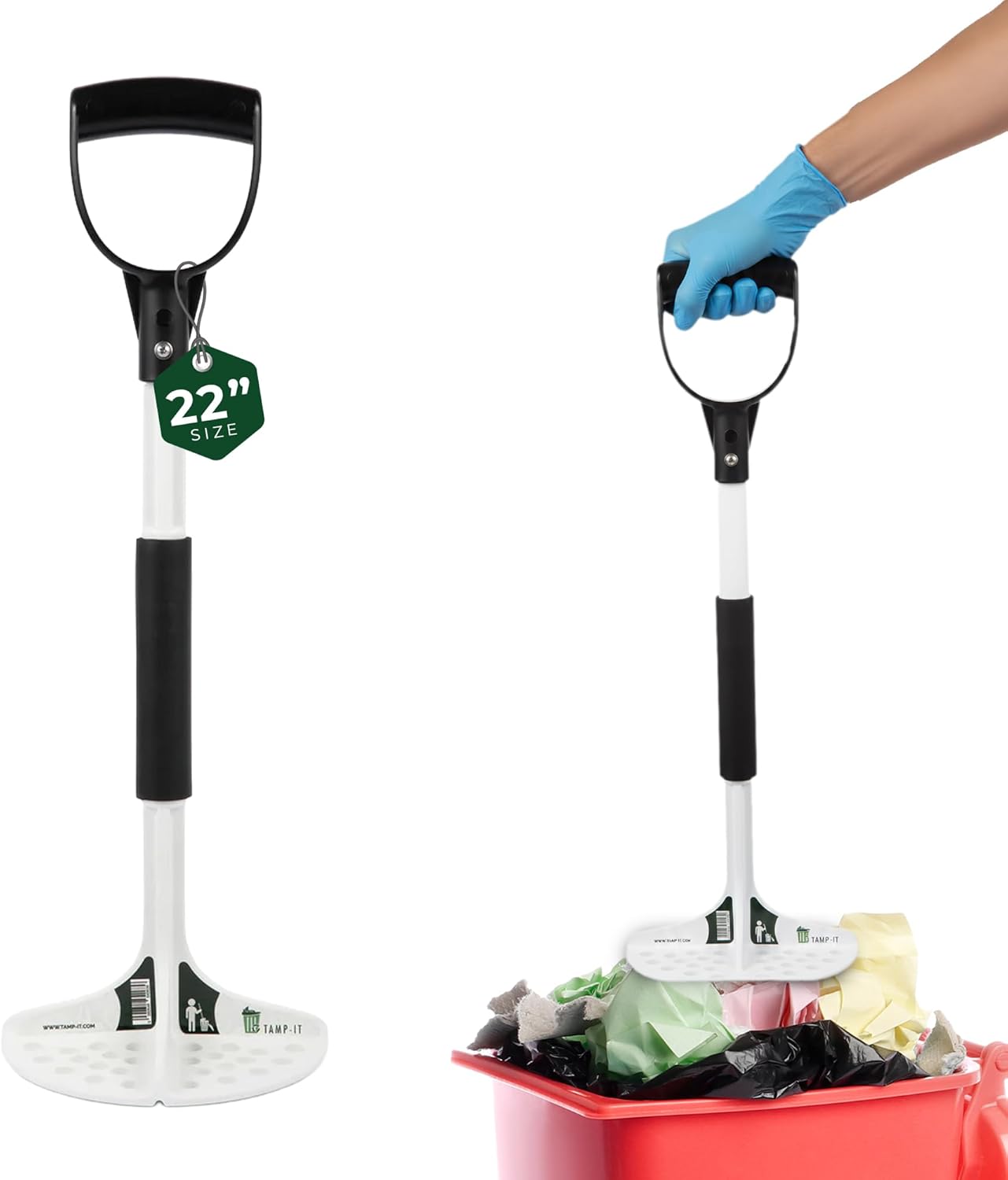
The TAMP-IT Next Gen Manual Trash Compactor is a D-handle tamper that compresses household and yard waste so bins hold more between pickups. You use it by placing the flat base over loose trash or yard debris and pressing down with the ergonomic D-handle to flatten and compact material; no power or installation is required. The tool is presented as heavy-duty with a wide base plate and a non-slip handle, which makes quick work of soft materials like bagged kitchen waste, leaves, and clippings and helps minimize overflowing cans. Because it is manual, it is portable and low-maintenance, and it doubles as a garden tamper for soil and gravel in light landscaping tasks. Expect limitations with very dense, rigid objects or full metal bins where compaction force is limited by human push strength, and it does not replace mechanical compactors for high-volume commercial sites.
Best for: Buyers who want an inexpensive, no-fuss way to reduce household or light commercial trash trips and who prefer a portable, tool-style solution over a built-in compactor.
Less Ideal for: Facilities that need high-throughput, powered compaction or users who require a sealed, in-bin mechanical compactor should choose a powered unit instead.
- Simple freestanding manual design needs no power or installation
- Ergonomic D-handle for secure, two-handed pressure and control
- Portable and multipurpose — compacts trash and can be used as a garden/ground tamper
- Wide base plate increases effective compaction area to reduce trips and overflow
- Manual operation limits force compared with powered compactors so very dense loads may not compress fully
- Not suitable as a sealed in-bin compactor or for professional high-volume waste facilities
Verdict: A simple, portable tamper that meaningfully increases bin capacity for homes and light-duty commercial spaces without power or installation.
Rattleware Trash Masher

| Material Type | Stainless Steel |
|---|---|
| Finish Type | Polished |
| Capacity | 10 gallons |
| Opening Mechanism | Manual-Lift |
| Additional Features | Commercial Dishwasher Safe |
The Rattleware Trash Masher is a heavy-duty, manual trash compactor built from polished stainless steel for kitchen or light commercial use. It uses a long lever handle and a square masher head to evenly compress up to 10 gallons of waste without electricity, which reduces bag changes, liquid seepage, and odors. The simple, minimal-part design makes it straightforward to clean by rinsing or running parts through a commercial dishwasher, and the wide bottom and ergonomic handle provide good leverage so you do not need to apply excessive force. Because it is freestanding and compact, it fits into tight back-of-house or under-counter spaces and can improve workflow in busy kitchens, bars, and cafés. The trade-offs are that manual operation means repeated physical use for frequent high-volume waste and it lacks locking or containment features for heavy liquids or sharp debris that powered compactors sometimes manage better.
Best for: Buyers who prioritize robust, mechanical performance and want a factory-quality, nonpowered compactor to reduce bag changes and improve sanitation in kitchens or small commercial settings.
Less Ideal for: Users who generate very large volumes of waste or need a hands-off, automated compaction solution should consider powered compactors instead.
- Durable stainless steel construction resists rust and heavy daily use
- Long ergonomic handle and wide masher head provide strong leverage for easy compression
- Manual design requires no electricity and has few parts to maintain or clean
- Commercial dishwasher safe components simplify sanitation in busy environments
- Manual operation can be tiring with very frequent or large-volume waste streams
- No built-in locking or containment for liquids and sharp objects compared with enclosed powered models
Verdict: Choose the Rattleware Trash Masher when you want a rugged, factory-quality manual compactor that reliably reduces trash volume without electricity.
BINGOX Manual Trash Compactor

| Power Source | Manual |
|---|---|
| Material Type | Stainless Steel |
| Installation Type | Freestanding |
The BINGOX Manual Trash Compactor is a simple freestanding tool that mounts on a wheelie-bin lid and uses a long lever arm to compress household and outdoor waste. It is built from coated steel with a 35.4-inch handle and an adjustable head and arm so you can set the compactor height between about 9.8 and 15.75 inches for different bin depths and mixed soft or hard refuse. Two-stage compression lets you press once when the bin is three quarters full and again when it is full, and the base blade is designed to help break up and pack trash so bags and trips to the curb are reduced. Because it is manual and touchless, it needs no power and is low tech to operate and maintain, though effective compaction requires physical effort and occasional repositioning. The unit is straightforward to hang on a bin lid and durable enough for outdoor use, making it a practical space-saver for households that want to cut bag use without noisy or powered equipment.
Best for: Buyers who prioritize reducing waste volume and saving bin space with a low-maintenance, nonpowered tool and who are willing to use a manual lever to compact trash.
Less Ideal for: People who need a hands-free electric compactor or those who cannot exert repeated manual force will want a powered alternative.
- All-iron, rustproof construction designed for outdoor durability
- Adjustable height and angle to fit 120–660L wheelie bins and mixed waste types
- Long padded handle reduces bending and gives leverage for compaction
- Two-stage compression reduces trash volume and lowers bag usage
- Manual operation requires physical effort and is not suitable for users wanting motorized convenience
- No mounting hardware beyond hooks means fit and stability depend on bin lid shape
Verdict: A durable, no-power freestanding compactor that maximizes wheelie-bin capacity for practical, hands-on waste reduction.
Mrhbyl 20" Manual Trash Compactor

| Material Type | Metal |
|---|---|
| Power Source | Manual |
| Item Dimensions D x W x H | 5.5"D x 5.5"W x 20"H |
This compact manual trash compactor uses a 20-inch all-metal press to reduce garbage volume by up to about 50 percent, making it useful for kitchen bins and outdoor yard containers. You use it by positioning the 5.5-inch base over the trash and pulling the long handle down to tamp and compress items like paper, food scraps, cans, and yard clippings. The metal construction and metal handle promise durability and rust resistance for repeated use, and the included silicone base lets you stand it upright for storage and protects floors. Because it is manual, there are no batteries or motors to maintain and it cleans easily with water. Expect straightforward, physical compaction rather than motorized convenience, so it requires some arm strength and is best for routine household loads rather than heavy commercial use. The unit is small and simple, which keeps it affordable and easy to store but limits how much one press can compress compared with built-in or powered compactors.
Best for: Buyers looking for a low-cost, no-frills way to reduce household trash volume who prioritize simplicity, durability, and easy storage.
Less Ideal for: Users who need heavy-duty, high-capacity compaction or a motorized solution for commercial or large-volume waste collection should choose a powered compactor instead.
- All-metal construction and handle for durability and rust resistance
- Long 20-inch press reduces need to bend or step on trash
- Compact 5.5-inch base fits most standard trash cans and bins
- No power or batteries required and simple to clean with water
- Manual operation requires physical effort and is slower than powered compactors
- Compression is limited per press compared with motorized units
Verdict: A budget-friendly, durable manual compactor that cuts household trash volume without power or complex maintenance.
Waste Smasher Manual Trash Compactor

| Included Components | 1 Manual Trash Compactor |
|---|---|
| Material Type | Plastic |
| Installation Type | Freestanding |
The Waste Smasher is a simple freestanding manual trash compactor that reduces garbage volume by pressing waste down inside a bin. You use it like a handheld press: position the tool over the bagged trash, push to compact, and hang it on the built-in hook for storage when finished. It is made from durable recycled plastic, is dishwasher safe for easy cleaning, and claims up to about 50 percent volume reduction which helps stretch how many bags you can use between pickups. Because it is manual and requires no power, it is quiet, low-maintenance, and reliable for daily kitchen use. The main limitations are that compaction force depends on user effort and it cannot replace powered in-cabinet compactors for large or very dense loads, so it is best for typical household trash rather than bulky waste.
Best for: Buyers who want a dependable, no-frills way to reduce household trash volume and prefer a quiet, low-maintenance tool that lasts with regular use.
Less Ideal for: People who need heavy-duty or powered compaction for large amounts of dense waste or for commercial settings should choose a motorized compactor instead.
- Requires no electricity or batteries, so it works anywhere and is very low maintenance
- Durable recycled plastic construction designed for daily use
- Built-in hook and freestanding design make storage convenient and keep it accessible
- Dishwasher safe for straightforward cleaning after use
- Compaction depends on user strength and cannot match motorized compactors for very dense or bulky trash
- Not suitable for large-scale or commercial compaction needs
Verdict: A simple, reliable manual compactor that saves bag changes and requires no power, ideal for everyday home use.
Joseph Joseph Titan Trash Compactor

| Capacity | 90 liters |
|---|---|
| Power Source | Manual |
| Installation Type | Freestanding |
The Joseph Joseph Titan is a freestanding manual trash compactor designed to shrink household waste so you empty bins less often. You use it like a standard pedal bin: drop waste into the liner, press the foot pedal and the internal compaction plate compresses the contents to roughly one third of their original volume. Practical features include a replaceable carbon odor filter tucked into the lid, a lid-stay for easier liner changes, and an anti-tear liner design that works with both custom IW4 liners and standard bags. Construction is stainless steel with a fingerprint-resistant finish and the compaction mechanism and pedal are tested for long life, backed by a 10-year guarantee against manufacturing defects. Limitations are that it is manually operated rather than electric, so compaction force depends on pedal action, and its 30L usable bin size means very large households may still need frequent emptying despite compaction.
Best for: Buyers who want a durable freestanding compactor to reduce bag usage and takeout frequency and who prefer a simple, mechanical unit with documented longevity and user reviews to assess real-world reliability.
Less Ideal for: People who need fully automatic or electric compaction, or very large households that produce heavy daily waste and need higher immediate capacity.
- Reduces trash volume by about 66% to cut down on how often the bin needs emptying
- Built-in replaceable carbon odor filter helps control smells from the lid
- Hygienic compaction design keeps the user’s hands and the bin exterior clean
- Durable stainless-steel construction and pedal tested over 100,000 cycles with a 10-year guarantee
- Manual operation requires physical pedal force rather than automatic compaction
- 30L internal capacity may still require regular emptying in very busy kitchens
Verdict: Choose the Titan if you want a robust, manually operated freestanding compactor that reliably cuts waste volume and includes odor control backed by long-term durability testing.
AMENER Manual Trash Compactor

| Power Source | Manual |
|---|---|
| Material Type | Metal |
| Installation Type | Freestanding |
| Included Components | Trash Compactor |
This compact, all-metal manual trash compactor is a simple freestanding tool for squeezing more waste into standard bins. You press down on the ergonomic palm-shaped handle to compress items like cups, cans, paper, leaves and small yard debris; the base screws to the rod for stable, repeatable compaction. Notable touches include an anti-slip silicone base that keeps the unit steady and doubles as a drip-catching mat, and an ergonomic grip that reduces wrist strain during use. Because it is fully manual with no electronics or batteries, setup, cleaning and long-term maintenance are straightforward — rinse the parts and dry them before reassembly. The unit is best for routine kitchen and outdoor waste where extra compaction reduces bag changes, but it relies on user force so it is less effective on very dense or rigid materials and can be awkward in very deep or overfilled cans. Its small footprint makes storage easy, and the metal construction prioritizes durability over lightweight portability.
Best for: Buyers who prioritize a low-risk, durable solution to reduce trash trips and want a simple, no-power compactor that is easy to clean and maintain.
Less Ideal for: People who need motorized compaction for very dense waste, or those who require a unit built for large commercial bins or heavy industrial use.
- All-metal construction for durability and rust resistance.
- Manual design with no batteries or electronics simplifies maintenance.
- Ergonomic palm-style handle reduces wrist strain during pressing.
- Anti-slip silicone base provides stability and catches drips.
- Detachable parts allow compact storage and easy cleaning.
- Requires physical force so it is less effective on very dense or rigid items.
- Not suitable for compacting very large or overfilled bins due to limited reach.
Verdict: A straightforward, durable manual compactor that reduces household trash volume without the complexity of batteries or motors.
Choosing the Right Freestanding Trash Compactor: Key Factors to Consider
Compaction Force and Mechanism
Compaction force determines how much you can reduce waste volume per bag. Higher force yields denser loads and longer periods between bag changes, which is useful for larger households or homes that produce bulky packaging. The mechanism matters too; hydraulic or electric rams typically produce more consistent compression than simple manual systems, and their reliability affects long-term performance.
Consider how force interacts with your typical waste types. Softer, compressible materials benefit most from high force, while rigid items may not compact well and could jam the unit if the mechanism is not robust. A consistent, controllable mechanism reduces the risk of incomplete cycles or damage to the compactor.
Usable Capacity and Bin Geometry
Rated capacity often differs from usable capacity because the compaction plate, door design, and internal geometry reduce the volume available for loose waste. Look for clear usable capacity figures and consider the shape of the internal bin: wider, deeper chambers accept larger items and allow more efficient loading.
Also think about bag compatibility and how many standard bags you can expect to fit between emptying. A slightly smaller footprint with better internal layout can outperform a larger unit with awkward geometry in real-world use.
Loading Ergonomics and Door Design
Loading should be simple and safe. A well-placed, wide door with a low lip reduces bending and makes it easier to deposit kitchen waste quickly. Some models offer one-handed operation or foot-activated doors that speed routine use without requiring you to put down dishes or utensils.
Also check how the compactor secures the bag during compression. Intuitive clamps, easy-release systems, and clear visual indicators reduce the chance of bag slippage and messy cleanups. Ergonomic loading reduces user frustration and encourages consistent use.
Noise, Vibration, and Placement
Compactors generate noise and vibration during cycles. If your kitchen is open to living areas, quieter motors and dampened frames are important to avoid disturbing conversations or TV audio. Vibration can also cause cabinets or nearby items to rattle, so a stable, well-mounted freestanding unit is preferable.
Think about where the compactor will sit during typical cycles. Units with smoother, slower compression can be less intrusive for frequent daytime use. Check for features like rubberized feet or vibration isolation that minimize movement during operation.
Maintenance, Cleaning, and Liner Compatibility
Regular cleaning prevents odors and prolongs the life of the compactor. Removable inner liners or trays make washouts simpler and safer. Materials that resist staining and bacterial growth reduce maintenance frequency and improve hygiene.
Liner compatibility affects ongoing convenience and cost. Units that accept standard-size trash bags or widely available liners are easier to service. Also evaluate how easy it is to access the compaction plate, motor area, and trap for occasional service or simple cleaning.
Safety Features and Reliability
Safety interlocks, automatic shutoffs, and clear cycle indicators prevent accidental operation while loading. Reliable switches and well-protected wiring are important because compactors handle substantial mechanical force and are used frequently.
Durability of moving parts matters for long-term value. Look for units with accessible service points and components that can be replaced without major disassembly. Built-in diagnostics or straightforward user-reset procedures help troubleshoot simple faults without professional service.
Where a Freestanding Compactor Fits in Your Kitchen
Freestanding compactors are ideal when you need a dedicated, self-contained unit that does not require cabinet modification or built-in support. They can be placed against a wall or tucked into a utility area and moved if your layout changes. That flexibility makes them a good choice for renters or homeowners who prefer minimal installation.
Because they are standalone, consider clearance for the door swing and access for routine bag changes and cleaning. Position the unit near where most kitchen waste is generated to minimize the time you carry trash across the room.
- No cabinet cutout needed
- Can be relocated when needed
- Requires floor space and door clearance
Installation and Electrical Requirements
Most freestanding compactors require a standard grounded electrical outlet. Confirm the unit's power rating to ensure it matches your home circuit capacity and to avoid overloading shared outlets. Hardwired units are less common in this category and generally not necessary for typical models.
Place the compactor on a flat, level surface to minimize vibration and wear. If it will sit on a tile or linoleum floor, consider a small anti-vibration mat to protect flooring and reduce noise transmission.
- Standard grounded outlet typically required
- Level floor and clearance for door and service access
- Consider a mat for vibration dampening
Bag and Liner Options
Check whether the compactor uses standard household trash bags, reinforced liners, or specialized sleeves. Standard bags are easier and often less expensive to source, while reinforced liners can reduce the chance of punctures during compaction. Many units accommodate a range of liner styles, but confirm dimensions before purchasing.
If you plan to compost or sort recyclables, think about how the compactor will integrate with those systems. Some owners use a compactor exclusively for non-recyclable kitchen waste to reduce pickup frequency while keeping recycling separate.
- Standard bags vs reinforced liners
- Confirm bag dimensions and attachment method
- Plan for sorting if you compost or recycle
Everyday Operation and Cycle Options
Simple controls and predictable cycles increase daily usability. Some compactors offer variable cycle lengths or partial compression settings for lighter loads. If you often compact small amounts of waste, look for a model that performs shorter cycles efficiently to save time and energy.
Automatic stop features or cycle indicators help avoid over-compression and provide clear feedback when a cycle ends. These conveniences reduce user error and make the unit easier to adopt into your routine.
- Look for simple, intuitive controls
- Variable cycle lengths can be useful
- Cycle indicators and automatic stops reduce errors
Odor Control and Ventilation
Odor management is a key quality-of-life factor with compactors. Look for models with sealed doors, passive charcoal filters, or easily cleaned internal surfaces. Regular cleaning and prompt bag changes remain the most effective controls, but built-in features can reduce the frequency of deep cleaning.
Proper ventilation around the unit helps dissipate odors and prevents moisture buildup. Avoid enclosing a freestanding compactor in a tight closet without ventilation unless you have a plan for active odor control.
- Sealed doors and washable surfaces help odor control
- Filters can reduce smell between cleanings
- Provide airflow around the unit to prevent moisture build-up
How We Chose the Best Freestanding Trash Compactor
We shortlisted units based on measurable, buyer-focused criteria that matter for everyday use. We prioritized compaction force and capacity because they directly determine how much waste volume is reduced and how long a bag lasts between emptying. Ease of use and loading mechanics were assessed to ensure the average household can operate the unit safely and without frequent adjustments. Noise and vibration levels were considered for homes where the compactor sits near living spaces or open kitchens. Long-term upkeep factors like liner compatibility, access for cleaning, and availability of standard replacement parts were required filters. We excluded units with unclear or unverified performance claims and any designs that required specialized, proprietary consumables that significantly increase ongoing cost. We also filtered out models lacking clear safety interlocks or those with difficult-to-service components. The final picks emphasize balanced performance across compaction force, usable capacity, everyday ergonomics, maintenance, and durability.
Our full evaluation process is outlined in our review methodology.
FAQ
How often will I need to change the bag in a freestanding trash compactor?
Frequency varies by household size and waste type, but compactors typically extend bag life by two to four times versus an uncompressed bin. Heavier packaging or dense materials may require more frequent changes than mostly food waste that compresses well.
Can I put glass or rigid plastics into a compactor?
Rigid items like glass and hard plastics do not compress well and can damage the compaction plate or jam the mechanism. It is usually better to remove recyclables and break down items that are safe to compress or discard rigid pieces separately.
Are freestanding compactors difficult to clean?
Cleaning is manageable with removable liners or trays and routine wipe-downs after bag changes. Units with smooth, washable interiors and accessible components require less effort. Regular maintenance reduces odor and prolongs service life.
Will a compactor save money on trash bags?
Compactors reduce the number of bags used by increasing the amount of waste per bag, which lowers bag consumption over time. Exact savings depend on how often you previously emptied your trash and the types of waste you produce.
How noisy are freestanding compactors during operation?
Noise levels depend on motor type and vibration isolation. Many models produce moderate noise for a short cycle; units designed with quieter motors and dampening produce less disturbance. If noise is a concern, look for specifications or user feedback on decibel levels.
Final Verdict
When choosing a freestanding trash compactor, prioritize compaction force and usable capacity first, because they determine how much the unit reduces bag changes and how well it handles your typical waste. Next, weigh ergonomics, noise, and maintenance needs to ensure daily use fits your kitchen routine and cleaning preferences. Accept tradeoffs between raw force and noise or between large capacity and footprint. Focus on reliable mechanisms, easy access for cleaning, and straightforward liner compatibility to get the most practical value from a freestanding trash compactor.