
Note: This article contains affiliate links. If you click on these links and make a purchase, we may earn a small commission at no extra cost to you. This helps support our research and content. Read our full affiliate disclosure here.
A basement freezer can keep bulk purchases, seasonal harvests, and emergency supplies safe and organized without crowding your kitchen. But basements bring unique challenges such as limited headroom, varying temperatures, and tighter access, so selecting the right freezer type and configuration matters more here than elsewhere in the house. This guide looks at the top shortlisted freezers for basements, focusing on usable capacity, footprint, energy performance, and reliability in cooler or occasionally damp environments. Below you will find our top picks and the evaluation criteria we used to assess each option.
Top Picks at a Glance
| Best Overall The best all-around choice for most situations | Frigidaire Chest Freezer EFRF5003 |  |
| Best Quality Built to a higher standard if you want something more solid | BLACK+DECKER 16.2 Cu. Ft. Chest Freezer |  |
| Best Value The sweet spot between price and what you get | Igloo Upright Deep Freezer 3.5 Cu Ft |  |
| Best Budget The cheapest option that still gets the job done reliably | DollarDash 3.5 Cu.Ft Chest Freezer |  |
| Top Rated A top-rated pick with lots of positive feedback | Koolatron Chest Freezer KTCF99 |  |
| Most Popular A crowd favorite that many people choose with confidence | Kismile 7.0 Cu Ft Chest Freezer |  |
| Best Seller A high-volume bestseller chosen again and again | Midea 7.0 Cu Ft Chest Freezer |  |
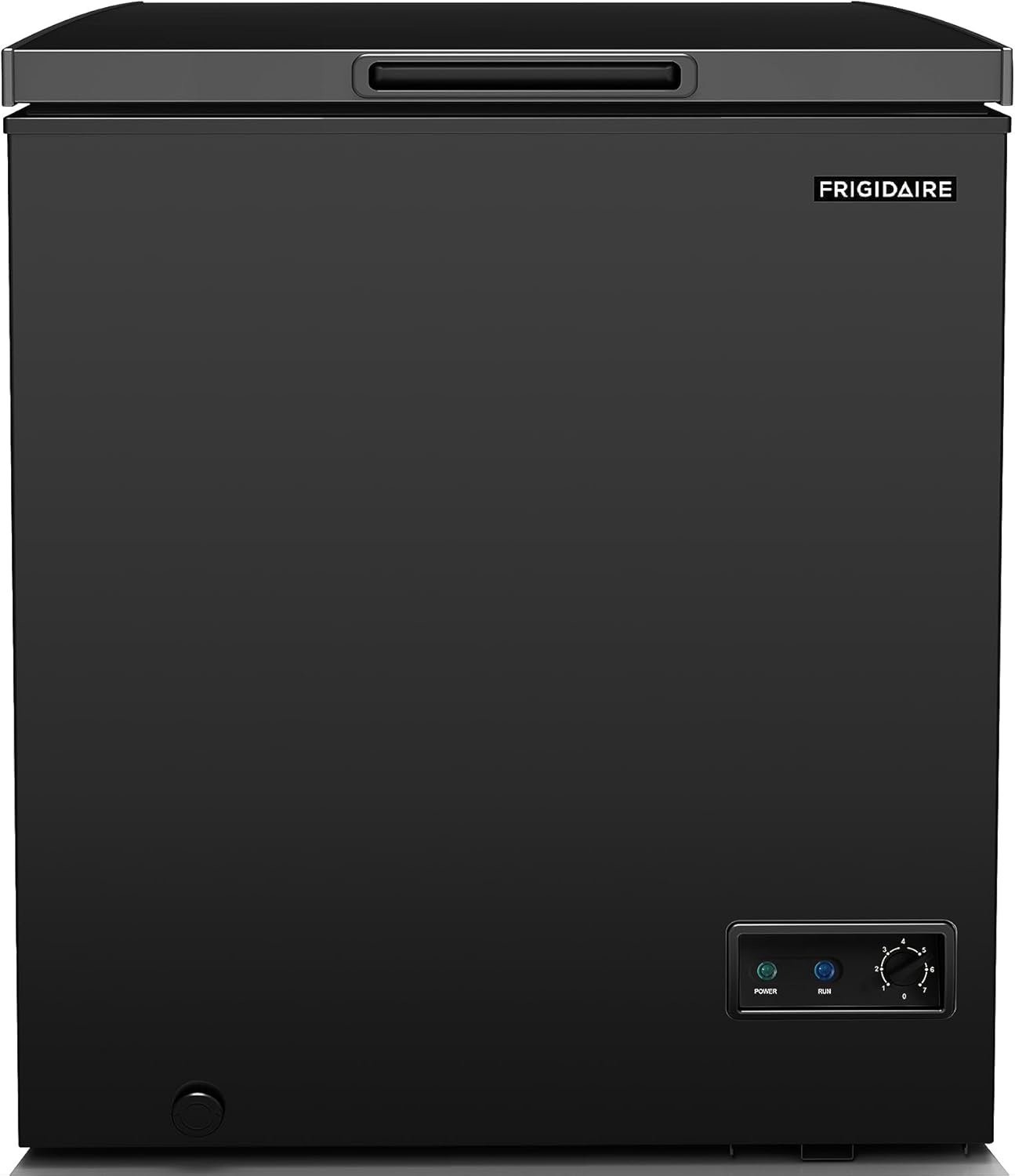
Frigidaire Chest Freezer EFRF5003
| Capacity | 5 cubic feet |
|---|---|
| Voltage | 120 volts |
| Number Of Shelves | 1 |
| Door Orientation | Top |
The Frigidaire Chest Freezer EFRF5003 is a compact, freestanding chest freezer intended to add extra frozen storage in tight spaces like basements and garages. It gives straightforward manual control via a front-mounted adjustable thermostat and a power-on indicator light so you can monitor status at a glance. Inside you get a single removable vinyl-coated wire basket to keep small items accessible while the aluminum interior liner simplifies cleaning. The unit's manual defrost drain speeds defrosting and makes maintenance less messy, and adjustable legs help level the freezer on uneven basement floors. Expect simple, reliable performance rather than advanced features like auto-defrost or smart controls; maintenance requires periodic manual defrosting and temperature checks. For buyers who want an uncomplicated, space-efficient chest freezer that holds a moderate amount of food and is built for basic long-term storage, this model covers the essentials well.
Best for: Buyers who want a no-frills, space-efficient chest freezer for extra frozen storage in basements or secondary spaces and prioritize straightforward temperature control and easy maintenance.
Less Ideal for: Those who need automatic defrost, extensive internal shelving, or smart connectivity should consider different models with those features.
- Compact 5.0 cu ft capacity fits in small basements or garage corners
- Front-mounted adjustable thermostat for simple temperature control
- Removable vinyl-coated wire basket keeps frequently used items organized
- Manual defrost drain eases defrosting and cleanup
- Adjustable legs help stabilize unit on uneven floors
- Manual defrost requires regular maintenance compared with frost-free models
- Single basket and one shelf limit organization options for larger collections
Verdict: A compact, reliable chest freezer that delivers practical extra storage and simple controls for basement use.
BLACK+DECKER 16.2 Cu. Ft. Chest Freezer

| Capacity | 16.2 cubic feet |
|---|---|
| Wattage | 95 watts |
| Voltage | 120 volts |
| Refrigerant | R600a |
| Installation Type | Freestanding |
This BLACK+DECKER 16.2 cu ft chest freezer gives reliable extra cold storage for a basement or garage where capacity and simple controls matter. It stores bulk frozen foods and long-term items across a roomy interior and includes two removable baskets to keep frequently used items accessible. The exterior control dial offers seven temperature settings plus power and compressor indicator lights so you can tune the internal temperature without opening the lid. Maintenance is straightforward thanks to manual defrosting and an easy-access drain, though you will need to plan periodic defrost cycles. The unit uses R600a refrigerant and runs at about 95 watts, so it is efficient for its size but requires enough clearance and a dedicated spot because it is a heavy, freestanding chest freezer. Installers will appreciate adjustable leveling legs and the top-opening lid that fits through standard doorways when lowered. If you want a large-capacity, no-frills freezer for basement food storage, this model covers the essentials well.
Best for: Basement homeowners who need a high-capacity, no-frills freezer for bulk food storage and who prioritize straightforward controls and reliable cooling performance.
Less Ideal for: People who want a low-maintenance, frost-free freezer or who need a lightweight, easily portable unit for occasional use.
- Large 16.2 cu ft capacity suitable for bulk and long-term frozen storage
- Mechanical temperature dial with seven settings and external indicator lights for easy adjustments
- Two removable storage baskets for organizing frequently used items
- Manual defrost with an easy-access drain simplifies cleaning and maintenance
- Adjustable leveling legs help to stabilize placement on uneven basement floors
- Manual defrost requires periodic user maintenance rather than automatic defrosting
- Heavy and bulky, which may complicate moving and installation
Verdict: A roomy, performance-focused chest freezer that delivers straightforward, adjustable cooling for basement food storage needs.
Igloo Upright Deep Freezer 3.5 Cu Ft

| Capacity | 3.5 cubic feet |
|---|---|
| Wattage | 100 watts |
| Door Orientation | Top |
| Number Of Shelves | 1 |
| Installation Type | Freestanding |
The Igloo 3.5 cu ft upright deep freezer is a space-saving freezer meant for basements, garages, and small homes where extra frozen storage is needed. It uses a D-type refrigeration tube and foam insulation to cool quickly and hold low temperatures, while a simple dial thermostat ranges from about -15°F to 0°F so you can tailor storage for meat, ice cream, or bulk vegetables. The upright layout and removable wire basket make organization easier than a traditional chest freezer, and the balanced hinge holds the lid open for one-person loading. LED lighting and low noise operation help it fit in a finished basement or utility room. Practical conveniences include front rollers for repositioning and a drain plug for easier defrosting and cleaning. Expect straightforward mechanical controls rather than smart features, and the 3.5 cu ft capacity is best for supplemental storage rather than whole-house use.
Best for: Buyers who want a compact, efficient secondary freezer to keep in a basement or garage and value organization, quiet operation, and simple temperature control.
Less Ideal for: Those needing large-capacity or full household freezer replacement or users who prefer digital controls and smart features should look elsewhere.
- Upright design with removable wire basket keeps items organized and accessible
- Adjustable thermostat (-15°F to 0°F) lets you set precise storage temperatures
- Quick-freezing D-type refrigeration tube and good insulation cools efficiently
- Quiet operation and LED interior light make it suitable for finished basements
- Front rollers and a drain plug simplify moving and defrosting
- 3.5 cu ft capacity is limited for large families or long-term bulk storage
- Controls are manual dial style with no digital temperature display
Verdict: A compact, quiet upright freezer that delivers efficient supplemental frozen storage and easy organization for basements and small spaces.
DollarDash 3.5 Cu.Ft Chest Freezer

| Capacity | 3.5 cubic feet |
|---|---|
| Door Orientation | Top |
| Included Components | Removable Basket |
| Installation Type | Freestanding |
This DollarDash chest freezer is a space-saving deep freezer aimed at small households and tight areas like basements, garages, or apartments. It offers 7-step temperature control so you can run it at refrigerator-like temps for drinks or crank it down for long-term freezing of meat and ice cream. The R600a compressor promises relatively quiet operation (listed at about 38 dB) and decent efficiency, and the removable basket plus an internal drain makes organizing and defrosting easier. The top-open lid and durable seals help keep temperatures steady in places that might see varying ambient conditions. Expect straightforward mechanical controls and a freestanding installation rather than fancy digital features. Trade-offs are its modest capacity and basic feature set compared with larger or higher-end models, so it is best where space and cost matter more than extra bells and whistles.
Best for: Buyers who need an affordable, compact freezer for a basement or utility space and prioritize low noise, basic reliability, and easy placement over advanced features.
Less Ideal for: Large families or anyone who needs high capacity, multiple compartments, or smart/digital controls should consider bigger or higher-end units instead.
- Compact footprint fits tight basement spots while still holding bulk items
- Seven temperature levels let you store beverages or deep-freeze meats and ice cream
- Quiet R600a compressor suitable for noise-sensitive locations
- Removable basket and drainage port simplify organization and cleaning
- Limited 3.5 cu ft capacity may not suit large households
- Controls are mechanical and lack advanced digital features
Verdict: A budget-friendly, quiet compact chest freezer that fits small basements and handles both beverage cooling and moderate long-term freezing needs.
Koolatron Chest Freezer KTCF99

| Capacity | 99 liters |
|---|---|
| Wattage | 125 watts |
| Voltage | 120 volts |
| Number Of Shelves | 1 |
The Koolatron 3.5 cu ft chest freezer is a compact, no-frills deep freezer aimed at adding reliable extra storage in tight spaces like basements or apartments. It uses a low-vibration compressor to maintain temperatures from 0 to -24°C (32 to -11.2°F) and has a front-mounted mechanical temperature dial for simple adjustment. The flip-top lid stays open for easy loading, and the removable hanging wire basket keeps frequently used items accessible. Manual defrost is handled through an easy-access front drain with a leak-proof plug, which simplifies cleaning but means occasional defrosting is required. The unit is freestanding with a flat-back design to fit against walls and includes basic insulation and a magnetic seal to hold cold air. Practical benefits include quiet operation, quick setup, and efficient use of floor space, but expect standard manual maintenance and the limited capacity of a small chest freezer. For a basement where steady, dependable freezing and space efficiency matter more than advanced features, this model performs as a straightforward, reliable option.
Best for: Buyers who need a dependable, space-saving secondary freezer for a basement or small utility area and prioritize quiet, straightforward operation over advanced features.
Less Ideal for: Those who want a large-capacity freezer, frost-free operation, or advanced temperature management features should look at larger or automated models.
- Compact footprint fits tight spaces and flat-back design allows placement against walls
- Quiet, low-vibration compressor cooling maintains a wide temperature range
- Removable hanging wire basket keeps small items organized and within reach
- Front-mounted temperature dial and stay-open lid make loading and temperature adjustments simple
- Manual defrost requires periodic draining and maintenance
- Limited 3.5 cu ft capacity may be small for large households
Verdict: A quiet, compact chest freezer built for reliable, space-conscious basement storage.
Kismile 7.0 Cu Ft Chest Freezer

| Capacity | 7 cubic feet |
|---|---|
| Number Of Shelves | 3 |
| Door Orientation | Top |
| Installation Type | Freestanding |
This compact chest freezer is aimed at buyers who need extra frozen storage for a basement, garage, or small kitchen. It offers a 7.0 cubic foot interior with three hanging wire baskets that keep smaller items accessible and reduce digging through bulk. Temperature is set with a 7‑grade adjustable thermostat (settings 1–7, plus Off) and the listed operating range covers light to deep freezing, letting you switch between everyday storage and lower-temperature preservation. The balanced hinge top stays propped at multiple angles for easier loading, and a water drain speeds defrost cleanup. A high-efficiency compressor promises relatively low energy use (about 0.66 kWh/day) and the unit is designed for quiet operation under 38 dB, both useful in shared basement spaces. Limitations to consider are the basic mechanical controls rather than digital temperature readout and the compact footprint that may not suit users needing very large capacity or specialized chest-freezer features like fast-freeze modes or interior lighting.
Best for: Buyers who need a reliable, space-efficient secondary freezer for basement or garage use and who prioritize quiet, energy-conscious operation with visible organized storage.
Less Ideal for: Not a good fit for users who need very large capacity, precise digital temperature control, or advanced freeze features for commercial or bulk storage needs.
- Compact 7.0 cu ft capacity that fits tight basement spots
- Three removable hanging baskets for organized, visible storage
- 7‑grade adjustable thermostat for flexible cold vs deep-freeze settings
- Low noise operation (under 38 dB) suitable for basements and living-adjacent areas
- Quick-drain port simplifies defrosting and cleaning
- No digital temperature display or precise numeric readout
- Basic feature set compared with larger or commercial chest freezers
Verdict: A compact, quiet, energy-efficient chest freezer that gives basements dependable extra frozen storage with easy-to-access baskets.
Midea 7.0 Cu Ft Chest Freezer

| Capacity | 7 cubic feet |
|---|---|
| Voltage | 115 volts |
| Door Orientation | Top |
| Installation Type | Freestanding |
This Midea chest freezer provides 7.0 cu ft of configurable storage for frozen or fresh foods, with a removable basket and interior LED for everyday organization. It converts between freezer and fridge modes, so you can switch uses as needs change, and Midea rates it as garage ready so it can run in unconditioned spaces typical of basements. Adjustable legs help sit the unit level on uneven floors and the power-outage protection claims the cabinet will keep contents frozen for up to 48 hours after a loss of power. In practice the simple top-opening design makes loading bulky items easy and the included basket keeps small items accessible without digging through the whole chest. Expect straightforward mechanical temperature control rather than smart features, and the unit is relatively heavy so two people are needed to move it. Performance will depend on correct placement and ventilation in a cool, dry basement, but for buyers who want a no-frills secondary freezer that tolerates less-controlled environments, this model covers the essentials reliably.
Best for: Buyers who want a dependable, low-complexity second freezer for a basement or garage and prioritize reliable temperature performance and simple controls over bells and whistles.
Less Ideal for: Shoppers who need a compact upright freezer with shelving, smart features, or frequent one-handed access should consider different formats.
- Convertible freezer-to-fridge mode lets you change storage use as needed.
- Garage/basement ready design rated to operate in non-climate-controlled spaces.
- Removable storage basket and interior LED improve organization and visibility.
- Power-outage protection keeps contents cold for up to 48 hours per manufacturer.
- Adjustable legs help level the unit on uneven basement floors.
- No smart connectivity or advanced digital controls; basic mechanical thermostat only.
- Top-opening chest design requires bending to access lower items and needs clearance to open.
Verdict: A practical, garage-ready 7 cu ft chest freezer built for basements and second-freezer use where reliability and simple operation matter most.
Choosing the Right Freezer for Basements: Key Factors to Consider
Available Floor Space and Footprint
Measure the basement area where the freezer will sit, accounting for door swings and clearance for moving large items in and out. A chest freezer requires more floor space but can fit under low ceilings, while an upright frees vertical space but needs taller clearance.
Also consider placement near stairs, low beams, or utility zones. Leave room for ventilation as specified by the manufacturer to avoid overheating and to make routine maintenance possible.
Ambient Temperature Range
Basements can be cooler or more variable than living spaces. Check the freezer's rated operating ambient temperature and choose a model that reliably reaches and maintains subfreezing temperatures at the lowest expected basement temperature.
Models not rated for low ambient conditions may run inefficiently or cycle frequently, which can reduce food safety and shorten compressor life. Look for explicit low-ambient specs if your basement drops close to freezing.
Energy Consumption and Long-Term Cost
Because freezers run continuously, energy draw and annual kWh use have a big impact on operating cost. Pick a unit with good efficiency for its size to limit ongoing expenses, especially in a basement where cooling losses and heat exchange with the environment matter.
Higher initial efficiency can pay off over years through lower utility bills. Consider units with better insulation, tighter seals, and efficient compressors to reduce runtime.
Access, Clearance, and Ergonomics
Think about how you will load and unload the freezer. Chest freezers are easier to load in tight vertical spaces and often perform better in colder ambient temperatures, but items can get buried without baskets or dividers. Uprights offer organized shelving and easier access but may require more height and door swing clearance.
Also plan for delivery and installation access. Measure stair widths and doorways to ensure the freezer can be moved into place without disassembly.
Moisture Resistance and Build Quality
Basements sometimes have higher humidity or occasional dampness. Choose freezers with corrosion-resistant finishes, durable seals, and materials that tolerate a basement environment. A tight gasket reduces frost buildup and helps the unit run efficiently.
Inspect drain and defrost systems in the model type you prefer. Manual-defrost chest freezers can be simple and efficient, but require occasional maintenance. Automatic defrost uprights reduce manual upkeep but may be more sensitive to humid air.
Noise and Vibration
Compressors and fans generate sound that can be noticeable in quieter finished basements. If your freezer will sit near living areas, prioritize models with low noise ratings and stable refrigeration cycles to avoid vibration transfer to floors and shelving.
Consider mounting surface and anti-vibration pads for large units to minimize transmitted noise and movement during compressor cycles.
Chest Vs Upright: Which Fits Basement Needs
Choosing between a chest and an upright freezer is often the biggest decision. Chest freezers tend to be more energy efficient per cubic foot and work well in low-ceiling basements because they open from the top. They also maintain cold temperatures during power interruptions more effectively due to smaller air exchange when opened.
Upright freezers make organization easier with shelves and door storage, so they are better if you need frequent, quick access. However, they require more vertical clearance and can be slightly less efficient because cold air spills out when the door opens.
- Chest: Lower profile, better cold retention, can be more efficient
- Upright: Easier organization, less bending, needs taller clearance
Installation and Ventilation in Basement Spaces
Proper installation avoids heat buildup and ensures long life. Most freezers require a few inches of clearance around the sides and back for airflow. In basements with limited airflow, leave extra room and avoid enclosing the unit in a tight cabinet.
If the basement has intermittent humidity or dust, position the freezer away from direct dampness and allow space to inspect and clean coils or vents. A small fan-driven floor grate or passive ventilation can help maintain steady ambient conditions.
- Keep manufacturer-recommended clearances for airflow
- Avoid placing unit against cold exterior walls that may cause condensation
- Allow access for coil cleaning and service
Defrost Systems and Maintenance Needs
Manual-defrost chest freezers are simple and can be more energy efficient but require occasional thawing and cleaning. In a basement this can be less convenient, so plan for a drip tray or nearby drain. Uprights with automatic defrost reduce manual maintenance but can cycle more frequently in humid basements.
Regular gasket inspection and occasional seal cleaning lengthen the freezer's usable life and reduce frost buildup. Keep a schedule for clearing vents, checking drain paths, and testing temperature stability.
- Chest: Periodic manual defrost, good cold retention
- Auto-defrost: Easier maintenance, may be more sensitive to humidity
Organizing for Accessibility and Food Rotation
Organize contents so older items are visible and accessible. For chest freezers use baskets and labeled containers to prevent items from getting buried. For uprights, use clear bins and shelf labels to group similar foods together.
Adopting a first-in, first-out approach reduces waste and helps you estimate required capacity more accurately over time.
- Use shallow bins for chest freezers to avoid deep stacks
- Label and date packages clearly
- Create zones for meal types to speed retrieval
Safety and Power Considerations
Install the freezer on a dedicated, grounded circuit when possible and avoid extension cords. Basements sometimes have older wiring, so confirm the electrical supply can handle continuous load. Consider a basic surge protector rated for appliance use.
If power outages are common in your area, choose models with good cold retention or add temperature alarms and a battery backup monitor so you can act before food thaws.
- Confirm circuit capacity and grounding
- Use temperature alarms or smart plugs that report power loss
- Avoid extension cords or undersized wiring
How We Chose the Best Freezer for Basements
We selected freezers for basements using criteria that reflect the real-world conditions of lower-level storage. First, we prioritized usable capacity and internal layout so a unit can hold practical volumes of food without wasting vertical or shelf space. Second, energy efficiency and annual running cost estimates were considered, since a freezer running continuously in a basement can have an outsized impact on utility bills. Third, construction and temperature-handling capability were evaluated to ensure reliable operation in cooler ambient conditions and to resist minor humidity. Fourth, access and serviceability were assessed, including lid or door clearance, reversible hinges where relevant, and clear interior organization. Finally, noise and vibration levels were factored in to avoid disturbance in finished or partially finished basements. We excluded units designed only for occasional outdoor use or specialized commercial-only freezers that require dedicated ventilation. Products that do not list ambient temperature operating ranges or that lack basic energy performance information were also filtered out. The result is a shortlist of practical, dependable freezers suited to typical basement environments.
Our full evaluation process is outlined in our review methodology.
FAQ
Can a freezer operate efficiently in a cold basement?
Often yes, but it depends on the freezer's specified ambient operating range. Some models struggle to cycle properly in very low temperatures. Choose a unit rated for lower ambient temps or a chest freezer, which typically tolerates cooler surroundings better.
How much clearance do I need around a basement freezer?
Most manufacturers recommend a few inches on each side and several inches behind for ventilation. In basements with restricted airflow, allow extra space to ensure proper heat rejection and to make maintenance easier.
Is a chest freezer better than an upright for a basement?
Chest freezers are usually better for low ceilings and for energy-efficient cold retention, while uprights are more convenient for organization. Your choice should weigh access needs against ceiling height and how often you open the freezer.
How often should I defrost a chest freezer in a basement?
Defrosting frequency depends on usage and humidity, but typically once or twice a year is sufficient. If you see significant frost buildup or reduced usable space, schedule a defrost sooner and clean seals and drain paths.
Will basement humidity damage a freezer?
High humidity can accelerate corrosion and lead to more frequent frost in manual-defrost units. Choose models with resistant finishes and maintain good basement ventilation to minimize moisture exposure.
Final Verdict
When choosing a freezer for basements, prioritize usable internal layout, an operating temperature range that matches your basement, and strong energy performance to keep running costs manageable. Consider how you will access and organize the unit in your space and select construction that tolerates damp or variable conditions. Balancing capacity against footprint and maintenance needs will lead to the best long-term fit for lower-level storage.