
Note: This article contains affiliate links. If you click on these links and make a purchase, we may earn a small commission at no extra cost to you. This helps support our research and content. Read our full affiliate disclosure here.
A dedicated freezer for garages gives you expanded cold storage without crowding the kitchen. Garages face wider temperature swings and dust, so choosing the right freezer matters for reliable food preservation and efficient energy use. This guide covers seven shortlisted freezers for garages that excel at stable temperature control, robust insulation, and practical storage options. We evaluated units with garage-ready features so you can pick a model that fits your space and usage needs. Below are the top picks and the evaluation criteria used to assess durability, temperature stability, and running costs.
Top Picks at a Glance
| Best Overall The best all-around choice for most situations | Frigidaire Chest Freezer 5.0 Cu. Ft. |  |
| Best Quality Built to a higher standard if you want something more solid | Hamilton Beach 14 cu ft Chest Freezer |  |
| Best Value The sweet spot between price and what you get | DEMULLER 3.5 Cu Ft Chest Freezer |  |
| Best Budget The cheapest option that still gets the job done reliably | Climate Choice 4.0 Cu.Ft Chest Freezer |  |
| Top Rated A top-rated pick with lots of positive feedback | Whynter CUF-301SS 3.0 cu ft Upright Freezer |  |
| Most Popular A crowd favorite that many people choose with confidence | Northair 3.5 Cu Ft Chest Freezer |  |
| Best Seller A high-volume bestseller chosen again and again | BODACIOUS 7.0 Cu Ft Chest Freezer |  |
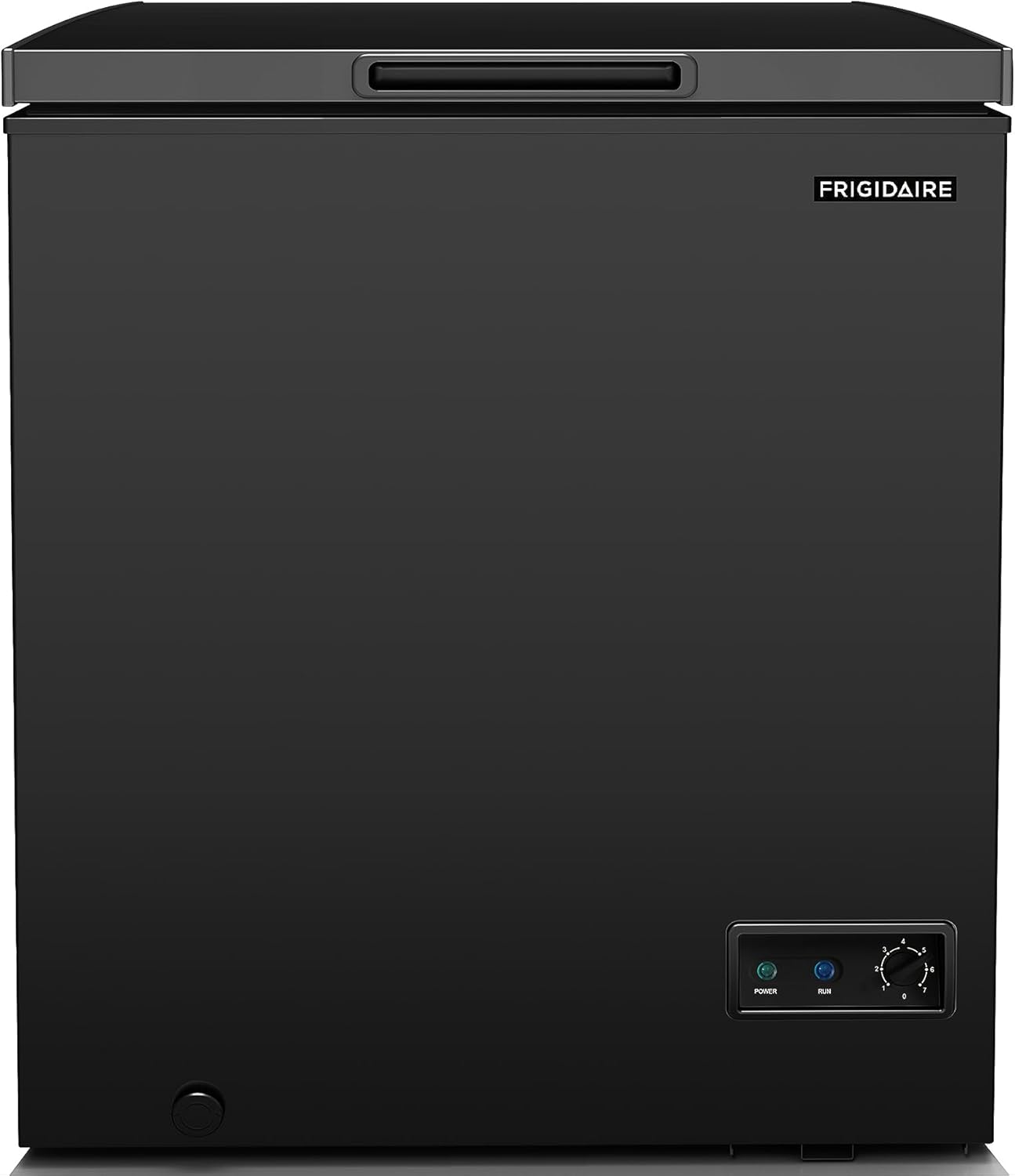
Frigidaire Chest Freezer 5.0 Cu. Ft.
| Capacity | 5 cubic feet |
|---|---|
| Voltage | 120 volts |
| Number Of Shelves | 1 |
| Installation Type | Freestanding |
This Frigidaire chest freezer provides straightforward extra frozen storage in a compact footprint that works well in a garage or utility space. It uses a top-opening lid and an adjustable exterior thermostat with seven settings so you can tune the internal temperature for long-term storage or quick freezing, and a power-on indicator lets you confirm operation at a glance. The removable vinyl-coated wire basket keeps small items accessible while the aluminum interior liner and recessed handle make cleaning and daily use simpler. Defrosting is manual but the built-in drain speeds the process and reduces mess when you do thaw it. It is designed to be freestanding with adjustable legs for uneven floors and is labeled garage-ready, but expect the usual chest freezer tradeoffs: manual defrosting and a single basket only, so organizing many small items can take some effort. For buyers who want reliable, no-frills extra freezer capacity in a garage, this model covers the essentials without complicated features.
Best for: Buyers who need dependable, no-frills extra freezer space for a garage or utility area and prioritize simple controls and easy maintenance over smart features.
Less Ideal for: Shoppers who want auto-defrost convenience, advanced organization systems, or integrated smart controls should consider other models.
- Compact 5.0 cu ft capacity adds usable frozen storage without a large footprint
- Adjustable external thermostat with seven settings for flexible temperature control
- Removable vinyl-coated wire basket keeps small items accessible
- Built-in manual defrost drain speeds and simplifies defrosting
- Adjustable legs and garage-ready design for stable placement on uneven surfaces
- Manual defrost requires periodic maintenance versus auto-defrost models
- Single basket and open interior make organizing many small items less convenient
Verdict: A straightforward, garage-ready 5.0 cu ft chest freezer that delivers reliable extra frozen storage with simple controls and easy defrosting.
Hamilton Beach 14 cu ft Chest Freezer

| Capacity | 14 cubic feet |
|---|---|
| Wattage | 500 watts |
| Voltage | 110 volts |
| Number Of Shelves | 1 |
| Installation Type | Freestanding |
This Hamilton Beach 14 cu ft chest freezer is built to provide straightforward, high-capacity cold storage for families or garage use. It has a top-opening lid with a removable vinyl-coated wire basket for easy access to frequently used items and an adjustable thermostat with seven settings to dial in the temperature you need. The unit uses manual defrost and includes a front-access defrost drain that simplifies cleaning, plus a power-on indicator light and an external handle with lock for security. Construction features such as an aluminum interior liner and a sturdy freestanding design make it suitable for less-controlled environments like garages or basements. Expect typical chest-freezer tradeoffs: manual defrost requires occasional maintenance and top-access means bending to reach items at the bottom, but the large 14 cu ft capacity and clear controls make it practical for bulk storage, meal prep, or hunting and fishing freezer needs in a garage setting.
Best for: Buyers who prioritize raw storage capacity and reliable cold-holding performance for garage or basement use and want a simple, durable freezer for bulk shopping, meal prep, or game storage.
Less Ideal for: Shoppers who need frost-free convenience, frequent upright-style access, or a freezer with integrated shelving systems for detailed organization should look elsewhere.
- Large 14 cu ft capacity suitable for bulk food and long-term storage
- Adjustable thermostat with seven settings for flexible temperature control
- Front-access defrost drain eases cleaning during manual defrost
- Removable vinyl-coated wire basket helps organize small or frequently used items
- Aluminum interior liner and lockable external handle add durability and security
- Manual defrost requires periodic thawing and maintenance
- Top lid design makes accessing deep items less convenient than upright freezers
Verdict: A rugged, no-frills 14 cu ft chest freezer that delivers large-volume cold storage and reliable performance for garage-based buyers who need maximum capacity.
DEMULLER 3.5 Cu Ft Chest Freezer

| Capacity | 3.5 cubic feet |
|---|---|
| Wattage | 70 watts |
| Voltage | 110 volts |
| Door Orientation | Top |
The DEMULLER 3.5 cubic foot chest freezer is a compact freestanding unit designed to add extra frozen storage in small spaces like garages, apartments, or dorms. It uses an electronic control and digital display that lets you set temperatures precisely from -15°F to 41°F so you can store everything from ice cream to bulk meat and quickly freeze fresh items. The interior includes a removable stainless steel basket for organizing small packages and a D-shaped cooling tube design intended to improve cooling efficiency around the cabinet. Manual defrost with a side drain hole simplifies thawing, and the manufacturer rates noise under 38 dB, which makes it quiet enough for many shared spaces. At 70 watts and 110 volts it is straightforward to power from a standard circuit, but note this model is a manual-defrost chest rather than an auto-defrost unit and has limited internal size compared with larger freezers. The one-year support offers basic coverage if you need help after purchase.
Best for: Buyers who need dependable extra frozen storage in a garage or small space and prioritize precise temperature control and quiet operation over maximum capacity.
Less Ideal for: Those who need large-volume or commercial freezing capacity or who prefer automatic defrosting and maintenance-free operation should consider larger or different models.
- Digital temperature control with 1°F precision and wide range from -15°F to 41°F
- Compact 3.5 cu ft capacity fits small garages, apartments, and dorms
- Removable stainless steel basket helps organize small items
- Quiet operation rated under 38 dB for low-noise environments
- Manual defrost design requires periodic thawing and draining
- Smaller internal dimensions limit bulk storage compared with full-size chest freezers
Verdict: A quiet, compact chest freezer with precise digital temperature control that fits garages and small spaces where reliable frozen storage is more important than maximum capacity.
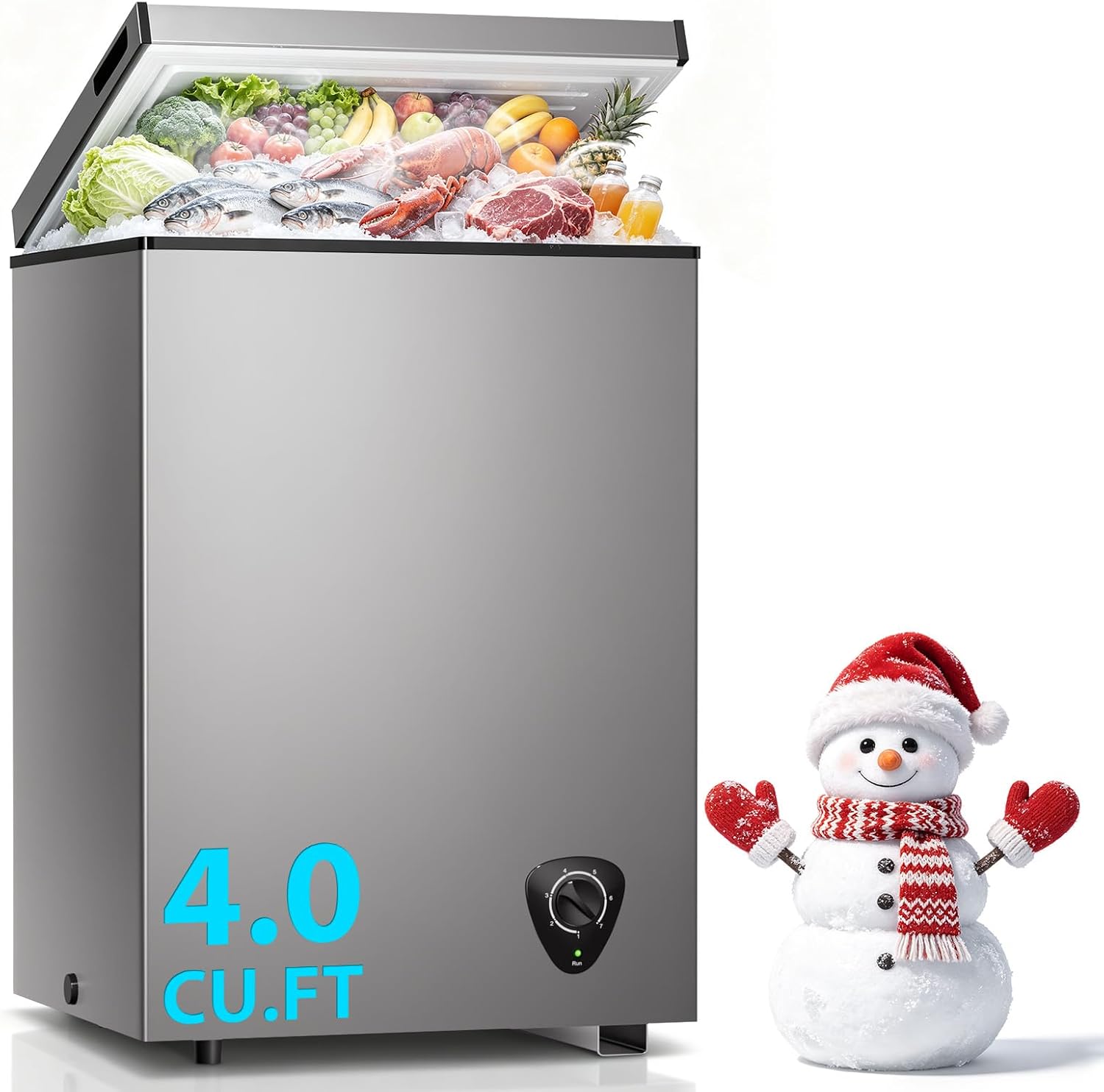
Climate Choice 4.0 Cu.Ft Chest Freezer
| Capacity | 4 cubic feet |
|---|---|
| Wattage | 85 watts |
| Voltage | 120 volts |
| Installation Type | Freestanding |
This compact chest freezer delivers usable deep-freeze storage in a small footprint, making it a practical extra freezer for a garage or tight utility space. It offers seven temperature settings (about -7.6°F to 21.2°F) so you can dial in the right freezing level for meat, prepared meals, or pet food, and the removable storage basket keeps frequently used items within easy reach. The bottom drain simplifies periodic defrosting and cleanup, and the manufacturer advertises quiet operation under 40 dB along with modest energy draw (0.469 kWh/24h), which helps keep running costs low. Built with a top-opening door and a stainless steel-style finish, it is freestanding and straightforward to install. Limitations include modest total capacity that will not replace a full-size freezer and a single basket rather than multiple compartments for detailed organization. For garage use you should ensure the location stays within the appliance's recommended ambient temperature range to maintain cooling performance.
Best for: Buyers looking for an inexpensive, space-saving secondary freezer for a garage, apartment, or workshop who prioritize low running costs and simple functionality.
Less Ideal for: Households needing large-capacity long-term storage or detailed internal organization should choose a larger chest or upright freezer instead.
- Compact 4.0 cu ft capacity fits small garages, apartments, or utility rooms
- Seven adjustable temperature settings for flexible freezing needs
- Removable storage basket for easier organization and access
- Low noise operation under 40 dB suitable for nearby living spaces
- Energy-efficient operation at about 0.469 kWh per 24 hours
- Limited total storage compared with full-size freezers
- Single internal basket limits organization of many small items
Verdict: A budget-friendly, compact chest freezer that saves energy and fits small garage or utility spaces while providing flexible temperature control.
Whynter CUF-301SS 3.0 cu ft Upright Freezer

| Capacity | 3 cubic feet |
|---|---|
| Temperature range | -14° to 50° F |
| Wattage | 100 |
| Door orientation | Reversible |
| Number of shelves | 3 |
The Whynter CUF-301SS is a small upright freezer designed for tight spaces such as garages, offices, dorms, or kitchens and can be switched to refrigerator mode when you need chilled storage. It uses a compressor-based cooling system with a mechanical dial that sets refrigerator temperatures from 32 to 50°F or freezer temperatures from -14 to -11°F, and includes two wire shelves plus a removable slide-out basket for basic organization. The reversible-swing stainless steel door and recessed handle make placement flexible while the included cylinder lock and keys let you secure contents in shared spaces. Rated to use relatively little energy, this unit is quiet enough for nearby rooms and runs on standard 115V household power. Limitations for garage use include modest capacity—only 3 cubic feet—and basic mechanical controls rather than precise digital settings, so it is best for regular food and beverage storage rather than long-term bulk freezing or temperature-critical items.
Best for: Practical buyers who need a compact, energy-conscious cold storage unit for a garage, office, or small household space and value flexibility between fridge and freezer modes.
Less Ideal for: Users who need large capacity or precise temperature control for long-term freezing, or those who store large frozen loads regularly.
- Convertible freezer/refrigerator mode for flexible cold storage needs
- Reversible stainless steel door and recessed handle for flexible placement
- Integrated lock with two keys for secure shared-space storage
- Quiet compressor operation suitable for near-room placement
- Includes removable shelf and slide-out basket for basic organization
- Only 3.0 cu ft capacity, limiting bulk storage
- Mechanical thermostat lacks precise digital control
- Not designed for heavy-duty or large-volume freezing tasks
Verdict: A compact, energy-conscious convertible freezer that fits garages and small spaces when you need a reliable, secure solution for everyday frozen or chilled storage.
Northair 3.5 Cu Ft Chest Freezer

| Capacity | 3.5 cubic feet |
|---|---|
| Door Orientation | Top |
| Number Of Shelves | 1 |
| Installation Type | Freestanding |
This Northair chest freezer is a small, purpose-built unit for users who need much colder temperatures than a standard freezer. It uses a high-efficiency compressor and a digital control panel to set temperatures from 14°F down to -40°F with 1°F increments, which makes it suitable for preserving beaded ice cream, seafood, game, and long-term meat storage. The 3.5 cubic foot interior balances usable capacity with a compact footprint for garages or utility rooms, and two removable baskets help keep often-used items accessible while larger packages sit below. Practical touches include a self-supporting lid that stays open between 45 and 90 degrees and a drain port to simplify defrosting and cleaning. Because it is a compressor-driven chest model, it cools quickly and maintains stable low temperatures while running relatively quietly and with claimed energy efficiency. Limitations are typical for chest freezers: upright organization is limited, and accessing lower items requires bending; also the unit is freestanding and needs adequate ventilation and a level surface in a garage environment.
Best for: Buyers who need reliable ultra-low temperatures in a compact freezer for garage, cabin, or light commercial use and who value stable cold storage for specialty items like beaded ice cream, seafood, or long-term meat preservation.
Less Ideal for: People who prefer upright-style shelving, frequent quick-access door access, or who lack a level, ventilated spot in a garage or utility area.
- Adjustable digital thermostat down to -40°F for ultra-low freezing needs
- High-efficiency compressor designed for fast cooling and stable temperatures
- Compact 3.5 cu ft capacity with two removable baskets for organization
- Self-supporting lid and drain port for easier loading and manual defrosting
- Quiet operation suitable for garages and utility rooms
- Chest layout makes accessing items at the bottom awkward compared with uprights
- Requires adequate clearance and ventilation as a freestanding compressor unit
Verdict: Choose this compact chest freezer if you need dependable ultra-low temperatures down to -40°F in a small footprint for garage or light commercial frozen storage.
BODACIOUS 7.0 Cu Ft Chest Freezer

| Capacity | 7 cubic feet |
|---|---|
| Voltage | 110 volts |
| Number Of Shelves | 2 |
| Door Orientation | Top |
| Specification Met | ETL |
This BODACIOUS 7.0 Cu Ft chest freezer is a small deep-freeze solution for homes, apartments, or garages where space and energy use matter. It cools with an adjustable six-position thermostat so you can dial in storage temperatures for meat, vegetables, or prepared meals, and the removable basket plus top-opening lid make loading and sorting straightforward. The unit is marketed as energy efficient and quiet, which helps when the freezer sits in a garage or utility room where noise and running costs are concerns, and a rear defrost drain simplifies occasional maintenance. Practical limitations include its modest 7 cu ft capacity compared with larger freezers and the recommendation to avoid running the thermostat on "MAX" continuously to protect compressor life and avoid higher power draw. For buyers who want a compact, straightforward chest freezer for overflow storage in a garage, this model delivers sensible features without complex controls.
Best for: Buyers who prioritize reliable, low-noise freezer storage for a garage or utility area and want a straightforward, energy-conscious unit with easy maintenance.
Less Ideal for: Those who need a high-capacity freezer for bulk long-term storage or who prefer frequent, upright-style access should consider larger or upright models instead.
- Energy-saving design intended to lower daily power consumption
- Quiet operation suitable for placement near living spaces or garages
- Adjustable 6-setting thermostat for tailored freezing
- Removable basket for organized storage and easier access
- Exterior defrost water drain for easier maintenance
- Capacity is limited to 7.0 cubic feet, so not ideal for very large household storage needs
- Top-opening chest layout requires vertical clearance and can be less convenient for frequent access
Verdict: A compact, energy-conscious chest freezer that keeps running costs and noise low, making it a practical choice for garage storage.
Choosing the Right Freezer for Garages: Key Factors to Consider
Ambient Temperature Range
Garages often experience large swings in ambient temperature across seasons. A freezer's rated operating range tells you whether it can hold safe internal temperatures when the surrounding air is very cold or quite warm. Units that specify a wide operating range or explicitly mention garage use are less likely to lose performance during heat waves or freezing nights.
If your garage is uninsulated or exposed to direct sun, prioritize freezers built to tolerate higher ambient temperatures. Conversely, if your garage routinely dips below freezing in winter, choose a unit that can self-regulate defrost cycles and maintain compressor performance at low surrounding temperatures.
Insulation and Cabinet Construction
Thicker foam insulation and a well-sealed cabinet reduce heat transfer and condensation, which is important in garage settings where humidity and temperature fluctuate. Rigid cabinet construction also handles the occasional knock or bump better than thin, flimsy panels.
Look for features such as reinforced lids or doors, gasket quality around openings, and designs that minimize heat infiltration around hinges and seals. Better construction reduces compressor runtime and helps maintain consistent internal temperatures, especially under challenging garage conditions.
Energy Consumption and Efficiency
Operating a freezer in a garage can increase energy use if the unit works harder to compensate for ambient heat. Energy consumption matters for long-term running costs and for circuits that may also serve other garage equipment. Check rated power draw and any efficiency ratings to estimate monthly energy use.
Efficient compressors, good insulation, and smart defrost systems lower electricity use. Consider compressor type and whether the freezer cycles predictably rather than running continuously, as erratic cycling can indicate inefficiency in tougher ambient conditions.
Storage Capacity and Layout
Capacity is more than raw cubic feet. The internal layout determines how usable that space is for your typical loads. Wire baskets, removable dividers, and shelving let you organize frozen goods for easier access in a garage setting where you may not want to dig through frozen items each time.
Consider how you will load and unload the freezer and whether the lid or door style fits your garage arrangement. Upright units offer shelving access while chest freezers typically maximize usable volume but can require more bending to reach items.
Defrost System and Maintenance
Freezers used in garages can accumulate more frost if humidity is high or defrost controls are not suitable for fluctuating temperatures. Automatic defrost or adaptive defrost systems reduce manual maintenance, but those systems must be designed to operate correctly in non-conditioned spaces.
Maintenance access is also a factor. Easy-to-clean interiors, removable baskets, and accessible drains make defrosting and cleaning simpler. Good serviceability helps extend the unit's lifespan in a less protected environment like a garage.
Noise, Vibration, and Placement
Compressors and fans generate noise and vibration that can be amplified by garage walls, tools, or shelving. If the freezer sits near living spaces or a home office in an attached garage, lower noise levels become more important. Vibration can also cause rattling against concrete floors or shelving.
Look for units with vibration-dampening feet or stable, balanced compressors. Plan placement to avoid amplifying noise and to allow airflow around the cabinet for efficient cooling.
Chest Vs Upright Freezers for Garage Use
Choosing between a chest and an upright freezer affects how you store items and how the unit performs in a garage. Chest freezers generally provide more usable volume for bulk storage and retain cold air better when opened, which can be helpful if your garage experiences temperature swings. Uprights make organization easier with shelves and drawers but may lose more cold air with frequent door openings.
Consider how often you will access the freezer and what you store. Bulk long-term storage favors chest designs, while frequent, smaller accesses favor uprights. Also think about the physical space and whether the garage layout accommodates lid-swing or door clearance.
- Chest: better cold retention during brief openings
- Upright: easier organization and access
- Chest: often lower energy use per usable cubic foot
- Upright: takes less floor footprint for height
Placement and Ventilation in Unconditioned Spaces
Proper placement in the garage ensures the freezer can reject heat and run efficiently. Leave manufacturer-recommended clearance at the sides and back for airflow, and avoid cramming the unit into a tight corner or against a wall covered by insulation or boxes.
Avoid placing the freezer in direct sunlight or next to heat sources such as water heaters or furnaces. If your garage is dusty, raise the unit slightly to reduce dust intake and clean external coils and vents periodically to maintain airflow.
- Maintain clearance for airflow as specified
- Keep away from direct sun and heat sources
- Elevate unit slightly to avoid dust and damp floors
- Clean coils and vents on a regular schedule
Power Requirements and Circuit Planning
Freezers draw steady power and can have higher startup current when the compressor kicks in. Verify that your garage circuit can handle the freezer plus any additional tools or appliances you run nearby. Hard start kits are sometimes used on heavy loads but consult an electrician before modifying circuits.
If your garage has an older or shared circuit, consider dedicated wiring to avoid nuisance tripping. Also check that the outlet placement allows you to keep the cord untucked and that extension cords are avoided for safety.
- Check startup and running current ratings
- Avoid extension cords; use dedicated outlet
- Consider a dedicated circuit for large units
- Consult an electrician for older garage wiring
Dealing with Condensation and Frost
Condensation and frost form more readily when humid outdoor air meets a cold surface. In garages that are damp or see rapid temperature changes, routinely inspect door gaskets and drain systems. Good gasket seals and functional drains prevent water from pooling and reduce ice buildup that leads to poor performance.
If your garage gets very humid, models with better defrost systems or dryers that reduce humidity near the cabinet will reduce the maintenance burden. Regularly defrost as needed and keep the exterior clear of moisture and debris.
- Inspect and clean door gaskets regularly
- Use units with reliable defrost systems in humid garages
- Keep drain channels clear to avoid standing water
- Monitor interior for frost patterns that may signal seal issues
Organizing Frozen Goods for Easy Access
A garage freezer often holds bulk purchases, seasonal items, or overflow from the kitchen. Use baskets, labels, and an inventory system to avoid prolonged door openings while you search for items. Removable baskets are especially useful for chest freezers to keep frequently used items near the top.
For upright units, adjustable shelves and drawers let you dedicate zones for meat, vegetables, and prepared meals. Plan your organization around how often items are accessed and place frequently used foods in the most reachable spots to reduce heat gain during openings.
- Use removable baskets or bins for chest units
- Label zones and shelves for quick identification
- Store similar items together to minimize open-door time
- Rotate stock so older items are front-facing
How We Chose the Best Freezer for Garages
We focused on features that matter specifically for freezers used in garage environments. Temperature stability under varying ambient conditions was a primary filter, including systems that maintain safe internal temperatures when ambient temps are cooler or warmer than typical indoor settings. We looked for robust insulation and cabinet construction that reduce heat gain and condensation risk. Energy efficiency and rated power consumption were included so owners can estimate long-term operating costs in a location that typically sees more extreme temperatures. Practical storage considerations such as capacity, shelf and basket layout, and lid or door type were assessed for everyday usability. Noise and vibration were reviewed because garage placement can amplify operational sounds. We excluded units designed only for indoor climate-controlled rooms or small portable units that lack adequate insulation for unconditioned spaces. Final selections balanced reliability in tougher environments with efficient operation and user-friendly storage features.
Our full evaluation process is outlined in our review methodology.
FAQ
Can I use a regular freezer in an unheated garage?
It depends on the unit's rated operating range. Some freezers are designed to operate in unconditioned spaces and maintain safe internal temperatures across a wider ambient range. Verify the manufacturer's ambient temperature specification before placing a standard indoor-only freezer in an unheated garage.
How should I protect a freezer from condensation in a garage?
Keep the freezer elevated off cold concrete, ensure door gaskets are clean and intact, and maintain clearance for airflow. Regularly check drain channels and defrost as recommended to prevent moisture buildup from forming ice or puddles.
Does a chest freezer use less energy than an upright in a garage?
Chest freezers often retain cold air better when opened, which can reduce compressor runtime for bulk storage use. Actual energy use depends on insulation, compressor efficiency, and how frequently the unit is opened, so assess based on the specific operating environment and usage patterns.
What maintenance should I plan for a garage freezer?
Schedule periodic coil and vent cleaning to maintain airflow, check door seals for gaps or wear, and inspect the interior for frost buildup. In humid garages, more frequent defrost cycles or manual defrosting may be necessary to preserve efficiency.
How do I choose the right size for a garage freezer?
Estimate your typical bulk storage needs and consider whether you will store large items that require open space. Factor in room for baskets or shelving to organize contents. It is better to err on slightly larger if you regularly stock seasonal or bulk items.
Final Verdict
Prioritize temperature stability, insulation, and practical storage when choosing a freezer for garages. The right balance depends on how often you access the unit, the typical ambient temperature swings in your garage, and how much space you need. Expect tradeoffs between organization and cold retention when choosing upright versus chest designs. Focus on models rated for unconditioned spaces, efficient compressors, and robust seals to minimize maintenance and running costs in a garage setting. Choose a freezer that matches your usage pattern and garage conditions to ensure reliable cold storage and long-term value.