
Note: This article contains affiliate links. If you click on these links and make a purchase, we may earn a small commission at no extra cost to you. This helps support our research and content. Read our full affiliate disclosure here.
When you store large cuts, bulk buys, or home-harvested game, a purpose-fit freezer makes the difference between flavorful meals and wasted food. A freezer for meat storage must hold steady at safe temperatures while offering usable capacity and an internal layout that keeps packages organized and accessible. This guide covers seven shortlisted freezers that meet those needs, focusing on steady temperature control, usable storage space, and features that reduce freezer burn and make inventory simple. Read on to understand the practical tradeoffs so you can pick a unit that fits your kitchen, garage, or utility area.
Top Picks at a Glance
| Best Overall The best all-around choice for most situations | Novadexor 7.0 Cu Ft Chest Freezer |  |
| Best Quality Built to a higher standard if you want something more solid | BANGSON Chest Freezer 7.1 Cu Ft |  |
| Best Value The sweet spot between price and what you get | LifePlus Chest Freezer 4.2 cu ft |  |
| Best Budget The cheapest option that still gets the job done reliably | Frigidaire Chest Freezer EFRF2006COMAMZ |  |
| Top Rated A top-rated pick with lots of positive feedback | BLACK+DECKER 2.0 Cu. Ft. Chest Freezer |  |
| Most Popular A crowd favorite that many people choose with confidence | Kismile Chest Freezer BD-80 |  |
| Best Seller A high-volume bestseller chosen again and again | BODACIOUS 7.0 Cu Ft Chest Freezer |  |
Novadexor 7.0 Cu Ft Chest Freezer

| Capacity | 7 cubic feet |
|---|---|
| Voltage | 110 volts |
| Wattage | 100 watts |
| Number Of Shelves | 2 |
This Novadexor 7.0 cu ft chest freezer is designed for households that need extra long-term storage for meat and bulk groceries without a large footprint. The compressor cools down to 0°F so frozen meats and prepared items keep well, and the adjustable thermostat makes it simple to set fridge-level or deep-freeze temperatures. The interior includes a removable wire basket for frequently used items and an LED light that turns on when the lid opens, which helps when locating packages. Maintenance is straightforward: manual defrost plus a bottom drain plug lets you melt and remove water without tipping the unit. The steel door looks durable for a garage or basement and the unit runs on standard 110V power. Expect basic, practical performance rather than advanced features like fast-freeze modes or frost-free convenience, and be prepared to defrost periodically. For balanced buyers who need reliable frozen storage in a modest footprint, this freezer delivers solid value.
Best for: Buyers who want dependable long-term meat and bulk-food storage in a compact, easy-to-fit chest freezer and value simple, practical features over bells and whistles.
Less Ideal for: Those who need a frost-free or hands-off freezer solution, rapid freeze capability, or large multi-compartment organization should consider other models.
- Reaches deep-freeze temperatures down to 0°F for long-term meat storage
- Removable wire basket keeps smaller items organized and easy to access
- Built-in LED interior light that activates when the lid opens
- Bottom drain plug simplifies manual defrost and cleaning
- Compact footprint fits garage, basement, or kitchen corners
- Manual defrost requires periodic thawing; not frost-free
- No advanced fast-freeze or temperature-hold features listed
- Limited to a single interior basket for organization
Verdict: A compact, no-frills chest freezer that reliably holds meat at deep-freeze temperatures and keeps maintenance simple for balanced home use.
BANGSON Chest Freezer 7.1 Cu Ft

| Capacity | 7.1 cubic feet |
|---|---|
| Wattage | 70 watts |
| Voltage | 110 volts |
| Number Of Shelves | 2 |
The BANGSON 7.1 cu ft chest freezer is a compact freestanding unit built to store large quantities of meat and bulk groceries in a small footprint. It uses a manual defrost design with a 7-level adjustable thermostat so you can dial in colder settings for long-term meat storage or milder settings for short-term freezing. Two removable storage baskets and a top-open door give easy access to frequently used items while leaving roomy space beneath for larger cuts or bulk packaging. The unit advertises low-noise operation and modest 70 watt power draw, which helps keep utility use reasonable in an apartment, garage, or basement. Practical features such as a built-in handle and bottom drain simplify routine use and cleaning. Expect the usual chest-freezer tradeoffs: manual defrosting requires occasional thawing and the top-access layout can make digging for items less convenient than an upright freezer, but for buyers prioritizing freezing performance and capacity in limited space this model provides sensible controls and usable internal organization.
Best for: Buyers who need a performance-focused freezer for storing large quantities of meat in a compact space and who value precise temperature control over convenience features.
Less Ideal for: Shoppers who want a no-maintenance upright freezer with frost-free operation or those who need frequent quick access to items at eye level.
- 7.1 cu ft capacity fits large cuts of meat and bulk packaging
- 7-level adjustable thermostat for precise temperature control
- Two removable baskets for organizing smaller items
- Quiet operation and relatively low 70 W power draw
- Built-in handle and convenient drain for easier maintenance
- Manual defrost requires periodic thawing and maintenance
- Top-opening chest design can make access to deep items awkward
Verdict: A compact, performance-minded chest freezer that gives precise temperature control and roomy storage for long-term meat preservation.
LifePlus Chest Freezer 4.2 cu ft

| Capacity | 4.2 cubic feet |
|---|---|
| Wattage | 85 watts |
| Voltage | 110 volts |
| Number Of Shelves | 1 |
| Specification Met | ETL |
This LifePlus chest freezer is a small, freestanding deep freezer intended for extra frozen storage in kitchens, garages, apartments, or RVs. It offers a 4.0–4.2 cu ft interior, a removable storage basket, and a 7‑grade adjustable temperature dial that ranges from about -7.6°F up to 50°F, so you can switch between freezer and cooler settings as needed. The unit emphasizes low noise operation and energy efficiency, claiming under 40 dB running noise and roughly 0.52 kWh/24 hr consumption thanks to thick insulation and a D‑shaped cooling circuit that reduces frost. Practical touches include side handles, a drain for easier defrosting, and two wheels for moving the cabinet. Limitations to note: capacity is modest for bulk meat storage, and chest freezers require bending to access items at the bottom versus upright organization. For straightforward, efficient cold storage where space is limited, this model balances quiet performance and simple temperature control, but buyers needing large long‑term meat inventory should consider larger units.
Best for: Buyers looking to add economical, quiet frozen storage for occasional or moderate meat preservation in small spaces who prioritize low energy use and simple controls.
Less Ideal for: Households that need to store large volumes of meat long term or require upright shelving and easy front access should choose a larger or upright freezer instead.
- Compact 4.0–4.2 cu ft capacity fits small spaces like apartments or garages
- Seven‑level adjustable temperature control for freezer or cooler use
- Energy efficient operation with low daily power draw
- Low noise design claimed under 40 dB for quiet placement
- Includes removable basket, drain and handles for easier organization and defrosting
- Modest internal capacity limits long‑term bulk meat storage
- Chest layout makes accessing deep items less convenient than uprights
Verdict: A compact, energy‑efficient chest freezer that gives quiet, adjustable cold storage for moderate meat batches in small spaces.
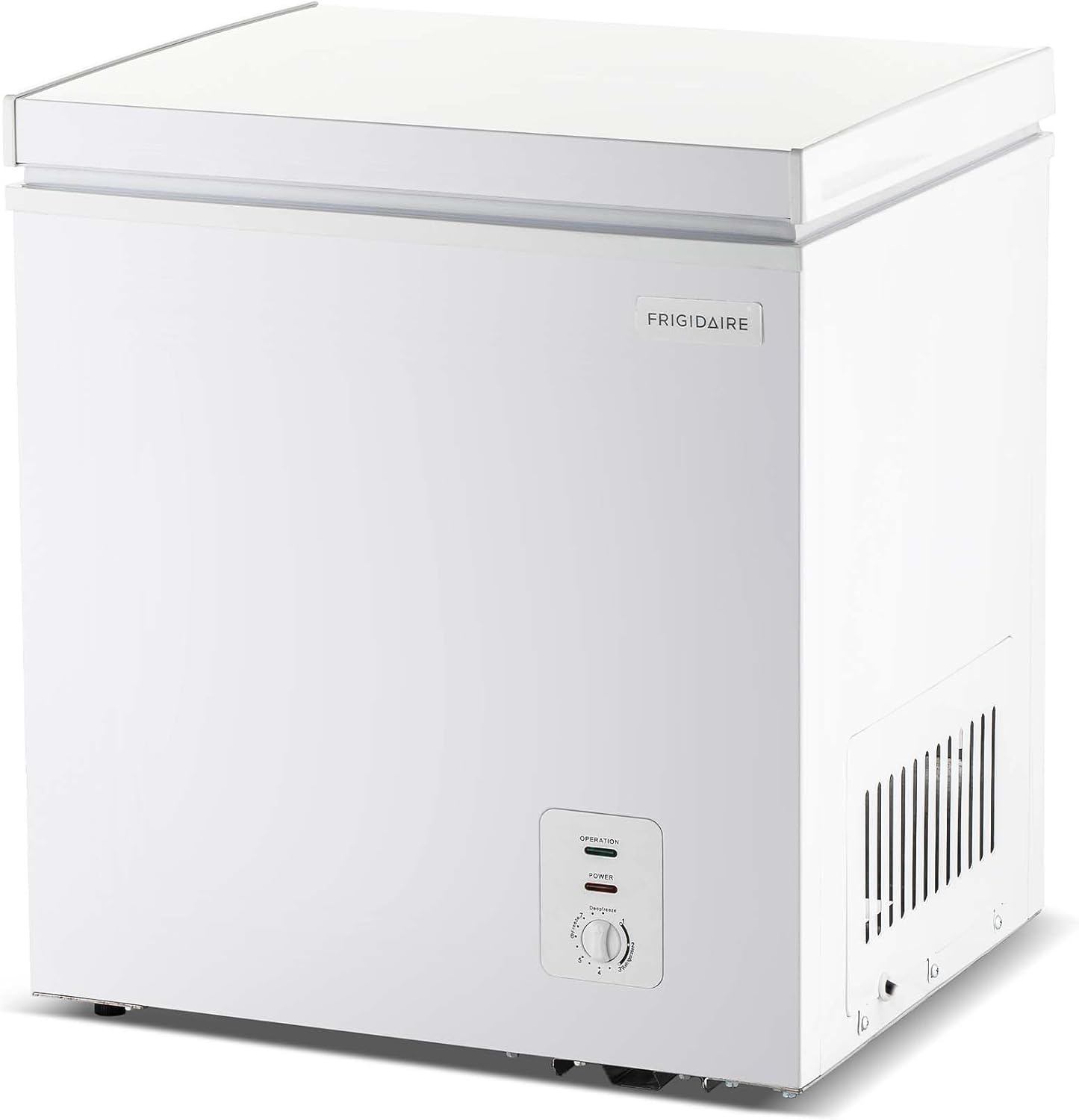
Frigidaire Chest Freezer EFRF2006COMAMZ
| Capacity | 2.1 cubic feet |
|---|---|
| Wattage | 300 watts |
| Voltage | 120 volts |
| Door Orientation | Top |
| Number Of Shelves | 1 |
This Frigidaire chest freezer provides small-space frozen storage designed for straightforward use. It holds about 2.1 cubic feet and is set up as a freestanding chest with a top flip-up lid and a removable vinyl-coated wire basket for organizing smaller items. Temperature is controlled manually via an exterior adjustable thermostat and a compressor-on indicator light shows when the unit is running. Defrosting is manual but simplified by an interior drain plug to speed water removal. Adjustable leveling legs and a recessed handle make placement and access easier in a garage, basement, or kitchen corner. At 300 watts it is energy modest for its size, and the compact footprint lets you store seasonal meat packs or smaller bulk buys without taking much floor space. The downsides are the limited total capacity and manual defrost, which mean more frequent organization and occasional melting during defrost cycles compared with larger frost-free models. For buyers who need simple, budget-friendly frozen storage for meat portions and short-term bulk storage, this unit covers the basics reliably.
Best for: Buyers on a tight budget who need a small, no-frills freezer for storing meat portions, seasonal harvests, or short-term bulk purchases where space is limited.
Less Ideal for: Users who need long-term heavy-duty meat storage or a frost-free, high-capacity chest for extended bulk freezing should consider larger or automatic-defrost options.
- Compact 2.1 cu ft capacity fits small spaces and garages
- Adjustable exterior thermostat lets you set freezing level manually
- Removable vinyl-coated wire basket keeps small items organized and accessible
- Interior drain plug simplifies manual defrost water removal
- Adjustable legs and recessed handle aid placement and access
- Manual defrost requires periodic thawing and more maintenance
- Limited capacity not suited for long-term large-volume meat storage
Verdict: A compact, budget-friendly chest freezer that delivers basic, space-saving frozen storage for meat portions and short-term bulk needs.
BLACK+DECKER 2.0 Cu. Ft. Chest Freezer

| Capacity | 2 cubic feet |
|---|---|
| Voltage | 115 volts |
| Number Of Shelves | 1 |
| Door Orientation | Top |
This BLACK+DECKER 2.0 cu. ft. chest freezer is a simple, no-frills unit that adds reliable long-term frozen storage for a small household or for meat-focused backup storage. It holds up to about 70 pounds of food and includes a removable storage basket for organizing smaller packages while larger cuts sit below. Temperature is set with an external mechanical dial offering seven settings and an indicator light so you can adjust without lifting the lid. Maintenance is straightforward: manual defrost plus an easy-access drain speeds thawing and cleaning. The compressor uses R600a refrigerant and the unit is freestanding, which makes placement flexible in a garage, basement, or kitchen with modest clearance. Expect basic performance rather than advanced features like fast-freeze cycles or digital controls, and note that manual defrost means occasional upkeep to prevent frost buildup. Its compact footprint and straightforward controls make it an uncomplicated option when you need dependable frozen storage specifically for bulk meat or overflow items.
Best for: Buyers who prioritize a straightforward, dependable freezer to store bulk meat or overflow frozen groceries without needing advanced electronics or fancy features.
Less Ideal for: If you need rapid freezing, precise digital temperature monitoring, or a no-maintenance frost-free design, look at models with automatic defrost and digital controls instead.
- Compact footprint that fits small kitchens, garages, or basements
- Holds up to about 70 pounds of food suitable for bulk meat storage
- External mechanical temperature dial with 7 settings for simple control
- Removable storage basket helps organize smaller items and packages
- Manual defrost with drain simplifies cleaning and maintenance
- Manual defrost requires periodic defrosting and monitoring for frost buildup
- Lacks digital controls, fast-freeze function, and modern energy management features
Verdict: A compact, dependable chest freezer that delivers simple, reliable frozen storage ideal for keeping bulk meat on hand.
Kismile Chest Freezer BD-80

| Capacity | 3.2 cubic feet |
|---|---|
| Number Of Shelves | 1 |
| Door Orientation | Top |
| Installation Type | Freestanding |
The Kismile BD-80 is a small chest freezer designed for tight spaces where extra frozen storage is needed. It offers a 3.2 cu ft capacity with two removable baskets for organizing smaller items and a 7-grade adjustable thermostat that ranges roughly from 6.8°F to -7.6°F, so you can choose colder settings for long-term meat storage or warmer settings for everyday frozen goods. The balanced hinge-style top lid stays open at set angles for easier loading, and the unit includes a convenient water drain for faster defrost cleanup. Kismile rates the compressor as energy efficient, consuming about 0.68 kWh per day, and operating noise is claimed under 40 dB, which keeps it unobtrusive in a kitchen or garage. Limitations to consider: the temperature range does not reach deep-freeze levels some dedicated chest freezers achieve, so very long-term vacuum-sealed meat storage may be better on colder units, and the compact footprint means limited bulk capacity. For anyone needing a small, quiet, and easy-to-maintain secondary freezer, this model performs well for everyday meat freezing and meal prep storage.
Best for: Buyers who want an easy-to-place secondary freezer for routine meat storage, meal prep, or small-batch freezing and who prioritize compact footprint and simple controls.
Less Ideal for: Not a good fit for buyers needing large-capacity or ultra-low deep-freeze performance for long-term bulk meat storage or commercial use.
- Compact 3.2 cu ft size fits small kitchens, dorms, or offices
- Two removable baskets help separate cuts and keep frequently used items accessible
- Adjustable 7-grade thermostat allows user control between normal and colder freezer settings
- Balanced hinge lid that can stay open at set angles makes loading and cleaning easier
- Built-in drain speeds defrosting and cleaning maintenance
- Top temperature floor around -7.6°F may not reach ultra-low deep-freeze for very long-term meat preservation
- Limited overall capacity restricts bulk storage for large hunters or very large families
Verdict: A compact, low-noise chest freezer that makes practical short- to medium-term meat storage simple where space is limited.
BODACIOUS 7.0 Cu Ft Chest Freezer

| Capacity | 7 cubic feet |
|---|---|
| Voltage | 110 volts |
| Number Of Shelves | 2 |
| Door Orientation | Top |
This BODACIOUS 7.0 Cu Ft chest freezer is a compact deep-freezing option for households needing extra meat storage without a large footprint. It uses an adjustable 6-setting thermostat so you can dial in colder temperatures for long-term meat storage or a milder setting for ready-to-eat items, and the removable basket helps keep frequently used cuts accessible. The unit is marketed as energy efficient and includes a simple exterior defrost drain to make occasional manual defrosting and cleanup easier. It is also described as quiet in operation, which matters if you plan to keep it in a garage, apartment, or utility room. Expect typical chest-freezer behavior: better temperature stability and storage capacity for bulk meat compared with upright mini freezers, but you will need to bend down to access items and periodically defrost. The brand recommends letting the freezer sit for 24 hours after delivery before first use and avoiding leaving the thermostat at the coldest setting continuously to preserve compressor life.
Best for: Buyers who prioritize reliable, energy-conscious long-term meat storage in a compact unit and want a straightforward freezer with simple controls and organization features.
Less Ideal for: People who need upright access, automatic defrosting, or a built-in alarm/temperature monitoring system should consider other freezer types.
- 7.0 cu ft capacity suitable for bulk meat storage
- Six-position adjustable thermostat for setting appropriate temperatures
- Removable basket for organizing frequently used items
- Energy-saving design aimed at lower daily power consumption
- Exterior defrost water drain simplifies manual defrosting
- Manual defrost design requires periodic maintenance
- Top-access chest layout requires bending to reach items at the bottom
Verdict: A compact, energy-conscious chest freezer that gives risk-averse buyers dependable bulk meat storage with simple controls and easy organization.
Choosing the Right Freezer for Meat Storage: Key Factors to Consider
Temperature Stability and Control
Maintaining a consistent, sufficiently low temperature is the single most important factor for storing meat safely. Fluctuations raise the risk of bacterial growth and accelerate quality loss, so look for freezers with reliable thermostats, good temperature recovery after door openings, and controls that allow you to set and maintain subfreezing targets.
Temperature control also affects texture and flavor. Rapid freeze cycles can preserve cellular structure better, while slow or uneven freezing promotes ice-crystal growth that leads to freezer burn. Consider units with firm temperature regulation and proven performance under load rather than relying solely on stated temperature ranges.
Usable Capacity and Interior Layout
Nominal cubic feet only tells part of the story. The way shelves, baskets, and compartments are arranged determines how much you can actually store and how easy it is to organize packages. A freezer for meat storage should offer flexible shelf positions, removable baskets, or a chest-style open space that accommodates whole cuts or large vacuum-sealed portions.
Think about how you plan to package meat. If you use vacuum sealing, you will want flat shelf surfaces and room for stacking. For whole birds or large roasts, a chest configuration or deep shelves may be more practical. Accessibility matters too; frequent rummaging increases warm-air exposure, so clear organization reduces door-open time and helps maintain consistent temperatures.
Insulation, Sealing, and Build Quality
High-quality insulation slows heat transfer and helps the freezer recover temperature after door openings or brief power interruptions. A tight door seal prevents moist, warm air from entering and forming frost, which can diminish cooling efficiency and increase energy use. Durable interior finishes resist corrosion from drips and are easier to clean, which matters when storing raw meat over long periods.
Good build quality also means reliable hinges, gaskets that are replaceable, and a design that minimizes cold-spot formation. Check for gasket accessibility and reinforcement in high-use closure areas to ensure long-term airtight performance.
Energy Use and Long-Term Operating Costs
When freezers run constantly, energy consumption becomes a meaningful part of ownership cost. Better-insulated models and efficient compressors reduce kilowatt-hours per month. Energy efficiency matters both for lower bills and for the freezer's ability to hold safe temperatures during brief power disruptions.
Consider the tradeoff between initial capacity and running cost. A very large freezer that is half-full may use more energy due to greater surface area; conversely, a properly sized unit filled reasonably well is more efficient. Look for features like adaptive defrost or efficient compressor tech that reduce unnecessary cycles.
Defrosting Method and Maintenance
Defrosting strategy affects convenience and performance. Manual-defrost chest freezers often provide the coldest, most stable environment because they accumulate less dry-out from automatic defrost cycles. Upright frost-free freezers are easier to maintain but can suffer drier interior air that leads to freezer burn over long-term meat storage.
Maintenance also includes cleaning, gasket replacement, and occasional coil servicing. Choose a design that allows easy access to interior corners and has replaceable or reversible parts. Simpler maintenance reduces the chance of temperature problems developing over time.
Placement, Noise, and Installation Constraints
Where you put the freezer influences performance and user experience. Garages and utility rooms are common, but ambient temperature swings in unheated spaces can affect compressor workload and temperature stability. Adequate clearance for airflow, a level surface, and accessible power are practical installation considerations.
Noise level matters if the unit sits near living spaces. Consider compressor placement and sound ratings if a quiet room is nearby. Also plan for door swing, lifting access for moving the unit, and the ability to move baskets or shelves in tight locations.
Chest Vs Upright: Which Suits Meat Best
Chest freezers typically excel at long-term meat storage because their cold air settles and is less prone to warm-air infiltration when opened. They also tend to have simpler interiors that maximize uninterrupted space for large cuts or stacked, flat-packed vacuum bags.
Upright freezers offer easier organization and quicker access thanks to shelves and drawers, which reduces the time the door stays open during retrieval. For buyers who need frequent access to many small packages, an upright layout can reduce rummaging and help keep temperatures stable in practical use.
- Chest: better for bulk, long-term storage and whole cuts
- Upright: better for organized access and frequent use
- Consider frequency of access and the typical size of packages when choosing form factor
Packaging and Organization Tips to Prevent Freezer Burn
How you package meat matters as much as the freezer itself. Vacuum sealing removes air and greatly slows oxidation and freezer burn. If vacuum sealing is not used, wrap packages tightly in freezer paper or heavy-duty foil and remove as much air as possible.
Labeling and date-stamping packages helps you rotate stock and avoid long-forgotten items. Use clear bins or baskets to separate poultry, ground meat, and roasts so items are easy to find without prolonged door openings.
- Vacuum seal for best protection against freezer burn
- Use flat stackable packaging to maximize usable shelf space
- Keep similar items together and label with date and cut
Power Outages and Temperature Recovery Strategies
Plan for occasional power interruptions. A well-insulated freezer with good mass of frozen product will hold safe temperatures longer than an empty one. Keep a digital thermometer or temperature logger inside so you can monitor when temps cross critical thresholds.
If a prolonged outage is expected, move perishable items to a working freezer or cooler with ice. Avoid repeatedly opening the freezer during an outage. Consider adding thermal mass, such as frozen jugs of water, to help stabilize internal temperature for longer periods.
- Monitor temps with a reliable internal thermometer
- Add frozen water jugs to increase thermal mass during outages
- Minimize door openings to preserve cold air
Sizing Your Freezer for Typical Meat Volumes
Estimate how much meat you store at peak times and choose a freezer that gives you 10 to 20 percent extra usable space beyond that. Overfilling restricts airflow and makes retrieval difficult; a mostly empty large freezer wastes energy. Think in terms of practical stackable volumes rather than advertised cubic feet.
If you process animals seasonally or buy in bulk a few times a year, size for your peak storage need and plan organization to keep the load dense and efficient. For frequent small purchases, prioritize an upright with adjustable shelves to keep items accessible without excessive air exchange.
- Size for peak needs plus margin to avoid overpacking
- Prioritize usable interior shape for your typical package sizes
Routine Care to Keep Meat Safe Long-Term
Regularly inspect and clean gaskets, defrost when needed, and clear coils if accessible. Frost buildup reduces efficiency and usable space while increasing compressor workload, which can shorten equipment life and affect temperatures.
Rotate stock using first-in, first-out practice and discard packages that show signs of freezer burn or long-term quality loss. Keeping a basic maintenance schedule helps ensure consistent performance and safer meat storage over years of use.
- Check door seals monthly and replace if deformed
- Defrost manual units before frost becomes excessive
- Keep an inventory list to avoid long-forgotten items
How We Chose the Best Freezer for Meat Storage
We selected freezers for meat storage using criteria that reflect real-world cold-storage needs. Primary factors included temperature stability under load, since meat requires consistent subfreezing temps to stay safe and retain texture. Usable storage capacity and layout were critical because cubic-foot ratings often overstate practical space; we prioritized flexible shelving, baskets, and compartment options that keep packages accessible. Energy efficiency and insulation quality matter for long-term operating cost and for how well a freezer resists temperature swings during power interruptions. Build quality and door/seal design were considered to reduce warm-air infiltration and limit freezer burn. Noise and installation requirements were evaluated so homeowners can match a unit to garage, utility room, or indoor use. We excluded units lacking proven temperature control or with designs that severely limit usable interior space. We also filtered out models without clear serviceability or basic reliability features. The resulting list focuses on units that balance stable cold performance, practical storage, and reasonable energy use for long-term meat preservation.
Our full evaluation process is outlined in our review methodology.
FAQ
What is the ideal internal temperature for storing meat long-term?
Aim for 0 degrees Fahrenheit or below for long-term storage. Consistently maintaining subzero temperatures slows bacterial growth and preserves texture and flavor over months.
Is a chest freezer always better than an upright for meat?
Not always. Chest freezers often provide colder, more stable space for bulk storage, but uprights can be better for organization and frequent access. The right choice depends on how much you store and how often you need items.
How can I prevent freezer burn on stored meat?
Remove air from packaging with vacuum sealing or tight wrapping, keep the freezer full enough to reduce air circulation, and maintain a stable, cold temperature. Proper packaging and minimal temperature fluctuations are the most effective defenses.
Can a freezer in an unheated garage protect meat year-round?
It depends on ambient temperature swings. Many freezers can operate in moderate unheated spaces, but extreme heat or cold can impair performance. Ensure the unit is rated for garage use and provide proper ventilation and clearance.
How should I organize meat to make the most of usable space?
Group like items, use flat stackable packages, and keep commonly used items near the top or in dedicated baskets. Label and date everything so you rotate stock efficiently without prolonged door openings.
Final Verdict
When choosing a freezer for meat storage, prioritize consistent temperature control, usable interior layout, and good insulation. Balance unit size against how much you actually store so the freezer runs efficiently and remains easy to organize. Consider whether you need a chest for bulk, long-term preservation or an upright for frequent access and organization. With proper packaging and maintenance, the right freezer will keep meat safe and tasting good for months.