
Note: This article contains affiliate links. If you click on these links and make a purchase, we may earn a small commission at no extra cost to you. This helps support our research and content. Read our full affiliate disclosure here.
Picking the right gas tank water heater affects everyday comfort, monthly fuel costs, and how long you wait for a second shower. Install the proper capacity and features and you avoid cold surprises during peak use and reduce wasted energy during slow periods. This guide covers six top-rated gas tank water heaters shortlisted for common home needs, with attention to recovery rate, energy efficiency, venting type, and installation considerations. Read on for a focused look at the attributes that matter and which unit types best match different household patterns.
Top Picks at a Glance
| Best Overall The best all-around choice for most situations | Rheem PROG50-36P 50-Gallon Gas Water Heater |  |
| Best Quality Built to a higher standard if you want something more solid | A. O. Smith ProMax GPVX-50L |  |
| Best Value The sweet spot between price and what you get | A.O. Smith BTR-200 100-Gallon Water Heater |  |
| Best Budget The cheapest option that still gets the job done reliably | KINGRVER 6 Gallon RV Water Heater |  |
| Top Rated A top-rated pick with lots of positive feedback | Suburban 12-Gallon RV Water Heater 5247A |  |
| Most Popular A crowd favorite that many people choose with confidence | CAMPLUX 6 Gallon RV Water Heater |  |
Rheem PROG50-36P 50-Gallon Gas Water Heater

| Power Source | Gas Powered |
|---|---|
| Heat Output | 36 british thermal units |
| Voltage | 240 volts |
| Capacity | 50 gallons |
The Rheem PROG50-36P is a 50-gallon atmospheric propane water heater built for everyday residential hot water needs. It delivers moderate heat output (36K BTU) and is aimed at families who need steady hot water for showers, laundry, and dishwashing. Notable features include R-Tech anode protection for tank longevity, an EverKleen system to reduce sediment build-up, and an enhanced-flow brass drain valve that simplifies maintenance. The unit meets low-emission standards and includes a Guardian air/fuel shut-off sensor for safety. Practical benefits are a decent first-hour recovery and efficiency in the .58 to .62 EF range, which helps lower operating costs compared with older models. Limitations are the basic atmospheric design rather than high-efficiency sealed combustion, and it requires proper venting and space for installation, so it is best suited to homes set up for conventional vented gas heaters rather than tight or high-efficiency installations.
Best for: Buyers who want a dependable, mid-efficiency propane water heater that balances fuel economy, straightforward maintenance, and reliable daily hot water for a typical household.
Less Ideal for: Homes that need the highest efficiency or direct-vent sealed-combustion units, or installations with restricted venting options, should consider alternative high-efficiency models.
- 50-gallon capacity suitable for typical family hot water demand
- R-Tech anode rod for longer tank protection
- EverKleen system and enhanced-flow drain valve reduce sediment maintenance
- Low-emission burner and Guardian air/fuel shut-off for safer operation
- Moderate efficiency (.58-.62 EF) and reasonable recovery performance
- Atmospheric venting design is less efficient than sealed combustion or high-efficiency models
- Requires conventional venting and professional installation for safe operation
Verdict: A solid, maintenance-friendly 50-gallon propane water heater that delivers reliable daily hot water with modest efficiency and easy sediment management.
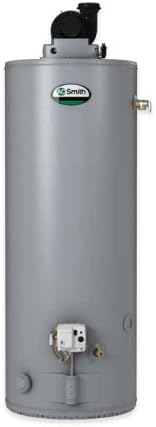
A. O. Smith ProMax GPVX-50L
| Power Source | Gas Powered |
|---|---|
| Special Features | Electronic Gas Control, LED Display, Blue Diamond Glass Coating, Flexible Venting |
| Mount Type | Wall |
| Capacity | 50 gallons |
The ProMax GPVX-50L is a performance-focused 50-gallon gas water heater built to handle higher hot-water demand while offering flexible installation options. It uses a power vent system that can be rotated in three positions and supports long combined horizontal and vertical vent runs, which makes it easier to place the unit away from exterior walls or in utility spaces. The unit includes electronic gas control with an LED display for more precise temperature management, a factory-installed temperature and pressure relief valve, and a tamper-resistant brass drain valve for serviceability. Blue Diamond glass coating improves tank corrosion resistance for longer life, and the heater accepts common vent materials such as ABS, PVC, CPVC, and polypropylene when using 4-inch venting. On the downside, this is a wall-mount indoor model that requires proper power and venting planning and professional gas hookup, so expect installation complexity compared with simple atmospheric models. For buyers who need high recovery and placement flexibility, it delivers real practical benefits in daily use.
Best for: Buyers who prioritize reliable high-capacity hot water and flexible installation options for homes that need long vent runs or wall-mounted placement.
Less Ideal for: Those seeking the simplest plug-and-play replacement or outdoor/atmospheric vent models should consider alternatives with lower installation requirements.
- 50-gallon capacity suitable for larger households or higher simultaneous demand
- Rotatable blower outlet and long venting capability allow flexible placement and lengthy vent runs
- Electronic gas control with LED display offers accurate temperature control and clear status feedback
- Blue Diamond glass coating enhances corrosion resistance for improved tank longevity
- Requires powered venting and proper electrical connection, increasing installation complexity
- Indoor wall-mount design needs planned vent routing and professional gas hookup
Verdict: Choose the GPVX-50L when you need a high-capacity, performance-oriented gas heater with flexible venting and precise electronic control.
A.O. Smith BTR-200 100-Gallon Water Heater

| Power Source | Natural Gas |
|---|---|
| Special Features | Electronic Ignition |
| Mount Type | Floor |
| Capacity | 100 gallons |
The A.O. Smith BTR-200 is a commercial-grade natural gas tank water heater designed to deliver large volumes of hot water for institutional or heavy-duty applications. It uses electronic ignition for reliable starts, CSA certification with an ASME-rated temperature and pressure relief valve for safety, and a 199,000 BTU input to rapidly heat its 100-gallon tank. The handhole cleanout simplifies maintenance and sediment removal compared with welded-only tanks, which can extend service life in hard-use settings. It meets current energy and standby loss standards cited by DOE and ASHRAE/IESNA, so it balances output with reasonable thermal efficiency for its class. On the downside this is a floor-mounted, commercial unit intended for professional installation and high-demand sites, so it is not suited to small homes or DIY replacement without matching gas and venting infrastructure. Plumbing and vent sizing must follow local codes to get the performance the rating promises.
Best for: Buyers who need a robust, high-capacity gas water heater for commercial sites or high-demand residential settings and who prioritize reliable output and serviceability.
Less Ideal for: Those seeking a compact, DIY-friendly home heater or low-capacity unit should look at residential models instead.
- Large 100-gallon capacity supports commercial or high-demand use
- High input (199,000 BTU) for fast recovery and sustained output
- Electronic ignition for reliable starts without a standing pilot
- CSA certified with ASME-rated T&P relief valve for safety compliance
- Handhole cleanout eases maintenance and sediment removal
- Designed for commercial installation so requires proper venting and professional hookup
- Not suitable for small residences or low-demand applications
Verdict: Choose the BTR-200 when you need a heavy-duty, fast-recovery commercial gas tank heater with solid safety features and easy maintenance.
KINGRVER 6 Gallon RV Water Heater

| Power Source | Dual-Mode Electric & Gas |
|---|---|
| Wattage | 1440 watts |
| Voltage | 12 volts_of_direct_current |
| Maximum Temperature | 140 °F |
| Heat Output | 12000 british thermal units |
This KINGRVER 6-gallon RV water heater provides flexible hot-water options for small RVs by offering gas, electric, or hybrid heating modes and a remote controller to set temperatures between 104°F and 140°F. It is designed to fit common 4–6 gallon cutouts and uses standard 1/2" NPT water connections, so installation is straightforward for someone familiar with RV hookups and it ships with a quick-install guide. Hybrid mode speeds recovery when you need back-to-back showers while the tank design and four-layer insulation help keep temperatures stable and reduce the water wasted while waiting for hot water. The unit runs gas ignition from the RV 12V system and supports 120V electric heating when shore power is available, giving useful options for off-grid and plugged-in use. Important limits are the 6-gallon capacity, which suits couples or solo travelers but will run short for larger groups, and the physical depth and weight that require planning during installation. For buyers prioritizing a compact, versatile tank heater on a budget, this model covers the core needs without extras.
Best for: Travelers seeking an affordable, compact RV tank heater that offers gas and electric options and easy temperature control for typical solo or couple use.
Less Ideal for: Large families, full-time RVers, or anyone who needs continuous high-volume hot water should consider larger-capacity or tankless solutions instead.
- Three heating modes (gas, electric, hybrid) for flexible power sources
- Remote controller for setting temperature and switching modes from inside the RV
- Designed to fit standard 4–6 gallon RV cutouts with 1/2" NPT water connections
- Four-layer insulated tank helps maintain stable water temperature and reduce waste
- 6-gallon capacity may be insufficient for larger families or multiple consecutive uses
- Requires at least 3 inches additional depth for piping which may complicate tight installations
Verdict: Choose this if you want a budget-friendly, compact RV tank heater that gives gas, electric, and hybrid operation with simple remote temperature control.
Suburban 12-Gallon RV Water Heater 5247A

| Capacity | 12 gallons |
|---|---|
| Power Source | Gas & Electric |
| Wattage | 1440 watts |
| Heat Output | 12000 BTU/h |
| Mount Type | Wall |
The Suburban 12-Gallon RV Water Heater (5247A) is a tank-style unit designed to give reliable hot water on the road using gas as the primary heat source and an optional 1,440-watt electric element when shore or generator power is available. It is built around a porcelain-lined steel tank with a replaceable anode rod to slow corrosion, and Suburban's flue-tube heat transfer design that improves recovery speed. In practice this model is used for showers, dishwashing, and other onboard hot-water needs; the 12,000 BTU burner delivers a fast recovery rate (about 10.1 GPH on gas, 6.1 GPH on electric) so you get more continuous hot water between cold cycles. Installation mounts to the RV wall and the unit includes factory-style features found on common RV water heaters. Limitations to note are its physical size and weight compared with smaller 6-gallon units and the reliance on gas for peak performance, so electric-only situations will see slower recovery. For buyers prioritizing durable construction and steady hot-water supply, this Suburban is a strong, straightforward choice.
Best for: Buyers who want a durable, factory-style RV water heater that prioritizes long-term reliability and steady hot-water availability for showers and chores while traveling.
Less Ideal for: Those who need the smallest, lightest heater for tight spaces or who will run exclusively on electric power and need faster electric recovery should consider other options.
- Porcelain-lined steel tank with replaceable anode rod for improved corrosion resistance
- Fast gas recovery rate (about 10.1 gallons per hour) for more usable hot water
- Optional 1,440-watt electric element provides flexibility when shore power or a generator is available
- Flue-tube heat transfer design increases heating efficiency and recovery speed
- Larger size and weight compared with compact RV heaters which may be an issue in small spaces
- Electric-only recovery is significantly slower than gas, limiting performance off-propane
Verdict: Choose this Suburban 12-gallon RV heater if you want a rugged, high-recovery gas tank heater built for long-term reliability on the road.
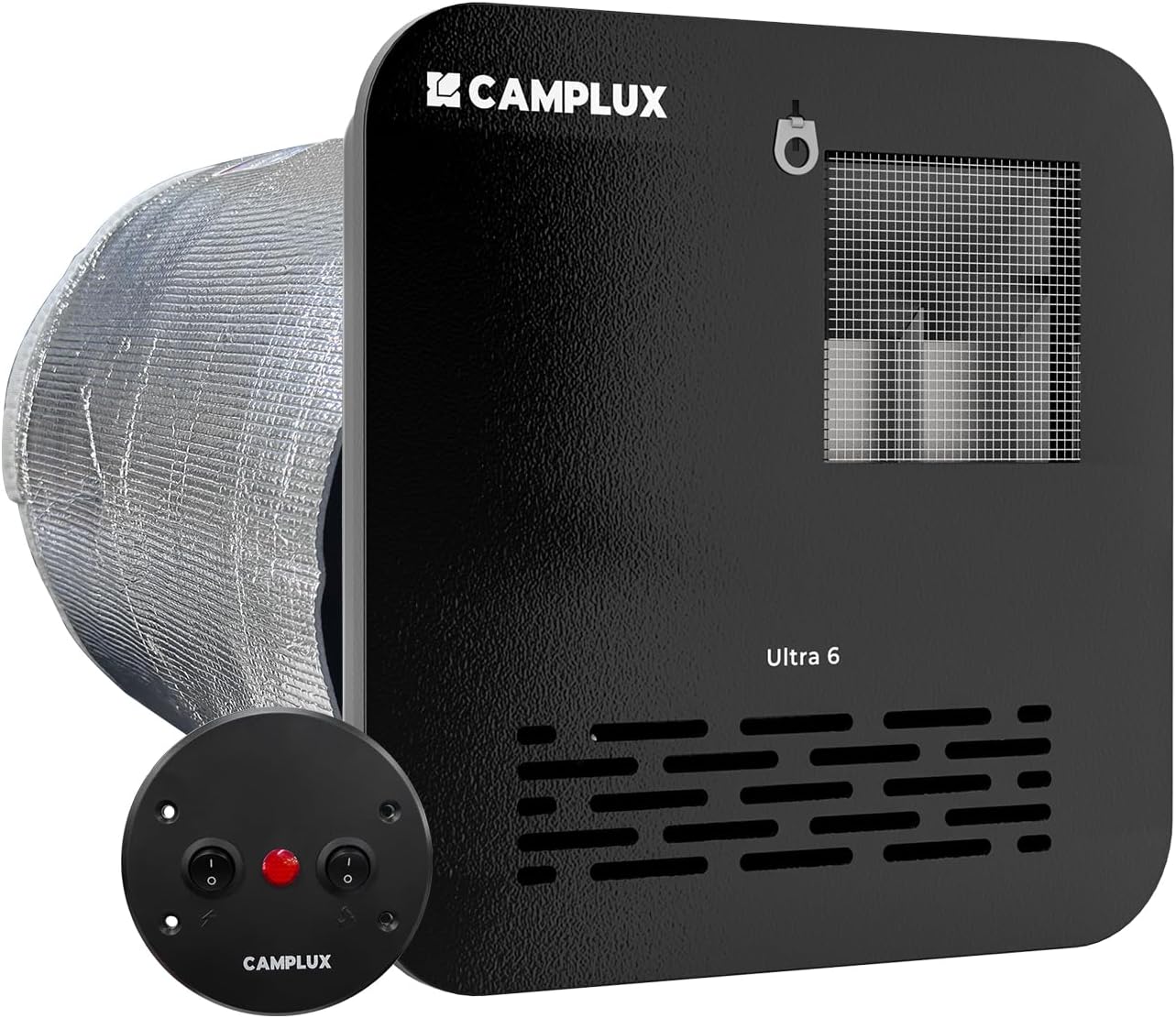
CAMPLUX 6 Gallon RV Water Heater
| Power Source | Propane + 120V Electric |
|---|---|
| Heat Output | 12000 BTU + 1440W |
| Capacity | 6 gallons |
| Flow Rate | 3.6 gpm |
| Maximum Temperature | 140 °F |
The CAMPLUX 6-gallon RV water heater is a hybrid propane and 120V electric unit built for RVs that need flexible hot-water options. It offers three heating modes—propane, electric, or both—to suit boondocking, campground hookups, or faster recovery when multiple showers are needed. The 12,000 BTU burner plus 1440W electric element delivers reasonably quick recovery and a 3.6 gpm flow rate with a maximum temp around 140°F, which is typical for RV use. Installation is straightforward for a direct-replacement fit into standard 13" x 13" cutouts and it uses common 1/2" NPT plumbing and 12V ignition, so swapping an old Suburban or Dometic-style tank is usually simple. The porcelain-lined steel tank with an anode rod is a practical durability upgrade against corrosion and sediment. Safety features include dry-boil and over-temperature protection and the unit is CSA-listed. Expect solid performance for family or full-time RVers, though the 6-gallon storage size limits consecutive long showers compared with tankless systems and weight and bulk remain higher than on-demand alternatives.
Best for: Campers and RV owners who want a familiar storage-style heater that swaps into existing Suburban or Dometic openings and value flexible fuel options and proven safety features.
Less Ideal for: Travelers who need continuous on-demand hot water for long consecutive showers or who prioritize the lightest, most compact tankless systems.
- Hybrid propane and electric heating for flexible fueling and faster recovery
- Porcelain-lined steel tank with anode rod for improved corrosion resistance
- Direct-replacement design fits standard 13" x 13" RV cutouts for easier installation
- Built-in safety features including dry-boil and over-temperature protection
- 6-gallon tank limits back-to-back hot-water use compared with tankless systems
- Bulk and weight are higher than compact on-demand heaters
Verdict: Choose this unit if you need a durable, direct-replacement 6-gallon RV water heater that offers propane and electric modes for reliable hot water across camping situations.
Choosing the Right Gas Tank Water Heater: Key Factors to Consider
Tank Capacity and First-Hour Rating
Tank capacity determines how much stored hot water you have on hand, but the first-hour rating is a better predictor of performance during peak demand. The first-hour rating combines the tank capacity with the unit's recovery rate to estimate how much hot water will be available in the first hour of use.
Choosing an appropriately sized tank avoids running out of hot water during consecutive showers or dishwasher and laundry overlaps. Smaller households often do well with lower-capacity tanks, while larger families or homes with multiple simultaneous uses need higher first-hour ratings to prevent cold-water interruptions.
Recovery Rate (Gallons Per Hour)
Recovery rate measures how quickly the heater can reheat fresh water once hot water is depleted. A higher recovery rate shortens the wait between uses and makes it easier to support back-to-back showers or continuous appliance cycles.
If you frequently use multiple hot-water fixtures at once, prioritize a unit with a stronger recovery rate. Matching recovery to household patterns can let you choose a slightly smaller tank without sacrificing peak-hour comfort.
Fuel Efficiency and Standby Heat Loss
Fuel efficiency, often expressed as Energy Factor (EF) or Uniform Energy Factor (UEF), estimates how effectively a gas water heater converts fuel into usable hot water. Higher efficiency means lower fuel consumption for the same workload.
Standby heat loss is how much heat a tank loses while sitting idle. Better insulation and lower standby loss reduce wasted energy, especially in cooler basement or garage installations. Together these metrics determine operating cost and environmental impact over the unit's life.
Venting Type and Installation Constraints
Gas tank water heaters require proper venting for combustion gases. Common venting configurations include atmospheric venting, power-venting, and direct-venting. The available venting options affect where the unit can be placed and the complexity of installation.
Homes with limited rooftop or exterior access may need units with more flexible venting. Consider clearance requirements, nearby combustibles, and whether the home can support a vertical flue or requires a power-vent to move exhaust horizontally.
Durability, Materials, and Corrosion Protection
Tank construction and corrosion protection determine longevity. Look for tanks with robust steel gauges, quality glass lining, and effective anode systems that reduce internal corrosion over time.
A replaceable anode rod and accessible drain valve are useful for maintenance. Corrosion protection reduces the chance of premature tank failure and the resulting need for early replacement.
Serviceability and Warranty Coverage
Ease of maintenance and the length and terms of the warranty affect long-term ownership ease and cost. Accessible service panels, straightforward burner access, and available replacement parts simplify repairs.
Longer, more comprehensive warranties signal manufacturer confidence and reduce financial risk if a major component fails. Check warranty coverage for the tank, heat exchanger components, and any additional parts such as valves or controls.
Sizing Tips for Typical Households
Start by estimating your peak-hour hot water needs using a first-hour demand approach. Tally simultaneous uses like showers, clothes wash, and dishwashing to determine a conservative first-hour requirement. If you cannot calculate exact numbers, choose a unit with a modest safety margin above your estimated peak to avoid depletion during busy mornings.
If your household patterns vary seasonally, size to the highest expected demand rather than average usage. It is usually cheaper to install a properly sized unit than to try to workaround frequent shortages with behavioral changes.
- Count how many fixtures may run at once and their approximate gallons per use
- Use the first-hour rating to match peak demand rather than just tank gallons
- Allow a safety margin of 10 to 20 percent for unexpected peak events
Venting, Location, and Clearance Considerations
Identify where the water heater will sit and which venting types the space supports. Atmospheric-vent units need vertical flues and more clearance, while power-vent units offer placement flexibility but require electrical connection and periodic blower maintenance.
Ensure there is enough clearance for routine service and that the chosen location meets local code for combustion air. In unconditioned spaces consider insulating pipes and selecting a unit with low standby loss to limit heat waste.
- Check for vertical chimney access before selecting an atmospheric-vent unit
- Plan for an electrical outlet if choosing a power-vent model
- Provide service clearances and easy access to the drain valve and gas shutoff
Maintenance Tasks That Extend Service Life
Regular maintenance keeps a gas tank water heater operating efficiently. Flushing the tank annually reduces sediment buildup that reduces heat transfer and can shorten the tank life. Inspecting and replacing the anode rod when depleted slows corrosion and helps prevent leaks.
Also check the temperature-pressure relief valve periodically and test burner operation. Scheduling routine inspections and addressing small issues early will reduce the chance of emergency replacements.
- Flush the tank annually to remove sediment
- Inspect and replace the anode rod as needed
- Test the temperature-pressure relief valve and check burner ignition periodically
Energy-Saving Upgrades and Controls
Various controls and insulation options can lower operating costs. Upgrading to a higher UEF model, adding a tank blanket where appropriate, or installing smart controllers that schedule lower temperatures during long absences can reduce fuel consumption.
When adding insulation, follow manufacturer guidance to avoid covering controls or vents. Smart or programmable controls are useful for seasonal homes or variable occupancy patterns.
- Consider higher UEF models for long-term fuel savings
- Use tank insulation only where compatible with the unit
- Explore programmable controllers for reduced standby operation
How We Chose the Best Gas Tank Water Heater
We evaluated gas tank water heaters using criteria that matter for reliable domestic hot water delivery and long-term ownership costs. Key evaluation dimensions included recovery rate, which determines how quickly a unit replenishes hot water after heavy use; first-hour rating and tank capacity, to match common household peak-demand scenarios; fuel efficiency and standby heat loss, which influence operating cost and energy waste; venting options and installation flexibility, because many homes have constraints that affect placement; durability and materials, such as tank construction and anode protection that affect service life; and serviceability and warranty coverage to reduce maintenance hassles. Units that lacked necessary safety certifications, used outdated venting designs, or offered clearly inadequate recovery for typical family use were excluded. We prioritized measurable specifications and design features over marketing claims, and focused on units that balance practical performance, installation realities, and operational cost for most homeowners.
Our full evaluation process is outlined in our review methodology.
FAQ
How do I determine the right tank size for my family?
Estimate simultaneous hot-water uses and use the first-hour rating rather than just tank gallons. Add a 10 to 20 percent margin if you expect occasional peaks or future household growth.
Can I install a gas tank water heater outdoors?
Outdoor installations are possible with units designed for external exposure and appropriate venting. Most standard indoor tanks are not weatherproof, so check specifications and local codes before choosing an outdoor location.
What maintenance keeps a gas tank water heater working longest?
Regular flushing to remove sediment, periodic anode rod inspection and replacement, and testing the temperature-pressure relief valve extend life. Addressing rust or burner issues early prevents more serious failures.
Is a power-vent model worth the extra complexity?
Power-vent models add installation flexibility and often allow horizontal exhaust routing, but they need an electrical supply and occasional blower maintenance. They are worth considering when chimney access is limited.
How important is the unit's efficiency rating?
Efficiency affects fuel consumption and operating cost over the life of the heater. For frequent use or homes with long expected ownership, a higher UEF or EF rating typically reduces annual fuel bills and environmental impact.
Final Verdict
Choosing a gas tank water heater comes down to matching capacity and recovery to your household's peak needs while balancing installation constraints and long-term operating cost. Prioritize accurate first-hour ratings and sufficient recovery if you routinely have overlapping hot-water uses, and consider venting flexibility if placement is limited. Factor in insulation, corrosion protection, and serviceability to lower the chance of early failure. With those tradeoffs clear, select the unit that best aligns with your usage pattern and installation realities to get dependable hot water for years.