
Note: This article contains affiliate links. If you click on these links and make a purchase, we may earn a small commission at no extra cost to you. This helps support our research and content. Read our full affiliate disclosure here.
If you bake bread at home, the right hand mixer can take the strain out of kneading and speed up your workflow without needing a stand mixer. A hand mixer for bread must do more than whip cream or beat eggs. You need motor torque that handles dense dough, durable dough hooks that resist bending, and controls that let you manage slow, steady mixing to develop gluten. This guide covers seven shortlisted hand mixers for bread that meet those requirements. We looked at build quality, motor performance, accessory design, and everyday usability. Read on to see the criteria we used and the practical features that matter when you want consistent, well-kneaded loaves at home.
Top Picks at a Glance
| Best Overall The best all-around choice for most situations | Cuisinart Power Advantage Plus HM-90BCS |  |
| Best Quality Built to a higher standard if you want something more solid | Breville Handy Mix Scraper BHM800 |  |
| Best Value The sweet spot between price and what you get | OVENTE Hand Mixer HM151 |  |
| Best Budget The cheapest option that still gets the job done reliably | GUALIU Electric Hand Mixer CX-6679 |  |
| Top Rated A top-rated pick with lots of positive feedback | Hamilton Beach 6-Speed Hand Mixer 62682G |  |
| Most Popular A crowd favorite that many people choose with confidence | KitchenAid 9-Speed Hand Mixer KHM926 |  |
| Best Seller A high-volume bestseller chosen again and again | KitchenAid 5 Speed Ultra Power Hand Mixer | 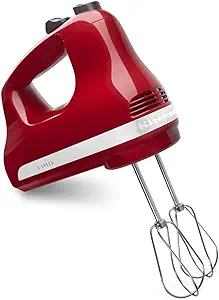 |
Cuisinart Power Advantage Plus HM-90BCS

| Wattage | 220 watts |
|---|---|
| Number of Speeds | 9 |
| Voltage | 120 volts |
| Capacity | 3.5 quarts |
The Cuisinart Power Advantage Plus is a heavier-duty hand mixer aimed at routine baking tasks like batters, whipped egg whites, and light dough work. Its 220-watt motor and nine speed settings, plus a SmoothStart feature that reduces splatter at low speeds, make it easy to dial in mixing from slow folding to faster whipping. The set includes extra-long dishwasher-safe beaters with no center posts, a chef's whisk, dough hooks, spatula, recipe booklet, and a snap-on storage case, so you get a ready-to-use kit for cakes, cookies, and small bread doughs. The beater-eject lever and dishwasher-safe attachments simplify cleanup, though this is still a hand mixer so it struggles with very stiff or large bread doughs compared with stand mixers. For everyday bakers who need a versatile, well-built handheld unit, this model delivers usable power, handy accessories, and practical controls, but those making frequent large loaves or enriched doughs will want a dedicated stand mixer instead.
Best for: Bakers who want a reliable, versatile hand mixer for everyday cakes, cookies, and occasional small bread or dough tasks and who value included accessories and easy cleanup.
Less Ideal for: Home bakers who regularly make large loaves or heavy, wet or dense doughs should choose a stand mixer designed for sustained kneading instead.
- Powerful 220W motor with nine speed settings for a range of mixing tasks
- SmoothStart low-speed feedback reduces splatter when starting
- Extra-long, dishwasher-safe beaters with no center posts reduce clogging
- Includes whisk, dough hooks, spatula, recipe book, and storage case for organized use
- Beater-eject lever makes accessory removal quick and simple
- Not suitable for heavy or large bread doughs that require prolonged kneading
- Relatively heavy for a hand mixer which may tire users during extended use
Verdict: A solid, well-equipped hand mixer that handles most home baking jobs and occasional small doughs while keeping cleanup and storage simple.
Breville Handy Mix Scraper BHM800

| Wattage | 240 watts |
|---|---|
| Voltage | 120 volts |
| Number of Speeds | 9 |
| Capacity | 1.4 liters |
| Included Components | Scraper Beaters, Dough Hooks, Balloon Whisks |
The Breville Handy Mix Scraper is a performance-minded hand mixer that adapts to different attachments and mixing loads. It detects the attachment in use and recalibrates speed automatically, which helps keep dough and batters at a steady pace whether you are whisking cream, whipping egg whites, or mixing bread dough. The pair of rubber scraper beaters reduce clanging and scrape bowl sides for more thorough mixing, while the included dough hooks and balloon whisks cover typical baking needs. Nine speed settings plus a boost give fine control from gentle folding to high-speed whipping, and the ergonomic handle and compact storage compartment make it comfortable and tidy to use. At 240 watts it has enough power for most home bread recipes, though very heavy or large-volume doughs may still be easier on a stand mixer. The plastic housing keeps weight down but is less durable-feeling than metal-bodied units. For bakers who want a strong, versatile hand mixer for frequent bread and baking tasks, this unit offers thoughtful features tailored to that purpose.
Best for: Home bakers who prioritize control and versatility for frequent bread and pastry tasks and want a hand mixer that adapts to attachments for consistent results.
Less Ideal for: Those who regularly make very large batches or very stiff artisanal doughs that demand a heavy-duty stand mixer should consider a dedicated stand model instead.
- Automatic attachment detection and recalibration for consistent speeds
- Rubber scraper beaters that minimize noise and scrape bowl sides
- Nine speeds plus boost for precise control across tasks
- Includes dough hooks, scraper beaters, and balloon whisks for baking versatility
- Ergonomic handle and dedicated storage compartment for attachments
- Plastic external housing is less robust than metal alternatives
- 240-watt motor may struggle with very large or extremely stiff doughs
Verdict: A capable, attachment-aware hand mixer that gives bakers precise speed control and useful scraper beaters for better mixing results in home bread and pastry work.
OVENTE Hand Mixer HM151

| Wattage | 150 watts |
|---|---|
| Number of Speeds | 5 |
| Voltage | 120 |
| Included Components | 2 Whisk Beater, Snap-On Case Storage |
The OVENTE HM151 is a lightweight, no-frills hand mixer designed for routine baking and cooking tasks. Its 150-watt motor with five adjustable speeds handles whipping cream, beating eggs, and mixing batter, and the two stainless steel whisks make it easy to work through typical home recipes. The ergonomic shape and push-button controls keep operation simple, while the beater-eject button speeds cleanup. A snap-on storage case stores the beaters and cord neatly, which helps keep small kitchens organized. Because the unit is compact and only 150 watts, it is best for light to medium doughs and batters rather than heavy kneading of large bread batches; for those tasks you may need a stand mixer or a higher-powered hand tool. Overall it is a practical, affordable option for cooks who want a straightforward mixer that is easy to store and maintain.
Best for: Home bakers who prioritize a compact, easy-to-store mixer for everyday whipping, batter mixing, and light dough tasks and who value straightforward controls and tidiness.
Less Ideal for: Bakers who regularly make large or heavy bread doughs or need prolonged kneading should choose a more powerful stand mixer or a higher-wattage hand mixer.
- Five adjustable speeds for control over mixing texture
- Two stainless steel whisk beaters suitable for whipping and light mixing
- Compact, lightweight design makes it easy to handle and store
- Snap-on storage case keeps beaters and cord organized for small kitchens
- 150W motor is underpowered for heavy bread dough or long kneading sessions
Verdict: A small, practical hand mixer that saves space and handles everyday whipping and light dough work for bakers focused on convenience and tidy storage.
GUALIU Electric Hand Mixer CX-6679

| Wattage | 150 watts |
|---|---|
| Voltage | 120 volts |
| Number of Speeds | 5 |
| Noise Level | 60 db |
The GUALIU CX-6679 is a budget-friendly handheld mixer intended for everyday home baking tasks like whipping cream, beating eggs, and light dough mixing. It offers five speed settings plus a turbo boost for short bursts of extra power, and comes with two stainless steel beaters, two dough hooks, and a storage bag. The motor is described as all-copper with designed two-way heat dissipation and a 5-minute continuous runtime limit, which makes it suitable for short mixing cycles and intermittent kneading rather than long continuous dough work. The upright bowl-stand feature and one-touch eject make swapping and cleaning attachments straightforward, and the non-slip ergonomic handle keeps control comfortable during use. Practical limitations include the modest 150 W motor and the recommended cool-down interval, so expect it to struggle with very heavy, high-hydration bread doughs or extended kneading sessions. For light to medium mixing tasks and occasional bread recipes that call for short kneading stretches, it delivers good value for the price.
Best for: Home bakers shopping on a budget who need an affordable, compact mixer for whipping, light mixing, and occasional short kneading sessions.
Less Ideal for: Serious bread bakers who require long continuous kneading or need to process large, heavy doughs should look for a more powerful stand mixer or a heavier-duty handheld model.
- Includes two beaters and two dough hooks plus a storage bag for organized accessory storage
- Five speeds plus turbo boost let you match speed to mixing task
- Compact ergonomic design with upright bowl-stand and one-touch eject for easy handling and cleaning
- Stainless steel attachments resist rust and are suitable for typical baking ingredients
- 150 W motor and a 5-minute continuous runtime limit make it unsuitable for long or heavy dough kneading
Verdict: A cost-conscious choice for home bakers who want a compact, easy-to-use handheld mixer for light mixing and short kneading tasks.
Hamilton Beach 6-Speed Hand Mixer 62682G

| Wattage | 250 watts |
|---|---|
| Number of Speeds | 6 |
| Special Features | QuickBurst button, Bowl Rest, Snap-on storage case |
| Included Components | Two beaters and whisk |
The Hamilton Beach 6-Speed Hand Mixer is a straightforward, dependable mixer for everyday baking tasks like cookie dough, batters, and light bread dough mixing. It offers six speeds plus a QuickBurst button so you can start slow and add short bursts of power when dough or mix-ins need extra force. The 250-watt peak motor handles typical household mixing needs and the Bowl Rest stabilizes the unit on a bowl edge when you pause to add ingredients. Attachments include two traditional beaters and a whisk that are dishwasher safe, and the included snap-on storage case keeps the beaters and cord together so they are not misplaced. For heavier, very dense bread doughs you will need a stand mixer with a dough hook and higher continuous torque, but for lighter quick-bread batters, enriched bread starters, and mixing add-ins this hand mixer is easy to use, store, and clean. Its plastic housing keeps weight down but also means it is a basic, no-frills tool rather than a heavy-duty commercial appliance.
Best for: Home bakers who prioritize a reliable, easy-to-use hand mixer for everyday baking and lighter bread-related tasks and who value tidy storage and simple cleanup.
Less Ideal for: Serious bread bakers who frequently mix heavy yeast doughs or large batches and need continuous high torque and a dough hook should choose a stand mixer instead.
- Six speeds plus QuickBurst for controlled starts and short power boosts
- 250-watt peak motor suitable for most household mixing tasks
- Bowl Rest stabilizes the mixer on the bowl when pausing work
- Snap-on storage case keeps beaters, whisk, and cord together
- Dishwasher-safe beaters and whisk for easier cleanup
- Not designed for heavy, dense bread doughs that require a stand mixer
- Plastic housing is lightweight but less rugged than metal-bodied mixers
Verdict: A reliable, no-frills hand mixer that handles everyday baking and lighter bread batters well while keeping attachments organized for dependable home use.
KitchenAid 9-Speed Hand Mixer KHM926

| Number of Speeds | 9 |
|---|---|
| Wattage | 100 watts |
| Voltage | 120 |
| Included Components | (2) Turbo Beater II, Pro Whisk, (2) Dough Hooks, Blending Rod, Storage Bag |
The KitchenAid 9-Speed Hand Mixer is a compact corded mixer built to handle a wide range of home baking tasks, from folding in chocolate chips to kneading small batches of yeast dough. In everyday use the nine speed settings give fine control so you can start slow to avoid splatter and ramp up to high speed for whipping or kneading. The included Stainless Steel Turbo Beater II accessories are designed for heavier batters and doughs, while the pro whisk quickly aerates creams and egg whites and the dough hooks help with light kneading tasks that would otherwise require a stand mixer. The blending rod is useful for dressings and smoothies, and all accessories are dishwasher safe for easy cleanup. It is lightweight and stores in the included bag, but as a hand mixer it cannot match the sustained power or large-batch kneading ability of a stand mixer, so expect better results on small to medium doughs rather than frequent large loaves.
Best for: Bakers who want a reliable, well‑supported hand mixer for small to medium bread batches, occasional kneading, and versatile mixing tasks backed by many user reviews.
Less Ideal for: Those who regularly make large loaves or high-volume bread doughs and need the sustained power and capacity of a stand mixer.
- Nine speed settings for precise control from slow stirring to high whipping
- Stainless Steel Turbo Beater II accessories suited for heavier batters
- Includes dough hooks and a pro whisk to handle light kneading and whipping
- Dishwasher-safe accessories and a storage bag for easy cleanup and tidy storage
- Hand-mixer motor is less powerful than a stand mixer for large or frequent bread doughs
- Not designed for heavy prolonged kneading required for large loaves
Verdict: Choose this KitchenAid 9-speed hand mixer if you need a versatile, user-trusted tool for small to medium bread batches and occasional kneading without moving to a stand mixer.
KitchenAid 5 Speed Ultra Power Hand Mixer

| Number of Speeds | 5 |
|---|---|
| Wattage | 60 watts |
| Voltage | 120 volts |
| Included Components | (1) Hand Mixer, (2) Stainless Steel Turbo Beater Accessories |
The KitchenAid 5 Speed Ultra Power Hand Mixer is a straightforward corded hand mixer designed for routine baking and cooking tasks like cookie dough, mashed potatoes, and light bread dough mixing. It offers five speed settings that range from a gentle stir up to a high whip, plus a soft-start feature that helps reduce splatter when beginning at low speeds. Practical touches include a lockable swivel cord for more comfortable reach, a soft-grip handle for better control, and an easy-release button to swap the two stainless steel Turbo Beater attachments. The beaters are dishwasher-safe which simplifies cleanup. While powerful enough for lighter doughs and frequent home baking, this compact 60-watt unit is not intended for very heavy, dense bread doughs or commercial use where a stand mixer or higher-capacity machine is preferable. For risk-conscious buyers it delivers reliable, well-known brand quality and simple controls without unnecessary complexity.
Best for: Home bakers who prioritize dependable, easy-to-use equipment for everyday recipes and occasional bread mixing and who value a familiar, low-risk brand choice.
Less Ideal for: Serious bread bakers who routinely mix large batches or very stiff doughs should choose a stand mixer or a more powerful dedicated dough mixer instead.
- Five speed settings including a soft-start for controlled mixing
- Stainless Steel Turbo Beater accessories suitable for heavier home-baking tasks
- Lockable swivel cord and soft-grip handle improve comfort and reach
- Beater accessories are dishwasher-safe for easy cleanup
- 60-watt motor can struggle with very heavy or high-hydration bread doughs
Verdict: A reliable, no-frills hand mixer from a trusted brand that handles everyday baking and light bread doughs with ease.
Choosing the Right Hand Mixer for Bread: Key Factors to Consider
Motor Torque and Thermal Management
Bread dough is dense and resists mixing more than batters. A hand mixer intended for bread needs a motor with sufficient torque to move heavy dough without stalling. Continuous torque rating and stall resistance determine whether the mixer can knead multiple batches or thicker doughs.
Thermal management matters because kneading loads generate heat. Look for mixers with built-in thermal protection or efficient cooling vents that prevent shutdowns during longer mixing cycles. Poor heat dissipation shortens motor life and forces you to pause and cool the unit between mixes.
Dough Hook Design and Build
Dough hooks are the interface that actually kneads the dough, so material and shape affect performance. Reinforced steel hooks or thicker, welded constructions resist bending when working tight dough. The hook profile matters too: spiral or C-shaped hooks reach deeper into the bowl and fold dough effectively, reducing the need for manual turning.
Attachment security is another element. Hooks that lock solidly into the hub without wobble reduce stress on the motor and feel more stable during use. Removable, replaceable hooks extend the mixer's useful life compared with one-piece, nonserviceable designs.
Speed Settings and Low-Speed Control
Kneading benefits from controlled, low-speed mixing to develop gluten without overworking the dough or splattering flour. A mixer with fine-grained speed steps or a soft-start feature lets you begin gently and increase torque as ingredients combine. Very few bread recipes call for high-speed whipping; consistent low-to-medium control is the practical requirement.
Variable speeds also let you handle different dough hydrating levels. A wetter dough may require softer mixing and short bursts, while stiffer dough benefits from steady, lower rpms and longer mixing intervals.
Ergonomics and Weight Balance
Hand mixers used for bread spend longer running than when whipping light ingredients, so comfort is important. A well-balanced housing with a comfortable grip reduces wrist strain during extended kneading. Consider the handle shape, button placement, and overall weight.
While heavier mixers can feel sturdy and may house stronger motors, excessive weight increases fatigue. Look for a design that balances enough mass to remain stable without being burdensome to hold for repeated batches.
Durability and Serviceability
Bread-focused use is demanding, so durability across the motor, gears, and attachment points matters. Metal gears or reinforced plastic in the gearbox resist wear from high torque. Units with replaceable parts or easy access to service components extend usable life and lower long-term ownership friction.
A durable outer housing that resists cracking and a robust attachment release mechanism also reduce the chance of failure under load. Consider whether the manufacturer offers replacement parts or straightforward repair paths when durability is a priority.
Cleaning and Maintenance
Dough residue can be sticky and hard to remove if a mixer has crevices or nonremovable parts. Mixers with detachable hooks and smooth, wipeable housings simplify cleanup. Dishwasher-safe attachments save time, but pay attention to the material finish because some coatings can trap dough.
Routine maintenance includes checking the hook mounts for wear, keeping vents clear of flour dust, and avoiding submerging housings in water. Ease of disassembly for cleaning extends the useful life and keeps performance consistent batch after batch.
Why a Hand Mixer Instead of a Stand Mixer
Hand mixers occupy a different niche than stand mixers. They are more portable, take up less counter space, and are generally quicker to deploy for small to medium dough batches. For bakers who make occasional loaves or have limited storage, a hand mixer can deliver good kneading performance without the footprint of a stand unit.
Hand mixers are also easier to tuck away and bring out for quick tasks. The tradeoff is typically power and stability. Selecting a hand mixer built for bread helps close that gap by prioritizing torque, robust hooks, and thermal protections so you still get reliable results in a compact package.
- Smaller footprint and easier storage
- Good option for occasional or small-batch bakers
- Choose models with bread-specific durability and torque
How to Use a Hand Mixer for Kneading Bread Dough
Start on the lowest speed to combine ingredients and prevent flour spillage, then gradually increase to a low or medium setting as the dough comes together. Use short mixing intervals with pauses to check dough consistency and avoid overheating the motor.
Periodically stop and scrape the bowl or reposition the dough rather than forcing the mixer to do all the work. For very stiff doughs, use a firm, steady motion and let the motor rest briefly between one- to two-minute mixing cycles to protect gears and motor windings.
- Begin on low speed and increase gradually
- Mix in short bursts to prevent overheating
- Scrape and reposition dough manually as needed
Attachments and Accessories That Matter
Dough hooks are the primary accessory for bread, but other attachments can add versatility. Look for solidly built hooks, and if available, a set of different hook profiles to match recipe types. Some mixers include beater attachments that are useful for initial mixing before switching to hooks.
Storage options and a carrying case can protect attachments and make it easier to keep components together. Also consider whether the attachment release is easy to operate with floury hands; a simple, reliable release mechanism speeds workflow during multi-batch sessions.
- Prefer reinforced or welded dough hooks
- Multiple hook profiles increase versatility
- Secure, easy-to-use attachment release is helpful
Troubleshooting Common Hand Mixer Issues with Dough
If the mixer stalls or slows dramatically, stop and let it cool for a minute. Reduce the dough load or break the mixing into shorter intervals. Persistent stalling indicates the motor or gearbox is not rated for dense dough and you should avoid long sessions.
If attachments wobble or the mixer shakes, check that hooks are fully seated and locked. Wobble under load increases wear on both the motor and the hook mount. Regularly inspect hooks for bends or deformation and replace them before they damage the hub.
- Pause and cool if the motor slows
- Check attachment seating to prevent wobble
- Inspect hooks for wear and replace when needed
Storage and Care Tips to Extend Lifespan
Store attachments clean and dry to prevent corrosion or odor transfer into dough. Keep the mixer in a cool, dry place and avoid storing heavy items on top of it. Periodically wipe vents and housing surfaces to remove flour dust and residue.
Follow recommended maintenance steps, such as checking for loose fasteners and testing the release mechanism. If your mixer has washable attachments, dry them thoroughly before reassembly to prevent moisture buildup inside the housing.
- Clean and dry attachments before storage
- Keep vents free of flour dust
- Avoid stacking heavy items on stored mixers
How We Chose the Best Hand Mixer for Bread
To assemble this list we applied practical, bread-focused filters to find hand mixers that genuinely perform with dough rather than only light batters. First, we prioritized motor torque and rated units by their continuous power capability and stall resistance to ensure they can handle firm dough without overheating. Second, we evaluated accessory design and durability, favoring mixers with reinforced dough hooks and secure attachment mechanisms that tolerate the torque of kneading. We also considered ergonomics and control: comfortable grips, incremental speed settings, and low-speed start features help prevent flour clouds and protect motor life. Cooling and thermal protection were used as reliability filters to avoid models likely to overheat under kneading loads. Finally, we reviewed ease of cleaning and upkeep, since dough can gum up housings and attachments. We excluded mixers intended only for light whipping or those with weak accessory fittings. The resulting picks emphasize torque, durable hooks, thermal management, grip comfort, and maintainability.
Our full evaluation process is outlined in our review methodology.
FAQ
Can a hand mixer knead all types of bread dough?
It depends. Many hand mixers can handle softer or moderately stiff doughs for quick loaves, but very dense or high-hydration artisan doughs may challenge a hand unit. Look for models with high torque and reinforced hooks if you plan to knead heavier doughs regularly.
How long should I run a hand mixer when kneading bread?
Short bursts of one to two minutes with pauses are usually best. Continuous running for several minutes can overheat the motor. Alternating mixing intervals with brief rests helps develop gluten while protecting the mixer.
Are dough hooks dishwasher safe?
Many dough hooks are dishwasher safe, but finishes and welding quality vary. Check manufacturer guidance if you want dishwasher convenience. Hand washing with warm water and drying thoroughly is a safe option for long-term durability.
What maintenance keeps a hand mixer reliable for bread use?
Keep attachments and housings clean, clear vents of flour dust, and inspect hooks and attachment mounts for wear. Allow the motor to cool between long kneading sessions and avoid forcing the mixer beyond its rated duty cycle.
Will using a hand mixer affect my bread texture compared with hand kneading?
A suitable hand mixer can produce consistent gluten development similar to hand kneading for many recipes. Technique and mixing time still matter, and some artisan-style doughs may benefit from hand or stand-mixer treatment for specific textures.
Final Verdict
When choosing a hand mixer for bread, prioritize motor torque, the durability of dough hooks, and low-speed control. These attributes determine whether a unit will knead reliably without frequent overheating or attachment failure. Balance ergonomics and weight against motor strength so you can run the mixer comfortably for the necessary kneading intervals. If you bake occasional loaves, focus on a compact, easy-to-clean mixer with decent torque. For frequent or dense-dough baking, favor models built with stronger motors, reinforced hooks, and thermal protection. That approach will give you consistent results and a longer-lasting tool for home bread making.