
Note: This article contains affiliate links. If you click on these links and make a purchase, we may earn a small commission at no extra cost to you. This helps support our research and content. Read our full affiliate disclosure here.
A properly heated crawl space prevents frozen pipes, reduces moisture buildup, and protects structural wood from rot. If you rely on a heater for crawl space protection, you need equipment sized and designed to run safely in confined, often-damp environments. This guide shortlists the top heaters built for crawl space use, focusing on steady heat output, safety features, and energy considerations. Below we summarize each top pick and explain the criteria used to evaluate them so you can quickly pick the best heater for your crawl space needs.
Top Picks at a Glance
| Best Overall The best all-around choice for most situations | DR. INFRARED HEATER DR218 1500W |  |
| Best Quality Built to a higher standard if you want something more solid | DR. Infrared Heater DR-968 |  |
| Best Value The sweet spot between price and what you get | Aikoper NT15-20A Space Heater |  |
| Best Budget The cheapest option that still gets the job done reliably | Comfort Zone CZ45E Personal Heater |  |
| Top Rated A top-rated pick with lots of positive feedback | DREO Atom One DR-HSH004 |  |
| Most Popular A crowd favorite that many people choose with confidence | DREO Portable Space Heater DR-HSH014 |  |
| Best Seller A high-volume bestseller chosen again and again | Amazon Basics Ceramic Space Heater |  |
DR. INFRARED HEATER DR218 1500W

| Heat Output | 1500 watts |
|---|---|
| Heating Coverage | 150 Sq. ft |
| Power Source | Corded Electric |
| Voltage | 120 volts |
| Min-Max Temperature | 32 °F – 104 °F |
The DR. INFRARED HEATER DR218 is a compact 1500W portable heater intended to warm small enclosed spaces such as greenhouses or workshops. It delivers radiant heat with a forced-air fan to circulate warmth and covers roughly 150 square feet on a single power setting, and it includes a precision temperature sensor and adjustable thermostat for maintaining a basic target temperature. The unit is built with heavy-duty steel housing, an IPX4 splash-resistant rating for light moisture exposure, and thermal overheat protection for safety. Its permanently lubricated motor and simple one-speed operation mean low maintenance and straightforward use, though the single heat setting limits fine control compared with multi-stage heaters. At 120 volts and about 12.5 amps it runs on standard circuits, and its lightweight, floor-mount form makes it easy to move into tight crawl spaces or small outbuildings, though it does not include advanced controls or multiple fan speeds. For someone wanting a rugged, no-frills heater for modest enclosed areas, this model is practical and dependable.
Best for: Buyers who want a straightforward, rugged heater to keep small enclosed spaces like crawl areas, greenhouses, or workshops above freezing with minimal setup and upkeep.
Less Ideal for: People who need precise multi-stage temperature control, programmable schedules, or an outdoor-rated unit for exposed conditions should consider other options.
- 1500 watts of heat suitable for warming up to about 150 sq. ft.
- IPX4 splash-resistant steel housing for light moisture environments
- Built-in overheat protection and precision temperature sensor for safety
- Lightweight and portable design that is easy to reposition
- Permanently lubricated motor designed for low maintenance
- Single power/heat setting limits temperature control flexibility
- No advanced controls, timers, or multiple fan speeds for fine tuning
- Rated for indoor use only so not suited for fully exposed outdoor locations
Verdict: A durable, low-maintenance 1500W infrared heater that reliably warms small enclosed spaces when you need a simple, portable heat source.
DR. Infrared Heater DR-968

| Wattage | 1500 Watts |
|---|---|
| Heating Coverage | 576 square feet |
| Number of Speeds | 3 |
| Voltage | 120 |
| Amperage | 12.5 A |
The DR. Infrared Heater DR-968 pairs a quartz infrared tube with a PTC element and a high-pressure low-noise blower to deliver fast, even warmth across a room. It is typically used freestanding and rolled on its caster wheels to target a specific area, with an electronic thermostat and Auto energy-saving mode that cycles between 1000W and 1500W to maintain a set temperature. Notable features include tip-over and overheat auto shutoff, a 12-hour timer, remote control, three power settings, and a claimed heating coverage up to 576 square feet. In practical use the heater heats objects and surfaces as well as air, so it brings a perceptible warmth quickly without blasting dry hot air, and the blower helps spread heat farther than a small ceramic heater. Important limitations for crawl-space work are the unit is designed for indoor, freestanding floor use and draws 12.5 amps on 120V, so you must ensure a safe power source and protection from dirt, moisture, and restricted clearance; it is not rated for permanent hardwired or outdoor installations.
Best for: Someone focused on delivering quick, measurable warmth to a specific cold area who wants a portable, efficient heater with a thermostat and safety features for intermittent crawl-space use under supervised conditions.
Less Ideal for: People seeking a permanently installed, hardwired, or moisture-rated heater for an exposed crawl space should choose a purpose-built, ruggedized unit instead.
- Dual heating system (PTC plus quartz infrared) for faster, more effective heat transfer
- High-pressure low-noise blower spreads heat more evenly across a space
- Built-in safety: tip-over protection and automatic overheat shutoff
- Electronic thermostat, Auto energy-saving mode, timer, and remote for convenient control
- Intended for indoor freestanding use so not suitable for damp or permanently installed crawl-space setups
- Draws 12.5 A on 120V which may require attention to circuit loading and extension cord safety
Verdict: Use this portable, high-output infrared heater when you need fast, efficient spot heating in an indoor crawl-space area and can supply a safe, dry power location.
Aikoper NT15-20A Space Heater

| Heat Output | 1500 watts |
|---|---|
| Heating Coverage | 150sq.ft |
| Number of Speeds | 3 |
| Voltage | 120 volts |
This compact Aikoper space heater delivers quick, localized warmth using a PTC ceramic element and an integrated fan, making it useful for warming small rooms or specific work areas. It offers three heat settings plus a fan-only mode and an adjustable manual thermostat so you can dial in comfort without complex controls. The unit is lightweight and portable with a built-in handle for moving between locations, and safety features include tip-over and overheat cutoffs along with ETL certification. For crawl space use it can provide targeted heat to prevent pipes from freezing or to raise ambient temperature while you service the area, but its small footprint and 150 sq. ft. coverage mean it is best for modest, contained spaces rather than large open crawl areas. Expect modest noise from the fan and plan for safe placement on a flat surface away from debris and moisture since the heater is meant for indoor, dry use only.
Best for: Buyers who prioritize efficient, portable spot heating to warm small, confined areas or to protect pipes and equipment in limited crawl spaces and want a simple, safety-focused heater.
Less Ideal for: People needing to heat large or poorly insulated crawl spaces, damp environments, or continuous industrial heating should choose a more powerful or moisture-rated solution.
- Fast PTC ceramic heating with fan distributes warmth quickly
- Three heat settings plus fan-only mode for flexible control
- Adjustable manual thermostat simplifies temperature control
- Built-in tip-over and overheat protection with ETL certification
- Compact and lightweight with an ergonomic handle for portability
- Designed for indoor, dry rooms only and not moisture-resistant
- 1500W output limits effective coverage to roughly small, enclosed areas
Verdict: Aikoper NT15-20A is a small, safety-minded 1500W heater that gives quick, portable warmth for contained crawl spaces and targeted spot heating.
Comfort Zone CZ45E Personal Heater

| Heating Coverage | 150 sq. ft. |
|---|---|
| Number of Speeds | 3 |
| Power Source | Corded Electric |
| Heating Method | Forced Air |
| Heat Output | 1520 british thermal units |
The Comfort Zone CZ45E is a lightweight tabletop forced-air heater designed to warm small areas quickly. It offers three heat settings plus a fan-only mode and an adjustable thermostat so you can dial in spot warmth without running central heat. Energy Save technology claims up to 30% lower energy use compared with standard models, and the unit includes practical safety features such as overheat protection and an automatic tip-over shutoff. The fan-forced design spreads heat rapidly across a small footprint, making it useful for short-term warming of a targeted space. Limitations include its personal-room capacity—rated for roughly 150 sq. ft.—and a modest maximum output, so it is not suitable as a primary heat source for large or poorly insulated crawl spaces. The compact form and molded handle make it easy to move and position, but the corded tabletop format requires a safe, dry, and level placement area to keep safety features effective.
Best for: Buyers seeking an inexpensive, portable heater to provide occasional spot warmth in small, enclosed areas and who prioritize low upfront cost and simple controls.
Less Ideal for: Do not choose this if you need continuous whole-space heating for a large or damp crawl space or want a hardwired, weatherproof solution designed for crawl-space conditions.
- Three heat settings plus fan-only mode for simple temperature control
- Adjustable thermostat allows reasonable temperature maintenance
- Built-in overheat protection and tip-over switch for safer operation
- Compact, lightweight design with a molded handle for portability
- Energy Save technology reduces power draw compared with some standard heaters
- Rated for about 150 sq. ft., so inadequate for large or uninsulated crawl spaces
- Requires a dry, stable tabletop or platform and accessible outlet for safe use
Verdict: A low-cost, portable option for adding occasional spot heat to small, dry crawl spaces when you need short-term localized warmth.
DREO Atom One DR-HSH004
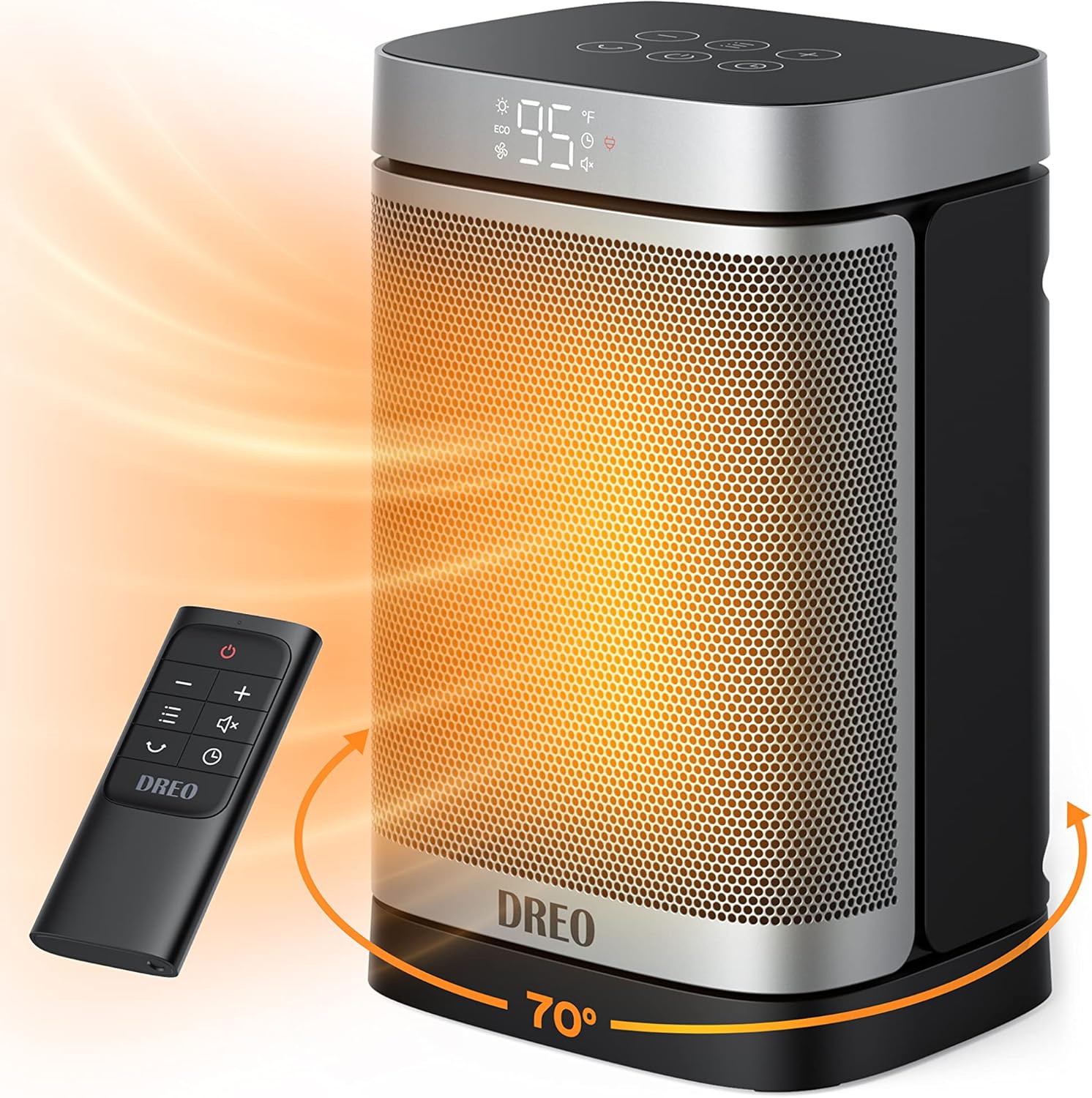
| Heat Output | 1500 watts |
|---|---|
| Heating Coverage | 200 sq.ft |
| Thermostat Range | 41-95 °F |
| Oscillation | 70° |
| Timer | 1-12 h |
The DREO Atom One is a compact 1500W PTC ceramic tower heater designed to deliver fast, directed warmth for small to medium indoor spaces. It uses a programmable digital thermostat (41 to 95°F in 1°F increments), 70° oscillation, and five power/speed modes including an ECO setting that adjusts output to maintain a set temperature while using less energy. Built-in safety features include tip-over and overheat protection plus an enhanced safety plug and detachable filter for basic dust control. The unit is quiet in operation thanks to a brushless DC motor and multi-blade fan, and the 1–12 hour timer and included remote make hands-off operation easy. For a crawl space, the heater offers focused heat output and safety certifications that matter in confined areas, but it is designed for indoor, dry locations and sits on the floor rather than mounting; it is not rated for damp or outdoor use and lacks specialized moisture protection or hardwired installation. Expect effective localized warming and programmable control, but plan placement and moisture management appropriately.
Best for: Someone who prioritizes reliable, controllable spot heating and safety features for occasional use in small enclosed areas and who will keep the unit in a dry, ventilated part of the crawl space.
Less Ideal for: Buyers seeking a moisture-resistant, hardwired, or permanently mounted heater for damp crawl spaces should consider heaters specifically rated for humid or outdoor utility locations instead.
- 1500W PTC ceramic element for fast, focused heat
- Programmable digital thermostat with 1°F increments for precise temperature control
- 70° oscillation and multiple modes including ECO to balance comfort and energy use
- Built-in tip-over and overheat protection with ETL-listed safety
- Quiet brushless DC motor and remote control with 1–12 hour timer
- Designed for indoor dry locations and not moisture- or vapor-rated for crawl spaces
- Floor-standing tower form factor limits mounting or permanent installation options
Verdict: A safety-focused, programmable 1500W tower heater that provides fast, quiet spot heating for dry, ventilated crawl spaces when moisture protection is not required.
DREO Portable Space Heater DR-HSH014

| Heat Output | 1500 watts |
|---|---|
| Heating Element | PTC |
| Heating Coverage | 107.6 – 215.3 sq.ft. |
| Thermostat Range | 41–95 °F |
| Special Features | 1-12h Timer, ECO Mode, 70° Oscillation |
This DREO tower heater uses a 1500W PTC ceramic element and forced-air fan to deliver fast, directed warmth across a room; it is intended for indoor use and includes a digital thermostat (41 to 95°F), 1–12 hour timer, three heat speeds plus ECO mode, 70° oscillation and remote control. In practice it heats quickly and the Hyperamics tech claim and 11.8 ft/s airflow mean you feel warmth sooner than with slower ceramic units, while the adjustable thermostat and timer make it easy to dial in and conserve energy. Safety features are robust for an electric heater: tip-over and overheat protection, V-0 flame-retardant materials, a safety plug and ETL listing. The brushless DC motor and winglet fan keep noise low for near-silent operation. The trade-offs are its tower form and corded design, which require dry, level placement and clearances; it is not built for damp, exposed or outdoor crawl spaces and does not include a built-in humidity or moisture safeguard. For enclosed, dry crawl spaces where you can place a stable, protected heater, it provides rapid, controllable heat with strong safety features.
Best for: Buyers who want a compact, safety-focused indoor heater that delivers quick, controllable warmth for enclosed, dry utility spaces and who value social proof and reduced risk from ETL-listed safety features.
Less Ideal for: People needing a heater for damp, unventilated, or outdoor crawl spaces or for installation where moisture protection and hardwired power are required should choose a purpose-built crawl-space heating solution.
- 1500W PTC ceramic element provides fast, direct heat
- Digital thermostat adjustable 41–95°F for precise temperature control
- Built-in safety: tip-over and overheat protection, safety plug and ETL listing
- 70° oscillation and remote control for wider coverage and convenient use
- Brushless DC motor and winglet fan design for relatively quiet operation
- Corded tower design requires dry, level placement and clearances
- Not moisture-rated for damp or unprotected crawl spaces
Verdict: A fast-heating, safety-focused indoor tower heater that is a sensible choice for dry, enclosed crawl spaces where quick, controllable warmth and verified safety matter.
Amazon Basics Ceramic Space Heater

| Heat Output | 1500 watts |
|---|---|
| Number of Speeds | 3 |
| Power Source | Corded Electric |
| Voltage | 120 volts |
| Max Temperature Setting | 130 °F |
This Amazon Basics ceramic space heater delivers quick, localized warmth using a 1500W ceramic heating element and convection airflow. It has three settings—high (1500W), low (900W), and fan-only—so you can dial heat output to match a small room or personal workspace, and an adjustable thermostat helps maintain a comfortable temperature. The unit is compact and lightweight, making it easy to move between rooms or set on a desk or floor. Safety features include tip-over and overheat protection plus a power indicator light, which suits cautious users who prioritize fail-safes. Noise is low around 43 dB, so it will not disturb sleeping or working household members. Practical limits are its small coverage area and non-oscillating design, so it is best for single-room spot heating rather than warming large crawl spaces or open areas; the manufacturer also advises against using it in damp locations. For routine indoor spot heating where portability and basic safety matter, it is a dependable, no-frills choice.
Best for: Buyers who want a safe, portable heater for spot-warming small, dry indoor spaces and value simple controls and built-in safety features.
Less Ideal for: People needing to heat large, open crawl spaces, damp environments, or whole-house areas should choose a purpose-built heater sized for those conditions.
- 1500W ceramic element provides fast, localized heating.
- Three settings including fan-only for adjustable comfort and circulation.
- Built-in tip-over and overheat protection with power indicator light.
- Compact, lightweight design for easy portability.
- Relatively quiet operation (~43 dB) suitable for bedrooms or offices.
- Not suitable for damp or high-moisture environments.
- Non-oscillating, so heat distribution is directional and limited to small areas.
Verdict: A compact, safety-focused portable heater that reliably warms small dry indoor spaces with simple controls and low noise.
Choosing the Right Heater for Crawl Space: Key Factors to Consider
Heat Output and Coverage
Measured output determines how effectively a heater for crawl space can keep the area above freezing and provide even warmth. Crawl spaces are typically low and insulated unevenly, so you need a unit that can maintain a stable minimum temperature rather than short, intense bursts that cause wide swings.
Consider the heater's rated output relative to your crawl space volume and local winter lows. Overpowered units may cycle frequently and waste energy, while underpowered ones will fail to prevent freezing in colder spells. Look for devices that specify minimum continuous output or a thermostat range suitable for freeze protection.
Safety Features and Certifications
Safety matters more in confined crawl spaces where combustible materials, limited ventilation, and restricted access increase risks. Confirm the heater includes features such as tip-over shutoff, overheating protection, enclosed heating elements, and sealed electrical connections.
Also check for relevant safety certifications or ratings that indicate testing for indoor use. For fuel-burning units, systems that include carbon-monoxide monitoring or require external venting should be considered carefully given crawl space ventilation constraints.
Moisture and Corrosion Resistance
Crawl spaces are prone to humidity, occasional water intrusion, and corrosive soils. Materials and finishes that resist rust and components protected against moisture will last longer and maintain safe operation.
Look for enclosures with corrosion-resistant coatings, raised or sealed electrical compartments, and designs that limit water exposure to critical parts. Units that are not moisture-tolerant may fail prematurely or create safety hazards when exposed to damp conditions.
Installation Constraints and Accessibility
Low clearance, irregular framing, and limited access points make installation a key consideration for a heater for crawl space. Choose models that can be mounted in constrained spaces, offer flexible mounting locations, or fit where panels and controls remain reachable from the entry point.
Also factor in the complexity of running power or fuel lines into the crawl space. Simpler mounting and clear wiring or piping routes reduce labor and the chance of mistakes that could compromise safety or performance.
Control Options and Thermostatic Behavior
Control features determine how well a heater maintains target temperatures and how efficiently it runs. A dedicated thermostat or integrated freeze-protection setting helps avoid wide temperature swings and reduces runtime.
Programmable or remote monitoring capability can be helpful if the crawl space is hard to access. Reliable control logic prevents excessive on/off cycling, which improves component life and steadier protection for pipes and structural elements.
Operating Cost and Energy Efficiency
Long-term cost matters because crawl space heaters often run through the cold months. Energy-efficient elements, good insulation pairing, and precise thermostatic control lower running expenses.
Compare expected power draw at typical operating levels rather than peak output alone. Features like low-watt standby modes, multi-stage heat, or efficient heat distribution can reduce electricity usage and monthly cost while still preventing freezing and condensation issues.
Placement Strategies for Even Crawl Space Heating
Where you place a heater affects how evenly heat is distributed and how well it protects vulnerable components like pipes and ducts. Position heaters to target the coldest spots, typically along exterior walls and near service lines that run through the space.
Avoid placing a heater directly against wood framing or insulation that could obstruct airflow. Use short runs of ducting or reflective panels if necessary to guide warm air toward critical areas without concentrating heat in one spot.
- Place units near pipe runs that are most exposed to exterior temperatures
- Use multiple low-output sources instead of one high-output unit for large, irregular spaces
- Keep clearances for airflow and maintenance access
Power Options and Electrical Considerations
Most crawl space heaters require dedicated electrical circuits to avoid overloading household wiring. Confirm the heater's current draw and verify the available circuit capacity before installation.
For installations with limited access to electricity, plan conduit routes and consider professional electrical work. Ground-fault protection and sealed conduit entries reduce the risk of moisture-related electrical faults in damp crawl spaces.
- Check required breaker size and wire gauge
- Prefer GFCI protection where codes or moisture warrant it
- Label the circuit for service technicians to avoid accidental shutdowns
Maintenance Tips for Longevity
Regular checks extend service life and maintain safety. Inspect for corrosion, clogged intake or exhaust paths, and secure wiring at least once per season or after any flooding event.
Replace or clean any removable filters, verify thermostats for accurate readings, and test safety cutouts. Keeping the space well-sealed from surface water and improving drainage reduces stress on the heater and lowers failure risk.
- Schedule seasonal visual inspections
- Address any water intrusion promptly
- Test safety features and thermostats periodically
Combining Insulation and Heating for Best Results
Heating works best when paired with proper crawl space insulation and vapor control. Insulate the band joist and underside of the floor to reduce heat loss and limit the heater's workload.
A vapor barrier on the ground reduces moisture and helps the heater maintain stable temperatures. When insulation is improved, smaller or lower-wattage heaters can be effective and more efficient.
- Insulate exterior walls and rim joist areas
- Install a ground vapor barrier to reduce humidity
- Coordinate insulation upgrades before upsizing a heater
When to Call a Professional
Hire a qualified installer if you need electrical upgrades, fuel-line routing, or if the crawl space has a history of flooding. Professionals can verify code compliance, recommend proper clearances, and test safety interlocks after installation.
If your crawl space has complex venting or structural concerns, professional assessment ensures the heating solution will not create condensation or ventilation problems that lead to mold or wood decay.
- Electrical circuit modifications
- Fuel-burning unit venting or combustion-air evaluation
- Post-install safety and performance verification
How We Chose the Best Heater for Crawl Space
We selected heaters based on attributes that matter for crawl spaces: consistent low-temperature heat output to prevent freezing, integrated safety systems to reduce fire and carbon-monoxide risks, moisture tolerance for damp conditions, ease of installation in tight and low-clearance areas, and long-term operating cost measured by efficiency and controls. We prioritized units with thermostatic control or proven cycling patterns that maintain minimum temperatures without excessive runtime. Noise level during continuous operation and straightforward maintenance access were also considered since crawl spaces are often visited infrequently. Units lacking basic safety interlocks, without clear moisture-protection ratings, or without any form of temperature control were excluded. Our filters favored products intended or rated for enclosed, low-clearance spaces and those that balance heat delivery with energy efficiency and straightforward installation. The resulting list reflects those priorities and provides options across installation styles and control approaches.
Our full evaluation process is outlined in our review methodology.
FAQ
How much heat do I need for a typical crawl space?
It depends on the crawl space volume, insulation level, and local climate. Estimate heat load by calculating cubic footage and considering worst-case outdoor lows, then choose a unit with steady low-end output suitable for freeze protection.
Can I use a standard space heater in a crawl space?
Standard space heaters are often not designed for damp, confined environments and may lack required moisture protection and mounting options. Use heaters intended or rated for enclosed, low-clearance spaces and confirm their safety features.
Will a crawl space heater prevent all moisture problems?
A heater can reduce condensation by raising temperatures, but it does not replace proper vapor barriers, drainage, and insulation. Addressing moisture at its source is necessary to prevent persistent dampness and mold risk.
How often should I inspect a crawl space heater?
Inspect visually at least once per heating season and after any flooding. Check for corrosion, secure wiring, and test safety cutouts and thermostat accuracy to ensure continued reliable operation.
Are fuel-burning heaters safe in crawl spaces?
Fuel-burning heaters require careful ventilation and must be installed to prevent combustion hazards and carbon-monoxide buildup. In many crawl spaces, electric options are safer unless a qualified professional verifies correct venting and combustion-air supply.
Final Verdict
Prioritize steady low-temperature output, robust safety features, and moisture resistance when choosing a heater for crawl space protection. Match unit capacity to your crawl space volume and insulation level, and plan installation with access, electrical supply, and maintenance in mind. Balancing efficient controls and corrosion-resistant construction will reduce operating cost and extend service life. With the right priorities, you can protect pipes and structural elements reliably without oversizing or compromising safety.