
Note: This article contains affiliate links. If you click on these links and make a purchase, we may earn a small commission at no extra cost to you. This helps support our research and content. Read our full affiliate disclosure here.
When the power goes out, maintaining warmth is both a comfort and a safety priority. Choosing the right heater for power outage scenarios means balancing heat output, fuel availability, and safe indoor use so you can keep living areas comfortable without risking carbon monoxide exposure or fire hazards. This guide highlights six shortlisted heaters that excel as backup heat options, and explains the practical criteria we used to evaluate them. You'll find clear discussion of heating capacity, fuel and power requirements, ventilation and safety needs, and portability so you can pick the best solution for your home and outage patterns.
Top Picks at a Glance
| Best Overall The best all-around choice for most situations | Mr. Heater Big Buddy MH18B |  |
| Best Quality Built to a higher standard if you want something more solid | DR. INFRARED HEATER DR-238 |  |
| Best Value The sweet spot between price and what you get | QQT Ceramic Space Heater QTS-01 |  |
| Best Budget The cheapest option that still gets the job done reliably | Amazon Basics Ceramic Space Heater |  |
| Top Rated A top-rated pick with lots of positive feedback | Mr. Heater Portable Buddy F232000 |  |
| Most Popular A crowd favorite that many people choose with confidence | GiveBest Portable Space Heater PTC-905 |  |
Mr. Heater Big Buddy MH18B

| Heat Output | 18,000 BTU |
|---|---|
| Heat Settings | 4,000 / 9,000 / 18,000 BTU |
| Heating Coverage | 450 sq ft |
| Fuel Type | Propane |
| Number of Speeds | 3 |
The Mr. Heater Big Buddy MH18B is a portable propane pedestal heater built to warm small to medium spaces during outings or emergencies. It offers three heat settings (4,000 / 9,000 / 18,000 BTU) and claims coverage up to 450 sq ft, using dual ceramic burners and a built-in fan to mix radiant comfort with convective airflow. The unit runs on 1 lb. propane cylinders or can hook up to a 20 lb. tank with accessories, and swivel regulators simplify fuel connection. Safety features geared to indoor use include an oxygen depletion sensor, tip-over shutoff, and thermal shut-down, which are important during power outages when ventilation may be limited. Practical limits are its reliance on propane fuel and the need to store spare cylinders or a hose for long runtime, and it produces combustion byproducts so some ventilation is still required. For emergency heating when electricity is out, the Big Buddy gives strong, immediate heat and straightforward operation, but buyers should plan fuel logistics and safe placement before use.
Best for: Buyers who want a powerful, portable, fuel-powered heater for emergency backup or temporary indoor/outdoor warmth and who prioritize quick, high BTU output over electric convenience.
Less Ideal for: People who need an all-electric backup solution, cannot store or transport propane safely, or need truly continuous multi-day heating without arranging additional fuel.
- High maximum output up to 18,000 BTU for rapid warming of a room or shelter
- Three heat settings let you balance fuel use and warmth
- Works with 1 lb. propane cylinders or can connect to a 20 lb. tank for extended runtime
- Built-in safety systems including oxygen depletion sensor and tip-over shutoff support indoor emergency use
- Portable pedestal design with swivel regulator for easy setup and transport
- Requires propane fuel and spare cylinders or a hose for long-duration outages
- Produces combustion byproducts so it must be used with some ventilation even indoors
- Not electric so cannot run without fuel during extended multi-day outages without resupply
Verdict: A rugged, high-output propane heater that delivers fast, reliable emergency heat when the power is out, provided you can supply and store propane safely.
DR. INFRARED HEATER DR-238

| Power settings | 900W / 1200W / 1500W |
|---|---|
| Voltage | 120 volts |
| Number of speeds | 3 |
| IP rating | IP55 |
| Included components | Heater, Mounting brackets, Remote Control |
The DR-238 is a carbon infrared heater designed to mount on a wall or ceiling and provide targeted, instant radiant heat for patios, garages, or indoor rooms. It plugs into a standard 120V outlet and offers three power settings (900W, 1200W, 1500W) along with a remote for quick adjustments, making it easy to aim heat where people are seated rather than heating all the air. Built from anodized aluminum with a high-reflectivity mirror backing and an IP55 rating, it tolerates damp outdoor conditions better than basic indoor-only units. Typical use is as a zone heater for outdoor dining areas or a garage workspace where you need fast comfort without ductwork. Limitations for the outage-use context are that it requires mains power and does not include an internal thermostat, so runtime depends on your backup power capacity and you will need to manage settings manually. The unit is compact and straightforward to mount, but because it is a high-wattage appliance at full output it can draw significant current from generators or inverters, so plan power supply accordingly.
Best for: Buyers who prioritize powerful, focused radiant heat for specific zones and who can supply steady electrical power during outages or with a sufficiently sized generator.
Less Ideal for: People looking for a heater that works on battery backup or low-wattage inverter systems, or those who want whole-house heat without targeted mounting and aiming.
- Three selectable power levels for flexible heat output
- IP55-rated construction for safe outdoor and damp-area use
- Wall or ceiling mounting saves floor space and directs heat
- Includes remote control and mounting hardware for easy installation
- Requires a 120V mains connection and draws up to 1500W at full power
- No built-in thermostat means temperature must be managed manually
Verdict: Choose the DR-238 when you need fast, directional infrared heat from a durable wall- or ceiling-mounted unit and have reliable 120V backup power or a generator sized to handle up to 1500W.
QQT Ceramic Space Heater QTS-01
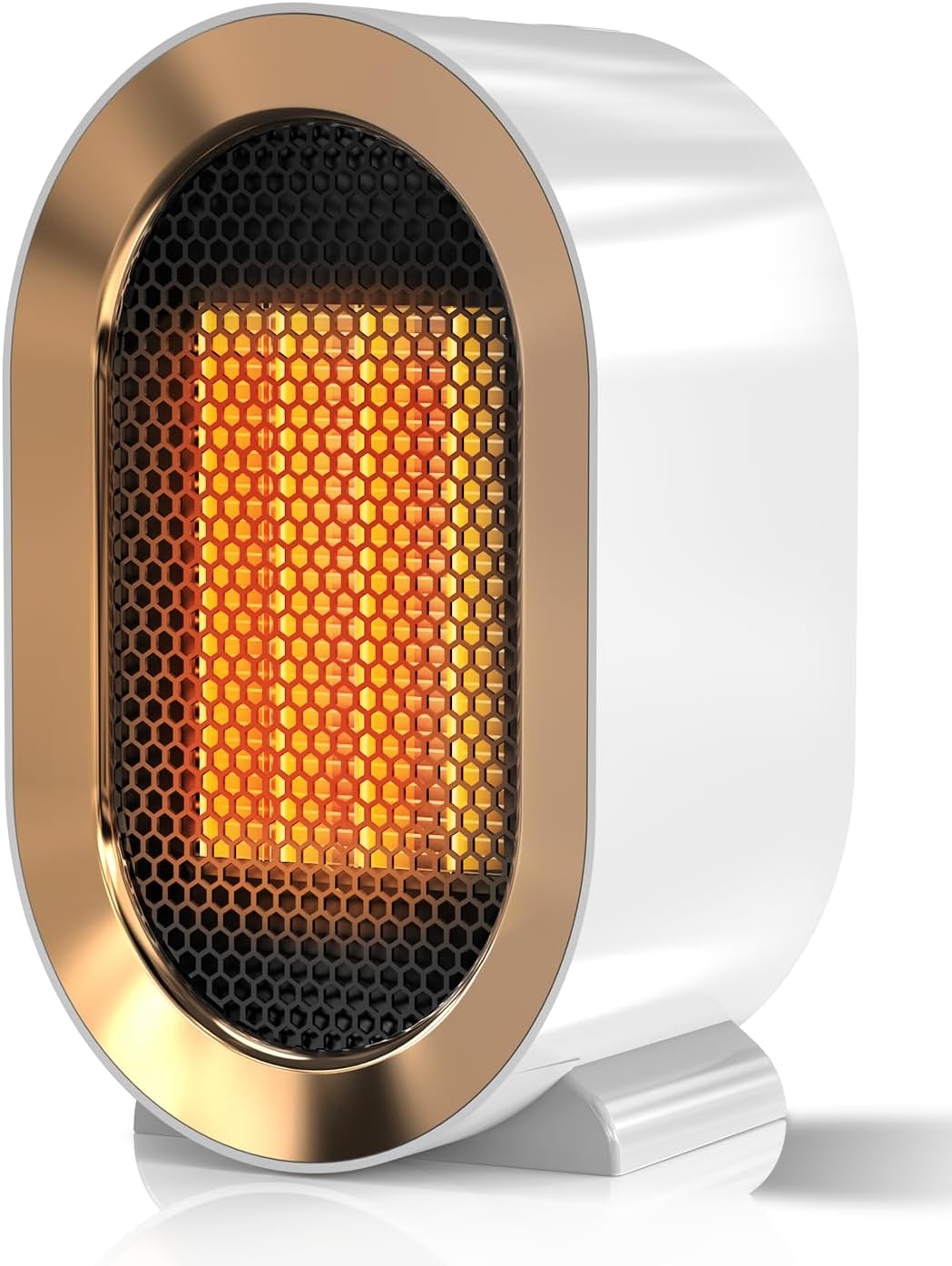
| Heat Output | 1200 watts |
|---|---|
| Heating Element | PTC ceramic |
| Number of Speeds | 2 |
| Indoor Outdoor Usage | Indoor |
| Heating Coverage | 200sq.ft |
The QQT Ceramic Space Heater is a small PTC tower heater intended to give fast, focused warmth in bedrooms, offices, or at a desk. It runs at 1200 watts and offers two heat settings so you can choose quicker high output or a lower energy setting for longer use. The PTC ceramic element and airflow design aim to deliver even heat without a lot of fan noise, and the unit is rated under 30 dB so it is unobtrusive around sleep or work. Built-in safety features include overheat shutoff, 45 degree tip-over power cut, flame-retardant ABS housing, and an insulated plug. Its hidden handle and light weight make it easy to move between rooms, but the small footprint and single-zone output mean it is best for personal spaces rather than heating large areas. Note that the unit relies on 1200W mains power, so during extended outages you will need a suitable generator or inverter to run it.
Best for: Buyers who want a no-frills, energy-conscious personal heater to warm a single room or workspace quickly and quietly.
Less Ideal for: If you need to heat multiple rooms, large living areas, or run without grid power for long periods, choose a higher-output heater or a heat source designed for off-grid use.
- Compact, lightweight tower design is easy to move and fits on tabletops
- PTC ceramic element provides quick, steady heat with low fan noise
- Two heat settings let you balance warmth and energy use
- Multiple safety features including overheat shutoff and tip-over protection
- 1200W output limits effective coverage to small rooms and personal zones
- Requires mains power so not suitable without a generator or inverter during outages
Verdict: A portable, quiet 1200W ceramic heater that delivers fast personal warmth with solid safety features for small indoor spaces.
Amazon Basics Ceramic Space Heater

| Heat output | 1500 watts |
|---|---|
| Number of speeds | 3 |
| Power source | Corded Electric |
| Voltage | 120 volts |
| Max temperature setting | 130 °F |
This Amazon Basics ceramic space heater delivers straightforward, portable warmth for small rooms during short-term outages or spot heating. It offers three settings — high (1500W), low (900W), and fan-only — plus an adjustable thermostat so you can dial back output to stretch runtime on a generator or battery-backed supply. The ceramic element provides rapid convection heating with a relatively low noise level, and built-in tip-over and overheat protection add basic safety for household use. Its lightweight, tabletop form factor makes it easy to move between a bedroom, home office, or living area, and the power indicator light shows when it is active. Limitations include the lack of oscillation and that it is a high-draw 120V resistive heater, so continuous use during an extended power outage will quickly consume generator or inverter capacity; it is best for short bursts of heat or supplemental warmth rather than whole-house heating.
Best for: Buyers needing an inexpensive, portable heater for quick, localized warmth during brief outages or to supplement a room when conserving power is a priority.
Less Ideal for: People who need to heat large areas for long periods during extended outages or who require low-wattage, continuous heating solutions designed for off-grid use.
- Three heat settings including 1500W for quick warmth and 900W to reduce power draw
- Adjustable thermostat lets you lower output to conserve generator or inverter power
- Compact, lightweight design is easy to move and position on a table or floor
- Built-in tip-over and overheat protection improve safety during unattended short-term use
- High power draw at 1500W makes it unsuitable for long continuous use on small generators or battery inverters
Verdict: A low-cost, portable ceramic heater that provides fast spot heat and a lower-power setting to help conserve generator or inverter capacity during short power outages.
Mr. Heater Portable Buddy F232000

| Heat Output | 9000 british thermal units |
|---|---|
| Heating Coverage | 225 |
| Fuel Type | Propane |
| Number of Speeds | 2 |
| Included Components | Piezo Igniter, Portable Buddy Heater |
The Mr. Heater Portable Buddy is a compact radiant propane heater built for quick, reliable warmth during cold snaps or power outages. It runs on a 1 lb propane cylinder (with optional adapters for a 20 lb tank), offers low and high settings that deliver up to 9,000 BTU, and is rated to heat roughly 225 square feet. Practical safety features include an oxygen depletion sensor, thermal shutoff, and tip-over switch, which make it suitable for enclosed spaces when used per instructions. The unit's piezo igniter and easy-grip handle simplify startup and transport, and a single 1 lb cylinder provides several hours of run time depending on the setting. Expect direct, radiant heat rather than whole-room convection, so placement matters for maximum comfort. There is also a modest electrical spec listing but no reliance on household power, which is valuable during outages. Buyers should follow the included safety guidance and ensure adequate ventilation when operating indoors.
Best for: People who prioritize a reliable, fuel-powered backup heater that starts without electricity and offers straightforward safety features for short-term emergency heating.
Less Ideal for: Those who need even, whole-room heating for large indoor spaces or continuous multi-day operation without frequent fuel resupply.
- Runs on 1 lb propane cylinder with optional 20 lb tank hookup for extended use
- Produces up to 9,000 BTU and can heat about 225 sq ft
- Built-in safety systems: oxygen depletion sensor, thermal shutoff, and tip-over switch
- Portable design with easy-grip handle and piezo igniter for tool-free startup
- Provides radiant, directional heat rather than even whole-room heating
- Run time on a 1 lb cylinder is limited and varies significantly by heat setting
Verdict: A dependable, no-electric radiant propane heater that delivers quick, portable warmth and built-in safety for emergency power outages.
GiveBest Portable Space Heater PTC-905

| Heat output | 1500 watts |
|---|---|
| Secondary heat | 750 watts |
| Heating coverage | 200 sq.ft |
| Number of speeds | 2 |
| Voltage | 120 volts of alternating current |
The GiveBest PTC-905 is a small ceramic heater meant to warm single rooms quickly. It offers two heat modes (1500W and 750W) plus a cool fan setting, and an adjustable electronic thermostat that cycles the unit to hold a set temperature. Practical safety features include overheat shutoff, tip-over protection with an audible beep, and flame-retardant housing, which make it suitable for everyday use in bedrooms, offices, and bathrooms. The built-in carry handle and light weight make it easy to move where you need targeted heat, and the manufacturer rates it to cover up to about 200 sq ft when positioned correctly. Limitations to keep in mind are that it is a plug-in electric heater, so it requires mains power and will not run in a power outage without a generator, and its compact size means it is intended for spot heating rather than whole-house use. Noise is low for this class but the fan is audible on higher settings.
Best for: Buyers who want a compact, safety-minded heater for targeted indoor warmth in bedrooms, home offices, or small living spaces and who rely on user reviews and proven features when choosing appliances.
Less Ideal for: People who need backup heat during power outages or who want to heat large open areas; those users should consider fuel-based or generator-compatible solutions.
- Two heat settings plus cool-fan mode for year-round use.
- Electronic thermostat that cycles to maintain a set temperature.
- Multiple safety protections including overheat shutoff and tip-over sensor.
- Compact and lightweight with a built-in carry handle for easy repositioning.
- Requires 120V mains power so it cannot provide heat during a power outage without external power.
- Designed for spot or single-room heating rather than large areas.
Verdict: A compact, safety-focused ceramic heater that delivers fast spot heat for small rooms when mains power is available.
Choosing the Right Heater for Power Outage: Key Factors to Consider
Heat Output and Coverage
Heat output determines how effectively a heater will warm an indoor space during an outage. Look for units with clear BTU or kilowatt ratings and guidance on square-foot coverage so you can match capacity to the rooms you plan to heat. Remember that rated output assumes certain insulation and ambient conditions; poorly insulated rooms or open floor plans will require greater output.
Considering coverage helps avoid underpowered choices that run continuously without achieving comfort. For intermittent or short outages, a smaller, targeted heater may work. For prolonged outages in cold climates, choose a unit with higher sustained output or plan to seal and heat a smaller zone.
Fuel Type, Availability, and Runtime
The fuel a heater uses directly affects how practical it will be in a power outage. Options include propane, kerosene, wood, or battery-backed electric models. Assess local fuel availability and safe indoor storage before selecting a unit. Runtime estimates at typical settings give a realistic picture of how long a heater will keep heating between refills or battery recharges.
Also evaluate refueling logistics during winter conditions and whether you can safely store backup fuel on site. For battery-based solutions, check realistic discharge curves and whether the unit supports external battery packs or solar recharging to extend runtime.
Indoor Safety and Ventilation Requirements
Safety is the top priority when using any heater inside during an outage. Combustion heaters need either venting or robust safety systems such as oxygen depletion sensors and carbon monoxide alarms. Even ventless combustion units should be used only with a clear understanding of ventilation needs and manufacturer guidance.
Look for built-in safety shutoffs for tip-over and overheating. Also plan for proper placement away from combustible materials and ensure carbon monoxide monitoring is part of your outage preparedness. Units with clear, simple ventilation instructions and safety interlocks reduce operational risk.
Portability and Ease of Setup
During an outage you may need to move heating to a single room or cabin in the home. Portability matters: lighter units with handles, integrated wheels, or compact footprints are easier to relocate. Consider whether the heater needs tools or professional help to set up; simpler, tool-free start-up is preferable under stress.
Also account for where you will store the unit when not in use and whether it requires additional accessories such as fuel canisters, hoses, or chimneys that affect transport and setup time.
Maintenance and Reliability
A reliable heater for outages should start and run dependably after periods of storage. Inspect build quality, access to routine maintenance items, and how easy it is to perform cleaning, filter changes, or spark plug checks if applicable. Low-maintenance designs reduce the chance of failure during critical moments.
Availability of replacement parts and straightforward troubleshooting information are also important. For combustion heaters, periodic inspection of vents and seals prevents performance loss and safety hazards.
User Controls and Operation in Low-Light
Controls should be simple to use during stressful outage situations. Large knobs, clearly labeled settings, and audible or visual status indicators make operation easier in low light. Electronic displays are helpful but should have battery backup or non-electric manual controls when possible.
Ignition method matters too. Push-button or electric ignitions are convenient but may depend on a charged battery; manual or battery-free ignition options increase robustness in long outages.
How to Choose the Right Backup Heating Strategy
Decide whether you need whole-home backup heating or the ability to keep one or two rooms warm. Zoning the home and closing off unused rooms reduces required capacity and fuel consumption. For many households, a strategic approach that focuses on insulating and heating a central sheltering room is the most fuel-efficient and safe option.
Plan for redundancy. Combine a primary heater with secondary solutions such as heavy blankets, insulated curtains, and emergency sleeping bags to extend the period between refuels or recharges.
- Identify the smallest comfortable zone to heat
- Prepare barriers and door seals to retain warmth
- Keep emergency blankets and warm bedding accessible
Ventilation and Carbon Monoxide Precautions
If you choose a combustion-based heater, understand exactly whether the unit requires an external vent or if it is designed for ventless use. Even ventless units exchange combustion byproducts with the room air, so carbon monoxide and moisture buildup are risks without monitoring and occasional airing out.
Install functioning carbon monoxide detectors on every floor and check batteries regularly. Never sleep in a room with a combustion heater running without a working detector and following the unit's ventilation instructions.
- Place detectors near sleeping areas
- Test detectors monthly and keep fresh batteries
- Open a window slightly if directed by the heater's manual
Safe Fuel Storage and Handling
Storing fuel safely reduces fire and contamination hazards. Keep portable fuel cans in well-ventilated, cool locations away from living spaces. Follow local regulations for quantities and approved containers.
Label fuel containers clearly and keep a spill kit or absorbent materials nearby. When refueling, move the heater outdoors or to a well-ventilated area and cool the unit first if required.
- Use approved containers for each fuel type
- Store fuels away from living spaces and ignition sources
- Rotate stored fuel periodically to maintain freshness
Battery and Power Considerations
Some electric heaters rely on battery backups, inverter systems, or generator power. Evaluate battery capacity and whether the heater supports external battery packs or solar recharging. For inverter or generator setups, confirm continuous power draw ratings so you do not overload the supply.
If you plan to use a generator to power an electric heater, select a generator and cabling arrangement matched to the heater's starting and running draw and follow safe transfer procedures to avoid backfeed hazards.
- Match battery/inverter output to heater requirements
- Consider using lower-power settings to extend runtime
- Keep batteries charged and stored in moderate temperatures
Setting Up a Safe Heating Zone
Create a designated heating zone with clear placement rules. Keep the heater at least the manufacturer-recommended distance from walls, furniture, and fabrics. Use a noncombustible floor surface or an approved mat as directed.
Establish a routine check schedule during operation: verify detector readings, monitor fuel levels, and ensure vents remain unobstructed. Limit the number of occupants in the heated zone if ventilation is marginal.
- Maintain clearances as recommended
- Use carbon monoxide and smoke detectors
- Check the heater periodically for proper operation
How We Chose the Best Heater for Power Outage
We focused on heaters that are practical for use during electrical outages, prioritizing reliable heat delivery, safe indoor operation, and fuel logistics. Our evaluation filtered for units that deliver measurable heat output relative to room size, offer safe combustion or electric backup options, and include features that reduce indoor risk such as oxygen depletion sensors, tip-over shutoffs, and clear ventilation requirements. We also assessed portability and runtime so buyers can understand how long a unit will maintain warmth on a given fuel supply, plus ease of ignition and ongoing operation during stressful conditions. Durability and simple user controls were considered because outages often occur in winter weather and in low-light conditions. We excluded specialty outdoor-only appliances and units that explicitly require permanent hardwiring or professional installation. Final selection emphasized concrete specifications and real-world practicality: rated heat output, fuel type and capacity, safety features, run time estimates, and portability. Those dimensions formed the backbone of our scoring and kept the list focused on dependable backup heating in power outage situations.
Our full evaluation process is outlined in our review methodology.
FAQ
Is it safe to run a combustion heater indoors during a power outage?
It can be safe only when the heater is explicitly designed for indoor use and when you follow ventilation and safety requirements. Always use carbon monoxide detectors and adhere to the unit's placement and ventilation instructions.
How long will a portable heater keep a room warm during an extended outage?
Runtime depends on the heater's output, fuel type, and room insulation. Manufacturers provide runtime estimates at specific settings; real-world runtime will vary with temperature, drafts, and how tightly the space is sealed.
Can I use a generator to power my electric heater during an outage?
Yes, but confirm that the generator can handle the heater's starting and running power draw. Use proper transfer equipment and follow safe generator operating practices to avoid electrical hazards.
What should I do if my carbon monoxide detector alarms while a heater is running?
Turn off the heater immediately, ventilate the space by opening windows and doors, and move occupants to fresh air. Do not restart the heater until the source of the alarm is identified and addressed.
Are battery-powered electric heaters a practical option for outages?
They can be practical for short-term needs or small spaces, especially if paired with external battery packs or solar chargers. For prolonged cold periods, combustion or generator-backed solutions usually offer longer runtimes.
Final Verdict
Choosing a heater for power outage use means balancing heat output, fuel logistics, and indoor safety. Prioritize units with clear coverage ratings, strong safety systems, and fuel or battery arrangements you can maintain during an extended outage. Consider portability and simple operation so the heater performs when you need it most. By planning a heating zone, verifying ventilation and detector function, and matching fuel strategy to outage duration, you can select a dependable backup heater that keeps household members safe and reasonably comfortable.