
Note: This article contains affiliate links. If you click on these links and make a purchase, we may earn a small commission at no extra cost to you. This helps support our research and content. Read our full affiliate disclosure here.
When you want to extend evenings on the patio, the right outdoor electric heater makes cold nights comfortable without fuss. You need a unit that produces steady, usable warmth, holds up to moisture and wind, and is safe for regular outdoor use. This guide covers the top shortlisted outdoor electric heaters selected for consistent heat output, durability in typical backyard conditions, and practical mounting or placement options. Below are our top picks with clear evaluation points you can use to match a heater to your patio layout and usage patterns. Read on for the criteria we used and the factors that matter most when choosing outdoor electric heat.
Top Picks at a Glance
| Best Overall The best all-around choice for most situations | Briza Infrared Patio Heater |  |
| Best Quality Built to a higher standard if you want something more solid | Eurofase EF60240B Infrared Patio Heater |  |
| Best Value The sweet spot between price and what you get | SereneLife 900W Patio Heater SLOHT52 |  |
| Best Budget The cheapest option that still gets the job done reliably | Dura Heat EUH1465 1500W Heater |  |
| Top Rated A top-rated pick with lots of positive feedback | sundate Hanging Patio Heater |  |
| Most Popular A crowd favorite that many people choose with confidence | DR. INFRARED HEATER DR-238 |  |
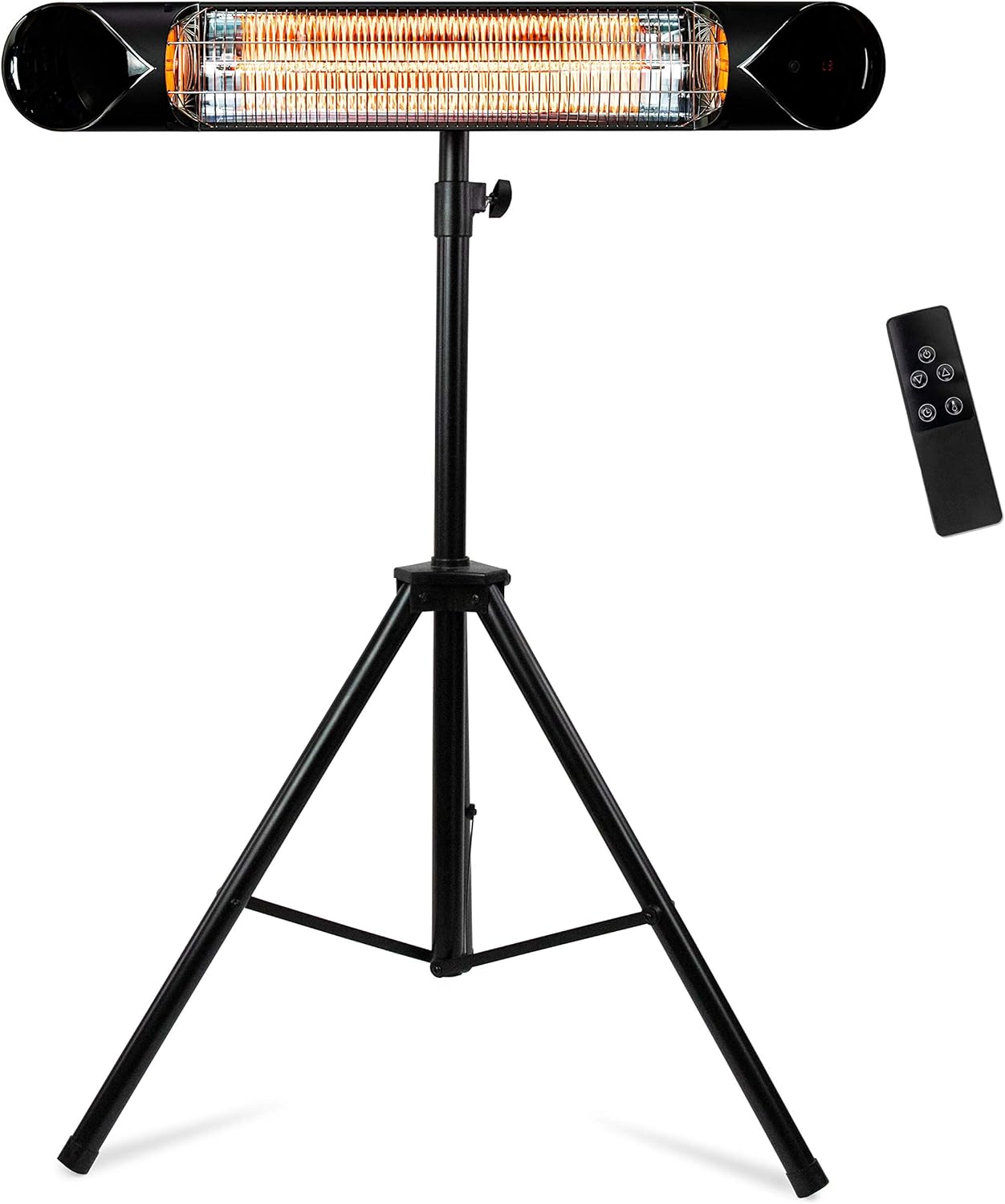
Briza Infrared Patio Heater
| Heating Method | infrared heating |
|---|---|
| Heat Output | 1500 watts |
| Number of Speeds | 3 |
| Voltage | 120 volts |
| Cable Length | 84 inches |
The Briza Infrared Patio Heater is a versatile electric radiant heater that works as a wall or ceiling unit or as a portable tower on the included tripod stand. It uses carbon infrared heating at three power levels (900W, 1200W, 1500W) to warm surfaces and people directly rather than heating air, which makes it effective for patios, garages, and other semi-open spaces. The unit includes an 84-inch power cable, remote control for on/off, timer and heat-level adjustments, and a tip-over safety sensor for peace of mind. With an IP55 rating it is built to resist rain, snow, dust and sand, so it holds up outdoors; the multiple mounting options make it easy to position for directional heating. Expect focused radiant warmth rather than whole-area convection heating, and note that maximum outdoor coverage is limited compared with larger commercial patio heaters. For homeowners wanting flexible, targeted outdoor or garage heating, this is a practical, easy-to-install option.
Best for: Buyers who want a flexible, weather-resistant infrared heater for patios, garages, or covered outdoor spaces and value easy installation and remote control convenience.
Less Ideal for: People who need to heat very large, fully open outdoor areas or who prefer whole-space convection heating should consider more powerful commercial-style heaters.
- Multiple mounting options include wall, ceiling, or tripod stand for flexible placement
- Three selectable power levels (900W, 1200W, 1500W) to match heating needs
- Remote control with timer lets you adjust power and set automatic shutoff from a distance
- IP55 weather resistance for reliable outdoor use in rain, snow, dust, and sand
- Radiant heat provides focused warmth and may not warm large open outdoor areas uniformly
Verdict: A weatherproof, easy-to-install infrared heater that delivers targeted radiant warmth with remote and timer control for patios and covered outdoor spaces.
Eurofase EF60240B Infrared Patio Heater

| Heat Output | 6000 watts |
|---|---|
| Heating Coverage | 121 square feet |
| Voltage | 240 volts |
| Amperage | 25 A |
| Mounting Type | Ceiling Mount |
This Eurofase EF60240B is a high-output infrared electric heater intended for mounting on a ceiling or wall to warm people and surfaces rather than the air. With 6000 watts at 240 volts it delivers near-instant radiant heat across its advertised 121 square foot coverage, making it useful for covered patios, pergolas, garages, or commercial outdoor dining areas. The unit is corded electric and built in steel with a heavy-duty form factor, which should stand up to regular seasonal use; infrared heating is energy-efficient because it directs warmth at objects and occupants instead of wasting power heating ambient air. Installation requires a 240V, 25A supply and secure ceiling or wall mounting, so professional wiring and proper placement are important. There is a one-year manufacturer warranty and simple included instructions, but the heater is relatively large and intended for fixed installation, so it is not a portable solution. If you need fast, focused radiant heat for a covered outdoor spot or semi-enclosed commercial space, this model provides strong, reliable performance.
Best for: Buyers who prioritize strong, fast radiant heat for covered outdoor areas or semi-enclosed commercial spaces and who can provide a 240V electrical connection and a permanent mount.
Less Ideal for: People who need a portable or temporary heater, who lack access to a 240V/25A circuit, or who plan to heat fully open outdoor areas without overhead cover.
- High 6000W heat output for fast, powerful radiant warmth
- Designed for ceiling or wall mounting to heat people and surfaces directly
- Suitable for indoor and covered outdoor use such as patios or pergolas
- Steel heavy-duty construction for durable, seasonal use
- Requires 240V/25A electrical supply and professional installation
- Fixed mounting makes it unsuitable as a portable or temporary heater
Verdict: Choose this Eurofase infrared heater when you need a powerful, fixed 240V unit that delivers rapid radiant warmth for covered outdoor or semi-enclosed spaces.
SereneLife 900W Patio Heater SLOHT52

| Heating Method | Infrared |
|---|---|
| Heat Output | 900 watts |
| Indoor Outdoor Usage | Indoor, Outdoor |
| Heating Coverage | 15 sq. ft. |
| Power Source | Electric |
The SereneLife 900W patio heater is a compact tower-style infrared unit meant to provide quick, localized warmth for small outdoor seating areas. It uses carbon fiber radiant elements to deliver odorless, sun-like heat and offers three power settings controlled from an included remote, so you can adjust output without leaving your seat. The aluminum alloy housing and IP65 rating make it suitable for covered patios or occasional outdoor exposure, and built-in safety features such as tip-over cutout, overheat protection, and a mesh guard help reduce risk around kids and pets. At 900 watts it is energy efficient for short-range heating but is best for zones up to about 15 square feet rather than whole patios. Assembly is straightforward with the supplied screws and Allen key, and operation is quiet. Expect good spot heating for a small table or gazebo, but not enough output for larger groups or very cold nights.
Best for: Buyers who want an efficient, low-noise electric heater for targeted spot-warming on patios, porches, or small outdoor dining areas and who prioritize weather resistance and safety features.
Less Ideal for: People needing to heat large, open outdoor spaces or groups larger than a small table setting should choose a higher-output or gas-powered solution.
- Infrared carbon fiber element provides near-instant, odorless heat.
- IP65-rated aluminum alloy housing for weather resistance and corrosion protection.
- Remote control and three power settings for convenient, adjustable warmth.
- Multiple safety features including tip-over switch and overheat protection.
- 900W output limits effective coverage to small areas around 15 sq. ft.
- Not intended to replace gas or high-output heaters for larger outdoor gatherings.
Verdict: A compact, weather-resistant infrared heater that delivers efficient, safe spot-warming for small outdoor areas.
Dura Heat EUH1465 1500W Heater

| Heat output | 5,120 BTU |
|---|---|
| Power | 1500 Watts |
| Heating coverage | 250 sq ft |
| Voltage | 120 volts |
The Dura Heat EUH1465 is a small, portable forced-air heater built for garages, workshops, basements, and similar spaces where quick, targeted warmth is needed. It delivers 1500W (about 5,120 BTU) through a PTC ceramic heating element and a high-velocity fan, and provides both heat and fan-only modes for year-round use. The unit's rugged steel cabinet, carry handle, and stable base make it easy to move and position, and the built-in thermostat plus overheat shutoff add practical safety and temperature control. It runs on a standard 120V outlet and includes a 6 ft polarized cord for flexible placement. Because it is a compact, single-speed heater with a focus on spot heating, it is best for small areas or supplementing a larger system rather than heating an entire home. The simple controls and durable construction make it a sensible, no-frills option when you need reliable warmth in a garage or workspace without complex features.
Best for: Buyers on a tight budget who need a tough, portable heater for small indoor work areas and want straightforward, reliable performance without extra bells and whistles.
Less Ideal for: People who need to heat large outdoor patios or whole rooms for long periods should look at higher-capacity or outdoor-rated models.
- 1500W PTC ceramic element for efficient, fast heat.
- High-velocity fan and fan-only mode for better air circulation.
- Rugged steel body and carry handle for durability and portability.
- Built-in thermostat and overheat shutoff for safer, controlled operation.
- Single speed fan limits fine-grained airflow control.
- Designed for small areas so it will not heat large outdoor spaces effectively.
Verdict: A rugged, budget-friendly 1500W forced-air heater that reliably heats small garages and workshops when you need simple, portable warmth.
sundate Hanging Patio Heater

| Heating Element | Carbon Fiber Heating Tube |
|---|---|
| Heat Output | 1500 watts |
| Mounting Type | Ceiling Mount |
| Indoor Outdoor Usage | Outdoor |
| Power Source | ac |
This hanging patio heater uses a 1500W carbon fiber heating tube to deliver near-instant radiant warmth directly to people and surfaces rather than heating the air. It mounts to a ceiling or overhead beam with the included adjustable chains and plugs into a standard 120V outlet for straightforward installation. The fanless design runs quietly and produces a soft ambient glow, making it suitable for covered patios, gazebos, garages, or other outdoor seating areas where a focused heat source is needed. Weatherproof construction and a protective dust cover mean it can be left in outdoor environments, and the supplied remote and digital display let you change settings without climbing up to the unit. Because it radiates heat, coverage is directional and best for warming people or a table area beneath it rather than heating large open yards, so placement matters. The unit is practical for supplemental outdoor comfort but requires proper mounting height and positioning to work most effectively.
Best for: Buyers who prioritize a dependable, no-fuss outdoor heater to provide quick, focused warmth for covered patios or seating areas and value quiet, weather-resistant operation.
Less Ideal for: People who need to heat wide open outdoor spaces or who cannot install a ceiling-mounted unit should consider other heating approaches.
- Fast infrared heat from a carbon fiber tube provides near-instant warmth to people and objects
- Ceiling-mount hanging design saves floor space and includes adjustable chains for flexible placement
- Weatherproof housing and protective cover make it suitable for covered outdoor use
- Fanless operation is quiet and creates a pleasant ambient glow
- Includes remote control and digital display for convenient adjustment
- Radiant heat is directional and best for localized zones rather than heating large open areas
- Requires safe overhead mounting and minimum clearance distances for proper operation
Verdict: A reliable, weatherproof ceiling-mounted infrared heater that delivers fast, quiet, localized warmth for covered outdoor seating areas.
DR. INFRARED HEATER DR-238

| Power settings | 900W / 1200W / 1500W |
|---|---|
| Voltage | 120 volts |
| Number of speeds | 3 |
| Mounting type | Wall Mount, Ceiling Mount |
| IP rating | IP55 |
The DR-238 is a corded electric carbon infrared heater built for patios, garages, and other semi-exposed spaces where targeted, instant warmth is needed. It mounts to a wall or ceiling and delivers radiant heat via a carbon lamp with three settings (900W, 1200W, 1500W) that let you dial output for smaller or larger zones. The unit is IP55-rated and made from anodized aluminum, so it tolerates damp outdoor environments better than typical indoor space heaters, and it includes mounting brackets and a remote for convenient control. Its reflector design is intended to focus infrared energy outward for efficient spot heating, which is useful for restaurants, workspaces, or backyard seating areas that need quick localized warmth. Limitations are that it runs on standard 120V power so peak output is modest compared with hardwired 240V commercial heaters, and it provides directional radiant warmth rather than heating large volumes of air evenly. Overall it is a practical, easy-to-install option when you want immediate, weather-resistant radiant heat in a defined area.
Best for: Buyers who want a weather-resistant, easy-to-install radiant heater for patios, garages, or outdoor dining areas and prioritize quick, targeted warmth over whole-space heating.
Less Ideal for: People who need to heat large open areas evenly or require higher sustained output from a hardwired 240V commercial heater.
- Three power settings (900W, 1200W, 1500W) for adjustable heat output.
- IP55-rated, anodized aluminum housing for outdoor/damp use.
- Includes wall and ceiling mounting brackets plus a remote for easy installation and control.
- 120V power limits maximum output compared with higher-voltage commercial heaters.
- Radiant, directional heating is best for zones rather than whole‑area warming.
Verdict: A compact, weather-resistant infrared heater that gives quick, focused warmth for patios and covered outdoor spaces without the need for special wiring.
Choosing the Right Outdoor Electric Heater: Key Factors to Consider
Heat Output and Effective Coverage
How much heat a unit produces and the area it effectively warms determines whether it will meet your needs. Heat output for electric outdoor heaters is typically expressed in watts or British thermal units equivalent, and higher-rated units cover larger or more exposed areas. However, raw output is only part of the story; directional design, reflector quality, and positioning affect how that power translates into usable warmth.
Consider where you will sit relative to the heater and whether you need focused directional warmth or broader ambient heat. A high-output directional heater can keep a dining table warm, while a wider-angle unit suits open seating. Wind, footprint layout, and intended operating time all influence what heat output will feel sufficient.
Weather Resistance and IP Rating
Outdoor equipment faces moisture, dust, and temperature swings, so weather resistance is crucial. Look for clear protection ratings and materials specified for outdoor use. A good weatherproofing approach includes sealed electronics, corrosion-resistant finishes, and components rated to tolerate occasional splashes or light rain if you plan to use the heater on an uncovered patio.
If your heater will be exposed to frequent wet conditions or coastal air, prioritize units with higher protection and marine-friendly finishes. For partially covered patios, moderate protection may be adequate, but placement under a canopy does not eliminate the need for outdoor-rated construction.
Installation Versatility and Mounting
How you install a heater affects usefulness and safety. Options include freestanding, wall-mounted, ceiling-mounted, and pole-mounted installations. Each has tradeoffs: freestanding units are portable but require stable footing and storage; wall or ceiling mounts free floor space and provide steady coverage but need secure attachment points and appropriate electrical access.
Assess whether you have an outdoor-rated outlet in the desired location and whether the mounting method fits your patio architecture. Consider the height and angle requirements to achieve the intended heat pattern and the ease of future repositioning or removal.
Build Quality and Material Longevity
The materials and construction quality determine long-term reliability in an outdoor environment. Look for stainless steel, powder-coated metal, or weather-resistant composites that resist rust and fading. Pay attention to seams, exposed fasteners, and any metal-to-metal contact that could accelerate corrosion.
Robust construction also affects noise, vibration, and the likelihood of needing repairs. Durable finish and simple serviceability will lower lifecycle hassles and make the heater a better long-term investment for regular outdoor use.
Safety Features and Controls
Outdoors does not negate the need for safety features. Important protections include overheat shutoff, tip-over cutoff for freestanding models, and secure mounting hardware that prevents accidental falls. Clear user controls and visible on/off indicators also reduce the chance of misuse.
Consider whether the unit offers remote control or timer functions to avoid manual operation in bad weather, and verify that electrical ratings and cords are suitable for outdoor exposure to minimize shock risk.
Choosing Between Infrared and Convection Electric Heaters
Infrared-style outdoor electric heaters warm objects and people directly, which often feels faster and more efficient for patio seating. Convection models heat the air, which can be less effective outdoors where air movement dissipates warmth quickly. Think about how you use your patio: targeted seating areas benefit more from infrared-style warming.
If your patio is partially enclosed or you plan to keep a larger area consistently warm, a convection approach combined with wind barriers can work, but in open-air settings infrared or directional radiant units typically deliver more perceptible comfort per watt.
- Infrared: immediate, directional heat; best for focused seating zones
- Convection: warms air; better in sheltered or semi-enclosed spaces
- Reflector design matters for radiant units to maximize usable warmth
Placement Tips to Maximize Warmth
Position heaters so the emitted heat reaches the intended seating area without obstruction. For wall or ceiling mounts, aim the beam slightly downward and toward the center of the seating arrangement. If using freestanding units, place them close enough for direct warmth but not so near that they create hot spots or safety risks.
Avoid placing heaters where nearby objects can block airflow or reflect heat away from people. Consider typical wind directions on your property and use windbreaks or partial enclosures to preserve warmth, rather than relying solely on higher wattage.
- Mount ceiling units at the recommended height to balance reach and safety
- Angle wall-mounted heaters toward primary seating rather than open walkways
- Use multiple lower-watt units to distribute heat more evenly than a single large heater
Power Requirements and Outdoor Electrical Safety
Confirm the electrical requirements before you buy. Many electric outdoor heaters need a dedicated 120V or 240V circuit and a properly rated outdoor outlet. Overloading an existing circuit can trip breakers or create hazards, so match installation to local electrical codes and consult a licensed electrician when in doubt.
Choose heaters with weather-rated cords and gaskets, and use outdoor GFCI-protected outlets. When running extension cables, select heavy-duty outdoor-rated cords and avoid running them through water-prone areas or under rugs where moisture can accumulate.
- Check whether the unit connects to 120V or requires higher-voltage wiring
- Use GFCI outlets for all outdoor electric appliance connections
- Hire a professional electrician for permanent or high-voltage installations
Maintenance and Seasonal Care
Regular maintenance keeps outdoor electric heaters functioning reliably. Brush away debris from reflectors and grills, check connections for corrosion, and verify that mounting hardware remains secure. Replace any weather-damaged cords promptly and store portable units indoors during winter or extended periods of nonuse if possible.
Inspect seals and fasteners annually and touch up exposed metal with rust-inhibiting coatings if needed. Proper seasonal care reduces the chance of sudden failure and preserves appearance.
- Clean reflectors and heating elements per manufacturer guidance
- Store portable units in a dry location when not in use for long periods
- Periodically tighten mounts and check for corrosion on hardware
Energy Efficiency and Running Costs
Electric heaters can be simpler to use than fuel-based options, but running costs vary with wattage and how long you operate them. Targeted radiant heating typically uses less energy for short, localized sessions compared with trying to raise ambient temperature across an entire open area.
Use timers and thermostatic controls where available to limit runtime. Pair heaters with behavioral strategies such as lowering setpoints, using seat warmers or blankets, and reducing drafts to lower energy use while maintaining comfort.
- Prefer directional radiant units for short-duration, localized warmth
- Use timers and thermostats to avoid unnecessary runtime
- Combine with windbreaks to increase perceived warmth without extra power
How We Chose the Best Outdoor Electric Heater
We focused on how well each heater performs in real outdoor situations rather than lab numbers alone. Key evaluation criteria included measured heat output and coverage, weather resistance and enclosure rating, installation flexibility and mounting options, build quality and corrosion resistance, and user safety features like tip-over cutoffs and cool-touch surfaces. We prioritized units that balance usable warmth over a reasonable coverage area with energy efficiency appropriate for electric operation. We excluded units designed only for enclosed indoor spaces, decorative-only models with negligible heat output, and heaters that required specialized fuel or permanent electrical alterations beyond what a typical homeowner can accommodate. We also filtered out products lacking basic weatherproofing for outdoor use or without clear safety features. The result is a list of models that meet practical needs for patio warmth, durability in exposed settings, installation simplicity, and safety.
Our full evaluation process is outlined in our review methodology.
FAQ
Are outdoor electric heaters safe in light rain?
It depends on the unit rating. Many outdoor electric heaters are designed to tolerate light moisture when they have appropriate weatherproofing, but you should follow the manufacturer guidance and avoid exposure beyond the stated rating. When in doubt, place the heater under a covered area or turn it off during heavy rain.
How high should I mount a ceiling outdoor electric heater?
Mounting height varies by design, but ceiling-mounted electric heaters generally perform best when installed high enough to clear heads and furniture while angled to direct heat down to seating areas. Follow the installation recommendations supplied with the unit and local electrical codes for safe clearance.
Can electric patio heaters work on an uncovered deck?
Electric heaters can provide useful warmth on an uncovered deck, especially when aimed directly at seating. Wind and open exposure reduce effectiveness, so consider windbreaks or multiple units for better coverage. Placement and reflector design will strongly influence perceived warmth in open-air conditions.
Do outdoor electric heaters require special wiring?
Some do. Many plug-in units operate on standard household circuits, but higher-output models may require a dedicated circuit or a 240V connection. Check the electrical specifications before installation and consult a licensed electrician if the heater's requirements exceed your existing outlet capacity.
How long do outdoor electric heaters typically last?
Lifespan depends on build quality, frequency of use, and exposure to the elements. Well-built outdoor units with proper seasonal care can last several years. Regular cleaning, storage during prolonged disuse, and prompt attention to corrosion will extend service life.
Final Verdict
Choosing the right outdoor electric heater means balancing heat output, weather resistance, and installation needs against how you use your patio. Prioritize units with the appropriate coverage for your seating layout, solid outdoor-rated construction, and the mounting style that fits your space. Pay attention to safety features and electrical requirements to avoid surprises during installation. Focus on the factors that matter most for your situation and be realistic about the limits of electric warmth in open-air settings. With the right combination of placement, weatherproofing, and controls, you can add useful, reliable heat to extend outdoor evenings comfortably.