
Note: This article contains affiliate links. If you click on these links and make a purchase, we may earn a small commission at no extra cost to you. This helps support our research and content. Read our full affiliate disclosure here.
If you struggle with visible mold or recurring musty odors, choosing the right HEPA air purifier can make a measurable difference in indoor air quality. A purifier designed specifically for mold control focuses on high-efficiency particulate filtration, appropriate room coverage, and airflow patterns that capture airborne spores before they settle. This guide collects seven shortlisted HEPA air purifiers selected for those priorities and explains the practical tradeoffs buyers face. Below we review each top pick and then walk through the criteria used to evaluate them, factors to consider when buying, and common user questions to help you pick the right unit for your space.
Top Picks at a Glance
| Best Overall The best all-around choice for most situations | COWAY Airmega Mighty2 AP-1512N |  |
| Best Quality Built to a higher standard if you want something more solid | AirDoctor AD3500 Air Purifier |  |
| Best Value The sweet spot between price and what you get | PuroAir 240 HEPA Air Purifier |  |
| Best Budget The cheapest option that still gets the job done reliably | VOOPNU HEPA Air Purifier DH-JH12 |  |
| Top Rated A top-rated pick with lots of positive feedback | Levoit Core 300-P Air Purifier |  |
| Most Popular A crowd favorite that many people choose with confidence | GermGuardian AC4825 22" Tower Air Purifier |  |
| Best Seller A high-volume bestseller chosen again and again | Levoit Vital 200S-P Air Purifier |  |
COWAY Airmega Mighty2 AP-1512N
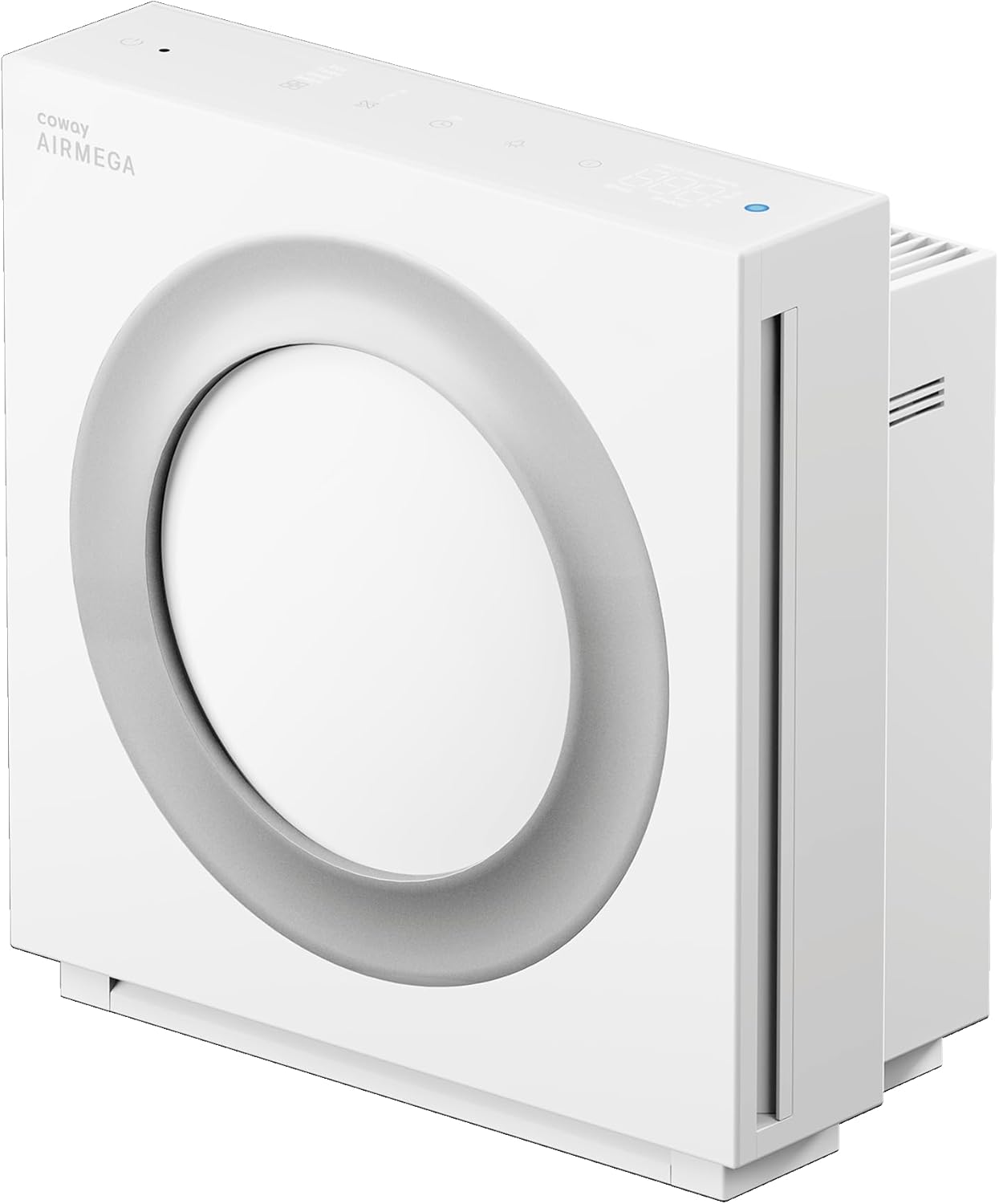
| Max coverage (1 hr) | 1,800 sq. ft. |
|---|---|
| CADR (Smoke/Dust/Pollen) | 240 / 242 / 249 |
| HEPA effectiveness | 99.97% of 0.3μm |
| Noise level | 19 dB – 50 dB |
| Power consumption | 56 W |
The Airmega Mighty2 is a compact tower purifier built for whole-room use and persistent indoor pollutants like allergens, smoke, and mold-related particles. It uses a three-stage system — washable pre-filter plus a 2-in-1 HEPA and activated carbon Max2 filter — and an IEST-RP-CC007 certified HEPA element to capture 99.97% of 0.3 µm particles and reduce many VOCs. A laser particle sensor tracks PM1/2.5/10 in real time and a four-color LED plus numeric readout make air quality easy to monitor. Smart Mode with an ambient light sensor and Eco/Sleep settings automates fan speed and cuts energy use, while the unit runs quietly down to 19 dB. Practical touches include a slide-out washable pre-filter, onscreen filter-life tracking, hidden handles for moving the unit, and a Nidec BLDC motor for efficient operation. The main limitations are that full VOC removal depends on filter condition and that replacement Max2 filters are required over time, so expect ongoing filter costs and occasional maintenance to maintain best mold and odor reduction performance.
Best for: Buyers who want a reliable, easy-to-use whole-room purifier that balances strong particle capture, VOC reduction, and quiet automated operation for daily living spaces.
Less Ideal for: People who need a no-maintenance option or those seeking an appliance that eliminates all VOCs instantly without periodic filter replacements should consider different approaches.
- IEST-certified HEPA captures 99.97% of 0.3 µm particles for reliable particulate removal
- Activated carbon in the Max2 filter reduces odors, VOCs, and some mold-related gases
- Advanced laser sensor reports PM1/2.5/10 with numeric readout and 4-color LED for instant air-quality feedback
- Smart Mode with Eco and Sleep automatically adjusts fan speed and reduces energy use
- Washable slide-out pre-filter and on-screen filter-life tracking simplify maintenance
- Ongoing cost for replacement Max2 filters to retain VOC and particle performance
- VOC and gas removal rates depend on real-world conditions and may be lower than lab results
Verdict: A balanced whole-room purifier that combines certified HEPA particle capture, activated carbon odor removal, and smart quiet operation to reduce mold spores and indoor pollutants across large rooms.
AirDoctor AD3500 Air Purifier

| Model | AD3500 |
|---|---|
| Coverage | Up to 2,520 ft2 per hour |
| Filtration | UltraHEPA + Activated Carbon |
| Particle capture | 0.003 microns (99.99%) |
The AirDoctor AD3500 is built for high-performance air cleaning in large rooms and open-plan areas. It combines a three-stage system—a pre-filter, premium activated carbon/VOC stage, and a Japan-made UltraHEPA filter—to capture particles down to 0.003 microns and reduce gases and odors from cooking, pets, and wildfire smoke. Real-time PM2.5 sensing with the Halo indicator and an Auto Mode means the unit adjusts fan speed and can trigger a Boost when air quality worsens, so it can run quietly most of the time and ramp up when needed. Practical benefits include fast coverage—the manufacturer rates it to clean 630 sq ft in 15 minutes and up to 2,520 sq ft in an hour—plus filter life guidance (carbon ~6 months, UltraHEPA ~12 months). Trade-offs are its larger physical footprint and heavier build compared with compact purifiers, and replacement filters are recommended genuine parts. For a buyer focused on measurable performance and rapid clearance of mold spores and other airborne irritants, the AD3500 is designed to deliver consistent, science-backed cleaning at scale.
Best for: Buyers who prioritize measurable, lab-backed particle removal and need fast, proven purification for large rooms or whole-level coverage to address mold spores and airborne pollutants.
Less Ideal for: Those who need a compact, lightweight purifier for a small bedroom or who want a budget countertop solution should consider smaller, lower-capacity models instead.
- Very high filtration efficiency down to 0.003 microns with UltraHEPA.
- Large room coverage with fast cleaning rates (up to 2,520 ft2 per hour).
- Premium activated carbon filter reduces gases, VOCs, and odors.
- Auto Mode with PM2.5 sensing and Halo visual feedback for hands-off operation.
- Physically large and relatively heavy compared with smaller purifiers.
- Requires periodic replacement of carbon and UltraHEPA filters to maintain rated performance.
Verdict: If you need fast, high-confidence removal of mold spores and tiny particles across large spaces, the AD3500 is a performance-first purifier built for that job.
PuroAir 240 HEPA Air Purifier

| Coverage | 1,000 sq ft |
|---|---|
| Filter | 3-layer HEPA + CarbonTech |
| Modes | Auto, Sleep, Multiple fan speeds |
| Certifications | CARB, ETL, ISO, UL |
The PuroAir 240 is a floor-standing HEPA purifier intended for larger rooms such as living areas or master bedrooms. It uses a three-layer HEPA plus CarbonTech filter to capture airborne particles and reduce odors and smoke, and an air quality sensor with auto mode adjusts fan speeds based on detected pollution. Typical use is continuous operation in living spaces to lower allergens, pet dander, and mold spores in the air; quiet sleep mode keeps noise low at night. Practical benefits include coverage targeted to about 1,000 square feet, app and auto features that reduce manual adjustments, and a combined HEPA/carbon approach that handles both particles and smells. Limitations are the ongoing cost and need to replace multi-layer filters periodically and the unit footprint and fan noise at higher speeds when rapid cleaning is required. It performs best as a central room purifier rather than a truly whole-house solution and works as part of an overall moisture- and source-control strategy for mold rather than a standalone remediation device.
Best for: Buyers who want an efficient, low-maintenance room purifier that runs automatically to reduce airborne mold spores, dust, and pet allergens in larger living spaces.
Less Ideal for: People seeking whole-house HVAC filtration or a device to fix active mold contamination should consider professional remediation or HVAC-grade solutions instead.
- HEPA plus activated carbon filter captures particles and reduces odors
- Auto mode with air quality sensor adjusts fan speed for hands-off operation
- Designed coverage sufficient for large rooms up to about 1,000 sq ft
- Quiet sleep mode suitable for overnight use
- Requires regular replacement of multi-layer filters which adds ongoing cost
- Can be noticeable at high fan speeds during rapid air cleaning
Verdict: A practical large-room HEPA purifier with automatic sensing and carbon filtration that simplifies ongoing air quality maintenance in spaces prone to mold and allergens.
VOOPNU HEPA Air Purifier DH-JH12

| Filter type | H13 True HEPA |
|---|---|
| Coverage | Up to 1,076 ft² per hour (250 ft² per 15 minutes) |
| Noise level | As low as 22 dB |
| Speeds | 3 fan speeds |
| Certifications | DOE, ETL, FCC, CARB, CE, ROHS |
The VOOPNU DH-JH12 is a compact H13 HEPA air purifier built to clean medium to large rooms using a 360° intake and a triple-layer filtration system that claims to capture 99.97% of airborne particles. It is intended for everyday use in bedrooms, living rooms, or areas where pet hair, pollen, smoke, and odors are concerns; simple one-touch controls and three fan speeds make it easy to run continuously. The unit is whisper-quiet at low speeds (as low as 22 dB) and includes a small essential oil tray if you want scented air while filtering. VOOPNU states lab-tested coverage of up to 1,076 ft² per hour (250 ft² every 15 minutes), and the purifier carries multiple safety and performance certifications. Practical limitations include a compact footprint that may limit filter size and replacement frequency expectations, and the product description recommends continuous operation for best results, which could raise energy use over long periods. Replacement filters and expected service intervals should be planned for rooms with heavy mold spores or persistent contaminants.
Best for: Buyers seeking an affordable, easy-to-use HEPA purifier for everyday removal of pollen, pet dander, smoke, and household odors who prefer a quiet unit that can run continuously with minimal interaction.
Less Ideal for: Homes with severe mold infestations that require industrial-grade or whole-house remediation and air handling should consider professional solutions or higher-capacity commercial purifiers instead.
- H13 True HEPA triple-layer filtration removes 99.97% of airborne particles
- 360° surround intake improves room-wide air circulation
- Very quiet operation down to 22 dB suitable for bedrooms
- Simple one-touch controls and three speed settings for easy continuous use
- Built-in essential oil tray for optional scenting while running
- Manufacturer recommends continuous operation for optimal results which can increase energy use
- Compact unit implies smaller filter size and more frequent replacements in heavily contaminated spaces
Verdict: A budget-friendly, quiet H13 HEPA purifier that delivers whole-room coverage and simple operation for regular mold-prevention maintenance in living spaces.
Levoit Core 300-P Air Purifier

| Filter Type | 3 in 1 Filtration |
|---|---|
| Floor Area | 1073 square_feet |
| Noise Level | 24 db |
| Particle Retention Size | 0.3 micron |
| Wattage | 56 watts |
The Levoit Core 300-P is a small, reliable HEPA air purifier intended for bedrooms, living rooms, or home offices where clean air matters. It uses a 3-stage filtration system with a Levoit original HEPA-grade filter to capture fine particles including pollen, dust, pet dander, smoke, and other airborne contaminants, and the company reports 99.97% efficiency for 0.1–0.3 μm particles. A 56W motor provides a CADR that refreshes a 222 ft² room several times per hour and can service larger open areas at a slower rate. The unit is AHAM verified and CARB and ETL certified, which supports consistent, tested performance—useful for occupants worried about mold spores in living spaces. Controls are touch-based with a dedicated quiet Sleep Mode that drops noise to about 24 dB and a timer and filter-check indicator for maintenance reminders. Trade-offs are its lack of Auto Mode or smart connectivity on this model and limited native coverage speed compared with larger purifiers, so it works best when placed in the rooms you frequent rather than whole-house protection.
Best for: Buyers who prioritize dependable, tested filtration and want a compact purifier to reduce airborne mold spores and fine particulates in frequently used rooms.
Less Ideal for: People who need whole-house rapid turnover or remote/smart control features should consider a larger or Wi‑Fi–enabled purifier instead.
- HEPA-grade 3-stage filter rated to remove 99.97% of 0.1–0.3 μm particles
- AHAM verified and CARB/ETL certified for consistent, tested performance
- Very quiet Sleep Mode at about 24 dB for night use
- Compact and portable design that fits on tabletops and moves between rooms
- Timer and filter-check indicator simplify routine maintenance
- No Auto Mode or smart connectivity on this model so fan speed must be changed manually
- Smaller unit means slower full-room turnover in very large spaces
Verdict: Choose the Core 300-P if you want a compact, AHAM-verified HEPA purifier that reliably reduces fine particles and helps protect living spaces from mold-related airborne contaminants.
GermGuardian AC4825 22" Tower Air Purifier

| Coverage | Up to 743 sq. ft. (one hour circulation) |
|---|---|
| Filter type | True HEPA with activated carbon pre-filter |
| Fan speeds | Three speeds with sleep mode |
| Model number | AC4825E |
The GermGuardian AC4825 is a compact tower air purifier that uses a True HEPA filter plus an activated carbon pre-filter and optional UV-C sanitizer to capture airborne particles and reduce odors. It is typically placed in bedrooms, living rooms, basements, or offices and runs on three fan speeds including a quiet sleep setting for night use. The HEPA filter is rated to trap 99.97% of particles down to 0.1 microns from air passing through the media, while the carbon layer helps reduce cooking, pet, and smoke scents; the UV-C lamp provides an additional germ-reduction option. Practical benefits include straightforward filter replacements using the manufacturer's B-series filters and relatively wide stated coverage for circulating air in rooms up to 743 square feet once per hour. Limitations are that the unit's effectiveness depends on proper placement and regular filter and bulb replacement, and the UV-C option may modestly increase maintenance cost and energy use. Noise on higher speeds can be noticeable in small rooms but the sleep mode keeps operation quiet overnight.
Best for: Buyers who prioritize proven filtration backed by many user reviews and want a straightforward, well-tested purifier for bedrooms, living areas, or basements where mold spore reduction and odor control are concerns.
Less Ideal for: Those seeking smart features, app control, or near-silent performance on high fan speeds should consider other models with Wi-Fi or lower max-noise designs.
- True HEPA filter captures very small particles down to 0.1 microns from air passing through the media
- Activated carbon pre-filter reduces common household odors like cooking and pet smells
- Optional UV-C light adds another layer of germ reduction
- Three fan speeds including a quiet sleep mode for overnight use
- Compatible with factory replacement B-series filters and bulbs for easy maintenance
- UV-C bulb requires periodic replacement and adds ongoing maintenance cost
- Performance depends on correct placement and timely filter changes to maintain stated coverage
Verdict: A reliable, well-tested tower purifier with True HEPA, carbon odor control, and optional UV-C that fits buyers seeking proven performance against airborne mold particles and common household odors.
Levoit Vital 200S-P Air Purifier

| Floor Area | 1875 square_feet |
|---|---|
| Filter Type | 3-Stage Filter |
| Noise Level | 27 db |
| Particle Retention Size | 0.1 micrometer |
| Power Source | Corded Electric |
The Levoit Vital 200S-P is a smart HEPA air purifier built for whole-room use in homes with allergies or pets. It uses a three-stage filter stack (pre-filter, activated carbon, and high-efficiency HEPA) and an enhanced U-shaped inlet to capture pet hair, dust, smoke, and other particulates; the manufacturer cites CADR figures for smoke, dust, and pollen suitable for rapid turnover in large spaces. The unit includes an app for remote control, a built-in air quality monitor, and a sleep mode that can operate quietly as low as 27 dB, which makes it practical for bedrooms. Practical benefits include strong particle capture down to 0.1 micrometer, CARB and AHAM verification for performance, and washable pre-filter media to reduce replacement frequency. Expect routine filter replacements for continued performance and a relatively large footprint and weight compared with compact bedroom models, so it is best placed on a floor or stable table. For buyers focused on mold, the high CADR and HEPA stage will reduce airborne spores but remember it does not address surface mold or moisture sources.
Best for: Buyers who prioritize proven, certified air-cleaning performance and quiet overnight operation in large living spaces and want an easy-to-monitor, app-controlled system.
Less Ideal for: People whose primary concern is killing or removing surface mold or controlling humidity should focus on moisture remediation and dehumidification solutions instead.
- AHAM-verified CADR ratings for smoke, dust, and pollen suitable for large rooms
- Three-stage filtration with HEPA capture down to 0.1 micrometer
- App control and onboard air quality monitor for hands-off operation
- Very quiet sleep mode rated at 27 dB for bedroom use
- Washable pre-filter reduces frequency of full filter replacements
- Does not remove moisture or remediate surface mold sources
- Relatively heavy and larger footprint compared with compact purifiers
- Ongoing cost of replacement filters for optimal performance
Verdict: Choose the Vital 200S-P if you want a certified, high-CADR HEPA purifier with smart controls and quiet operation to reduce airborne mold spores and allergens in large rooms.
Choosing the Right HEPA Air Purifier for Mold: Key Factors to Consider
True HEPA Filtration
True HEPA capability is the baseline for any purifier intended to reduce mold spores. True HEPA filters capture at least 99.97% of particles 0.3 microns in size, which covers the typical size range of fungal spores. Choosing a unit with a certified HEPA element means airborne spores will be trapped rather than recirculated.
Pay attention to whether manufacturers use terms like HEPA-type or HEPA-like; these do not meet the same standard and are less reliable for mold control. Filter warranties and stated particle capture ratings are useful data points when comparing models.
Clean Air Delivery Rate and Room Size
CADR provides an estimate of how quickly a purifier can remove particulates from a room and is essential for matching a unit to the space it needs to protect. For mold control you want a purifier rated for the square footage of the room where mold is most problematic, and ideally a model that can achieve multiple air changes per hour at a practical fan speed.
When CADR is unavailable, use manufacturer room coverage recommendations conservatively. A unit rated for open-plan living areas may perform differently in bedrooms or rooms with limited airflow, so consider positioning and measured airflow in addition to stated coverage.
Airflow Pattern and Placement
A purifier's ability to reduce spores depends not only on filter media but also on how air moves through a room. Units with 360-degree intakes or directional outlets can be more effective at mixing and pulling in contaminated air from corners or near damp areas. Assess whether the unit's design fits typical placement options in your home, such as against a wall or centered in a room.
Also consider whether you need a portable unit moved between rooms or a dedicated device for a single space. Larger units with stronger airflow handle centralized treatment, while compact units are best for spot treatment or smaller rooms.
Pre-filters and Odor Control
Mold problems often come with musty odors and particulate buildup. A good pre-filter captures larger particles like dust and hair, extending the life of the HEPA element. Activated carbon or other odor-control stages help reduce volatile organic compounds and the smell associated with dampness and mold growth.
Consider how filters layer together in the system and whether replacement filters combine HEPA and carbon or require separate parts. Systems that allow easy maintenance and have clearly labeled filter lifespans typically cost less effort to keep effective.
Noise and Daily Use
Because mold control often requires continuous operation, noise becomes an important practical factor. Look for units with a range of fan speeds and a quiet mode designed for overnight use. Manufacturers sometimes publish decibel levels at different speeds; lower noise at the speed needed to achieve reasonable air changes per hour is preferable.
Also consider user controls such as timers, auto mode based on sensors, and night settings. These features can make it easier to run the purifier effectively without disrupting daily life.
Maintenance, Filter Availability, and Cost
Long-term effectiveness depends on replacing filters on schedule and keeping the unit clean. Check how often HEPA and pre-filters need replacement, how easy it is to access them, and whether replacement parts are widely available. Filters with clear end-of-life indicators or long rated lifespans reduce the chance of forgetting maintenance.
Factor in the cumulative cost of replacement filters when assessing total ownership. Units that require proprietary or multiple separate filters may be more costly and complicated to maintain over time.
Where Mold Spores Come From and How Purifiers Help
Mold spores are microscopic particles that become airborne when disturbed by airflow or activity. They can enter a room through vents, windows, clothing, or by growing on damp surfaces and then releasing spores into the air. A HEPA air purifier does not cure the underlying moisture problem, but it captures airborne spores and reduces the load that can settle and grow elsewhere.
Using a purifier as part of a broader plan—moisture control, surface cleaning, and ventilation—reduces exposure and limits spread. For immediate air quality improvement, a well-matched HEPA unit will lower airborne spore counts and help with allergy or asthma symptoms tied to fungal particles.
- Purifiers remove spores from the air but do not remove mold on surfaces.
- Combine purifiers with humidity control and surface remediation for longest-lasting results.
- Positioning matters: place units where airflow will pull spores across the intake.
Matching Purifier Capacity to the Room
Measure the square footage of the room and verify ceiling height to calculate volume. Use the CADR or manufacturer room rating to ensure the unit can achieve at least two to four air changes per hour at a useful fan speed. In spaces with active mold sources or damp conditions, aim for the higher end of that range.
If you plan to move a single unit between rooms, pick a model rated for the largest room you intend to treat. For whole-home coverage, multiple smaller units placed in problem rooms are often more effective than one central device.
- Check CADR values against the actual room volume for better sizing.
- For bedrooms, prioritize quiet operation alongside adequate CADR.
Running Time, Auto Modes, and Energy Use
Continuous or regular operation is necessary to keep airborne spore levels low. Look for models with an energy-efficient mode or low-power fans for 24/7 use. Auto modes that respond to particulate sensors help balance performance and energy consumption but make sure the sensors detect the particle sizes relevant to mold.
Timers and scheduling let you ramp up purification during high-risk periods, such as after cleaning, showering, or when humidity spikes. Energy consumption for most residential purifiers is modest, but it adds up over months of constant use.
- Auto modes are convenient but verify sensor type and responsiveness.
- Use timers or smart plugs if you want predictable daily schedules and lower energy.
Maintenance Best Practices
Regular filter changes and periodic cleaning of intakes and outlets keep the unit performing at rated levels. Follow manufacturer guidance for replacement intervals and avoid operating past recommended filter life. Inspect prefilters monthly and vacuum or wash washable prefilters per instructions to reduce load on the HEPA element.
Keep the area around the purifier clear to maintain intake airflow and avoid placing the unit directly against walls or behind furniture. If visible dust accumulates on the exterior grille, vacuum it gently to prevent airflow reduction.
- Mark replacement dates on a calendar or set reminders to avoid forgotten maintenance.
- Store replacement filters in a dry place and handle HEPA media carefully to avoid damage.
When to Call a Professional
If you detect persistent mold growth on surfaces, recurring visible colonies, or structural moisture issues, air purifiers alone are not sufficient. A professional assessment for hidden leaks, ventilation problems, or contaminated HVAC elements may be necessary. Purifiers are most effective as part of a remediation and prevention plan rather than a standalone fix.
If odor or symptoms persist despite continuous purifier use and humidity control, a specialist can identify hidden sources and recommend remediation steps that prevent recontamination of cleaned areas.
- Use purifiers for air treatment while addressing the root moisture problem.
- A professional can test spore counts and identify hidden mold sources when required.
How We Chose the Best HEPA Air Purifier for Mold
We prioritized units that demonstrate the specifications and features most directly tied to reducing airborne mold spores. First, we required true HEPA filtration or certified equivalent capable of capturing particles down to 0.3 microns. Second, we looked for verified Clean Air Delivery Rate (CADR) or manufacturer-stated CADR for smoke/dust to estimate real-world spore removal and to determine effective room coverage. Third, airflow design and multiple fan speeds matter because they determine how quickly the purifier cycles room air and where spores are drawn in. Fourth, we considered prefilter and activated carbon stages that extend HEPA life and remove odors associated with mold and dampness. Finally, practical factors such as filter availability, noise at common operating speeds, and basic controls were included to assess ongoing usability. Units that lacked a true HEPA filter or provided no credible airflow or coverage data were excluded. We also filtered out devices with maintenance needs or filter ecosystems that make long-term upkeep impractical for typical home use.
Our full evaluation process is outlined in our review methodology.
FAQ
Can a HEPA air purifier remove mold from walls and furniture?
No. HEPA purifiers remove airborne spores but do not treat mold growing on surfaces. Surface mold must be cleaned and the underlying moisture source resolved to prevent regrowth.
How many hours a day should I run a purifier for mold control?
Continuous operation is recommended for ongoing mold spore reduction, but running a purifier at a higher speed for several hours after activities that release spores can also be effective. Use quieter lower-speed modes overnight if noise is a concern.
Do I need a purifier with activated carbon for mold?
Activated carbon helps reduce musty odors and some volatile compounds associated with damp environments. It does not remove spores, so it is a complementary feature rather than a replacement for HEPA filtration.
Will a purifier fix a mold problem caused by high humidity?
No. Air purifiers do not remove moisture. You should address humidity with dehumidification, ventilation, and repairs. Purifiers can reduce airborne spores while you correct the moisture issue.
Are expensive HEPA units always better for mold?
Not necessarily. Effectiveness for mold depends on true HEPA filtration, appropriate room coverage, and airflow more than price alone. Consider filter ratings, CADR, and maintainability when evaluating models.
Final Verdict
For mold concerns, prioritize a true HEPA filtration system sized to the room, with adequate CADR and airflow to provide frequent air changes. Complement the purifier with prefilters and carbon stages if odors are present, and pick a model with manageable maintenance and quiet operation for continuous use. Remember that purifiers treat airborne spores but do not eliminate source moisture or surface growth. Use them as part of a broader remediation and prevention strategy and choose the unit that best balances filtration efficiency, coverage, and daily usability.