
Note: This article contains affiliate links. If you click on these links and make a purchase, we may earn a small commission at no extra cost to you. This helps support our research and content. Read our full affiliate disclosure here.
If you bake often or run a small-scale baking operation, choosing the right high-end dough mixer changes how smoothly your workflow runs. A top-tier machine reduces mixing time, handles dense bread dough without overheating, and delivers consistent results batch after batch. This guide shortlists the seven best high-end dough mixers available for serious home and light commercial use, focusing on long-term reliability and mixing performance. We evaluate motor capability, gearbox durability, bowl and capacity options, and ease of cleaning to help you pick a model that suits your baking rhythm. Read on to see which features matter most for heavy-duty dough work.
Top Picks at a Glance
| Best Overall The best all-around choice for most situations | Bosch Universal Plus Stand Mixer |  |
| Best Quality Built to a higher standard if you want something more solid | Ooni Halo Pro Spiral Mixer |  |
| Best Value The sweet spot between price and what you get | CUSIMAX Stand Mixer 5-Quart |  |
| Best Budget The cheapest option that still gets the job done reliably | OLIXIS 4.2 Qt Stand Mixer |  |
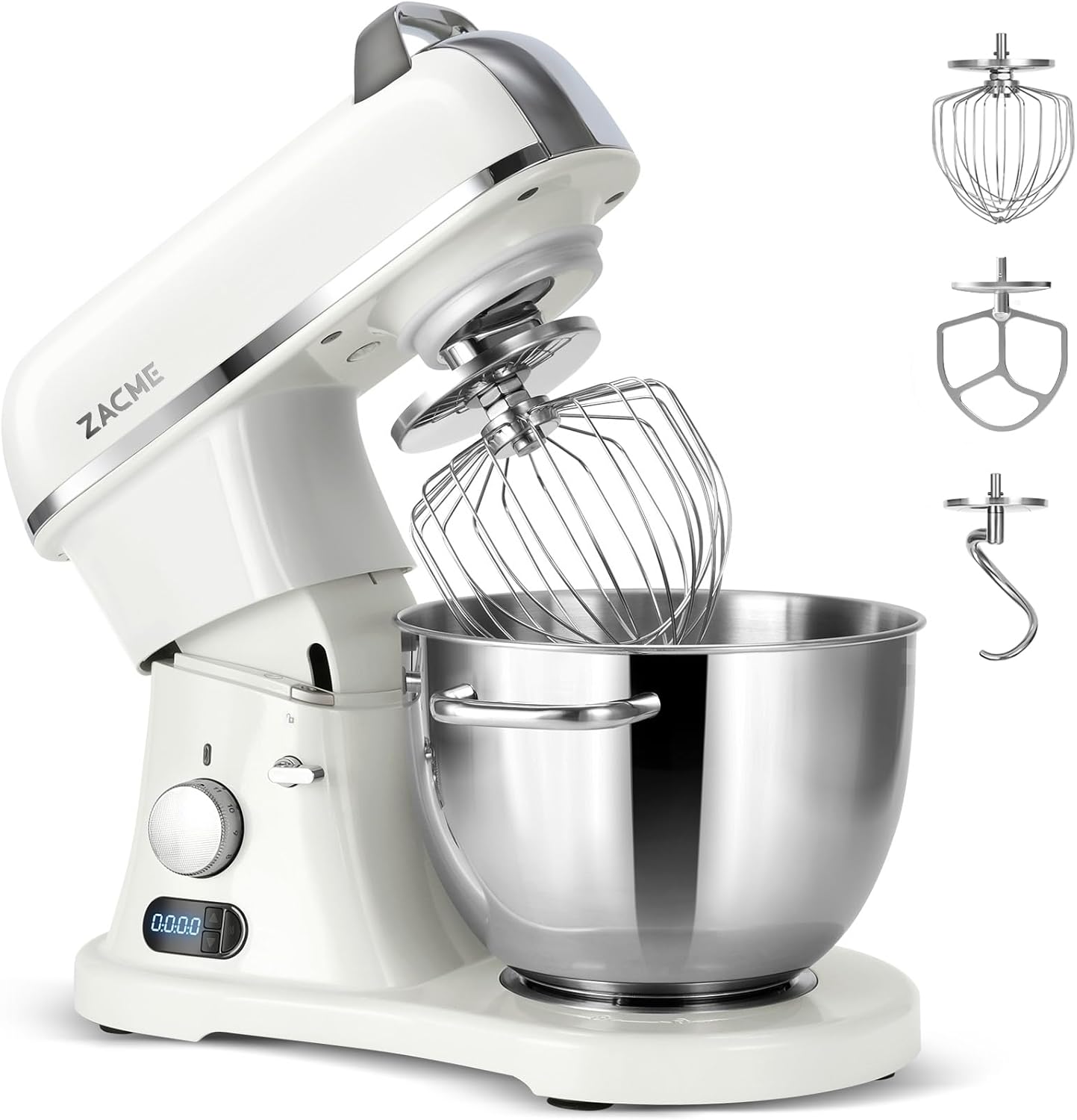
| Top Rated A top-rated pick with lots of positive feedback | ZACME 8.4QT Commercial Stand Mixer |  |
| Most Popular A crowd favorite that many people choose with confidence | Kitchen in the box 3.2QT Stand Mixer | 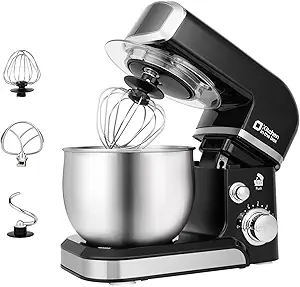 |
| Best Seller A high-volume bestseller chosen again and again | Cuisinart Stand Mixer SM-50R |  |
Bosch Universal Plus Stand Mixer

| Wattage | 500 watts |
|---|---|
| Number of Speeds | 4 + pulse |
| Capacity | 6.5 quarts |
| Included Components | Dough Hook, Dough Hook Extender, Wire Whips, Stainless Steel Bowl, Splash Ring with Lid |
The Bosch Universal Plus is a torque-focused, bottom-drive stand mixer designed for serious home bakers who need power and capacity. It uses a 500 W motor and belt-driven transmission to deliver high torque directly into a 6.5-quart stainless bowl, letting you knead dense whole-grain doughs or large batches without straining the motor. The package includes wire whips, a heavy-duty dough hook and a dough hook extender for small batches, plus a two-piece pouring shield to reduce mess. Dual wire whips create a triple-whip action that handles delicate tasks like meringue as well as heavier jobs such as shredding cooked poultry or mixing cookie dough. Four variable speeds plus a pulse give practical control, and suction-cup feet help keep the unit steady during heavy kneading. The mixer is relatively compact for its capacity and has dishwasher-safe tools for easier cleanup, but it does not have as many high-speed settings as some competitors and relies on a belt drive rather than direct drive, which can mean occasional maintenance. For bakers who prioritize torque, capacity, and tried-and-true mixing action, this unit is a capable high-end choice.
Best for: Home bakers who bake frequently and want a durable, torque-driven mixer that handles large batches and heavy doughs reliably.
Less Ideal for: Buyers who need many fine-grained speed settings, a compact travel-friendly unit, or prefer a direct-drive motor design for minimal maintenance.
- High-torque bottom-drive design for heavy doughs and large batches
- Large 6.5-quart stainless steel bowl suitable for family-scale baking
- Includes dough hook extender and multiple mixing tools for versatile use
- Suction-cup feet provide stability during intense mixing
- Dishwasher-safe parts and built-in cord storage simplify cleanup and storage
- Only four speed settings plus pulse may limit fine speed control for some tasks
- Belt-driven transmission can require maintenance compared with direct-drive motors
Verdict: Choose this mixer if you want a torque-first, high-capacity machine built to handle heavy doughs and large home-baking batches.
Ooni Halo Pro Spiral Mixer

| Capacity | 7.3 quarts |
|---|---|
| Wattage | 650 watts |
| Number of Speeds | 58 |
| Noise Level | 65 db |
| Voltage | 110 volts |
The Ooni Halo Pro Spiral Mixer brings commercial-style spiral mixing into a home kitchen to produce stronger gluten development and consistently better dough for bread and pizza. It uses a rotating bowl with a spiral dough hook plus a removable breaker bar and four included attachments so you can switch from heavy-duty kneading to whisking or beating for cakes, cream, and batters. Controls are touch-based and offer 58 precise speed settings spanning roughly 60 RPM to over 1,000 RPM, letting you dial in slow, gentle mixing or high-speed whipping. At 650 watts and dual-rotation spiral technology, it handles large batches in the 7.3 quart stainless bowl while the detachable spindle and removable bowl simplify cleanup. Noise is listed at 65 dB, so it runs noticeably but not excessively loud for its power class. This mixer leans toward serious home bakers and prosumers who want bakery-level dough without a commercial footprint, though its weight and size make it less convenient to move or store in small kitchens.
Best for: Bakers focused on dough performance and consistency who want near-professional spiral mixing at home and value precise speed control and versatile attachments.
Less Ideal for: Casual bakers who only make small occasional batches or people needing a lightweight, easily storable mixer for tight kitchens.
- Spiral mixing with rotating bowl for improved gluten development and more consistent dough.
- Wide 58-step speed range for precise control from slow kneading to high-speed whipping.
- Four multifunctional attachments included for kneading, whisking, beating and breaking dough.
- Removable bowl and detachable spindle make switching attachments and cleaning easier.
- Heavier and larger than typical home mixers, so it is less portable and needs dedicated counter space.
- 650W motor may run warm under prolonged heavy commercial use compared with full commercial machines.
Verdict: Choose the Ooni Halo Pro if you want a home mixer that delivers commercial-style spiral kneading and precise speed control for bakery-quality dough.
CUSIMAX Stand Mixer 5-Quart

| Wattage | 650 watts |
|---|---|
| Number of Speeds | 8 |
| Capacity | 5 liters |
| Voltage | 120 volts_of_alternating_current |
The CUSIMAX stand mixer is a hands-free kitchen mixer aimed at home bakers who need a capable, all-purpose machine for cakes, cookies and bread dough. It pairs a 650W motor and metal gear drive with a 5-quart stainless steel bowl and three common attachments — dough hook, flat beater and wire whip — so you can mix everything from stiff doughs to whipped egg whites. Controls are via a touch digital switch that sets one of eight speeds and a 15-minute timer, and the tilt-head with a grip handle makes bowl and attachment changes straightforward. Practical touches include a splatter shield with an ingredient port and non-slip feet for stable operation. Expect reliable mixing for family-sized batches, but note this is a consumer-level mixer so very heavy, continuous commercial use may strain the motor over time and the exterior is plastic rather than metal. For home bakers wanting a solid, feature-focused machine for frequent household use, it provides a lot of capability for the class.
Best for: Home bakers who want a dependable, versatile mixer for regular family-sized baking and appreciate digital controls and convenient features that speed prep.
Less Ideal for: Professional bakeries or users who need a heavy-duty commercial machine designed for continuous high-volume production.
- Powerful 650W motor and metal gear drive for consistent mixing.
- 5-quart stainless steel bowl suitable for family-sized batches.
- Digital touch controls with 8 speeds and a 15-minute timer for precise mixing.
- Includes dough hook, flat beater and wire whip for common baking tasks.
- Tilt-head with handle and splatter shield make attachment changes and adding ingredients easy.
- Plastic housing rather than full metal construction may feel less durable for heavy commercial use.
- 15-minute timer and speed range may be limiting for very long or specialized mixing tasks.
Verdict: A feature-rich, reliable 5-quart mixer that gives home bakers strong mixing power and convenient digital controls for everyday baking.
OLIXIS 4.2 Qt Stand Mixer

| Capacity | 4.2 quarts |
|---|---|
| Wattage | 300 watts |
| Number of Speeds | 10 |
| Noise Level | 60 db |
| Voltage | 120 volts |
The OLIXIS 4.2 Qt Stand Mixer is a compact countertop mixer aimed at everyday home bakers. It uses a 300W motor with ten speed settings and a tilt-head for easy access to the stainless steel bowl, and it ships with a dough hook, wire whisk, and flat beater so you can mix batters, whip cream, and knead small to medium dough batches without buying extra attachments. A unique multi-function splash lid adds measuring, slicing, and egg-separating conveniences that save counter tools and speed prep. Controls are simple knob-style settings and an anti-skid base keeps the unit stable during heavier mixes; noise is listed around 60 dB, so it runs noticeably but not loudly. The mixer is compact and lightweight, which makes it easy to store but limits it for very large or commercial batches; the 4.2-quart bowl handles typical household recipes but will struggle with frequent 2-lb loaves or large holiday batches. Build materials are mostly ABS with aluminum and stainless steel parts, so it balances durability and value rather than matching the heft of high-end commercial mixers.
Best for: Buyers looking for an affordable, ready-to-use stand mixer that covers everyday home baking and occasional bread making with a compact footprint and included accessories.
Less Ideal for: Professional bakers, heavy-duty users, or anyone who needs to mix very large dough batches regularly should choose a heavier-duty, higher-capacity machine.
- Includes dough hook, whisk, and flat beater for immediate use
- Ten speed settings cover everything from slow kneading to high-speed whipping
- Compact 4.2 quart bowl fits most household baking needs and stores easily
- Multi-function splash lid adds measuring and prep tools to save counter space
- 4.2 quart capacity is small for very large doughs or frequent big batches
- 300W motor is adequate for home use but not for heavy commercial workloads
Verdict: A budget-friendly, compact stand mixer that delivers the essential power and attachments most home bakers need without premium commercial heft.
ZACME 8.4QT Commercial Stand Mixer
| Capacity | 8.4 quarts |
|---|---|
| Power | 800 watts |
| Number of Speeds | 11 |
| Noise Level | 48 db |
| Voltage | 120V |
The ZACME 8.4QT Commercial Stand Mixer is built for heavy kitchen use, delivering strong, consistent mixing for large batches of dough, batter, and whipped ingredients. Its 800W DC motor and metal gear drive provide the torque needed for dense bread and pizza dough while the planetary mixing action ensures thorough ingredient incorporation without frequent scraping. The tilt-head design and included stainless steel bowl with a dough hook, flat beater, and wire whip make it straightforward to switch tasks, and the LED display with a countdown timer helps when multitasking during long recipes. Practical touches aimed at extended use include dual cooling fans to prevent overheating, suction cups for stability, and an industrial aluminum die-cast body rated to NSF/ANSI 8-2023 for commercial environments. Noise is relatively low on lower speeds, though the top end is louder as expected for an 800W motor. At 33 pounds it is noticeably heavy, which helps stability but reduces portability. Overall it performs like a small commercial unit suited to serious bakers who need reliable, repeatable power for frequent large batches.
Best for: Buyers who prioritize long-term dependability and commercial-style performance for frequent large-batch baking, such as serious home bakers, small bakery owners, or culinary programs.
Less Ideal for: Casual bakers who only mix small batches or need a lightweight, compact mixer for occasional use should consider smaller, more portable consumer models instead.
- Robust 800W DC motor and metal gears for high-torque mixing of dense doughs
- Large 8.4 quart stainless steel bowl and planetary action for even, hands-free mixing of big batches
- Commercial-grade aluminum die-cast housing and NSF/ANSI 8-2023 compliance for durability and safety
- LED display with countdown timer and 11-speed control for precise, repeatable results
- Dual cooling system and suction feet improve heat management and stability during long runs
- Heavy 33 lb weight reduces portability and makes storage harder
- Higher speeds produce noticeable noise consistent with commercial power
Verdict: If you need a durable, commercial-capable mixer that reliably handles large batches and heavy doughs, this ZACME 8.4QT is a strong, dependable choice.
Kitchen in the box 3.2QT Stand Mixer

| Capacity | 3.2 QT |
|---|---|
| Power | 300 watts |
| Number of Speeds | 6 |
| Included Components | Whisk, Beater, Dough Hook |
| Voltage | 120 |
This Kitchen in the box stand mixer is a small, lightweight unit designed for 1–2 person households and occasional baking tasks. It uses a tilt‑head design and planetary mixing action with a removable 3.2 QT stainless steel bowl, and includes an aluminum dough hook, flat beater, and stainless steel whisk. The six speed settings cover everything from gentle stirring to whipping and denser mixing, while the transparent splash guard helps keep countertops clean. Four suction feet are intended to stabilize the mixer during operation. At 300 watts it handles batters, creams, meringues, and light doughs comfortably, but the small bowl and modest power mean it is not built for large batches or frequent heavy-duty kneading. The unit is easy to store and the accessories are dishwasher safe, which simplifies cleanup. For buyers who value a compact, budget-friendly kitchen mixer for everyday small-scale baking, this model is practical; prospective buyers needing professional capacity or sustained heavy-duty performance should choose a larger, higher-powered machine.
Best for: Buyers seeking a space‑saving, entry‑level stand mixer for everyday small‑batch baking and simple home use who prioritize compact size and convenience over commercial capacity.
Less Ideal for: People who bake large quantities, work with very heavy doughs frequently, or need a commercial‑grade mixer for professional use should look at larger, higher‑power models instead.
- Compact footprint and lightweight design makes it easy to store and move
- Includes three common attachments (dough hook, flat beater, whisk) for versatile mixing tasks
- Transparent anti-splash lid reduces mess during high‑speed mixing
- Dishwasher‑safe accessories simplify cleaning
- Six speed settings cover a wide range of mixing needs for small batches
- 3.2 QT bowl is small and not suited to large or professional batches
- 300W motor limits heavy kneading and extended high-torque use
Verdict: A compact, budget‑friendly stand mixer that makes small‑batch home baking easier for people with limited counter space.
Cuisinart Stand Mixer SM-50R

| Capacity | 5.5 quarts |
|---|---|
| Motor power | 500 watts |
| Number of speeds | 12 |
| Controls type | Knob |
The Cuisinart SM-50R is a metal-bodied stand mixer built for regular home baking tasks and accessory-driven projects. It pairs a 500-watt motor with 12 speeds and a tilt-back head to handle mixing, whipping, and kneading in its 5.5-quart stainless steel bowl, and it ships with a whisk, dough hook, flat paddle and a splash guard with pour spout. The controls are a simple knob so speed changes are intuitive, and the included accessories and dishwasher-safe bowl make cleanup straightforward. The die-cast construction and metal bowl give it a solid, durable feel compared with lighter consumer mixers, and the mixer accepts optional attachments such as pasta rollers and a meat grinder for expanded capability. On the other hand, it is a fairly heavy unit and the manual control style means you will adjust speeds yourself rather than relying on presets or smart features. For buyers who want a dependable, well-built mixer for frequent home baking and occasional attachment use, this is a reliable, no-frills choice.
Best for: Buyers who prioritize a dependable, well-built mixer for regular home baking and occasional accessory projects and who value straightforward, proven controls over advanced connectivity.
Less Ideal for: Those seeking a lightweight, ultra-compact mixer for occasional use or buyers who want digital controls, presets, or smart integration should consider other options.
- Robust die-cast metal construction for long-term durability
- Powerful 500-watt motor with 12 speeds for a wide range of mixing tasks
- 5.5-quart stainless steel bowl suitable for medium to large batches
- Includes standard attachments (whisk, dough hook, paddle) and splash guard with pour spout
- Bowl and accessories are dishwasher safe for easier cleanup
- Relatively heavy compared with compact models which affects portability
- Manual knob controls only with no digital presets or smart features
Verdict: A solidly built, powerful 5.5‑quart mixer that delivers reliable performance for regular home bakers who prefer straightforward, durable equipment.
Choosing the Right High-End Dough Mixer: Key Factors to Consider
Motor Power And Thermal Management
Motor power determines how well a mixer handles dense doughs and large batches. Higher wattage and a motor designed for continuous duty reduce the risk of stalling during heavy kneading cycles. Equally important is thermal management: motors with adequate cooling, thermal cutoffs, or duty ratings rated for prolonged use will maintain consistent torque and avoid shutdowns during back-to-back batches.
When you bake frequently or prepare multiple loaves, a robust motor with clear duty specifications gives predictable performance and extends the machine's service life. Look for mixers that specify continuous-duty ratings or include features like fan-assisted cooling or automatic thermal protection.
Gearbox Construction And Materials
The gearbox transfers motor torque to the attachments and is the mechanical heart of any high-end mixer. Metal gears, sealed bearings, and a sturdy attachment hub reduce wear under heavy loads and help maintain consistent mixing action over many years. A well-designed gearbox also minimizes play or wobble at the attachment point, which improves kneading efficiency and reduces stress on components.
Avoid designs that rely on thin plastic gears or poorly supported shafts for heavy dough use. Serviceability is also important: mixers with user-serviceable gearbox access or replaceable gear sets are easier and cheaper to maintain in the long run.
Bowl Size, Shape, And Capacity Options
Capacity determines batch size and kitchen throughput. Larger bowls let you mix higher dough yields without overfilling, but they also require more powerful motors and stiffer gearboxes. Bowl shape affects how ingredients fold and whether you need different attachments for optimal mixing. Some mixers offer multiple bowl sizes or bowl lift mechanisms that improve ergonomics and stability during heavy mixing.
Consider how much dough you typically make per session, whether you need the flexibility to scale recipes up, and how bowl capacity interacts with countertop space and lifting capability.
Attachment Ecosystem And Versatility
A healthy attachment ecosystem extends a mixer's usefulness beyond dough. For bakers, a strong dough hook is essential, but access to flat beaters, whisks, and optional specialty tools for grinding, pasta, or slicing can make the unit more valuable. Attachments should mount securely and be built from durable materials so they stand up to frequent use.
Assess whether the mixer's attachment system supports professional-grade accessories and whether those accessories are designed for heavy-duty use rather than occasional light tasks.
Ease Of Use, Controls, And Ergonomics
Controls should be intuitive and allow gradual speed changes to prevent ingredient splash or sudden torque spikes when dough tightens. Ergonomic features like bowl lifts, tilt-head release mechanisms, and clear speed markings reduce strain and make frequent use less fatiguing. Weight and footprint affect where the mixer can live in your kitchen and whether it must be moved for cleaning or storage.
User-friendly design speeds up routine tasks and lowers the chance of operator error during busy baking sessions.
Serviceability And Long-Term Support
High-end mixers are an investment; the ability to service and repair them extends usable life. Look for machines with accessible motors and gearboxes, available replacement parts, and clear maintenance procedures. Durable finishes and corrosion-resistant materials help preserve appearance and function in humid or flour-dust environments.
A product that is easier to maintain and repair will typically offer a lower total cost of ownership over many years of frequent use.
How Capacity Affects Workflow
Bowl capacity dictates how many loaves or batches you can produce in a single mixing cycle. For occasional home bakers, a medium-capacity bowl is often the sweet spot, but for frequent bakers or small production runs, larger capacities reduce the number of cycles per day and save time. Larger bowls require stronger motors and a stable base to prevent movement or vibration during heavy kneading.
- Match bowl capacity to your typical batch size.
- Consider whether multiple bowl options or a smoother bowl-lift mechanism are offered.
- Remember larger bowls increase machine footprint and weight.
Mixing Speed Ranges And Control
Speed control matters more than top speed. Dough development benefits from low, steady torque in early stages and faster speeds for incorporating ingredients or finishing. Look for mixers with stepless controls or clearly spaced speed presets that let you dial in the right speed without jerking the dough. Sudden speed changes can strain the motor and stress mechanical components.
- Prefer gradual, variable speed control over fixed single-speed units.
- Check for soft-start features to prevent ingredient splash and reduce initial motor load.
- Ensure speed markings or digital displays are easy to read and use.
Noise, Vibration, And Kitchen Comfort
High torque and heavy loads can generate significant noise and vibration. A well-engineered machine uses dampening, solid mounting, and balanced attachments to reduce these effects. Lower noise and vibration make long mixing sessions less tiring and protect nearby cabinetry and countertops from wear.
- Look for heavy-duty rubber feet or isolation mounts.
- Balanced attachments reduce wobble and uneven mixing.
- Read specifications or owner reports for noise ratings if available.
Cleaning And Flour-Dust Management
Flour and dough residue can accumulate in crevices, leading to more frequent deep cleans. Smooth, sealed surfaces and easily removable attachments simplify cleaning. Some mixers offer sealed motor housings to prevent dust ingress; this improves longevity and reduces maintenance time. Consider whether the bowl and attachments are dishwasher-safe and how easy it is to access typical trouble spots like the attachment hub.
- Prioritize removable attachments and smooth exterior finishes.
- Avoid models with hard-to-reach seams where flour accumulates.
- Check if the manufacturer provides cleaning guidance or dedicated tools.
Space And Installation Considerations
High-end mixers tend to be heavy and occupy significant counter or cart space. Think about where you will operate the machine and whether you need a dedicated stand or cart. Accessibility for lifting and unloading the bowl is important to avoid strain, and consider clearances for tilt-head or bowl-lift mechanisms. Also account for electrical requirements and whether the mixer needs a dedicated circuit for frequent heavy use.
- Measure countertop or cart space before purchase.
- Plan for safe bowl handling and access to the attachment hub.
- Verify that your kitchen's electrical circuit can support repeated, high-power operation.
How We Chose the Best High-End Dough Mixer
Our selection focused on machines designed to meet the demands of frequent, heavy dough mixing. We prioritized motor power and thermal management to ensure continuous operation during long or repeated mixing cycles. Mechanical durability was judged by gearbox design and materials, because robust gears and metal construction directly affect long-term reliability under load. Bowl capacity and attachments were evaluated to ensure machines can handle a range of batch sizes and mixing needs, from small artisan loaves to larger dough batches. Ease of use and maintenance were included to minimize downtime: intuitive controls, simple attachment changes, and accessible surfaces for cleaning reduce daily overhead. Noise and vibration control was considered for comfortable operation in a kitchen environment. Units that lacked clear specs for sustained-duty operation, had flimsy mechanical interfaces, or used predominantly plastic structural components were excluded. The resulting shortlist emphasizes proven engineering, serviceability, and capacity for heavy-duty domestic or light commercial baking.
Our full evaluation process is outlined in our review methodology.
FAQ
What motor size do I need for frequent bread baking?
For frequent bread baking and large batches, choose a motor with a continuous-duty rating and higher wattage. A higher-rated motor sustains torque under load and is less likely to overheat, though exact wattage needs depend on your batch sizes and the mixer's gearing.
Can I use a high-end home mixer for small commercial baking?
Often you can for light commercial use if the mixer is specified for continuous or heavy-duty operation and has the capacity you need. Confirm duty ratings, gearbox durability, and whether the manufacturer supports frequent daily use before relying on a home-style machine for commercial production.
How important is the bowl material?
Bowl material affects durability, weight, and cleaning. Stainless steel bowls are standard for durability and hygiene, while coated or polished finishes may offer easier cleanup. Ensure the bowl is balanced and mounts securely to avoid wobble during heavy mixing.
Are tilt-head or bowl-lift mixers better for heavy doughs?
Bowl-lift mixers typically offer better stability for heavy doughs because the bowl is cradled and supported from underneath, reducing stress on the head hinge. Tilt-head models are easier to access for small tasks but may show more flex under very heavy loads.
How often should I service a high-end mixer?
Service frequency depends on use intensity. For regular heavy use, inspect moving parts and gearbox seals every few months and perform a deeper service annually. Routine cleaning after each use and monitoring for unusual noises or heat will help catch issues early.
What attachments are essential for bread bakers?
A sturdy dough hook is essential for bread work. A flat beater and whisk are useful for other tasks, and a range of heavy-duty specialty attachments can add value if you plan to grind, extrude, or process other ingredients.
Final Verdict
When choosing a high-end dough mixer, prioritize sustained motor performance, a robust gearbox, and a bowl capacity that matches your typical batch sizes. Expect tradeoffs between capacity, footprint, and ease of cleaning: larger, more powerful machines demand more space and stronger support but save time during heavy use. Focus on serviceability and durable materials to lower long-term ownership costs. With these priorities in mind, you can confidently select a mixer that delivers reliable, consistent dough development for frequent baking.