
Note: This article contains affiliate links. If you click on these links and make a purchase, we may earn a small commission at no extra cost to you. This helps support our research and content. Read our full affiliate disclosure here.
If you bake or cook frequently, a high-end mixer can change how much you can handle and how consistent results are. The right machine saves time, reduces effort with heavy doughs and batters, and stands up to years of regular use. This guide outlines the top shortlisted high-end mixers chosen for serious home cooks and small-batch bakers. We evaluated each option on motor performance, build quality, attachment versatility and capacity so you can match a mixer to your typical recipes and workload. Read on for concise buying guidance and what to expect from each style of high-end mixer.
Top Picks at a Glance
| Best Quality Built to a higher standard if you want something more solid | SMEG SMF05 Forte Stand Mixer |  |
| Best Value The sweet spot between price and what you get | Hamilton Beach Professional Stand Mixer |  |
| Best Budget The cheapest option that still gets the job done reliably | Cuisinart Stand Mixer SM-50 | 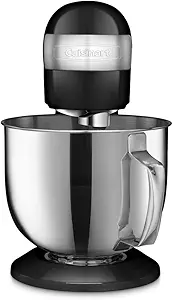 |
| Top Rated A top-rated pick with lots of positive feedback | KitchenAid Classic Series K45SS |  |
| Most Popular A crowd favorite that many people choose with confidence | KitchenAid Artisan 5-Qt Mixer |  |
SMEG SMF05 Forte Stand Mixer
| Wattage | 750 watts |
|---|---|
| Number of Speeds | 10 |
| Capacity | 5 quarts |
| Voltage | 120 volts |
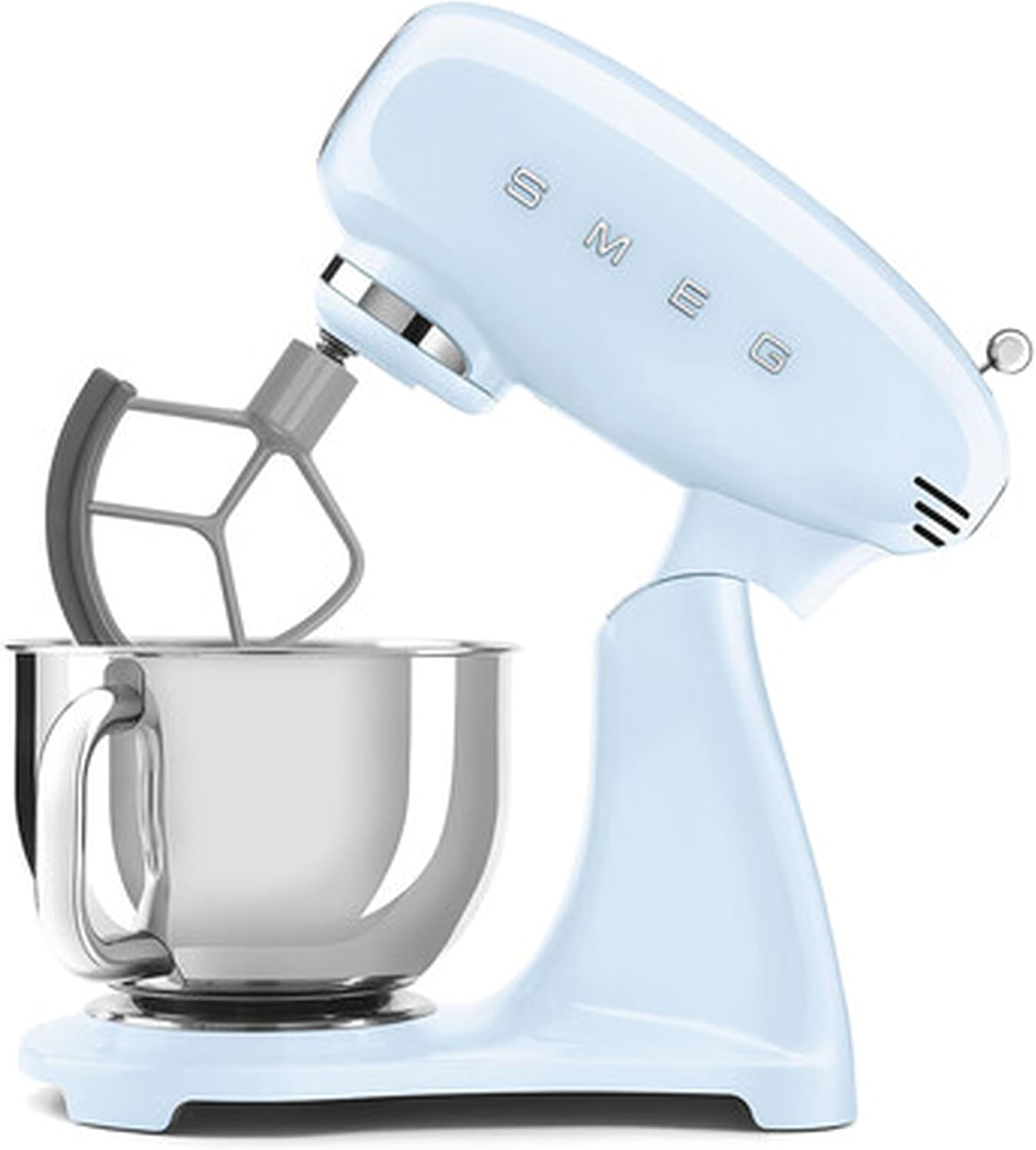
The SMEG SMF05 Forte is a high-performance stand mixer aimed at serious home bakers who want both style and substance. Its 750W direct-drive motor and SteadyMix system deliver consistent torque for heavy doughs and large batches, while planetary mixing action and 10 precision speeds ensure even incorporation across every recipe. Smooth Start reduces splatter when adding ingredients, and the included flex-edge beater continuously scrapes the bowl so you spend less time stopping to scrape. The 5-quart stainless steel bowl and full set of attachments let you whip cream, mix batters, and knead bread without needing extra accessories right away. Practical trade-offs are its substantial weight and countertop footprint and the premium price that comes with SMEG styling and metal construction. Also, optional specialty attachments are sold separately if you want to add functions like pasta making or ice cream. For buyers focused on reliable, stable mixing and elevated design, the SMF05 is a strong performer that handles dense doughs better than lower-powered consumer models.
Best for: Buyers who prioritize mixing performance and durability for frequent baking and dough work and who also value a distinctive retro design on the countertop.
Less Ideal for: Those who need a lightweight, ultra-compact machine for occasional use or shoppers on a tight budget seeking the lowest-cost mixer.
- Powerful 750W direct-drive motor provides steady torque for dense doughs and large batches.
- SteadyMix and planetary action produce even mixing with minimal vibration and no unmixed pockets.
- Flex-edge beater included reduces manual scraping and improves ingredient incorporation.
- Smooth Start feature limits splatter during initial mixing for cleaner counters.
- Comes with a full set of common attachments and a 5-quart stainless steel bowl ready for immediate use.
- Heavier and larger than compact mixers, requiring dedicated counter or storage space.
- Specialty attachments like pasta rollers and grinders are sold separately.
Verdict: Choose the SMF05 Forte if you want a powerful, stable stand mixer that reliably handles heavy doughs while doubling as a stylish kitchen centerpiece.
Hamilton Beach Professional Stand Mixer

| Capacity | 5 quarts |
|---|---|
| Wattage | 450 watts |
| Number of Speeds | 12 |
| Controls Type | Knob |
The Hamilton Beach Professional All-Metal Stand Mixer is a robust 5-quart kitchen mixer built for frequent baking and heavier dough tasks. Its 450-watt motor and 12-speed knob control deliver steady power and precise speed adjustments for everything from whipping cream to kneading bread, while planetary mixing action ensures thorough bowl coverage. The stainless steel bowl, included flat beater, whisk, and spiral dough hook cover common needs, and the splash/pour shield helps keep counters cleaner during high-speed mixing. A specialty attachment hub expands capability with optional add-ons for pasta, grinding, slicing, and shredding, which makes the unit more versatile than a basic mixer. The all-metal construction and sturdy controls give a professional feel, but the machine is relatively heavy and takes counter space typical of full-size mixers. There is no built-in timer or digital controls, so users who prefer programmable convenience will find the mixer more manual in operation. For someone prioritizing power, durability, and the ability to add specialty attachments, this mixer performs very well.
Best for: Buyers who want a durable, powerful stand mixer that handles frequent baking and heavy doughs and who value the ability to add specialty attachments over digital conveniences.
Less Ideal for: People seeking a lightweight, compact mixer or those who prefer programmable, touchscreen, or app-connected controls should consider other models.
- 450-watt motor provides consistent power for dense doughs and heavy mixing
- Planetary mixing action for thorough bowl coverage and even mixing
- All-metal construction and stainless steel bowl built for durability
- Specialty attachment hub expands functionality with optional accessories
- Manual knob controls with no digital timer or presets
- Relatively heavy and requires significant counter space
Verdict: Choose this mixer if you want a heavy-duty, all-metal 5-quart machine with strong motor power and an attachment hub for expanding capabilities.
Cuisinart Stand Mixer SM-50

| Capacity | 5.5 liters |
|---|---|
| Wattage | 500 watts |
| Number of Speeds | 12 |
| Material | Stainless Steel |
The Cuisinart SM-50 is a straightforward, heavy-duty stand mixer built for everyday baking and small-batch production. Its 500-watt motor and 12 speeds give fine control for tasks from whipping egg whites to kneading dough, while the 5.5-quart stainless steel bowl and tilt-back head make loading and scraping easy. The mixer ships with a chef's whisk, flat paddle and dough hook plus a splash guard with pour spout, and the accessories and bowl are dishwasher safe for easier cleanup. Die-cast metal construction and a solid motor mean it handles thicker mixes without struggling, and the unit accepts a range of optional attachments for pasta, grinding and frozen desserts if you want to expand use later. The design is manual with a simple knob control rather than digital bells and whistles, so it is practical but lacks smart features or automated presets found on some premium models. It is a reliable choice for serious home bakers who want durable performance without extra complexity.
Best for: Buyers who want a durable, no-nonsense mixer that performs like a higher-end machine without premium pricing and who value straightforward controls and expandability via optional attachments.
Less Ideal for: Those seeking a large commercial-capacity mixer, touchscreen controls, or smart features should look at more premium, pro-style models.
- Powerful 500-watt motor and 12 speeds for versatile mixing tasks
- Durable die-cast metal construction with a stainless steel bowl
- Tilt-back head and included splash guard make bowl access and pouring easier
- Dishwasher-safe bowl and accessories simplify cleanup
- Manual knob controls lack digital presets or advanced programmability
- 5.5-quart capacity is smaller than some high-end pro-style mixers
Verdict: A sturdy, performance-focused mixer that delivers reliable mixing power and useful expandability for buyers seeking high-end functionality on a budget.
KitchenAid Classic Series K45SS
| Capacity | 4.5 quarts |
|---|---|
| Number of Speeds | 10 |
| Wattage | 275 watts |
| Voltage | 120 volts |
| Included Components | Flat beater, dough hook, 6-wire whip, stainless steel bowl |
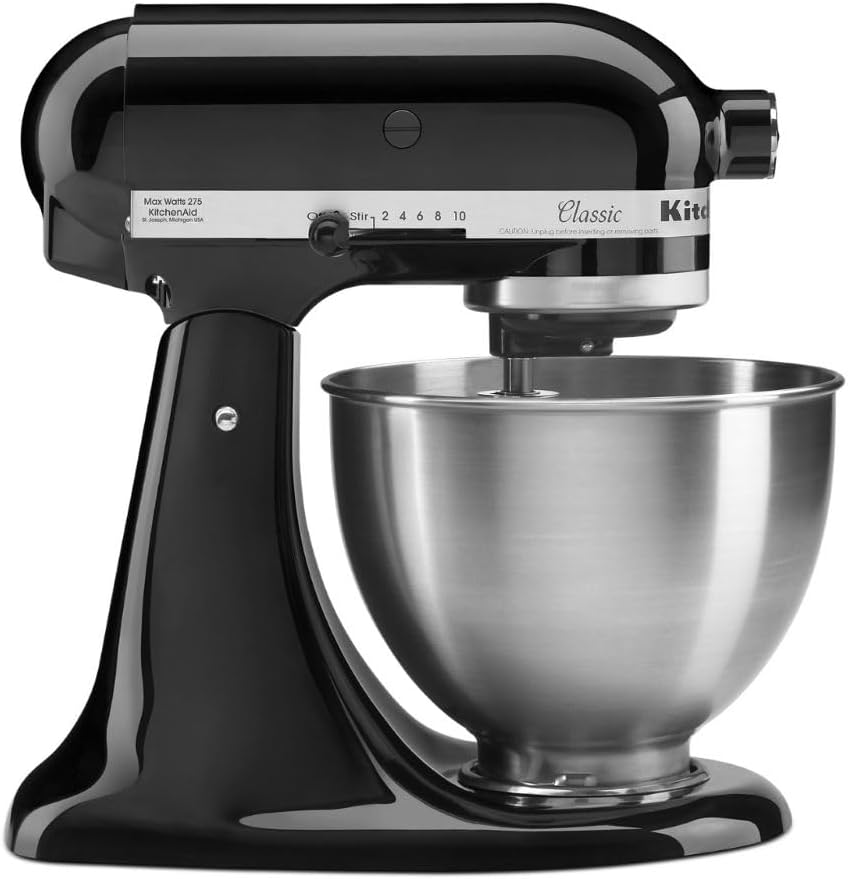
The KitchenAid Classic Series K45SS is a straightforward, durable tilt-head stand mixer built for regular home baking. Its 4.5-quart stainless steel bowl and included flat beater, dough hook, and 6-wire whip handle common tasks from cookie dough to whipped cream, while the 10-speed motor covers stirring through high-speed whipping. The metal construction and 59 touchpoints around the bowl are designed to deliver consistent mixing and long-term reliability, and the power hub accepts optional attachments to expand uses like pasta or grinding. The tilt-head design makes adding ingredients and swapping attachments easy, and the bowl is dishwasher-safe for cleanup. At 275 watts it is well suited for typical batches but may be slower or require smaller batches than heavier commercial mixers when kneading very large quantities. For home cooks who want a long-lasting, no-frills mixer that accepts attachments, this model balances everyday power, simple controls, and durable construction without unnecessary extras.
Best for: Home bakers who prioritize a reliable, metal-built mixer for regular batches and want a machine that accepts a variety of optional attachments to extend its uses.
Less Ideal for: People who routinely mix very large or commercial volumes or who need the extra stability and capacity of a heavy-duty bowl-lift or professional-grade mixer.
- Durable metal construction designed for long-term use
- Versatile 4.5-quart stainless steel bowl suitable for family-sized batches
- Includes flat beater, dough hook, and 6-wire whip for common mixing tasks
- 10-speed range covers stirring to high-speed whipping
- Power hub enables optional attachments to expand functionality
- 275-watt motor may be underpowered for very large or heavy doughs
- Tilt-head form limits bowl capacity compared with some bowl-lift models
Verdict: Choose this KitchenAid Classic for dependable, everyday mixing with a durable metal build and expandable attachment capability.
KitchenAid Artisan 5-Qt Mixer

| Capacity | 5 quarts |
|---|---|
| Wattage | 325 watts |
| Number of Speeds | 10 |
| Voltage | 120 volts |
The KitchenAid Artisan 5-Quart Tilt-Head Stand Mixer is a full-featured, metal-bodied mixer designed for home bakers who want a reliable, long-lasting machine. It handles everything from stirring and whipping to kneading thanks to a 10-speed knob control and a powerful 325-watt motor, and the tilt-head design makes it easy to add ingredients or swap attachments. The mixer ships with a polished stainless-steel 5-quart bowl, coated flat beater, coated dough hook, six-wire whisk, and a pouring shield so you can start baking right away. Its durable construction and 59 touchpoints around the bowl translate to consistent mixing and good ingredient incorporation, and the bowl capacity is large enough for multi-batch cookie dough or family-sized recipes. The tilt head limits access for very tall attachments compared with bowl-lift designs, and at its weight it is a heavier countertop appliance to move. For buyers who value proven build quality and broad accessory compatibility, this Artisan model performs like a workhorse in a home kitchen.
Best for: Buyers who want a proven, durable stand mixer that performs reliably for frequent baking and values strong social proof and established brand reputation.
Less Ideal for: Those who need a lighter, more portable mixer or who prefer a bowl-lift design for easier access when using large or heavy attachments.
- Durable metal construction built for long-term home use
- 5-quart stainless-steel bowl handles large batches up to about 9 dozen cookies
- Ten-speed control covers gentle stirring through high-speed whipping
- Includes key accessories: flat beater, dough hook, whisk, and pouring shield
- Tilt-head design can limit clearance for very tall attachments compared with bowl-lift models
- Heavy unit that is less convenient to move or store
Verdict: A durable, high-capacity Artisan mixer that delivers reliable mixing performance and broad accessory support for serious home bakers.
Choosing the Right High-End Mixer: Key Factors to Consider
Motor Power and Torque
Motor capability determines what your mixer can do reliably. Higher wattage and torque let a mixer handle dense bread doughs, large cookie batches, and thick frostings without bogging down.
A strong motor also matters for longevity because it will strain less under heavy loads. Look for specifications that show continuous power delivery rather than short bursts, and consider whether the mixer has thermal protection or cooling pathways to avoid overheating during longer jobs.
Build Materials and Durability
Construction materials affect stability, longevity, and how the appliance feels in use. Metal gears and an all-metal or reinforced metal housing resist flex and wear better than mostly plastic designs.
Weight and a low center of gravity help reduce counter movement while mixing. Durable finishes on bowls and attachments prevent corrosion and make cleanup easier. Think about repairability and whether common wear parts are replaceable when evaluating long-term cost.
Bowl Capacity and Shape
Bowl size dictates how much you can mix in a single batch and how ingredients move during mixing. Larger bowls are preferable if you bake sizable batches or make family-sized recipes, while smaller bowls are fine for occasional or single-portion use.
The bowl shape and tilt or lift mechanism influence how evenly ingredients integrate and how easy it is to access the mixture. Consider whether the mixer's bowl height and capacity match your common recipes to avoid repeated small batches.
Attachment Compatibility and Versatility
A flexible attachment system expands what the mixer can do beyond basic mixing. Standard attachments like flat beaters, dough hooks, and wire whisks cover most baking tasks, while optional tools can add functions such as pasta making, grinding, or spiralizing.
Check whether the mixer uses a universal attachment hub or a proprietary interface, and whether quality accessories are included or sold separately. The ability to accept a range of sturdy, metal attachments increases long-term usefulness.
Speed Control and Consistency
Good speed control lets you start slowly to avoid splatter, then ramp up for efficient mixing. Steady, accurate speed settings produce consistent results and prevent ingredient overworking, especially for delicate batters.
Some mixers provide electronic speed regulation that compensates for load to maintain consistent rpm. Consider how intuitive and repeatable the controls are for recipes that rely on precise timing and mixing stages.
Serviceability and Warranty Support
Access to parts and straightforward repairability extend a mixer's useful life. Machines designed with replaceable gears, standard fasteners, and accessible motors are easier to maintain when something wears out.
Warranty terms and the availability of service centers are practical considerations, particularly for high-use buyers. A clear warranty and easy replacement-part channels reduce downtime and overall lifecycle cost.
Choosing the Right Capacity for Your Kitchen
Match bowl size to the volume of baking you do. Home bakers who regularly mix dough for multiple loaves or batches of cookies should lean toward larger bowls. If you mainly prepare small desserts, a mid-size bowl often saves counter space while still handling most recipes.
Consider how the mixer's mechanism—tilt-head versus bowl-lift—affects access and stability. Bowl-lift designs often provide a steadier mixing platform for heavy doughs, while tilt-head models are easier to load and clear for everyday tasks.
- Large bowls reduce the need for multiple batches
- Bowl-lift offers greater stability for heavy doughs
- Tilt-heads are typically simpler to load and clean
Understanding Attachment Ecosystems
Decide whether you want a mixer that acts as a kitchen hub. If you plan to make pasta, grind meat, or use specialty tools, prioritize mixers with a robust attachment standard and metal-driven hubs. Confirm which accessories are included and which require separate purchase.
Also assess attachment storage and changeover convenience. Quick-release mechanisms and clear indexing make swapping tools faster, which encourages using the full range of functions.
- Look for metal-driven attachment hubs for durability
- Check included accessory types and optional expansions
- Evaluate how easy it is to attach and remove tools
Noise, Heat, and Long Runs
High-power motors can generate noise and heat during extended mixing sessions. If you frequently run a mixer for long periods, seek units with better insulation, cooling vents, or thermal protection to avoid shutdowns and excessive sound.
Consider where you will use the mixer and how much noise is acceptable. Some higher-end machines incorporate noise-dampening features without sacrificing power, which can matter in open-plan kitchens.
- Thermal protection prevents motor damage during long runs
- Noise-dampening features improve comfort in shared spaces
- Ventilation design affects how hot the mixer gets under load
Countertop Footprint and Stability
High-end mixers can be heavy and take significant counter space. Measure the footprint and ensure you have room both for the mixer and for tipping or lifting the head if needed. A heavier base often correlates with less movement during operation.
Non-slip feet and a low center of gravity reduce tracking while mixing. Think about storage, whether the unit needs to stay on the counter, and how easily you can move it if kitchen layout changes.
- Measure clearance for tilt-head models
- Look for a solid, weighted base to minimize movement
- Confirm storage space if you plan to hide the machine between uses
Maintenance and Cleaning Tips
Routine cleaning preserves performance and hygiene. Removable bowls and dishwasher-safe attachments speed cleanup, but check if the manufacturer recommends hand washing for longevity. Wiping the motor housing and keeping vents clear prevents dust buildup.
Inspect wear items like seals and gears periodically. Lubrication points and accessible fasteners make maintenance simpler and extend the machine's usable life.
- Prefer dishwasher-safe attachments when convenience matters
- Keep vents and cooling paths free from debris
- Schedule periodic checks of moving parts and seals
How We Chose the Best High-End Mixer
We focused on features that directly affect long-term performance and everyday usability for serious home cooks. Key evaluation criteria included motor power and torque, because heavy doughs and continuous mixing demand sustained, reliable output. We assessed build quality and materials to judge durability and long-term resistance to wear. Capacity and bowl design were checked to ensure the mixers can handle common batch sizes without overloading. Attachment system and versatility mattered for buyers who want multifunctional machines that accept standard accessories. Noise and heat management were considered for comfort during extended operation. Products were excluded if they used primarily plastic gears, lacked clear motor or capacity specifications, or targeted only occasional users. We prioritized mixers that balanced strong, well-cooled motors with metal construction and secure attachment systems. Where specs were comparable, we favored units that offered practical features such as steady speed control, a sturdy mixing bowl, and accessible serviceability.
Our full evaluation process is outlined in our review methodology.
FAQ
Do I need a high-end mixer for home baking?
Often it depends on volume and recipe complexity. If you bake frequently, make heavy doughs, or want consistent professional results, a high-end mixer is a worthwhile investment. For occasional use, a mid-range model may suffice.
How important is motor wattage when choosing a mixer?
Motor wattage and torque both matter because they indicate the ability to sustain heavy loads. Higher wattage generally helps with dense doughs and long mixing cycles, but motor design and cooling are also important for reliability.
Are metal gears worth it compared with plastic gears?
Metal gears usually offer better durability and longevity under heavy use. Plastic gears can be quieter and lighter, but they are more prone to wear when used frequently with dense ingredients.
Can I use a high-end mixer for non-baking tasks?
Yes. With the right attachments, many mixers can handle tasks such as meat grinding, pasta making, and vegetable slicing. Verify that the mixer supports the specific attachments you plan to use and that the attachment hub is sturdy enough for those functions.
How do I know if a mixer will overheat during long batches?
Look for explicit notes about thermal protection, duty cycle, or cooling features in the specifications. User experience also matters, so machines that advertise continuous-duty ratings or enhanced ventilation are less likely to overheat.
Final Verdict
Prioritize motor strength, build quality, and the right bowl capacity for your typical recipes when choosing a high-end mixer. Think about how much versatility you need from attachments, and weigh the tradeoff between a heavier, more stable machine and countertop space constraints. Focus on a mixer that matches the volume and types of mixing you do most often, and you will get the best balance of performance and longevity.