
Note: This article contains affiliate links. If you click on these links and make a purchase, we may earn a small commission at no extra cost to you. This helps support our research and content. Read our full affiliate disclosure here.
If you value café-level extraction at home but have limited counter space, a high-end small coffee grinder can make a big difference. The right grinder gives you repeatable grind settings, minimal retention, and mechanical build quality that holds up to daily use. This guide shortlists the top small, high-end machines that fit tight kitchens and focused brewing setups. We evaluated each option for grind consistency, dosing control, durability, and footprint. Read on for a focused look at the picks and what matters when choosing a compact grinder for pour-over, espresso, or other manual methods.
Top Picks at a Glance
| Best Overall The best all-around choice for most situations | Breville Smart Grinder Pro BCG820BSS | 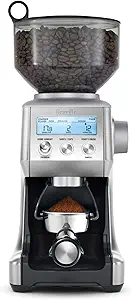 |
| Best Quality Built to a higher standard if you want something more solid | Fellow Ode Gen 2 Grinder |  |
| Best Value The sweet spot between price and what you get | Baratza Encore Grinder |  |
| Best Budget The cheapest option that still gets the job done reliably | KRUPS Precision Coffee Grinder F203 |  |
| Top Rated A top-rated pick with lots of positive feedback | AMZCHEF Conical Burr Grinder CG209 |  |
| Most Popular A crowd favorite that many people choose with confidence | Cuisinart Supreme Grind DBM-8P1 | 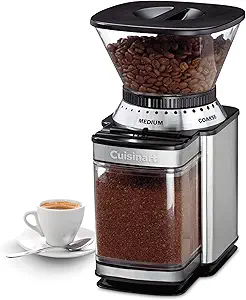 |
| Best Seller A high-volume bestseller chosen again and again | OXO Brew Compact Conical Burr Grinder |  |
Breville Smart Grinder Pro BCG820BSS

| Wattage | 165 |
|---|---|
| Voltage | 120 |
| Capacity | 1.1 pounds |
The Breville Smart Grinder Pro is a countertop conical-burr grinder designed to give precise, repeatable dosing for everything from espresso to French press. It is typically used to grind beans directly into a portafilter, airtight container, filter basket or paper filter, and the clear LCD shows grind setting, grind time and cup/shot selection. The standout features are Dosing iQ with 0.2-second time increments and 60 distinct grind settings, which make dialing in grind size and dose straightforward for different brew methods. Included portafilter cradles and a sealed grinds container add convenience for espresso users, and the stainless steel build feels sturdy. Trade-offs are the grinder's footprint and weight which make it less portable, and the learning curve to navigate many settings if you prefer a simpler one-knob experience. Noise during operation is typical for burr grinders and not unusually quiet. For home baristas who value control and consistency, it delivers factory-quality performance without stepping up to a commercial machine.
Best for: Home users who want precise, repeatable control over grind size and dose for multiple brew methods and are willing to spend time dialing in settings to improve coffee quality.
Less Ideal for: Buyers who want a very compact, lightweight grinder for travel or those who prefer a simple, no-fuss single-knob grinder for occasional use.
- Very wide 60 grind settings for espresso through French press
- Digital Dosing iQ with 0.2-second increments for consistent doses
- Grinds directly into portafilter or airtight container for versatile use
- Clear LCD makes grind selection and dose visible and repeatable
- Includes portafilter cradles and sealed grinds container for espresso convenience
- Relatively heavy and not designed for frequent moving
- Can take time to learn and fine-tune many settings
Verdict: Choose this grinder if you want detailed, repeatable control over grind size and dosing for high-end home brewing.
Fellow Ode Gen 2 Grinder

| Capacity | 100 g |
|---|---|
| Wattage | 140 watts |
| Voltage | 120 volts |
| Material Type | Stainless Steel |
The Fellow Ode Gen 2 is a purpose-built single-dose grinder aimed at brewed coffee methods rather than espresso. It uses professional-grade 64 mm flat stainless steel burrs and a two-stage grind geometry to produce consistent particle size across its 31 grind settings, which helps improve clarity and sweetness in pour-over, drip, French press, and cold brew. Anti-static tech, a built-in knocker, and an optimized grind path reduce retention and mess while the magnetic catch cup and auto-stop button make dosing repeatable and simple. The 100 g load bin keeps it strictly single-dose, keeping unused beans fresher between brews, and the design is compact and relatively quiet for countertop use. Trade-offs are clear: it is not designed for high-volume commercial use or for dialling in ultra-fine espresso on a shot-by-shot basis, and the single-dose hopper means frequent refills if you brew many cups. For home brewers focused on brewed-coffee flavor and consistent grind quality, the Ode Gen 2 delivers precise, low-retention performance in a refined package.
Best for: Home brewers and coffee enthusiasts who prioritize brewed-coffee flavor and consistent particle size and want a refined, low-retention single-dose grinder for pour-over, drip, French press, or cold brew.
Less Ideal for: People who need an espresso-focused grinder, a large-capacity hopper for batch grinding, or a commercial high-throughput machine should look elsewhere.
- 64 mm flat burrs and two-stage geometry for consistent particle distribution
- 31 grind settings tailored for brewed methods from pour-over to cold brew
- Anti-static system, built-in knocker, and optimized path reduce retention and mess
- Magnetic catch cup and auto-stop make single-dose grinding repeatable and easy
- Compact, relatively quiet operation suitable for countertop setups
- Not intended for espresso-level fine grinding or high-volume café use
- 100 g single-dose bin requires frequent refilling for multiple cups
Verdict: If you want a compact, low-retention single-dose grinder that elevates brewed-coffee flavor with precise, consistent grinds, the Ode Gen 2 is a top-tier choice.
Baratza Encore Grinder

| Wattage | 70 watts |
|---|---|
| Voltage | 120 volts |
| Capacity | 5 ounces |
The Baratza Encore is a straightforward, beginner-friendly burr grinder built for home brewing. It uses 40mm conical steel burrs and a DC motor to produce consistent, brew-ready grounds across 40 settings, making it useful for methods from pour-over to French press. Operation is simple with an on/off switch and a front-mounted pulse button for short bursts, and the small footprint fits easily on most counters. The hardened alloy burrs and serviceable design mean parts can be cleaned or replaced, which helps long-term ownership. Limitations include a modest 5 ounce hopper capacity that means refilling for larger batches, and it is not geared as a high-speed or dedicated espresso grinder for very fine, high-volume commercial use. For home users seeking reliable, adjustable grind quality without complex controls, the Encore delivers practical performance and durable, repairable components.
Best for: Home brewers who prioritize consistent, adjustable grind quality in a compact, repairable machine and want a reliable everyday grinder without advanced controls.
Less Ideal for: Users who need high-capacity grinding, very fine commercial-grade espresso performance, or a high-speed grinder for heavy daily volume should consider a different model.
- 40mm conical steel burrs provide consistent grind quality across a wide range of brew methods
- Simple controls with on/off switch and front pulse button make daily use intuitive
- Compact footprint fits small counters and kitchens
- Hardened alloy burrs and serviceable parts support long-term repairability
- Small 5-ounce hopper requires frequent refilling for multiple cups
- Not optimized for heavy-duty commercial use or high-volume espresso shops
Verdict: A durable, user-friendly home burr grinder that delivers consistent, adjustable grinds in a compact, serviceable package.
KRUPS Precision Coffee Grinder F203

| Capacity | 85 g (3 oz) |
|---|---|
| Wattage | 200 watts |
| Voltage | 240 volts |
| Power Source | Electric |
The KRUPS F203 is a simple, one-touch electric blade grinder that delivers quick, everyday grinding for coffee and spices. Its 200W motor and stainless steel blades chop beans from coarse to fine through short pulses or longer runs, and the 3 oz (85 g) hopper handles enough beans for roughly a dozen cups. You use it by adding beans or spices, securing the lid, and holding the button until you reach the desired consistency; grind time controls fineness rather than preset settings. Practical features include a lid that doubles as a measuring cup and a lid-activated safety interlock so the blades only run when closed. Cleaning is straightforward — wipe the lid and brush out the chamber — though the blade design makes it less suited for ultra-fine, uniform espresso grinds compared with burr machines. Its compact plastic body fits easily on counters or in cabinets and is well suited to kitchens that need a no-frills, dependable grinder. For buyers focused on premium, salon-level grind consistency and adjustable grind settings, a higher-end burr grinder will be a better match.
Best for: Buyers prioritizing a low-cost, compact grinder that handles coffee and spice tasks quickly and simply for everyday household use.
Less Ideal for: Those seeking high-end, cafe‑grade grind consistency, precise grind settings, or a durable metal-bodied grinder should consider a dedicated burr grinder instead.
- Fast, one-touch operation for quick daily use
- 200W motor and stainless steel blades handle coffee, spices, herbs, and nuts
- 3 oz (85 g) capacity grinds enough beans for multiple cups at once
- Lid doubles as measuring cup and lid-activated safety interlock for safe operation
- Compact footprint stores easily on counters or in cabinets
- Blade grinder yields less uniform particle size than burr grinders, limiting espresso-level precision
- Plastic exterior and simple controls lack premium fit-and-finish and adjustable grind settings
Verdict: A compact, budget-friendly one-touch grinder that reliably handles coffee and spices for everyday home use.
AMZCHEF Conical Burr Grinder CG209

| Burr size | 40mm |
|---|---|
| Grind settings | 48 settings |
| Wattage | 150 watts |
| Capacity | 10.6 ounces |
The AMZCHEF CG209 is a compact conical burr grinder aimed at home baristas who want flexible grind control and low retention. It uses 40mm stainless steel conical burrs and offers 48 grind settings that cover espresso through French press, plus a touchscreen LED panel to choose cup counts or set grinding times with 0.5s precision. A 10.6 oz removable hopper with a UV-tinted lid and a trap door makes refilling and cleaning straightforward, while anti-static tech and a stainless grounds container reduce mess when transferring grinds to portafilters or brewers. The built-in portafilter holder accepts 51–58 mm sizes and the unit includes a cleaning brush and grounds cup. On the downside it is a manual-operation grinder rather than fully automatic and users should watch for occasional clogs that trigger a protection pause requiring cleaning. For reliability-focused buyers, the metal construction and straightforward controls make routine use predictable, though heavy commercial use could expose durability limits not designed for café volumes.
Best for: Buyers who prioritize steady, repeatable home grinding for espresso and brewed coffee and want a metal-bodied grinder with precise, easy-to-use controls.
Less Ideal for: People needing a commercial-duty grinder for continuous high-volume use or those who want a fully automatic, hands-off dosing system.
- Wide 48-step grind range covering espresso to French press
- 40mm stainless steel conical burrs for consistent particle size
- LED touchscreen with 0.5s timer accuracy and manual start/stop
- Removable 10.6 oz hopper with UV tint and trap door for easier refills
- Anti-static system and stainless grounds cup reduce mess and retention
- Not intended for heavy commercial throughput, more for home use
- May pause if the grind chute clogs and requires manual cleaning
Verdict: Choose the CG209 if you want a reliable, metal-bodied home burr grinder that delivers precise, low-retention grinds across espresso to French press.
Cuisinart Supreme Grind DBM-8P1

| Wattage | 500 |
|---|---|
| Capacity | 0.23 kg |
| Voltage | 110 volts |
The Cuisinart Supreme Grind DBM-8P1 is a home-focused flat-burr grinder that delivers consistent, uniform grinds from ultra-fine to extra-coarse thanks to its 18-position selector. It is typically used to grind whole beans for drip, pour-over, and French press brewing and can grind enough for roughly 4 to 18 cups in one cycle. The removable 8 oz bean hopper and grind chamber make it easy to swap beans and clean, while the one-touch power bar and internal timer automatically stop the motor when the chosen grind is reached. Practical benefits include a heavy-duty motor that handles regular home use and cord storage plus a scoop and brush to keep the counter tidy. Trade-offs are that it is a countertop unit with an older, mostly mechanical interface rather than touchscreen controls, and the 500 W motor and metal construction mean it is not the quietest grinder available, so it may be better suited to daytime use than very early mornings.
Best for: Buyers who prioritize consistent, repeatable grinds and want a reliable, easy-to-clean burr grinder for everyday home brewing backed by broad user experience.
Less Ideal for: People seeking the absolute quietest operation, compact travel models, or advanced app-connected dosing features should consider other options.
- 18 grind settings for fine to coarse control
- Removable 8 oz hopper and grind chamber for easy cleaning and bean changes
- Internal timer and one-touch power bar for simple, repeatable grinding
- Includes cord storage and a cleaning scoop/brush for tidy countertop use
- Heavier, louder motor compared with some quieter high-end grinders
- Interface is mechanical rather than modern touchscreen or app-controlled
Verdict: Choose the Cuisinart DBM-8P1 if you want a dependable, easy-to-maintain burr grinder that produces consistent grinds across a wide range of brew methods.
OXO Brew Compact Conical Burr Grinder

| Capacity | 50 g |
|---|---|
| Voltage | 120 volts_of_alternating_current |
The OXO Brew Compact Conical Burr Grinder brings consistent, burr-style grinding to small kitchens without taking up much counter space. It uses stainless steel conical burrs and offers 15 stepped settings with 29 micro-adjustments, so you can dial in grind size for espresso, pour-over, or drip in modest quantities. The 50 g hopper is sized for one to six cups, and the chute-free grounds container with a pouring spout makes transferring grounds neat and simple. Removable upper and lower burrs simplify cleaning, and the compact footprint plus cord wrap make storage easy. Because the unit is designed for small batches, it is best for daily single-serve or small-pot brewing rather than large-volume grinding; the 50 g capacity and compact motor limit throughput compared with full-size grinders. Material choices like a Tritan Renew hopper and plastic body keep weight and cost down but mean the grinder is less heavy-duty than all-metal professional models. For buyers who want reliable, consistent grinds in a space-saving package, this delivers practical performance with easy maintenance.
Best for: Buyers who want dependable, consistent burr grinding for single cups or small pots and who prioritize low risk and straightforward operation in a compact appliance.
Less Ideal for: Those who grind large volumes regularly or need a heavyweight, pro-grade grinder for back-to-back brewing sessions should consider larger commercial-style models instead.
- True conical stainless steel burrs for consistent grind quality
- 15 settings plus 29 micro-adjustments for precise tuning
- Compact footprint and cord wrap make countertop storage easy
- Removable upper and lower burrs and washable grounds container simplify cleaning
- Small 50 g hopper limits batch size and requires frequent refills for multiple brew cycles
- Mostly plastic body means less robust feel compared with heavier all-metal grinders
Verdict: A compact, easy-to-clean conical burr grinder that reliably delivers precise small-batch grinds for everyday home brewing.
Choosing the Right High-End Small Coffee Grinder: Key Factors to Consider
Grind Consistency and Particle Distribution
Evenness of the grind determines how uniformly water extracts soluble solids. Inconsistent particle sizes create overextracted and underextracted pockets, which dulls clarity and balance. For a high-end small coffee grinder, look for burr geometries and motor speed control that reduce fines and large grinds within the same setting.
When a grinder produces a narrow particle distribution you get a cleaner cup and more predictable extraction adjustments. This matters for espresso where small changes dramatically affect crema and shot balance, and for pour-over where clarity and sweetness depend on consistent flow.
Adjustment Precision and Step Size
How finely you can change grind size affects your ability to dial in recipes. High-end grinders typically provide micro-adjustments or well-indexed steps so you can change settings without large jumps. Small grinders should balance a compact adjustment mechanism with reliable repeatability so you can return to known settings day after day.
Coarse or variable step sizes make dialing-in frustrating, especially on espresso. Precision adjustment is also important if you switch between brew methods frequently because it reduces the time spent testing and wasting coffee.
Dosing Options and Retention
Dosing accuracy matters whether you weigh doses or rely on timed or volumetric dosing. Small high-end grinders should minimize retention, the grounds left trapped inside the grinding path, because retained grounds change dose weight and freshness between uses. Low retention supports single-dose workflows and reduces stale-ground carryover between roasts.
Some grinders offer timed dosing, measured dispenses, or easy portafilter/bottle docking. Consider how the machine integrates with your workflow and whether it delivers consistent grams-per-pulse or per-timer setting.
Build Quality and Serviceability
A compact body does not excuse flimsy construction. High-end small grinders should use robust burr materials, solid adjustment collars, and a chassis that resists vibration. Durability matters because consistent burr alignment and tight tolerances preserve grind consistency over time.
Serviceability is also a factor. Look for machines with accessible burrs, replaceable parts, and clear manufacturer service policies. A grinder that is easy to clean and maintain will perform more reliably and last longer in everyday use.
Noise, Heat, and Motor Control
Smaller grinders can run louder or generate more heat if the motor and gearing are not optimized. High-end designs use controlled motor speeds and efficient burr geometries to limit heat transfer to the coffee and keep noise at tolerable levels for home kitchens. Excessive heat can alter flavor while coarse motors can be disruptive in small living spaces.
Consider the start-stop behavior, idle noise, and whether the machine has features like soft-start or low-RPM modes. These affect user comfort and extracted flavor, especially during longer dosing sessions.
Footprint and Countertop Fit
Physical size is a key constraint for compact kitchens. A high-end small coffee grinder should balance a minimal footprint with stable ergonomics for dosing and tamping. Vertical height, base area, and bean hopper size all influence where the grinder can sit and how it fits under shelves or cabinets.
Also assess hopper capacity relative to how often you brew. Large hoppers reduce refilling but increase the chance of stale beans in low-volume households. Choose a size that fits both your space and your brewing frequency.
Single-Dose Vs. Hopper Workflows
Small high-end grinders often support both single-dose and hopper-based workflows, but each approach has tradeoffs. Single-dosing minimizes stale beans and retention issues, and it keeps beans fresher for specialty roasts. It is favored by people who weigh beans for each brew and prefer tight control over roast freshness.
Hopper workflows are convenient for daily use and households that brew multiple times without refilling. When using a hopper, choose a grinder that allows easy removal or that has a small-capacity hopper to limit bean dwell time. The right choice depends on how often you brew and whether you prioritize convenience or peak freshness.
- Single-dose pros: fresher beans, lower retention, consistent results for single-origin roasts
- Hopper pros: convenience, fewer daily refills, better for multiple brewers
- Consider a removable hopper if you want flexibility between workflows
Burr Types and What They Mean
Burr material and profile influence particle distribution and longevity. Hardened steel burrs offer long life and predictable wear characteristics. Ceramic burrs resist heat transfer and can stay sharper for specific applications, but they may be more brittle under impact.
The burr profile, such as flat versus conical geometry, changes how beans are sheared and the resulting particle spectrum. Flat burrs often produce a narrower distribution at the expense of slightly higher retention, while conical burrs can be quieter and better at lower speeds. Evaluate what matters most for your brew preferences and maintenance habits.
- Flat burrs: tight distribution, precise grind, sometimes higher retention
- Conical burrs: forgiving, often quieter, can be lower retention
- Material tradeoffs: steel for durability, ceramic for thermal properties
Noise and Vibration in Small Spaces
Noise level and vibration are practical considerations that affect daily comfort and where the grinder can be placed. Small grinders that rattle or produce high decibel levels can be disruptive in apartments or open-plan homes. Vibrations also affect burr alignment over time and can produce uneven wear.
When possible, test machines at low and high speed or look for devices that advertise low-RPM modes. Anti-vibration feet, rigid chassis construction, and balanced burr sets all reduce noise and protect long-term performance.
- Look for solid, vibration-resistant construction for quieter operation
- Lower RPM motors usually mean less heat and noise
- Anti-slip feet and weight distribution help stabilize dosing
Maintenance and Cleaning Best Practices
Regular cleaning preserves flavor and grinder performance. For high-end small grinders, establish a simple routine: empty the hopper, brush burrs after use, and vacuum or blow out trapped fines periodically. Some designs allow quick burr removal which significantly reduces cleaning time.
Use dedicated grinder brushes and avoid harsh liquids on metal components. For deeper cleans, follow the manufacturer's guidance for disassembly and reassembly to maintain burr alignment. Routine care prevents buildup that causes taste degradation and mechanical wear.
- Brush burrs after each use to limit oil buildup
- Perform a deeper clean monthly or when switching bean types
- Check and tighten adjustment collars periodically to maintain repeatability
Integrating a Small Grinder Into Your Brewing Setup
Think about workflow: where the grinder sits relative to your scale, kettle, and brewer affects how efficient your morning routine is. A compact grinder that allows direct dosing into a portafilter, grounds bin, or dosing cup reduces mess and speeds up the process.
Consider accessories such as anti-static dosing cups, funnel attachments, or rubber mats that help manage grounds and reduce mess. The right setup minimizes transfer loss and keeps your countertop clean while preserving dose consistency.
- Place grinder near the brewing station for efficient workflow
- Use a dedicated mat or tray to collect stray grounds
- Consider a low-retention funnel for precise dosing into narrow baskets
How We Chose the Best High-End Small Coffee Grinder
We compiled this shortlist by prioritizing attributes that matter most for high-end compact grinding at home. Primary evaluation criteria included grind consistency across the most common brew ranges, from fine espresso to coarse pour-over. We measured how repeatable settings are and whether the machine maintains consistent particle distribution as you change grinds. Build quality and materials were next: durable burr sets, precise adjustment mechanisms, and a compact but rigid chassis are essential for machines that see daily use in confined spaces. We also assessed dosing accuracy and retention since small grinders often serve precise single- or double-dose workflows. Ease of cleaning and maintenance was included because compact designs can hide trapped grounds that affect flavor. Other filters excluded units that were either too large to qualify as "small" or that lacked fine adjustment for high-end brewing. We also excluded models intended only for wholesale or commercial batch grinding. The final list favors grinders that balance size, repeatability, and longevity for serious home brewers.
Our full evaluation process is outlined in our review methodology.
FAQ
How often should I replace the burrs on a high-end small grinder?
Burr replacement frequency depends on bean volume and burr material. For daily home use, expect to replace steel burrs roughly every 1,000 to 3,000 pounds of coffee, though most home users will find several years between replacements. Watch for declining performance such as increased fines or inconsistent extraction.
Can a small grinder handle both espresso and pour-over?
Many high-end small grinders can cover both ranges, but it depends on burr size and adjustment range. Smaller burrs may heat faster or require more time when switching, while well-designed compact machines provide the adjustment precision needed to dial in both.
Is a removable hopper necessary for freshness?
A removable hopper is helpful if you single-dose frequently or want to limit bean dwell time. It makes switching beans and cleaning easier, reducing stale-bean carryover. If you keep beans in the hopper long-term, consider a smaller-capacity hopper.
How much noise should I expect from a compact high-end grinder?
Noise varies by motor type and burr geometry. Expect some audible sound, but high-end designs often include low-RPM modes and rigid construction to reduce noise. If noise is a concern, look for grinders with documented reduced decibel levels or user controls for speed.
What maintenance steps preserve dosing accuracy?
Regularly clean burrs and the grinding chamber to prevent buildup that alters retention and dose weight. Check and recalibrate adjustment collars if your grinder allows it. Consistent dosing also comes from stable tamping and weighing practices in your overall workflow.
Final Verdict
Choose a high-end small coffee grinder that matches your brewing priorities. Prioritize grind consistency and adjustment precision if you dial in recipes frequently, or focus on low retention and compact footprint if you single-dose and value freshness. Consider noise, maintenance, and how the grinder fits your workspace. Ultimately, the best choice balances predictable performance with a size that fits your countertop and routine. Use the evaluation criteria above to compare options and pick the compact grinder that supports the brewing styles you use most often.