
Note: This article contains affiliate links. If you click on these links and make a purchase, we may earn a small commission at no extra cost to you. This helps support our research and content. Read our full affiliate disclosure here.
Picking a high-end stovetop pressure cooker matters because these pots are built to handle heavy use, higher temperatures, and precise pressure control for better results. The right choice can shorten cook times, improve texture and flavor, and avoid frustrating maintenance problems. This guide covers seven shortlisted high-end stovetop pressure cookers, selected for long-term durability, ease of sealing, and consistent pressure performance. Below you will find our top picks and the practical reasons each design made the list, plus the evaluation criteria we used to compare them.
Top Picks at a Glance
| Best Overall The best all-around choice for most situations | Kuhn Rikon Duromatic 7.0L Pressure Cooker |  |
| Best Quality Built to a higher standard if you want something more solid | Fissler Vitaquick Premium 8.5-Qt |  |
| Best Value The sweet spot between price and what you get | KOBACH 8QT Stainless Steel Pressure Cooker |  |
| Best Budget The cheapest option that still gets the job done reliably | IMUSA 7-Quart Stovetop Pressure Cooker |  |
| Top Rated A top-rated pick with lots of positive feedback | All American 1930 21.5-Qt Pressure Canner |  |
| Most Popular A crowd favorite that many people choose with confidence | Presto 6-Quart Stainless Pressure Cooker |  |
| Best Seller A high-volume bestseller chosen again and again | Presto 23-Quart Pressure Canner |  |
Kuhn Rikon Duromatic 7.0L Pressure Cooker

| Capacity | 7 liters |
|---|---|
| Material | 18/10 stainless steel |
| Base | Superthermic aluminum sandwich, induction compatible |
| Controller Type | Mechanical knob |
| Included Components | Trivet, Quick Cuisine cookbook |
The Kuhn Rikon Duromatic is a high-end stovetop pressure cooker designed to speed up home cooking while preserving flavor and nutrients. It uses a Superthermic aluminum sandwich base bonded to stainless steel for fast, even heating on induction and all other cooktops, and the secure locking lid plus multiple steam-release mechanisms make pressure control straightforward and safe. Typical use cases include braises, soups, grains, and quick batch cooking where you want tender results in a fraction of conventional time. The included trivet and fill-level markings add practical convenience, and the mechanical knob control is simple to operate without electronics. At this level of build quality you get durable 18/10 stainless construction and Swiss assembly that should last many years, but the cooker is relatively heavy and requires careful handling and stove clearance. It also lacks electronic or programmable controls, so cooks who want digital presets or one-touch timers will need a separate device. For cooks seeking a robust, efficient stovetop pressure cooker, the Duromatic delivers dependable, fast performance with thorough safety features.
Best for: Home cooks who want a durable, high-performance stovetop pressure cooker that speeds up everyday meals and delivers consistent, restaurant-quality results without relying on electronics.
Less Ideal for: Buyers who prioritize lightweight, ultra-compact cookware for small kitchens or those who need digital timers and automatic programs should consider alternatives.
- Induction-compatible Superthermic base for even, fast heating
- Solid 18/10 stainless steel construction for long-term durability
- Multiple built-in safety features including locking lid and several steam-release mechanisms
- Includes trivet and cookbook for immediate use and versatile cooking
- Heavy unit that can be awkward to lift when full
- No electronic controls or programmable presets
Verdict: A robust Swiss-made stovetop pressure cooker that delivers fast, even cooking and strong safety features for cooks who want a durable, high-performance tool.
Fissler Vitaquick Premium 8.5-Qt

| Capacity | 8.5 quarts |
|---|---|
| Material | Stainless steel |
| Operation Mode | Manual |
| Control Method | Push Button |
| Included Components | Steamer Insert, Tripod |
The Fissler Vitaquick Premium is a high-end stovetop pressure cooker built for speed, control, and everyday versatility. It offers two intuitive pressure settings for delicate foods or hearty dishes, a secure locking lid with audible click and color pressure indicator, and a steamer insert plus tripod for multi-level cooking. In practice it reduces long braises and beans to a fraction of the time while preserving flavor and nutrients, and the stainless steel construction and removable parts make cleanup straightforward and dishwasher-safe. The mechanical push-button control and controlled steam release give precise, confidence-inspiring operation without electronics, and the robust build feels like a long-term kitchen tool. Expect premium fit-and-finish and solid heat performance, but at a higher price and with a learning curve if you are new to manual stovetop pressure cooking; achieving exact timing and release methods still depends on familiarity with the cooker. For cooks who prize speed, consistency, and durable construction, it performs at a level suited to serious home cooks and entertainers.
Best for: Cooks who want professional-level stovetop pressure performance and reliable, long-lasting construction to speed up braises, grains, and multi-course meal prep.
Less Ideal for: Casual cooks who prefer one-touch electric models or those seeking a low-cost, entry-level pressure cooker should consider alternatives.
- Two pressure settings for delicate and high-pressure cooking
- Stainless steel 18/10 construction for durable, long-lasting performance
- Includes steamer insert and tripod for multi-level cooking
- Secure locking system with visual and audible pressure indicators for safe use
- Dishwasher-safe removable parts simplify cleanup
- Premium price point compared with basic pressure cookers
- Manual controls require practice to master timing and release techniques
Verdict: Buy this if you want a durable, German-engineered stovetop pressure cooker that delivers fast, consistent, restaurant-quality results.
KOBACH 8QT Stainless Steel Pressure Cooker

| Capacity | 8 quarts |
|---|---|
| Material | Stainless steel |
| Special Features | Dishwasher Safe, Induction Compatible Base |
| Operation Mode | Manual |
| Closure Type | Locking lid |
This KOBACH 8QT pressure cooker is a heavy-duty stainless steel stovetop canner that shortens cook times by up to 70 percent versus conventional pots while keeping flavors and nutrients locked in. It is used like a conventional pressure cooker: add ingredients and liquid to the marked water lines, secure the locking lid with a single press, bring to pressure and use the swing-type exhaust or safety valve to release steam when finished. Notable features include a composite induction-capable base, dual side handles for safer lifting, internal measurement lines, and a toothless one-hand lid that stands upright on the counter. Safety is emphasized with multiple pressure-relief channels, a pressure-limiting valve, anti-clog cover, and a backup safety valve. Practical benefits are faster batch cooking for families, compatible use on gas, induction and ceramic ranges, and easy cleanup since it is dishwasher safe. The cooker is fairly large and built for batch meals, so it may be heavier to handle when full and is less appropriate for single-person or small-portion cooking.
Best for: Buyers who want a durable stovetop pressure cooker to speed up family-size cooking and who prioritize safety features and easy one-handed lid handling.
Less Ideal for: People who primarily cook single servings, need a lightweight portable pot, or prefer an electric multicooker with automated programs should consider alternatives.
- Induction-ready composite base works on gas, induction and ceramic cooktops
- One-handed, toothless locking lid that stands upright for cleaner countertop handling
- Multiple redundant safety valves and anti-clog cover for controlled steam release
- Interior measurement lines help avoid overfilling and improve recipe consistency
- Dishwasher-safe stainless steel construction simplifies cleaning
- Large 8-quart capacity makes it bulky and heavier to lift when full
- Manual control requires active monitoring of stovetop heat to maintain pressure
Verdict: A robust, safety-focused 8-quart stainless steel stovetop pressure cooker built to speed up family and batch cooking while working across gas and induction ranges.
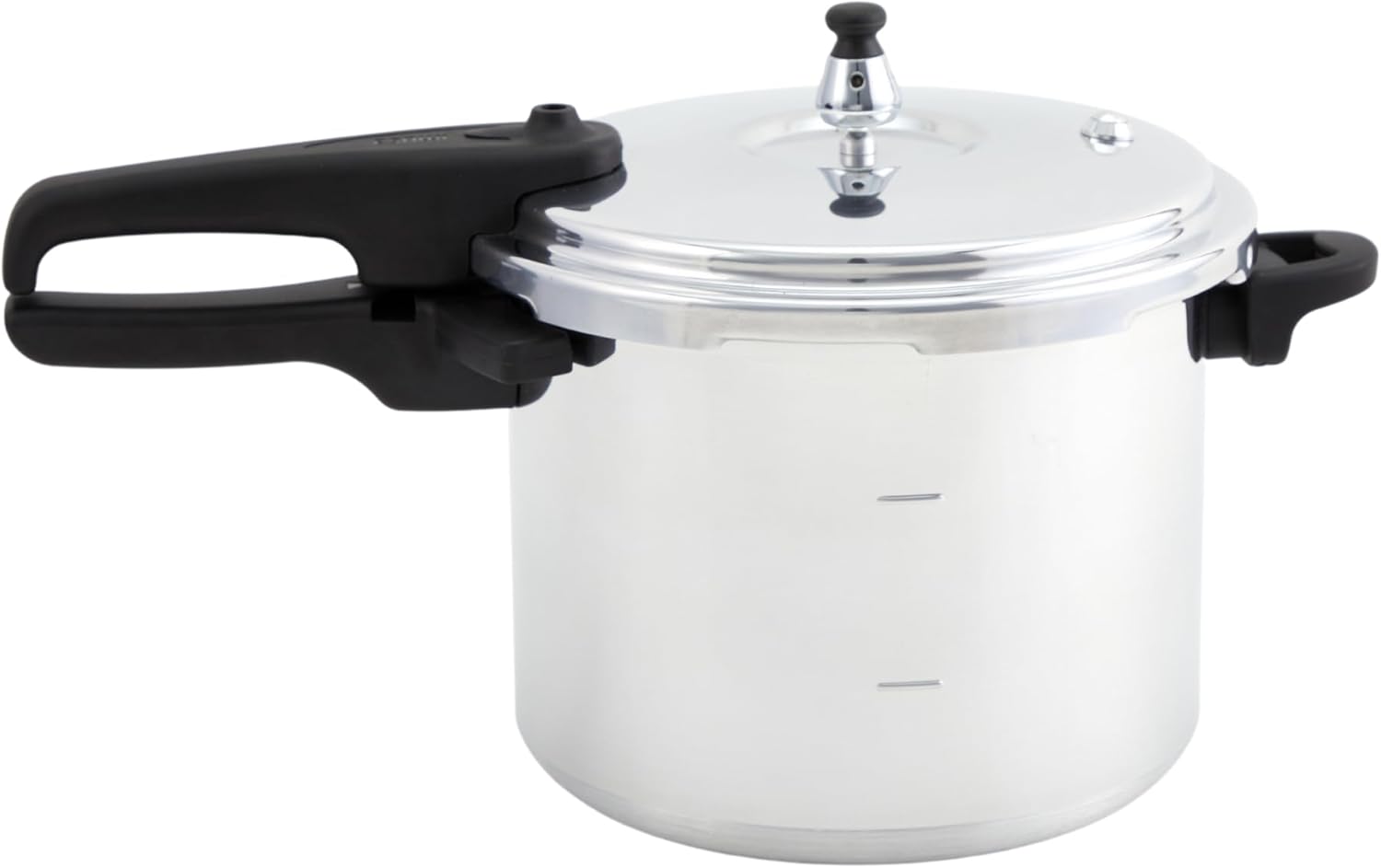
IMUSA 7-Quart Stovetop Pressure Cooker
| Capacity | 7 quarts |
|---|---|
| Material | Aluminum |
| Special Features | Locking Lid |
| Operation Mode | Automatic |
| Included Components | Pressure Cooker, Pressure Regulator |
The IMUSA 7-quart stovetop pressure cooker is a basic, no-frills aluminum cooker designed to speed up home cooking for larger batches. It locks the lid securely, uses an automatic pressure regulator and safety valve for controlled pressure, and includes a cool-touch side handle plus a helper handle for safer lifting. The polished exterior makes it easy to wipe clean and aluminum construction gives fast, even heat response on gas or electric stovetops. It is most useful for beans, soups, stews, and tougher cuts of meat where short cook times matter. Because it is a traditional stovetop unit with manual controls, you get straightforward, reliable performance without digital bells and whistles. Limitations include the aluminum body, which requires careful care to avoid warping or discolored surfaces over long-term high-heat use, and the lack of advanced pressure settings found on higher-end stainless models. Overall it is a practical, capacity-focused cooker for cooks who want fast results on a budget.
Best for: Buyers seeking an affordable, high-capacity stovetop pressure cooker for everyday family meals who prioritize straightforward, fast cooking over premium materials or electronics.
Less Ideal for: Those who want premium stainless construction, fine pressure control, or programmable/digital pressure-cooker features should consider higher-end alternatives.
- Generous 7-quart capacity suitable for family meals and batch cooking
- Automatic pressure regulator and safety valve for consistent, safer pressure control
- Cool-touch side handle and helper handle for easier, safer lifting and transport
- Polished aluminum exterior provides quick heat transfer and easy surface cleaning
- Aluminum construction can show wear, discoloration, or warp under prolonged high heat compared with stainless steel
- No digital controls or multiple pressure settings for precision cooking
Verdict: Choose this IMUSA cooker if you want a roomy, reliable stovetop pressure cooker that delivers fast, practical results without premium price tags.
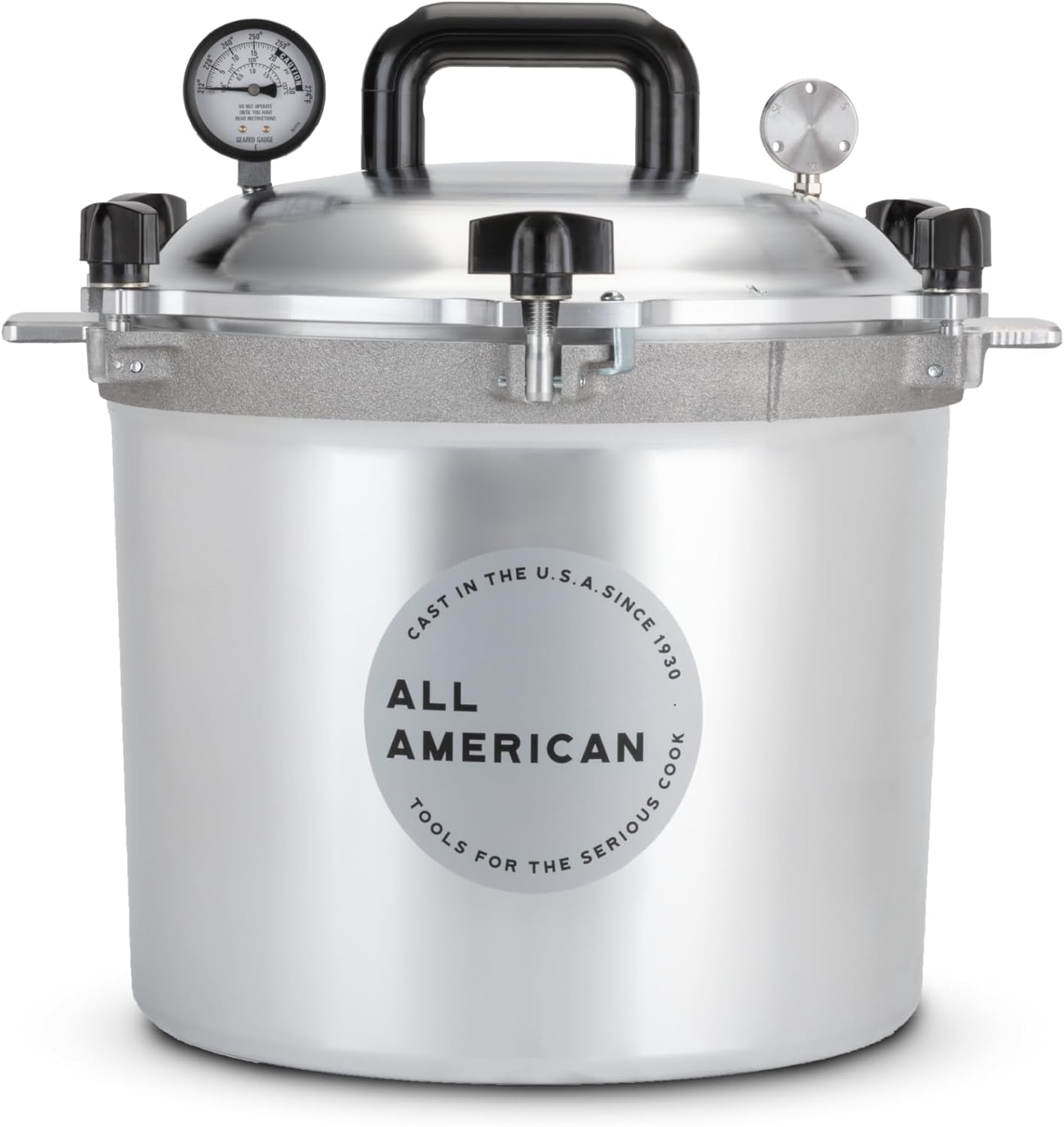
All American 1930 21.5-Qt Pressure Canner
| Capacity | 21.5 quarts |
|---|---|
| Material | Aluminum |
| Sealing System | Metal-to-metal |
| Suitable For | Gas, Electric, or Flat Top Stoves |
The All American 1930 21.5-quart pressure cooker/canner is a professional-grade stovetop unit built for serious home canning. It uses a precision-machined metal-to-metal seal instead of a gasket, so the lid clamps to the pot for a steam-tight closure that is simple to clean and does not require replacement seals. The cooker includes an easy-to-read steam gauge, a regulator weight for accurate pressure control, and a robust construction with double-thickness edges and a phenolic top handle. You can process low- and high-acid foods safely per USDA guidelines and load up to about 19 pint jars or 7 quart jars for batch canning. Because it is cast aluminum and built heavy, it holds heat well and withstands frequent use, but it is not compatible with induction cooktops and is relatively heavy to move. The lack of a gasket eliminates routine seal maintenance but also means the unit relies on precise machining and user attention to the steam gauge and valves for safe operation.
Best for: Buyers who prioritize long-term reliability and low-maintenance sealing for frequent stovetop canning and want a durable, factory-quality unit they can use for years.
Less Ideal for: If you rely on induction cooktops, need a lightweight portable canner, or only do occasional small-batch canning, this heavy stovetop model may be more than you need.
- Metal-to-metal seal eliminates gasket replacement and simplifies cleaning
- Heavy cast aluminum construction built for frequent, long-term use
- Includes steam gauge and precision regulator for controlled, USDA-approved canning
- Large 21.5-qt capacity holds many pint or quart jars per batch
- Not compatible with induction cooktops
- Relatively heavy, making it less convenient to move or store
Verdict: Choose this pressure canner when you want a rugged, low-maintenance stovetop unit with a factory-quality metal-to-metal seal for dependable, high-volume canning.
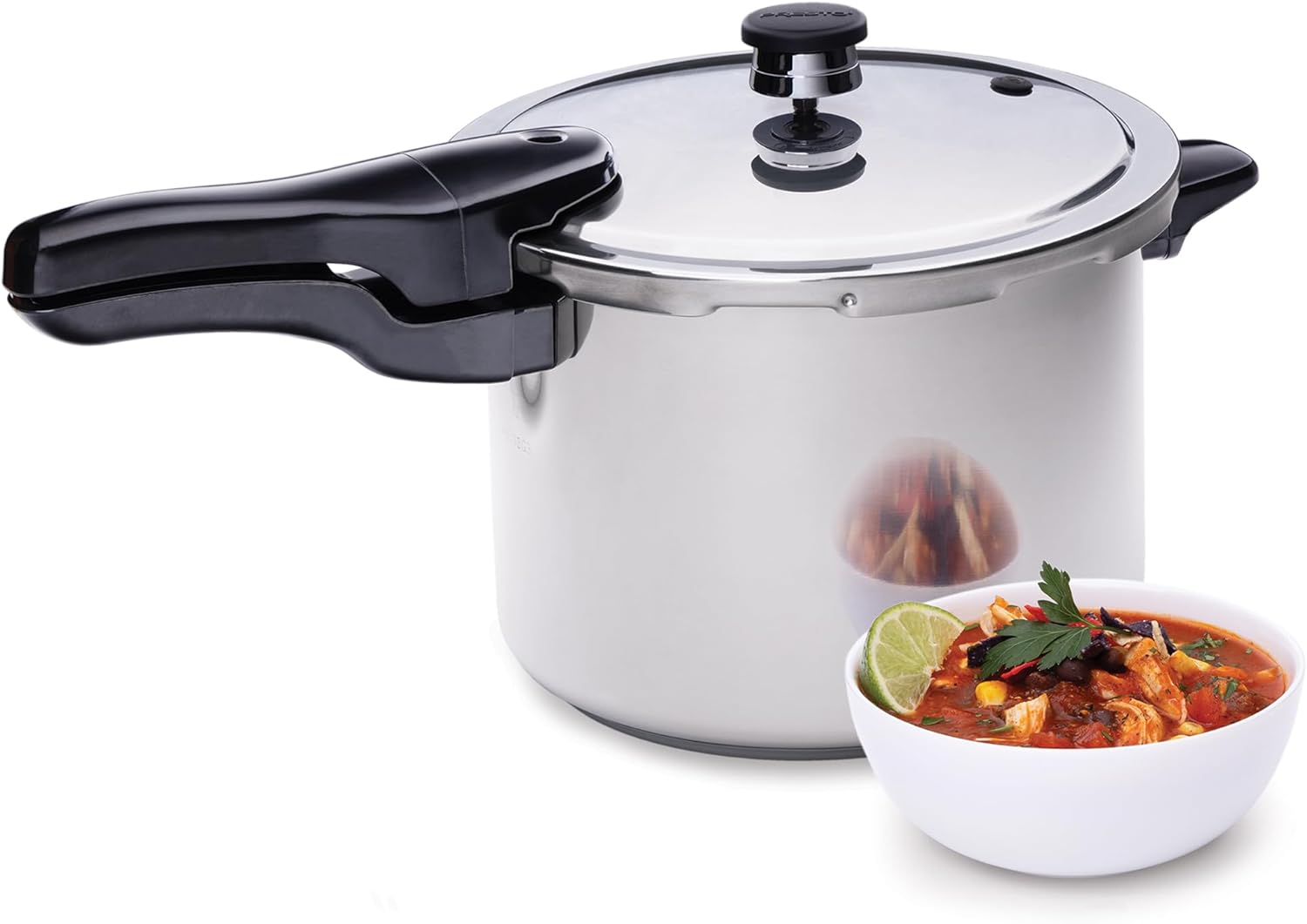
Presto 6-Quart Stainless Pressure Cooker
| Capacity | 6 quarts |
|---|---|
| Special Features | Dishwasher Safe, Induction Compatible Base, Locking Lid |
| Wattage | 1000 watts |
| Control Method | Touch |
The Presto 6-Quart stainless steel pressure cooker is a traditional stovetop cooker built for fast, nutrient-preserving meals and reliable everyday use. It uses a pressure regulator and locking lid to maintain and indicate safe pressure, plus an overpressure plug and steam-release mechanism for extra safety. The tri-clad base sandwiches aluminum between stainless steel layers for more even heating on gas, electric and induction ranges, and the included rack lets you cook multiple items without flavor transfer. It is dishwasher safe if you remove the sealing ring and overpressure plug first, and the package includes a 64-page instruction and recipe booklet that helps with timing and techniques. The pot is heavier than lightweight alternatives and has a more classic control scheme, so it does not replace electric multicookers for automated presets, but it offers faster cooking times and sturdy, professional-style construction for cooks who prefer stovetop control.
Best for: Buyers who prioritize proven stovetop performance, durable stainless-steel construction, and clear safety features supported by strong user feedback when choosing a high-end stovetop pressure cooker.
Less Ideal for: People who want hands-off, programmable electric multicookers with digital controls and preset programs should consider an electric model instead.
- Tri-clad base for even, responsive heating on multiple cooktops
- Robust safety features including cover lock indicator, pressure regulator, and overpressure plug
- Dishwasher-safe body with removable sealing ring for easier cleaning
- Includes cooking rack and a 64-page instruction/recipe book to guide use
- Heavier, traditional stovetop design lacks digital presets and automation found in electric multicookers
Verdict: Choose the Presto 6-quart if you want a professionally built stovetop pressure cooker with even heating and comprehensive safety features.
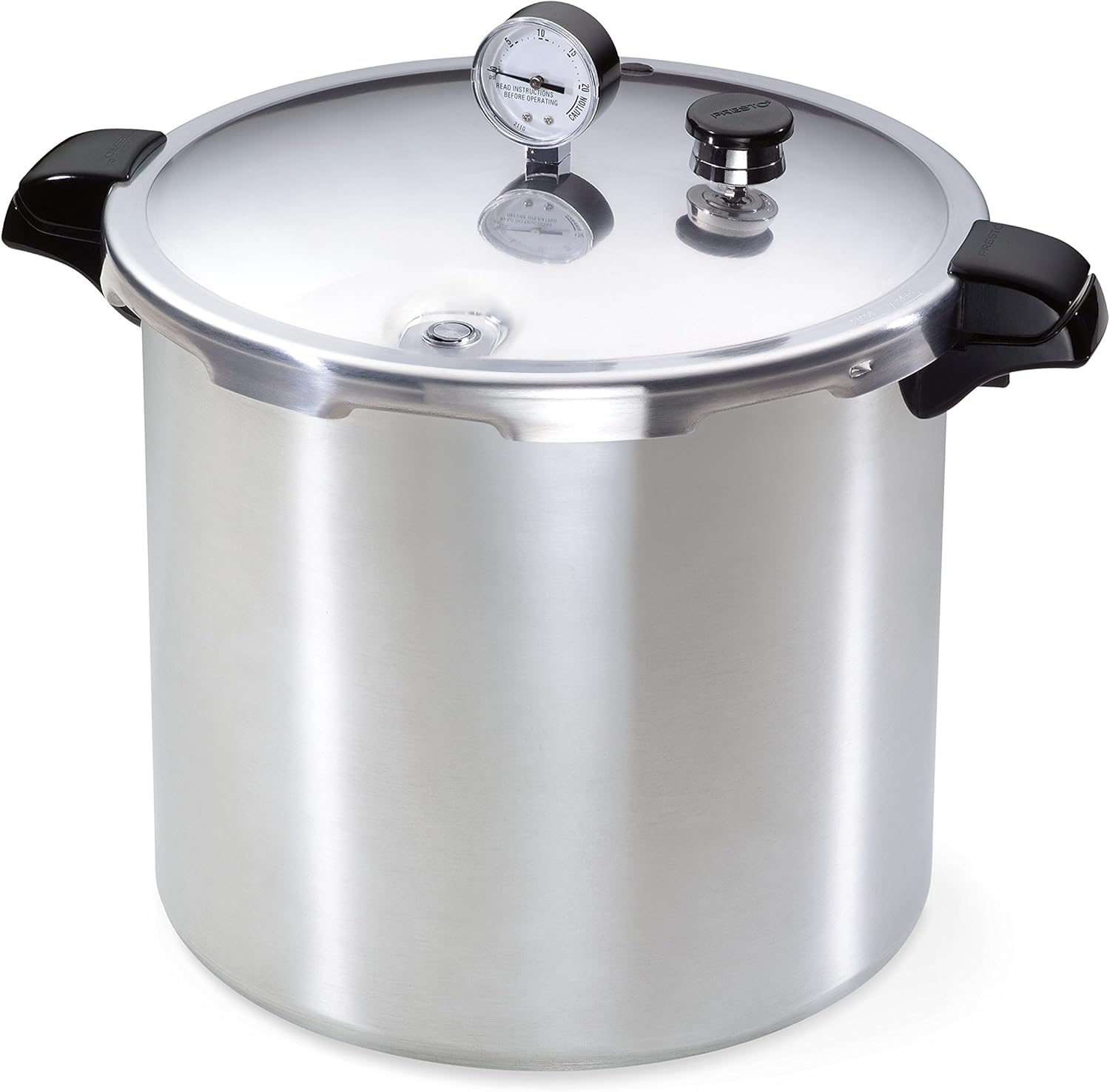
Presto 23-Quart Pressure Canner
| Capacity | 21.8 liters |
|---|---|
| Wattage | 1000 watts |
| Control Method | Touch |
| Closure Type | Outer Lid |
The Presto 23-Quart Pressure Canner is a dedicated stovetop canner that also doubles as a high-capacity pressure cooker for family meals. It is built from heavy-gauge, warp-resistant aluminum for even heating and works on both regular and smooth-top ranges, making it easy to bring jars up to and maintain processing pressure. The unit includes a deluxe pressure dial gauge for precise pressure monitoring, an air vent/cover lock that prevents the lid from opening while pressurized, an overpressure plug for safety, and a rack to keep jars off the bottom. Practical uses include USDA-recommended pressure canning of low-acid foods, boiling-water canning for fruits and pickles, and large-batch cooking like stews or stocks. The large 23-quart capacity handles big canning days and family-sized recipes, and the included recipe and instruction booklet helps with safe operation. Buyers should note the aluminum exterior requires gentle cleaning and the dial gauge is delicate and may need careful handling or calibration over time.
Best for: Buyers who prioritize safe, USDA-compliant home canning and want a dependable, large-capacity stovetop unit for serious seasonal or year-round preserving.
Less Ideal for: Those who prefer dishwasher-safe stainless steel cookware or need a compact, counter-top electric pressure cooker for everyday quick meals.
- Large 23-quart capacity suitable for big canning batches and family meals
- Heavy-gauge aluminum construction for fast, even heating on stovetops
- Deluxe pressure dial gauge provides precise pressure readings important for safe canning
- Built-in safety features including air vent/cover lock and overpressure plug
- Includes canning rack and a detailed instruction and recipe booklet
- Aluminum finish requires careful cleaning and occasional polishing to maintain appearance
- Dial gauge is delicate and may need cautious handling or periodic calibration
Verdict: Choose this canner if you want a proven, high-capacity stovetop pressure canner with precise pressure monitoring and built-in safety for risk-averse home canners.
Choosing the Right High-End Stovetop Pressure Cooker: Key Factors to Consider
Construction and Materials
High-end stovetop pressure cookers should use durable, corrosion-resistant metals such as thicker-gauge stainless steel. Heavier construction reduces warping over time and improves heat distribution, which is important when relying on direct stove heat. A solid base layered for even heat transfer helps avoid hot spots that can trigger uneven pressure behavior.
Pay attention to riveted or welded handle attachments and robust lid fitment. Materials also affect how easy the cooker is to maintain and whether it will remain safe and attractive after years of use.
Sealing System and Gasket Quality
The gasket and sealing surface determine whether the cooker holds pressure reliably and vents predictably. Higher-end models often have replaceable gaskets made from heat-resistant elastomers and well-machined sealing channels to ensure a snug fit. A tight seal reduces steam loss and keeps cooking times consistent across batches.
Consider how easily the gasket can be removed and replaced, and whether replacement parts are standard sizes. A visible, serviceable gasket makes long-term ownership less fussy and reduces the risk of unexpected failure.
Pressure Control and Indicators
Precise pressure control is critical for consistent results, especially with delicate foods. Look for clear, mechanical pressure indicators and reliable venting options that let you select or maintain target pressure ranges. Some high-end stovetop designs offer multi-stage valves or stepped pressure settings to adapt cooking for different recipes.
A clearly observable indicator reduces guesswork and increases safety by letting you confirm when the pot is pressurized. Venting should be straightforward to operate and require minimal force to avoid accidental releases.
Safety Features and Locking Mechanisms
Safety features that prevent opening under pressure, provide redundant pressure relief, and guard against clogging are essential. High-end models typically include locking lids, secondary safety valves, and robust vent paths that resist blockage from food particles. A dependable locking mechanism also improves the user experience by aligning the lid securely and preventing accidental disengagement.
Evaluate how the cooker behaves when pressure is released and whether the design has built-in protections against overpressure scenarios. Ease of visually verifying that the lid is locked adds an important safety cue.
Compatibility With Your Cooktop
Stovetop performance varies with burner size and heat output. High-end stovetop pressure cookers should have a flat, stable base and good contact with common burner types. Thicker, multi-layered bases improve heat distribution on gas and electric ranges and reduce the need to constantly adjust flame or heat.
Check whether a pot's base diameter and weight are appropriate for your burners to avoid instability. A cooker that transfers heat evenly will achieve and maintain pressure more predictably.
Maintenance and Parts Availability
Long-term ownership depends on easy maintenance and access to replacement parts, particularly gaskets and valves. Choose designs where seals, pressure indicators, and safety valves can be serviced or replaced without professional tools. Clear instructions for disassembly and cleaning reduce the chance of overlooked maintenance that could compromise safety.
Consider how simple it is to clean hard-to-reach vent passages and whether routine upkeep requires specialized cleaners or parts. Readily available replacement components keep the cooker functioning safely for years.
How Stovetop Pressure Cookers Differ From Electric Models
Stovetop pressure cookers rely on the heat control of your range rather than built-in thermostats and microprocessor controls. That means you will actively manage flame or burner setting to maintain target pressure, which provides faster response but requires more attention.
Because they are purely mechanical, stovetop models tend to deliver higher maximum pressures and greater durability in the hands of experienced users. They also have fewer electronic parts to fail, making them attractive if you want a long-lasting, serviceable cooker.
- Requires manual heat adjustment to hold pressure
- Often higher maximum pressure and simpler mechanical parts
- Easier long-term serviceability due to fewer electronics
Common Pressure Settings and When To Use Them
Understanding typical pressure ranges helps pick recipes and predict cook times. Lower settings are best for delicate proteins and vegetables, while higher settings shorten cooking times for beans, tough cuts, and dense grains.
Some high-end stovetop designs offer stepped or adjustable valves that let you change pressure without fully venting. That flexibility can be useful for multi-stage cooking where you start at high pressure then drop to low for finishing.
- Low pressure: gentler texture for fish and soft vegetables
- Medium pressure: steady cooking for most one-pot meals
- High pressure: fastest results for beans, stews, and tough cuts
Maintaining Seals and Valves for Longevity
Regular inspection and cleaning of the sealing ring and pressure valves keeps the cooker working safely. After each use, remove food debris from vent paths and wipe the gasket to prevent odors and deformation. Periodic replacement of the gasket is a simple maintenance step that maintains sealing integrity.
If your model has removable valves or indicators, follow the manufacturer's cleaning guidance to prevent clogging from starches or oils. Storing the gasket slightly flexed or loose rather than compressed helps extend its useful life.
- Inspect gasket for cracks or permanent deformation
- Clean vent paths after each use to prevent clogging
- Replace seals on a predictable schedule based on use
What High-End Features Actually Improve Cooking
Not every premium feature affects everyday results. Thick multi-ply bases, high-quality gasket materials, and straightforward pressure indicators provide measurable benefits in durability and cooking consistency. Extras like polished finishes or ornate handles are nice but do not change cooking performance.
Look for features that directly influence pressure behavior, safety, and maintenance. Replaceable components and clear mechanical indicators are more valuable than cosmetic upgrades when evaluating long-term use.
- Prioritize functional upgrades over purely aesthetic details
- Replaceability beats permanently bonded parts for long-term value
- Clear, mechanical feedback is preferable to ambiguous markings
Setting Up for Reliable Results
Before first use, inspect all seals and moving parts and run a short water test to confirm the pressure path and venting behavior. Use the recommended liquid volume for the cookware, and avoid overfilling, which can block vents and compromise sealing.
During cooking, adjust the burner gradually to find the lowest setting that maintains the desired pressure. Sudden changes in heat can make the cooker cycle pressure more often, which affects timing and texture.
- Perform a quick water test before cooking food
- Follow fill-level guidance to avoid vent blockage
- Adjust heat slowly to maintain steady pressure
How We Chose the Best High-End Stovetop Pressure Cooker
We focused on attributes that matter most for buyers investing in a high-end stovetop pressure cooker. Our selection prioritized robust construction and corrosion-resistant materials that hold up under frequent use. Pressure control and sealing performance were weighted heavily, since accurate, repeatable pressure and a reliable gasket determine safety and cooking consistency. We also evaluated ease of use features such as secure locking mechanisms, intuitive venting, and clear pressure indicators that reduce the chance of user error. Other important filters included maintenance and serviceability, with attention to replaceable gaskets and accessible valves, and stovetop compatibility to ensure even heating on common cooktops. We excluded units designed primarily for low-cost or single-use markets, pots with one-piece nonserviceable seals, and designs lacking clear pressure-control feedback. Final choices reflect a balance of build integrity, sealing reliability, user safety features, and long-term upkeep considerations.
Our full evaluation process is outlined in our review methodology.
FAQ
How often should I replace the gasket on a high-end stovetop pressure cooker?
Gaskets typically need replacing every 12 to 36 months depending on frequency of use and cleaning habits. Inspect the gasket regularly for cracks, permanent deformation, or odor; any of those signs justify replacement sooner.
Can I use a high-end stovetop pressure cooker on any type of stove?
Most high-end stovetop pressure cookers work on common gas and electric ranges, provided the base contacts the burner evenly. Confirm the pot's base diameter suits your burners and watch for stability on raised grates.
What is the safest way to release pressure after cooking?
Use the manufacturer-recommended venting method, typically either natural release or controlled quick release through the valve. Keep hands and face away from the vent path and use a tool or long-handled utensil if needed to operate the vent.
Why does my stovetop pressure cooker steam intermittently during use?
Intermittent steaming often reflects the pressure regulation cycle as the cooker holds a target pressure. Small bursts are normal as the valve vents excess steam to maintain a steady internal pressure.
How much liquid do I need to reach pressure reliably?
Most recipes and cookware guidelines require at least 1 to 2 cups of liquid to generate sufficient steam. The exact minimum depends on pot size and the design of the venting system; follow the guidance for your specific cooker.
Final Verdict
When choosing a high-end stovetop pressure cooker, prioritize build quality, a serviceable sealing system, and clear mechanical pressure control. Those elements have the biggest impact on day-to-day cooking consistency and long-term reliability. Safety features and ease of maintenance are the next most important tradeoffs because they reduce the risk of failures and extend the cooker's usable life. Focus on models with replaceable gaskets, visible pressure indicators, and a well-made base that matches your cooktop. That approach will guide you toward a durable, dependable cooker that suits serious home cooks.