
Note: This article contains affiliate links. If you click on these links and make a purchase, we may earn a small commission at no extra cost to you. This helps support our research and content. Read our full affiliate disclosure here.
A hot-and-cold water dispenser can make daily routines easier by giving you near-instant hot water for tea and quick chilled water for drinking and cooking. Picking the right unit for home use matters because capacity, safety, and energy use affect how seamless it will be in your kitchen, home office, or small apartment. This guide shortlists the top picks for home use and explains the practical differences that matter in day-to-day use. We evaluated units on safety features, output speed, and long-term operating cost to help you find the best fit for your household. Read on for concise guidance and the shortlisted options that meet common home needs, followed by what to consider before you buy.
Top Picks at a Glance
| Best Overall The best all-around choice for most situations | Avalon A3 Bottom-Loading Water Cooler |  |
| Best Value The sweet spot between price and what you get | Manastin Bottom Loading Water Cooler |  |
| Best Budget The cheapest option that still gets the job done reliably | Kllkmmws Top Loading Water Dispenser |  |
| Top Rated A top-rated pick with lots of positive feedback | Avalon A4 Bottom Loading Water Cooler |  |
| Most Popular A crowd favorite that many people choose with confidence | Brio Bottom Load Water Cooler CLBL420V2 | 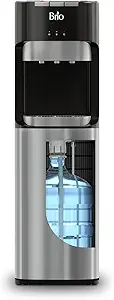 |
| Best Seller A high-volume bestseller chosen again and again | Brio Bottom Load Water Cooler CLBL520SC |  |
Avalon A3 Bottom-Loading Water Cooler

| Wattage | 150 watts |
|---|---|
| Installation Type | Freestanding |
| Access Location | Bottom |
| Number of settings | 3 |
| Power Source | Corded Electric |
The Avalon A3 is a freestanding, bottom-loading water cooler designed for home use that offers three temperature settings: cold, hot, and room. It pumps from standard 3- or 5-gallon bottles stored in a lower cabinet to avoid heavy lifting and shows an empty-bottle indicator when replacement is needed. The unit uses a compressor to produce cold water near 47°F and a hot tap around 185°F with a child safety lock on the hot spout, and a nightlight helps locate the dispensing area after dark. A removable drip tray and reasonably generous clearance under the spouts accommodate most large cups and bottles. Notable extras include a self-cleaning ozone sanitation cycle and Energy Star/UL compliance. Practical limitations are its 150-watt power draw and the need to replace bottles rather than using a plumbed water line, and its stainless steel cabinet adds weight which affects moving or positioning the cooler indoors.
Best for: Buyers who want a reliable, no-plumbing home dispenser that balances convenience, safety, and sanitization for everyday drinking and hot-drink use.
Less Ideal for: Homes that prefer a permanently plumbed-in water line or need an ultra-light portable cooler for frequent moves should consider other options.
- Bottom-loading design reduces heavy lifting and hides water bottles
- Three temperature settings including hot with child safety lock
- Self-cleaning ozone feature helps sanitize internal surfaces
- Nightlight and empty-bottle indicator improve convenience
- Requires 3- or 5-gallon bottles rather than direct plumbing
- Relatively heavy cabinet makes relocation more difficult
Verdict: A practical bottom-loading cooler that delivers hot, cold, and room water with built-in sanitation and family-friendly safety for most household needs.
Manastin Bottom Loading Water Cooler

| Installation Type | Freestanding |
|---|---|
| Capacity | 2 liters |
The Manastin bottom-loading water cooler provides three preset temperatures—hot, cold, and room—so it covers everyday beverage needs in a home or small office. Its bottom-load design makes replacing 3–5 gallon bottles much easier than top-loading units, and the control buttons on the top panel are straightforward to use. A built-in low-water reminder helps avoid unexpected empty bottles, and a child safety lock on the hot spout reduces the risk of accidental scalds. The unit is described as an aluminum-alloy construction that should stand up to regular use and fits a modern aesthetic. Expect basic, reliable performance rather than advanced controls: there are preset temperatures rather than fully adjustable thermostats, and the product description notes the drain plug must be secured to prevent leaks. For buyers who want simple, no-frills hot-and-cold dispensing with easier bottle changes, this cooler is a practical choice; power users who need precise temperature control or additional filtration options should look elsewhere.
Best for: Buyers who prioritize straightforward, low-effort hydration solutions and want easier bottle replacement plus basic hot-and-cold dispensing for home use.
Less Ideal for: Households that require adjustable precise temperature control, built-in water filtration, or commercial-capacity dispensing should consider other options.
- Bottom-loading design reduces lifting and makes bottle changes easier.
- Three preset temperatures (hot, room, cold) cover typical household uses.
- Top-mounted, easy-to-use button layout simplifies operation for all users.
- Low-water indicator helps prevent running out of water unexpectedly.
- Child safety lock on the hot spout enhances safety around children.
- Temperature settings are preset rather than continuously adjustable.
- No mention of an integrated filtration system or advanced purification features.
Verdict: A practical, easy-to-use bottom-loading cooler that simplifies bottle changes while delivering hot, cold, and room-temperature water for everyday home use.
Kllkmmws Top Loading Water Dispenser

| Power | 550 watts |
|---|---|
| Installation Type | Countertop |
| Access Location | Top |
| Capacity | 5 gallons |
| Upper Temperature Rating | 194 °F |
This budget-friendly top-loading dispenser sits on a countertop and delivers three water temperatures: boiling-hot, room temperature, and chilled (about 8–15 °C). It uses a universal detachable seat that fits 5–18 L bottles and a 304 stainless steel liner for improved hygiene. The unit is powered by a corded 550 W system and is sized for small kitchens or office desks where space is limited. Practical benefits include fast heat output and a removable water box for easier cleaning, plus simple three-setting controls for everyday use. Expect the cold water to cool to refrigerator-like temperatures but not freeze; the listed cooling capacity is modest. The build is mostly polypropylene with stainless liner, so it is lightweight and affordable but not as rugged as higher-end metal-bodied dispensers. Setup is straightforward: top-load the bottle, plug in, and choose hot, cold, or normal water. If you need very low chilled temperatures, high throughput, or a heavy-duty commercial unit, look at larger models instead.
Best for: Buyers on a tight budget who need a compact, easy-to-use countertop dispenser for occasional home or small-office use and prefer a sanitary stainless liner over all-plastic interiors.
Less Ideal for: Those who need very cold chilled water, high daily throughput, or heavy commercial durability should consider larger or commercial-grade dispensers instead.
- Provides hot, cold, and room-temperature water from one compact countertop unit
- Universal detachable seat accepts 5–18 L bottles for flexible bottle choices
- 304 stainless steel liner improves water hygiene compared with all-plastic interiors
- Removable large-area water box is easy to clean and maintain
- Simple three-setting controls make operation straightforward for nontechnical users
- Cold output only reaches about 8–15 °C so it will not produce ice-cold water
- Lightweight polypropylene body is less durable than heavier metal-bodied models
Verdict: A compact, no-frills countertop dispenser that gives hot, cold, and room-temperature water with a hygienic stainless liner at a very budget-friendly price.
Avalon A4 Bottom Loading Water Cooler

| Capacity | 5 gallons |
|---|---|
| Wattage | 400 watts |
| Access Location | Bottom |
| Number of settings | 3 |
| Power Source | Corded Electric |
The Avalon A4 is a practical bottom-loading water dispenser designed for home use where dependable hot and cold water are needed. It fits standard 3 to 5 gallon bottled water and uses manual buttons to deliver three temperature choices including a hot setting powered by a 420W heater and a cold setting supported by a 100W cooling system. The stainless steel cabinet looks clean in a kitchen or small office and a built-in nightlight and empty-bottle indicator add convenience. Bottom loading removes the need to lift heavy bottles and the BioGuard antimicrobial treatment on high-contact areas helps limit bacterial growth. Expect straightforward operation and easy maintenance, though this model does not include touchscreens or advanced filtration and relies on bottled supplies rather than a plumbed-in source. For buyers who prioritize a simple, durable dispenser that emphasizes practical features and everyday reliability, the Avalon A4 delivers consistent performance without unnecessary extras.
Best for: Buyers who want a no-frills, sturdy home water dispenser that reliably provides hot and cold water and minimizes maintenance tasks like lifting bottles.
Less Ideal for: People who need a plumbed-in system, integrated filtration, or smart features for hands-off water management should look elsewhere.
- Bottom-loading design reduces heavy lifting and spills when changing bottles
- Three temperature settings (hot, cold, room) cover common home needs
- Stainless steel cabinet with BioGuard treated high-contact areas for easier hygiene
- Built-in nightlight and empty-bottle indicator improve usability in low light
- Uses bottled water only and does not offer plumbed-in or integrated filtration
- Manual buttons and basic controls lack advanced features like digital displays or Wi-Fi
Verdict: A dependable, easy-to-use bottom-loading dispenser that focuses on reliable hot and cold performance for home settings.
Brio Bottom Load Water Cooler CLBL420V2

| Wattage | 500 watts |
|---|---|
| Installation Type | Freestanding |
| Access Location | Bottom |
| Number of settings | 3 |
| Power Source | Corded Electric |
The Brio bottom-load water cooler is a freestanding dispenser built to make bottled water easier to manage in homes and small offices. It accepts 3- or 5-gallon jugs in a cabinet at the base so you avoid lifting heavy bottles, and it provides three temperature settings—hot, cold, and room temperature—so you can brew beverages or grab chilled water quickly. The unit uses stainless-steel reservoirs for cleaner taste and includes a child-safety lock on the hot spout to reduce accidental pours. An LED display alerts you when the bottle is empty, which simplifies maintenance, and the corded 500-watt unit installs without hard plumbing. Trade-offs are typical for a bottom-load bottled dispenser: you will need to replace bottles and manage storage space for spares, and the cooler is fairly tall and substantial, so it requires a dedicated floor spot. If you want a straightforward, no-plumbing hot-and-cold dispenser with user-friendly features and visible maintenance alerts, this model covers the basics well.
Best for: Buyers who prioritize easy bottle changes, simple hot-and-cold dispensing, and visible maintenance alerts for reliable family or home-office hydration.
Less Ideal for: People who want a plumbed-in, bottleless filtration system or need a compact countertop dispenser for tight spaces.
- Bottom-load cabinet eliminates heavy lifting and makes bottle changes easier.
- Three temperature settings (hot, cold, room) for versatile daily use.
- Stainless-steel reservoirs intended to preserve water taste and hygiene.
- Child-safety lock on the hot spout for safer household use.
- LED indicator that alerts when the bottle is empty to simplify upkeep.
- Requires 3- or 5-gallon bottles so ongoing bottle replacement and storage are necessary.
- Large, freestanding footprint means it needs dedicated floor space.
Verdict: Choose this Brio bottom-load cooler if you want an easy-to-use, no-plumbing hot-and-cold dispenser that removes bottle lifting and adds simple maintenance alerts.
Brio Bottom Load Water Cooler CLBL520SC

| Wattage | 500 watts |
|---|---|
| Installation Type | Freestanding |
| Access Location | Bottom |
| Number of settings | 3 |
| Capacity | 5 gallons |
The Brio CLBL520SC is a bottom-loading water cooler designed for home use, offering hot, cold, and ambient water on demand. It hides the heavy bottle in a lower cabinet for easy replacement, and a stainless steel reservoir helps preserve water taste. Controls include a nightlight and a child-safety lock for the hot faucet, and the unit offers a UV self-cleaning cycle to reduce microbial buildup with minimal intervention. The bright display reports heating and chilling status and when the bottle is empty, which is helpful for everyday monitoring. Expect straightforward setup as a freestanding, corded unit, and typical use is dispensing drinks, filling mugs, and getting hot water for tea or instant meals. Limitations include the need to change bottles or filters externally and the ongoing energy draw for keeping water hot and cold, and the cooler's footprint and weight mean it needs a stable spot in the home. For buyers prioritizing safety and low-maintenance sanitizing, the Brio delivers sensible convenience.
Best for: Buyers who want a reliable, low-fuss home water dispenser that prioritizes safe hot water access and easy bottle changes, and who appreciate built-in sanitizing features for peace of mind.
Less Ideal for: People needing an ultra-compact or portable countertop solution or those who want to avoid any continuous energy draw for heating and cooling water.
- Bottom-load cabinet removes the need to lift heavy bottles for easier replacement.
- UV self-cleaning cycle helps reduce contaminants and biofilm with a one-button operation.
- Dispenses three temperatures including instant hot with a child-safety lock to prevent accidental use.
- Stainless steel reservoirs maintain water purity and flavor compared with plastic tanks.
- Nightlight and LED indicators make operation and status visible in low light.
- Continual power use to maintain hot and cold temperatures increases energy usage compared with non-heated dispensers.
- Unit is relatively heavy and requires a dedicated floor space; not portable for frequent moves.
- Replacement bottles or compatible filters are ongoing costs and require occasional maintenance.
Verdict: Choose the Brio CLBL520SC if you want a home water cooler that makes bottle replacement easy and adds UV self-cleaning and child-safety for worry-free hot-and-cold dispensing.
Choosing the Right Hot-and-Cold Water Dispenser for Home Use: Key Factors to Consider
Heating and Cooling Speed
How quickly a dispenser brings water to usable hot or cold temperatures affects convenience for tasks like making beverages or filling a water bottle. Faster heating minimizes wait time for hot drinks and shortens the time a unit spends cycling, which can reduce energy draw in some designs.
For cold water, steady cooling performance under repeated draws prevents long waits for chilled water when multiple people use the dispenser. Consider whether the unit uses a reservoir or active refrigeration, since reservoir systems can be faster for short bursts while refrigeration-based systems maintain lower temperatures for extended use.
Temperature Control and Consistency
Accurate temperature control matters for safety and specific uses. Hot water that is too hot raises scald risk while water that is not hot enough can be impractical for brewing or sanitizing. Cold water that fluctuates can leave drinks tepid or require additional chilling steps.
Look for units with clear temperature indicators or adjustable settings so you can match the output to tasks like making baby formula or preparing hot beverages. Consistent control also reduces wasted water from flushing to reach the desired temperature.
Safety Features
Safety is a top concern with hot-and-cold dispensers, especially in homes with children or seniors. Child locks on hot taps, insulated spouts, and drip trays that contain spills all reduce the chance of burns and messes. Some units include automatic shutoff functions to prevent overheating or dry-fire if the reservoir runs empty.
Evaluate how controls are positioned and whether locking mechanisms are easy for adults to use but difficult for children. Also consider the physical stability of freestanding units to avoid tipping incidents.
Capacity and Refill Options
Capacity affects how often you need to refill or replace water sources and whether a unit fits your household's consumption patterns. Larger reservoirs or direct-plumbed options reduce refill frequency but may require more space or installation work.
Think about whether you prefer a bottle-fed, bottom-loading, or plumbed-in system. Each has tradeoffs for convenience and maintenance: bottle systems are simple to install, bottom-loaders hide the bottle for aesthetics, and plumbed systems provide continuous supply but need a water connection.
Energy Use and Operating Cost
Because these dispensers run heating elements and sometimes refrigeration, their energy footprint affects monthly operating cost. Units with efficient insulation around hot reservoirs and modern compressor or thermoelectric cooling for cold water can be cheaper to run.
Check for features that reduce run time, such as standby modes, programmable schedules, or eco settings. Understanding typical daily use patterns will help estimate real operating costs more accurately than relying on peak power ratings alone.
Ease of Maintenance and Water Quality
Regular cleaning and filter changes are necessary to keep dispensed water tasting good and to prevent microbial growth. Easy access to internal reservoirs, straightforward filter replacement, and clear maintenance indicators make upkeep less of a chore.
Consider the availability and type of filters used, whether the unit supports standard filter sizes, and how easy it is to sanitize the reservoir and spouts. Units that minimize tool use and have removable, dishwasher-safe parts simplify ongoing care.
Countertop Vs Freestanding: Which Fits Your Kitchen
Countertop dispensers are compact and work well in kitchens with limited floor space or in apartments. They are usually simpler to set up and move, making them good for renters or those who want a non-permanent solution.
Freestanding models offer larger reservoirs and are better suited to households with higher daily water demand. They occupy floor space but often provide higher capacity and sometimes more powerful cooling systems.
- Countertop: easier installation, smaller capacity, portable.
- Freestanding: higher capacity, more stable supply, needs floor space.
Installation and Placement Considerations
Think about access to power and how the unit will be refilled or plumbed. Keep the dispenser on a level surface with adequate clearance for ventilation if it uses a compressor-based cooling system.
Place the dispenser where spills are easy to contain and where users can operate it comfortably. If using a plumbed unit, account for the water line route and any local code or practical constraints.
- Allow ventilation space for refrigeration components.
- Position near a drain or use a drip tray to manage spills.
- Ensure cord length reaches a grounded outlet without extension cables.
Water Filtration and Taste
Some hot-and-cold dispensers include built-in filtration to reduce chlorine, sediment, and off-flavors. Filtration improves taste and can protect internal components from scale buildup in hard-water areas.
If water quality is a concern, prioritize dispensers with replaceable carbon or multi-stage filters and clear guidance on filter change intervals. Consider how easy it is to source replacement filters and whether the unit accepts standard filter sizes.
- Carbon filters reduce chlorine and some organic tastes.
- Multi-stage filters address finer particulates and some heavy metals.
- Regular filter changes maintain water quality and system longevity.
Noise and Household Comfort
Cooling compressors and pumps can produce noise that matters in open-plan homes or quiet offices. Thermoelectric coolers tend to run quieter but may not reach the same low temperatures as compressor systems.
If the dispenser will live near living areas or bedrooms, prioritize low-noise designs and read specs for decibel levels where available. Some units cycle less frequently and therefore produce less perceived noise over time.
- Compressor cooling: better chilling, louder operation.
- Thermoelectric: quieter, less extreme cooling.
Design, Ergonomics, and Accessibility
Consider tap height, lever force, and how easy it is to place cups or bottles under the spout. Ergonomic controls and a comfortable dispensing height reduce spills and make frequent use simpler.
Aesthetics may matter if the dispenser is a visible part of your kitchen. Choose finishes and shapes that match your space while keeping practical concerns like easy-clean surfaces in mind.
- Look for removable drip trays for easy cleaning.
- Check whether spouts accommodate tall bottles or pitchers.
How We Chose the Best Hot-and-Cold Water Dispenser for Home Use
We focused on real-world home use scenarios to narrow the field to units that reliably deliver both hot and cold water without unnecessary complexity. Our process prioritized measurable performance and safety over novelty features. Key evaluation criteria included heating and cooling speed, steady-state temperature control, and energy efficiency under typical household duty cycles. We also assessed safety features for households with children or older adults, such as child locks and spill containment. Capacity and refill options were examined to ensure the dispenser fits common family and single-person workflows. Ease of routine maintenance and filter access was another decisive factor because regular upkeep affects long-term water quality and operating cost. Units were excluded if they lacked basic temperature control for either hot or cold modes, had poor documented safety features, or required unusual installation beyond simple countertop or freestanding placement. The final selections reflect a balance of reliable thermal performance, manageable energy draw, and practical safety and maintenance features for home use.
Our full evaluation process is outlined in our review methodology.
FAQ
How often should I sanitize a hot-and-cold water dispenser?
You should sanitize the dispenser at least every three months, and more often if you notice off tastes or visible residue. Follow manufacturer cleaning steps for reservoirs and spouts, and use food-safe sanitizing solutions when recommended.
Is a plumbed-in dispenser better than a bottle-fed one for home use?
Plumbed-in units provide continuous supply and reduce refill hassle, which is useful for larger households. Bottle-fed systems are simpler to install and move, making them better for renters or lower-demand households. The best option depends on your daily water use and willingness to install a water line.
Can hot water from these dispensers be hot enough for sterilizing bottles or making baby formula?
Many home hot-and-cold dispensers reach temperatures suitable for hot beverages and light sterilizing tasks, but exact temperatures vary. For infant formula, follow health guidance about temperature and always verify the unit's temperature specs before relying on it for sensitive uses.
What maintenance do filters typically require?
Filters commonly need replacement every 3 to 12 months depending on usage and water quality. Some units include indicators for filter life, while others rely on a calendar schedule. Replacing filters on time preserves taste and reduces scale buildup.
Are countertop units safe for homes with young children?
Countertop units can be safe if they include child locks and insulated spouts, and if they are placed out of reach. Evaluate the safety features carefully and teach children not to operate hot taps. Physical locks and push-button designs reduce accidental hot-water access.
Final Verdict
When choosing a hot-and-cold water dispenser for home use, prioritize the balance between heating and cooling performance, safety, and how the unit fits your daily routine. Tradeoffs are common: higher capacity or stronger cooling can mean more space and slightly higher energy use, while compact models trade capacity for portability. Focus on the criteria that matter most to your household, such as fast heating if you frequently make hot drinks or robust filtration if water taste is a concern. With those priorities clear, you can pick a dispenser that delivers convenient, reliable hot and cold water for years.