
Note: This article contains affiliate links. If you click on these links and make a purchase, we may earn a small commission at no extra cost to you. This helps support our research and content. Read our full affiliate disclosure here.
When the lights go out and the house starts to cool, an indoor propane heater for power outage can be the difference between uncomfortable and safely warm. You want a unit that provides steady, controllable heat without relying on electricity, plus dependable safety systems that prevent carbon monoxide buildup and tip-over accidents. This guide highlights six shortlisted indoor propane heaters chosen for consistent output, practical controls, and safety under emergency conditions. Read on to understand the tradeoffs in fuel capacity, heat coverage, and operation so you can pick the best backup heater for your living space.
Top Picks at a Glance
| Best Overall The best all-around choice for most situations | DEWALT Forced Air Propane Heater DXH70CFAV |  |
| Best Quality Built to a higher standard if you want something more solid | ProCom ML300HBA Ventless Heater |  |
| Best Value The sweet spot between price and what you get | CAMPLUX Portable Propane Buddy Heater |  |
| Top Rated A top-rated pick with lots of positive feedback | FNOONXY Propane Cabinet Heater FN-QNQ |  |
| Most Popular A crowd favorite that many people choose with confidence | Mr. Heater Little Buddy F215100 |  |
| Best Seller A high-volume bestseller chosen again and again | Mr. Heater Portable Buddy F232000 |  |
DEWALT Forced Air Propane Heater DXH70CFAV

| Heat Output | 68,000 BTU |
|---|---|
| Heating Coverage | 1,7000 square feet |
| Power Source | Propane |
| Voltage | 120 volts |
| Included Components | Heater, hose & regulator assembly, handle |
The DEWALT DXH70CFAV is a freestanding forced-air propane heater built to push a lot of heat into workspaces and garages during cold spells or power outages. It runs on propane and offers a claimed 68,000 BTU output intended to cover very large areas, using a 120V electric fan to distribute warm air quickly. Typical use is spot- or zone-heating a garage, workshop, or other ventilated workspace where you need fast, high-output warmth; included hose and regulator let you hook up a standard propane tank. The heater's metal housing and long cable suit jobsite durability, and the handle makes it reasonably portable for moving between locations. Important limits are its need for ventilation and propane fuel, and the electric fan means it still requires some electricity to run; it is not a sealed indoor-safe unit for tight living spaces. Expect substantial warmth and rapid heating in ventilated work areas but plan for safe placement and fresh-air exchange when used indoors.
Best for: Buyers who need a powerful, jobsite-style heater to rapidly warm garages, workshops, or vented indoor areas during outages or cold work sessions.
Less Ideal for: People seeking a sealed, living-room safe indoor heater or a unit for small, unventilated rooms should choose a different, low-emission design.
- High claimed heat output (68,000 BTU) for fast warming of large spaces
- Freestanding, portable design with handle and 10 ft power cable for jobsite mobility
- Includes hose and regulator for direct propane tank hookup
- Durable metal construction suited to garage and workshop environments
- Requires propane fuel and adequate ventilation when used indoors
- Uses a 120V fan so it still needs electricity to run
- Not suitable for small, poorly ventilated living spaces
Verdict: Choose this DEWALT if you want a rugged, high-output propane heater that delivers fast warmth to garages and ventilated workspaces during outages.
ProCom ML300HBA Ventless Heater

| Heat Output | 30,000 BTU |
|---|---|
| Fuel Type | Propane |
| Indoor Outdoor Usage | Indoor |
| Heating Coverage | 1400 sq. ft. |
| Special Features | Adjustable Temperature, Low-Oxygen Safety Shutoff |
This ProCom ML300HBA is a high-output ventless blue flame heater that runs on propane and requires no electricity, making it useful during power outages. It offers three manual heat settings and a push-button piezo ignition so you can start and adjust heat without grid power, and the oxygen depletion sensor provides an automatic shutoff for safety. The heater is delivered with base feet and a wall-mount bracket so you can use it as a freestanding pedestal or mount it on a wall; a blower is available separately if you want forced-air circulation. In real-world use it delivers strong radiant/convection heat suitable for open living areas up to the advertised coverage, and operating costs are generally low compared with electric heating. Important limits: it is a ventless unit so local codes and altitude restrictions apply, and this model is not for sale in California; professional installation is required for safe operation. The lack of electronic thermostat control means temperature management is manual rather than automated.
Best for: Buyers who need reliable, high-output emergency heat without grid power and who prioritize raw heating performance over automated controls.
Less Ideal for: People in jurisdictions that restrict ventless propane appliances, those at high elevations above 4,500 feet, or users who want full electronic thermostat control and smart features.
- Runs on propane with no electricity required, so it works during power outages.
- High heat output rated at 30,000 BTU suitable for large rooms.
- Oxygen depletion sensor provides automatic shutoff for safety.
- Includes both base feet and wall-mount bracket for flexible installation.
- Ventless design may be restricted by local codes and not suitable above specified elevations.
- No electronic thermostat or remote control for automatic temperature regulation.
Verdict: If you need dependable, high-output indoor heat during outages, this propane ventless heater delivers powerful, no-electricity warmth with basic safety features.
CAMPLUX Portable Propane Buddy Heater
| Heat Output | 12000 BTU |
|---|---|
| Fuel Type | Propane |
| Heating Method | Radiant |
| Indoor Outdoor Usage | Indoor, Outdoor |
| Included Components | Heater, LED light |
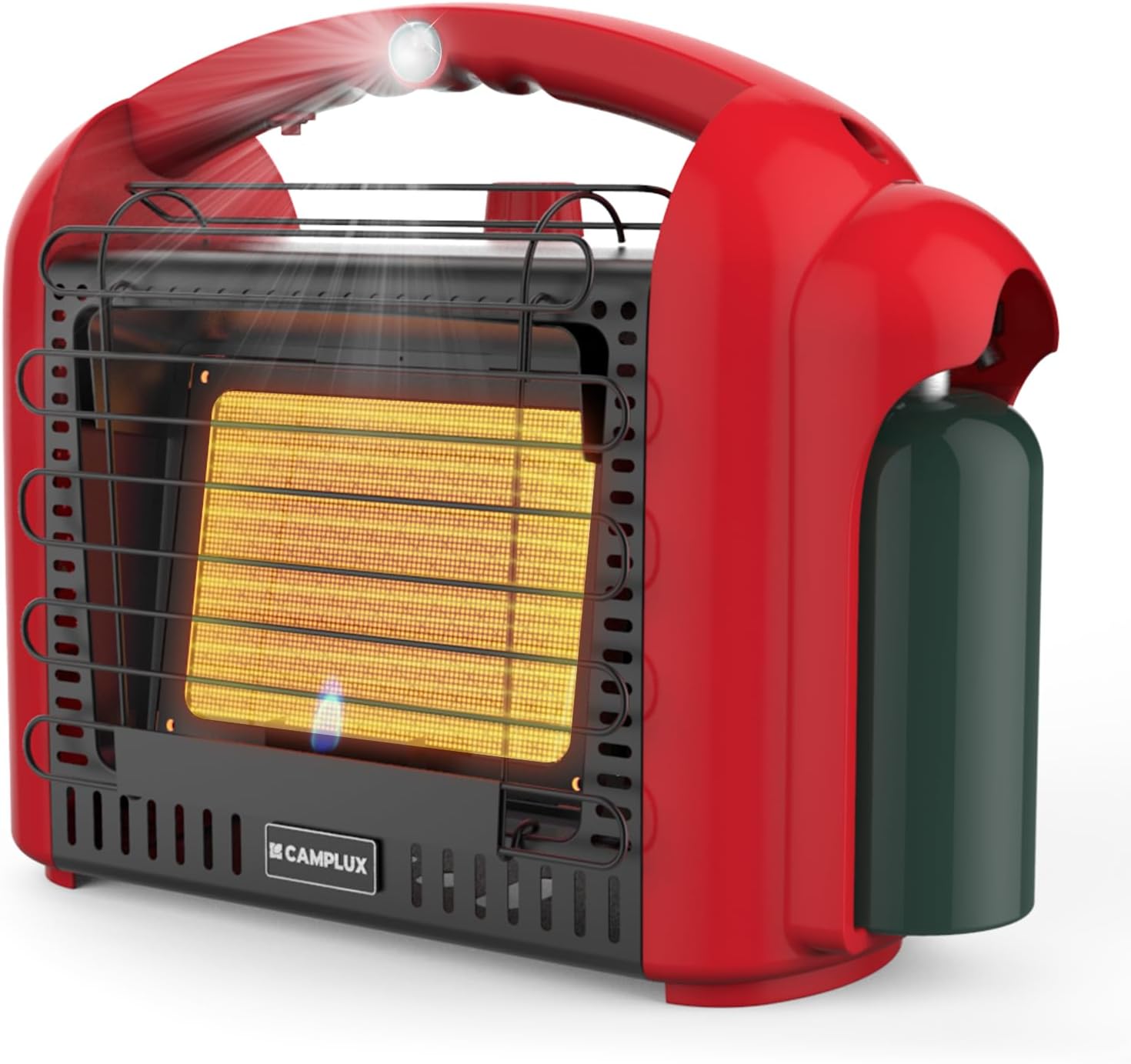
The CAMPLUX portable propane buddy heater is a compact radiant heater designed to deliver quick, localized warmth where you need it. It runs on propane and produces up to 12,000 BTU from a ceramic plate burner, offering several hours of continuous heat on a small tank or connection to a larger cylinder. Start-up is simple with a single control knob and piezo igniter, and the built-in LED on the handle helps when lighting or moving the unit in low light. Safety features include an oxygen depletion sensor and tip-over shutoff that cut gas flow if conditions become unsafe. Its pedestal form and easy-grip handle make it convenient to move between a garage, tent, patio, or well-ventilated indoor space during outages. Limitations are typical of portable propane units: it provides focused radiant heat rather than whole-room convection, and safe operation requires good ventilation and adherence to indoor propane use guidance.
Best for: A practical buyer who needs a compact, fast-heating backup heat source for short-term indoor use during outages and values portability and built-in safety features.
Less Ideal for: People seeking sustained whole-house heating or a convection heater to evenly warm large living spaces should consider larger electric or hardwired systems instead.
- High heat output at 12,000 BTU for fast, focused warmth
- Lightweight and portable design with an easy-grip handle and built-in LED
- Simple single-knob control with piezo igniter for quick startup
- Safety features include low-oxygen shutoff and tip-over protection
- Radiant design provides localized heat rather than heating large rooms
- Requires proper ventilation and safe propane handling for indoor use
Verdict: Choose this if you want a lightweight, quick-start propane heater that delivers fast localized warmth with factory-quality safety cutoffs during power outages.
FNOONXY Propane Cabinet Heater FN-QNQ

| Heat Output | 18700 BTU |
|---|---|
| Fuel Type | Propane |
| Heating Coverage | 377 sq.ft |
| Number of Speeds | 3 |
| Special Features | Tip-Over Protection, Fast Heating |
This propane cabinet heater produces up to 18,700 BTU and is built to warm mid-size rooms and covered areas when electricity is out. It runs on a standard propane tank and offers three heat settings (6.4k, 12.6k, 18.7k BTU) so you can dial power to need, and piezoelectric ignition plus a zero-pressure shutoff make startup and operation straightforward. Safety features include oxygen depletion sensing, tip-over shutdown, and flame-out protection, which are especially important for indoor emergency use. The unit is on casters with two locks so you can move and stabilize it quickly, and CSA-certified valve assemblies add confidence in the gas controls. Expected run time on a typical tank is long enough for extended outages, but users must ensure good ventilation and follow local codes when operating indoors. The heater is compact for its output but still requires careful placement and propane refills for continued use during prolonged power interruptions.
Best for: Buyers who prioritize dependable, gas-powered warmth during outages and want a robust, safety-equipped heater they can move where needed.
Less Ideal for: People who cannot provide ventilation, indoor users restricted by local indoor-propane rules, or those seeking an electric backup heater with automatic thermostat control.
- High maximum heat output up to 18,700 BTU for rapid room warming
- Three selectable heat settings to match different space sizes and conserve fuel
- Multiple safety protections including ODS, tip-over shutoff, and flame-out protection
- CSA-certified valve assemblies and piezoelectric ignition for reliable operation
- Lockable casters make it easy to reposition and secure the unit indoors or in a garage
- Requires propane fuel and ventilation, so indoor use needs caution and planning
- Not electrically powered so features like thermostatic auto-cycling are limited to built-in controls
Verdict: If you need a high-output, safety-focused propane heater to keep a mid-size room warm during power outages, this model is a reliable, moveable choice.
Mr. Heater Little Buddy F215100
| Heat Output | 3,800 BTU |
|---|---|
| Heating Coverage | 95 sq. ft. |
| Fuel Type | Propane |
| Power Source | gas_powered |
| Ignition | Piezo |
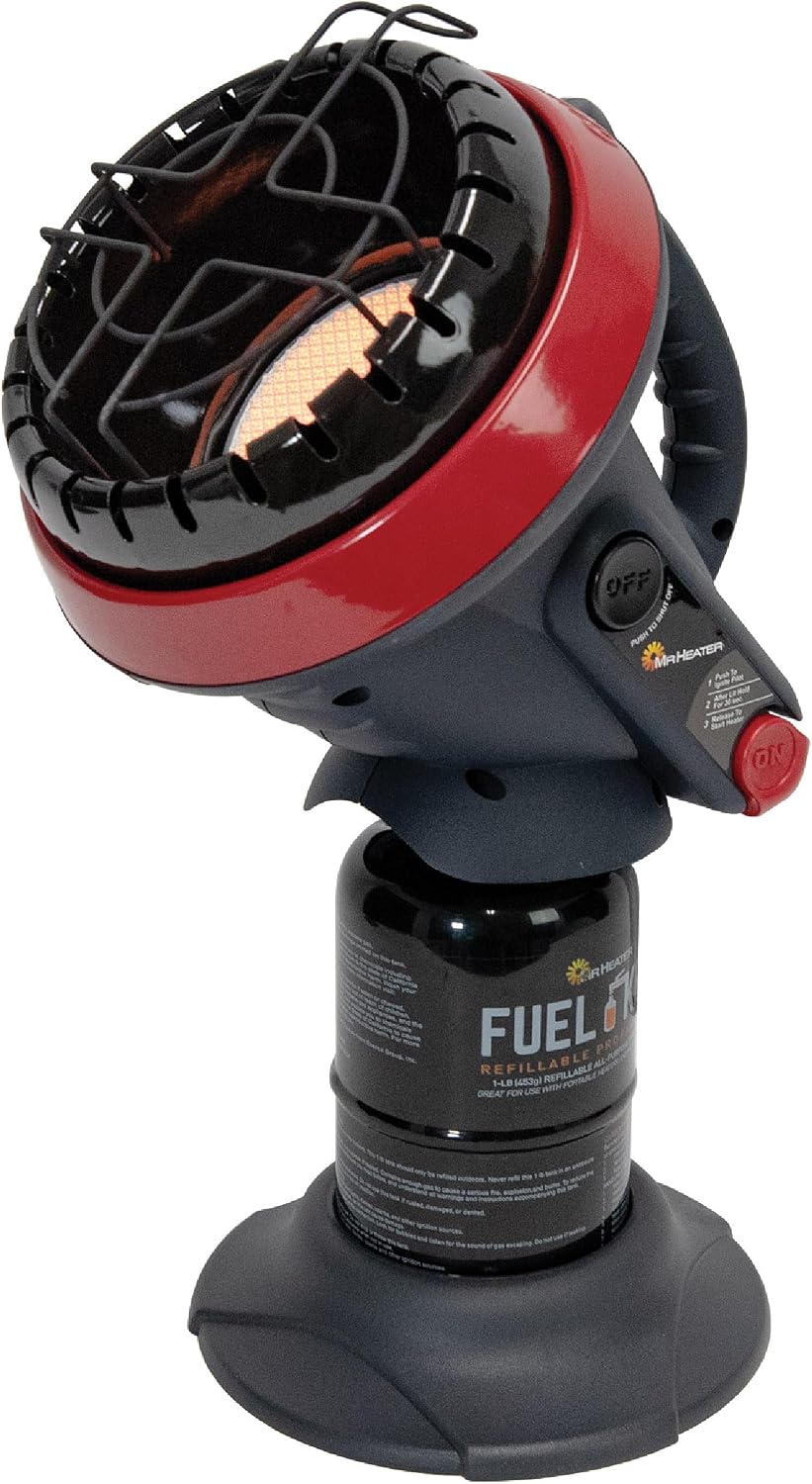
The Mr. Heater Little Buddy is a small, gas-powered radiant heater built for short-term indoor use during cold snaps or power outages and for outdoor activities like camping or ice fishing. It runs on a 1 lb propane cylinder and produces 3,800 BTU to warm areas up to roughly 95 square feet, with a one-button piezo ignition for quick startup. Safety features include an oxygen depletion sensor, tip-over shutoff, cross-thread protection and a thermocouple-fed self-extinguishing design, which make it suitable for supervised indoor use when ventilation is considered. Its compact footprint and ergonomic handle make it easy to move and store, and the quiet, odor-free radiant heat is pleasant for personal spaces. The main limitations are its small coverage area and single heat output, so it is not intended to replace whole-home heating, and it requires proper ventilation and cautious placement when used indoors for safety.
Best for: Buyers who want a compact, safety-focused backup heater for short-term indoor use or for personal outdoor activities and who prioritize proven safety features and strong user reviews.
Less Ideal for: People needing to heat large rooms, whole houses, or continuous long-term use should choose higher-capacity or electric heating solutions instead.
- Produces 3,800 BTU suitable for warming single rooms or small tents
- Built-in safety systems: oxygen depletion sensor and tip-over shutoff
- Compact, lightweight design with ergonomic handle for easy transport and storage
- One-button piezo ignition for fast, tool-free startup
- Limited heating coverage and single output make it unsuitable for larger spaces
- Requires a 1 lb propane cylinder and ventilation when used indoors
Verdict: Choose the Little Buddy when you need a compact, safety-minded propane heater that reliably warms a small room during outages or outdoor trips.
Mr. Heater Portable Buddy F232000

| Heat Output | 9000 BTU |
|---|---|
| Indoor Outdoor Usage | Indoor, Outdoor |
| Heating Coverage | 225 |
| Fuel Type | Propane |
| Number of Speeds | 2 |
The Mr. Heater Portable Buddy is a compact propane radiant heater designed for quick, localized warmth during outages, camping, or in drafty garages. It offers two heat settings—4,000 and 9,000 BTU—so you can choose lower fuel use or stronger output, and it is intended for indoor and outdoor use when installed per instructions. The unit runs on a 1 lb. propane cylinder (with optional adapter for a 20 lb. tank) and includes a piezo igniter, easy-grip handle, and a swivel regulator on compatible setups. Safety features built into the design include an oxygen depletion sensor, thermal shut-off, and tip-over protection, which matter for indoor emergency use. Practical limits are run time—about three hours on high from a 1 lb. cylinder—and the heater provides radiant, not whole-house convection, so it is best for occupied areas rather than heating large rooms long-term. Expect reliable, simple operation with clear safety systems, but plan fuel supply and placement for safe indoor use during power outages.
Best for: Buyers who prioritize a simple, safety-focused portable heat source for short-term indoor emergency use and want a product that is easy to operate and monitor.
Less Ideal for: Those who need to heat large or multiple rooms continuously during extended outages should choose a whole-house heating solution or higher-capacity heater instead.
- Two heat settings (4,000 and 9,000 BTU) for adjustable output and fuel economy.
- Designed for indoor approval with oxygen depletion sensor and automatic shut-off systems.
- Portable pedestal form with integrated handle and piezo igniter for easy transport and use.
- Compatible with 1 lb. propane cylinders and can be adapted to larger tanks for longer run time.
- A 1 lb. cylinder provides limited run time (around three hours on high), so continuous indoor use requires extra fuel or a larger tank adapter.
- Radiant heating concentrates warmth nearby and will not efficiently heat a whole home or large open spaces.
Verdict: A compact, safety-minded portable propane radiant heater that reliably provides short-term indoor warmth during power outages.
Choosing the Right Indoor Propane Heater for Power Outage: Key Factors to Consider
Heat Output and Coverage
Heat output determines how large an area a heater can warm during an outage. Look for units rated with clear BTU or watt-equivalent figures and guidance on square-foot coverage so you can match the heater to the rooms you plan to use.
Undersizing a heater means it may never reach comfortable temperatures and will use more fuel trying. Oversizing can create safety and comfort issues including dry air and hot spots. Consider how many rooms you need to move between and whether doorways or open plans will allow a single heater to work effectively.
Safety Features and Venting
Because these heaters run without house electrical systems, built-in safety systems are critical. Oxygen depletion sensors, tip-over shutoff mechanisms, and automatic flame failure shutoffs reduce the risk of dangerous conditions during extended use.
Proper ventilation and CO monitoring strategies matter too. Even indoor-rated propane heaters need some air exchange; understand recommended clearances and CO alarm placement. Choose heaters with documented safety certifications and clear instructions for indoor operation during outages.
Fuel Efficiency and Run Time
In a prolonged outage, how long a heater runs on a single cylinder or tank is a practical concern. Fuel efficiency depends on burner design, adjustable output settings, and whether a heater has an eco or low-power mode.
Estimate expected run time based on typical outdoor temperature ranges where you live and the heater's rated consumption. Factor in whether you can safely store spare cylinders indoors or need quick refills, and consider models that let you throttle output to conserve fuel while still maintaining comfort.
Portability and Setup
Fast deployment during an outage often matters more than elaborate features. Consider weight, built-in handles, hose and regulator compatibility, and whether the heater stands freely or requires wall clearance. Smaller, lighter heaters are easier to move between rooms but may provide less coverage.
Also evaluate how simple it is to connect fuel, light the pilot or ignition without electricity, and shut the unit down. Models that are simple to set up reduce stress in emergency situations and lower the chance of mistakes during hurried use.
Controls and Usability
Controls that work without mains power are essential. Manual valves, mechanical thermostats, and multi-stage heat settings let you manage comfort without depending on wall power. Clear, tactile controls are easier to operate in low-light conditions common in outages.
Consider whether the heater provides visible flame indicators, easy-to-read dials, or locking controls to prevent accidental changes. Usability during stress and darkness should guide your preference between simple and feature-rich models.
Storage, Maintenance, and Durability
An outage-ready heater will likely sit in storage for long periods and then be expected to run reliably when needed. Durable construction, corrosion-resistant materials, and simple maintenance access help ensure the heater performs after storage.
Look for units with easy-to-clean surfaces, accessible burners for inspection, and clear guidance on winterization or long-term storage. Consider how spare parts like igniters or seals are handled and whether routine maintenance is something you can perform safely at home.
Where to Place an Indoor Propane Heater During an Outage
Placement affects both safety and effectiveness. Put the heater on a stable, level surface away from foot traffic and combustible materials. Keep the recommended clearance distances on all sides and avoid enclosed small closets or tight corners where heat can build and sensors might behave unpredictably.
Position the heater to deliver heat into the primary living space while allowing for safe airflow. If you plan to move the unit between rooms, pick a central location and maintain clear paths for transport so you can reposition it without tripping or spilling fuel fittings.
- Place on a noncombustible, level floor surface.
- Maintain manufacturer-recommended clearances on all sides.
- Avoid running in fully sealed rooms; provide minimal ventilation according to guidelines.
- Keep a working CO alarm in the same room but not directly beside the heater.
Running Time Expectations and Fuel Management
Understand how burn settings affect runtime. Operating at maximum output shortens run time significantly compared with a low or medium setting. Planning for extended outages means calculating realistic run times at likely thermostat settings rather than relying on peak BTU figures.
Keep spare cylinders or refills accessible and store them according to safety codes. If indoor storage of spare fuel is limited, consider arranging a safe, accessible external supply or prioritizing heaters that run longer on a single cylinder.
- Estimate runtime using the heater's consumption per hour at different settings.
- Rotate rooms and lower thermostat targets to stretch fuel during long outages.
- Label and date stored cylinders and follow local rules for indoor fuel storage.
Managing Indoor Air Quality and Carbon Monoxide Risk
Even indoor-rated propane heaters can affect indoor air quality. Use a battery-powered or mechanical CO alarm and ensure minimal fresh air exchange consistent with the heater's guidance. Avoid sleeping in the same room with the heater running unless the model specifically supports continuous, unattended overnight operation with appropriate sensors.
Monitor humidity and ventilation. Fuel-burning heaters reduce indoor oxygen and can alter humidity levels, so open a window slightly if guidance calls for it and do not block air pathways. Regularly inspect seals and connections for leaks before operation.
- Place CO alarm on the same level as the heater and test batteries regularly.
- Follow guidance for overnight operation; many units are not intended for unattended use.
- Do routine leak checks on fittings before every fuel change.
Quick-Start Checklist for Power Outages
A short, repeatable checklist reduces errors when an outage begins. Include verifying the fuel level, checking hoses and connections, confirming sensor batteries, and positioning the heater with required clearances. Practice the setup once so you can perform it confidently under stress.
Include safety items in your outage kit such as a fire extinguisher rated for fuel fires, extra CO alarm batteries, gloves for handling cylinders, and a flashlight. Having these items ready cuts setup time and increases safety during the first cold hours of an outage.
- Verify fuel level and cylinder date.
- Check hose, regulator, and fittings for cracks or wear.
- Confirm CO alarm battery and functionality.
- Position heater and clear combustibles before ignition.
Maintaining and Storing an Emergency Heater
Store the heater in a dry, temperature-stable place away from direct sunlight and corrosive chemicals. Before seasonal storage, clean dust from vents and burner surfaces and run a brief operational check to confirm ignition and sensor function.
At the start of each cold season, perform a full inspection and basic maintenance. Replace worn seals and test mechanical controls. Keeping a small maintenance log with dates of inspection helps track when parts may need replacement.
- Keep heaters covered but ventilated in storage to prevent dust buildup.
- Inspect and replace any brittle hoses or seals annually.
- Run an ignition and sensor test before the first use each season.
How We Chose the Best Indoor Propane Heater for Power Outage
We prioritized features that matter most in emergency heating situations where electricity is unavailable. Key criteria included measured heat output and run time so a heater can maintain comfortable temperatures through extended outages, integrated safety systems such as oxygen depletion sensors and automatic shutoff, and thermostat or multi-stage heat controls that let you extend fuel by avoiding constant full-power operation. We also evaluated portability and setup for quick deployment in common living areas, build quality and materials for reliable long-term storage, and maintenance needs like ease of cleaning and accessibility of consumable parts. We excluded outdoor-only units and any heaters that require electrical power for primary operation. Units with unclear safety systems or insufficient documentation on ventilation and CO protections were removed from consideration. The result is a list of indoor propane heaters that balance continuous heat delivery with the safeguards and usability buyers need during power outages.
Our full evaluation process is outlined in our review methodology.
FAQ
Can I run an indoor propane heater overnight during a power outage?
It depends on the heater. Only units designed and certified for continuous indoor use with oxygen depletion sensors and automatic shutoffs are appropriate for overnight operation. Even then, follow manufacturer guidance on ventilation and place a working CO alarm in the room.
Do indoor propane heaters need electricity to start or run?
Many indoor propane heaters are designed to operate without mains power and use manual ignition or battery-powered igniters. Confirm that ignition and any safety monitors run without house electricity before relying on the unit during an outage.
How much space will a typical indoor propane heater warm?
Heating coverage varies by output rating and room layout. Check the heater's rated BTU and recommended square-foot coverage, and expect less effective heating in open-plan homes or poorly insulated spaces. It's better to size the heater for the primary occupied room than for an entire house.
Is indoor storage of spare propane cylinders safe?
Storing spare cylinders indoors has safety limits and local regulations may apply. If indoor storage is allowed, keep cylinders upright, away from heat sources, and in a ventilated area. Follow all local codes and the heater's guidance for safe fuel storage.
What maintenance should I perform before an outage season?
Perform a visual inspection of hoses and fittings, clean vents and burners of dust, test ignition and safety sensors, and replace any brittle seals. Testing the unit under controlled conditions before an outage reduces the risk of failures when you need it most.
Final Verdict
When selecting an indoor propane heater for power outage situations, prioritize proven safety features and realistic heat output for the spaces you will occupy. Balance run time against portability and ensure you understand ventilation and CO monitoring requirements before use. By choosing a model with clear operating instructions, reliable mechanical controls, and documented safety systems, you can maintain warmth during outages while minimizing risk. Focus on the tradeoffs that matter to your household and plan fuel and placement accordingly to stay safe and comfortable.