
Note: This article contains affiliate links. If you click on these links and make a purchase, we may earn a small commission at no extra cost to you. This helps support our research and content. Read our full affiliate disclosure here.
Picking the right Kitchen Can Opener matters for everyday cooking and meal prep. A good opener makes quick work of canned ingredients, reduces wrist strain, and lasts through years of regular use. This guide summarizes the top shortlisted options so you can find a can opener that fits your typical meal routines and kitchen layout. We evaluated products for build durability, cutting smoothness, ergonomic comfort, and ease of cleaning. Read on to see the top picks and the criteria we used to assess them.
Top Picks at a Glance
| Best Overall The best all-around choice for most situations | Hamilton Beach Smooth Touch Can Opener |  |
| Best Quality Built to a higher standard if you want something more solid | OXO SteeL Can Opener 58081 |  |
| Best Value The sweet spot between price and what you get | GoodCook Safe-Cut Can Opener |  |
| Best Budget The cheapest option that still gets the job done reliably | Wonforic Can Opener COM-1 |  |
| Top Rated A top-rated pick with lots of positive feedback | Graceliving Premium Can Opener GR001 |  |
| Most Popular A crowd favorite that many people choose with confidence | KitchenAid Classic Can Opener |  |
| Best Seller A high-volume bestseller chosen again and again | Cuisinart Electric Can Opener CCO-50BKN |  |
Hamilton Beach Smooth Touch Can Opener

| Operation Mode | Automatic |
|---|---|
| Wattage | 165 watts |
| Material Type | Metal, Plastic |
| Blade Material Type | Stainless Steel |
The Hamilton Beach Smooth Touch is a straightforward electric can opener built for easy, one-handed use. You set a can under the cutting head, press the easy push-down lever and the 165-watt motor turns the blade to cut along the side so lids come off smooth and safe to handle. It handles both pop-top and standard cans, and its extra-tall profile lets you work with taller cans or jars that sit on the counter. The metal and plastic housing with chrome accents looks tidy on a countertop and the stainless steel blade is replaceable in many models, so longevity is reasonable for regular kitchen use. Because it cuts the lid along the side, you can reuse lids to cover food in the fridge without jagged edges. The unit is automatic so it removes the need for manual twisting or crank operation, but it is a single-function countertop appliance and takes up some counter space compared with a compact manual opener. For buyers who want a simple, reliable powered opener that prioritizes safety and ease, this model performs well.
Best for: Buyers who want a safe, no-fuss electric can opener that makes one-handed operation and smooth lids the priority in an everyday kitchen.
Less Ideal for: People seeking a minimal, space-saving manual opener or those who need a multi-function gadget with additional features should consider other options.
- Automatic, one-handed operation for easy use
- Cuts along the side to leave smooth, safe lids that can be reused
- Works with both pop-top and regular cans
- Extra-tall design accommodates taller cans and jars
- Stainless steel blade and solid motor power (165 watts) for dependable cutting
- Single-purpose countertop appliance that requires storage or space on the counter
- Not suitable for users who prefer a compact manual opener or drawer storage
Verdict: Choose this Hamilton Beach electric opener if you want a reliable, one-handed countertop solution that produces smooth, safe lids every time.
OXO SteeL Can Opener 58081

| Material Type | Stainless Steel |
|---|---|
| Blade Material Type | Stainless Steel |
| Operation Mode | Manual |
| Included Components | Can Opener |
The OXO SteeL Can Opener is a solid manual opener built for frequent kitchen use. It uses sharp stainless-steel blades and an oversized knob to make turning easier, while large handles with cushioned touch points reduce hand strain during repeated openings. The tool cuts cans smoothly along the rim so lids remove cleanly, and the included bottle opener adds a handy secondary function. It is fully manual so there are no electronics to fail and cleaning is straightforward though the manufacturer recommends hand washing. Left- and right-handed users can operate it comfortably. For cooks who open many cans, the durable stainless construction and ergonomic controls translate to faster, less tiring performance, but users should expect regular hand effort rather than automated convenience and should dry it thoroughly to prevent corrosion over long term heavy use.
Best for: Buyers who prioritize reliable, high-performance manual tools and open cans frequently will appreciate the durable blades and ergonomic controls for faster, less tiring use.
Less Ideal for: People who prefer electric openers or need a no-effort solution for limited hand strength should consider an automatic model instead.
- Sharp stainless-steel cutting wheel for clean lid removal
- Oversized turning knob reduces wrist effort
- Large cushioned handles improve grip and reduce hand pressure
- Built-in bottle opener adds extra utility
- Hand wash recommended which adds care steps
- Manual operation requires physical effort for many or large cans
Verdict: Choose this can opener if you want a durable, ergonomic manual tool that makes frequent can opening quicker and less tiring.
GoodCook Safe-Cut Can Opener

| Material Type | Stainless Steel |
|---|---|
| Blade Material Type | Stainless Steel |
| Operation Mode | Manual |
| Included Components | can opener |
The GoodCook Safe-Cut Can Opener is a handheld manual opener that prioritizes safety and everyday reliability. It uses a hardened stainless steel cutting blade and a thick guide wire to cut cans so the lid has a smooth, non-sharp edge, and an integrated guide lifts the lid away from the can for hands-free disposal. The plastic ergonomic handle and non-slip turn knob make it easy to hold and turn, which helps users with limited grip strength. Because the cutting wheel never contacts the can contents, the design reduces the chance of cross-contamination and makes it suitable for messy foods. The chrome construction feels sturdy and built for regular use, though being a manual tool it requires physical effort compared with electric models and may be slower when opening many cans in a row. For routine home kitchen tasks this opener offers a safe, durable, and practical solution.
Best for: Buyers who want a reliable, safety-focused manual opener for everyday kitchen use and who value a design that reduces contact with food and sharp edges.
Less Ideal for: People who open large volumes of cans frequently or who prefer an automated, low-effort solution should consider an electric can opener instead.
- Cuts lids so edges are smooth and safe to handle
- Guide wire lifts and holds the lid for hands-free disposal
- Stainless steel blade and chrome construction built for durability
- Ergonomic handle and non-slip turn knob improve grip and control
- Manual operation requires physical effort and is slower than electric openers
- Plastic handle may wear faster than all-metal designs under heavy use
Verdict: A sturdy, safety-focused manual can opener that makes handling opened cans safer and easier for everyday kitchen tasks.
Wonforic Can Opener COM-1

| Material Type | Carbon Steel |
|---|---|
| Blade Material Type | Carbon Steel |
| Operation Mode | Manual |
| Unit Count | 1 Count |
This handheld can opener is a simple, no-frills tool for opening cans and bottles. It uses carbon steel cutting blades and gears to slice lids while the curved, anti-slip ABS handle and finger-conforming knob make turning easier for extended use. The unit is lightweight and compact so it stores easily or hangs by its hole, and the integrated bottle opener adds small convenience. Practical for everyday kitchen tasks and trips outdoors, the screwdriver-style cutting head produces smooth edges and the electroplated finish resists surface corrosion. Limitations are its strictly manual operation and small form factor, which give less mechanical advantage than large ergonomic or electric openers for very stiff cans or users with severe grip weakness. It is best treated as an inexpensive, durable backup or primary opener for routine household use.
Best for: Buyers seeking a low-cost, dependable manual can opener for daily home cooking or occasional outdoor use who prioritize value and simple, durable tools.
Less Ideal for: People who need an electric opener or require significant mechanical advantage due to severe hand weakness or very frequent heavy-duty can opening.
- Carbon steel blade and gears for reliable cutting.
- Ergonomic anti-slip ABS handle and curved knob for easier turning.
- Lightweight, compact design with hanging hole for convenient storage.
- Built-in bottle opener adds multifunction utility.
- Manual-only operation provides less leverage than larger ergonomic or electric models.
- Small size may be harder to use on very stiff or large industrial cans.
Verdict: A budget-friendly, durable manual can opener that delivers everyday performance and simple convenience.
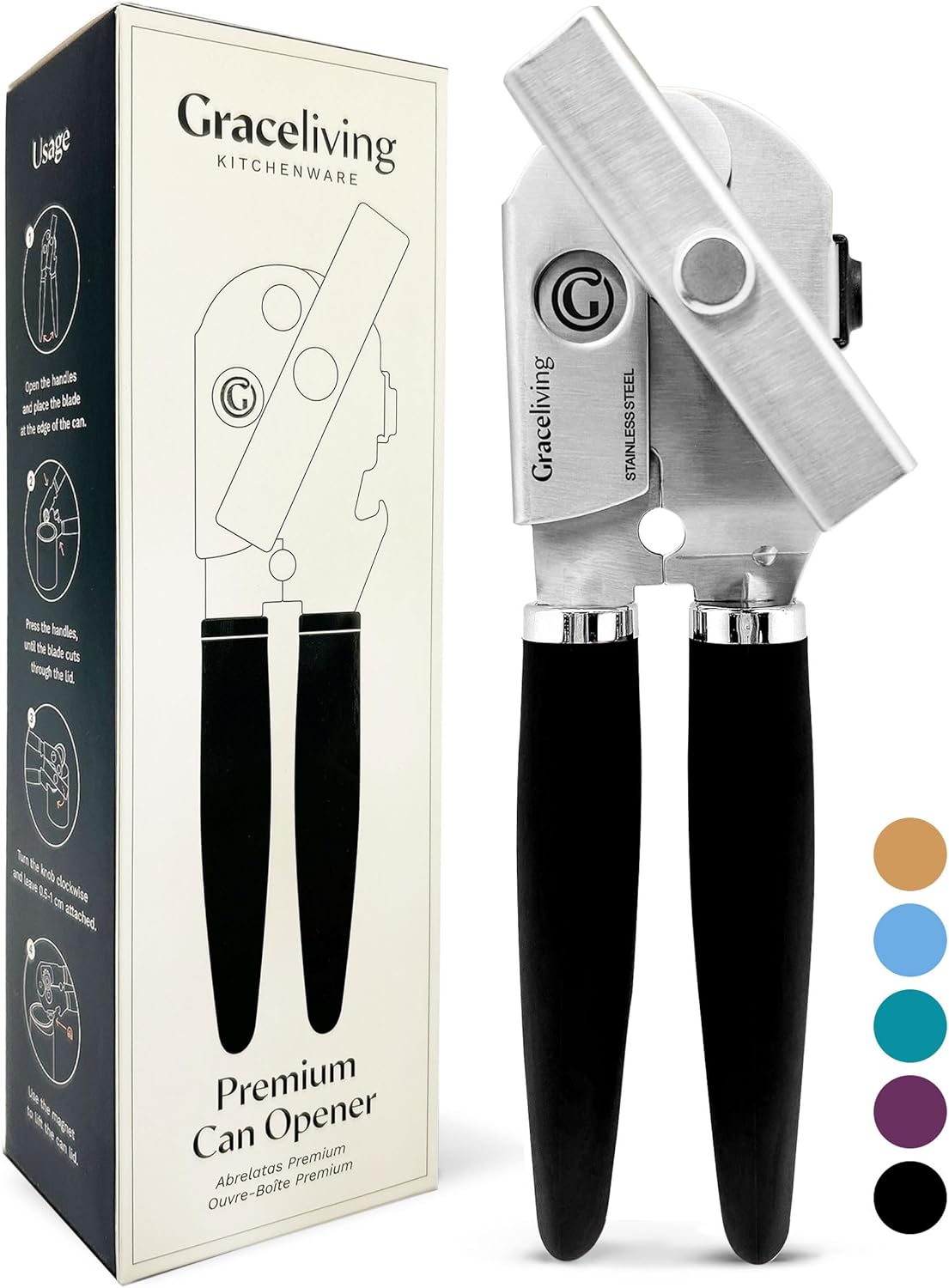
Graceliving Premium Can Opener GR001
| Material Type | Stainless Steel |
|---|---|
| Blade Material Type | Stainless Steel |
| Operation Mode | Manual |
| Unit Count | 1 Count |
This Graceliving manual can opener is built for frequent use, with reinforced stainless steel components, precision gears, and a high-carbon blade that cut lids cleanly and without jagged edges. You operate it like a standard hand can opener, but the oversized, smooth-turning knob and soft-touch, non-slip handle make repeated twists easier and more comfortable, especially when opening multiple cans. The strong built-in magnet lifts and holds lids for touch-free removal, reducing contact with sharp edges and keeping counters cleaner. The unit also includes a bottle opener for occasional multiuse convenience. Its heavier, commercial-style construction is designed to last far longer than basic models, which makes it a good fit for busy kitchens, though its manual operation still requires hand strength and counter clearance while turning. Expect reliable, durable performance for routine can opening without electrical dependency.
Best for: Buyers who prioritize a durable, long-lasting manual can opener for frequent kitchen use and want a comfortable, reliable tool that reduces lid handling.
Less Ideal for: People who need an automated or electric opener for limited hand strength or space-constrained kitchens should consider an electric or more compact alternative.
- Reinforced stainless steel body and precision gears for durable, long-lasting use
- High-carbon blade designed for clean, jag-free cuts
- Oversized smooth-turning knob and soft-touch non-slip handle for comfortable operation
- Strong magnetic lid lifter enables touch-free, safe lid removal
- Includes built-in bottle opener for added utility
- Manual operation still requires physical effort and counter clearance
- Heavier construction may feel bulky for storage in small drawers
Verdict: A heavy-duty, comfort-focused manual can opener built to deliver reliable, long-lasting performance for everyday kitchen use.
KitchenAid Classic Can Opener

| Material Type | Stainless Steel |
|---|---|
| Blade Material Type | Stainless Steel |
| Operation Mode | Manual |
| Included Components | 1 can opener |
The KitchenAid Classic Can Opener is a straightforward manual opener that cuts cans cleanly with a razor-sharp stainless steel wheel and includes a built-in bottle opener. You use it by clamping the wheel to the can rim and turning the oversized knob, which offers a secure grip and makes repeated use easier for people with weaker hands. The soft, ergonomic handles provide comfort and leverage, and the stainless cutting wheel slices smoothly to minimize jagged edges. It is a compact, hand-wash tool designed for everyday pantry cans and bottles rather than heavy industrial use. Limitations include manual operation so it requires hand effort and no electric option is available, and a plastic knob and non-removable wheel mean maintenance is basic rather than serviceable. For a simple, durable kitchen tool that performs reliably every day, this model emphasizes comfort and dependable cutting rather than extra features.
Best for: Buyers who prioritize reliable, well-made kitchen tools backed by strong customer feedback and who prefer a simple manual opener that is comfortable to use daily.
Less Ideal for: People seeking an electric or hands-free can opener or those who need serviceable, replaceable internal parts for long-term maintenance.
- Razor-sharp stainless steel cutting wheel for smooth, clean cuts
- Oversized turning knob provides secure grip and easier operation
- Soft ergonomic handles reduce hand strain during use
- Built-in bottle opener adds a useful 2-in-1 function
- Compact, durable manual design suitable for everyday kitchen use
- Manual operation requires hand effort and is less convenient than electric models
- Cutting wheel is not user-replaceable for long-term refurbishment
Verdict: A dependable, comfortable manual can opener that delivers smooth cuts and simple 2-in-1 functionality for everyday kitchen use.
Cuisinart Electric Can Opener CCO-50BKN

| Operation Mode | Automatic |
|---|---|
| Wattage | 60 watts |
| Material Type | Stainless Steel |
The Cuisinart CCO-50BKN is a simple, no-frills electric can opener that opens cans at the touch of a button and stays put thanks to a wide nonslip base. It uses stainless steel cutting components and a 60-watt motor to slice lids cleanly, and the detachable activation lever makes it easy to rinse and remove food residue. Typical use is straightforward: place the can under the cutting head, press the lever, and the opener runs automatically until the lid is released and captured. Its compact footprint makes it convenient for everyday kitchens and it handles a range of can sizes without complicated adjustments. Expect reliable, consistent performance rather than fancy extras like cordless operation or digital controls. The main limitations are a basic, corded design and a lightweight plastic housing that keeps cost and counter presence low, so if you want premium materials or advanced features you may look elsewhere.
Best for: Buyers who prioritize dependable, easy-to-use kitchen gear and want a straightforward automatic opener that minimizes effort and uncertainty.
Less Ideal for: Those who prefer cordless or high-end stainless steel appliances with premium finishes or additional features should consider other models.
- One-touch automatic operation for hands-free can opening
- Stainless steel blade and cutting mechanism for clean cuts
- Wide nonslip base provides stable, steady use
- Detachable activation lever for easier cleaning
- Compact countertop footprint that stores easily
- Corded design limits placement on counters away from outlets
- Basic plastic housing rather than premium metal finish
Verdict: A reliable, easy one-touch electric can opener that delivers consistent, low-effort performance for buyers who want a simple, dependable kitchen tool.
Choosing the Right Kitchen Can Opener: Key Factors to Consider
Cutting Method and Edge Type
How the opener cuts the lid affects safety, lid removal, and leftover sharpness. Traditional side-cutting wheels remove the lid from the rim and can leave sharp edges on both the lid and can, while smooth-edge or top-cut designs minimize exposed sharp edges by cutting under the rim. Deciding between these methods matters if you routinely handle opened lids or store partially opened cans.
For buyers, consider whether smooth edges are a priority for households with children or frequent can reuse. The cutting method also influences waste handling and whether you need to file or avoid sharp edges after opening.
Handle Design and Ergonomics
Handle shape, length, and grip material directly change how much wrist or hand force you need to apply. Long, well-cushioned handles distribute force and reduce strain for users with weaker grip strength or hand conditions. Short, compact designs may save storage space but often require more effort per turn.
Think about who will use the opener most often. If multiple family members or older adults will use it, prioritize comfortable, non-slip handles and a smooth turning mechanism to reduce fatigue.
Blade Material and Replaceability
Blade composition determines how long cutting edges stay sharp and resist corrosion. Hardened stainless steel or chromium-plated cutting wheels typically last longer and are less prone to rust in humid kitchens. Some designs allow blade or gear replacement, extending the tool's usable life without replacing the whole unit.
If you open cans frequently, a replaceable or higher-grade blade reduces long-term ownership costs and ensures consistently clean cuts over time.
Mounting and Stability
Some can openers are handheld, while others are countertop-mounted. Countertop models can offer a steadier, one-handed operation and greater leverage, which is useful if you open large or tight-lidded cans often. Handheld openers provide portability and easier storage but require two-handed control in many cases.
Consider your kitchen layout and storage options. If counter space is limited, a compact handheld unit may be preferable. If you value stability and one-handed use, a mounted or clamp-style opener could be the better choice.
Ease of Cleaning and Maintenance
Residue from canned food can collect on the cutting wheel and gears, so look for openers with accessible parts or materials that tolerate quick rinsing. Dishwasher-safe components simplify maintenance, though many durable units require handwashing to protect long-term finishes. Smooth surfaces and minimal crevices reduce bacterial buildup and make routine wiping effective.
Regular cleaning extends the life of the mechanism and prevents cross-contamination between food types, so pick a design that fits your cleaning habits.
Safety Features and Lid Handling
Safety elements such as magnetized lid catchers, shielded cutting wheels, or smooth-edge cutting reduce the chance of accidental cuts while handling lids. A secure lid capture prevents the lid from falling into food or onto the counter. Some designs also keep the lid attached to the opener until you remove it, which helps keep hands safe.
Evaluate how important one-handed safety and controlled lid removal are for your household routines, particularly if children or older adults assist with cooking.
Manual Vs Mounted Openers: Which Fits Your Routine
Handheld manual openers are compact and easy to store, making them suitable for small kitchens or occasional users. They are versatile and typically less complex to maintain, but they often require more hand strength and two-handed coordination for safe operation.
Mounted or clamp-style openers attach to a counter or clamp to the side of a cabinet to offer one-handed operation and better leverage. These designs work well for frequent cooks or those who prefer a steadier, less strenuous opening motion.
- Manual: Portable, compact, suited for infrequent use
- Mounted: One-handed operation, better leverage for frequent use
- Consider storage space and who will use the opener most
Top-Cut Vs Side-Cut: Pros and Cons
Top-cut or smooth-edge openers remove the lid without leaving sharp edges exposed, which improves safety and makes lids easier to handle or discard. Side-cut openers typically cut along the can wall and can leave sharper lids but may be simpler in mechanism and familiar to many users.
When safety and neatness are priorities, top-cut designs are often preferred. If you prioritize a traditional, straightforward mechanism and minimal moving parts, side-cut models can be durable and effective.
- Top-cut: Smooth edge, safer to handle lids after opening
- Side-cut: Traditional method, often simpler mechanism
Maintaining Your Can Opener for Long Life
Regular cleaning after each use prevents food buildup on the cutting wheel and gears. Wiping with a damp cloth and drying the metal parts reduces corrosion risk. If components are removable, rinse them under warm water and dry thoroughly before reassembly.
Lubricating moving parts with a small food-safe oil occasionally can keep gears turning smoothly. Inspect the cutting wheel periodically for nicks or rust; replacing the wheel or the unit as soon as performance declines preserves safe operation and clean cuts.
- Wipe or rinse after each use and dry fully
- Use food-safe oil sparingly on pivot points if recommended
- Replace worn blades or gears to maintain clean cutting
Accessibility Considerations
If hand strength or dexterity is limited, look for designs with large turning knobs, longer handles, or countertop mounting that enable one-handed use. Non-slip grips and cushioned handles reduce effort and improve control. Easy-to-reach components and simple mechanisms simplify use for people with arthritis or reduced grip strength.
Some openers offer automatic or electric mechanisms that eliminate manual turning, which can be helpful but require a nearby power source and more countertop space. For fully manual households, prioritize ergonomics over minimal size.
- Large grips reduce wrist strain
- Countertop units enable one-handed opening
- Electric options remove manual effort but need power
Materials and Finish: What Holds Up in the Kitchen
Stainless steel bodies and cutting wheels resist corrosion and clean easily in moist kitchen environments. Chrome-plated or coated parts can look attractive but may wear over time if exposed to heavy use or frequent washing. Plastic components can reduce weight and cost but may be less durable under repeated stress.
Prioritize solid construction in areas that take the most force, like gears and handles. A well-built hinge and gear train reduce wobble and make cutting smoother over the life of the tool.
- Stainless steel for corrosion resistance
- Plastic is lighter but may wear faster
- Pay attention to hinge and gear construction
How We Chose the Best Kitchen Can Opener
We selected entries based on real-world usability and specifications that matter in daily kitchen tasks. Primary filters included blade durability and cutting reliability, since a long-lasting cutting wheel prevents jagged lids and reduces the need for replacement. Ergonomics and effort required were core criteria because many users open numerous cans and need a comfortable grip that minimizes wrist force. Cleaning and maintenance were assessed for water resistance and how easily removable parts are to rinse or wipe. Safety features were also considered, including lid retention or smooth-edge cutting designs that reduce sharp edges after opening. Build materials and overall longevity were measured through stated construction materials and design simplicity. We excluded specialty or industrial models meant for commercial kitchens and units that require unusual installation setups. Products that lacked clear specifications on blade material or user safety features were also omitted. The resulting shortlist focuses on practical, durable kitchen can openers optimized for home use, balancing ease of operation, maintenance, and long-term reliability.
Our full evaluation process is outlined in our review methodology.
FAQ
How often should I clean a kitchen can opener?
You should wipe or rinse the opener after each use to remove food residue. For units with removable parts, rinse them under warm water and dry completely. Regular maintenance prevents buildup and corrosion.
Can I sharpen or replace the cutting wheel?
Some models allow replacement of the cutting wheel while others do not. Sharpening is rarely practical; replacing a worn wheel or the unit is usually the recommended solution to restore clean cuts.
Are electric can openers worth considering?
Electric openers eliminate manual effort and are helpful for users with limited hand strength. They require counter space and a power source and may be more complex to clean, so weigh convenience against space and maintenance needs.
Do smooth-edge openers really reduce the risk of cuts?
Yes, top-cut or smooth-edge designs minimize exposed sharp edges on lids and cans, which lowers the chance of accidental cuts when handling opened cans. They are often preferred for households with children or frequent lid handling.
What if my opener slips while turning?
Slippage usually indicates a poor grip on the can or a worn cutting wheel. Ensure the opener is seated correctly on the can, dry handles or grips, and consider a model with non-slip handles or a mounted design for better stability.
Final Verdict
Choose a Kitchen Can Opener by balancing cutting method, ergonomics, and durability against your daily kitchen habits. If safety and neat lids matter, prefer top-cut designs that reduce sharp edges. If you open many cans or have limited hand strength, prioritize one-handed or low-effort designs with ergonomic handles or mounting options. Lastly, factor in blade material and ease of cleaning to ensure long-term reliable performance. With those tradeoffs in mind, you can confidently pick an opener that fits your cooking frequency and storage constraints.