
Note: This article contains affiliate links. If you click on these links and make a purchase, we may earn a small commission at no extra cost to you. This helps support our research and content. Read our full affiliate disclosure here.
A sharp fillet knife makes delicate tasks like skinning and portioning fish faster, safer, and cleaner. Fillet blades are typically thin and flexible, so they need a sharpening method that preserves the narrow bevel and precise edge geometry without removing excessive metal. Choosing the right knife sharpener for fillet knives matters because the wrong tool can round the edge, change the blade profile, or shorten blade life. This guide presents seven shortlisted knife sharpeners for fillet knives that suit a range of skills and workshop setups. We evaluated options that keep consistent angles, remove minimal material, and are easy to use during routine maintenance. Read on for the evaluation criteria, buying factors, and practical tips to help you pick the best sharpener for your fillet knives.
Top Picks at a Glance
| Best Overall The best all-around choice for most situations | Sharp Pebble 5 Precision Adjust Sharpener |  |
| Best Quality Built to a higher standard if you want something more solid | Work Sharp Precision Adjust Elite |  |
| Best Value The sweet spot between price and what you get | Sharp Pebble 1000/6000 Whetstone |  |
| Best Budget The cheapest option that still gets the job done reliably | AccuSharp Knife & Tool Sharpener |  |
| Top Rated A top-rated pick with lots of positive feedback | Work Sharp Guided Field Sharpener |  |
| Most Popular A crowd favorite that many people choose with confidence | KitchenIQ Edge Grip 2-Stage Sharpener |  |
| Best Seller A high-volume bestseller chosen again and again | KITCHELLENCE 3-Stage Knife Sharpener |  |
Sharp Pebble 5 Precision Adjust Sharpener
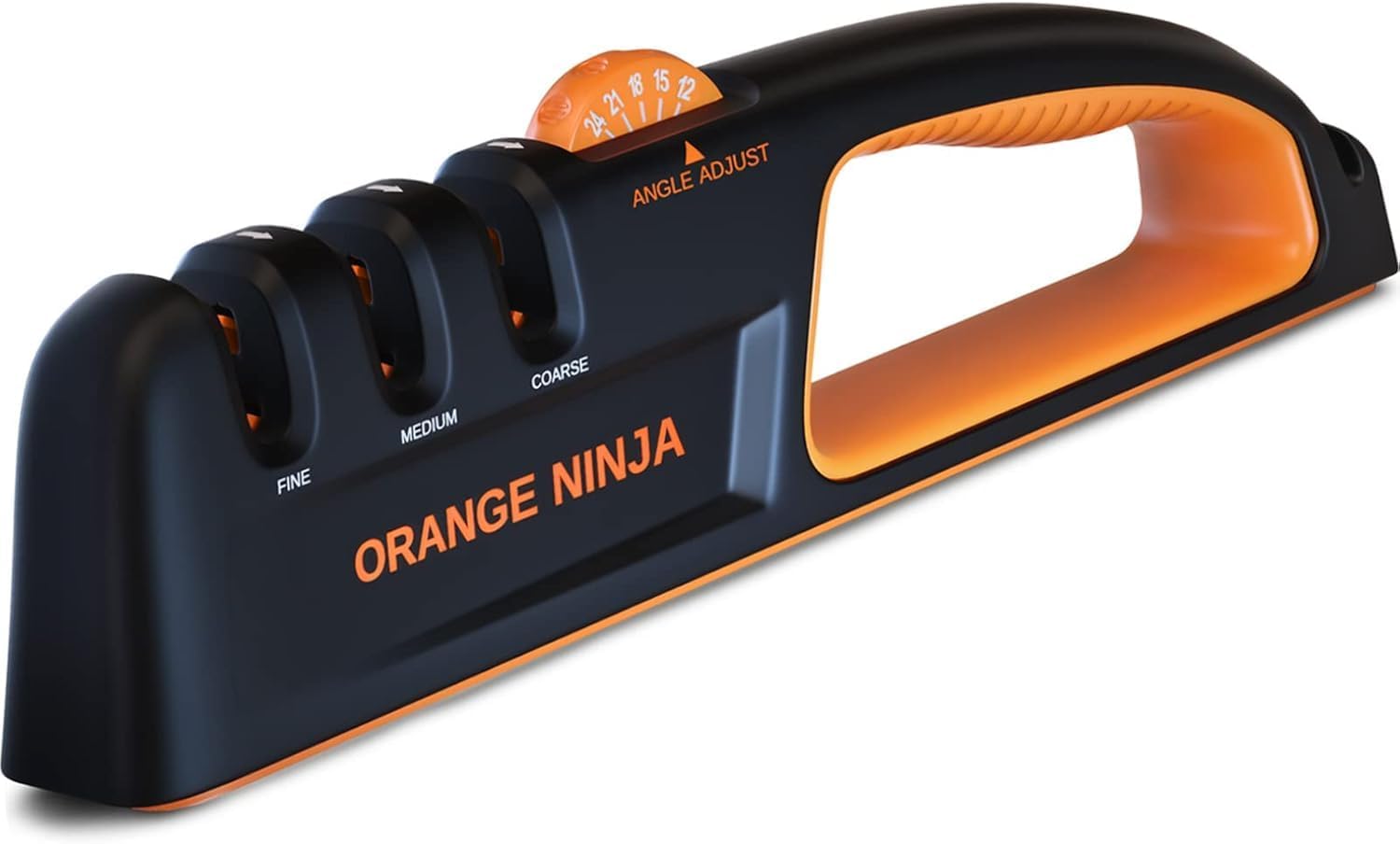
| Grit Type | Coarse, Medium, Fine |
|---|---|
| Material Type | Acrylonitrile Butadiene Styrene, Rubber |
| Included Components | Knife Sharpener |
This Sharp Pebble adjustable knife sharpener is a handheld, three-stage system that guides straight-edge blades through coarse, medium and fine grit slots while letting you set one of five angles (12°, 15°, 18°, 21° or 24°). You use it by placing the blade in the chosen slot and pulling it through a few passes to remove dullness, refine the edge and then polish for a razor finish. The ergonomic ABS body and rubberized grip make it stable and easy to control, and the compact design is convenient to store or bring to the job site. It is suitable for kitchen chef knives, fillet knives with straight edges, pocket blades and many hunting knives, and it restores a keen edge quickly without motorized noise or setup. Limitations are that it is not intended for serrated blades or scissors and manual sharpening can remove more metal than a light honing rod if used aggressively, so it works best as a maintenance and restoration tool rather than a professional stone replacement.
Best for: Buyers who want a simple, versatile manual sharpener that can restore and refine straight-edge fillet and kitchen knives without the complexity of stones or powered tools.
Less Ideal for: People who need to sharpen serrated blades, scissors, or who prefer precision whetstone sharpening or motorized systems for professional-level edge control.
- Five adjustable angle settings (12°–24°) to match a range of blade edge geometries
- Three-stage grit progression (coarse, medium, fine) for reshaping and polishing edges
- Ergonomic ABS body with rubberized grip for stable, controlled sharpening
- Compact, handheld design that is easy to store and transport
- Not suitable for serrated knives or scissors
- Manual sharpening can remove more material than honing and may require care to avoid over-sharpening
Verdict: A straightforward, angle-adjustable manual sharpener that quickly restores straight-edge fillet and kitchen knives for balanced, everyday use.
Work Sharp Precision Adjust Elite

| Included components | Leather strop, ceramic rod for serrations |
|---|---|
| Material Type | Plastic, Stainless Steel |
| Model Number | WSBCHPAJ-ELT-ATL |
| Price | 129.95 USD |
The Work Sharp Precision Adjust Elite is a benchtop guided sharpening system that lets you set fixed angles between 15° and 30° and run abrasive plates and rods across the edge for repeatable results. It is typically used clamped to a work surface where you secure the blade in the guide, choose coarse or fine diamond plates for bevel rebuilding or honing, and finish with the ceramic rod or leather strop included in the kit. Notable features include the precision angle adjustment, a coarse 320-grit and fine 600-grit diamond plate, a ceramic finishing rod, a conical ceramic serration rod, and a tri-braise accessory for curved blades. For fillet knives this system gives good control over thin edge angles and the serration rod lets you address scalloped edges without damaging the profile. The precision guide reduces guesswork and speeds up consistent sharpening, but the motorized or belt-driven rapid stock removal of some electric systems is absent since this is a guided hand-feel system, and very delicate micro-bevel work still requires care and practice. The kit is durable and complete enough for hobbyists and pros who expect repeatable, sharp results at home.
Best for: Buyers who prioritize precise, repeatable edge angles and want a durable guided system to maintain fillet and kitchen knives at home.
Less Ideal for: People who need extremely fast bulk reprofiling or prefer a fully automatic electric sharpener that does most work with minimal user technique.
- Precise adjustable angle range from 15° to 30° for matching Japanese, Western, and specialty blades
- Comprehensive kit includes coarse and fine diamond plates, ceramic finishing rod, serration rod, and leather strop
- Guided clamping system produces consistent, repeatable edge geometry with minimal guesswork
- Accessories for curved blades and serrations let you service fillet and specialty knives without custom jigs
- Not a rapid stock-removal power sharpener, so heavy reprofiling takes more time
- Requires practice to dial in very fine micro-bevels and mirror-polished finishes
Verdict: If you want a guided, adjustable-angle system that delivers consistent, professional edges on fillet and specialty knives, this kit gives the control and accessories to do it at home.
Sharp Pebble 1000/6000 Whetstone

| Grit | 1000/6000 |
|---|---|
| Material Type | Corundum |
| No Oil Required | Yes |
| Included Components | Angle guide, bamboo base, instruction manual |
This Sharp Pebble whetstone is a two-sided 1000/6000 waterstone kit meant to restore and polish kitchen blades by hand. You use the coarser 1000 side to rebuild dull or damaged edges and then switch to 6000 to refine and polish the bevel to a razor finish. The kit includes a non-slip bamboo base that stabilizes the stone and an angle guide that holds the blade at a consistent angle, which removes much of the guesswork for beginners. Because it is a waterstone, no oil is required and the stone performs faster cutting and finer polishing than basic abrasive blocks. Practical extras include an instruction manual and an online tips ebook, and the manufacturer claims a durable corundum composition that resists dishing and chipping. Limitations are those common to whetstones: it requires periodic flattening to stay true and sharpening by hand takes more time and practice than electric systems, though results can be superior for thin fillets and delicate edges.
Best for: Home cooks who want a single handheld system to repair and polish fillet knives and are willing to learn or follow guidance to sharpen by hand.
Less Ideal for: People who need very fast, repeatable sharpening with no hands-on technique or those who prefer electric or guided bench systems for heavy reprofile work.
- Dual 1000/6000 grits cover edge repair through polishing in one stone
- Angle guide simplifies holding a consistent sharpening angle for beginners
- Non-slip bamboo base provides stable work surface during sharpening
- Waterstone format cuts efficiently and polishes to a fine, razor edge without oil
- Requires manual skill and time compared with electric sharpeners
- Periodic flattening may be needed to maintain an even surface
Verdict: A practical, two-grit waterstone kit that delivers professional-level polishing for fillet knives while keeping setup simple for home users.
AccuSharp Knife & Tool Sharpener

| Material Type | Synthetic |
|---|---|
| Grit Type | Coarse |
| Included Components | Fillet Knife Sharpener |
| Number of Items | 1 |
The AccuSharp Knife & Tool Sharpener is a simple pull-through device designed to restore, hone, and sharpen a wide range of blades including fillet and serrated knives. You use it by placing the blade in the V-shaped carbide slot and pulling through a few times; the reversible tungsten carbide edges are diamond-honed for aggressive metal removal, so very dull blades are brought back to usable condition in seconds. Its molded ergonomic handle and full-length finger guard make the pull-through motion safe and comfortable for both right- and left-handed users, and the compact footprint stores easily in a drawer. The construction is low-maintenance — the carbide element is dishwasher-safe and reversible to extend life — but because it is a coarse, fixed-angle sharpener it removes material rather than offering precise angle control or a polished razor edge. That makes it excellent for quick touch-ups and restoring bent or moderately dull fillet blades, but less suited to precision finishing or high-end knives that need a refined microbevel.
Best for: Buyers looking for an inexpensive, no-fuss sharpener to quickly bring fillet knives back into service and who prioritize speed and durability over exact edge geometry.
Less Ideal for: Users seeking precision angle control or a mirror-polished edge for high-end knives should choose a honing stone or guided sharpening system instead.
- Quickly restores very dull blades with a few pull-throughs.
- Diamond-honed tungsten carbide tips are durable and reversible for longer life.
- Ergonomic handle and finger guard improve safety during use.
- Dishwasher-safe and low maintenance for home use.
- Fixed coarse grit and angle remove metal and do not produce a polished, razor-sharp finish.
Verdict: If you want a budget-friendly, fast way to revive fillet knives and keep them serviceable, this rugged pull-through sharpener is a practical choice.
Work Sharp Guided Field Sharpener

| Material Type | Diamond and Ceramic Sharpener |
|---|---|
| Grit Type | Coarse, Fine |
| Included Components | WSGFS221 |
The Work Sharp Guided Field Sharpener is a portable guided sharpening system built for anglers and outdoorsmen who need reliable edge maintenance for fillet and pocket knives. It packs removable diamond plates, a rotating ceramic honing rod with coarse, fine and grooved faces for fish hooks, a leather strop, and fixed guides set to 20 and 25 degrees so you can reproduce an edge quickly. In practice it works well on thinner fillet blades where consistent bevel angle matters and the grooved rod helps with hooked points and serrations. The compact, self-contained design needs no tools or setup, making it straightforward to use on a boat or at a campsite. Limitations include the fixed angle choices that may not suit every specialty blade and the small abrasive surfaces that require a bit more time than a full-size bench system for very dull edges. For routine touch-ups and field repairs this sharpener is an easy, durable option.
Best for: Buyers who prioritize a dependable, portable sharpening system for field repairs and regular maintenance of fillet and outdoor knives and who value consistency and durability over full bench features.
Less Ideal for: Users who need fully adjustable angle control for a wide range of specialty blades or who prefer a benchtop system for heavy re-profiling should look elsewhere.
- Includes diamond plates and ceramic honing rod for both rapid material removal and fine honing
- Guided angles (20° and 25°) help produce consistent bevels on fillet and pocket knives
- Self-contained, compact design requires no tools or assembly and is suitable for field use
- Includes leather strop and fish hook groove for finishing and specialized sharpening tasks
- Angle options are limited to 20° and 25°, which may not fit all blade geometries
- Small abrasive surfaces mean longer sessions to reshape very dull or damaged edges
Verdict: A compact, durable guided sharpener that reliably restores and maintains fillet-knife edges on the go.
KitchenIQ Edge Grip 2-Stage Sharpener

| Material Type | Plastic |
|---|---|
| Grit Type | Fine |
| Included Components | Complete |
The KitchenIQ Edge Grip is a small, easy-to-use two-stage pull-through sharpener meant for routine home sharpening. You pull straight blades through a carbide coarse slot to reset very dull edges, then through crossed ceramic rods to hone and polish the blade. Its patented V-shaped grip lets you anchor the sharpener on a countertop edge to steady longer blades, and non-slip feet plus a soft rubber handle add stability during use. Because it uses preset angles and fixed abrasives, sharpening is fast and repeatable without needing skillful angle control, making it convenient for quick maintenance of fillet and chef knives. It is compact enough to stash in a drawer, but the fixed-angle pull-through design removes metal quickly on damaged blades and is not suitable for precision angle work or for restoring highly chipped edges. Also, while the product supports straight and some serrated blades according to the maker, it is best used on standard straight-edged fillet blades rather than specialized hollow-ground or scalpel-thin fillet knives.
Best for: Buyers who want a low-effort, reliable way to keep everyday fillet and kitchen knives sharp without learning sharpening angles or techniques, and who value quick maintenance and social-proof reliability.
Less Ideal for: Enthusiast sharpeners seeking precise angle control, professional reprofiling, or restoration of badly damaged or specialty fillet blades should look at bench stones or guided systems instead.
- Two-stage system (carbide coarse + ceramic fine) for both edge setting and honing
- Patented V-Grip lets you anchor the sharpener on a countertop edge for added stability
- Preset sharpening angles make it simple to use without knife-sharpening experience
- Compact, lightweight design stores easily in a drawer
- Fixed-angle pull-through design limits control for precision or custom bevels
- Not intended for restoring heavily chipped or specialty hollow-ground blades
Verdict: A handy, no-fuss two-stage pull-through sharpener that quickly restores usable edges on everyday fillet and straight kitchen knives.
KITCHELLENCE 3-Stage Knife Sharpener
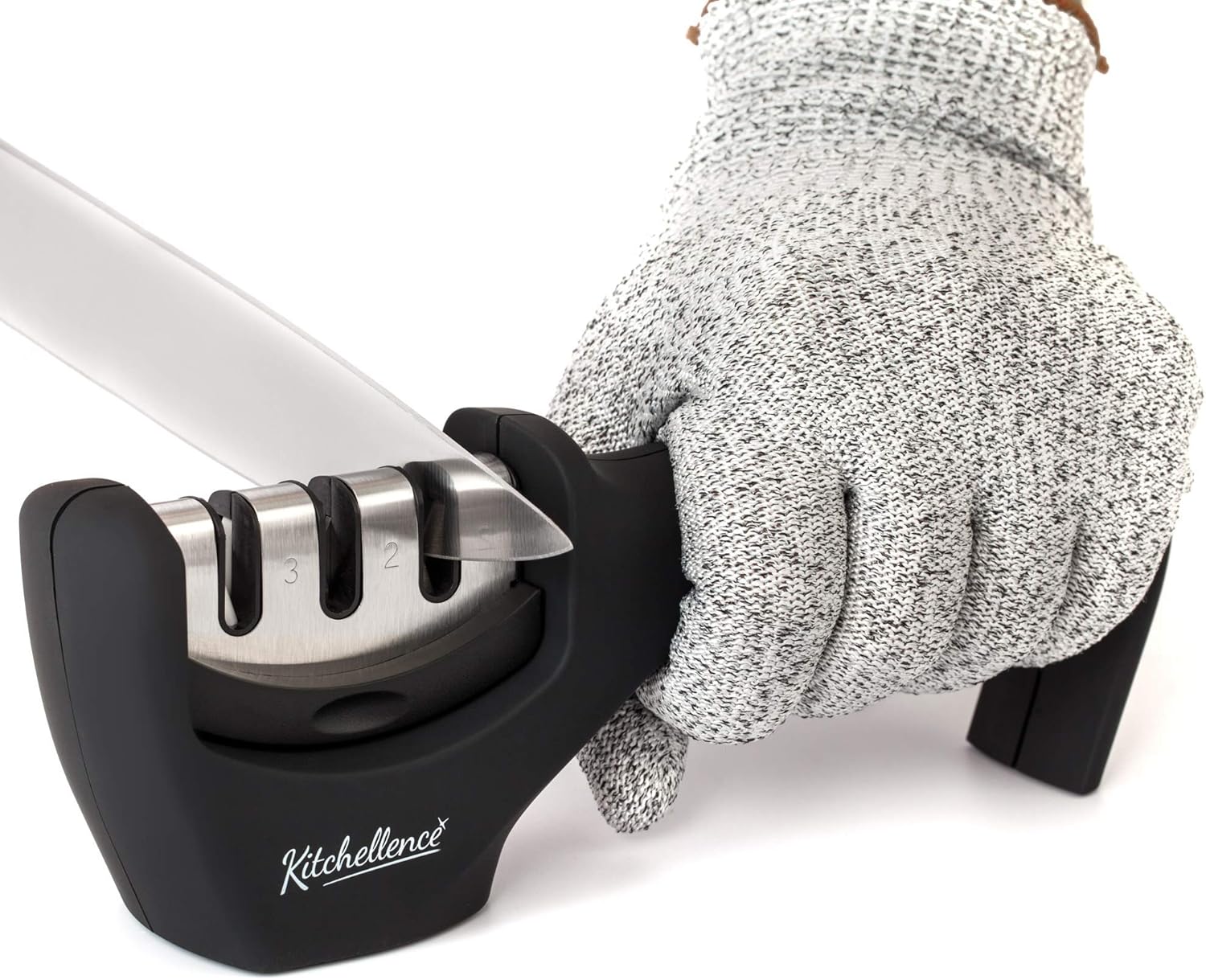
| Material Type | Plastic |
|---|---|
| Number of Items | 1 |
| Included Components | Cut-resistant glove |
| Manufacture Year | 2026 |
This three-slot manual sharpener is built for quick, beginner-friendly edge maintenance and basic repair work on kitchen knives. The first diamond rod straightens damaged edges, the second slot reforms the V-bevel to restore a working edge, and the final slot polishes for a finer finish; the non-slip base and ergonomic handle make it simple to pull blades through with control. It is best used for routine touch-ups and recovering slightly dull or nicked edges rather than precision honing or completely re-profiling high-end fillet knives. The included cut-resistant glove adds a safety layer during use and the ABS plastic housing keeps the unit lightweight and easy to store. Expect fast, repeatable results for everyday kitchen blades, but professional fillet-fishing users seeking ultra-fine polishing or aggressive metal removal will want a dedicated whetstone or guided system for best results.
Best for: Buyers who want a safe, easy-to-use sharpener for routine kitchen maintenance and quick restoration of dull or slightly damaged blades.
Less Ideal for: Serious anglers or chefs who need razor-fine finishes or to re-profile premium fillet knives should choose a whetstone or guided sharpening system instead.
- Three distinct sharpening stages for repair, sharpening, and polishing
- Diamond rod in the first stage for effective edge repair
- Non-slip base and ergonomic handle for stable, one-handed use
- Includes cut-resistant glove to improve user safety
- Not suitable for precision finishing or re-profiling high-end fillet knives
- Plastic housing limits heavy-duty or professional workshop use
Verdict: A simple, safe three-stage sharpener that gives risk-averse cooks quick, reliable edge restoration for everyday kitchen and fillet knives.
Choosing the Right Knife Sharpener for Fillet Knives: Key Factors to Consider
Angle Control
Fillet knives need a narrow bevel and consistent edge angle to slice flesh cleanly without tearing. A sharpener that offers precise angle control prevents overbeveling, which can thicken the cutting geometry and make the knife less effective at delicate tasks.
Look for systems with adjustable guides, fixed-angle jigs sized for thin blades, or whetstones that allow you to reproduce the same hand angle consistently. When sharpening freehand, familiarity and practice with a single angle are critical to avoid uneven edges.
Abrasive Type and Grit Progression
The abrasive medium determines how quickly metal is removed and how fine the finished edge will be. Coarse abrasives remove nicks and reshape edges faster but can take more metal. Fine stones, ceramic rods, or stropping compounds produce the polished edge fillet knives need for clean cuts.
A good sharpener workflow usually includes at least two stages: a modestly abrasive stage to repair and set the bevel, and a fine finishing stage to refine and polish the edge. Consider whether the system's abrasive options match the level of edge restoration you expect to perform.
Material Removal Rate
Fillet knives often have thin cross-sections, so excessive material removal shortens blade life and can damage the geometry. Assess how aggressive a sharpening method is and whether it is suitable for routine touch-ups versus major repairs.
For regular maintenance, choose a method that refreshes the edge with minimal stock removal, such as light stropping or fine-grit stones. Reserve coarser tools for occasional re-profiling when the blade is damaged or dulled significantly.
Ergonomics and Stability
Stable mounting and comfortable handling reduce the risk of slips and encourage consistent results. Some sharpeners clamp the blade or the tool, others require freehand work. Consider the setup you are comfortable with and whether you need a portable solution for field use or a benchtop arrangement for workshop sharpening.
Non-slip bases, comfortable handles, and secure blade supports make repeated strokes predictable and safer. If you work with wet or slimy fish, look for materials and designs that resist slipping and are easy to clean.
Blade-Width Compatibility
Fillet knives come in varying lengths and flexibilities, so the sharpener should accommodate the blade width and curvature you own. Tools with narrow clamps or adjustable guides handle thin, flexible blades better than bulky jigs made for thicker kitchen knives.
Check the usable edge length and whether the system can work along the full bevel without forcing awkward angles. For heavily curved fillet blades, a flexible sharpening surface or small-diameter rods are often easier to use.
Maintenance and Consumables
Consider the lifetime cost and upkeep: whetstones may require flattening, abrasive rods eventually wear, and jigs can need replacement parts. Ease of sourcing replacement abrasives and the frequency of routine maintenance affect long-term value.
Choose a system whose consumables are commonly available or that uses maintenance procedures you are willing to perform. Low-maintenance options reduce downtime and make it more likely you will keep your fillet knives in peak condition.
Sharpening Techniques That Preserve Thin Fillet Edges
Certain techniques are better suited to fillet knives because they preserve the blade's thin geometry. For light maintenance, stropping on leather with a fine abrasive compound realigns and polishes the edge without removing much steel. This yields the razor-smooth edge anglers want for delicate slicing.
When a blade needs more work, using a fine-grit whetstone with controlled, consistent angles is a safe way to reshape the bevel. Keep each stroke consistent and test progress frequently to avoid over-angling. Small-diameter ceramic rods are useful for following a curved edge and touching up between full sharpening sessions.
- Stropping: minimal removal, high polish
- Fine stones: controlled reshaping, good edge geometry
- Ceramic rods: ideal for curved or narrow blades
Field-Friendly Options and Portability
If you sharpen while fishing or on a boat, portability and quick setup matter more than elaborate jigs. Compact rod-style sharpeners and small guided systems that clamp quickly to a work surface work well in cramped spaces. Look for corrosion-resistant materials and storage covers to protect abrasives from saltwater exposure.
Avoid systems that require large benchtops or extensive setup unless you always have access to a stable workbench. A lightweight option with a protective case makes it easier to maintain a keen edge between trips.
- Consider protective cases and corrosion resistance
- Choose compact solutions that are quick to set up
Care and Cleaning After Sharpening Fish-Contact Knives
Sharpening fillet knives often happens near food preparation, so cleaning both the knife and the sharpener after use is important. Remove metal particles and fish residue promptly, rinse and dry tools thoroughly, and store abrasives and rod tips where moisture will not degrade them.
If using oil or honing compounds, wipe surfaces clean and reapply light lubrication only when the manufacturer or best practice recommends it. Regular cleaning preserves abrasive performance and prevents contamination of food-contact blades.
- Rinse and dry immediately after use
- Keep abrasive surfaces free of debris
- Store in a dry, ventilated place
When to Reprofile Versus Touch Up
A touch-up refreshes the existing bevel and is appropriate when the blade feels dull but has no chips. Regular stropping and light stone work prevent the need for aggressive reshaping. Reprofiling is necessary when the bevel is damaged, too thick, or the edge geometry has changed significantly.
Reprofiling usually requires coarser abrasives or controlled angle jigs and should be done sparingly on thin fillet blades to avoid unnecessary metal loss. If you are unsure, start with a conservative approach and increase aggressiveness only after evaluating results.
- Touch up for routine maintenance
- Reprofile only for chips or altered geometry
- Assess with paper-slice or feel tests before major work
Stropping and Polishing for a Razor Finish
The final polishing stage makes fillet knives glide through flesh with less drag. Stropping on leather or a strop paste removes the microscopic burr and polishes the edge to a fine keenness. This step is often the difference between a usable edge and a truly razor-sharp fillet knife.
Develop a short, repeatable stropping routine after each sharpening session to maintain the edge and prolong intervals between abrasive sharpening.
- Use leather strops with light abrasive compound
- Maintain a consistent stropping angle
- Short stropping sessions are usually sufficient
How We Chose the Best Knife Sharpener for Fillet Knives
We prioritized tools and systems that maintain the thin, acute edge geometry fillet knives require while minimizing metal removal. Key evaluation criteria included the sharpener's ability to control and hold a consistent angle, the abrasives used and their aggressiveness, and whether the system allows for fine honing versus aggressive reshaping. We also assessed user ergonomics and stability, because a secure setup reduces slips and helps you produce repeatable results. Ease of cleaning and the longevity of consumable parts were considered to reflect routine maintenance costs and downtime. Finally, versatility for different fillet blade widths and edge profiles was included so the picks work across common fillet-knife styles. We excluded tools designed solely for heavy kitchen cleavers, axes, or serrated-only systems because those do not address the delicate needs of fillet blades. Products that rely on gimmicky angle presets without real angle control were also removed. The remaining options were judged on the concrete dimensions above: angle control, abrasive progression, ergonomics and stability, maintenance and consumables, and blade-width compatibility.
Our full evaluation process is outlined in our review methodology.
FAQ
How often should I sharpen a fillet knife?
It depends on use. Frequent filleting may need stropping or light touch-ups after every few sessions. Heavy use or dulling from bone contact requires stone work. Regular maintenance avoids large reprofile jobs.
Can I use a regular kitchen sharpener on fillet knives?
Often regular kitchen sharpeners are too aggressive or set wider angles than fillet blades need. They can change the thin bevel and reduce slicing performance. Choose a method that permits a narrow angle and gentle finishing.
Is stropping enough to keep a fillet knife sharp?
Stropping maintains and polishes an already-good edge and is excellent for routine upkeep. It does not remove deep nicks or restore a badly dull edge, which requires abrasive stones or reshaping tools.
What angle is best for a fillet knife?
Fillet knives typically benefit from a narrow angle that balances sharpness and edge strength. The exact degree depends on steel and blade thickness, but consistent reproduction of the chosen angle is more important than the number itself.
How do I sharpen a curved fillet blade?
Use small-diameter ceramic rods or flexible sharpening surfaces that follow the curve. Work in short strokes and maintain the same angle across the curve. Guided systems with narrow contact points can also help preserve uniform geometry.
Final Verdict
When choosing a knife sharpener for fillet knives, prioritize tools that preserve the thin bevel and let you control the edge angle precisely. Favor abrasive progressions that offer a fine finishing stage and methods that minimize material removal for routine maintenance. Consider your typical sharpening environment and whether you need a portable or benchtop solution, and factor in ergonomics and consumable availability. Overall, pick a system that matches your comfort level and sharpening frequency. A conservative approach that emphasizes angle consistency, fine finishing, and regular stropping will keep fillet knives slicing cleanly while protecting blade life.