
Note: This article contains affiliate links. If you click on these links and make a purchase, we may earn a small commission at no extra cost to you. This helps support our research and content. Read our full affiliate disclosure here.
When you manage large facilities, the right machine industrial floor scrubber affects cleaning speed, surface appearance, and worker productivity. A properly chosen scrubber reduces downtime between shifts, minimizes manual touch-ups, and makes daily maintenance less labor intensive. This guide highlights the top shortlisted floor scrubbers in the commercial category and explains which models suit different facility sizes and duty cycles. We evaluated run time, cleaning capacity, maneuverability, and serviceability to surface practical tradeoffs and help you pick the right unit for your operation.
Top Picks at a Glance
| Best Overall The best all-around choice for most situations | Dapper Supply Ride-On Floor Scrubber |  |
| Best Quality Built to a higher standard if you want something more solid | SUNMAX RT50 Floor Scrubber |  |
| Best Value The sweet spot between price and what you get | Dapper Supply 17" Floor Buffer DP-FM1301 |  |
| Best Budget The cheapest option that still gets the job done reliably | HHQ Commercial Floor Scrubber Orb-6 |  |
| Top Rated A top-rated pick with lots of positive feedback | Prolux Core 15" Floor Buffer | 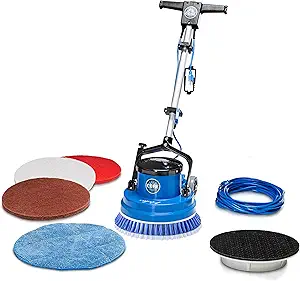 |
| Most Popular A crowd favorite that many people choose with confidence | Bissell BigGreen Hercules BGFS650 |  |
| Best Seller A high-volume bestseller chosen again and again | Prolux Core 13" Floor Buffer |  |
Dapper Supply Ride-On Floor Scrubber

| Power Source | Battery Powered |
|---|---|
| Cleaning Width | 22" brush |
| Squeegee Width | 31.5" |
| Run Time | 3-4 Hours |
| Productivity | 48,400 sq ft/hour |
This ride-on floor scrubber is built for commercial cleaning of large indoor areas such as warehouses, malls, and hospitals. It uses a 22-inch brush and a 31.5-inch squeegee to cover wide swaths quickly, and the dual-tank layout separates clean solution from recovery to reduce downtime for refills. The battery provides three to four hours of continuous runtime and recharges in about seven to eight hours, which fits typical shift-style cleaning schedules. At an advertised productivity of roughly 48,400 sq ft per hour and a 200 rpm brush speed, it is optimized for heavy-duty, repetitive scrubbing tasks. Built-in lights, a backup alarm, and a 20 degree gradeability help on varied floors and dimly lit areas, while a quoted 60 dB noise level keeps operation relatively quiet. The unit is heavy and sized for commercial use, so it requires dedicated storage and handling, and assembly or service access should be planned since it is not a small push model. For teams that need fast, reliable coverage of large indoor floors, this unit delivers practical power and runtime.
Best for: Cleaning crews and facility managers who need a robust, ride-on scrubber to efficiently maintain large indoor commercial or industrial floors during scheduled shifts.
Less Ideal for: Small businesses, residential users, or locations with very tight storage or maneuvering space should consider smaller walk-behind scrubbers instead.
- Wide 22" brush and 31.5" squeegee for fast coverage of large areas
- Dual clean and recovery tanks reduce refill frequency and downtime
- Battery-powered with 3–4 hours runtime suitable for shift cleaning
- Quiet operation around 60 dB, appropriate for noise-sensitive environments
- Safety features include front/back lights and a backup alarm
- Large and heavy unit requires dedicated storage and handling
- 7–8 hour recharge time may limit back-to-back shifts without spare batteries
Verdict: Choose this ride-on scrubber when you need fast, quiet, battery-powered cleaning that covers very large indoor areas with minimal refills.
SUNMAX RT50 Floor Scrubber

| Scrubbing Width | 22 inches |
|---|---|
| Suctioning Width | 31 inches |
| Vacuum Motor Power | 0.7 HP / 550 W |
| Clear Water Tank Capacity | 13.2 gallon |
| Continuous working time | 5 hours |
The SUNMAX RT50 is a cordless, walk-behind floor scrubber built for routine commercial cleaning on sealed hard floors. It uses a 22-inch brush to agitate dirt while a 31-inch squeegee and 550 W vacuum motor recover dirty water so floors are left dry after a single pass. The unit is battery powered (24 V/200 Ah) and supports up to five hours of continuous runtime with an eight-hour full charge, making it suitable for long cleaning shifts without a cord in the way. It ships with a heavy-duty brush plus white, red, and black pads for different floor types and includes the charger and spare squeegee blades for quick setup. Practical benefits include a large solution and recovery tank pair (13.2 and 14.5 gallons) to reduce refills, clear controls for straightforward operation, and a sturdy brush pressure for deeper scrubbing. Trade-offs are its heavy industrial weight and large footprint that require adequate storage and handling, and the eight-hour recharge time may necessitate multiple batteries or scheduled charging for continuous multi-shift use.
Best for: Facility managers and cleaning teams that prioritize fast, high-coverage cleaning performance for large sealed hard-floor areas and want a cordless machine that reduces labor time.
Less Ideal for: Small businesses or spaces with tight doorways, limited storage, or infrequent cleaning needs where a lighter scrubber or mop system would be more practical.
- Scrubs and vacuums in one pass for faster turnaround on high-traffic floors
- Long continuous runtime up to 5 hours per charge for extended cleaning routes
- Comes with brush and interchangeable pads for different floor types
- Large solution and recovery tanks reduce frequency of refills and dumping
- Includes batteries, charger, and spare squeegee blades for immediate use
- Heavy and bulky which makes moving and storing the machine more demanding
- Eight-hour full charge time can limit back-to-back use without spare battery supply
Verdict: Choose the RT50 if you need a cordless, high-runtime scrubber that cleans and dries large commercial hard-floor areas quickly and reliably.
Dapper Supply 17" Floor Buffer DP-FM1301

| Power Source | Corded Electric |
|---|---|
| Speed | 175 rpm |
| Maximum Power | 1100 watts |
| Specific Uses For Product | Carpet, Floor |
| Voltage | 110 volts_of_alternating_current |
This Dapper Supply 17" floor buffer is a commercial-grade walk-behind machine built for scrubbing, buffing and polishing a range of hard floors and carpets. It uses a 1100 W pure-copper motor driving a high-torque random orbit head at 175 rpm across a 17-inch cleaning path, which reduces gouging and swirl marks while delivering aggressive cleaning and polishing. The counterweighted head and anti-collision rubber bumper help protect surfaces during operation, and the aluminum frame plus ergonomic handle reduce operator fatigue for longer jobs. It ships with a solution tank, hard and soft brushes and scouring pads so you can switch between deep scrubbing and light polishing without extra purchases. The 39 ft cord gives wide coverage before you need to change outlets, but being corded limits mobility compared with battery models and you will need standard electrical access for extended runs. Overall, it is a practical, heavy-duty choice for janitorial crews and facilities that need a durable, repairable machine for regular floor maintenance.
Best for: Facility managers and janitorial teams who prioritize reliable, repairable equipment that delivers efficient, repeatable cleaning and polishing across commercial hard floors.
Less Ideal for: Small homeowners or occasional users who need a lightweight, portable cordless cleaner or who lack regular access to 110V outlets for prolonged commercial use.
- Commercial 17-inch cleaning path covers more area per pass
- 1100 W pure copper motor with 175 rpm random orbit head for effective deep cleaning and reduced surface damage
- Includes hard and soft brushes plus scouring pads and a solution tank for multiple cleaning modes
- Counterweighted head and bumper protect floors and improve polishing consistency
- Long 39 ft cord reduces the need to change outlets during jobs
- Corded design limits mobility compared with battery-powered machines
- No onboard battery or cordless option for remote locations
Verdict: A heavy-duty, repairable floor buffer that delivers professional scrubbing and polishing results for commercial cleaning teams.
HHQ Commercial Floor Scrubber Orb-6

| Power Source | Corded Electric |
|---|---|
| Speed | 2000 rpm |
| Amperage | 2.8 A |
| Voltage | 115 volts |
| Maximum Power | 1.5 hp |
The HHQ Orb-6 is a heavy-duty orbital floor scrubber designed for commercial cleaning of hard floors and carpets. It ships with three brushes (heavy, medium, soft) and three cleaning pads so you can switch between scrubbing, polishing, and bonnet cleaning without buying extras. The corded ECM motor delivers up to 1.5 hp and a 2000 rpm orbital head for aggressive agitation, and the unit is built from metal and stainless components for durability in frequent use. Controls are fingertip style and rubber wheels and a balanced handle make moving the 40 lb machine around easier than the raw weight suggests. Practical benefits include faster deep cleaning than manual mopping, a one-machine solution for multiple floor tasks, and a waterproof design that simplifies rinsing the head after use. Trade-offs are its bulk and weight for smaller janitorial crews, and the lack of onboard solution tanks means you will need external buckets or a wet-vac system for water management.
Best for: Buyers who need a budget-friendly commercial orbital scrubber that handles heavy-duty cleaning tasks and prefer a single durable machine with ready-to-use accessories.
Less Ideal for: Residential users with only occasional light cleaning needs or teams who require a compact machine with built-in water/solution tanks should consider other options.
- Includes three brushes and three pads for multiple cleaning modes out of the box
- Powerful ECM motor rated up to 1.5 hp with 2000 rpm for effective agitation
- Metal and stainless steel construction for commercial durability
- Fingertip controls and rubber wheels improve maneuverability and usability
- Relatively heavy at 40 pounds which can be tiring to lift or transport
- No integrated solution or recovery tank so separate water management is required
Verdict: A no-frills, commercial-grade orbital scrubber kit that delivers strong cleaning power and useful accessories for budget-conscious buyers needing heavy-duty floor care.
Prolux Core 15" Floor Buffer
| Power Source | AC |
|---|---|
| Speed | 150 rpm |
| Amperage | 2.5 A |
| Voltage | 120 volts |
| Maximum Power | 300 watts |
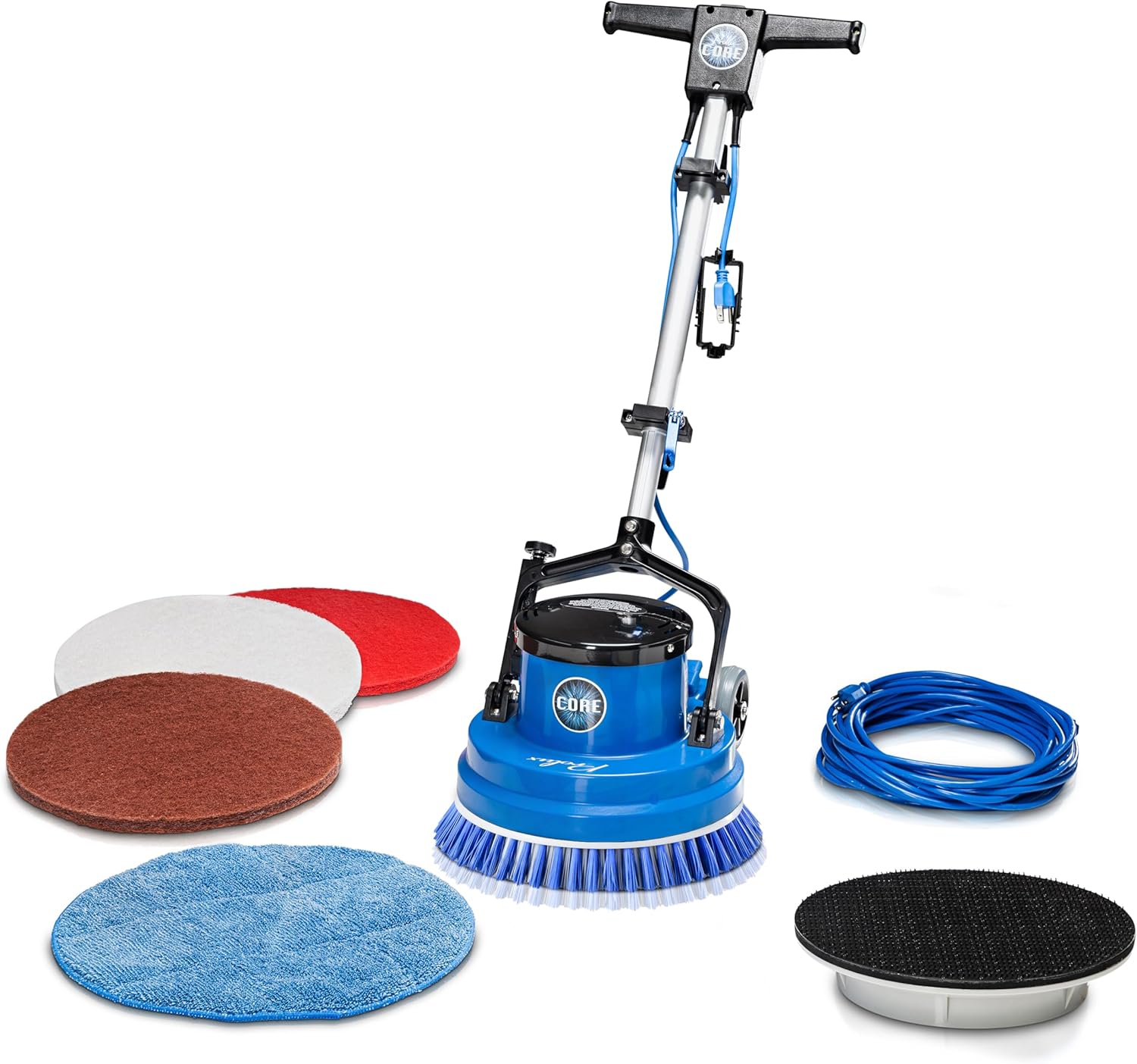
The Prolux Core 15" is a low-speed, high-torque floor buffer built for heavy cleaning jobs in commercial or residential settings. It runs on 120V AC with a 300-watt motor geared to 150 RPM so the machine delivers deep scrubbing action without high-speed swirl marks. The unit ships with a removable 50-foot extension cord, a telescoping T-handle for user comfort, large rubber wheels for mobility, and five different cleaning pads to handle tile, concrete, polishing, waxing, and light stripping. In practice it is used by pushing the T-handle while the single 15" pad rotates in both directions to lift soil; the weight and low gearing help it cut through stubborn grime that lightweight machines miss. Practical benefits include durable construction geared for frequent use, easier handling over thresholds or cords, and the ability to swap pads for different tasks. Limitations are the heavier weight that makes it less portable than consumer models and the single-speed 150 RPM design that favors deep cleaning over fast buffing tasks.
Best for: Buyers who prioritize a reliable, purpose-built machine for regular heavy-duty floor cleaning in commercial or high-traffic spaces and want a unit designed to last.
Less Ideal for: If you need a lightweight, highly portable buffer for occasional home use or variable-speed polishing, a smaller consumer model would be a better choice.
- Heavy, low-RPM design for deeper scrubbing on stubborn soil
- Includes five cleaning pads for multiple floor tasks out of the box
- Removable 50 ft extension cord increases reach for large spaces
- Telescoping T-handle and large rubber wheels improve operator comfort and maneuverability
- Heavier 30 lb build reduces ease of transport for one person
- Single fixed speed (150 RPM) limits flexibility for delicate or high-speed polishing
Verdict: Choose the Prolux Core 15" when you need a durable, factory-quality floor buffer built for reliable, deep cleaning in industrial or commercial settings.
Bissell BigGreen Hercules BGFS650

| Brush Speed (Rpm) | 2200 Rpm |
|---|---|
| Included Components | Brush, Pads |
| Form Factor | Cannister |
| Manufacturer | Bissell BigGreen Commercial |
The Bissell BigGreen Hercules BGFS650 is a compact scrub-and-clean floor machine meant for light commercial and heavy home use on bare floor surfaces. It runs a 2200 rpm brush head that scrubs and buffs to restore shine when paired with floor polish, and the included brush and pads make it ready to use out of the box. Its adjustable handle and low weight improve maneuverability around furniture and tight spaces, and a protective bumper helps prevent scuffs during operation. Because it is a single-purpose buffer/scrubber without integrated water tanks or vacuum squeegees, you use it mainly for dry buffing and polish work rather than wet scrubbing or extraction cleaning. That simplicity keeps the unit compact and easy to store, but it also means more surface prep and follow-up with other floor-care tools for heavily soiled or wet jobs. For shoppers who need a straightforward, pro-style buffer for restoring shine on hard floors, the BGFS650 delivers solid performance in a small footprint.
Best for: Buyers who want a compact, pro-style floor buffer to restore shine and polish bare floors and value maneuverability and straightforward operation over all-in-one wet cleaning features.
Less Ideal for: Facilities that require heavy wet scrubbing, rapid coverage of very large floor areas, or machines with integrated water recovery should look at larger-capacity scrubbers instead.
- High brush speed (2200 rpm) for effective buffing and polishing
- Lightweight, compact design improves maneuverability and storage
- Adjustable handle and protective bumper for easier control and reduced scuffing
- Includes brush and pads so it is usable immediately out of the box
- No integrated water tank or vacuum system so it is not suited for wet extraction cleaning
- Not intended for very large industrial sites where ride-on or high-capacity scrubbers are required
Verdict: Choose the BGFS650 when you need a nimble, professional-grade buffer to efficiently restore shine on bare floors in small to medium spaces.
Prolux Core 13" Floor Buffer

| Power Source | AC |
|---|---|
| Speed | 150 rpm |
| Specific Uses For Product | Floor |
| Included Components | Case |
The Prolux Core 13" is a purpose-built floor buffer that scrubs, buffs, polishes, and can be used for light stripping or waxing on most hard floors. It uses a low-speed 150 RPM high-torque motor and a two-direction scrubbing action to deliver deeper cleaning without swirl marks, and it ships with five interchangeable pads so you can switch from scrubbing to polishing. Practical features include a telescoping T-handle for more ergonomic operation, large rubber wheels to move the 28-pound unit easily, and a removable 50-foot extension cord that makes larger rooms easier to cover. The lower RPM and heavier build make it better at breaking up ground-in grime than lightweight consumer scrubbers, but that heft means it is bulkier to store and may be more than casual users need for occasional touch-ups. It is a solid choice when you want a durable, US-engineered machine that emphasizes cleaning power and longevity rather than compactness or ultra-high speed.
Best for: Buyers who want a durable, repairable floor machine that prioritizes deep cleaning performance for homes, offices, or light commercial spaces and prefer a built, engineer-focused design.
Less Ideal for: People who need a compact, lightweight spot cleaner for occasional use or who have very limited storage and prefer a small cordless unit.
- Low 150 RPM, high-torque motor for deep cleaning without swirl marks
- Cleans in both directions simultaneously for more effective soil removal
- Includes five interchangeable pads to handle multiple floor tasks
- Telescoping T-handle and large rubber wheels improve ergonomics and mobility
- Removable 50 ft extension cord lets you reach larger areas without rewiring
- Heavier, bulkier design may be overkill for light or occasional home use
- Higher upfront weight and size require more storage space
Verdict: Choose the Prolux Core 13" when you need a heavy-duty, low-speed buffer that delivers deep, two-direction cleaning and comes ready with multiple pads for different floor tasks.
Choosing the Right Machine Industrial Floor Scrubber: Key Factors to Consider
Run Time and Power Source
Run time determines how much continuous area a machine can cover before recharging or swapping batteries. Longer run times reduce shift interruptions and may eliminate the need for multiple machines on single shifts. Battery type matters because lead-acid, gel, and lithium options differ in recharge speed, cycle life, and maintenance needs.
Consider how many hours per shift the scrubber must operate and whether the facility can support fast charging or battery-swapping workflows. For multi-shift operations, faster recharge or swap capability can be more important than peak run time alone.
Cleaning Width and Productivity
Cleaning width directly influences how many passes are required to cover a floor area and therefore impacts total cleaning time. Wider decks reduce passes but can compromise access in narrow aisles and around obstacles. Productivity should be evaluated as cleaning width combined with brush speed and solution flow.
Match deck width to the facility layout. Large open warehouses benefit from wider cleaning paths, while retail or production floors with aisles and racking often need narrower machines for consistent coverage without double work.
Recovery Tank Size and Water Management
Recovery tank capacity determines how long the machine can extract dirty water before an operator must stop to empty it. Smaller tanks mean more frequent stops and lower effective productivity. Tank design, squeegee quality, and vacuum system capacity affect how dry the floor is after a pass and whether additional mop work is required.
Think about water availability, wastewater disposal rules, and how often operators can reasonably pause cleaning. Larger tanks are helpful for long uninterrupted runs but add weight and may affect maneuverability.
Maneuverability and Size Constraints
A machine that is easy to steer and has a tight turning radius will reduce operator fatigue and improve coverage in confined areas. Physical footprint matters for storage and transport as well. Consider door widths, elevator capacities, and aisle spacing when choosing a scrubber.
Compact ride-on or narrow walk-behind models are preferable where obstacles and tight turns are frequent. In large, unobstructed spaces, stability and straight-line tracking may be more important than extreme maneuverability.
Brush and Pad System Versatility
The type and number of brushes or pads determine how effectively a machine can handle different soils and floor finishes. Disc, cylindrical, and orbital systems each have strengths: some excel at scrubbing around debris, others at polishing or stripping finishes.
Choose a system that supports the range of floor types and soils in your facility. Availability of replacement brushes and ease of changing pads affect ongoing maintenance and adaptability.
Serviceability and Maintenance Access
Machines that provide easy access to wear items and consumables reduce downtime and service labor. Quick-release brush decks, accessible batteries, and clear diagnostics help technicians perform routine checks and repairs faster. Consider the availability of replacement consumables and the complexity of routine tasks such as squeegee replacement and vacuum motor service.
Lower maintenance complexity can translate to lower total cost of ownership even if the initial spec looks similar across models.
Sizing Your Scrubber to Facility Area
Estimate total cleanable square footage per shift and translate that into required effective run time and cleaning width. Multiply the desired cleaned area by the expected operating speed and account for operator breaks and obstacles to derive a realistic productivity target.
For facilities with mixed zones, consider using two machine sizes: a larger unit for open production or warehouse floors and a compact unit for congested areas. This approach can balance high throughput with the ability to clean under racks and around machinery.
- Calculate effective coverage: cleaning width × travel speed × run time
- Account for refill and emptying stops when projecting shift throughput
- Plan for storage and charging locations near cleaning zones
Maintenance Planning and Consumables
Create a maintenance schedule that aligns with daily operations. Daily tasks typically include squeegee checks, brush inspection, and tank rinsing. Weekly and monthly checks cover belts, vacuum motors, and battery condition.
Keep a small stock of common consumables such as squeegees, brushes, and filters to minimize downtime. Training operators to perform basic maintenance can prevent small issues from becoming service calls.
- Document daily rinse and drain procedures to prevent odors and buildup
- Log battery charge cycles if using rechargeable batteries
- Assign clear responsibilities for routine inspections
Operator Ergonomics and Training
Operator comfort affects productivity and retention. Controls that are intuitive and adjustable steering or seat positions reduce fatigue. Consider machines with clear operator interfaces and simple routine task flows.
Invest in operator training that covers safe operation, basic troubleshooting, and maintenance tasks. Well-trained operators work faster and cause less wear on equipment.
- Provide hands-on training sessions rather than paper checklists
- Teach battery handling and charging best practices if applicable
- Encourage reporting of unusual noises or handling changes early
Water Use, Detergents, and Environmental Considerations
Evaluate how much cleaning solution a machine consumes and whether concentrated detergents or dosing systems are supported. Lower water usage reduces disposal and can be important where wastewater rules are strict.
Some facilities require eco-friendly chemicals or have limited wastewater discharge options. Machines that provide accurate dosing and low solution flow can reduce chemical use and environmental impact.
- Check if the machine supports automatic dosing or variable solution flow
- Match detergent type to floor finish and soil load
- Consider wastewater capture and disposal procedures in facility planning
Safety Features and Floor Compatibility
Look for safety features such as effective squeegees that reduce slip risks, clear visibility lines for operators, and emergency stop controls. Floor type compatibility is also crucial; some machines are too aggressive for delicate finishes.
Test cleaning methods on small, inconspicuous areas to verify finish compatibility before scheduling full-area cleaning. Proper machine settings and pad selection can protect floor coatings and extend their life.
- Verify squeegee performance to minimize slip hazards
- Adjust brush pressure and solution flow for sensitive floors
- Ensure machine lights or audible warnings are appropriate for busy environments
How We Chose the Best Machine Industrial Floor Scrubber
We shortlisted machines based on criteria that matter for heavy-duty floor care in commercial and industrial settings. Primary factors included run time and battery type, because uninterrupted cleaning time determines how much area a single operator can cover. We assessed brush and pad system versatility and cleaning width to estimate productivity per pass. Recovery tank size and solution delivery were evaluated for how often operators must stop to empty or refill. Maneuverability and turning radius were considered for mixed open-area and congested-floor layouts. Finally, maintenance access and parts availability were reviewed to estimate downtime and service labor. Excluded items included light-duty consumer units and walk-behind models intended for residential use. We focused on ride-on and large walk-behind industrial scrubbers designed for sustained daily use. Our selection prioritized machines with clear specs for battery or power options, documented cleaning widths, and serviceability features so buyers can match units to facility demands.
Our full evaluation process is outlined in our review methodology.
FAQ
How large of a scrubber do I need for a 50,000-square-foot facility?
It depends on desired shift coverage and machine run time. Estimate required throughput then choose a cleaning width and run time combination that meets that throughput. You may need a larger unit for open areas and a compact unit for aisles.
What is the difference between disc and cylindrical brush systems?
Disc systems are efficient at scrubbing and polishing flat surfaces, while cylindrical systems are better at handling debris and edges. The choice depends on floor type and whether you need debris-handling capability.
Are lithium batteries worth the investment for industrial scrubbers?
Lithium batteries offer faster charging and longer cycle life but often have higher upfront cost. They reduce downtime and maintenance compared with flooded batteries, which can be beneficial for multi-shift operations.
How often should recovery tanks be emptied and cleaned?
Empty and rinse recovery tanks after each use to prevent odors and buildup. Deeper cleaning and inspection should be performed weekly to check seals and vacuum performance.
Can a single machine handle both open warehouse floors and narrow aisles?
Some mid-sized machines strike a balance, but there is usually a tradeoff between cleaning width and maneuverability. For consistent results, many facilities use two machine sizes tailored to each area.
What routine maintenance keeps a scrubber reliable?
Daily rinsing of tanks, inspection of squeegees and brushes, and checking vacuum performance are essential. Track battery condition and follow the manufacturer schedule for motor and belt inspections.
Final Verdict
Choose a machine industrial floor scrubber by matching cleaning width, run time, and tank capacity to your facility layout and shift structure. Prioritize serviceability and brush versatility to reduce downtime and adapt to changing floor conditions. Remember that operator training and a defined maintenance plan often matter as much as machine specs. With clear priorities, you can pick a scrubber that balances productivity, reliability, and total cost of ownership.