
Note: This article contains affiliate links. If you click on these links and make a purchase, we may earn a small commission at no extra cost to you. This helps support our research and content. Read our full affiliate disclosure here.
If you plan to make sausages at home, a purpose-built meat grinder can be the difference between inconsistent batches and reliably textured links. You want a unit that moves meat quickly without overheating, produces an even grind for stable sausage bind, and accepts sausage-stuffing attachments without fuss. This guide collects seven top options shortlisted for home sausage making and focuses on practical factors that matter in the kitchen: throughput, grind consistency, durability, and cleanup. Read on to see the evaluation criteria used and which features to prioritize for successful small-batch sausage production.
Top Picks at a Glance
| Best Overall The best all-around choice for most situations | STX Turboforce 3000 Classic |  |
| Best Quality Built to a higher standard if you want something more solid | STX Turboforce II 4000 |  |
| Best Value The sweet spot between price and what you get | AAOBOSI Meat Grinder MGC04 |  |
| Best Budget The cheapest option that still gets the job done reliably | Aiheal Meat Grinder MG-2430RB |  |
| Top Rated A top-rated pick with lots of positive feedback | LEM BigBite #8 Meat Grinder |  |
| Most Popular A crowd favorite that many people choose with confidence | KitchenAid Metal Food Grinder KSMMGA |  |
| Best Seller A high-volume bestseller chosen again and again | CHEFFANO Meat Grinder AZ-MG091DG |  |
STX Turboforce 3000 Classic

| Wattage | 1800 watts |
|---|---|
| Capacity | 3 pounds |
| Voltage | 110 volts |
| Material Type | Aluminum / Stainless Steel |
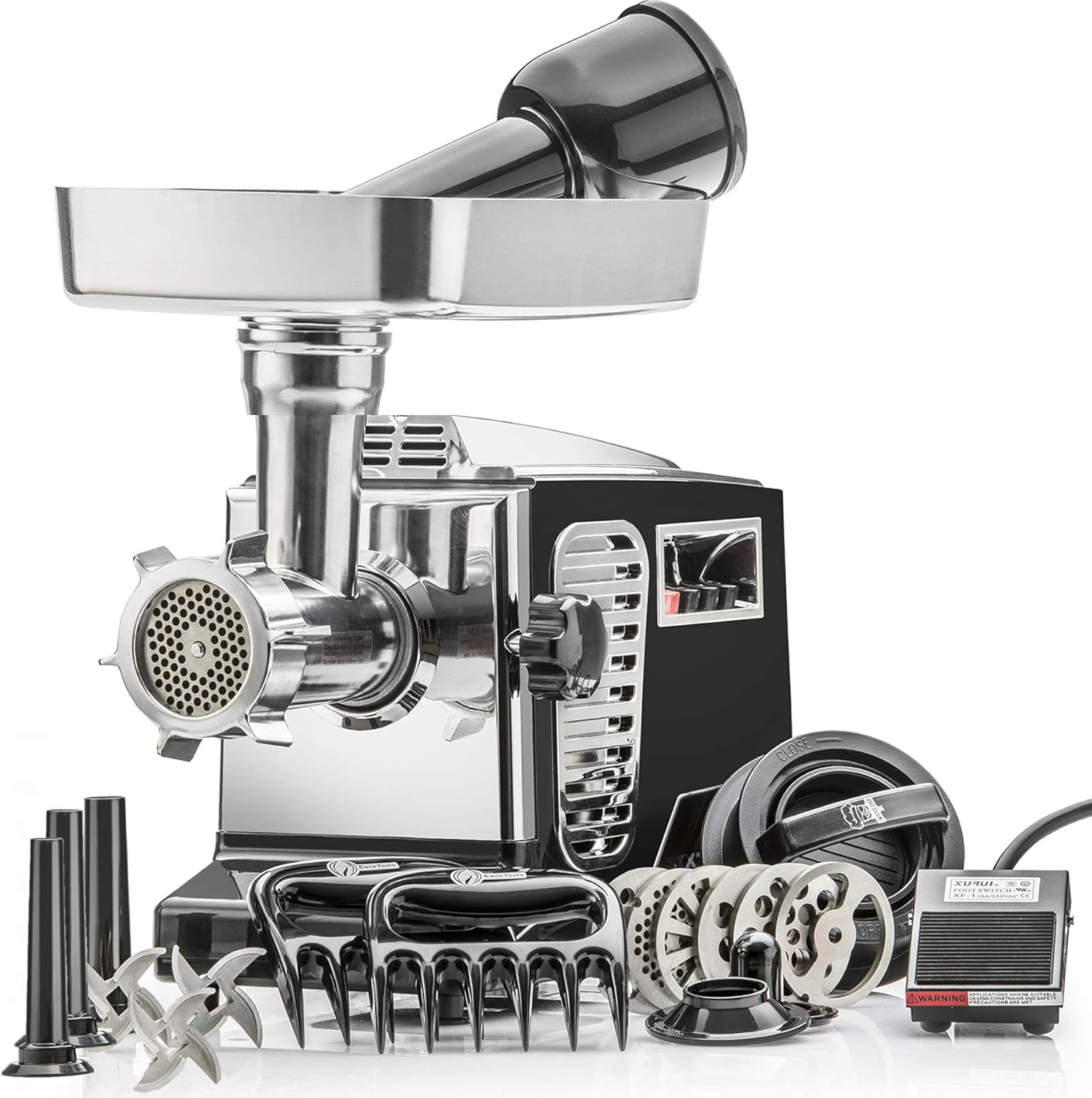
The STX Turboforce 3000 Classic is a home-focused electric meat grinder built to handle regular batch grinding and sausage making. It uses a size #12 polished aluminum grinding head with a large hopper that holds about 3 pounds of prepped meat and an auger designed for higher intake; when properly prepared it can process roughly 180 to 240 pounds per hour. The package includes three stainless steel cutting blades, five grinding plates (including a sausage stuffing plate), three stuffing tubes, a kubbe attachment, meat claws, and a burger press, so you can make sausages, kubbe, and patties without sourcing extras. The motor is rated up to 3000W max but typically runs between 800 and 1200W under load, and the unit operates on standard 110V household power. Important limits: the grinder is not designed to handle bones, tendons, vegetables, or nuts, and it is intended for home rather than commercial use. For home cooks who want a robust, multi-function grinder for sausage projects and larger weekend batches, this model offers a complete kit and strong throughput.
Best for: Home cooks who want a robust, versatile grinder with full sausage-making accessories and enough capacity for frequent batches and weekend projects.
Less Ideal for: People needing a commercial-grade continuous-use grinder or users who require bone-crushing capability or multi-voltage support.
- Size #12 head and large hopper for higher-capacity home grinding
- Includes multiple grinding plates, stuffing tubes, kubbe attachment and burger press for versatile sausage and patty making
- 304-grade stainless steel cutting blades for durable cutting performance
- High throughput when meat is properly prepped, suitable for weekend batch processing
- Not designed to grind bones, tendons, or non-meat items
- Intended for home use only, not rated for commercial continuous operation
Verdict: Choose the Turboforce 3000 Classic if you want a beefy, fully equipped home grinder that covers sausage making and large batch processing without needing extra attachments.
STX Turboforce II 4000
| Wattage | 2000 watts |
|---|---|
| Capacity | 3 pounds |
| Voltage | 120 volts |
| Included Components | Grinding head, meat pusher, 6 plates, 3 blades, sausage tubes, kubbe attachment, foot pedal |
The STX Turboforce II 4000 is a performance-focused home meat grinder designed to handle large batches and a variety of tasks from basic grinding to sausage and kubbe making. It uses a 2000 watt motor with a patented air-cooled quad induction system and a circuit breaker for sustained operation, and the size No.12 grinder head plus a 2.5-inch output lets it process more meat per pass than smaller domestic units. The large tray and variable intake design support up to roughly 220 to 260 pounds per hour depending on plate size and meat type, and the kit includes multiple grinding plates, three cutting blades, sausage tubes, a kubbe attachment, foot pedal, meat claws, and a burger press so you can make sausages, burgers, and stuffed preparations without sourcing extra parts. Practical limits are its 3 pound recommended capacity for the tray and the need for some workspace for the sizeable unit, and while it can handle soft bones the heavier-duty performance will be noisier and requires careful cleaning and maintenance. For home cooks who need factory-quality grinding speed and a full accessory set, this is a capable choice.
Best for: Home cooks who prioritize grinding speed, capacity, and a complete accessory kit for regular sausage making and large batches.
Less Ideal for: Casual or occasional users who need a compact, quiet grinder or have very limited kitchen space should consider smaller models.
- 2000 watt motor with air-cooled system and circuit breaker for sustained heavy use
- Size No.12 grinder head and 2.5-inch output for higher throughput than smaller home models
- Comes with multiple grinding plates, cutting blades, sausage tubes, kubbe attachment, foot pedal, and other accessories
- Built to handle soft bones and a wide range of meats for versatile home butchery tasks
- Large and heavier unit requires dedicated counter space and cleanup effort
- Recommended tray capacity is 3 pounds, so continuous high-volume use still requires refilling and monitoring
Verdict: A high-power, accessory-rich grinder built for home users who need near-commercial throughput and versatile sausage-making capability.
AAOBOSI Meat Grinder MGC04

| Capacity | 1.5 kg |
|---|---|
| Wattage | 2800 watts |
| Voltage | 120 volts |
| Material Type | Stainless Steel |
| Included Components | 3 plates, 2 blades, sausage stuffer, kubbe kit, slicing attachments |
The AAOBOSI MGC04 is a multi-function electric meat grinder aimed at home cooks who want to grind meat, stuff sausage, form kibbe, and shred or slice ingredients without needing separate appliances. It includes three stainless steel grinding plates, two blades, a sausage stuffer, kubbe maker, and slicing/shredding attachments that lock into the feed head for straightforward accessory swaps. The listed 2800W peak (3000W max marketing claim) motor and built-in overload protection let it process up to about 1.5 kg per minute on the 7mm plate, and the reverse function helps clear jams from sinew or tougher bits. Construction mixes 18/8 stainless steel for the housing with ABS components and several heat-dissipation vents to reduce overheating during heavier runs. For practical kitchen use it is easy to load and disassemble for cleaning, and many cutting parts are dishwasher safe. Limitations include guidance to avoid bones and very tough sinew to prevent jamming and that the unit still requires cautious feeding and occasional unclogging despite the reverse feature.
Best for: Home cooks who want a single, versatile grinder to make fresh sausage, kibbe, and routine grinding without professional commercial capacity and who prioritize practical features and easy cleanup.
Less Ideal for: Buyers who need a commercial-grade, all-metal grinder for heavy daily use or who plan to process bones and very large volumes should look at higher-capacity pro units instead.
- Includes multiple stainless steel plates and blades for grinding, stuffing, kibbe making, and slicing so you can handle several kitchen tasks with one machine
- High peak wattage motor and heat-dissipation design allow relatively fast grinding and reduced risk of overheating during moderate batches
- Auto-reverse and overload protection help clear jams and protect the motor
- Most accessory parts disassemble easily and many blades are dishwasher-safe for simpler cleanup
- Not intended for grinding bones or very tough connective tissue so feedstock must be trimmed first
- Some plastic/ABS components are used alongside stainless steel which may affect perceived durability compared with all-metal commercial units
Verdict: A versatile, feature-packed home meat grinder that makes fresh sausage and routine grinding easy while keeping cleanup straightforward.
Aiheal Meat Grinder MG-2430RB

| Power | 300W (3200W Max locked power) |
|---|---|
| Material Type | Stainless Steel |
| Included Components | 2 Blades, 3 Plates, 3 Sausage Tubes, Pusher |
| Capacity | 44 pounds |
| Power Source | Electric |
The Aiheal MG-2430RB is a compact electric meat grinder designed for home use and small-batch sausage making. It uses a 300W motor with a 3200W max locked power rating and includes three grinding plates (2mm, 5mm, 7mm), two stainless steel blades, and three sausage stuffer tubes so you can grind fine to coarse and fill sausages in different sizes. The unit is made largely of stainless steel and comes with a pusher, an R reverse/unclog button, and overload protection to shut the motor off if it overheats. In practice it handles beef, pork, chicken, venison, and fish for burgers, meatballs, bolognese, and sausages, and disassembles for cleaning of the cutting parts (not dishwasher-safe). For a budget-focused home cook it offers solid functionality and useful accessories, but its advertised peak power figure is a locked maximum rather than continuous running wattage, so expect typical household performance rather than commercial throughput, and plan batches to avoid frequent overheating.
Best for: Home cooks who want an affordable grinder that can handle regular sausage making and small to medium batches of ground meat without the cost of a commercial unit.
Less Ideal for: People who need continuous high-volume grinding for commercial or party-scale production should consider a commercial-grade machine instead.
- Includes three grinding plates and three sausage stuffer tubes for versatile grind sizes and sausage making
- Stainless steel cutting parts and two blades that are removable for cleaning
- Built-in overload protection and an R reverse button to clear jams
- Compact design suitable for countertop use in home kitchens
- Advertised 3200W max is a locked peak figure and not continuous motor output for heavy commercial use
- Some parts are not dishwasher-safe and require hand drying after cleaning
Verdict: Aiheal MG-2430RB is a budget-friendly home meat grinder that gives you versatile grind sizes and sausage-stuffing capability without the price of a commercial unit.
LEM BigBite #8 Meat Grinder

| Power source | electric |
|---|---|
| Material Type | Stainless Steel |
| Capacity | 7 pounds |
| Horsepower | 0.50 HP |
The LEM BigBite #8 is a heavy-duty stainless-steel electric grinder built for frequent home use and small-scale sausage making. Its 0.5 HP motor and BigBite throat feed produce roughly 7 pounds per minute, so it handles bulk batches, burger grind, and stuffing work without frequent refills. The unit ships with three plates, a knife, stomper, and stuffing tubes so you can grind, change coarseness, and start making sausages right away. Stainless-steel construction and a permanently lubricated motor simplify cleaning and reduce maintenance needs, and the noise-dampening design keeps operation quieter than many commercial-style grinders. It is not rated for bones and the machine is fairly heavy, so it is better suited to a dedicated prep area rather than frequent countertop moves. Replacement parts and a five-year factory warranty back long-term ownership, which is helpful for buyers wanting a reliable, serviceable machine for seasonal or regular sausage production.
Best for: Buyers who prioritize a durable, serviceable grinder for regular sausage making, bulk burger prep, or processing game and want a machine built to last rather than a light occasional-use model.
Less Ideal for: Casual users who need a lightweight, portable unit for occasional small jobs or those who intend to grind bones should consider alternatives.
- Stainless steel build for durability and easier cleaning
- Includes plates, knife, stomper, and stuffing tubes for complete sausage setup
- 0.5 HP motor and BigBite feed handle bulk grinding at about 7 lb/min
- Noise-dampening design for quieter operation than similar commercial-style grinders
- Five-year factory warranty and available replacement parts support long-term use
- Not safe for grinding bones
- Relatively heavy, not ideal for frequent moving or small countertop storage
Verdict: Choose the LEM BigBite #8 if you want a robust, factory-quality grinder that reliably handles regular sausage making and bulk home grinding.
KitchenAid Metal Food Grinder KSMMGA
| Included components | (1) Metal food grinder, (1) Removable Food tray, (1) Fine grinding plate, (1) Medium grinding plate, (1) Coarse grinding plate, (1) Cleaning brush, (1) Food pusher, (2) Sausage stuffer tubes, (1) Sausage stuffer plate |
|---|---|
| Material | Metal |
| Voltage | 110 volts |
| Capacity | 11 kg |
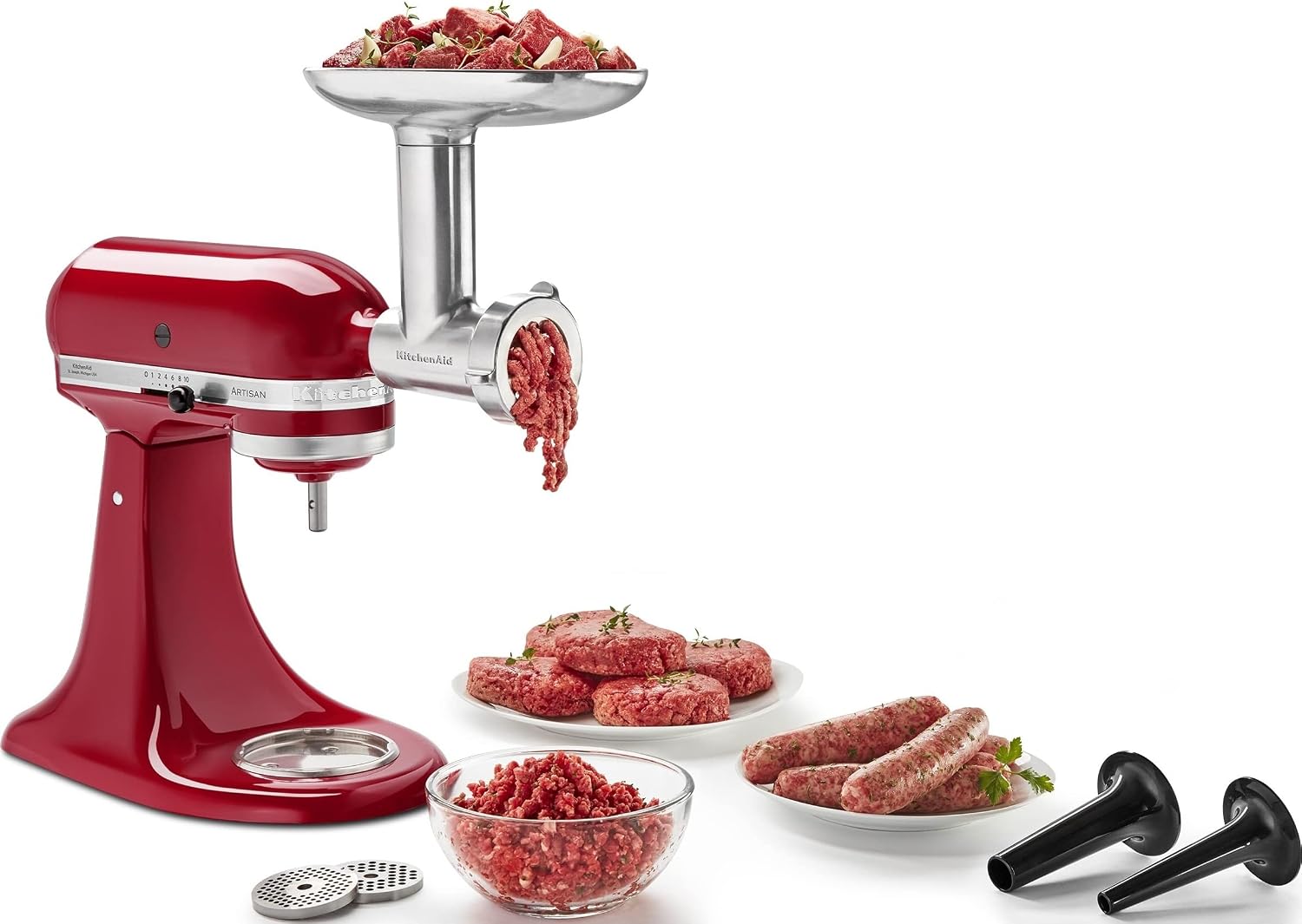
The KitchenAid Metal Food Grinder KSMMGA attaches to the power hub of any KitchenAid stand mixer and uses the mixer's motor to grind fresh meat, hard cheeses, and breadcrumbs or to stuff sausages. It ships with fine, medium, and coarse grinding plates, two sausage stuffer tubes and a larger removable food tray that speeds batch processing, and all parts store in a dedicated case. In practice the metal construction feels robust and the variety of plates makes it simple to dial in grind texture for burgers or sausage mixes; pre-chilling the grinder helps keep meat cold for a cleaner grind. Because it relies on your stand mixer for power it is quiet and compact on the counter compared with a standalone electric grinder, but throughput is limited by the mixer motor and the trays feed rate. Overall this is a durable, user-friendly attachment for home cooks who want consistent grinds and sausage-making capability without buying a separate grinder.
Best for: Home cooks who want to grind fresh meat and make sausages at home using their KitchenAid stand mixer and who value sturdy, factory-quality accessories backed by broad user adoption.
Less Ideal for: People who need high-volume commercial grinding or the fastest throughput should choose a dedicated electric grinder designed for heavy daily use.
- Metal construction and included storage case keep parts organized and durable
- Comes with fine, medium, and coarse plates plus two sausage stuffer tubes for versatile grinding and sausage making
- Larger removable food tray processes more ingredients per batch to reduce prep time
- Uses stand mixer motor so no separate motor or extra counter footprint is needed
- Grinding speed and throughput depend on your stand mixer motor and can be slower than heavy-duty standalone grinders
- Requires pre-chilling and careful feed technique to avoid warming meat during grinding
Verdict: If you already own a KitchenAid stand mixer and want a durable, all-in-one attachment for grinding meat and stuffing sausages, this metal grinder delivers versatile, reliable results without buying a separate unit.
CHEFFANO Meat Grinder AZ-MG091DG

| Capacity | 180 pounds |
|---|---|
| Material Type | Stainless Steel |
| Power Source | Corded Electric |
| Included Components | Sausage Maker, Food Pusher, Kubbe Attachments, 2 Blades, 3 Cutting Plates |
| Manufacturer Warranty Description | 2 Year Manufacturer |
The CHEFFANO AZ-MG091DG is a countertop electric meat grinder meant for home sausage and kibbe preparation that ships with three stainless steel cutting plates, two blades, sausage tubes and kubbe attachments. It uses a copper-wound motor rated 350W continuous with a claimed peak of 2800W and an auger updated to reduce heat buildup during grinding, which the brand says helps preserve meat texture. Typical use is straightforward: assemble the head and plate you need, feed trimmed meat with the pusher, and use the REV function to clear jams. The stainless attachments are removable for hand washing, and the unit includes safety ETL certification. Practical benefits include the variety of plates for coarse-to-fine grinds, included stuffing accessories for small-batch sausage projects, and a reverse function to unclog the feed. Limitations to note are the recommendation to hand-wash parts only, so cleaning takes more effort than dishwasher-safe alternatives, and peak wattage claims are marketing figures rather than continuous power ratings, so expect performance consistent with a midrange home grinder rather than a commercial unit.
Best for: Home cooks who want a reliable, safety-certified grinder with included stuffing and kibbe accessories for making small to medium batches of sausage and fresh-ground meat.
Less Ideal for: People who need a heavy commercial-capacity grinder or who prefer dishwasher-safe parts for quick cleanup should consider other models.
- Includes three stainless steel cutting plates and two blades for multiple grind sizes
- Comes with sausage stuffer tubes and kubbe attachments for home sausage and kibbe making
- ETL safety certification and mostly stainless steel construction
- Reverse function helps clear jams without disassembly
- Attachments are not dishwasher safe and require hand washing
- Advertised peak wattage is much higher than the motor's continuous rating, so not a substitute for commercial equipment
Verdict: A safety-certified, accessory-rich home meat grinder that makes small-batch sausage and kibbe straightforward for cautious buyers.
Choosing the Right Meat Grinder for Home Sausage Making: Key Factors to Consider
Grinding Consistency
Consistent particle size directly affects sausage texture, fat distribution, and how well the meat binds. Uneven grinds can cause pockets of fat or dense meat that compromise mouthfeel and cooking performance.
When evaluating grinders, look for well-machined cutting plates and a strong, sharp blade that maintains contact with the plate across repeated passes. Options that offer multiple plate sizes let you produce coarse grinds for chunkier sausages or fine grinds for smooth emulsions.
Throughput Capacity
Throughput determines how quickly you can process a batch without overheating or causing the motor to stall. For home sausage making, you will usually work in multi-pound batches, so a grinder that can sustain a steady feed rate makes the job faster and less frustrating.
Consider both rated pounds-per-minute and real-world reports of continuous run time. Higher-capacity machines are useful if you plan frequent or larger runs, while lower-capacity units may be adequate for occasional small batches.
Ease Of Cleaning
Sausage making involves raw meat and fat, so fast, thorough cleaning is essential for food safety and for keeping the grinder performing reliably. Machines that disassemble into a few large pieces with smooth surfaces are easiest to clean by hand.
Avoid designs with tight crevices that trap fat or small screws that complicate teardown. Metal components that tolerate hot water and are corrosion resistant will simplify sanitation and extend service life.
Durability And Materials
Tough materials matter because blades and plates are wear items that must stay sharp and true. Metal feed tubes, stainless-steel plates, and hardened carbon-steel blades resist deformation under load and reduce the need for frequent replacement.
Also consider the housing and worm gear materials. All-metal construction in critical load areas increases longevity for users who grind often or process bony cuts on occasion.
Attachment Compatibility
Sausage-making is more than grinding. If you want to stuff links, look for grinders that accept standard stuffing tubes or include adapter options. Compatibility with additional plates and accessories expands what you can do without buying new machines.
Confirm thread sizes or mounting styles when assessing attachments. Machines with straightforward mounting and secure locking minimize wobble and provide smoother sausage stuffing.
Noise, Vibration, And Comfort
Long sausage runs can be fatiguing if the grinder is loud or vibrates excessively. Noise and vibration do not affect grind quality directly but influence how comfortable it is to operate the unit for extended periods.
Look for machines with balanced rotors, rubber feet, and sound-damping housings if you value a quieter working environment. Reduced vibration also helps keep feeds and attachments aligned during stuffing.
Preparing Meat For Best Results
How you prepare the meat before it hits the grinder is as important as the grinder itself. Chill the meat and fat to near but not below freezing; cold trims and chilled plates produce cleaner cuts, reduce smearing, and help the grinder push uniform chunks through the plates.
Trim out silver skin and large sinew, and cut meat into pieces that will feed easily through the machine. For a consistent grind, partially freeze the meat for 20 to 40 minutes depending on your freezer and batch size. This also reduces the load on the motor and improves texture in the finished sausage.
- Use well-chilled meat and fat to prevent smearing
- Cut into 1 to 2 inch cubes for easier feeding
- Work in small batches to avoid overheating the grinder
Choosing Plate Sizes And Grind Sequences
Different plate sizes yield different textures. A coarse plate gives chunkier sausage suitable for rustic links, while fine plates and multiple passes create a smooth emulsified sausage like bratwurst or frankfurter.
A common workflow is to pass meat once through a coarse plate, then through a medium plate, and finally through a fine plate if a smooth texture is desired. Always sharpen, align, and inspect the blade and plate before multi-pass procedures to avoid tearing.
- Coarse plates for country-style sausages
- Medium plates for balanced texture
- Fine plates for emulsified sausages and pâtés
Maintaining And Sharpening Blades
Blades and plates dull with use, which reduces cutting efficiency and can produce heat and smearing. Regular inspection and replacement or sharpening of blades preserves grinding quality.
Many home users replace blades and plates periodically rather than attempt sharpening, but if you choose to sharpen, follow manufacturer-safe methods and maintain the correct blade bevels. Always dry components thoroughly and apply a light food-grade oil to metal parts before storage to prevent rust.
- Inspect blades for nicks before each session
- Replace or sharpen blades once grinding slows or smears
- Store metal parts dry and lightly oiled to prevent corrosion
Sanitation And Food-Safety Best Practices
Raw meat handling requires rigorous sanitation to prevent cross-contamination. Clean and sanitize all components that contact meat immediately after use and keep work surfaces disinfected during processing.
Use separate cutting boards for meat and other ingredients, and refrigerate sausages promptly after stuffing. If you plan to store sausage, follow cold-chain best practices and freeze within recommended safe windows for ground meat products.
- Teardown and wash grinder parts in hot, soapy water after each use
- Sanitize surfaces and utensils that contact raw meat
- Chill finished sausages quickly before refrigeration or freezing
Troubleshooting Common Jams And Feeding Issues
Jams are usually caused by connective tissue, sinew, or overly warm meat. If the feed clogs, stop the machine and clear the obstruction rather than forcing the motor. Use a pusher or small spatula to remove stuck material safely.
If stalling occurs frequently, reduce batch size, chill the meat more, and inspect the feed worm and plate for obstructions. Regular cleaning reduces the chance of residual fat building up and causing blockages over time.
- Stop and clear jams immediately to avoid motor damage
- Reduce batch size and further chill meat to prevent stalling
- Check blades and plates for wear if feeding issues persist
How We Chose the Best Meat Grinder for Home Sausage Making
We evaluated machines using criteria that matter for home sausage making rather than general commercial specs. Primary filters included consistent grind quality across coarse-to-fine plates, motor capacity that handles typical home batch sizes without stalling, and reliable feed systems that minimize jamming. We also weighed build materials and durability, prioritizing units with metal feed tubes and hardened cutting blades over thin plastics. Ease of cleaning and disassembly was another key criterion, since frequent sausage runs require quick teardown and sanitation. Noise and vibration were considered for comfort during longer sessions, and compatibility with common sausage-stuffing attachments was required. Units lacking decent safety features, or those that had poor user serviceability or no clear cleaning access, were excluded. The final list focuses on balanced options that suit hobbyist sausage makers who want dependable performance and straightforward maintenance.
Our full evaluation process is outlined in our review methodology.
FAQ
What grind size is best for sausages?
Grind size depends on sausage style. Coarse grinds are good for rustic, chunky links while medium grinds offer balanced texture. Fine grinds create smooth, emulsified sausages. Many recipes use a two-stage grind to control texture.
How much meat can I grind per minute at home?
Rated throughput varies by model, but home units commonly process a few pounds per minute under ideal conditions. Real-world rates depend on meat temperature, fat content, and whether you are doing multi-pass grinds.
Can I grind frozen meat?
Partially frozen meat is preferable because it feeds cleaner and produces less smearing. Fully frozen blocks can damage blades and strain the motor, so avoid grinding meat that is rock-solid.
How often should I replace blades and plates?
Replacement frequency depends on use. For occasional home use, inspect before each session and expect to replace components occasionally if you notice dulling or nicks. Heavy or frequent use shortens service intervals.
Is it safe to clean grinder parts in the dishwasher?
Some non-critical parts may be dishwasher safe, but hand washing in hot, soapy water is usually recommended to protect blade sharpness and prevent corrosion. Check whether components are explicitly rated for dishwasher use.
Final Verdict
Choose a grinder that matches the batch sizes and textures you plan to produce. Prioritize consistent grinding geometry, robust materials, and straightforward disassembly for cleaning over bells and whistles. Remember that preparation and maintenance—chilling meat, proper plate selection, and timely blade care—have as much impact on final sausage quality as the machine itself. With the right balance of capacity and serviceability, you can make dependable, delicious sausages at home.