
Note: This article contains affiliate links. If you click on these links and make a purchase, we may earn a small commission at no extra cost to you. This helps support our research and content. Read our full affiliate disclosure here.
If you make jerky at home, the right meat slicer makes the process faster, safer, and more consistent. A slicer built for jerky helps you cut uniform strips at the thinness needed for reliable curing and drying, which shortens dehydration time and yields more even texture. This guide highlights seven shortlisted meat slicers for jerky, each chosen for dependable blade construction, repeatable thickness control, and practical handling for home use. Read on to see the evaluation factors we used and which features matter most to get consistent, tasty jerky. Then move into the product list to find the best match for your workflow.
Top Picks at a Glance
| Best Overall The best all-around choice for most situations | Cuisinart Kitchen Pro FS-75 |  |
| Best Quality Built to a higher standard if you want something more solid | KWS MS-10NS 10" Meat Slicer |  |
| Best Value The sweet spot between price and what you get | Borlebbi Meat Slicer SL-518M |  |
| Best Budget The cheapest option that still gets the job done reliably | NutriChef Electric Meat Slicer NUGJ801 |  |
| Top Rated A top-rated pick with lots of positive feedback | BESWOOD 10" Meat Slicer BESWOOD250 |  |
| Most Popular A crowd favorite that many people choose with confidence | CUSIMAX Electric Meat Slicer 1905 |  |
| Best Seller A high-volume bestseller chosen again and again | OSTBA Meat Slicer SL-518 |  |
Cuisinart Kitchen Pro FS-75

| Blade length | 7.5 inches |
|---|---|
| Motor power | 130 watts |
| Slice thickness range | 1/32" to 1/2" |
| Operation mode | Automatic |
The Cuisinart Kitchen Pro FS-75 is a compact electric slicer built for home use that makes quick work of deli-style cuts. It uses a 7.5" stainless steel blade driven by a 130-watt motor and a slice-control knob to adjust thickness from 1/32" up to 1/2", so you can produce paper-thin slices for cured meats or thicker cuts for sandwiches. The carriage, blade, and food guide are removable, which simplifies hand-washing and cleanup, and non-slip feet plus a 38" cord make it easy to position on a kitchen counter. Its die-cast aluminum and coated steel housing feels sturdy for regular household use, though the 130-watt motor is sized for home portions rather than continuous commercial workloads. For making jerky you can achieve consistently thin slices, but expect to work in small batches and take extra care to dry thinner cuts quickly to avoid overprocessing. Overall it is a practical, durable slicer for home cooks who want deli-style results without professional equipment.
Best for: Home cooks who want deli-style slicing and control over slice thickness for small batches, including occasional jerky preparation, without investing in commercial equipment.
Less Ideal for: People who need heavy-duty, continuous commercial slicing or large-volume jerky production should consider a higher-powered, professional-grade slicer instead.
- Adjustable slice thickness from 1/32" to 1/2" for versatile cuts
- 7.5" stainless steel blade suitable for meats, cheeses, and bread
- Removable blade, carriage, and food guide for easier cleaning
- Sturdy die-cast aluminum and coated steel housing for home durability
- 130-watt motor is intended for home use and not continuous commercial slicing
- Requires hand washing rather than dishwasher-safe components
Verdict: If you want reliable, adjustable home slicing for deli meats and occasional jerky in small batches, the Cuisinart Kitchen Pro FS-75 delivers consistent, easy-to-clean results without commercial complexity.
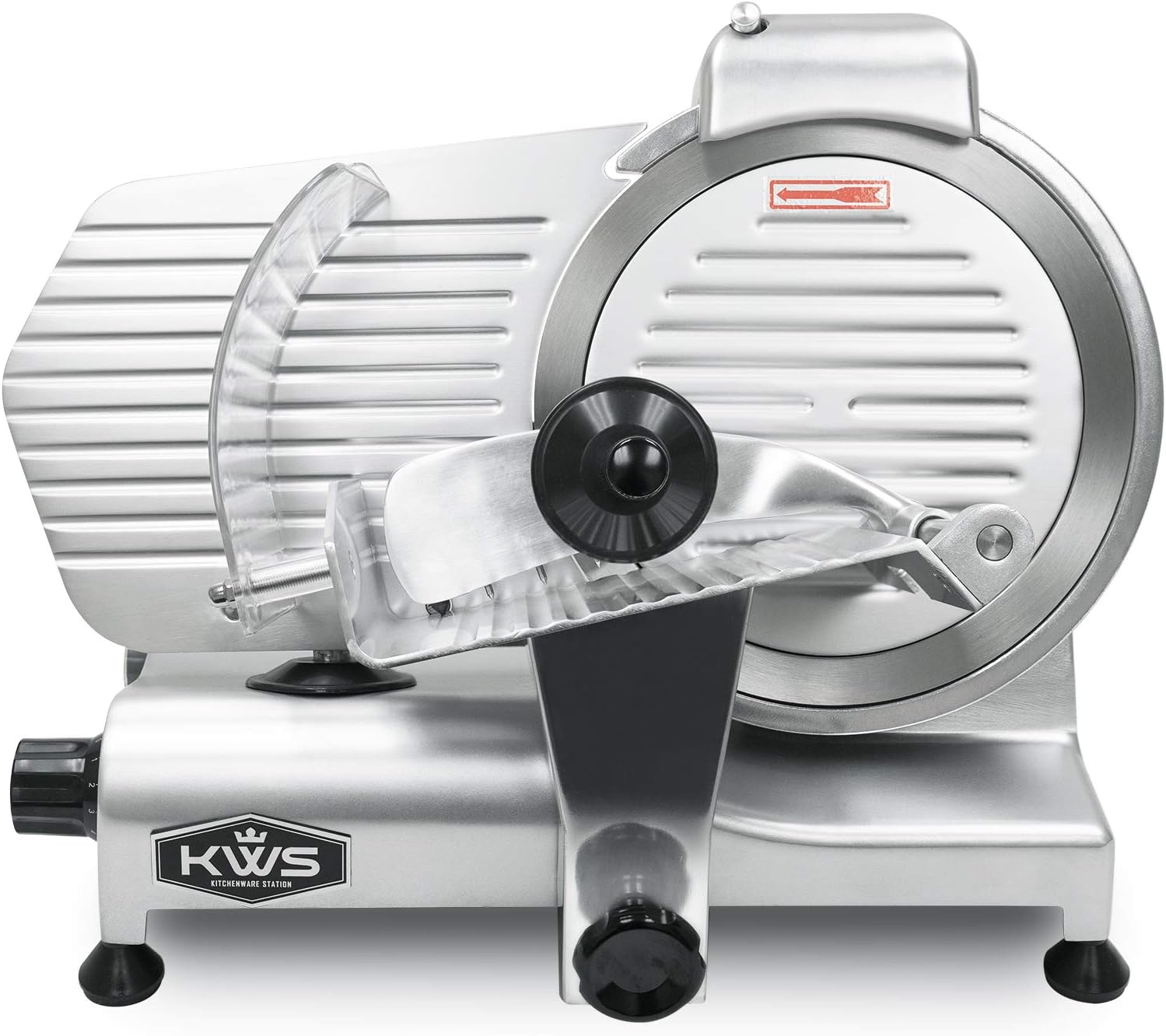
KWS MS-10NS 10" Meat Slicer
| BladeLength | 10 inches |
|---|---|
| Material Type | Stainless Steel |
| Operation Mode | Semi Automatic |
| Included Components | Belt and Stone, Hand Guard, Sharpener, Slicer, User Manual |
| Manufacturer Warranty Description | 1-Year Factory Limited Warranty |
The KWS MS-10NS is a deli-style 10" electric slicer built for sustained, precise slicing of meat, cheese, and semi-frozen products. Its 320W belt-driven motor provides steady power for batch work, and the adjustable thickness dial delivers consistent cuts from paper-thin up to 14 mm, which is useful when preparing jerky or thin hot-pot slices. The stainless steel blade is NSF certified for food contact and pairs with an integrated dual-whetstone sharpener for quick touch-ups that keep slices uniform without frequent blade changes. The removable carriage, blade cover, and hand guard make cleanup and basic servicing straightforward, and the cast aluminum body keeps vibration low for smoother, quieter operation during long runs. This model is aimed at serious home cooks, hunters, and small food-service users who need repeatable results and tougher construction than consumer-grade slicers. Limitations include its 10" blade size, which constrains the maximum width of some large cuts, and the unit is heavy and countertop-sized so it is not optimized for very occasional or ultra-compact storage needs.
Best for: Buyers who prioritize consistent, high-volume slicing for jerky, charcuterie, or bulk prep and want a durable, near-commercial machine rather than a light-duty consumer slicer.
Less Ideal for: People who need an ultra-compact, lightweight slicer for infrequent home use or who regularly need to slice very wide roasts that exceed a 10-inch blade.
- Powerful 320W high-torque motor for continuous slicing without slowdown
- Adjustable thickness dial for consistent paper-thin to 14 mm slices
- NSF certified 10" stainless steel blade resists corrosion and holds edge
- Built-in dual whetstone sharpener for fast on-unit blade maintenance
- Removable carriage and blade cover simplify cleaning and servicing
- 10-inch blade limits maximum slice width for very large cuts
- Heavy, countertop footprint makes it less convenient for occasional or space-conscious users
Verdict: Choose this slicer when you want a tough, near-commercial machine that delivers steady, precise paper-thin cuts ideal for jerky and bulk slicing.
Borlebbi Meat Slicer SL-518M

| Power | 200 watts |
|---|---|
| Voltage | 120 volts |
| Blade Diameter | 7.5 inch |
| Max Slice Thickness | 15 mm |
This Borlebbi electric slicer is a compact, restaurant-style unit that puts a 200W motor and two removable 7.5" stainless steel blades at your disposal for quick, consistent slices. Typical use is home deli work and prepping large batches for sandwiches, charcuterie, or jerky precuts; the knob adjusts thickness from paper-thin up to 0.6" (15 mm) so you can dial in even slices for drying or serving. The carriage, blade, and food pusher detach for more thorough cleaning and the stainless steel tray collects slices cleanly. Safety features include a recessed power switch and non-slip suction feet to keep the unit stable while slicing. Because it is die-cast aluminum and designed for countertop storage, it is sturdy without taking excessive space. Expect practical limitations: the 200W motor is fine for cold meats and firm cuts but may strain on large, bone-in roasts or very frozen slabs, and hand-wash-only parts add cleanup time. For anyone prepping jerky, its adjustable thickness and blade options make consistent, repeatable slices straightforward when working with properly chilled meat.
Best for: Buyers who want a compact, durable countertop slicer that delivers repeatable, adjustable slices for home jerky prep and deli-style tasks and who prioritize efficiency and consistent results.
Less Ideal for: Those who need to process large, bone-in roasts, very frozen meat, or commercial volumes where a higher-power, industrial slicer is required.
- 200W motor with two removable 7.5" stainless steel blades for versatile slicing
- Adjustable thickness control from very thin to 15 mm for consistent jerky slices
- Detachable blade, carriage, and food pusher for easier cleaning and sanitation
- Non-slip suction feet and recessed power switch improve stability and safety
- Die-cast aluminum construction offers durability while staying compact for countertop use
- 200W motor may be underpowered for very large, bone-in, or frozen cuts
- Parts require hand washing rather than dishwasher-safe cleaning
Verdict: A compact, practical slicer that gives home cooks consistent, adjustable slices ideal for prepping jerky and deli servings.
NutriChef Electric Meat Slicer NUGJ801

| Power | 200W |
|---|---|
| Blade length | 7.5 inches |
| Operation mode | Automatic |
| Additional features | Adjustable Thickness, Removable Blade, Safety Lock |
The NutriChef NUGJ801 is a small automatic meat and deli slicer designed for home kitchens that need quick, consistent slices without professional equipment. It uses a 7.5-inch stainless steel blade driven by a 200W motor and an adjustable dial that sets slice thickness from about 0 to 15 mm, so it can handle thin deli cuts and thicker pieces for jerky preparation. The machine includes a removable blade and detachable food carriage for easier cleaning, plus a safety guard and food pusher for safer operation. Its compact footprint makes it easy to store, and the automatic operation speeds up repetitive slicing compared with hand tools. Limitations are the modest motor power and relatively small blade, which mean very large roasts or dense frozen meat will require pre-slicing and multiple passes, and it is intended for countertop home use rather than heavy commercial workloads.
Best for: Home cooks on a budget who want an affordable countertop slicer for deli meats and small batches of jerky where consistent thickness and easy storage matter.
Less Ideal for: Users needing a heavy-duty or commercial slicer for large volumes or continuous daily use should look at higher-powered, larger-blade models instead.
- Adjustable thickness dial supports slices from very thin to about 15 mm for versatile cuts
- 7.5-inch removable stainless steel blade simplifies cleaning and maintenance
- Automatic operation and food pusher speed up repetitive slicing tasks
- Compact design with detachable carriage fits small kitchens and stores easily
- 200W motor and 7.5-inch blade are limited for very large or dense cuts and heavy use
- Requires hand washing for care which adds cleaning time
Verdict: A budget-friendly, compact automatic slicer that delivers consistent thickness for small-batch jerky and deli slicing at home.
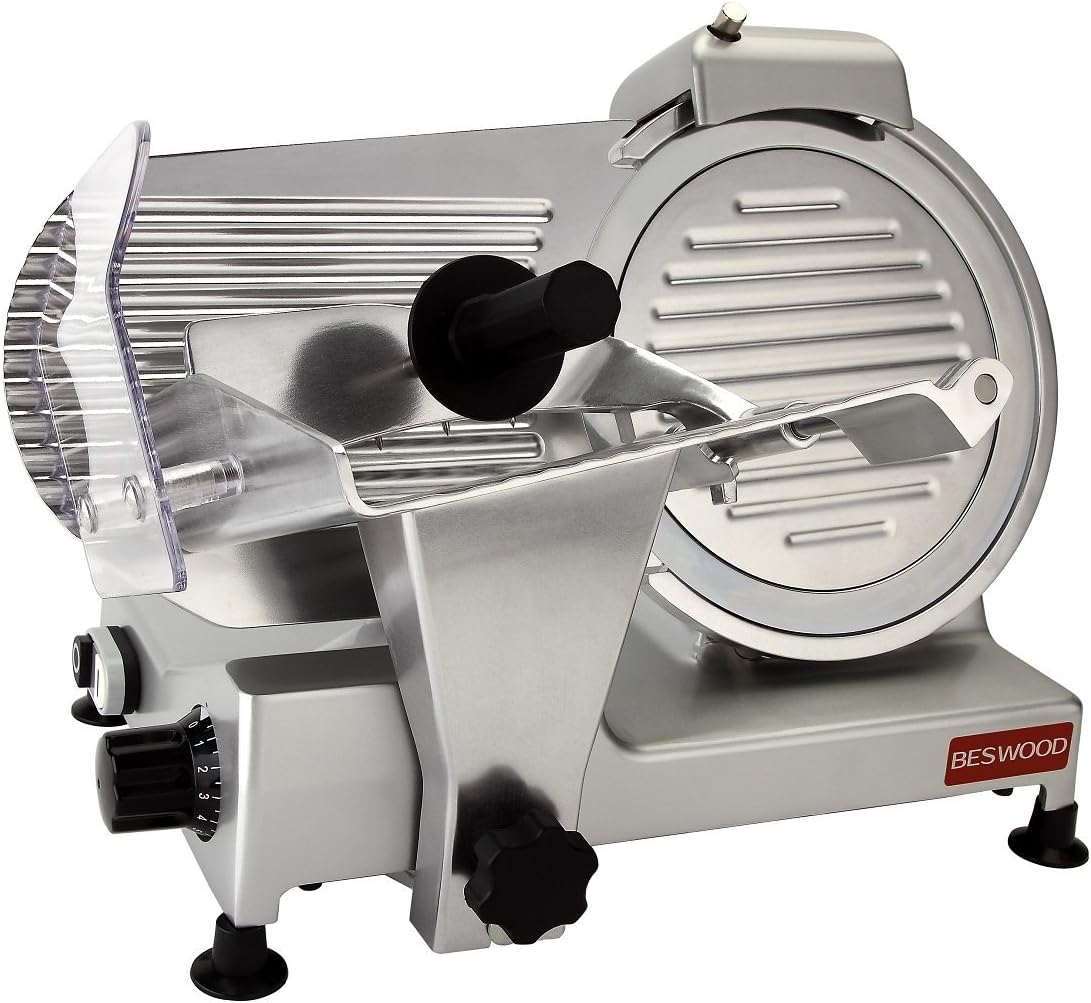
BESWOOD 10" Meat Slicer BESWOOD250
| Blade Diameter | 10 inches |
|---|---|
| Power | 240W |
| Maximum cutting thickness | 12mm |
| Operation Mode | Semi Automatic |
| Blade Material | High-carbon and Chromium-plated Steel |
The BESWOOD 10" electric deli slicer is a countertop slicer built for frequent use in home kitchens or small commercial settings. It uses a 10-inch high-carbon, chromium-plated steel blade and a 240W enclosed motor to slice meats, cheeses, and vegetables; an adjustable thickness control lets you cut deli-thin slices up to thicker cuts and a built-in two-stone sharpener helps keep the blade edge consistent. The machine includes safety features such as a blade ring guard, skidproof rubber feet, and a double-illuminated 24V on/off switch, and the removable product table simplifies cleaning. At about 33 pounds with an aluminum body and V-belt drive, it feels stable during operation and the manufacturer positions it for light commercial as well as home use. Limitations to note are the need for hand washing of parts and the slicer is sizable and heavy compared with purely domestic models, which affects storage and maneuvering; users should also follow the operator manual for safe use and maintenance.
Best for: Buyers who prioritize a reliable, heavy-duty countertop slicer for making consistent deli-style cuts and who plan to use it regularly in a home or small commercial kitchen.
Less Ideal for: Those with very limited counter space, need a lightweight portable slicer, or who want fully dishwasher-safe components should consider other options.
- Durable chromium-plated, high-carbon steel 10" blade that resists corrosion and holds an edge
- 240W enclosed motor provides steady slicing power for frequent use
- Built-in two-stone sharpener keeps the blade sharp without disassembly
- Safety-minded design with blade guard, rubber feet, and low-voltage illuminated switch
- Removable product table for easier cleaning and maintenance
- Requires hand washing for care rather than dishwasher-safe parts
- Relatively heavy and large footprint compared with compact home slicers
Verdict: A sturdy, serviceable 10-inch slicer built for dependable daily slicing when you need consistent, sharp cuts for jerky and deli meats.
CUSIMAX Electric Meat Slicer 1905

| Power | 200 watts |
|---|---|
| Voltage | 120 volts |
| Blade Diameter | 7.5 inches |
| Thickness Adjustment Range | 1-20 mm |
The CUSIMAX 1905 is a compact semi-automatic slicer intended for home kitchens and small batches of deli work. It uses a 7.5-inch stainless steel blade driven by a 200W motor and offers thickness adjustment from 1 to 20 mm, so you can produce anything from paper-thin ham for jerky prep to thicker sandwich cuts. The unit includes two blade types, a removable food carriage and pusher, anti-slip feet, and a safety blade guard; those removable parts make cleaning and switching between foods straightforward. The slicer is designed for short runs — the manufacturer warns against continuous operation longer than seven minutes — so it is best for occasional jerky slicing rather than heavy commercial throughput. Construction combines aluminum and stainless steel for durability, but the relatively small blade means larger roasts require multiple passes and repositioning. Safety features and removable components reduce cross-contamination risks, while the semi-automatic operation keeps setup and use simple for home cooks.
Best for: Buyers who want a reliable home slicer to prepare small to medium batches of jerky and deli cuts with adjustable slice thickness and easy cleanup, and who prioritize safety and proven product reviews.
Less Ideal for: Those needing a high-throughput commercial slicer or a unit for continuous long runs should look at larger, commercial-grade machines instead.
- 200W motor with 7.5-inch stainless steel blade suitable for precise slicing.
- Adjustable thickness range (1–20 mm) for thin jerky slices or thicker cuts.
- Removable blade, food carriage, and pusher for easier cleaning and reduced flavor transfer.
- Safety features include blade guard and non-slip feet for stable operation.
- Not intended for continuous heavy use; advised maximum runtime is short.
- Blade diameter is modest, so very large roasts need repositioning and extra passes.
Verdict: A compact, user-friendly home slicer that delivers precise adjustable slices and easy cleanup, making it a practical choice for hobby jerky makers and deli-style home use.
OSTBA Meat Slicer SL-518

| Wattage | 200W |
|---|---|
| Blade length | 7.5 inches |
| Adjustable thickness | 0-15mm |
| Included blades | Serrated and non-serrated |
The OSTBA SL-518 is a compact home deli slicer built to produce consistent slices of meat, bread, cheese and vegetables. It uses a 200W motor and two 7.5" stainless steel blades (serrated and non-serrated) so you can switch between cutting frozen or tougher roasts and softer items like bread and cheese. Thickness adjusts from very thin up to about 15mm, and removable parts including the blade, carriage and food pusher make cleanup straightforward and help with sanitation. Safety is addressed with a dual safety-lock plus power switch and non-slip feet for stable operation. Practical limits for jerky makers: while the serrated blade can handle firmer, chilled meats, the slicer is designed for deli-style thin to moderate slices rather than heavy-duty commercial jerky production, and its semi-automatic design means operator attention during longer runs. The build uses stainless steel parts for food contact, and many components are dishwasher safe which eases maintenance. For home users wanting reliable, safe slicing for small batches this model covers the bases well.
Best for: Buyers who prioritize safe, easy-to-clean home deli equipment and want reliable, consistent slices for occasional jerky batches, sandwiches and home charcuterie.
Less Ideal for: Commercial shops or heavy jerky producers who need continuous high-volume slicing or a dedicated industrial-grade slicer should look at higher-capacity machines.
- Two removable 7.5" blades (serrated and non-serrated) for versatile cutting tasks
- 200W motor delivers consistent slicing power for home use
- Adjustable slice thickness 0–15mm for thin deli cuts or thicker slices
- Removable, dishwasher-safe components simplify cleaning and sanitation
- Child-lock plus dual-button start and non-slip feet improve user safety
- Not intended for high-volume commercial jerky production or continuous heavy-duty slicing
- Semi-automatic operation requires user attention for long runs
Verdict: A safe, easy-to-clean home deli slicer that delivers consistent, versatile slices for small-batch jerky and everyday deli work.
Choosing the Right Meat Slicer for Jerky: Key Factors to Consider
Blade Material and Edge Retention
The blade material determines how long it stays sharp and how well it resists corrosion. For jerky you want a blade that can maintain a keen edge through repeated slicing of lean and slightly fibrous muscle tissue, otherwise you end up tearing instead of cutting.
Stainless steel alloys with higher hardness ratings will hold an edge longer and need less frequent sharpening. A blade that resists rust is also important because meat prep involves moisture and acidic marinades. If you plan to slice frequently, choose a blade system that allows straightforward sharpening or swapping without specialized tools.
Thickness Range and Adjustment Precision
Jerky generally requires thin, uniform slices to dry consistently. The slicer's minimum thickness setting and how precisely you can dial that setting in will determine the uniformity of your cuts and the drying time variability across pieces.
Look for micro-adjustment features or clearly indexed stops for repeatable settings. If you will process different textures or recipes, a wider usable range gives flexibility for both thin jerky strips and slightly thicker cuts for specialty styles.
Motor Power and Torque
A motor that sustains speed under load keeps slicing smooth when you have denser trims or a long session. High torque helps prevent bogging down on tougher cuts and reduces the need to push meat forcefully, which improves safety and slice quality.
Consider duty cycle as well if you expect to make large batches. A motor rated for continuous or heavy intermittent use will last longer and avoid overheating during multi-hour prep sessions.
Safety Features and Ergonomics
Slicing meat involves a sharp, spinning blade and repetitive motion, so the machine's safety features matter. A secure food carriage, effective pusher, and accessible blade guard reduce the risk of accidental contact. Non-slip feet and a stable base prevent shifting while you work.
Ergonomics influence speed and fatigue. Comfortable carriage handles, easy-to-reach controls, and a practical feed angle will make longer sessions safer and more pleasant, and reduce the chance of mistakes that cause inconsistent slices.
Ease of Cleaning and Food Safety
Meat prep requires thorough cleaning to prevent bacterial growth. Slicers that offer quick disassembly and surfaces that are easy to wipe or rinse will reduce downtime between batches and make compliance with food-safety practices practical at home.
Removable blades and carriage parts that can be washed without specialized tools are preferable. Also consider how exposed electrical components are during cleaning and whether the design minimizes nooks where juices can collect.
Build Quality and Serviceability
A well-constructed slicer stands up to repeated use and maintains alignment and calibration over time. Metal components in the carriage and chassis increase durability compared with thin plastic parts that can flex or wear.
Serviceability matters for long-term ownership. Machines designed for easy replacement of wear parts such as belts, bearings, or blades extend usable life. Check whether the design allows straightforward access to common service points without disassembling the whole unit.
Preparing Meat for Best Jerky Results
How you trim and chill meat before slicing has a large impact on slice quality. Trim visible fat and silver skin because fat does not dry the same way as lean meat and can cause spoilage or uneven texture in jerky.
Partially freezing meat firms the fibers and makes it much easier to cut consistent thin strips. Aim for a firm but not rock-solid state so you can still feed and control the piece through the slicer safely.
- Remove excess fat and connective tissue to improve drying.
- Chill meat for 30 to 60 minutes to firm it before slicing.
- Cut larger muscles into manageable blocks so the carriage can hold them securely.
Blade Maintenance and Sharpening Tips
Keeping the blade sharp ensures clean cuts and reduces tearing. Use the manufacturer-recommended sharpening method if available; otherwise a consistent honing routine will improve edge life.
Inspect the blade regularly for nicks and corrosion. Clean and dry the blade thoroughly after each session and oil any exposed nonfood-contact pivot points per the owner's guidance.
- Hone lightly between sessions if you do frequent batches.
- Replace or professionally sharpen blades that have visible damage.
Batch Workflow and Food Safety
Plan your batches to minimize contamination risk. Keep a dedicated prep area for raw meat and separate cleaned surfaces for finished slices. Use sanitized containers for slices and avoid leaving trimmed scraps near the finished product.
Rotate batches by thickness if you make different styles in one session. Thinner slices dry faster, so grouping similar-thickness strips simplifies timing and monitoring during dehydration.
- Label and date containers before drying to track batch times.
- Sanitize contact surfaces between batches to reduce cross-contamination.
Space, Storage, and Setup Considerations
Slicers need stable counter space with enough clearance behind the carriage for full travel. Consider how you will store the unit when not in use; some models are bulky and benefit from a dedicated shelf or cover.
Also plan for cord routing and access to a clean water source for rinsing parts. If bench space is limited, prioritize a slicer with a compact footprint but a robust build.
- Measure counter depth and allow extra room for carriage movement.
- Select a storage spot that keeps the blade covered and dry between uses.
Choosing Between Manual and Electric Feed Styles
Some home slicers use a manual carriage feed where you slide the meat across the blade, while others offer power-assisted feed mechanisms. Manual feed gives you tactile control and can be preferable for small, precise batches. Power feed reduces physical effort and can speed large runs but requires a more reliable motor and safety features.
Consider how much jerky you plan to make. For occasional hobby batches, a simple manual feed slicer can be sufficient. If you routinely process large volumes, a power-assisted carriage can save time and reduce operator fatigue.
- Manual feed units offer precision for small jobs.
- Power feed units aid speed and consistency for larger batches.
How We Chose the Best Meat Slicer for Jerky
We evaluated machines that are suited to preparing jerky by prioritizing attributes that directly affect slice quality, safety, and workflow. Key criteria included blade material and edge retention, since a sharp, corrosion-resistant blade produces clean cuts and requires less frequent sharpening. Thickness range and the precision of adjustments were essential because jerky needs thin, repeatable slices to dry evenly. Motor robustness and torque under load were used to judge whether a slicer maintains speed with denser cuts and long sessions. We also looked at safety and handling features such as a stable carriage, secure food pusher, and blade guards to reduce the risk during repetitive slicing. Ease of cleaning and disassembly mattered for hygiene and turnaround time between batches. Finally, build quality and warranty support informed durability expectations. We excluded machines intended only for deli counter use with impractical size or power requirements for home use, and we did not include devices lacking thickness control or basic safety features.
Our full evaluation process is outlined in our review methodology.
FAQ
What thickness should I set for jerky slices?
Most jerky recipes call for thin slices between 1/16 and 1/8 inch. Thinner slices dry faster and more evenly. Use your slicer's fine adjustment to target repeatable settings and test a small batch to confirm drying time.
Can I slice frozen meat for jerky?
Partially frozen meat is easier to slice cleanly because it firms up the fibers. Avoid fully frozen blocks that can damage the blade. Aim for a texture where the meat is firm but still pliable enough to feed through the carriage.
How often should I sharpen the slicer blade?
Sharpening frequency depends on volume. For occasional home use, light honing before each session and a full sharpen every few months is common. Higher-volume use requires more frequent attention. Always follow the machine's maintenance guidance.
Is a removable blade necessary for cleaning?
A removable blade simplifies deep cleaning and makes it easier to sanitize contact surfaces. It also helps with safe blade maintenance. If the blade is non-removable, ensure the design allows safe, thorough cleaning without exposing electrical components.
How do I prevent slipping while slicing?
Ensure the unit sits on a stable, level surface and that non-slip feet are intact. Use a proper food pusher and secure the meat in the carriage to avoid hand contact near the blade. Keeping the surface dry and free of debris also reduces movement.
Final Verdict
Prioritize blade quality, thickness control, and motor torque when choosing a meat slicer for jerky. Those factors directly affect slice uniformity, drying time, and operator safety. Balance ease of cleaning and serviceability against features such as power feed or compact footprint to match your typical batch size. Focus on machines that make it simple to get repeatable thin slices and that are straightforward to maintain. That approach will save time during prep, reduce waste from uneven slices, and deliver more consistent jerky results over the long run.