
Note: This article contains affiliate links. If you click on these links and make a purchase, we may earn a small commission at no extra cost to you. This helps support our research and content. Read our full affiliate disclosure here.
Installing a microwave inside a cabinet can save counter space and create a cleaner kitchen layout, but the wrong unit can cause poor ventilation, overheating, or fit issues. You need a model that fits the cabinet footprint, vents correctly, and delivers reliable cooking performance without compromising safety. This guide shortlists six top microwave options designed for inside-cabinet installation and evaluates them on practical factors like cabinet clearances, airflow, and interior usability. Read on for a concise overview of what to check and why each shortlist criterion matters before you pick the right microwave for your cabinet.
Top Picks at a Glance
| Best Overall The best all-around choice for most situations | Panasonic NN-SN67KS 1.2 cu ft Microwave | 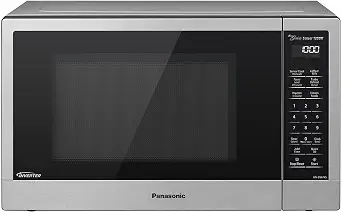 |
| Best Quality Built to a higher standard if you want something more solid | Sharp SMD3070ASY Microwave Drawer |  |
| Best Budget The cheapest option that still gets the job done reliably | Farberware 0.7 Cu. Ft. Microwave |  |
| Top Rated A top-rated pick with lots of positive feedback | TOSHIBA 1.2 Cu.Ft Microwave |  |
| Most Popular A crowd favorite that many people choose with confidence | TOSHIBA EM131A5C-BS 1.2 Cu Ft Microwave |  |
| Best Seller A high-volume bestseller chosen again and again | GE 30" Over-the-Range Microwave JVM3160RFSS |  |
Panasonic NN-SN67KS 1.2 cu ft Microwave
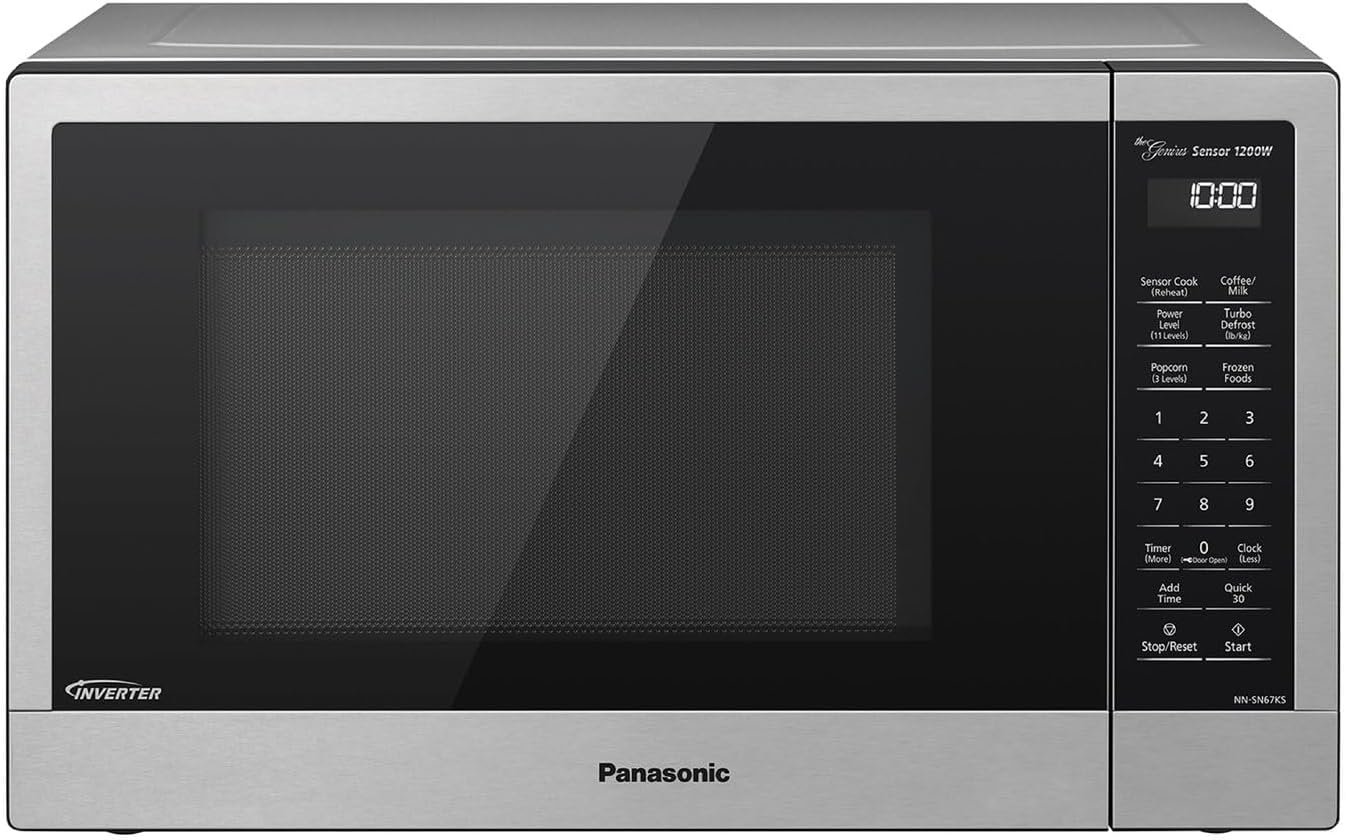
| Capacity | 1.2 cubic feet |
|---|---|
| Wattage | 1200 watts |
| Number of Programs | 16 |
| Number of Power Levels | 11 |
| Turntable Diameter | 13.4 inches |
The Panasonic NN-SN67KS is a compact countertop microwave built around Panasonic's Inverter technology and Genius Sensor cooking for more even heating than traditional pulsed microwaves. It is typically used for reheating leftovers, defrosting frozen foods, popping microwave popcorn with a three-level popcorn setting, and one-touch sensor cooking across 16 programs. The touch controls and 11 power levels make it straightforward to fine-tune results, while the 13.4-inch turntable and 1.2 cu ft cavity fit medium plates and casserole dishes common in everyday use. Practical benefits include faster, more consistent defrosting with Turbo Defrost and sensor reheat that adjusts time based on steam output so you do not overcook sensitive items. The stainless steel interior wipes clean relatively easily and the mandatory child lock adds safety in family kitchens. Expect a solid countertop footprint and typical microwave noise; if you need an ultra-compact unit for very shallow cabinets check clearance first since it is designed primarily for countertop placement.
Best for: Buyers who want a reliable everyday microwave that prioritizes even heating and convenient sensor-driven programs for family meals and frequent reheating.
Less Ideal for: People who need a microwave specifically engineered for built-in or limited in-cabinet installation where low clearance and special ventilation are required.
- Inverter technology delivers continuous power for more even heating from edge to center
- Genius Sensor cook and sensor reheat automatically adjust time and power for fewer guesswork results
- 1200 watts and 11 power levels provide strong, flexible cooking performance
- 16 auto programs and a 3-level popcorn button simplify common tasks
- Stainless steel interior is easy to clean and durable
- Designed for countertop use so internal ventilation and external clearance may limit inside-cabinet installation
- Relatively heavy for its size which may make moving or fitting into tight spaces harder
Verdict: Choose this Panasonic if you want a powerful, sensor-driven countertop microwave that consistently heats and defrosts food without guesswork.
Sharp SMD3070ASY Microwave Drawer

| Capacity | 1.2 cubic feet |
|---|---|
| Wattage | 950 watts |
| Installation Type | Built-In |
| Controller Type | Touch |
| Cooking Program | Convection, Defrost, Grill, Microwave, Sensor Cook |
The Sharp SMD3070ASY is a built-in microwave drawer intended for under-counter or below-wall-oven placement that brings microwave cooking down to countertop level. It delivers 950 watts of microwave power across a 1.2 cubic foot cavity, large enough for a 4 qt casserole dish or a tall 20 oz cup, and opens with an Easy Touch automatic drawer for simple loading and hands-free close. A concealed angled control panel and digital LCD keep the front clean while the controls rotate into view at a 45 degree angle for easy operation. Cooking modes include convection, grill, defrost and sensor cook in addition to standard microwave heating, so it can handle reheating, quick bakes and light roasting in the same unit. The stainless steel finish and low-profile design fit kitchens where you want the appliance out of direct sightlines. Limitations include only two power levels and a modest 950 W output compared with higher-powered built-in microwaves, so very fast or heavy-duty microwave tasks may take longer. Installation requires built-in clearance and planning, but for design-forward kitchens that need a functional under-counter microwave, this model balances style and versatile cooking modes.
Best for: Buyers who prioritize a streamlined kitchen layout and want an under-counter microwave that handles everyday reheating, casserole cooking, and occasional convection or grill tasks without being visually prominent.
Less Ideal for: People who need the fastest possible microwave performance for frequent heavy-duty or commercial-style usage or those who cannot accommodate a built-in installation.
- Built-in drawer design allows under-counter installation for cleaner sightlines
- 1.2 cu ft cavity fits larger dishes like a 4 qt casserole and tall cups
- Concealed angled touch control panel improves aesthetics and is easy to read when opened
- Multiple cooking modes including convection, grill, defrost and sensor cook add versatility
- Maximum microwave output is 950 watts and only two power levels, so high-speed microwaving is limited
- Requires built-in cabinet cutout and professional installation planning
Verdict: Choose this microwave drawer if you want a versatile under-counter unit that combines a low-profile, design-forward look with multiple cooking modes for everyday kitchen tasks.
Farberware 0.7 Cu. Ft. Microwave
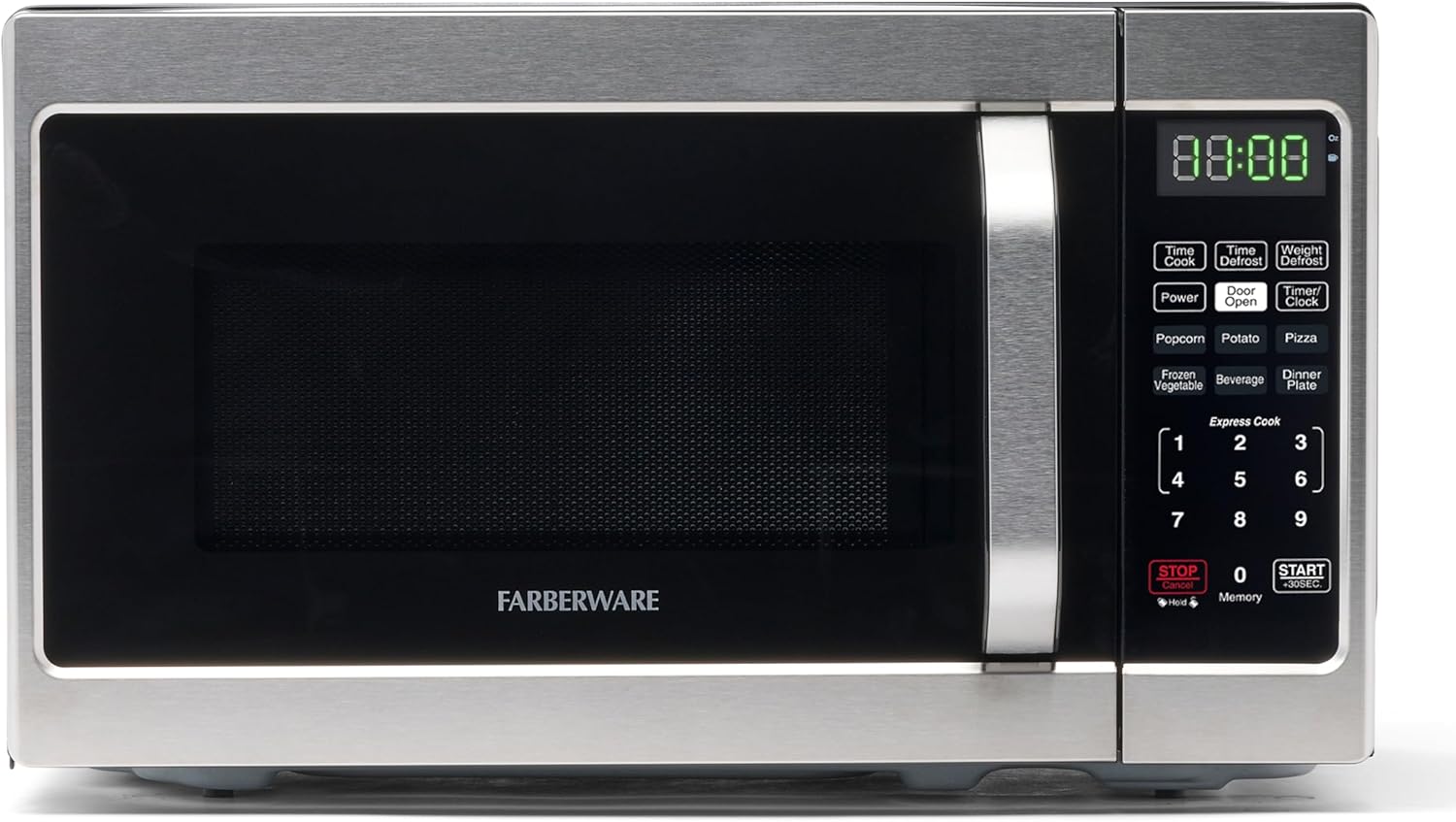
| Capacity | 0.7 cubic feet |
|---|---|
| Wattage | 700 watts |
| Number of Programs | 6 |
| Number of Power Levels | 10 |
| Turntable Diameter | 10.6 inches |
This Farberware 0.7 cu ft microwave is a compact, no-frills countertop unit aimed at small kitchens or office break rooms. It delivers 700 watts across ten power levels and offers six one-touch cooking presets (popcorn, potato, pizza, frozen vegetable, dinner plate, beverage) plus weight/time defrost, which makes reheating and simple meals straightforward. The numeric keypad supports express cooking up to six minutes and the LED display doubles as a clock and countdown timer. Stainless steel interior and exterior simplify cleaning, and the child safety lock is a useful security feature for homes with children. Because it is only 0.7 cubic feet with a 10.6-inch turntable, it fits snugly inside tight cabinet openings but will not accommodate larger plates or casserole dishes. The unit is basic in features compared with higher-watt models, so expect slightly longer cook times for dense foods. For buyers prioritizing compact footprint and straightforward controls, this model is practical and reliable; those needing faster cooking or larger capacity should look at higher-watt, bigger models.
Best for: Buyers who need a budget-friendly, compact microwave that fits small cabinets or limited countertop space and prefers simple, reliable controls.
Less Ideal for: Households that regularly cook large dishes, reheat full-size plates, or want faster, more powerful microwaving should choose a higher-capacity, higher-watt model.
- Compact footprint suitable for small counters or tight cabinet spaces
- Ten power levels and six auto-cook presets for flexible, simple cooking
- Weight and time defrost options for frozen foods
- Stainless steel interior and exterior for easier cleaning
- Child safety lock and clear LED timer/clock for safer everyday use
- Lower 700-watt output means longer cook times compared with higher-watt models
- 0.7 cu ft capacity and 10.6" turntable limit usable dish size
Verdict: A small, affordable countertop microwave that fits tight cabinet or counter spaces while offering straightforward presets and essential safety features.
TOSHIBA 1.2 Cu.Ft Microwave

| Capacity | 20 liters |
|---|---|
| Wattage | 1000 watts |
| Number of Power Levels | 10 |
| Turntable Diameter | 12.4 inches |
The TOSHIBA 1.2 Cu.Ft microwave is a compact countertop unit that pairs 1000 watts of cooking power with smart sensor technology and 13 preset menus to simplify everyday reheating, defrosting, and basic cooking. It is typically placed on a countertop or inside a dedicated cabinet space where its relatively compact footprint and stainless steel interior help keep surfaces easy to clean. Notable features include a mute option for silent operation, a two-step child lock for safety, one-touch buttons, and a memory function to save settings for frequent dishes. The smart sensor adjusts cooking time automatically for many presets, reducing guesswork and preventing overcooking for common items. Trade-offs are modest: it is not an inverter model, so power delivery is conventional rather than optimized for delicate thawing, and the internal capacity limits large casserole dishes. For buyers prioritizing dependable, straightforward performance in a small footprint, this model delivers consistent results without complicated setup or connectivity.
Best for: Buyers who want a reliable, no-frills compact microwave for a small kitchen, apartment, or cabinet installation and who value consistent sensor-guided results and simple controls.
Less Ideal for: Those who need large internal capacity, advanced inverter power control, or air-fry/convection functions should consider other models better suited to those needs.
- Smart sensor cooking with 13 preset menus reduces guesswork for common foods
- 1000 watts of power offers quick reheating and defrosting
- Mute function and memory setting improve convenience in shared or quiet spaces
- Stainless steel interior and 12.4-inch glass turntable are easy to clean
- Not inverter-based, so it may be less precise for delicate defrosting or low-power simmering
- 1.2 cu ft capacity may be tight for large platters or family-size dishes
Verdict: A dependable compact microwave with smart-sensor presets and straightforward controls that fits well inside a cabinet or small kitchen space for consistent everyday use.
TOSHIBA EM131A5C-BS 1.2 Cu Ft Microwave

| Capacity | 1.2 cubic feet |
|---|---|
| Wattage | 1000 watts |
| Number of Programs | 10 |
| Turntable Diameter | 12.4 inches |
| Additional Features | ECO+Mute, Humidity sensor |
The Toshiba EM131A5C-BS is a straightforward 1.2 cu ft countertop microwave that uses a built-in humidity sensor to adjust cook time and power automatically, which simplifies reheating and sensor-based cooking. It offers 1000 watts of output, ten power levels, 12 preprogrammed menus and a large 12.4-inch glass turntable that fits common plates and bowls. The touch controls, numeric keypad and one-touch start for 1 to 6 minutes make basic tasks fast, and the mute plus ECO mode are handy for quiet or energy-conscious kitchens. The stainless steel interior is easier to wipe clean than painted cavities, and the ability to program three favorite time/power combinations adds convenience. Trade-offs are that it is a traditional microwave with no convection or air-fry capability and it is moderately heavy for a countertop unit, which matters if you plan to install it inside a shallow cabinet or move it frequently. For everyday reheating, defrosting and simple cooking, it performs reliably and reduces guesswork with sensor cooking.
Best for: Buyers who want a proven, sensor-equipped microwave that reliably reheats and cooks with minimal input and who value quiet and energy-saving modes for a shared kitchen or cabinet placement.
Less Ideal for: If you need convection baking, air-fry capability, or smart home connectivity, choose a different model that includes those functions.
- Smart humidity sensor automatically adjusts time and power for consistent results
- 1000-watt output with 10 power levels for flexible cooking
- Stainless steel interior that is easier to clean
- Large 12.4-inch removable glass turntable accommodates typical dinner plates
- Mute and ECO modes for quieter, lower-energy operation
- No convection or air-fry functionality for browning or crisping
- Relatively heavy for a countertop unit which can complicate cabinet installation
- Controls are basic touch/buttons with no advanced connectivity
Verdict: A reliable, sensor-driven 1.2 cu ft microwave that simplifies reheating and everyday cooking while offering quiet and energy-saving modes ideal for inside-cabinet use.
GE 30" Over-the-Range Microwave JVM3160RFSS

| Capacity | 1.6 cubic feet |
|---|---|
| Wattage | 1000 watts |
| Venting | Two-speed 300 CFM |
| Power levels | 9 |
| Installation type | Over-the-Range |
This GE over-the-range microwave combines everyday cooking functions with basic ventilation for standard kitchens. It offers 1,000 watts of power and a 1.6 cubic-foot cavity that handles family-sized plates, reheats, and defrosting tasks reliably, while one-touch controls and nine power levels simplify common jobs. The two-speed 300 CFM hood vent clears steam and odors above the range and the surface light has a bright and a night-light mode for better cooktop visibility. Practical touches include weight- or time-based defrost, a turntable that can be turned off for larger dishes, and easy-mount installation designed for typical OTR placement. Trade-offs are straightforward: it is a conventional microwave without smart features or advanced sensor cooking, and its 1,000-watt power is not the fastest for heavy-duty roasting or rapid boiling. For buyers prioritizing proven, no-frills performance and reliable venting in a cabinet or over-the-range location, this model covers the essentials well.
Best for: Someone who wants a dependable, straightforward over-the-range microwave that provides reliable cooking and venting without extra connectivity or complexity.
Less Ideal for: Buyers seeking smart features, app control, or the fastest high-power cooking for heavy home catering should consider other options.
- Adequate 1,000-watt power for consistent reheating and everyday cooking
- Two-speed, 300 CFM vent removes smoke, steam, and odors from the cooktop area
- Turntable On/Off offers flexibility for larger or irregular dishes
- One-touch controls and nine power levels make common tasks quick and simple
- Weight- or time-defrost and preset programs reduce guesswork for frozen foods
- No smart connectivity or advanced sensor cooking modes
- Not designed for very high-power commercial-style cooking
Verdict: A reliable, no-frills over-the-range microwave that pairs dependable 1,000-watt cooking with effective 300 CFM venting for typical cabinet or over-the-range installations.
Choosing the Right Microwave for Inside Cabinet: Key Factors to Consider
Cabinet Fit and Clearances
Measure the cabinet interior carefully before choosing a microwave. Many models list minimum clearance requirements for the top, sides, and rear; failing to respect those clearances can block airflow, trap heat, and shorten the appliance life.
Also account for trim kits or face panels that add depth or width. If the cabinet has a false back or built-in shelving, account for reduced interior depth. Ensuring precise fit reduces vibration, avoids friction against cabinet walls, and helps maintain the recommended ventilation paths.
Venting Method and Airflow
Check whether the microwave uses rear exhaust, top venting, or recirculating charcoal filters. For inside-cabinet installs, efficient directed exhaust is preferable because it moves heat and moisture out of the enclosed space. Recirculation can work, but it traps more heat inside the cabinet and relies on filters that need regular replacement.
Consider how the exhaust will be routed: through the cabinet wall, up and out the cabinet, or into an over-the-range hood duct. The chosen routing affects necessary cabinet modifications and the long-term thermal environment around the unit.
Interior Capacity Versus External Footprint
You want the largest usable interior for the smallest external footprint. Manufacturers sometimes trade away internal cubic inches for slimmer faces or decorative trim. Compare turntable diameter and usable height to the appliance footprint so you know whether common plates, casserole dishes, or bowls will fit comfortably.
Also think about how interior shape affects cleaning and loading. An awkwardly tall but narrow cavity or a recessed turntable can make everyday use less convenient even if the listed capacity sounds adequate.
Power, Cooking Modes, and Heat Output
Wattage determines how quickly the microwave heats, but higher power also generates more internal heat. When the unit is inside a cabinet, balance cooking speed needs against how much heat will be expelled into the enclosure. Multi-stage cooking modes, sensor cooking, and inverter-style power delivery can produce more even results at lower peak temperatures.
Look for models with adjustable power levels and sensor functions that reduce run time for many tasks. These features can minimize continuous high-heat operation, which helps the surrounding cabinet stay cooler.
Installation Flexibility and Trim Options
Installation features like mounting hardware, adjustable feet, and optional trim kits simplify inside-cabinet placement. Some microwaves offer conversion kits for flush mounting or have reversible controls and doors to better match cabinet orientation. The easier the included hardware makes a secure, level installation, the less chance of gaps that block vents or allow heat buildup.
Also evaluate how the unit is serviced. A microwave that requires partial removal of cabinet elements for basic repair or filter changes can create maintenance headaches and added labor costs down the road.
Noise, Controls, and Usability
When a microwave is enclosed, fan noise and beeper volume can seem louder. Check reported noise levels and look for quieter fan modes or adjustable sound settings. Control placement and display visibility matter because viewing angle can be limited by cabinet depth; front-facing, large controls and a readable display make operation easier.
Consider door swing and handle clearance. If the cabinet face is shallow, a wide-swinging door might hit nearby surfaces or require extra clearance planning.
Measuring Your Cabinet for a Built-In Microwave
Start by measuring the cabinet interior width, depth, and height, then subtract any obstructions like braces, hinges, or lighting fixtures. Record both the raw internal dimensions and the available cutout size where the microwave will sit.
Allow for airflow gaps recommended by manufacturers and for any trim that will overlap the cabinet opening. If you plan to vent through a cabinet wall, measure the distance to the nearest exterior wall or duct chase to determine routing options.
- Measure at least three points for depth and width because cabinet boxes can be out of square.
- Check for internal wiring or plumbing that could interfere with rear vents.
- Account for door swing and clearance for handles or control access.
Routing Venting and When to Use Recirculation
Hard-vented exhaust routed outside is the best option for inside-cabinet installations when available. It removes heat, moisture, and cooking odors from the enclosure instead of letting them accumulate inside the cabinet.
Use recirculation only when external venting is impractical. If you choose recirculation, plan for regular filter replacement and consider adding passive ventilation openings in the cabinet to help heat escape.
- Exterior-venting options include rear wall or top-of-unit ducts.
- Recirculation relies on charcoal filters that degrade over time.
- Even with recirculation, leave clearance above and behind the unit for passive airflow.
Clearance, Heat Management, and Cabinet Materials
Cabinet material affects heat tolerance. Solid wood and plywood can handle more heat than some laminates or veneers, which can delaminate under prolonged exposure. Use heat-resistant backing or an insulated panel if your cabinet material is sensitive.
Provide clearance not just for airflow but for heat dissipation during high-power cycles. Consider installing thermal cutoff vents or using heat-diffusing materials between the microwave and cabinet walls if space is very tight.
- Avoid enclosing the microwave in a fully sealed box without ventilation.
- Consider fire-rated materials if your installation approaches tight clearances.
- Regularly inspect the cabinet interior for warping or discoloration as a sign of heat stress.
Practical Tips for Everyday Use and Maintenance
Keep filters clean and replace charcoal filters on schedule to maintain airflow and reduce odors. Wipe down the interior after spills to prevent smoke and lingering smells that are harder to remove in enclosed spaces.
Use shorter, lower-power cycles for tasks like reheating to avoid prolonged high heat that raises the cabinet temperature. Monitor the cabinet after the first few uses to ensure temperatures stabilize within acceptable limits.
- Run a short test cycle and feel adjacent cabinet surfaces for hot spots.
- Keep a small gap between the microwave and cabinet walls to allow convection.
- Label a maintenance schedule inside the cabinet door for filter and lint checks.
When to Consult a Professional Installer
If routing exterior venting requires cutting into load-bearing walls, navigating insulation, or relocating wiring, hire a professional. Certified installers can ensure ducting meets local building codes and that the microwave is secured safely within the cabinet.
A pro can also advise on necessary cabinet reinforcements, proper clearances for heat-sensitive finishes, and any local code requirements for enclosed appliance installations.
- Get a site survey if duct routing is complex or if electrical upgrades are needed.
- Use a licensed professional for structural modifications or hard-vent installations.
How We Chose the Best Microwave for Inside Cabinet
We focused on features and specifications that directly affect safe, reliable inside-cabinet installation and everyday use. Key evaluation criteria included ventilation method and exhaust efficiency, cabinet-fit dimensions and required clearances, heat management during typical cycles, interior capacity versus external footprint, and installation flexibility including mounting and trim options. We also examined control accessibility and noise levels since these affect usability when the unit is enclosed. Products were excluded if they lacked clear manufacturer guidance for cabinet installations, had insufficient venting options for enclosed spaces, or required nonstandard cabinet modifications. We prioritized units with explicit cabinet-fit specifications and tested installation guidance. The resulting shortlist favors microwaves that balance compact external dimensions with useful interior volume, provide adequate exhaust or recirculation solutions, and include installation features that reduce modification work and risk.
Our full evaluation process is outlined in our review methodology.
FAQ
Can any countertop microwave be installed inside a cabinet?
Not always. Many countertop models lack manufacturer guidance for enclosed installs because they rely on free airflow. Choose a model with explicit cabinet-fit specifications or designed for built-in or under-cabinet installation to avoid heat and ventilation problems.
How much clearance does a microwave need inside a cabinet?
Clearance needs vary by model but typically include gaps at the top, sides, and rear to allow airflow. Check the specific installation instructions for minimum distances and add extra space if you plan to use recirculation rather than external venting.
Is recirculating venting safe for an inside-cabinet microwave?
Recirculating venting can be safe when properly maintained, but it traps more heat in the cabinet compared with external venting. It requires regular filter replacement and additional passive ventilation to help dissipate heat.
Will mounting a microwave inside a cabinet void warranties?
Some manufacturers limit warranty coverage if installation deviates from their instructions. Always follow the installation guidance provided by the manufacturer and document that the unit was installed within specified clearances and venting requirements.
How can I reduce noise from an enclosed microwave?
Look for models with quieter fan modes or adjustable sound settings, position the microwave so the fan exhaust faces a duct rather than directly into the cabinet, and maintain filters to avoid added fan strain. Small gaps for passive airflow can also reduce stress on the fan.
Final Verdict
Choosing a microwave for inside-cabinet installation requires balancing fit, ventilation, and everyday usability. Prioritize models with clear cabinet-fit specifications, reliable exhaust options, and features that limit continuous high-heat operation. Pay close attention to cabinet materials, required clearances, and installation hardware to reduce long-term risks. If you focus on cabinet fit, venting method, and practical installation features, you can select a unit that saves space without sacrificing performance. When in doubt about venting or structural modifications, consult a professional to ensure a safe, code-compliant installation.