
Note: This article contains affiliate links. If you click on these links and make a purchase, we may earn a small commission at no extra cost to you. This helps support our research and content. Read our full affiliate disclosure here.
Picking the right microwave with exhaust fan changes how your kitchen smells, how much grease settles on cabinets, and how comfortable cooking feels. If you cook frequently or have limited range hood space, a microwave that includes a built-in exhaust can handle smoke, steam, and odors while keeping the footprint compact. This guide shortlists the top options so you can compare ventilation strength, noise level, installation fit, and controls. Read on to see which models made the cut and why they matter for typical home kitchens.
Top Picks at a Glance
| Best Overall The best all-around choice for most situations | Frigidaire Over-The-Range Microwave FFMV1846VS |  |
| Best Quality Built to a higher standard if you want something more solid | Samsung Smart SLIM Over-the-Range Microwave |  |
| Best Value The sweet spot between price and what you get | Midea Over-the-Range Microwave 1.7 Cu Ft | 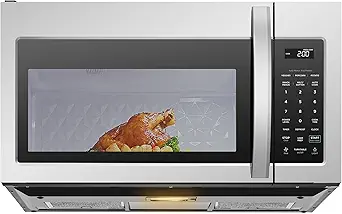 |
| Best Budget The cheapest option that still gets the job done reliably | GE 30" Over-the-Range Microwave JVM3160RFSS |  |
| Top Rated A top-rated pick with lots of positive feedback | thermomate Over-the-Range Microwave OTR773S |  |
| Most Popular A crowd favorite that many people choose with confidence | BLACK+DECKER Over-the-Range Microwave 1.7 cu ft | 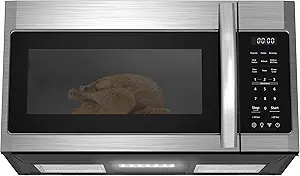 |
| Best Seller A high-volume bestseller chosen again and again | BLACK+DECKER Over-the-Range Microwave | 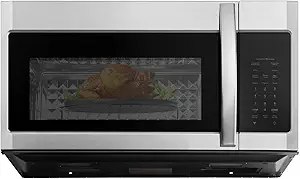 |
Frigidaire Over-The-Range Microwave FFMV1846VS

| Capacity | 1.8 cubic feet |
|---|---|
| Wattage | 1000 watts |
| Number of Programs | 6 |
| Turntable Diameter | 12.35 inches |
This Frigidaire over-the-range microwave combines a roomy 1.8 cu. ft. interior with 1000 watts of microwave power and a two-speed exhaust fan, making it a practical all-purpose choice for everyday kitchens. It installs over the cooktop and uses LED cooktop lighting plus an interior LED light to improve visibility while you cook, and the extra-large 12.5" glass turntable handles bigger plates and casserole dishes. One-touch preset buttons cover common tasks like popcorn, potatoes, and add-30-seconds so reheating and simple cooking are straightforward, while auto defrost simplifies thawing. The door opens to 90 degrees for zero-clearance installation next to cabinets. Limitations include a single power level which reduces fine-grained power control, and the controls are basic button/touch style rather than a more advanced interface. For buyers who want a reliable over-the-range microwave that also functions as a vent hood without specialty cooking features, this model offers solid capacity, straightforward operation, and useful lighting.
Best for: Buyers seeking a dependable over-the-range microwave that doubles as a vent hood and prioritizes roomy capacity, straightforward presets, and good cooktop lighting.
Less Ideal for: Users who want fine-grain power control, specialty cooking modes, or a high-end digital control interface should consider other models.
- Large 1.8 cu. ft. interior fits 13" x 9" baking dishes and larger cookware
- 1000 watts provides quick reheating and everyday cooking power
- Integrated two-speed ventilation serves as an over-the-range hood
- LED cooktop and interior lighting improve visibility while cooking
- Extra-large 12.5" glass turntable accommodates big plates and casserole dishes
- Only one microwave power level limits precise low-power cooking
- Basic button/touch controls lack advanced programming or presets
Verdict: A practical, roomy over-the-range microwave with 1000 watts and a built-in two-speed exhaust fan that suits balanced buyers who want reliable everyday performance and venting in one unit.
Samsung Smart SLIM Over-the-Range Microwave

| Capacity | 1.1 cubic feet |
|---|---|
| Wattage | 1100 |
| Hood Ventilation | 550 CFM |
| Turntable Diameter | 11.5 inches |
| Number of Power Levels | 5 |
This Samsung Smart SLIM is an over-the-range microwave that combines a powerful exhaust hood with everyday microwave cooking. It delivers 1100 watts for quick reheating and cooking, a sizeable 1.1 cubic foot cavity, and a slim profile that fits under cabinets while providing a 550 CFM ventilation system and dual wide grease filters for serious fume and smoke capture. The touch controls, sensor cook, and Wi‑Fi with voice control make operation convenient whether you use preset programs or remote commands. LED wide lighting brightens the cooktop and the ceramic enamel interior cleans relatively easily. On the downside, the slimmer depth means the turntable is 11.5 inches, which limits very large plates, and advanced users may prefer more than five power levels for delicate work. Energy consumption is listed separately from output, so installation and venting should be planned to handle the higher ventilation capacity. For cooks who need both strong exhaust performance and a capable microwave, this model balances venting power and everyday cooking features in a compact package.
Best for: Buyers who prioritize strong exhaust performance combined with solid microwave power and modern smart controls for everyday cooking and venting needs.
Less Ideal for: If you need to heat oversized cookware or require very fine power granularity for specialty cooking, consider a deeper microwave or a unit with more power levels.
- Integrated 550 CFM hood vent for strong kitchen ventilation
- 1100 watt microwave output for fast cooking and reheating
- Wi‑Fi and voice control for convenient remote operation
- Wide LED lighting and dual grease filters improve visibility and grease capture
- Ceramic enamel interior simplifies cleaning
- Shallow cabinet depth limits turntable size and very large dishware
- Only five power levels which may restrict finer power control
Verdict: Choose this model if you want a compact over‑the‑range microwave that pairs strong 550 CFM exhaust performance with reliable 1100W cooking power and smart controls.
Midea Over-the-Range Microwave 1.7 Cu Ft

| Capacity | 1.7 cubic feet |
|---|---|
| Power Consumption | 1000 watts |
| Number of Programs | 19 |
| Number of Power Levels | 10 |
| Turntable Diameter | 12.5 inches |
This Midea over-the-range microwave combines a roomy 1.7 cubic foot interior and 1000 watts of cooking power with a built-in 300 CFM ventilation system, so it handles everyday reheating and light cooking while removing fumes from the cooktop below. The one-touch smart panel offers 18 auto menus plus 10 power levels, which makes common tasks like popcorn, pizza, defrost, and reheating simple for anyone who prefers preset convenience. The 12.4 inch turntable fits a 12 inch pizza or a rotisserie chicken and the bright cooktop light improves visibility while cooking. As an over-the-range unit it replaces a hood and provides adjustable fan speeds, but buyers should plan for professional or competent DIY installation because of the size and venting requirements. The stainless steel interior and exterior are durable but the control layout is touch-only which can be finicky for some users. For kitchens that need both a microwave and a capable exhaust, this model strikes a practical balance between cooking features and ventilation performance.
Best for: Buyers who want a single appliance that combines a full-size microwave and effective exhaust to simplify kitchen layout and remove cooking odors while delivering straightforward preset cooking options.
Less Ideal for: Anyone who needs ultra-precise manual controls, a very large internal capacity beyond 1.7 cu ft, or a completely silent ventilation system should consider other options.
- 1.7 cu ft capacity fits 12 inch pizzas and whole rotisserie chickens
- 1000W output with 10 power levels for versatile heating
- 300 CFM exhaust with adjustable fan speeds replaces a separate range hood
- 18–19 auto cook menus simplify common tasks with one-touch controls
- Bright cooktop light improves visibility over the stove
- Touchscreen controls can be less tactile and harder to use with wet hands
- Installation requires proper venting and may need professional help
- Turntable diameter limits placement of very large dishes
Verdict: Choose this unit if you want a practical over-the-range microwave that pairs a usable 1.7 cu ft cooking cavity with a strong 300 CFM exhaust to free up counter space and control kitchen odors.
GE 30" Over-the-Range Microwave JVM3160RFSS

| Capacity | 1.6 cubic feet |
|---|---|
| Wattage | 1000 watts |
| Venting | Two-speed 300 CFM |
| Number of Power Levels | 9 |
| Installation Type | Over-the-Range |
The GE JVM3160RFSS is an over-the-range microwave designed to handle everyday reheating, defrosting, and light cooking while also serving as a kitchen vent. It offers 1,000 watts and a 1.6 cu ft interior that fits standard plates and medium cookware, plus one-touch controls and nine power levels for straightforward operation. The unit includes a two-speed, 300 CFM hood vent that removes smoke and steam from the cooktop and an LED surface light with a night-light setting for stovetop visibility. Practical features such as weight/time defrost, a turntable on/off option for larger dishes, and preset one-touch buttons make routine use quick. Trade-offs are its basic control set and conventional finish rather than premium features like convection or smart connectivity, and installation requires an over-the-range cutout and ducting or recirculation setup. For buyers wanting a simple combined microwave and vent that performs core tasks without extras, this GE model delivers reliable, no-frills performance.
Best for: Buyers who need a dependable over-the-range unit that combines a capable microwave with a practical exhaust fan and prefer straightforward, no-frills operation.
Less Ideal for: Users seeking convection baking, smart connectivity, or premium styling should consider other models with those specific features.
- Combined microwave and two-speed 300 CFM vent removes smoke and steam while cooking
- 1,000 watts and nine power levels for consistent everyday cooking and reheating
- Turntable on/off for accommodating larger or odd-shaped dishes
- One-touch presets and weight/time defrost simplify routine cooking tasks
- Basic control panel without advanced features like convection or smart controls
- Requires proper over-the-range installation and venting or recirculation setup
Verdict: Choose this GE if you want a reliable, budget-friendly over-the-range microwave that also provides effective two-speed ventilation.
thermomate Over-the-Range Microwave OTR773S

| Capacity | 1.7 cubic feet |
|---|---|
| Wattage | 1000 watts |
| Ventilation | 300 CFM Venting System |
| Power Levels | 10 |
The thermomate OTR773S is a straightforward 30-inch over-the-range microwave designed to replace countertop units and provide exhaust ventilation above a cooktop. It delivers 1000 watts of power across 10 power levels and uses a 13.5-inch glass turntable to promote even heating, while four one-touch programs and time/weight defrost simplify everyday tasks. The built-in 300 CFM two-speed vent and LED lighting clear steam and improve visibility over the stove, and the touch/button controls with a safety lock make operation simple and family-friendly. Stainless steel interior and exterior surfaces are easy to wipe clean after splatters. Expect reliable basic performance for reheating, defrosting, and quick cooking, but advanced features like convection or air-fry modes are not present and the control scheme is intentionally simple rather than high-tech. If you need a solid over-the-range unit that combines decent exhaust capacity with reliable microwave performance, this model covers those core needs without extras.
Best for: Buyers who prioritize a dependable over-the-range unit that combines solid microwave performance with effective exhaust ventilation for everyday cooking and cleanup.
Less Ideal for: People who want smart features, specialty cooking modes, or a high-end control interface should look at more feature-rich models.
- 300 CFM two-speed venting clears smoke and steam above the stove
- 1000 watts with 10 power levels for consistent heating control
- 1.7 cu ft capacity and 13.5-inch turntable for family-size dishes
- Stainless steel interior and exterior are easy to clean
- Simple one-touch programs and child safety lock for everyday use
- No advanced cooking modes like convection or air fry
- Basic control interface lacks smart or connectivity features
Verdict: Choose this model if you want a no-nonsense over-the-range microwave that reliably combines 1000W cooking power with a 300 CFM exhaust to keep your stovetop area clear.
BLACK+DECKER Over-the-Range Microwave 1.7 cu ft

| Capacity | 1.7 cubic feet |
|---|---|
| Wattage | 1000 watts |
| Turntable Diameter | 12.4 inches |
| Number of Power Levels | 10 |
| Installation Type | Over-the-Range |
This BLACK+DECKER over-the-range microwave combines a roomy 1.7 cubic foot cavity and 1000 watts of power for everyday cooking and reheating above the stove. It installs as an OTR unit and is controlled via a touchscreen with ten power levels plus one-touch menus for popcorn, beverage, reheat, melt/soften and defrost, which makes quick tasks simple. The unit supports multi-stage cooking for programming high-then-low power in a single cycle, and a 12.4-inch turntable handles most plates and casserole dishes. The integrated 300 CFM two-speed vent helps clear fumes and odors from the cooktop while the built-in light improves cooktop visibility. Practical limitations are its manual defrost only and lack of advanced sensors or smart features, so food timing may need occasional adjustment, and it is a straightforward, no-frills model focused on reliable performance rather than premium bells and whistles.
Best for: Buyers who prioritize a reliable over-the-range microwave with strong ventilation and straightforward presets backed by lots of user feedback.
Less Ideal for: Shoppers seeking sensor-driven cooking, connected features, or advanced automated thawing should consider models with those capabilities instead.
- Spacious 1.7 cu. ft. interior fits larger plates and medium cookware
- 1000-watt output for faster heating and standard cooking tasks
- Ten power levels and one-touch presets simplify common jobs
- Integrated 300 CFM two-speed vent with light for effective stove-top ventilation
- Touchscreen controls and multi-stage cooking increase programming flexibility
- No sensor cooking or smart connectivity for automatic doneness adjustments
- Defrost is manual rather than automated
Verdict: Choose this unit if you want a dependable 1000W over-the-range microwave that pairs a roomy interior with a powerful 300 CFM exhaust for effective stove ventilation.
BLACK+DECKER Over-the-Range Microwave

| Capacity | 1.5 cubic feet |
|---|---|
| Wattage | 900 watts |
| Turntable Diameter | 13.6 inches |
| Cooking Program | air fryer, bake, convection, grill, microwave |
| Ventilation | 300 CFM vent fan |
This BLACK+DECKER over-the-range microwave is a multifunction appliance that pairs a 900W microwave with convection and an air-fry capability, so it can reheat, roast, bake, grill, and crisp food with less oil while also ventilating your cooktop. Installation is the standard over-the-range style and it includes a 13.6-inch turntable and internal rack to handle larger plates and multi-level cooking. The unit's 300 CFM two-speed exhaust helps remove smoke and odors and the integrated light improves cooktop visibility. Controls are touchscreen with 10 power levels and a sensor reheat option that simplifies reheating leftovers. Practical benefits include a roomy 1.5 cu ft interior for casserole dishes and a consolidated footprint that replaces a separate microwave and air fryer. Expect some typical trade-offs: 900W is adequate but not as fast as higher-wattage models, and fitting this into existing cabinetry requires confirming clearances and venting configuration. For buyers who prefer a single anchored appliance that ventilates well and adds air-fry and convection functions, this model is a sensible, familiar choice.
Best for: A buyer who wants a single, reliable over-the-range appliance that replaces a standard microwave and adds ventilation plus air-fry and convection cooking without experimenting with niche brands.
Less Ideal for: People needing the fastest possible microwave performance or those who cannot accommodate a standard over-the-range installation should consider other formats.
- Combines microwave, convection, air-fry, bake, and grill modes in one over-the-range unit
- Spacious 1.5 cubic foot interior with 13.6-inch turntable and included rack for larger cookware
- 300 CFM two-speed exhaust fan with integrated light improves ventilation and cooktop visibility
- Touchscreen controls with sensor reheat and 10 power levels for flexible cooking
- 900W microwave power is moderate and may take longer to heat than higher-wattage models
- Requires proper over-the-range installation and venting which may need professional fitting
Verdict: Choose this model if you want a familiar, risk-averse over-the-range microwave that adds solid exhaust performance plus air-fry and convection cooking in one appliance.
Choosing the Right Microwave with Exhaust Fan: Key Factors to Consider
Vent Type and Ducting
Deciding between external ducting and recirculation affects long-term air quality. External ducting vents combustion byproducts and cooking odors outdoors, which usually delivers the best performance for removing heat, smoke, and moisture.
Recirculation uses charcoal or hybrid filters to clean air before returning it to the kitchen. It is viable when adding ductwork is impractical, but filter replacement and reduced moisture removal mean you should plan for periodic maintenance and accept somewhat lower ventilation effectiveness.
Airflow Capacity and Real-World Performance
Airflow ratings provide a baseline for how much air a microwave exhaust can move, but real-world performance depends on installation and cooking habits. Look for units with higher rated airflow if you frequently sear, broil, or stir-fry, because those activities generate more smoke and grease.
Also consider whether the exhaust has multiple speeds and how quickly the fan ramps up. A single high-speed setting can be noisy and overkill for light use, while multiple speeds let you balance ventilation and sound.
Noise and Operation Comfort
Noise matters because the exhaust often runs while you cook or shortly afterward. Check how manufacturers report noise levels and whether low-speed operation is noticeably quieter. In open-plan kitchens, quieter fans maintain conversation and prevent the space from feeling mechanical.
If a microwave has a high maximum airflow but is consistently loud even at low speeds, weigh whether superior ventilation outweighs the annoyance of constant noise. Some models also include sound-dampening features or optimized fan blades to reduce whine.
Cabinet Fit and Installation Requirements
Microwaves with exhaust fans are usually installed over the range and must match cabinet depth, mounting brackets, and a specific cutout area. Confirm the unit's exterior height and depth as well as clearances for vent grilles so the appliance fits without cabinet modification.
Installation complexity ranges from simple under-cabinet mounting to routing new ductwork. If you lack access to an exterior wall or roof, a recirculating setup might be the only option, and you should plan for filter replacement and slightly lower ventilation capacity.
Filter Type and Maintenance Frequency
Most integrated exhaust microwaves use a combination of grease filters and, for recirculation modes, charcoal odor filters. Metal grease filters are typically washable and last longer, while charcoal filters trap odors and need periodic replacement.
Maintenance frequency depends on cooking style. Heavy frying or frequent use means checking filters monthly. Easy access to the filter housing reduces maintenance friction and helps ensure the exhaust keeps performing as intended.
Controls, Sensors, and Usability
User-friendly controls make it simpler to operate ventilation alongside cooking. Look for intuitive fan-speed buttons, a clear indicator for which vent mode is active, and useful automation such as humidity or smoke sensors that can run the fan automatically.
Consider whether the microwave's control scheme allows you to start the exhaust independently of cooking cycles. Separate fan controls are convenient when you need ventilation without activating the microwave.
Ducted Vs Recirculating Installation: Pros and Cons
Ducted installations route exhaust outdoors and provide the most effective removal of heat, odors, and grease. They require a path through the wall or ceiling and sometimes a back-draft damper to prevent outside air from entering when the fan is off.
Recirculating setups are simpler to install because they do not need ducting. They capture grease in metal filters and reduce odors with charcoal media, but they return moisture to the kitchen and typically provide lower overall contaminant removal compared with ducted systems.
- Ducted: better moisture and odor removal, requires ductwork and exterior vent.
- Recirculating: easier install, needs regular charcoal filter replacement, less effective at removing humidity.
Measuring Noise and What Levels Mean
Manufacturers sometimes publish decibel ratings measured at a standard distance. Use those numbers to compare models but remember perceived loudness depends on fan speed and the acoustics of your kitchen.
As a rule of thumb, operation under 50 dB is considered quiet for kitchen fans at low speed. Expect noise to increase at higher speeds, so check whether the unit offers intermediate settings for everyday cooking.
- Under 50 dB: generally unobtrusive for open kitchens.
- 50 to 65 dB: noticeable but typical for stronger ventilation.
- Above 65 dB: loud and may interrupt conversations in open-plan spaces.
Installing an Over-the-Range Microwave With Venting
Plan the installation by verifying cabinet dimensions, the wall or ceiling path for ductwork, and electrical requirements. Many microwaves require a dedicated circuit or specific outlet placement; consult installation guidelines before purchase.
If adding ductwork, aim for straight runs with minimal bends to preserve airflow. Use rigid ducting where possible and ensure exterior vent caps have backflow dampers to prevent air infiltration. For recirculating installations, confirm space for easy filter access and replacement.
- Verify cabinet depth and cutout measurements.
- Minimize duct bends to preserve airflow.
- Ensure power and outlet placement meet local codes.
Maintaining Filters and Extending Performance
Routine maintenance keeps exhaust performance consistent. Wash metal grease filters every one to three months depending on cooking intensity. Replace charcoal or odor filters per the manufacturer timeline or sooner if odors return.
Inspect fan housings and vents for accumulated grease and clean accessible surfaces during filter maintenance. This reduces strain on the motor and helps maintain airflow.
- Wash metal filters regularly in hot, soapy water or dishwasher if supported.
- Replace charcoal filters as recommended, often every 6 to 12 months.
- Check vent caps and duct runs annually for blockages or buildup.
When to Prioritize Ventilation Over Microwave Features
If your primary goal is improving kitchen air quality—such as reducing smoke from frequent high-heat cooking—prioritize fan capacity and ducted venting. High airflow and efficient grease capture are more important than advanced cooking presets in that case.
Conversely, if you rarely cook foods that generate smoke or heavy steam, you can prioritize microwave cooking features and size, accepting a more modest exhaust capability.
- Frequent high-heat cooking: choose stronger ventilation and ducted routing.
- Light cooking and reheating: focus on cooking controls and interior capacity.
How We Chose the Best Microwave with Exhaust Fan
We evaluated microwaves with exhaust fan features using selection criteria that target real-world kitchen needs. Primary filters included measured airflow capacity, noise level during typical cooking cycles, and venting versatility such as recirculation versus external-duct options. Installation factors mattered as well: cabinet depth compatibility, required cutout dimensions, and whether simple ducting or a trim kit was needed. We also considered user-facing controls and maintenance: ease of filter access, replacement frequency for charcoal or grease filters, and how straightforward regular cleaning is. Safety and useful extras such as sensor cooking and child-lock features were part of the score but secondary to ventilation performance and fit. We excluded units without integrated exhaust capability and microwaves designed exclusively for special commercial installations. We also filtered out models with insufficient installation documentation or unclear venting specifications. The resulting shortlist emphasizes appliances that balance reliable ventilation, reasonable noise, and straightforward installation for common residential kitchens.
Our full evaluation process is outlined in our review methodology.
FAQ
Can every over-the-range microwave be ducted outdoors?
Many over-the-range microwaves support external ducting, but compatibility depends on available wall or roof access and the unit's venting configuration. Check the installation specifications to confirm duct orientation and required clearances before planning an outdoor duct run.
How often should I replace charcoal odor filters in a recirculating setup?
Replacement intervals vary, but charcoal filters commonly need replacement every 6 to 12 months under typical household use. Heavy cooking with strong odors may require more frequent changes to maintain effectiveness.
Will a microwave exhaust fan remove steam as effectively as a range hood?
A ducted microwave exhaust can remove a significant portion of steam, but performance depends on fan capacity and duct layout. Dedicated high-capacity range hoods typically outperform microwaves when frequent high-volume steam removal is required.
Are metal grease filters dishwasher-safe?
Many metal grease filters are dishwasher-safe, but you should confirm the documentation for the specific unit. Regular washing prevents buildup and helps maintain airflow, but greasy filters may require pre-rinsing to avoid clogging the dishwasher.
How loud will the exhaust be when running at high speed?
High-speed operation is usually noticeably louder and can range from tolerable to disruptive depending on the model and kitchen acoustics. Expect noise to increase several decibels at higher speeds; check published noise ratings and consider models with intermediate speeds to minimize disturbance.
Final Verdict
Choose a microwave with exhaust fan by balancing ventilation capacity, installation feasibility, and daily comfort. If you cook often at high heat, prioritize units designed for ducted venting and higher airflow. If you cannot add ductwork, focus on models with accessible, replaceable charcoal filters and good grease capture. Weigh noise and maintenance tradeoffs alongside fit and controls to find a solution that keeps your kitchen air cleaner without making operation inconvenient.