
Note: This article contains affiliate links. If you click on these links and make a purchase, we may earn a small commission at no extra cost to you. This helps support our research and content. Read our full affiliate disclosure here.
If your kitchen needs better ventilation or your layout requires venting to the outside, choosing a microwave with an external vent makes a tangible difference. These units route exhaust outdoors instead of recirculating it back into the room, which helps remove cooking odors, steam, and grease more effectively and keeps ambient humidity lower. This guide covers our shortlisted top picks for microwaves with external venting. We evaluated airflow performance, installation requirements, noise, and maintenance so you can pick a model that fits your kitchen ducting, cooking habits, and serviceability needs. Read on for practical buying guidance and the criteria we used to select these options.
Top Picks at a Glance
| Best Overall The best all-around choice for most situations | Samsung Smart Slim Over-the-Range Microwave |  |
| Best Quality Built to a higher standard if you want something more solid | GE Profile Over-the-Range Microwave UVM9125DYBB |  |
| Best Value The sweet spot between price and what you get | Cosmo Stellar 24 in. Microwave |  |
| Best Budget The cheapest option that still gets the job done reliably | Midea Over the Range Microwave 1.7 Cu Ft | 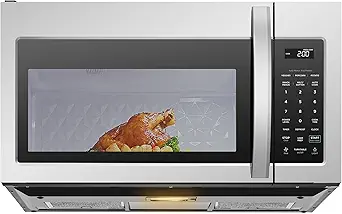 |
| Most Popular A crowd favorite that many people choose with confidence | BLACK+DECKER Over the Range Microwave EM044K6CE-SS | 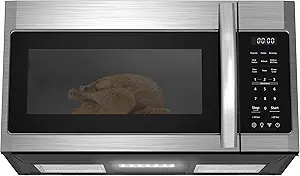 |
| Best Seller A high-volume bestseller chosen again and again | GE 30" Over-The-Range Microwave JVM3160RFSS |  |
Samsung Smart Slim Over-the-Range Microwave

| Capacity | 1.1 cubic feet |
|---|---|
| Wattage | 1100 |
| Hood Ventilation | 550 CFM |
| Number of Power Levels | 5 |
| Inner Material | Ceramic Enamel |
This Samsung Smart SLIM over-the-range microwave combines a compact footprint with features you expect from a full-size OTR unit. It offers 1.1 cu ft capacity and 1100 watts of power for reheating, defrosting, and everyday microwave cooking, while the built-in 550 CFM hood provides strong external-style ventilation for steam and smoke above the cooktop. The unit supports Wi-Fi and voice control for remote commands, a wide LED light bar for cooktop visibility, and sensor cook that adjusts time and power automatically. The touchscreen controls and fingerprint-resistant stainless finish keep the front easy to wipe down, and dual wide grease filters help with vent maintenance. On the downside, the slim depth reduces interior width compared with deeper models and the turntable is modestly sized, so very large platters may not fit comfortably. Energy consumption and multiple power settings make it versatile, but buyers who need extra interior room or a full-depth microwave may prefer a larger model.
Best for: Buyers who want a space-saving over-the-range microwave with strong venting and smart controls for everyday cooking and better cooktop ventilation.
Less Ideal for: People who need a deep interior for large casserole dishes or who prioritize maximum microwave capacity over a slim footprint.
- Integrated 550 CFM hood vent clears steam and smoke efficiently over the cooktop
- Smart features including Wi-Fi and voice control for remote operation
- Sensor cook automates time and power for common foods
- Bright wide LED light bar improves cooktop visibility
- Fingerprint resistant stainless steel makes the front easier to keep clean
- Slim depth limits interior space and may not fit very large platters
- Turntable diameter is modest which restricts big dishes
Verdict: A compact over-the-range microwave that pairs strong 550 CFM ventilation with smart connectivity for buyers wanting good cooktop extraction in a slim package.
GE Profile Over-the-Range Microwave UVM9125DYBB

| Capacity | 1.2 cubic feet |
|---|---|
| Power | 1000 Watts |
| Venting | 400 CFM, two-speed |
| Lighting | LED cooktop lighting |
The GE Profile UVM9125DYBB is a performance-focused low-profile over-the-range microwave that pairs mid-size cooking capacity with strong ventilation for stovetop cooking. It provides 1.2 cu ft of usable space and 1000 watts of power for reheating, defrosting, and everyday cooking, while sensor cooking controls simplify timing and power adjustments. The 400 CFM two-speed venting system efficiently removes smoke and odors when frying or searing on the cooktop, and LED cooktop lighting gives bright, even illumination across the range. Practical extras include time and weight defrost, a selectable turntable on/off control, a dedicated melt function for delicate tasks, and adjustable sound settings for quiet operation. The low-profile design fits where an undercabinet hood would go and keeps countertop space clear, and the integrated handle with bottom-mounted controls offers an easy-to-clean front. Expect a solid, appliance-grade feature set suited to active home cooks, though its 1000-watt power is mid-range compared with higher-wattage commercial-style units and the two-speed venting has fewer fan speeds than some premium systems.
Best for: Buyers who prioritize kitchen performance and ventilation strength for frequent stovetop cooking and want a compact, integrated over-the-range microwave that keeps countertops clear.
Less Ideal for: Shoppers seeking the highest microwave output or fine-grained fan speed control for commercial-level cooking should consider more powerful or feature-rich alternatives.
- 400 CFM two-speed venting system effectively clears smoke and odors from the cooktop
- Sensor cooking controls automate time and power for more consistent results
- LED cooktop lighting provides bright, even illumination across the range
- Selectable turntable operation and dedicated melt function add flexible cooking options
- 1000-watt cooking power is mid-range and slower than higher-wattage models for rapid heating
- Two-speed vent fan offers limited speed granularity compared with multi-speed or variable fans
Verdict: Choose this GE Profile low-profile OTR microwave when you want solid mid-sized cooking performance combined with a powerful external vent to keep kitchen air clear.
Cosmo Stellar 24 in. Microwave

| Capacity | 1.34 cubic feet |
|---|---|
| Wattage | 1000 watts |
| Power Levels | 10 |
| Installation Type | Over-the-Range |
| Turntable Diameter | 13.6 inches |
The Cosmo Stellar 24 in. over-the-range microwave combines a roomy 1.34 cubic foot interior with a 1000 watt magnetron and 10 power levels to handle everyday reheating, defrosting, and simple cooking tasks. It installs above the cooktop and includes an integrated vent fan and grease filters to remove steam, odors, and light smoke while you cook. Controls are touchscreen presets including sensor reheat/cook, automatic defrost, and specialty presets for popcorn and melting, and the bright LED lighting helps visibility on the range below. Practical additions like a 13.6-inch turntable, child safety lock, and included exhaust adapter and installation kit keep setup and daily use straightforward. Trade-offs to expect are a conventional feature set without advanced smart connectivity or convection cooking and the typical noise level of a 1000 W vent fan when running at higher speeds. For buyers prioritizing a clean-lined over-the-range unit with reliable venting and solid basic microwave performance, this model covers the essentials without unnecessary complexity.
Best for: Buyers who want a straightforward over-the-range microwave that doubles as a functional range hood and prioritizes reliable ventilation and everyday cooking convenience.
Less Ideal for: Anyone seeking smart features, convection baking, or a high-end luxury appliance with advanced cooking modes should consider other options.
- Integrated vent fan and grease filters remove smoke and odors from the cooktop area
- 1000 watts with 10 power levels gives faster, more precise cooking than lower-watt units
- Sensor reheat/cook and touch presets simplify common tasks like defrosting and popcorn
- Included installation kit and exhaust adapter streamline over-the-range installation
- No smart connectivity or convection features for advanced cooking
- Vent fan can be noticeably loud at higher settings
Verdict: A practical over-the-range microwave that pairs solid 1000 W cooking performance with an integrated vent fan for buyers who want reliable ventilation and simple everyday use.
Midea Over the Range Microwave 1.7 Cu Ft

| Capacity | 1.7 cubic feet |
|---|---|
| Power Consumption | 1000 watts |
| Number of Programs | 19 |
| Number of Power Levels | 10 |
| Ventilation CFM | 300 CFM |
The Midea over-the-range microwave is a budget-friendly unit that combines full-size cooking capacity with built-in ventilation for standard kitchen installations. It cooks at 1000 watts across 10 power levels and offers 19 preset programs and a one-touch cook panel for common tasks like popcorn, pizza, and defrosting, which makes day-to-day reheating and simple meal prep easy. The 1.7 cubic foot interior and 12.5-inch turntable fit family-sized dishes such as a rotisserie chicken or a 12-inch pizza. On the ventilation side it provides up to 300 CFM with adjustable fan speeds and a bright cooktop light to keep the range clear while you cook. Controls are a touchscreen interface that keeps the front clean but may require a moment to learn. As a value model it omits premium finishes and advanced smart features, and its stainless steel inner and outer surfaces will need regular wiping to keep looking fresh. For a cramped budget-conscious kitchen that needs an external venting option and straightforward presets, this unit covers the essentials without extras.
Best for: Buyers prioritizing a low-cost over-the-range microwave that still offers full-size capacity and effective external ventilation for everyday reheating and simple cooking.
Less Ideal for: Shoppers seeking high-end finishes, smart connectivity, or professional-grade cooking features should consider higher-tier models instead.
- 1.7 cu ft capacity fits large dishes like rotisserie chicken and 12-inch pizza
- 1000W cooking power with 10 power levels for versatile heating
- 300 CFM ventilation with adjustable fan speeds helps clear smoke and odors
- One-touch cook panel and 19 auto menus simplify common tasks
- Basic touchscreen controls can be less tactile and slower to use than knobs
- Lacks advanced smart home features or premium finish options
Verdict: A practical, budget-minded over-the-range microwave that pairs full-size cooking capacity with effective external ventilation for everyday kitchen use.
BLACK+DECKER Over the Range Microwave EM044K6CE-SS

| Wattage | 1000 watts |
|---|---|
| Capacity | 1.7 cubic feet |
| Number of Power Levels | 10 |
| Turntable Diameter | 12.4 inches |
This BLACK+DECKER over-the-range microwave is built for everyday cooking above a stove, offering a roomy 1.7 cubic foot interior and a 12.4-inch turntable that handle full plates and medium cookware. The 1000-watt output and 10 power levels, plus one-touch presets for popcorn, beverage, reheat, melt/soften, and defrost, make quick reheats and simple meals straightforward. The touchscreen control and multi-stage cooking let you set sequences of power levels for recipes that need staggered heating. For ventilation, the built-in 300 CFM two-speed fan helps clear fumes and odors while the integrated light brightens the cooktop. Practical benefits include a stainless steel interior that is easier to wipe clean and a child safety lock for households with kids. Expect the unit to be a competent everyday workhorse, though installation requires standard over-the-range mounting and the venting performance is best for typical residential stovetops rather than heavy-duty commercial use.
Best for: Buyers who prioritize proven, well-reviewed appliances and want a straightforward over-the-range microwave that combines roomy capacity, reliable 1000W cooking, and an integrated vent for everyday kitchen use.
Less Ideal for: If you need commercial-strength ventilation or advanced sensor cooking features, look at higher-end range hoods or microwaves with sensor-based presets instead.
- Spacious 1.7 cu ft interior with 12.4-inch turntable fits full plates and medium cookware
- 1000-watt power with 10 power levels and one-touch presets for common tasks
- Integrated 300 CFM two-speed vent fan and light for over-the-stove ventilation
- Stainless steel interior and exterior for easier cleaning and a cohesive kitchen look
- Vent fan suited to typical residential use and may struggle with very heavy cooking fumes
- Manual defrost only, lacking an automatic sensor defrost feature
Verdict: A dependable, roomy 1000W over-the-range microwave with a built-in 300 CFM vent that's a safe choice for everyday residential kitchens.
GE 30" Over-The-Range Microwave JVM3160RFSS

| Capacity | 1.6 cubic feet |
|---|---|
| Wattage | 1000 watts |
| Venting | Two-speed 300 CFM hood vent |
| Power levels | 9 levels |
This GE 30" over-the-range microwave is a straightforward kitchen workhorse designed for everyday cooking and venting above a range. It offers 1,000 watts and a 1.6 cu ft cavity that handles family-sized plates, reheats, and basic cooking tasks, and the turntable can be switched off for larger or irregular dishes. Controls are touch-pad based with one-touch shortcuts, nine power levels, and automatic weight- or time-based defrost for simple results. The built-in two-speed, 300 CFM hood vent clears smoke and odors and includes a bright surface light with a night-light option, so it serves as both a microwave and an external-vent alternative for typical home kitchens. Installation is the over-the-range type with an easy-mount design, but buyers should plan for a professional or careful DIY install to hook up ducting and electrical. There are no advanced smart features or convection cooking, so it is best for buyers who want reliable, no-frills performance rather than multi-functionality.
Best for: Buyers who prioritize a dependable, easy-to-use over-the-range microwave with effective external venting and straightforward controls for everyday family cooking.
Less Ideal for: If you want advanced cooking modes like convection, air fry, or smart home integration, choose a multifunction oven instead.
- 1000 watts and 1.6 cu ft capacity suitable for family meals and reheats
- Two-speed 300 CFM vent removes smoke, steam and odors above the cooktop
- Turntable on/off lets you heat larger or oddly shaped dishes evenly
- One-touch controls and weight/time defrost simplify everyday cooking
- No convection or air-fry mode for browning or roasting
- Basic touch-pad controls are functional but not programmable or smart-enabled
Verdict: Choose this GE over-the-range model if you want a reliable, no-nonsense microwave that also provides effective external venting for everyday kitchen use.
Choosing the Right Microwave with External Vent: Key Factors to Consider
Vent Airflow and Static Pressure Capability
A microwave with external vent must move a realistic volume of air through your ductwork. Rated airflow in cubic feet per minute gives a baseline, but the blower's ability to maintain flow against static pressure from long ducts, elbows, and exterior caps is equally important.
If your duct run is long or has multiple turns, prioritize units that specify higher CFM and list static-pressure performance or include higher-capacity blowers. Underpowered blowers will reduce capture of steam and grease and can leave lingering odors.
Duct Size, Orientation, and Mounting Options
Check whether the microwave supports top, rear, or convertible venting and what duct diameters it accepts. Many kitchens require a specific orientation because of cabinet layout or existing ductwork.
Choosing a unit that matches your duct size avoids the need for reducers that increase static pressure. Flexible options for top or rear venting give more installation choices, especially when retrofitting into an existing space.
Noise Level While Venting
Exhaust blowers vary widely in how loud they are at operational speeds. In open-concept homes, a loud microwave vent can be a constant annoyance while cooking.
Look for units that report noise levels or that put emphasis on quiet blower design. Consider how often you cook with heavy steam or strong aromas; frequent use favors quieter models to keep living spaces comfortable during operation.
Ease of Installation and Retrofit Complexity
Installing a microwave to vent externally can range from straightforward to complex depending on cabinet space, duct routing, and whether electrical or cabinet modifications are required.
Clear mounting templates, accessible wiring knockouts, and included duct collars reduce installation time and the chance of mistakes. If you are retrofitting an existing microwave location, note whether the unit's depth and trim are compatible with surrounding cabinets to avoid custom carpentry.
Filter Type and Maintenance Accessibility
Even with exhaust routed outdoors, grease and particulates still pass through the microwave's internal filter system. Grease filters should be easy to remove, clean, or replace, and charcoal filters are used in recirculating modes when outside venting is not possible.
Prioritize units with tool-free access to filters and straightforward cleaning instructions. Regular maintenance preserves vent performance and reduces fire risk from grease buildup.
Durability and Serviceability
Microwaves with external vents combine mechanical blowers and standard microwave components, so build quality affects how long the unit performs reliably. Robust blower housings, corrosion-resistant duct connectors, and accessible service panels make repairs and maintenance easier.
Consider whether replacement parts like blower motors and filters are commonly available and how straightforward routine service tasks are for a technician or competent DIYer.
Planning Your Duct Run
Before choosing a model, map the shortest possible duct path to the exterior and note the number of turns and the distance. Each elbow and foot of duct reduces effective airflow, so shorter, straighter runs preserve performance.
Use rigid ducting where possible; flexible ducts increase resistance and collect grease more readily. Also verify local building codes for exhaust terminations and required exterior caps or backdraft dampers.
- Measure available clearance above and behind the intended microwave location
- Confirm whether top or rear venting aligns with existing ductwork
- Plan for a cleanout or access panel if long runs are expected
Top Vs Rear Venting: Which Works for Your Kitchen
Top venting often aligns neatly with over-cabinet duct runs while rear venting may be better when a shorter run through an exterior wall is available. The decision affects cabinet modifications and the visual outcome above the microwave.
Convertible venting that supports both orientations provides the most flexibility for future changes, but ensure any adapter pieces do not excessively reduce airflow.
- Top venting: easier when roof or soffit exit is above cabinets
- Rear venting: best with nearby exterior walls for short runs
- Convertible: useful for uncertain future layout changes
Noise Management and Operation Profiles
If your kitchen opens to living areas, select a unit with lower noise ratings or offer multiple fan speeds so you can run a quieter mode for light cooking. Higher blower speeds for heavy-duty venting are useful but should be balanced against acceptable sound levels.
Also consider how blower noise varies with duct restrictions. A model that is quiet on a short, straight run may sound louder when fighting a long or narrow duct.
- Use lower speeds for simmering or reheating
- Reserve full-power venting for grease-heavy or steam-heavy cooking
- Check manufacturer guidance on expected dB levels if available
Maintenance Best Practices
Establish a regular cleaning schedule for grease filters and accessible blower housing. Grease buildup reduces airflow, increases noise, and raises fire risk. Removable, dishwasher-safe filters simplify upkeep.
Inspect exterior vent terminations seasonally to ensure caps and dampers move freely and are not obstructed by debris or nesting animals. Properly maintained termination hardware preserves backdraft protection and airflow.
- Clean grease filters monthly with heavy use
- Check exterior caps for blockages twice yearly
- Replace charcoal filters per the manufacturer's recommended interval if using recirculation
Electrical and Safety Considerations
Confirm that the microwave's electrical requirements match the circuit you plan to use. Some over-the-range or built-in-style microwaves require a dedicated circuit or specific outlet placement.
Also verify that the chosen installation preserves clearances to combustible materials and matches local fire and building codes. Proper grounding and accessible disconnects help ensure safe operation and serviceability.
- Check voltage and circuit amperage requirements before installation
- Maintain required clearances around vents and heating surfaces
- Install a qualified electrician for any required wiring changes
How We Chose the Best Microwave with External Vent
We focused on features and performance that matter specifically for microwaves designed to vent externally. Primary evaluation criteria included measured vent airflow and static-pressure handling, since real-world duct runs and turns can reduce exhaust effectiveness. Installation flexibility was another priority, covering compatible duct sizes, top or rear venting options, and the clarity of mounting and ducting instructions. Noise level during exhaust operation was included because louder blowers can be intrusive in open-plan kitchens. Ease of cleaning and access to grease filters mattered because external-vent units still collect airborne grease that must be removed to maintain performance. Finally, durability and serviceability were considered through build details like blower motor access and the availability of replaceable filters and brackets. We excluded units intended only for recirculating use or those that cannot be ducted outdoors. Models lacking clear venting specifications or duct compatibility data were not considered. The shortlisted units met the ducting, airflow, and serviceability thresholds above and offered a balance of installation options, ventilation efficiency, and user maintenance convenience.
Our full evaluation process is outlined in our review methodology.
FAQ
Can every microwave be vented to the outside?
Not every microwave is designed for external venting. Some models are recirculating-only and lack the duct collars or blower capacity for outdoor venting. Confirm the unit's venting options and duct compatibility before planning an external exhaust installation.
How much does duct length affect vent performance?
Duct length and the number of turns significantly reduce effective airflow. Longer runs and multiple elbows raise static pressure on the blower, so choose units with higher airflow ratings or reduce duct resistance to preserve performance.
Is it better to use rigid or flexible ducting?
Rigid ducting is preferable because it has lower airflow resistance and is easier to clean. Flexible ducting can be used where necessary, but it increases static pressure and can trap grease, so keep flexible sections short.
Do I still need to clean filters if the microwave vents outside?
Yes. Even with external venting, grease and particulates pass through internal filters and the blower housing. Regular cleaning of grease filters and checking blower access keeps performance high and reduces fire risk.
Will venting to the outside reduce kitchen odors permanently?
External venting removes most cooking odors and steam more effectively than recirculation, but complete elimination depends on fan speed, duct layout, and how quickly you run the blower during cooking. Properly sized ducting and sufficient airflow improve results.
Final Verdict
When choosing a microwave with external venting, prioritize units that match your duct path and offer sufficient airflow against expected static pressure. Installation flexibility, quiet operation at common speeds, and easy filter access are practical features that determine long-term satisfaction. Balance blower capacity against noise and duct complexity. For most kitchens, a model that provides clear duct compatibility, straightforward installation details, and accessible maintenance points will deliver reliable ventilation and fewer odors. Use the factors above to weigh tradeoffs and pick the configuration that best fits your layout and cooking habits.