
Note: This article contains affiliate links. If you click on these links and make a purchase, we may earn a small commission at no extra cost to you. This helps support our research and content. Read our full affiliate disclosure here.
Choosing a microwave with a powerful exhaust fan matters when you cook on busy weeknights or in kitchens with limited natural ventilation. A robust built-in vent removes steam, smoke, and strong cooking odors, helping protect cabinets, walls, and indoor air quality. At the same time, quieter operation makes a big difference when the exhaust runs while you are entertaining or working in an open-plan space. This guide highlights seven shortlisted microwaves with powerful exhaust fans across common venting needs. We evaluated airflow, ducting options, noise levels, and vent placement so you can pick a unit that suits your kitchen layout and cooking style. Read on to see the factors that matter and practical tips for installation and upkeep.
Top Picks at a Glance
| Best Overall The best all-around choice for most situations | TOSHIBA Over-the-Range Microwave 1.9 Cu.Ft |  |
| Best Quality Built to a higher standard if you want something more solid | GE Profile 30" Over-the-Range Microwave |  |
| Best Value The sweet spot between price and what you get | Empava Over-the-Range Microwave EMPV-30OTR01 |  |
| Best Budget The cheapest option that still gets the job done reliably | Midea Over-the-Range Microwave 1.7 cu ft | 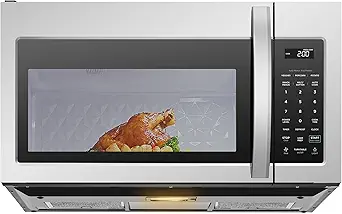 |
| Top Rated A top-rated pick with lots of positive feedback | Sharp SMO1759JS 1.7 cu ft OTR Microwave |  |
| Most Popular A crowd favorite that many people choose with confidence | BLACK+DECKER Over-the-Range Microwave EC942K6CE-SS | 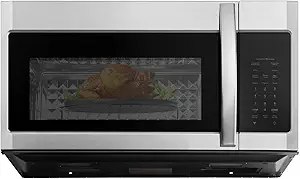 |
| Best Seller A high-volume bestseller chosen again and again | GE 30" Over-the-Range Microwave JVM3160RFSS |  |
TOSHIBA Over-the-Range Microwave 1.9 Cu.Ft

| Capacity | 1.9 cubic feet |
|---|---|
| Wattage | 1000 watts |
| Ventilation | 400 CFM 2-speed |
| Power levels | 11 |
This TOSHIBA over-the-range microwave combines a family-size 1.9 cu.ft cavity and 1000 watts of cooking power with a 2-speed 400 CFM ventilation system to handle regular stovetop smoke and odors. It is designed for everyday meal prep using sensor cooking, 24 preset menus, ChefDefrost for faster thawing, and 11 power levels for flexible heating. The unit emphasizes convenience with an easy flip-and-lock installation bracket, a soft-close door with a hydraulic damper that reduces slamming noise, and a 13.5-inch turntable that fits large plates and casserole dishes. Practical benefits include faster, more even defrosting and the ability to vent grease and steam effectively in open kitchens. Trade-offs are typical for its segment: the microwave is not a convection or air-fry model, and its 1000W output is adequate for most tasks but slower than higher-wattage units for rapid cooking. The controls mix buttons and touch input, which work fine but will show fingerprints on the panel. If you want a solid OTR unit with strong ventilation and sensible cooking automation, this model delivers a balanced set of features.
Best for: Buyers who want a dependable over-the-range microwave that balances strong ventilation, useful automation, and quieter daily operation for family kitchens.
Less Ideal for: Those who need convection or air-fry capability or who prioritize the fastest possible microwave cook times should look at models with higher wattage or additional cooking modes.
- Powerful 2-speed 400 CFM exhaust fan that clears smoke and steam effectively
- Sensor cooking and ChefDefrost automate timing for more consistent results
- Easy flip-and-lock installation bracket reduces install time and complexity
- Soft-close door with hydraulic damper minimizes noise and door wear
- No convection or air-fry function for crisping or roasting
- 1000W cooking power may be slower than higher-wattage models for some tasks
Verdict: Choose this model if you want a quiet, easy-to-install over-the-range microwave with strong 400 CFM ventilation and smart sensor cooking for everyday family use.
GE Profile 30" Over-the-Range Microwave

| Capacity | 1.2 cubic feet |
|---|---|
| Power | 1000 Watts |
| Venting | 400 CFM, two-speed |
| Controls | Touch |
The GE Profile 30" low-profile over-the-range microwave pairs mid-size cooking capacity with a strong ventilation system designed for busy kitchens. It delivers 1000 watts of cooking power across multiple sensor and manual controls, plus time and weight defrost for flexible reheating and thawing. The standout is the 400 CFM two-speed exhaust, which is sized to quickly clear smoke, steam and cooking odors from the cooktop area while the LED cooktop light keeps the surface well illuminated. Practical touches include an integrated handle and touch controls for a sleek, easy-to-clean front, a turntable with on/off control, a melt function for delicate foods and adjustable sound for quiet operation. The low-profile fit saves above-range space compared with taller OTR units but also means a slightly smaller interior than full-size models. Expect solid everyday cooking and ventilation performance, especially in kitchens where a compact footprint and strong exhaust are priorities.
Best for: Buyers who prioritize strong exhaust performance and reliable everyday cooking in a compact over-the-range package and want a microwave that keeps kitchen air clear while saving space.
Less Ideal for: Those who regularly need to heat or fit very large cookware or want the maximum interior volume should consider larger over-the-range or countertop models.
- 400 CFM two-speed venting efficiently removes smoke, steam and odors from the cooktop
- 1000-watt power with sensor cooking, time and weight defrost for reliable heating and thawing
- Low-profile design fits over the range without taking extra cabinet space
- LED cooktop lighting provides bright, even illumination of the stove
- Touch controls, integrated handle and turntable on/off make cleaning and use straightforward
- 1.2 cu. ft. capacity is mid-sized and may be limiting for very large dishes
- Lower profile means less interior height compared with larger over-the-range microwaves
Verdict: Choose this GE Profile low-profile microwave when you want strong 400 CFM exhaust performance in a space-saving over-the-range unit.
Empava Over-the-Range Microwave EMPV-30OTR01

| Capacity | 1.7 cubic feet |
|---|---|
| Output Microwave | 1000 watts |
| Vent Fan CFM | 300 |
| Installation Type | Over-the-Range |
| Number of Power Levels | 11 |
This Empava over-the-range microwave combines a 1000W cooking cavity with a built-in two-speed 300 CFM venting fan so it handles reheating, sensor cooking, and basic ventilation in one unit. It is typically installed above a cooktop where the LED cooktop light and 300 CFM recirculation fan keep smoke and odors from spreading while you cook. The 1.7 cu ft stainless steel interior with a glass turntable makes for even heating and straightforward cleaning, and sensor cooking plus express 30-second pads simplify common tasks like popcorn or reheating leftovers. Controls are touchscreen with a child lock and multiple auto menus for convenience. Limitations to note are the recirculation vent orientation as shipped, which is less effective than direct exterior venting, and a mostly plastic control/handle construction that feels less premium than higher-end models. For buyers prioritizing a strong exhaust over a simple microwave, the 300 CFM fan is the standout feature, but expect typical compromises in materials and recirculation performance compared with ducted installations.
Best for: Buyers who want a single over-the-range unit that prioritizes strong exhaust performance and straightforward controls for everyday cooking and ventilation.
Less Ideal for: Those who require factory-ducted ventilation out of the box or who want a premium metal control package should look at duct-capable or higher-end alternatives.
- 300 CFM two-speed venting fan for strong cooktop exhaust when ducted or used in recirculation mode
- 1000W output with sensor cooking and multiple auto menus for easy, consistent results
- 1.7 cu ft stainless steel interior and glass turntable for even heating and easier cleaning
- LED cooktop lighting and 30-second express cook pads for quick, everyday use
- Standard recirculation orientation as shipped is less effective than direct-ducted venting
- Control panel and handle use plastic components that feel less premium
Verdict: Choose this Empava unit if you want a compact over-the-range microwave that pairs solid 1000W cooking with a powerful 300 CFM exhaust to help control cooktop smoke and odors.
Midea Over-the-Range Microwave 1.7 cu ft

| Capacity | 1.7 cubic feet |
|---|---|
| Power Consumption | 1000 watts |
| Number of Programs | 19 |
| Number of Power Levels | 10 |
| Turntable Diameter | 12.5 inches |
The Midea over-the-range microwave is a no-frills kitchen unit that combines a roomy 1.7 cubic foot cavity and 1000 watts of cooking power with a built-in 300 CFM ventilation fan. You use the large touchscreen one-touch cook panel to run 18 auto menus or select among 10 power levels for reheating, defrosting, or simple cooking tasks, and the 12.5-inch turntable accommodates a 12-inch pizza or a rotisserie chicken. The exhaust offers adjustable fan speeds and a bright cooktop light to keep the stovetop clear while removing steam and odors. Practical benefits include straightforward controls, a stainless steel interior and exterior for easier cleaning, and decent suction for an over-the-range unit at this price point. Expect basic insulation and standard installation hardware rather than premium finishes or advanced inverter cooking; the fan is effective for everyday stovetop use but not engineered for heavy commercial venting. For buyers on a budget who want an integrated microwave and functional exhaust, this model delivers solid capability without extras that drive up cost.
Best for: Home cooks who need an affordable over-the-range microwave with decent cooking power and a functional exhaust fan for everyday stovetop use.
Less Ideal for: Those who require professional-grade ventilation or advanced cooking features like inverter heating and precision sensor cooking.
- 1.7 cu ft capacity fits 12-inch pizzas and larger dishes.
- 1000W cooking power with 10 power levels for flexible heating.
- 300 CFM adjustable exhaust removes everyday steam and odors effectively.
- Touchscreen one-touch cook panel with 18 auto menus simplifies common tasks.
- Stainless steel interior and exterior are easy to wipe clean.
- Not designed for heavy-duty commercial ventilation or very high-output cooktops.
- Feature set is basic compared with higher-end models (no inverter technology).
Verdict: If you want an inexpensive over-the-range microwave that pairs solid 1000W cooking with a capable 300 CFM exhaust, this Midea model is a practical choice.
Sharp SMO1759JS 1.7 cu ft OTR Microwave

| Wattage | 1000 watts |
|---|---|
| Capacity | 1.7 cubic feet |
| Turntable Diameter | 13.6 inches |
| Fan | 300CFM |
The Sharp SMO1759JS is an over-the-range microwave built to handle everyday family cooking while also clearing steam and smoke with a two-speed, 300 CFM ventilation system. It offers 1,000 watts of power and a 1.7 cubic foot cavity with a 13.6-inch carousel turntable, putting it in the mid-to-large capacity range for reheating, defrosting, and simple meal prep. Sensor Cook and Sensor Reheat automate timing for common foods, and a Melt/Soften function helps with delicate tasks like melting butter or chocolate. Controls are touch-based with a bright white LED display and interior lighting that improve visibility. Smart integration works with Alexa for voice-start commands, which can be convenient when your hands are full. Practical strengths include easy-to-replace grease filters and a gray, easy-clean interior. Limitations are typical for this class: it is not a convection oven, so it will not brown or bake like a range oven, and the two-speed fan may be louder on its higher setting compared with dedicated range hoods.
Best for: Buyers who prioritize dependable everyday performance and a strong exhaust for stovetop ventilation will appreciate this unit as a practical, no-surprises over-the-range microwave.
Less Ideal for: If you need oven-style baking or crisping from the microwave or you require an ultra-quiet ventilation system, look at dedicated convection ovens or higher-end range hoods instead.
- Powerful 1,000 watt cooking output for consistent reheating and cooking
- 300 CFM two-speed ventilation clears steam and smoke effectively for over-the-range use
- Sensor Cook and Sensor Reheat simplify common cooking tasks and reduce guesswork
- Alexa compatibility enables hands-free commands for basic microwave functions
- Removable grease filters and bright LED lighting make maintenance and visibility easier
- Not a convection model so it cannot brown or bake like a convection oven
- Higher fan speed can be noticeably louder than quieter under-cabinet hoods
Verdict: Choose the SMO1759JS when you want a reliable over-the-range microwave that combines solid 1000W cooking with a strong 300 CFM exhaust for effective kitchen ventilation.
BLACK+DECKER Over-the-Range Microwave EC942K6CE-SS

| Capacity | 1.5 cubic feet |
|---|---|
| Wattage | 900 watts |
| Turntable Diameter | 13.6 inches |
| Cooking Program | air fryer, bake, convection, grill, microwave |
| Ventilation | 300 CFM 2-speed fan |
This BLACK+DECKER over-the-range microwave pairs a roomy 1.5 cu. ft. cavity with six cooking modes—microwave, air fry, convection, combi/grill, bake, and roast—so it handles everything from reheating to crisping and baking. It is typically installed above a cooktop where the built-in 300 CFM two-speed vent and integrated light remove fumes and provide task lighting while you cook. The touch control touchscreen and 10 power levels make it simple to switch between microwave and convection/air-fry programs, while sensor reheat helps keep leftovers from drying out. Practical benefits include a stainless steel interior, a 13.6-inch turntable for larger plates, and a metal rack for multi-level cooking. Trade-offs to consider are the 900W microwave power, which is modest versus some higher-watt models, and the unit's installation requirements and footprint that suit standard over-the-range placements but require proper mounting and venting work. For kitchens that need a combined cooking and ventilation solution, this model brings multiple cooking modes in one appliance and a strong exhaust fan for odor and smoke control.
Best for: Buyers who want a single over-the-range unit that both ventilates well and expands cooking options beyond basic microwaving, favoring proven features and established user feedback.
Less Ideal for: People who need the highest microwave wattage for very fast reheating or who cannot accommodate over-the-range installation should consider other formats or professional install solutions.
- Six cooking modes including air fry and convection for versatile meal prep
- Built-in 300 CFM two-speed exhaust fan with integrated light for effective ventilation
- Spacious 1.5 cu. ft. interior and 13.6-inch turntable to fit larger dishes
- Touchscreen control with 10 power levels and sensor reheat for convenience
- Includes microwave rack for multilevel cooking and a stainless steel interior for easier cleaning
- 900 watts of microwave power is moderate compared with higher-watt countertop or over-the-range units
- Requires proper over-the-range installation and compatible cabinetry/venting which can limit placement options
Verdict: Choose this unit if you want an over-the-range microwave that combines air-fry and convection cooking with a powerful 300 CFM exhaust to keep kitchen air clear.
GE 30" Over-the-Range Microwave JVM3160RFSS

| Capacity | 1.6 cubic feet |
|---|---|
| Wattage | 1000 watts |
| Ventilation | Two-speed 300 CFM |
| Number of Power Levels | 9 |
The GE 30" over-the-range microwave pairs everyday cooking power with a strong hood vent for kitchens that need reliable exhaust. It offers 1,000 watts and nine power levels for straightforward reheating, cooking and defrosting, plus one-touch controls and a turntable on/off option for larger dishes. The built-in two-speed, 300 CFM vent removes smoke, steam and odors above the cooktop while integrated LED lighting and a surface light/night light help illuminate the range. Practical features like weight- and time-defrost, shortcut keys and a simple touch pad make routine tasks quick, and the stainless steel interior simplifies cleaning. Buyers should note this is a conventional microwave without advanced smart features or convection cooking, and installation requires an over-the-range mounting setup and proper venting configuration. For cooks who prioritize dependable heating and a capable exhaust fan in a familiar, no-frills package, this model delivers consistent performance.
Best for: Buyers who want a straightforward, proven over-the-range microwave with a strong exhaust fan and simple controls for reliable daily cooking.
Less Ideal for: Home cooks seeking smart features, convection cooking, or a freestanding/compact counter microwave should consider other options.
- 300 CFM two-speed venting effectively removes smoke, steam and odors from the cooktop area
- 1,000-watt power with nine power levels for consistent reheating and everyday cooking
- Convenience controls including one-touch presets, weight/time defrost, and turntable on/off
- LED surface lighting with a night-light option improves range visibility
- Stainless steel interior is easier to wipe clean and resists staining
- No convection or air-fry capability for oven-style cooking
- Requires proper over-the-range installation and venting which may need professional help
Verdict: Choose this GE over-the-range microwave when you need dependable 1000W cooking paired with a powerful 300 CFM exhaust for a kitchen that prioritizes ventilation and reliability.
Choosing the Right Microwave with Powerful Exhaust Fan: Key Factors to Consider
Exhaust Airflow Capacity
Airflow capacity is the clearest indicator of how much steam, smoke, and odors the microwave can move out of the cooking area. Higher cubic feet per minute or equivalent airflow ratings mean the fan can clear heavier cooking loads more quickly, reducing residue and lingering smells on surrounding surfaces.
When you cook frequently with high heat or prone-to-splatter foods, prioritize units with stronger airflow so the vent actually captures contaminants instead of letting them spread. Keep in mind that actual performance can vary with duct length and bends, so factor installation details into expected results.
Noise Level During Operation
A powerful fan usually means more noise, but modern designs balance airflow with acoustic dampening. Look for documented noise ratings or user feedback about noise character. A quieter fan matters in open-plan layouts or when the vent runs while people are in adjacent living areas.
Consider whether the unit offers multiple speed settings so you can run a lower, quieter mode for light steaming and ramp up the fan only when frying or producing heavier smoke. Also check if the control layout makes it easy to change speeds quickly while cooking.
Ducting Options and Compatibility
Installation flexibility affects how well the fan performs. Microwaves may support external venting through the wall or ceiling, or recirculating mode where air passes through a charcoal filter and is returned to the kitchen. External ducting generally delivers better odor and moisture removal, while recirculating is useful where exterior venting is impossible.
Verify compatible duct diameters, recommended maximum duct length, and whether the unit supports top or rear vent exits. Longer ducts and multiple bends reduce effective airflow, so shorter, straighter runs preserve performance.
Filter Access and Maintenance
Filters capture grease and particulates and keep the fan functioning efficiently. Easy-to-remove grease filters and accessible charcoal filter compartments make routine maintenance fast, which helps sustain airflow and reduces fire risk. Metal or dishwasher-safe filters simplify cleaning compared with permanently fixed or hard-to-reach parts.
Plan for replacing charcoal filters at appropriate intervals when using recirculating mode. If a unit has complicated access panels or requires tools to reach the fan, maintenance chores become more time-consuming and are more likely to be deferred.
Vent Placement Relative to Cooktop
Where the exhaust opening sits determines how effectively it captures rising steam and smoke. A vent positioned close to the cooktop and aligned with the primary heat sources will pull more contaminants before they disperse. Over-the-microwave vents that direct airflow backward or upward may underperform compared with designs that capture air directly above burners.
Consider your stove configuration and typical pot and pan sizes when evaluating vent placement. Some units provide directional vanes or multi-speed airflow that improves capture for different cooking styles.
Controls and Useful Features
Vent controls and related features affect day-to-day convenience. Useful options include multiple fan speeds, a dedicated vent button, delay-off timers to clear lingering odors after cooking, and integrated lights that illuminate the cooktop. Simple, clearly labeled controls let you adjust ventilation quickly while handling pots and pans.
Also check for reliable indicator lights or alerts for filter cleaning or replacement. These small features reduce guesswork about maintenance and improve long-term performance.
Installation Tips to Preserve Exhaust Performance
Short, straight duct runs deliver the best exhaust results. Plan the microwave placement so the duct path to the exterior is as direct as possible and uses the largest compatible diameter to reduce friction losses.
When external venting is not an option, recirculating mode with a high-quality charcoal filter helps but will not match external venting for moisture removal. Ensure replacement charcoal filters are readily available and sized correctly for the unit.
Seal duct joints and use smooth-walled ducting where possible. Flexible foil ducts increase turbulence and reduce fan effectiveness, so swap them for rigid or semi-rigid ducts when your layout allows.
- Keep total duct length within manufacturer limits
- Minimize 90-degree bends; use gradual sweeps instead
- Use insulated ducting when running through unconditioned spaces to prevent condensation
Balancing Airflow and Noise for Different Kitchens
Open-plan kitchens need quieter operation because noise travels farther. Look for units with multiple fan speeds so you can keep noise low during normal cooking and increase airflow only when needed.
In small, enclosed kitchens stronger airflow can be prioritized over noise because the fan will clear contaminants quickly. A short run to the exterior increases effectiveness, allowing you to run higher speeds for shorter durations.
- Use lower speeds for simmering and steaming
- Run higher speeds briefly for frying or searing
- Use delay-off timers to clear lingering odors without long noisy operation
Maintaining Filters and Fan Health
Grease buildup reduces airflow and increases fire risk. Clean metal grease filters regularly according to usage frequency; many are dishwasher-safe, which makes maintenance easier. For heavy frying, check filters weekly until you establish a cleaning cadence.
Charcoal filters need periodic replacement when used in recirculating mode. Track how long packs are rated to last under normal cooking conditions and set calendar reminders to swap them before effectiveness drops significantly.
- Remove and soak grease filters in warm, soapy water for stubborn buildup
- Inspect fan intake and housing annually for grease accumulation
- Replace charcoal filters per manufacturer guidance when odor removal declines
When External Blowers Matter
Some cooktops and heavy-duty cooking produce more heat and smoke than an integrated microwave blower can manage. If your kitchen experiences frequent heavy frying or wok cooking, plan for an external blower or a professional ventilation upgrade in the long term.
For many households, a strong integrated exhaust on the microwave is sufficient when paired with a short, unobstructed duct run. Evaluate your typical cooking patterns before deciding whether integrated ventilation will meet your needs permanently.
- External blowers are preferable for long-term heavy cooking
- Integrated blowers work best with short ducts and moderate cooking loads
- Consider upgrade paths when remodeling the kitchen
How We Chose the Best Microwave with Powerful Exhaust Fan
We focused on mechanical and installation characteristics that determine how well a microwave exhausts cooking byproducts. Our selection filters prioritized measurable ventilation performance, installation flexibility, and user experience. Key evaluation criteria included exhaust airflow capacity in cubic feet per minute or manufacturer-stated equivalent, measured or reported noise levels during operation, available ducting configurations (recirculating versus external venting and duct diameter compatibility), and ease of routine maintenance for filters and fan assemblies. We also considered control ergonomics and vent placement so the fan can capture steam and smoke effectively from typical stovetop cooking. Units with limited or ambiguous vent specifications were excluded. We did not consider external range hoods or inline blower systems; the scope is strictly microwaves that include integrated exhaust fans. Final selections reflect units that balance strong ventilation performance with reasonable sound levels, accessible filter maintenance, and flexible installation options.
Our full evaluation process is outlined in our review methodology.
FAQ
How do I know if a microwave exhaust is strong enough for my stove?
Check the unit's airflow rating if provided and compare to typical kitchen ventilation needs. Also consider duct length and configuration because long or convoluted ducts reduce effective exhaust performance.
Can I use a recirculating charcoal filter instead of external venting?
Yes, recirculating with a charcoal filter is a workable option when exterior venting is impossible, but it usually removes odors and moisture less effectively than external ducting. Plan for regular charcoal filter replacement.
Will running the exhaust fan remove steam quickly enough to protect cabinets?
A powerful exhaust fan with a direct duct to the exterior will significantly reduce steam and airborne grease that can damage cabinets. Effectiveness depends on airflow, duct route, and how promptly you run the fan during cooking.
How often should I clean or replace filters in the exhaust system?
Grease filters should be cleaned frequently based on usage; heavy cooks may need weekly cleaning, while light users can clean monthly. Charcoal filters in recirculating setups should be replaced per manufacturer intervals or when odor removal declines.
Does a stronger fan always mean louder operation?
Not always. Modern designs aim to balance airflow and acoustics, and many units offer multiple speeds so you can choose quieter operation for light tasks and higher power when needed. Noise levels still tend to increase at higher fan speeds.
Final Verdict
Prioritize measurable airflow, clear ducting options, and easy filter access when choosing a microwave with a powerful exhaust fan. Decide whether external venting is feasible in your kitchen because it makes the biggest difference for odor and moisture removal. Balance noise and speed settings to match your living space and cooking habits. By focusing on exhaust capacity, duct compatibility, maintenance ease, and control placement, you can pick a microwave that keeps your kitchen vented and comfortable without unnecessary noise or upkeep headaches.