
Note: This article contains affiliate links. If you click on these links and make a purchase, we may earn a small commission at no extra cost to you. This helps support our research and content. Read our full affiliate disclosure here.
If your kitchen needs a space-saving microwave that also vents upward into an over-cabinet duct or recirculates air efficiently, picking the right microwave matters. A microwave with vent on top changes how heat, steam, and cooking odors are routed and can simplify installation when cabinet layouts restrict rear or bottom venting. This guide shortlists the six best microwaves with top vents and explains the practical differences that affect everyday use, from exhaust capacity and noise to mounting and filter maintenance. Read on to see which features and installation details we weighed when creating the short list.
Top Picks at a Glance
| Best Overall The best all-around choice for most situations | Sharp R1874TY 1.1 Cu. Ft. Microwave |  |
| Best Quality Built to a higher standard if you want something more solid | Samsung Smart SLIM Over-the-Range Microwave |  |
| Best Budget The cheapest option that still gets the job done reliably | Midea Over the Range Microwave 1.7 cu ft | 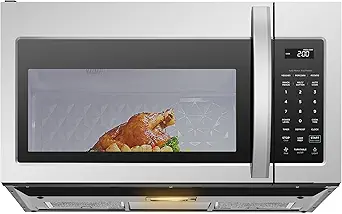 |
| Top Rated A top-rated pick with lots of positive feedback | BLACK+DECKER Over-the-Range Microwave EM044K6CE-SS | 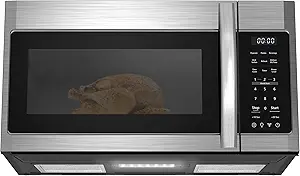 |
| Most Popular A crowd favorite that many people choose with confidence | Frigidaire Over-The-Range Microwave FFMV1846VS |  |
| Best Seller A high-volume bestseller chosen again and again | GE 30" Over-the-Range Microwave JVM3160RFSS |  |
Sharp R1874TY 1.1 Cu. Ft. Microwave

| Capacity | 1.1 cubic feet |
|---|---|
| Wattage | 850 watts |
| Turntable Diameter | 13 inches |
| Number of Programs | 20 |
| Heating Method | Convection |
The Sharp R1874TY is an over-the-range convection microwave that pairs an 850-watt microwave with convection baking and a built-in exhaust and hood light, making it a versatile choice for everyday kitchen use. Typical use cases include reheating, sensor-guided cooking, crisping or roasting with the convection mode, and ventilating stovetop fumes using the two-speed fan. Notable features are 12 convection programs, 8 sensor programs, a 13-inch turntable for even heating, a 2-color 7-digit display with touch controls, and included low and high racks for multi-level baking. In practice it delivers more cooking flexibility than a standard microwave because convection lets you brown and roast small dishes, while the sensor programs simplify reheating. Trade-offs to consider are the single microwave power level setting listed and the mid-size interior that may be tight for very large cookware. Installation is standard for built-in over-the-range units and the stainless steel interior and exterior make cleanup straightforward.
Best for: Buyers who want a balanced over-the-range unit that combines everyday microwave convenience with convection baking and integrated ventilation for a practical kitchen centerpiece.
Less Ideal for: Those who routinely cook large roasts or use extra-large cookware that require a much larger interior or who need multi-level microwave power settings.
- Convection plus 850W microwave power expands cooking options beyond reheating
- Built-in exhaust system with hood light and two-speed fan integrates ventilation
- Multiple preset programs including 12 convection and 8 sensor programs for easy cooking
- Stainless steel interior and 13-inch turntable promote even heating and easy cleaning
- Only one listed microwave power level which limits fine-grain microwave control
- 1.1 cu. ft. capacity can be restrictive for large baking dishes or wide platters
Verdict: Choose this Sharp if you want a mid-size over-the-range microwave that adds convection baking and a built-in vent for flexible, space-saving kitchen cooking.
Samsung Smart SLIM Over-the-Range Microwave

| Capacity | 1.1 cubic feet |
|---|---|
| Wattage | 1100 |
| Ventilation | 550 CFM |
| Turntable Diameter | 11.5 inches |
| Number of Power Levels | 5 |
The Samsung Smart SLIM is an over-the-range microwave that combines a powerful 550 CFM ventilation system with a compact 1.1 cubic foot cooking cavity and 1100 watts of cooking power. It installs over the cooktop and is used both as a microwave and as a range hood, with dual wide grease filters and a wide LED light bar that improves cooktop visibility. The unit offers Wi-Fi and voice control for remote operation plus sensor cook modes and five power levels for everyday reheating, defrosting, and simple cooking tasks. Its slim profile saves cabinet space while still accommodating most medium dishes on the 11.5-inch turntable. Expect practical benefits like strong venting for smoke and steam removal, touch controls and touchscreen-style input for easy operation, and a fingerprint-resistant stainless finish that reduces visible smudges. Trade-offs include the modest internal capacity compared with larger countertop microwaves and the standard one-year parts and labor warranty, so buyers prioritizing very large items or extended coverage should plan accordingly.
Best for: Buyers who want strong venting performance over their cooktop and smart features in a compact over-the-range microwave for everyday cooking and ventilation.
Less Ideal for: Those who regularly need to heat very large platters or prefer the largest possible internal microwave capacity should consider larger models or separate hood and microwave solutions.
- Integrated 550 CFM hood vent effectively clears smoke and steam from the cooktop area
- 1100 watt output with sensor cook and five power levels for consistent everyday cooking
- Wi-Fi and voice control provide remote operation and smart-home convenience
- Slim over-the-range design saves space while including a wide LED light bar for good task lighting
- Fingerprint-resistant stainless steel exterior and ceramic enamel interior for easier cleaning
- 1.1 cu ft capacity and 11.5-inch turntable limit the size of dishes that fit inside
- Standard one-year parts and labor warranty may be brief for buyers seeking long-term coverage
Verdict: Choose this slim Samsung if you need a compact over-the-range microwave that delivers strong 550 CFM ventilation plus smart connectivity and reliable 1100-watt cooking power.
Midea Over the Range Microwave 1.7 cu ft

| Capacity | 1.7 cubic feet |
|---|---|
| Power Output | 1000 watts |
| Number of Programs | 19 |
| Turntable Diameter | 12.5 inches |
| Number of Power Levels | 10 |
The Midea over-the-range microwave is a budget-focused appliance that combines a roomy 1.7 cu ft cavity with 1000 watts of cooking power and a 300 CFM ventilation system to handle everyday cooking and venting above the range. It uses a touchscreen one-touch cook panel with 19 auto menus and 10 power levels, which makes reheating, defrosting, and common presets like popcorn and pizza easy without fuss. The 12.5-inch turntable and 1.7 cu ft capacity fit large items such as a rotisserie chicken or a 12-inch pizza, and the bright cooktop light helps you see the stove while venting. Practical benefits include strong suction for smoke and odors and straightforward preset controls for quick meals. Trade-offs are typical for the price class: the control layout is basic rather than professional, and the stainless interior and finish will show fingerprints and need occasional cleaning. Installation requires standard over-the-range mounting and a 120V connection, so plan for proper venting setup during install.
Best for: Buyers who want a capable over-the-range microwave with strong venting and straightforward presets at a lower price point for everyday family cooking.
Less Ideal for: If you need premium features, advanced sensor cooking, or a pro-level control layout, consider higher-end models instead.
- 1.7 cu ft capacity fits large dishes like rotisserie chicken or 12-inch pizza
- 1000W cooking power with 10 power levels for flexible heating
- 19 auto programs and one-touch presets simplify common tasks
- 300 CFM ventilation with adjustable fan speeds helps remove fumes and odors
- Bright cooktop light improves visibility of the range below
- Control panel and feature set are basic compared with higher-end models
- Stainless steel surfaces and interior may show fingerprints and require regular cleaning
Verdict: A practical, budget-friendly over-the-range microwave that pairs roomy 1.7 cu ft cooking with strong 300 CFM venting for everyday family kitchens.
BLACK+DECKER Over-the-Range Microwave EM044K6CE-SS

| Capacity | 1.7 cubic feet |
|---|---|
| Wattage | 1000 watts |
| Number of Power Levels | 10 |
| Turntable Diameter | 12.4 inches |
| Installation Type | Over-the-Range |
The BLACK+DECKER EM044K6CE-SS is an over-the-range microwave designed to replace a standard stove hood while adding microwave cooking. It delivers 1000 watts of microwave power to handle everyday tasks like reheating, defrosting, and quick cooking, and includes six one-touch menus for common purposes such as popcorn and beverages. Touchscreen controls and 10 power levels let you set multi-stage cooking sequences for recipes that need different power steps. The unit also integrates a 300 CFM vent fan with two speeds and a built-in light to remove fumes and illuminate the cooktop beneath. Inside, a 12.4-inch turntable and a 1.7 cu ft stainless steel cavity give room for plates and medium-size dishes. Practical strengths are straightforward controls, a strong vent for over-the-stove ventilation, and a stainless interior that cleans easily. Expect typical microwave limitations: no convection or air-fry capability and manual defrost only, and the size requires proper over-the-range installation and clearance planning.
Best for: Buyers who prioritize a dependable over-the-range microwave that also serves as a capable vent hood and want straightforward controls and durable construction.
Less Ideal for: People who need advanced cooking modes like convection or air fry, or who want sensor-driven automatic defrost and crisping features.
- 1000W output for faster heating and cooking
- Integrated 300 CFM two-speed vent fan to remove fumes and odors
- Touchscreen controls with 10 power levels and one-touch cooking presets
- Spacious 1.7 cu ft stainless steel interior with a 12.4-inch turntable
- Built-in cooktop light for better visibility while cooking
- No convection or air-fry functions for browning or crisping
- Defrost is manual rather than an automatic sensor system
- Requires professional or careful over-the-range installation and clearance checking
Verdict: Choose this BLACK+DECKER if you want a reliable over-the-range microwave that combines solid 1000W cooking performance with a strong 300 CFM vent and simple touchscreen controls.
Frigidaire Over-The-Range Microwave FFMV1846VS

| Capacity | 1.8 cubic feet |
|---|---|
| Wattage | 1000 watts |
| Turntable Diameter | 12.35 inches |
| Number of Programs | 6 |
| Installation Type | Over-the-Range |
This Frigidaire over-the-range microwave combines everyday microwave cooking with a built-in hood for venting above a cooktop. It offers 1.8 cubic feet of interior capacity and a 12.5" turntable that easily handles large casserole dishes and a 13" x 9" baking pan, while interior and cooktop LED lights improve visibility. Controls are touch-and-button based with six one-touch cooking programs and an add-30-seconds feature for quick reheats. The unit provides 1000 cooking watts and two ventilation fan speeds to reduce steam and cooking odors; the door opens to 90 degrees for easy access. Practical benefits include simple, familiar controls and enough space for family-sized plates, plus integrated lighting and venting so you do not need a separate range hood. Limitations are the single power level setting rather than variable power stages and a basic set of preset programs without advanced sensor cooking, so users who want fine-grained power control or smart features may find it too simple.
Best for: A buyer who values a proven, straightforward over-the-range microwave with built-in venting and clear user feedback from other owners, prioritizing reliable everyday performance over advanced smart features.
Less Ideal for: Shoppers who need variable power control, sensor-based automatic cooking, or app/smart-home integration should consider other models.
- Spacious 1.8 cu. ft. interior fits large casserole dishes and a 13" x 9" pan
- Integrated two-speed ventilation functions as an over-the-range hood
- Bright LED interior and cooktop lighting improve visibility while cooking
- One-touch presets and add-30-seconds make everyday use quick and simple
- Only one listed power level instead of multiple user-selectable power settings
- No advanced sensor cooking or smart connectivity features
Verdict: Choose this Frigidaire if you want a roomy, no-nonsense over-the-range microwave that doubles as a two-speed vent hood for straightforward everyday cooking.
GE 30" Over-the-Range Microwave JVM3160RFSS

| Capacity | 1.6 cubic feet |
|---|---|
| Wattage | 1000 watts |
| Venting | Two-speed 300 CFM |
| Number of Power Levels | 9 |
| Number of Programs | 10 |
The GE 30" over-the-range microwave is a straightforward kitchen workhorse that combines everyday cooking with an integrated vent hood. It offers 1,000 watts and a 1.6 cubic foot cavity good for family reheats, defrosting, and simple cooking tasks, while one-touch controls and preset programs speed routine use. The two-speed, 300 CFM venting system removes smoke and odors from the cooktop and the surface light has a bright and night-light setting for countertop illumination. Practical touches include weight- and time-defrost, a turntable on/off option for larger dishes, and touch-pad controls that make operation simple. Installation is the typical over-the-range mount so it consolidates venting and microwave functions into a single appliance, but buyers should plan for a proper professional or careful DIY install to ensure ducting and clearance are correct. This model prioritizes reliable, familiar operation over smart features, so it is best for users who want a solid, no-frills vented OTR microwave that performs well for everyday cooking.
Best for: Buyers who want a dependable, easy-to-use over-the-range microwave with a strong built-in vent and familiar controls rather than the latest smart features.
Less Ideal for: Customers seeking Wi-Fi connected ovens, advanced sensor cooking, or compact countertop solutions should consider other options.
- Integrated two-speed 300 CFM vent removes smoke, steam, and odors
- 1,000-watt power with 1.6 cu ft capacity for reliable everyday cooking
- One-touch controls and preset programs simplify common tasks
- Turntable on/off lets you heat larger or oddly shaped dishes
- No smart connectivity or advanced sensors compared with newer models
Verdict: Choose this GE over-the-range microwave if you want a reliable, easy-to-operate unit with a strong factory venting system for everyday cooking.
Choosing the Right Microwave with Vent on Top: Key Factors to Consider
Venting Airflow and Type
The primary purpose of a top-vent microwave is to move steam, grease, and odors away from the cook surface and into a duct or filter. Look for a quantified airflow rating or clear manufacturer guidance on whether the unit supports ducted exhaust to the ceiling or only recirculating with a charcoal filter. Higher airflow makes a bigger kitchen effect, but ducted installations usually deliver the best long-term results.
Airflow interacts with duct size and run length. Even a high-CFM microwave will underperform if paired with an undersized or obstructed duct. Consider the kind of venting your kitchen can physically accommodate and choose a microwave whose vent type matches that plan.
Installation Clearances and Mounting
Top-vent microwaves are chosen when cabinet layouts limit rear or bottom venting. Confirm the cabinet interior height, ceiling cavity, and the required clearances the microwave needs above the unit for proper venting. Some models require additional cabinet depth or reinforce points for mounting, so measure precisely before you buy.
Also check whether the unit ships ready for top venting or requires conversion parts. Convertible venting that supports both ducted and recirculating setups provides future flexibility, which matters if you plan a remodel or change the kitchen ventilation later.
Filter Type and Serviceability
Top-vent microwaves often rely on grease filters and, for recirculation, charcoal odor filters. Evaluate how easy it is to access and remove those filters from above, whether replacement filters are standard sizes, and how often they need cleaning or replacing. Filters that slide out without tools reduce maintenance time and keep the vent performing as designed.
Also consider whether interior finishes resist staining and whether the filter housing seals properly to prevent bypassed airflow. A poorly sealed filter area reduces effective ventilation and increases grease buildup over time.
Noise and Fan Speed Control
A strong fan is useful, but noise can be disruptive in open-plan kitchens. Check whether the microwave offers multiple fan speeds and whether higher speeds produce acceptable noise levels for your home. Manufacturers sometimes list noise in decibels, but user impressions and fan speed variability matter as much as the raw number.
If you cook frequently at high power or use the exhaust often, prioritize quieter designs or units with more granular fan-speed control. A balance between airflow and operational noise will make daily use more pleasant.
Cooking Features and Usability
Even when venting is the deciding factor, the microwave still has to cook reliably. Look for even heating, sensible power levels, turntable size or turntableless designs, and intuitive control layouts. Programs like sensor cooking can reduce guesswork and minimize cycling the fan manually.
Usability also includes access for cleaning, intuitive timer and power settings, and safety features such as child locks and automatic shutoffs. A well-designed control panel speeds routine tasks and reduces the chance of misuse.
Energy Use and Long-Term Costs
Microwaves are relatively efficient, but fan use and filter replacements add to running costs. Consider how often you will use the exhaust and whether the unit supports energy-saving features like auto-off or adaptive fan control.
Factor in the expected lifetime of replaceable parts, especially charcoal filters for recirculating setups. Easy-to-find, standard-sized replacement filters will keep long-term maintenance simple and predictable.
Top-Vent Vs. Rear-Breathing Layouts
Top-vent microwaves change the direction of exhaust to suit cabinetry or ceiling duct placements. Understanding the difference between top venting and rear exhaust helps you decide whether a top-vent model actually simplifies installation or creates new constraints.
If a ceiling or over-cabinet duct exists, a top-vent microwave can connect directly and provide cleaner kitchen air. If you must use recirculation, expect more frequent filter changes and somewhat reduced odor removal compared with a ducted system.
- Top venting works best when a straight, short duct path to the ceiling is available.
- Recirculating mode eliminates ductwork but depends on charcoal filter efficiency.
- Rear exhaust may still be preferable when wall penetration is accessible.
Measuring for Fit and Clearance
Accurate measurements are crucial. Measure cabinet interior height, front-to-back depth, and the distance from the cabinet floor to the underside of the upper cabinet to determine if the microwave will fit and if the top vent will clear any obstructions.
Also check clearance requirements listed in the installation instructions. Some microwaves need additional free space above the unit to allow proper airflow and service access, and ignoring those clearances can reduce vent performance or violate safety recommendations.
- Measure the cabinet cavity and compare to manufacturer vent clearance specifications.
- Account for duct collar placement and any required offset for control access.
- Keep a small service gap to remove filters without disassembling cabinetry.
Ducting Tips for Top Vent Installations
Short, straight ducts maximize airflow and reduce noise. Use rigid or semi-rigid metal ducting sized to the microwave's outlet to avoid constriction. Avoid multiple bends and long runs that impede exhaust flow.
Seal joints with foil tape rather than duct tape and secure transitions to prevent vibration and rattle. If installing into an attic or soffit, ensure the duct terminates with a proper roof or ceiling vent to prevent moisture migration into building cavities.
- Match duct diameter to the microwave collar for best performance.
- Minimize elbows and length to preserve CFM.
- Insulate duct runs passing through unconditioned spaces to avoid condensation.
Maintaining Filters and Vent Performance
Grease filters should be cleaned regularly to maintain airflow and reduce fire risk. For top-vent microwaves, confirm that filters can be removed from the front or underside without excessive disassembly.
Charcoal filters used in recirculating setups absorb odors but have a finite life. Track replacement intervals and keep spares on hand if you frequently cook greasy or highly aromatic foods.
- Clean grease filters monthly if you use the microwave vent often.
- Replace charcoal filters per manufacturer guidance or sooner if odors persist.
- Inspect the vent housing annually for grease buildup and secure mounting.
Noise Management and Fan Speed Use
Choose a unit with multiple fan speeds so you can run a lower, quieter setting for gentle steaming and a higher setting for heavy frying. Observe noise ratings where available and pay attention to user controls that let you delay or auto-turn off the fan after cooking.
If noise is a major concern, evaluate how the fan sounds at each speed and whether the microwave has vibration isolation for the exhaust path.
- Use low speed for simmering and high speed for frying or heavy smoke.
- Look for fan auto-off or adjustable duration controls to avoid running the fan unnecessarily.
- Check installation tightness to reduce vibration noise.
How We Chose the Best Microwave with Vent on Top
We focused on features that matter most when a top-vent microwave is the best fit for a kitchen layout. Our selection filters emphasized venting performance, installation flexibility, long-term maintenance, safety features, and consistent cooking results. For venting performance we evaluated stated airflow capacity, whether the design supports ducted or recirculating setups, and the quality and accessibility of grease and charcoal filters. Installation flexibility covered top-vent and convertible vent options, required clearances, and whether the unit fits common upper-cabinet footprints. Maintenance and durability considered filter replacement ease, interior finishes that resist staining, and the accessibility of service points. Safety and usability factors included cook controls, child-lock features, and overheat protection. We excluded units that only support rear or bottom exhaust without a clear top-vent configuration, products lacking basic venting specs, and any models with unclear documentation about conversion to recirculating mode. The result is a concise set of top picks aligned to real-world kitchen layouts that call for a vent-on-top solution.
Our full evaluation process is outlined in our review methodology.
FAQ
Can I install a top-vent microwave without a ceiling duct?
Yes. Many top-vent models support recirculating mode using charcoal odor filters that trap smells before returning air to the kitchen. However, recirculation is generally less effective than ducted exhaust and requires periodic filter replacement.
How often should I clean or replace filters in a top-vent microwave?
Grease filters usually need cleaning every month with frequent vent use and less often for light use. Charcoal filters in recirculating setups typically need replacement every 6 to 12 months depending on cooking habits and manufacturer guidance.
Will top-vent exhaust be noisier than rear exhaust?
Noise depends more on fan design and duct routing than the vent orientation itself. Long or curved ducts can increase noise and vibration. Choosing a model with multiple fan speeds and proper installation reduces perceived noise.
Do top-vent microwaves require special cabinet modifications?
Sometimes. You may need to cut a hole in the cabinet floor or add a duct chase to route exhaust to the ceiling. Confirm cabinet clearances and mounting requirements before purchase to avoid unexpected carpentry work.
Can a top-vent microwave handle heavy frying smoke?
Top-vent microwaves can help but are not a substitute for a dedicated range hood designed for heavy frying. For frequent high-smoke cooking, a ducted venting plan and high CFM capacity are important to keep air quality under control.
Final Verdict
Prioritize venting type and installation compatibility when choosing a microwave with a vent on top. If you have an existing ceiling or over-cabinet duct, pick a model that supports ducted exhaust and offers strong, serviceable airflow. If ducting is not possible, choose a microwave with accessible charcoal filters and clear maintenance procedures. Balance airflow versus noise and look for installations that preserve cabinet integrity and allow easy filter access. Focusing on those tradeoffs will help you choose a top-vent microwave that performs well and fits your kitchen without surprises.