
Note: This article contains affiliate links. If you click on these links and make a purchase, we may earn a small commission at no extra cost to you. This helps support our research and content. Read our full affiliate disclosure here.
Picking the right mini air purifier for a bedroom matters because bedroom air quality directly affects sleep, allergies, and morning energy. You want a unit that removes common irritants while staying quiet and compact enough to fit on a nightstand or dresser. This guide shortlists the top mini air purifiers for bedrooms, focusing on real-world bedroom needs like low noise, effective particulate filtration, and compact footprint. Below you will find our top picks and a clear explanation of the criteria used to evaluate them, so you can choose the unit that fits your room size and sleep habits. Read on to see which features matter most for bedroom use.
Top Picks at a Glance
| Best Quality Built to a higher standard if you want something more solid | BLUEAIR Mini Restful BLU-113 |  |
| Best Value The sweet spot between price and what you get | GoveeLife Smart Mini Air Purifier H7126 |  |
| Best Budget The cheapest option that still gets the job done reliably | MEGAWISE Home Air Purifier EPI810 |  |
| Most Popular A crowd favorite that many people choose with confidence | Levoit Core Mini-P |  |
| Best Seller A high-volume bestseller chosen again and again | VOOPNU H13 HEPA Air Purifier DH-JH12 |  |
BLUEAIR Mini Restful BLU-113

| Filter Class | HEPASilent + Activated Carbon |
|---|---|
| Floor Area | 350 square_feet |
| Noise Level | 21 db |
| Particle Retention Size | 0.1 micron |
| Filter lifetime | 9 months |
The BLUEAIR Mini Restful is a bedside-focused air purifier built to improve sleep and wake routines while cleaning bedroom air. It uses HEPASilent plus activated carbon filtration to capture 99.97% of particles down to 0.1 micron and reduce common irritants like dust, pollen, pet dander, odors, and some smoke. The unit is quiet, rated as low as 21 dB, and sized for small rooms — Blueair says it refreshes a 140 sq ft room in about 12.5 minutes. On the convenience side it integrates a gradual sunrise alarm and selectable gentle wake sounds, a three-level nightlight, a dot-matrix clock, and USB-C charging on the bedside. Setup and schedules are managed through the Blueair mobile app and some basic controls are available on the device. Filters are designed to last roughly nine months before replacement. Limitations to note are the single-room capacity and the requirement to use the app for full personalization; heavier filtering needs for larger rooms will require a bigger model.
Best for: Buyers who prioritize bedroom performance and sleep-friendly features and want a compact, quiet purifier that also functions as a sunrise alarm and nightstand device.
Less Ideal for: People who need whole-room or large-room air cleaning or who prefer a fully standalone device without app dependence.
- HEPASilent plus activated carbon filter removes 99.97% of particles down to 0.1 micron
- Very quiet operation down to 21 dB suitable for overnight use
- Built-in sunrise alarm, gentle wake sounds, and adjustable nightlight support sleep routines
- App connectivity for schedules and custom alarm and light settings
- Designed for small bedrooms only, not suitable for larger rooms
- Full feature set requires the Blueair app for initial setup and customization
- Filter replacements are required roughly every nine months
Verdict: Choose the Mini Restful if you want a compact, whisper-quiet bedroom purifier that pairs effective particle removal with a gentle sunrise alarm and sleep-focused controls.
GoveeLife Smart Mini Air Purifier H7126

| Model | H7126 |
|---|---|
| Room coverage | 376 sqft/hour |
| Noise level | 24 dB (sleep mode) |
| Connectivity | App, Alexa, IFTTT (2.4 GHz Wi-Fi only) |
The GoveeLife Smart Mini Air Purifier H7126 is a compact bedroom-focused cleaner that uses a 3-in-1 HEPA filter and a dual-channel 360° intake to move and filter air in small rooms. It connects to the GoveeLife app and supports Alexa and IFTTT, so you can change fan speeds, set timers, and run custom schedules from your phone or voice assistant; note it does not support 5 GHz Wi-Fi. In practice it is quiet enough for sleep, with a sleep mode down to about 24 dB, and includes an aromatherapy pad so you can add essential oils while it filters. The unit claims effective purification for a ~376 sq ft room once per hour and can be paired with GoveeLife's air quality monitor for automatic speed adjustments. Practical limitations are its small size—filter life and replacement costs matter—and dependence on the app ecosystem and 2.4 GHz networks for smart features. The aromatherapy feature is handy but means adding scents when you want pure filtration. For bedroom use it balances low noise, app control, and a small footprint well, but users should plan for periodic filter replacements and ensure their Wi-Fi is compatible.
Best for: Buyers who prioritize quiet overnight operation, smart scheduling, and space-saving bedroom purification while seeking easy remote control and occasional aromatherapy.
Less Ideal for: Do not choose this if you need a heavy-duty purifier for large open-plan areas or if you rely exclusively on 5 GHz Wi-Fi and cannot use 2.4 GHz networks.
- App and Alexa control for remote scheduling and mode changes
- Certified intake design with 360° dual-channel airflow for efficient small-room circulation
- Very quiet sleep mode down to about 24 dB suitable for bedrooms
- Built-in aromatherapy pad adds fragrance without separate diffuser
- Compact footprint easy to place on nightstands or small surfaces
- Requires 2.4 GHz Wi-Fi; 5 GHz networks are not supported
- Small unit means filter replacement is a recurring cost and limits heavy-duty use
- Aromatherapy option may introduce scents that some users prefer to avoid
Verdict: A quiet, app-controlled mini purifier built for bedroom use that balances low noise, smart scheduling, and a small footprint.
MEGAWISE Home Air Purifier EPI810

| Filtration | True HEPA (99.97% to 0.3 μm) |
|---|---|
| Coverage | up to 215 sq ft |
| Speeds | 6 fan speeds |
| Noise | <25 dB (Sleep Mode) |
The MEGAWISE EPI810 is a small, budget-friendly air purifier built around a true HEPA filter that captures 99.97% of particles down to 0.3 microns, making it useful for dust, pet dander, and smoke in bedrooms and home offices. It uses dual-channel 360 degree airflow and a six-speed fan to refresh spaces up to about 215 square feet, and a near-silent sleep mode runs under 25 dB for overnight use. The unit also offers a negative ion option and a filter replacement indicator, while its washable filter reduces ongoing filter costs by allowing rinsing instead of immediate replacement. In practical use the purifier is lightweight and small enough to sit on a nightstand or shelf and can handle routine odor and particulate reduction in medium-sized bedrooms. Expect solid baseline performance for the price, but note that washable filters may need occasional deeper cleaning to maintain peak efficiency and the negative ion feature can be a matter of personal preference rather than a primary cleaner.
Best for: Buyers seeking an affordable, compact purifier for a bedroom or small to medium room who prioritize quiet overnight operation and low running costs.
Less Ideal for: People who need hospital-grade filtration, specialized gas/VOC removal, or smart/home integration features should consider higher-end models instead.
- True HEPA filtration capturing 99.97% of particles down to 0.3 μm
- 360° dual-channel airflow suitable for rooms up to 215 sq ft
- Near-silent sleep mode under 25 dB for overnight use
- Washable filter lowers ongoing replacement costs
- Six fan speeds and a filter replacement indicator for adjustable control
- Washable filter may require regular deep cleaning to maintain effectiveness
- Negative ion feature may not appeal to all users and has limited measurable benefit
Verdict: A quiet, inexpensive bedroom purifier with true HEPA filtration and a washable filter that delivers strong value for budget-minded sleepers.
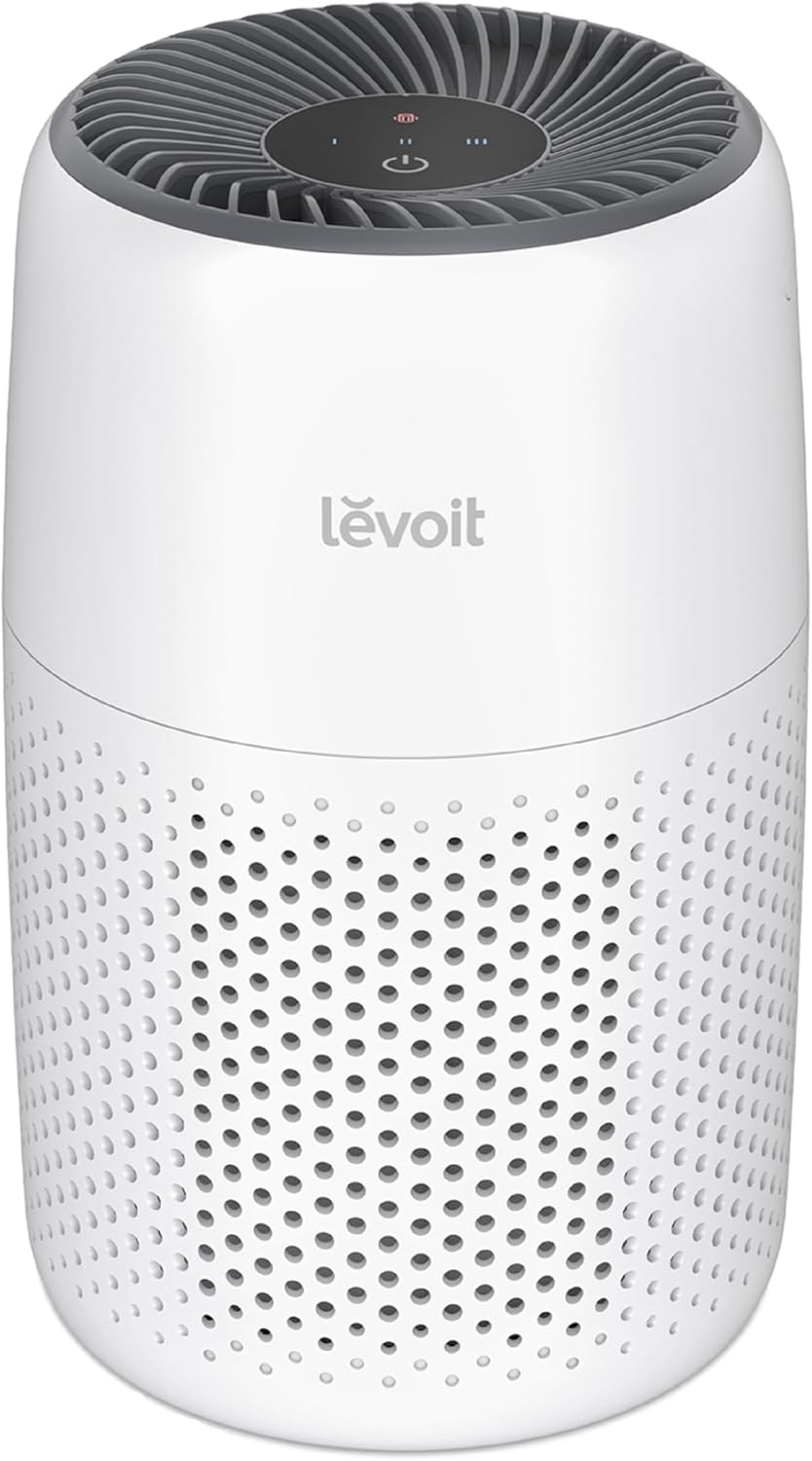
Levoit Core Mini-P
| Rated Power | 7W |
|---|---|
| Noise Level | 27-45dB |
| Adapter Input | 100-240V, 50/60Hz |
| Particle Retention Size | 0.3 micron |
The Levoit Core Mini-P is a small, plug-in air purifier intended for bedrooms, dorms, and desks where space is limited. It uses a pre-filter and main filter to capture lint, hair, pet dander, and fine particles, and the unit includes a fragrance sponge for light aromatherapy. Practical features include a low noise range (listed around 27–45 dB), a sleep mode with an auto-off display to reduce disturbance at night, and a built-in adapter storage to keep the cord tidy. At roughly 7 watts rated power it is energy efficient and easy to run continuously. Limitations are its small coverage area and modest airflow, so it is best for personal or single-room use rather than whole-room purification; replacement filters and fragrance use need occasional maintenance and you must avoid overfilling the fragrance pad. For buyers who want a quiet, space-saving purifier for a bedside or desktop, this model delivers convenient, low-power filtration without complex setup.
Best for: A cautious buyer who values proven performance and social validation and wants a quiet, compact purifier for a bedroom, dorm, or personal workspace.
Less Ideal for: People looking to purify large living rooms or open-plan spaces or who need high CADR performance for heavy smoke or allergy loads.
- Compact footprint fits on a nightstand or desk
- Pre-filter plus main filter captures pet hair, dust, and smoke particles
- Very low power draw (rated 7W) for continuous use
- Quiet operation with a sleep mode and auto-off display
- Built-in adapter storage keeps the cord tidy
- Small unit with limited coverage not suited for large rooms
- Aromatherapy requires careful dosing to avoid overflow or plastic damage
Verdict: If you want a quiet, energy-efficient mini purifier for a bedside or desktop backed by strong user feedback, the Levoit Core Mini-P is a reliable choice.
VOOPNU H13 HEPA Air Purifier DH-JH12

| Model number | DH-JH12 |
|---|---|
| Coverage (claimed) | 1076 ft² per hour (250 ft² per 15 min lab tested) |
| Noise level | 22 dB (low) |
| Filtration | H13 triple-layer HEPA |
The VOOPNU H13 HEPA Air Purifier is a compact bedroom unit that uses a 360° intake and a triple-layer H13 filter to remove particles, pollen, pet dander, and odors. It is intended for simple, everyday use—place it on a nightstand or shelf, plug it in, tap the control panel, and let it run continuously; the manufacturer reports it can clean 250 ft² every 15 minutes. Noise is very low on the lowest fan setting (as quiet as 22 dB), making it suitable for sleep, and a small essential oil tray lets you add a scent without affecting filtration. The unit is fully certified to common safety and emissions standards and accepts factory replacement filters available in standard or pet-care editions. Practical limitations are its small physical size and modest reported coverage relative to larger room purifiers, and replacement filters are recommended to retain performance. There is no complicated setup or app control, so if you want simple plug-and-play purification for a bedroom, this is straightforward and conservative choice.
Best for: Buyers seeking a low-noise, easy-to-use bedroom purifier that runs continuously for steady air cleaning and prioritizes straightforward, reliable operation.
Less Ideal for: People who need whole-house or large open-plan room purification or advanced smart features and app controls should consider larger or connected models instead.
- H13 triple-layer filtration captures fine particles and allergens.
- 360° air intake for even small-room circulation.
- Very quiet operation down to 22 dB suitable for sleeping.
- Simple one-touch controls with no complex setup or apps.
- Essential oil tray for light scenting while running.
- Compact unit has more limited airflow compared with larger purifiers.
- Relies on manufacturer replacement filters for best performance.
Verdict: A quiet, plug-and-play bedroom purifier that delivers reliable H13 filtration and easy continuous operation for risk-averse buyers.
Choosing the Right Mini Air Purifier for Bedrooms: Key Factors to Consider
Filtration Type and Efficiency
The type of filter determines what the purifier actually removes from bedroom air. True HEPA filters capture at least 99.97 percent of particles down to 0.3 microns and are the standard for trapping dust, pollen, and many allergy triggers. Some compact units use high-efficiency electrostatic or multi-stage filtration that can approach HEPA performance while saving space.
Knowing the filter class helps set expectations for allergen reduction and smoke or cooking odor control. For bedroom buyers, focus on particulate capture efficiency first, since removing fine particles and allergens has the most consistent impact on sleep quality and morning symptoms.
Noise Levels During Sleep
Noise output is a primary concern for bedroom purifiers because constant hum or fan noise can disturb sleep. Look for objective noise specs measured in decibels, especially at low or sleep fan settings. Many mini purifiers list a sleep mode that reduces fan speed and LED brightness to minimize disturbances.
Consider whether you are a light sleeper or prefer white noise. Some users want near-silent operation, while others accept gentle white noise. Check how noise scales with fan speed and whether the unit has a very low overnight power draw.
Room Coverage and Air Exchange Rate
A mini air purifier must exchange the air in your bedroom frequently enough to be effective. Check the stated coverage in square feet or the clean air delivery rate for particulate removal. Small units are designed for compact rooms, closets, or bedside spaces; larger bedrooms require higher airflow or multiple units.
Estimate your room size and compare it to the purifier's recommended coverage. Consider how quickly you want the unit to reduce airborne particles: faster air exchange improves results but can increase noise and energy use.
Physical Size and Placement Options
Mini purifiers need to fit where you want them. A nightstand-friendly footprint, vertical or low-profile designs, and easy cord routing matter for convenience. Placement affects performance too: a purifier should have unobstructed intake and outflow and not be tucked behind pillows or under shelves.
Think about bedroom layout and whether the unit can run on a bedside table, dresser, or floor without creating hazards. Also consider whether it has controls that are easy to reach in the dark or an app/remote for convenient adjustments.
Filter Lifespan and Replacement Ease
Ongoing filter costs and how easy it is to replace filters are practical considerations. Compact purifiers sometimes use proprietary or smaller filters that need more frequent replacement, which raises lifecycle cost and maintenance frequency. Look for clear replacement intervals and accessible filter chambers.
Some units offer washable prefilters that extend the main filter life. For bedroom use, choose a design that keeps replacement straightforward so you are more likely to maintain optimal performance.
Energy Use and Overnight Running Costs
A purifier that runs through the night should be energy efficient to avoid high electricity consumption. Check wattage at normal and sleep modes and consider units with low-power standby or automatic scheduling features.
Energy-efficient fans and LED indicators help keep operating costs down. If you plan to run the purifier every night, small differences in power draw compound over months, so favor models with documented lower consumption for continuous use.
How Much Coverage Do You Need for a Bedroom?
Start by measuring your bedroom square footage and ceiling height. Most mini purifiers list an optimal room size or a CADR-like figure; match that to your room to ensure adequate air exchanges. For small bedrooms under 120 square feet, a true mini unit is usually sufficient. For larger master bedrooms, look for higher airflow or plan to place the unit where it can clear air for the sleeping zone.
Remember that placement and obstacles like furniture affect effective coverage. Position the purifier so its intake is unobstructed and the outflow can circulate toward the sleeping area rather than directly against a wall or under bedding.
- Measure floor area and note ceiling height
- Match stated coverage to your room, not just the unit size
- Place unit with clear intake and outflow paths
Balancing Quiet Operation and Airflow
Quiet sleep modes usually reduce fan speed and airflow, which slows the rate of particle removal. Decide whether you prefer near-silent operation at the cost of slower cleaning or louder higher-speed cycles that refresh the room faster. Many users find a middle fan setting offers acceptable noise with decent exchange rates.
Look for features like multiple fan speeds, a dedicated sleep mode, and adjustable timers so you can tailor operation to bedtime and early-morning needs without manual intervention.
- Sleep mode for low noise and dimmed lights
- Multiple speeds let you balance speed and quiet
- Timers and scheduling reduce need for manual changes
Maintenance Tips for Bedroom Use
Keep the area around the purifier clear to avoid blocking intake vents and to reduce dust buildup. Vacuum or dust the surrounding area regularly to extend filter life and maintain airflow. If the unit has a washable prefilter, rinse it on the schedule recommended by the manufacturer to trap larger particles before they reach the main filter.
Replace primary filters according to the suggested interval, and keep a spare filter on hand if replacements have long lead times. Check indicator lights or app alerts and avoid running the unit past a recommended filter life, as efficiency declines over time.
- Clear a 12-inch perimeter around the unit when possible
- Vacuum or dust near the purifier weekly in high-dust homes
- Follow recommended replacement intervals and keep a spare filter
Controls, Indicators, and Smart Features
Controls that are easy to operate in the dark are especially useful in a bedroom. Look for units with tactile buttons, a sleep-friendly display, or an app that allows remote adjustments. Air quality indicators and filter-life readouts help you know when to increase fan speed or change filters without guesswork.
Smart features can add convenience, but they are optional for many users. If you prefer minimal fuss, a simple three-button interface and a clear filter indicator may be preferable to app-based setups that require pairing and occasional updates.
- Sleep-friendly displays or dimmable lights
- Filter-life indicators minimize guesswork
- App control adds convenience but is not essential
Allergy and Asthma Considerations
If allergies or asthma are concerns, prioritize particulate capture and verified filter efficiency. A unit that effectively traps fine particles will reduce airborne triggers. Consider models that also include a prefilter to capture pet hair and larger debris, which prolongs the main filter life and maintains consistent airflow.
Keep in mind that air purifiers reduce airborne particles but do not address all triggers, such as dust mites in bedding. Pair purifier use with regular washing of linens and bedroom cleaning for the best results.
- Prioritize high-efficiency particulate filtration
- Use prefilters for pet hair and large debris
- Combine purifier use with regular cleaning for best results
How We Chose the Best Mini Air Purifier for Bedrooms
We prioritized features that matter specifically for bedroom use. Key evaluation dimensions included particulate filtration performance for fine particles and allergens, verified through HEPA or equivalent filtration specs and filter design. Noise output at common fan speeds was measured in reported decibels or manufacturer test data to ensure units stay unobtrusive during sleep. Airflow and clean-air delivery were considered relative to bedroom sizes, using CADR or stated room-coverage figures where available to judge how quickly a unit can refresh typical sleeping spaces. We also evaluated unit footprint and placement flexibility so a purifier can sit on a nightstand or floor without blocking vents. Energy consumption and runtime behavior were included to reflect overnight operating cost and practicality. Filter maintenance and replacement accessibility were assessed for ongoing usability. Units with unclear filtration claims, excessive sleep-time noise, or impractical placement requirements were excluded. Our selections favor measurable filtration performance, quiet operation, adequate room coverage for bedrooms, and easy maintenance.
Our full evaluation process is outlined in our review methodology.
FAQ
Can a mini air purifier handle a whole bedroom overnight?
Often it can if the unit's stated coverage matches your bedroom size. Mini purifiers are designed for smaller rooms; verify the recommended square footage and expect slower particle removal on lower fan speeds. For larger bedrooms, run the purifier on a higher setting before sleep and switch to sleep mode overnight.
How loud is a typical bedroom-focused mini purifier?
Noise levels vary, but many sleep-mode settings operate around whisper-quiet levels that are unlikely to disturb most sleepers. Check decibel ratings for low and medium speeds to understand how the unit performs during overnight use.
How often do filters need to be replaced?
Replacement frequency depends on filter type, usage hours, and local air quality. Expect main filter replacements every 6 to 12 months in typical bedroom use, with washable prefilters requiring cleaning more frequently. Units with filter-life indicators remove guesswork.
Will a bedroom purifier remove odors and VOCs?
Some mini purifiers include activated carbon or adsorbent stages that reduce odors and certain volatile organic compounds. However, compact units have limited capacity for persistent VOCs, so for strong or continuous odors consider improving ventilation in addition to a purifier.
Is it safe to run a mini purifier all night?
Yes, most mini purifiers are designed for continuous operation and include safety features and low-power modes for overnight use. Ensure the unit has adequate clearance, a stable placement, and is used according to manufacturer instructions.
Final Verdict
For bedroom use, prioritize filtration efficiency, low noise at sleep settings, and coverage that matches your room. Mini purifiers offer a balance of compact size and effective particulate removal, but you must trade off between airflow speed and quiet operation. Choose a unit with a proven filter type, accessible maintenance, and the footprint that fits your bedside setup. When you match coverage and noise performance to your sleep preferences, a mini air purifier becomes an effective overnight tool for cleaner air and better-rested mornings.