
Note: This article contains affiliate links. If you click on these links and make a purchase, we may earn a small commission at no extra cost to you. This helps support our research and content. Read our full affiliate disclosure here.
If you need compact, reliable cold storage without taking over your room, the right mini fridge makes a big difference. Whether you are furnishing a dorm, office nook, or secondary kitchenette, small differences in interior layout, capacity, and energy draw determine how useful a mini fridge will be in daily use. This guide highlights seven shortlisted mini fridges that represent strong deals across common needs. We evaluate usable capacity, power consumption, cooling performance, and practical features so you can pick an option that balances storage, noise, and running cost. Read on for the factors we weighed and the tests that shaped our selections.
Top Picks at a Glance
| Best Overall The best all-around choice for most situations | Upstreman BR321 3.2 Cu.Ft Mini Fridge |  |
| Best Quality Built to a higher standard if you want something more solid | EUHOMY 3.2 Cu Ft Mini Fridge |  |
| Best Value The sweet spot between price and what you get | EUHOMY WC-6B Mini Fridge | 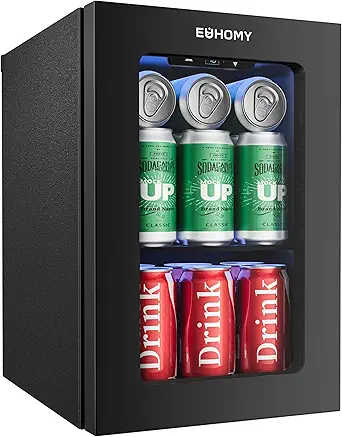 |
| Best Budget The cheapest option that still gets the job done reliably | Frestec 1.7 Cu Ft Mini Fridge |  |
| Top Rated A top-rated pick with lots of positive feedback | Midea Compact Refrigerator WHS-65LB1 |  |
| Most Popular A crowd favorite that many people choose with confidence | Frigidaire Retro 3.2 Cu Ft Fridge |  |
| Best Seller A high-volume bestseller chosen again and again | Frostorm Mini Fridge BC-90 |  |
Upstreman BR321 3.2 Cu.Ft Mini Fridge

| Capacity | 3.2 cubic feet |
|---|---|
| Freezer Capacity | 0.3 cubic feet |
| Cooling Method | Compressor |
| Defrost System Type | Manual Defrost |
| Voltage | 115 volts |
The Upstreman BR321 is a compact compressor mini fridge that packs practical daily features into a small footprint. It provides 3.2 cubic feet of total capacity with a 0.3 cu.ft freezer, two adjustable glass shelves, a crisper drawer, and three door shelves for bottles and condiments. Cooling is controlled by a five-step thermostat (32°F to 50°F) so you can dial in temperatures for drinks, dairy, and produce, while the manual defrost freezer and tight door seal help retain cold. The reversible door and adjustable leveling feet make it easy to fit in tight spaces and on uneven floors, and the claimed 38 dB noise level plus ETL certification suit bedroom or office use. Trade-offs are typical for this class: the freezer is small and not intended for ice cream or large frozen items, and manual defrost means occasional maintenance. Energy consumption is listed at 206 kWh annually, so it is relatively efficient for a compressor unit. For buyers seeking a straightforward, space-saving fridge with flexible shelving and quiet operation, this covers the essentials without extra frills.
Best for: Buyers who want a balanced, no-nonsense compact refrigerator for a dorm, bedroom, office, or small apartment where quiet operation and flexible storage matter more than large frozen capacity.
Less Ideal for: Anyone who needs substantial freezer space or hands-off frost-free maintenance should look at larger or auto-defrost models instead.
- Compact footprint with 3.2 cu.ft total capacity and a dedicated 0.3 cu.ft freezer for small frozen items
- Adjustable glass shelves and crisper drawer allow flexible organization for bottles, snacks, and produce
- Reversible door and adjustable leveling feet simplify placement in dorms, bedrooms, or offices
- Quiet compressor operation (about 38 dB) and ETL certification make it bedroom/office-friendly
- Freezer is small and not suitable for storing ice cream or large frozen items
- Manual defrost requires periodic maintenance to prevent frost buildup
Verdict: A quiet, energy-efficient 3.2 cu.ft mini fridge that delivers flexible shelving and practical features for everyday dorm, bedroom, or office use.
EUHOMY 3.2 Cu Ft Mini Fridge

| Capacity | 3.2 cubic feet |
|---|---|
| Freezer Capacity | 0.96 cubic feet |
| Cooling Method | Compressor |
| Defrost System Type | Manual |
| Door Orientation | Reversible |
This EUHOMY 3.2 cu ft mini fridge pairs a small refrigerator compartment with a 0.96 cu ft top freezer to give you both chilled and frozen storage in a compact footprint. It uses a compressor cooling system and offers three temperature settings, so it brings reliable, fridge-style cooling rather than the weaker thermoelectric performance found on some mini fridges. Adjustable glass shelves, a crisper drawer, interior LED lighting, and a reversible door make it flexible for dorms, bedrooms, or offices, and the compressor runs quietly for everyday use. Setup is straightforward for freestanding placement and the unit includes electronic lock capability. Expect a manual defrost freezer and modest annual energy use compared with full-size units; the fridge is not intended for heavy family storage but does well for snacks, drinks, and meal prep for one or two people. If you want a compact, performance-focused mini fridge that cools consistently and includes a small freezer, this model hits the mark.
Best for: Buyers who prioritize dependable cooling performance in a compact fridge for a dorm room, bedroom, or small apartment and want the convenience of a separate freezer.
Less Ideal for: People who need large-capacity refrigeration for families, long-term food storage, or frequent heavy use should look at larger refrigerators.
- Compressor cooling for more consistent and lower temperatures than thermoelectric units
- Two-door layout with a dedicated freezer section for frozen foods and ice cream
- Adjustable glass shelves and crisper drawer for flexible organization
- Reversible door and adjustable feet for adaptable placement
- Interior LED light for clear visibility at night
- Manual defrost freezer requires occasional maintenance
- Capacity is limited for multi-person households or heavy storage needs
Verdict: Choose this mini fridge when you want compact, compressor-driven cooling with a usable top freezer for reliable everyday performance.
EUHOMY WC-6B Mini Fridge

| Capacity | 18 liters |
|---|---|
| Cooling Method | Compressor |
| Temperature Range | 40°F to 61°F |
| Installation Type | Freestanding |
| Defrost System Type | Manual |
The EUHOMY WC-6B is a small compressor-powered beverage refrigerator sized for counters, dorms, and home bars. It cools between 40°F and 61°F using a digital control, and its quiet compressor claims under 40 dB operation so it can sit in a bedroom or office without much noise. The interior holds about 24 cans or a few bottles and includes a removable shelf so you can swap between cans and taller bottles. The right-hinged UV-protected door and internal LED make it easy to find drinks, while manual defrost keeps the design simple. Because it is compressor-based rather than thermoelectric, it maintains stable temperatures as room conditions change, but the capacity is very small and it is freestanding only. Expect basic functionality and modest energy use suitable for single-person use or short-term cooling rather than bulk storage.
Best for: Buyers who want a reliable, space-saving fridge for keeping drinks chilled near a workspace or bedside and who prioritize steady cooling and low noise over large capacity.
Less Ideal for: Not suitable for anyone needing to chill large quantities, long-term food storage, or built-in installation in cabinetry.
- Compressor cooling for more stable temperatures than thermoelectric units
- Compact 18 L capacity fits on countertops and in small spaces
- Removable shelf allows easy reconfiguration for cans or bottles
- Digital temperature control with a 40°F–61°F range
- Quiet operation under 40 dB suitable for bedrooms and offices
- Very small internal capacity limits how many bottles or cans you can store
- Manual defrost requires occasional user maintenance
Verdict: Choose this compact compressor mini fridge when you need quiet, stable cooling in a very small countertop footprint.
Frestec 1.7 Cu Ft Mini Fridge

| Capacity | 1.7 cubic feet |
|---|---|
| Freezer Capacity | 0.2 cubic feet |
| Cooling Method | Compressor |
| Defrost Type | Manual |
| Voltage | 115 volts |
This Frestec 1.7 cu ft mini fridge is a basic, space-saving refrigerator that fits under a desk or in a small room and includes a 0.2 cu ft freezer compartment. It uses a compressor cooling method with R-600A refrigerant and offers six temperature settings via a simple thermostat knob and a one-touch defrost button for occasional ice buildup. The interior has one removable glass shelf and a small light, and the reversible door plus adjustable feet make placement flexible on uneven surfaces. Noise is low at about 37 dB, so it is unlikely to disturb a bedroom or office, and the unit is marketed as energy-efficient with roughly 0.55 kWh per day. Trade-offs are its manual defrosting and single shelf layout, which limit heavy food storage and organization, and its modest annual energy figure is higher than some premium efficient models. For buyers wanting a no-frills, compact fridge to hold drinks, snacks, and light perishables, this delivers practical performance for tight spaces.
Best for: Buyers on a tight budget who need a straightforward, quiet mini fridge for dorms, offices, or bedrooms and prioritize compact size and simple controls over extra storage features.
Less Ideal for: Those who need larger capacity, extensive internal organization, or automatic defrosting for heavy food storage should consider larger or more feature-rich models.
- Very compact footprint fits under desks and in small rooms
- Includes small internal freezer for ice or frozen snacks
- Low operating noise around 37 dB suitable for bedrooms or offices
- Reversible door and adjustable feet for flexible placement
- Removable glass shelf simplifies cleaning and accommodates taller items
- Manual defrost rather than automatic defrost system
- Single shelf and small freezer limit organized storage capacity
Verdict: A budget-friendly, quiet compact fridge that fits tight spaces and covers basic cooling needs with a small freezer for simple dorm or office use.
Midea Compact Refrigerator WHS-65LB1

| Capacity | 1.6 cubic feet |
|---|---|
| Annual Energy Consumption | 207 kilowatt hours per year |
| Defrost System Type | Automatic |
| Cooling Method | Compressor |
| Installation Type | Freestanding |
The Midea WHS-65LB1 is a compact, freestanding mini refrigerator built for small spaces like dorms, offices, or bedrooms. It uses an R600A compressor and is ENERGY STAR certified, which keeps annual energy use low while providing steady cooling across six thermostat settings and a small chiller compartment for quick cooling. The unit has a reversible door and a removable shelf to adapt to taller items and offers convenient door racks sized for bottles. Noise is kept low, under 42 dB, so it is suitable for quiet rooms. Practical limits include the modest 1.6 cubic foot capacity and a chiller that only handles short-term cooling rather than deep freezing, so it is not for long-term frozen storage. The fridge is straightforward to set up and operate and delivers dependable, economical refrigeration for basic food and beverage needs where footprint and energy use matter more than capacity or advanced features.
Best for: Buyers who prioritize reliable, energy-efficient refrigeration in tight spaces and want a simple, low-maintenance mini fridge for drinks and short-term food storage.
Less Ideal for: People who need significant refrigeration capacity, long-term freezing, or advanced temperature control features should consider larger or feature-rich models instead.
- ENERGY STAR certified and uses an R600A compressor for lower annual energy consumption
- Reversible door and removable shelf allow flexible placement and internal arrangement
- Compact footprint suited to small spaces such as dorms, offices, or bedrooms
- Quiet operation rated under 42 dB for low ambient noise during use
- Small 1.6 cu ft capacity limits how much perishables and bottles you can store
- Internal chiller is for short-term cooling and cannot reliably freeze items
Verdict: A compact, energy-efficient mini fridge built for dependable, low-noise cooling in small spaces.
Frigidaire Retro 3.2 Cu Ft Fridge

| Capacity | 3.2 cubic feet |
|---|---|
| Freezer Capacity | 0.2 cubic feet |
| Cooling Method | Compressor |
| Defrost System Type | Manual |
| Annual Energy Consumption | 219 kwh |
This Frigidaire retro compact fridge delivers classic styling with practical small-space performance. It cools with a compressor and includes a 0.2 cu ft chiller compartment for ice and frozen snacks, two glass shelves and a 2L-capable door basket for bottles, plus a built-in can dispenser and side bottle opener for entertaining. The reversible door and flush-back design make placement flexible in dorms, offices, or bedrooms, and the manual defrost keeps the internal layout simple. Energy use is reasonable for its class at about 219 kWh/year, and the metal door and matte finish feel sturdy compared with many countertop alternatives. Expect basic mechanical controls rather than smart features, and the freezer is small so it will not replace a full-size unit for long-term frozen storage. Assembly is straightforward but noise from the compressor can be noticeable in very quiet rooms. For buyers who want a retro look with usable beverage and snack storage, this is a solid, no-frills choice.
Best for: Buyers who prioritize a stylish, compact refrigerator for entertaining or small-space living and who value visible user reviews and reliable, straightforward performance.
Less Ideal for: Anyone needing significant frozen storage, advanced temperature control, or smart-connected appliances should consider larger or feature-rich alternatives.
- Distinctive retro styling that adds personality to small spaces
- Built-in bottle opener and can dispenser for easy entertaining
- Reversible door and flush-back design for flexible placement
- Two glass shelves and a 2L door basket provide organized storage
- Compressor cooling with a dedicated chiller/freezer compartment
- Freezer compartment is very small and only suitable for ice or short-term frozen items
- Manual defrost requires occasional maintenance
- No smart features or advanced temperature controls
Verdict: Choose this fridge if you want a stylish, compact compressor refrigerator that balances retro looks with dependable beverage and snack storage.
Frostorm Mini Fridge BC-90

| Capacity | 3.2 cubic feet |
|---|---|
| Freezer Capacity | 0.3 cubic feet |
| Defrost System Type | Automatic |
| Voltage | 115 |
The Frostorm BC-90 is a compact 3.2 cubic foot mini fridge with a built-in 0.35 cu ft upright freezer, designed for bedrooms, offices, and dorm rooms. It cools with a simple mechanical thermostat (1–5) and includes adjustable glass shelves, door bins, and an ice tray for everyday organization. The freezer reaches freezer temperatures suitable for ice and short-term frozen storage while the main compartment handles beverages and meal prep. Practical touches include a reversible door for flexible placement, automatic defrost operation for low maintenance, and ETL certification for safety. Energy use is modest at about 0.6 kWh per day, which keeps running costs low. Expect basic, reliable performance rather than premium precision cooling or advanced features like digital controls or smart connectivity. The unit is freestanding and straightforward to install, but manual defrost of the small freezer compartment and limited freezer volume mean it is best for routine chilled storage rather than long-term freezing or heavy frozen-food use.
Best for: Buyers seeking a reliable, low-maintenance compact fridge for a dorm, bedroom, or office who prioritize straightforward performance and energy efficiency over advanced features.
Less Ideal for: People who need substantial long-term frozen storage, precise temperature control, or smart-connected appliances should consider larger or feature-rich refrigerators instead.
- Generous 3.2 cu ft total capacity for a mini fridge with a dedicated upright freezer
- Reversible door allows flexible placement in small spaces
- Adjustable glass shelves and door bins for organized storage
- Automatic defrost and simple mechanical thermostat make operation low-maintenance
- ETL certified and energy efficient with about 0.6 kWh/day consumption
- Freezer is small and suited mainly for ice and short-term storage
- Controls are mechanical only, no digital precision or smart features
- Not suitable for heavy freezer use or large frozen items
Verdict: A dependable, energy-efficient 3.2 cu ft mini fridge with an upright freezer that delivers fuss-free cooling and flexible placement for risk-averse buyers.
Choosing the Right Mini Fridge Deals: Key Factors to Consider
Usable Capacity and Layout
Cabinet volume alone does not tell the whole story. Shelving configuration, door bin size, and the presence of a small freezer compartment determine how much you can actually store and how you can organize beverages, prepared foods, and produce.
Look for adjustable shelves or removable bins if you plan to fit taller bottles or odd-sized containers. Consider whether the unit has a compact freezer section if you need frozen storage; some mini fridges sacrifice freezer space for more refrigerated capacity, which can be preferable for drink- and snack-focused use.
Energy Use and Long-Term Cost
Mini fridges typically run constantly, so energy draw affects monthly electrical costs and heat output in small rooms. Check for efficient compressor designs and low standby draw. Units rated with lower annual kWh consumption are generally cheaper to operate over time.
Also consider the ambient room temperature where the fridge will sit. Units working in hot or poorly ventilated spaces run harder and consume more power. Placement with adequate airflow and away from heat sources reduces cycling and saves energy.
Cooling Performance and Temperature Control
Fast cool-down and consistent temperature retention protect food and drinks. Reliable thermostatic controls or digital thermostats let you set and maintain the desired temperature. Some mini fridges are better at holding lower temperatures when loaded, while others struggle under heavier loads.
Assess how quickly a unit returns to set point after the door opens frequently. For sensitive items, look for fridges with better insulation and stronger compressors that maintain even cooling across shelves.
Noise Level and Suitability for Living Areas
Noise becomes important when a mini fridge sits in a bedroom, study, or office. Compressor-driven models are more common and can be quiet, but cheap vibration isolation or loose panels can cause buzzing or rattling that is intrusive.
Pay attention to reported decibel levels where available and seek units designed with vibration damping and quieter compressors for sleeping or working spaces. Placement on a stable, level surface also reduces noise from vibration.
Size, Door Swing, and Installation Fit
Physical dimensions and door swing direction determine where the fridge can be installed. Measure your available footprint, including clearance for the door to open fully. Reversible doors add flexibility for placement near counters or walls.
Also check ventilation requirements; some units need clearance at the back or sides to dissipate heat. Built-in or countertop-style placement has different ventilation considerations, so match the unit to your intended location.
Ease of Maintenance and Interior Cleaning
Mini fridges that are easy to clean stay hygienic and last longer. Removable shelves, simple door gaskets, and accessible drip trays make defrosting and routine cleaning easier. Smooth interior finishes resist stains and odors.
Consider how easy it is to defrost if the unit has a freezer compartment. A fridge with straightforward access to the interior and parts you can wipe down without tools reduces long-term upkeep time and frustration.
Where Mini Fridges Work Best
Mini fridges are ideal for small-scale cold storage needs where a full-size refrigerator is unnecessary. Typical use cases include dorm rooms, home offices, media rooms, and secondary kitchenettes. Their compact footprint lets you add chilled storage without sacrificing valuable floor space.
Think about what you plan to store more of. If you need to stock beverages, prioritize models with taller door bins and bottle-friendly shelving. If you need short-term food storage, a model with a modest freezer compartment might be preferable.
- Dorm rooms: prioritize quiet operation and reversible doors for tight layouts
- Offices: prioritize energy efficiency and compact footprint
- Basement or garage: consider units with stronger compressors for warmer ambient temps
Placement and Ventilation Tips
Proper placement extends the life and performance of a mini fridge. Allow recommended clearance at the back and sides for airflow. Avoid enclosing the unit in tight cabinetry unless it is specifically rated for built-in installation.
Keep the fridge away from direct heat sources like radiators or sunlight, which force the compressor to work harder and increase energy draw. Level the unit to prevent extra vibration and to ensure the door seals correctly.
- Leave at least a few inches behind the fridge for heat dissipation
- Avoid placing on carpet without a solid base to reduce vibration and airflow restriction
- Keep the door hinge clearance in mind when measuring installation space
Understanding Energy Labels and Real-World Use
Energy ratings provide a baseline, but actual consumption varies with ambient temperature, how often the door is opened, and what you store inside. A densely packed fridge retains cold better but may take longer to cool new items.
Compare annual kWh estimates when available, and factor in your climate. In warmer rooms expect higher running costs. For continuous operation in living spaces, prioritize models with lower energy draws and efficient insulation.
- Annual kWh estimates help compare operating cost
- Frequent door openings increase run time and energy use
- Placement in hot rooms raises consumption and reduces cooling margin
Managing Noise and Minimizing Vibration
Noise and vibration are common complaints for small fridges. Look for units with reported low-decibel operation and good build quality. Simple steps like placing a vibration-damping mat underneath or tightening loose panels can reduce audible rattles.
If the fridge will sit near a bed or workstation, prioritize units explicitly designed for quiet operation and test for hum or rattle in the first days of use.
- Use a stable, level platform to reduce vibration
- Check door alignment and tighten internal shelving to prevent rattles
- Consider compressor type and reported noise levels for sensitive locations
Maintaining Temperature and Food Safety
Keep the thermostat set at recommended temperatures for safe food storage. For mixed-use where both drinks and perishables are stored, aim for a stable setting that keeps dairy and leftovers safe without freezing bottled drinks.
Regularly clean seals and interior surfaces to prevent odor transfer and bacteria buildup. If the unit has a defrost function, follow the manufacturer schedule to avoid ice buildup that reduces cooling efficiency.
- Monitor internal temperature with a small thermometer if precise control is needed
- Avoid overpacking, which obstructs airflow and causes uneven cooling
- Defrost periodically to maintain efficient cooling in models without automatic defrost
How We Chose the Best Mini Fridge Deals
We narrowed candidates by focusing on the features that matter most for small-format refrigeration. Usable interior capacity and shelf layout were primary filters because advertised liters or cubic feet often mislead; we looked for units with usable shelf space and flexible shelving to suit bottles, cartons, and snacks. Energy efficiency and real-world power draw were critical because mini fridges often run continuously in tight spaces; models with efficient compressors or proven low-watt operation were favored. Cooling performance and temperature stability were evaluated next, emphasizing rapid pull-down and the ability to hold set temperatures under normal room conditions. Noise level and vibration were important for bedroom or office use, so quieter compressors and vibration-dampening designs received priority. Practical features such as reversible doors, interior lighting, and easy-clean surfaces also influenced selections because they affect day-to-day convenience. We excluded novelty-only units or models with unclear thermal performance and poor ventilation designs. Units with unreliable controls or lacking basic safety and certification information were not considered. The result is a shortlist that balances compact capacity, operating cost, low noise, and everyday usability.
Our full evaluation process is outlined in our review methodology.
FAQ
How much space do I need for a mini fridge in a dorm or office?
Measure the intended footprint plus clearance for ventilation and door swing. Allow a few inches behind the unit for airflow and confirm the door can open fully in your chosen location.
Will a mini fridge run up my electricity bill?
Mini fridges consume less than full-size refrigerators but run continuously. Energy use depends on model efficiency, ambient temperature, and how often the door is opened, so choose a low-kWh unit for lower running costs.
Can I put a mini fridge inside a cabinet or under a counter?
Only if the unit is rated for built-in or enclosed installation and you provide sufficient ventilation per the manual. Enclosing a standard countertop model can cause overheating and reduced compressor life.
How often should a mini fridge be defrosted?
Frequency depends on whether the unit has an automatic defrost feature. For manual-defrost models, defrost when ice buildup approaches a quarter-inch to maintain efficiency and capacity.
Are compressor-driven mini fridges better than thermoelectric models?
Compressor models generally offer stronger cooling and better temperature control in varied ambient temps. Thermoelectric units can be quieter and lighter but are less effective in hot rooms or for cooling to low temperatures.
Final Verdict
Choose a mini fridge by prioritizing the features that match your daily needs. If you need beverage storage and low noise for a bedroom, focus on door layout and quiet operation. If you require food storage and occasional freezing, prioritize usable interior capacity and reliable temperature control. Balance energy efficiency against cooling strength and factor in placement constraints like ventilation and door swing. With those tradeoffs in mind, you can confidently select a compact unit that delivers the right mix of storage, running cost, and convenience.