
Note: This article contains affiliate links. If you click on these links and make a purchase, we may earn a small commission at no extra cost to you. This helps support our research and content. Read our full affiliate disclosure here.
A basement-friendly mini fridge does more than chill beverages. In lower-level spaces you often need a unit that fits tight layouts, handles cooler ambient temperatures, and runs quietly so it does not echo through living areas. The right mini fridge keeps snacks and drinks accessible without frequent trips upstairs or creating heat and noise problems that make a basement less comfortable. This guide shortlists the top mini fridges for basements and explains the evaluation criteria we used, including capacity, noise, temperature stability, and energy use. Read on for the picks that best address common basement challenges and for guidance to help you pick the right unit for your space.
Top Picks at a Glance
| Best Overall The best all-around choice for most situations | Honeywell H115BCS Beverage Cooler |  |
| Best Quality Built to a higher standard if you want something more solid | Danby DBC117A1BSSDB-6 Beverage Center |  |
| Best Value The sweet spot between price and what you get | Manastin Beverage Refrigerator MRBRN2 |  |
| Best Budget The cheapest option that still gets the job done reliably | Feelfunn Beverage Refrigerator FWC008-11 | 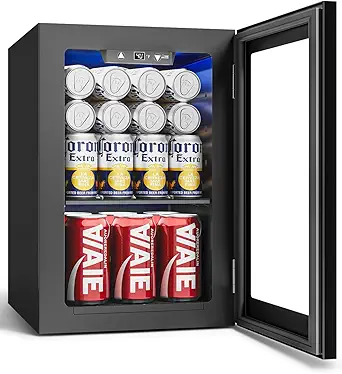 |
| Top Rated A top-rated pick with lots of positive feedback | hOmeLabs Beverage Refrigerator HME030065N | 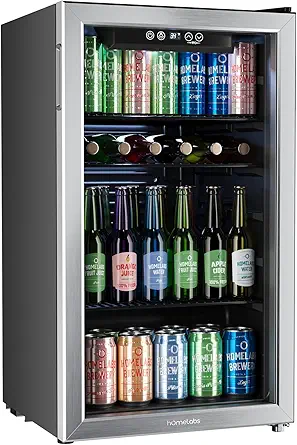 |
| Most Popular A crowd favorite that many people choose with confidence | Frigidaire Retro Compact Fridge 3.2 cu ft |  |
| Best Seller A high-volume bestseller chosen again and again | EUHOMY 3.2 Cu Ft Beverage Refrigerator |  |
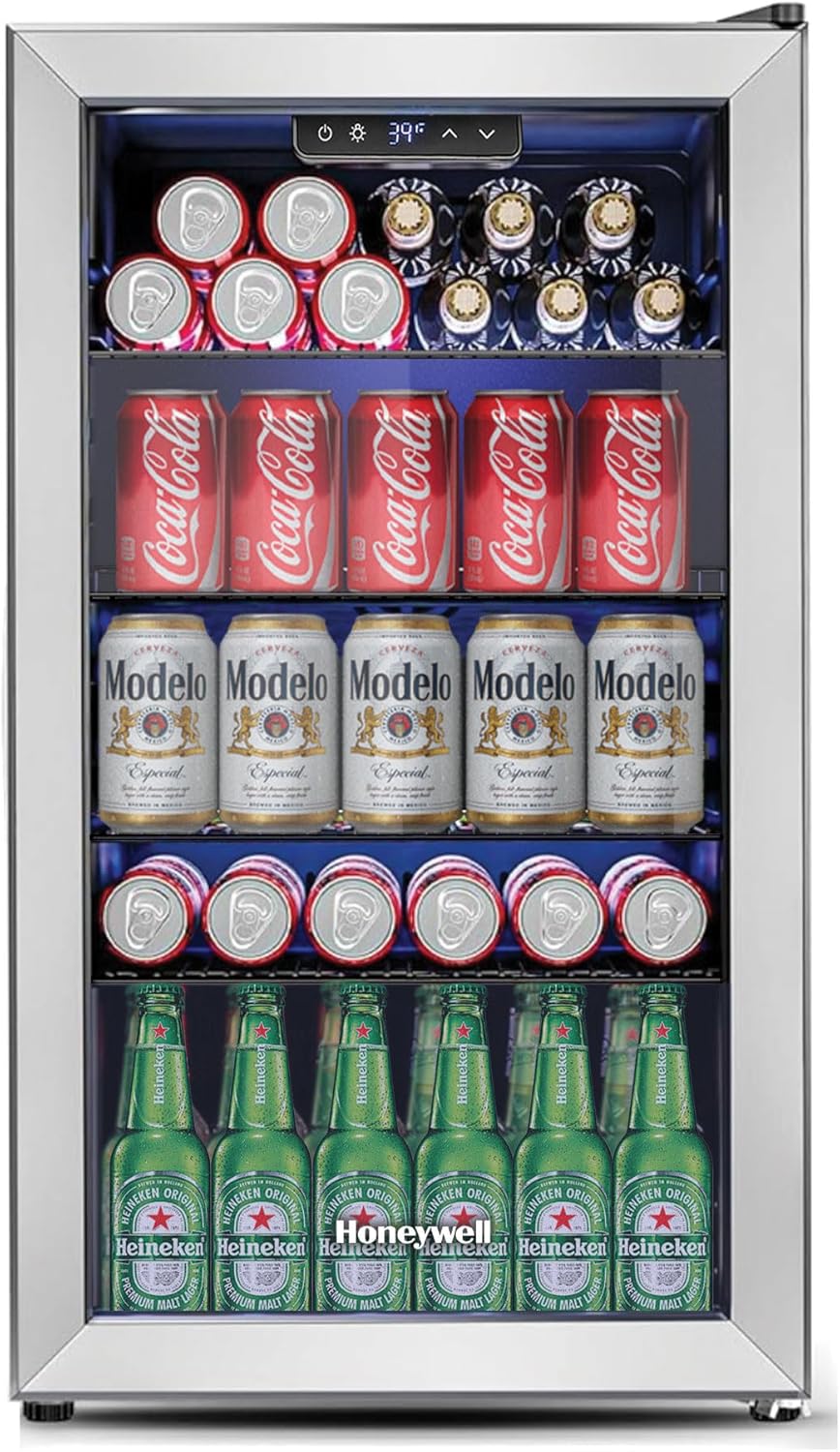
Honeywell H115BCS Beverage Cooler
| Capacity | 3 cubic feet |
|---|---|
| Cooling Method | Thermoelectric |
| Can Capacity | 116 Can |
| Door Material | Tempered Glass |
| Thermostat | Adjustable digital (34°F–50°F) |
The Honeywell H115BCS is a compact beverage cooler designed to store cans and bottles in a visible, temperature-controlled cabinet. It uses thermoelectric cooling and an adjustable digital thermostat that ranges from 34°F to 50°F, letting you set serving temperatures for beer, soda, or light wine. The unit has a tempered glass door to help insulate and reduce UV exposure, soft interior LED lighting for display, and three slide-out PVC-coated wire shelves plus a bottom section that together accommodate up to 116 cans. Practical touches include adjustable leveling legs, a reversible door, and an electronic lock for security. The cooler is frost-free and intended for undercounter or freestanding placement in small spaces like basements, home bars, or rec rooms. Limitations are typical for thermoelectric systems: it is best for moderate ambient conditions and will not cool as aggressively as a compressor fridge in very warm rooms, and its 3.2 cubic feet capacity suits medium to light stocking rather than large events. If you want a visible, easy-to-manage beverage display for a basement hangout, this unit covers the basics well.
Best for: Buyers who want a visible, easy-to-use beverage display for a basement rec room or home bar and prioritize adjustable serving temperatures and organized storage over commercial-grade cooling.
Less Ideal for: Those needing rapid deep cooling or large-volume storage for frequent big gatherings should choose a compressor-powered, higher-capacity refrigerator instead.
- Adjustable digital thermostat with 34°F–50°F range for beverage-specific temperatures
- Tempered glass door with interior LED lighting provides clear display and UV protection
- Slide-out PVC-coated wire shelves and 116-can capacity maximize organized storage
- Reversible door and adjustable leveling legs simplify placement in tight basement spaces
- Thermoelectric cooling is less powerful than compressor systems in hot ambient conditions
- Capacity and cooling method are better suited to regular use rather than heavy-duty commercial stocking
Verdict: A compact, display-friendly beverage cooler that delivers adjustable serving temperatures and tidy storage ideal for basement bars and rec rooms.
Danby DBC117A1BSSDB-6 Beverage Center

| Capacity | 3.1 cubic feet |
|---|---|
| Size | 117 Cans |
| Cooling Method | Fan-forced |
| Temperature Range | 35.6°F to 50°F (2°C to 10°C) |
The Danby DBC117A1BSSDB-6 is a compact beverage fridge built to keep drinks cold and visible in a small footprint. It uses fan-forced cooling and a centrifugal compressor to maintain even temperatures across the cabinet, and a mechanical thermostat lets you set a range from about 35.6°F to 50°F for beer, soda, or bottled water. Interior blue LED lighting and a tempered glass door with stainless trim make it useful as a bar or basement display, while three adjustable wire shelves let you configure can and bottle storage. The reversible door and smooth-back design make placement near a wall straightforward, and the keyed lock adds security for shared spaces. Expect straightforward mechanical controls rather than smart features and moderate energy use typical of compact fridges. If you need a simple, purpose-built drink cooler that prioritizes consistent cooling and capacity in a small footprint, this Danby delivers; buyers seeking precise digital controls or ultra-quiet, high-end compressors may prefer other models.
Best for: Buyers who want a high-capacity, no-frills beverage cooler for a basement or bar area that reliably holds a large stash of drinks and prioritizes consistent cooling over smart features.
Less Ideal for: Those who need exact digital temperature control, ultra-quiet premium compressors, or integrated smart home connectivity should consider other options.
- Holds up to 117 (12 oz) cans for substantial basement drink storage
- Fan-forced cooling with centrifugal compressor for even internal temperatures
- Three adjustable wire shelves let you configure space for cans and bottles
- Reversible door and smooth-back design allow flexible placement near walls
- Tempered glass door with LED interior lighting and keyed lock for display and security
- Mechanical thermostat lacks precise digital temperature readout or presets
- Moderate annual energy consumption compared with the most efficient compact models
Verdict: A spacious, performance-focused beverage cooler for basement hosts who need dependable, even cooling and high can capacity.
Manastin Beverage Refrigerator MRBRN2

| Capacity | 3.2 cubic feet |
|---|---|
| Temperature Range | 35–65°F |
| Cooling Method | Compressor |
| Number of Shelves | 3 |
| Power Source | Corded Electric |
The Manastin 3.2 cu ft beverage refrigerator is a compact compressor-cooled drink cooler aimed at storing cans and bottles in a small footprint. It uses a digital thermostat with a 35–65°F range and a touch-mode control so you can set precise serving temperatures for soda, beer, or wine, and the display can switch between Fahrenheit and Celsius. Three removable wire shelves and multiple slot positions provide flexible layouts for upright bottles or stacked cans, while an interior fan and dual low-E glass door help maintain even temperatures and reduce heat transfer. The unit is freestanding, has adjustable feet for uneven floors, a soft blue LED interior light, and a keyed lock for security. Practical benefits for basement use include quiet compressor operation, compact depth for tight spaces, and visible storage behind the glass door for easy access during gatherings. Limitations are its modest 3.2 cu ft capacity, so it is best for supplemental storage rather than full household refrigeration, and the single-door, right-hinge design restricts placement options in very tight corners.
Best for: Buyers who want a compact, quiet supplemental fridge to keep drinks at precise serving temperatures in a basement bar, rec room, or media area and who value visible, organized storage.
Less Ideal for: Households needing primary refrigeration or large-capacity cold storage for groceries should choose a full-size fridge instead.
- Digital thermostat with 35–65°F range for precise drink temperatures
- Compressor cooling with internal fan for even, fast cooling
- Adjustable removable shelves that accommodate cans and bottles
- Dual low-E glass door and soft blue LED for display and insulation
- Quiet operation and adjustable feet for uneven basement floors
- 3.2 cu ft capacity is limited for large parties or heavy stockpiling
- Single right-hand door limits placement in some tight basement layouts
Verdict: A compact, quiet beverage fridge that delivers precise temperature control and flexible shelving for basement bars and rec rooms.
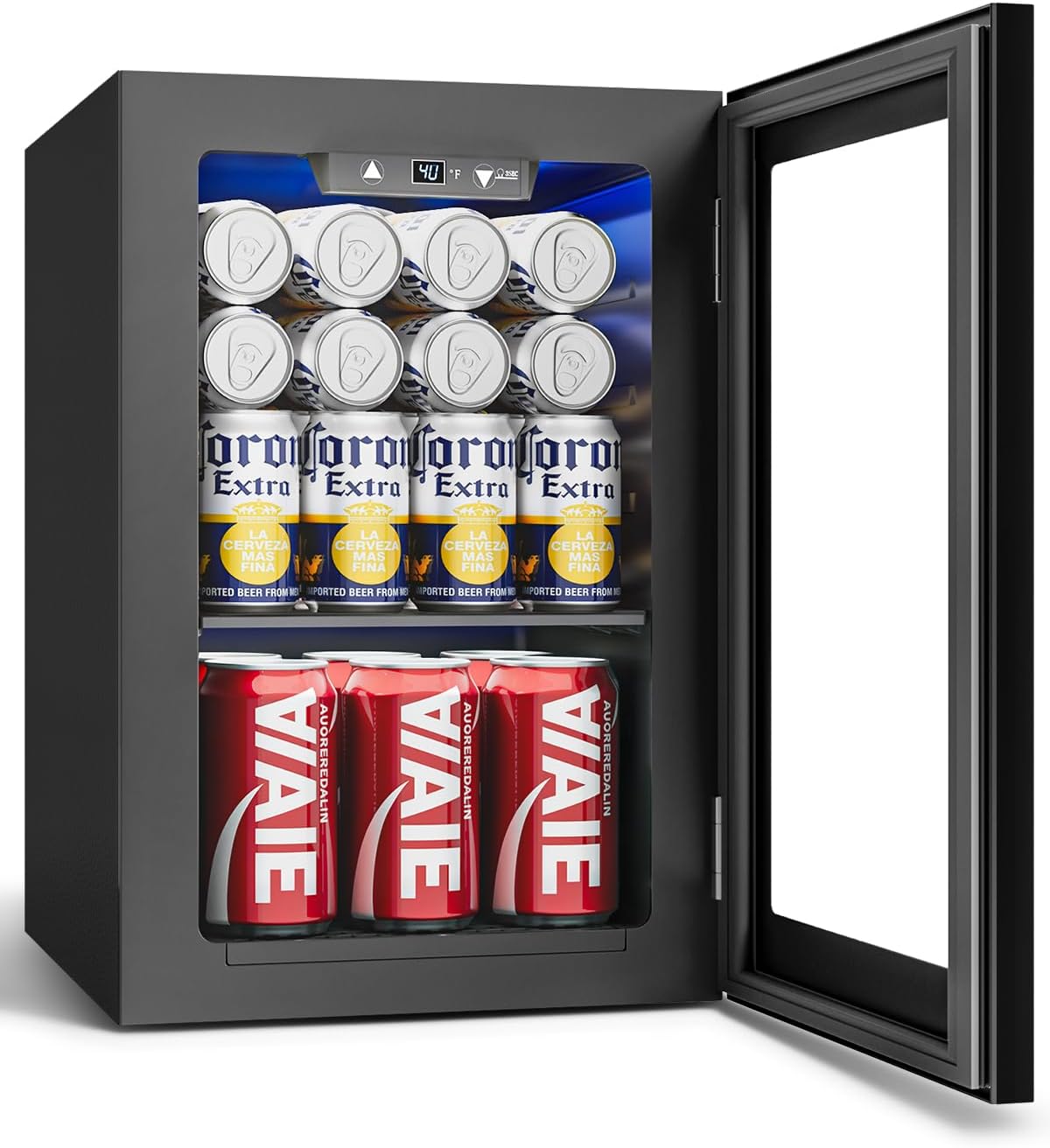
Feelfunn Beverage Refrigerator FWC008-11
| Capacity | 0.6 cubic feet |
|---|---|
| Temperature Range | 40-61°F (4-16°C) |
| Cooling Method | Compressor |
| Noise Level | ≤38 dB |
| Power Source | Corded Electric |
The Feelfunn 24-can beverage refrigerator is a compact, compressor-cooled mini fridge intended for storing cans, bottles, or a few upright wine bottles in small spaces. It uses a 3D circulating air cooling system with an adjustable temperature range from 40 to 61°F accessed via touch controls and an LED display, and a removable shelf lets you switch between can and bottle storage. The unit runs quietly at or below 38 dB, has interior LED lighting, and a seal-equipped door to reduce frost and keep temperatures steady. Because it is freestanding and small, it fits under desks, in basements, dorms, or on a countertop, and the adjustable feet help stabilize it on uneven surfaces. Limitations include a very small 0.6 cu.ft capacity that only suits small stashes, and the manual defrost design may require occasional maintenance to manage frost in heavy-use conditions. Buyers should also allow upright rest time before first use to protect the compressor.
Best for: Basement users who need a low-cost, space-saving fridge to keep drinks chilled near a seating or game area and prioritize quiet, reliable cooling over large capacity.
Less Ideal for: Do not choose this if you need to store large quantities, bulk beverages, or full meal items in a basement bar or entertainment area where higher capacity is required.
- Compact footprint fits tight basement nooks or under counters
- Compressor cooling with 3D air circulation provides faster, more even cooling than thermoelectric mini fridges
- Adjustable 40–61°F temperature range and removable shelf for flexible storage
- Quiet operation at ≤38 dB suitable for living or shared basement spaces
- Very small 0.6 cu.ft capacity limits storage to about 24 cans or a handful of bottles
- Manual defrost requires occasional user maintenance to control frost buildup
Verdict: A budget-friendly, whisper-quiet compressor mini fridge that fits tight basement spots and keeps a small drinks stash consistently chilled.
hOmeLabs Beverage Refrigerator HME030065N

| Capacity | 3.2 cubic feet |
|---|---|
| Temperature range | 34°F-50°F |
| Cooling method | Compressor |
| Number of shelves | 3 removable shelves |
| Voltage | 120 volts |
This hOmeLabs beverage refrigerator is a compact compressor cooler built to store cans and bottles in a visible, easy-to-access layout. It holds about 120 slim cans across three removable chrome wire shelves and uses a whisper-quiet compressor plus convection-style fan to maintain steady temperatures between 34°F and 50°F via a touch-button digital control. The reinforced double-glazed glass door and bright interior LED make it simple to find drinks without letting cold air escape, and the reversible stainless-steel framed door and adjustable feet help it fit different basement layouts. Practical benefits include flexible shelf arrangement for bottles or mixed drink sizes and a quiet motor that will not dominate living or rec room noise. Expect some energy use consistent with its annual 288 kWh rating and a weight and footprint that require a stable freestanding spot; it is not designed as a built-in undercounter unit. For basement use it offers reliable, visible beverage storage with straightforward controls and minimal fuss.
Best for: Buyers who prioritize a dependable, quiet beverage cooler for a secondary living space and want visible, organized storage for cans and bottles in a basement or rec room.
Less Ideal for: People seeking a plug-and-play undercounter built-in fridge or those who need the absolute lowest-energy compact cooler should consider other formats.
- Holds up to 120 slim cans with three removable shelves for flexible organization
- Digital touch temperature control that cools down to 34°F for consistent beverage chilling
- Reinforced glass door and bright LED interior for clear visibility without prolonged door openings
- Whisper-quiet compressor and circulating fan suitable for noise-sensitive spaces
- Annual energy consumption (288 kWh) is relatively high compared with some compact models
- Freestanding design and weight require a dedicated stable spot rather than easy built-in installation
Verdict: A reliable, quiet compressor beverage fridge that delivers visible, organized cold storage ideal for basement entertaining and rec rooms.
Frigidaire Retro Compact Fridge 3.2 cu ft

| Capacity | 3.2 cubic feet |
|---|---|
| Freezer Capacity | 0.2 cubic feet |
| Cooling Method | Compressor |
| Defrost System Type | Manual |
| Voltage | 110 volts |
This Frigidaire retro compact fridge is a countertop-style 3.2 cubic foot refrigerator designed for small spaces like basements, dorms, or offices. It uses a compressor cooling system with an internal 0.2 cu ft freezer compartment and two glass shelves to keep drinks, snacks, and a few frozen items organized, while a 2L door basket and can dispenser add practical storage. The reversible door and flush back design make placement against walls easier, and the built-in side bottle opener is a handy touch for entertaining. It is manually defrosted and operates on standard 110V power, so you will need to periodically defrost the freezer and plan for standard outlet placement. Energy consumption is listed at 219 kWh per year, which is reasonable for this size but not as efficient as some modern inverter models. The unit is straightforward to use and offers a balance of retro styling and basic functionality, though buyers should expect standard noise and maintenance typical of compact reciprocating compressors.
Best for: Buyers who want a stylish, straightforward compact fridge for a finished basement or rec room and prioritize looks plus basic beverage storage over ultra-quiet or high-efficiency operation.
Less Ideal for: Not a good choice for users seeking the quietest possible operation, the highest energy efficiency, or a large freezer capacity for long-term frozen storage.
- Eye-catching retro styling that fits finished basement decor
- Compact 3.2 cu ft capacity with glass shelves and door storage for organized beverage and snack storage
- Reversible door and flush back design allow flexible placement against walls
- Includes a small internal freezer and built-in side bottle opener for entertaining convenience
- Manual defrost freezer requires occasional thawing and maintenance
- Uses a standard reciprocating compressor which may be noisier and less efficient than inverter compressors
Verdict: Pick this Frigidaire if you want a compact, retro-styled basement fridge that balances party-ready features and simple, reliable cooling.
EUHOMY 3.2 Cu Ft Beverage Refrigerator

| Capacity | 3.2 cubic feet |
|---|---|
| Temperature Range | 37°F to 61°F |
| Cooling Method | Compressor |
| Number Of Shelves | 5 |
| Defrost System Type | Frost Free |
The EUHOMY 3.2 cu ft beverage refrigerator is a compact, compressor-cooled mini fridge designed to store cans and bottles in a freestanding basement, office, or home bar location. It uses a compressor and internal circulation fan to keep temperatures steady across a 37°F to 61°F range that you set with a touch digital control and LED display, and the double-layer UV-blocking glass door plus high-density foam help maintain an even interior climate. Five removable wire shelves let you reconfigure the layout for cans, bottles, or a mix of beverages, and the reversible door and adjustable feet make siting flexible in tighter basement spots. The unit is frost free and rated for moderate energy use, and EUHOMY advertises quiet operation around 36 dB which helps in low-noise basement setups. Expect basic, reliable cooling with the usual small-fridge limits: space is best for drinks rather than bulk food storage, and like most compressor minis it needs upright settling before first use and occasional maintenance. For buyers wanting a straightforward, no-frills basement beverage fridge, this covers the essentials with sensible features.
Best for: Buyers who prioritize reliable, easy-to-use cooling and want a simple beverage fridge to keep drinks organized and accessible in a basement or secondary space.
Less Ideal for: Anyone needing large-capacity refrigeration, freezer capability, or a unit for heavy food storage should choose a full-size refrigerator instead.
- Compressor cooling with circulation fan for consistent temperatures
- Digital touchscreen control with 37°F to 61°F range for precise settings
- Five removable shelves for flexible storage layouts
- Reversible door and adjustable feet for flexible placement
- Double-layer UV-blocking glass door and tight seal to protect contents
- 3.2 cu ft capacity is best suited to drinks, not large food storage
- Not designed as a freezer and has the usual compressor startup requirements
Verdict: A practical, compressor-cooled mini fridge that gives steady, adjustable beverage storage and flexible placement for basement use.
Choosing the Right Mini Fridge for Basements: Key Factors to Consider
Noise Level
Basements often have open sightlines or shared walls with living spaces, so compressor sound and fan noise matter. Look for documented decibel ratings or user reports indicating whisper-quiet operation. A unit that runs below typical conversational levels will be less likely to disturb TV watching, sleeping areas, or conversation in adjacent rooms.
Noise matters more if the fridge will sit in a finished area, near a bedroom, or under a staircase where sound can reverberate. Consider placement options and whether you can isolate the unit on vibration-damping feet or a small platform to reduce transmitted noise.
Temperature Stability in Cool Ambient Conditions
Basement temperatures can be lower and more constant than upper floors, which can confuse some thermostats and cooling systems. Choose a fridge designed to maintain set temperatures even when the surrounding air is cool; this ensures safe food storage and consistent beverage cooling.
Thermostat range and control granularity affect how well a unit adapts to cooler rooms. Units with adjustable thermostats and compressor designs perform better than simple thermoelectric coolers when ambient temperatures drop, especially below typical room temperature.
Usable Capacity and Interior Layout
Measure the items you plan to store and compare them to usable interior dimensions rather than advertised gross volume. Adjustable shelving, door bins sized for tall bottles, and a flexible layout make a modest-capacity mini fridge far more useful.
Consider how much vertical space is taken by the freezer compartment if present. For basement use you may prefer more flexible refrigerated space over a small freezer if you store beverages, fresh snacks, or prepared foods.
Energy Efficiency and Continuous Run Cost
A basement mini fridge often runs continuously, so its energy draw impacts utility bills and heat load. Look for efficient compressor designs, Energy Star ratings where applicable, and conservative wattage draw. Lower energy consumption reduces operating cost and the amount of waste heat added to the room.
Also consider the climate and seasonal use. A more efficient unit will be easier on your power supply if the basement lacks robust circuits or if the fridge shares a circuit with other appliances.
Ventilation and Placement Flexibility
Basement locations may offer less airflow than kitchens. Check ventilation requirements and whether a unit needs clearance around the sides, back, or top. Proper airflow prevents overheating and reduces the chance the compressor cycles excessively.
If you plan to place the fridge inside a built-in cabinet, under a counter, or against a wall, verify that the model supports those installation types. Some mini fridges require free air on one side for heat rejection, while others have bottom-mounted vents.
Durability and Maintenance
Basement environments can be more humid or subject to dust and occasional dampness. Choose a unit with corrosion-resistant finishes, a stable door seal, and an easily accessible condenser for periodic cleaning. Robust door hinges and a reliable gasket help maintain temperature and reduce energy use over time.
Think about filterless designs or easily removable components that simplify cleaning. A model that is straightforward to defrost or has an auto-defrost feature will save effort and help maintain efficiency.
Placement Tips for Basement Installations
Position the fridge where airflow is adequate and heat can dissipate freely. Avoid tight corners or enclosed shelves unless the model specifies built-in or cabinet installation compatibility.
Keep the unit off cold, damp concrete if condensation is likely. Use a small raised platform or rubber feet to prevent moisture damage and to improve airflow under the cabinet.
Allow extra clearance at the back and sides if the manufacturer recommends it. Even a few inches can significantly improve cooling efficiency and reduce compressor run time.
- Keep at least 2–3 inches clearance at rear for most compressor units
- Avoid direct contact with exterior walls prone to moisture
- Use vibration-damping pads if the fridge sits on shared flooring
Managing Moisture and Humidity
Basements can be more humid than other rooms, which affects both food storage and the appliance itself. Use a dehumidifier or improved ventilation to control humidity if condensation appears on the exterior or interior.
Regularly check door seals and wipe interior surfaces to prevent mold and mildew growth. An auto-defrost function helps reduce interior ice buildup that can trap moisture and harbor odors.
- Inspect door gasket for tight seal to prevent moisture intrusion
- Leave a small gap when storing wet items to allow air circulation
- Consider silica gel packets or moisture absorbers for enclosed basement rooms
Power and Circuit Considerations
Confirm the electrical circuit you plan to use can handle a continuously running compressor. Basements sometimes have fewer dedicated circuits, so avoid adding a fridge to a heavily loaded line.
If you plan to place the mini fridge near other appliances, check startup current requirements, as compressors draw a brief surge when the motor kicks on. This can trip older or overloaded breakers if circuits are marginal.
- Use dedicated outlet where possible to avoid nuisance tripping
- Avoid extension cords or power strips for permanent fridge placement
- Check for a grounded three-prong outlet to match modern fridge requirements
Choosing Between Compressor and Thermoelectric Cooling
Compressor-based mini fridges are generally better at holding steady temperatures in cool basement conditions and when the interior is frequently accessed. They handle a wider ambient temperature range and provide lower minimum temperatures for freezing when needed.
Thermoelectric units are often lighter and quieter in some cases, but they perform poorly below typical room temperatures and offer limited cooling capacity. For most basement situations where reliable cold storage is required, a compressor model is the safer choice.
- Prefer compressor units for consistent performance in cool basements
- Reserve thermoelectric options for short-term or low-demand uses
- Check manufacturer ambient temperature range regardless of technology
Organizing Interior Space for Maximum Utility
Use adjustable shelves and door bins to tailor the interior around tall bottles, platters, or meal-prep containers. Removable shelving allows you to create zones for beverages, snacks, or perishables.
If you plan to store both drinks and food, designate a top shelf for ready-to-eat items and lower shelves for raw or temperature-sensitive goods. Frequent opening patterns benefit from a logical layout to minimize heat entering the cabinet and reduce compressor workload.
- Keep frequently accessed items at eye level
- Store heavy items on lower shelves to avoid strain
- Label shelves if multiple users access the basement fridge
How We Chose the Best Mini Fridge for Basements
We focused on characteristics that matter most for basement use and eliminated units that underperform in lower-level conditions. Primary evaluation criteria included temperature stability in cooler ambient environments, low operational noise, usable refrigerated volume and shelving flexibility, energy consumption for continuous operation, and build quality for long-term reliability. We also considered ventilation and heat rejection design, since confined basement locations can trap compressor heat and affect performance. We excluded models designed exclusively for outdoor use, temporary coolers that require frequent refilling, and units that rely on inefficient thermoelectric cooling when a compressor-style solution was clearly more appropriate for steady basement temperatures. Our selections favored mini fridges that offer clear capacity specifications, quiet operation ratings or measured decibel ranges, sensible interior layouts, and efficient compressor systems. We prioritized units with straightforward maintenance and proven reliability indicators for frequent daily use in a lower-level living or rec room setting.
Our full evaluation process is outlined in our review methodology.
FAQ
Can a mini fridge work reliably in a cool basement year-round?
Often. Many compressor-based mini fridges are designed to operate across a broad ambient temperature range and will maintain set temperatures in cooler basements. Check the specified ambient operating range because some designs struggle when the room is consistently below typical room temperature.
How much clearance does a mini fridge need in a basement alcove?
It depends on the model, but a few inches of clearance at the back and sides is common to allow heat to escape. Refer to the manufacturer's ventilation guidelines and provide extra space in confined basement alcoves to prevent overheating.
Is a mini fridge a big source of heat in a small basement?
A running compressor does expel heat, but most mini fridges are low-wattage and add a modest heat load. In small, poorly ventilated basements the heat can accumulate, so ensure good airflow or use a unit with efficient heat rejection to minimize temperature rise.
Will a mini fridge cause moisture problems in a basement?
It can contribute if humidity is already high. Condensation or frost may form if the room is damp. Controlling baseline humidity with ventilation or a dehumidifier and maintaining a good door seal will reduce moisture-related issues.
Can I place a mini fridge directly on concrete in a basement?
You can, but it is better to elevate it slightly. A small platform or anti-vibration feet help prevent moisture contact and improve airflow beneath the unit, which aids cooling performance and reduces corrosion risk.
Final Verdict
When selecting a mini fridge for basements, prioritize reliable temperature stability, low noise, and proper ventilation. Those factors determine how well a unit performs in cooler, potentially damp lower-level spaces and how unobtrusive it will be in daily use. Balance usable interior layout and energy efficiency against placement constraints. Choose a compressor-style unit with the right clearance and flexible shelving if you need consistent cold storage. With those tradeoffs in mind you can pick a basement mini fridge that stays quiet, efficient, and fit for your space.