
Note: This article contains affiliate links. If you click on these links and make a purchase, we may earn a small commission at no extra cost to you. This helps support our research and content. Read our full affiliate disclosure here.
If you want cold drinks on demand without taking up a full-size refrigerator, a mini fridge for beverages is a smart addition. These compact units fit dorm rooms, home offices, garages, or entertainment nooks and are optimized for holding cans, bottles, and a few larger containers. Choosing the right beverage-focused model matters because internal layout, temperature range, and noise levels directly affect how well your drinks chill and how convenient access is. This guide shortlists the top options designed specifically for beverages and explains the practical tradeoffs buyers face. We evaluated cooling performance, usable capacity, and user-friendly features to assemble these picks. Read on for the factors that matter and how to match a mini fridge to your routine.
Top Picks at a Glance
| Best Overall The best all-around choice for most situations | Electactic Beverage Refrigerator JC-90 |  |
| Best Quality Built to a higher standard if you want something more solid | Whynter BR-1211DS Beverage Refrigerator |  |
| Best Value The sweet spot between price and what you get | Erivess Compact Beverage Refrigerator |  |
| Best Budget The cheapest option that still gets the job done reliably | Feelfunn 24-Can Beverage Refrigerator | 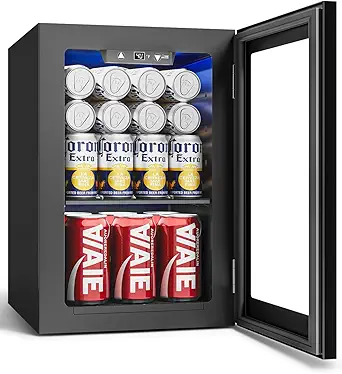 |
| Top Rated A top-rated pick with lots of positive feedback | hOmeLabs Beverage Refrigerator HME030065N | 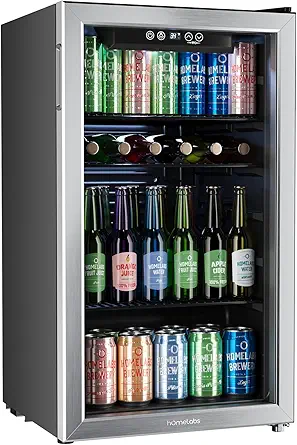 |
| Most Popular A crowd favorite that many people choose with confidence | EUHOMY BR013-110 Beverage Refrigerator |  |
| Best Seller A high-volume bestseller chosen again and again | EUHOMY BR013-110 Beverage Refrigerator |  |
Electactic Beverage Refrigerator JC-90

| Capacity | 3.1 cubic feet |
|---|---|
| Cooling method | Compressor |
| Number of shelves | 5 |
| Temperature range | 37°F-61°F |
| Installation type | Freestanding |
This Electactic 3.1 cu.ft beverage refrigerator is built around a compressor cooling system and designed specifically for chilled drinks. It holds roughly 130 cans across five removable wire shelves that can be repositioned or removed to fit tall bottles, and a reversible glass door with LED lighting shows contents clearly. Temperature is set via a digital touch control and display with a reported range suited for beer and wine, while the compressor and internal circulation aim to keep temperatures consistent top to bottom. In everyday use it works as a freestanding mini bar for a home office, man cave, or small kitchen and can also be installed under counters if space allows. The unit is ETL listed and meant to run quietly, but it requires manual defrosting and has standard wire shelving rather than dedicated bottle cradles. For buyers who want a straightforward, attractive drink cooler with solid cooling performance, this model covers the essentials without extra bells and whistles.
Best for: Buyers who want a stylish, reliable freestanding beverage cooler that keeps a variety of drinks at precise temperatures and fits into a home bar, office, or small kitchen.
Less Ideal for: People who need a zero-maintenance or frost-free unit or a fridge optimized specifically for long-term wine cellaring should consider other specialized models.
- Compressor-based cooling for reliable, even chilling.
- Digital touch temperature control with visible display for precise setpoints.
- Five removable wire shelves allow flexible storage and accommodate tall bottles.
- Glass door with internal LED lighting makes contents easy to view.
- Reversible door orientation for flexible placement.
- Manual defrost requires occasional user maintenance.
- Wire shelves lack specialized racks for wine bottles or cans stacked tightly.
Verdict: A compact, attractively designed compressor beverage fridge that delivers reliable, adjustable cooling for parties and everyday drink storage.
Whynter BR-1211DS Beverage Refrigerator

| Capacity | 3.4 cubic feet |
|---|---|
| Size | 136 Can |
| Cooling Method | Compressor |
| Temperature Range | 34°F – 43°F |
| Number Of Shelves | 5 |
The Whynter BR-1211DS is a purpose-built beverage fridge for chilling cans and bottles in a compact footprint. It uses a rotary scroll compressor with internal air cooling and an inverter to keep temperatures steady between 34°F and 43°F, controlled via a touch panel. The unit ships with one half-size and four full-width slide-out wire shelves plus a bottom section for taller bottles, so you can reconfigure storage for mixed cans and bottles. A double-pane glass door with stainless-steel trim, soft LED interior lighting, and a lock make it a good display piece for a home bar, office, or rec space. Noise and vibration are kept low compared with countertop thermoelectric coolers, and the compressor cooling is more consistent for long-term beverage storage. Expect a heavier, freestanding cabinet that requires floor space and consumes typical compressor power rather than the lower draw of small thermoelectric models, and it is not Energy Star rated. For buyers who prioritize steady, cold temperatures and organized beverage storage, this model delivers practical performance and a showroom look.
Best for: People who need reliable, restaurant-style cooling and neat organized storage for a large selection of cans and bottles and who prioritize consistent beverage temperatures and display over minimal footprint.
Less Ideal for: Those wanting an ultra-compact, lightweight dorm or countertop cooler, or buyers whose top priority is the lowest possible energy use rather than cooling performance.
- Compressor with inverter and air-cooling provides consistent, adjustable temperatures from 34°F to 43°F
- Double-pane glass door and LED lighting create a display-friendly look while improving insulation
- Five adjustable slide-out shelves plus a bottom storage area for flexible organization
- Lockable door adds security for shared spaces
- Low vibration quiet compressor suitable for indoor use
- Not Energy Star rated, so annual power draw is higher than some efficient models
- Freestanding cabinet is relatively heavy and requires dedicated floor space
- Wire shelves may not cradle bottles as securely as molded shelves
Verdict: Choose the Whynter BR-1211DS when you want dependable compressor cooling and flexible 136-can storage in a display-ready beverage fridge.
Erivess Compact Beverage Refrigerator

| Capacity | 3.2 cubic feet |
|---|---|
| Can Capacity | 126 cans |
| Cooling Method | Compressor |
| Temperature Range | Cools down to 37°F |
| Installation Type | Freestanding/Countertop/Built-in |
The Erivess Compact Beverage Refrigerator is a single-zone, freestanding cooler built to hold cans and bottles for home or light-commercial use. It uses a compressor plus a small convection fan to deliver consistent cooling down to about 37°F, and the large digital display with touch controls makes temperature adjustments straightforward. The glass front door and interior LED light make it useful as a display unit, while four adjustable chrome shelves let you arrange cans or bottles to maximize capacity. The unit includes automatic defrost and a reversible door for flexible placement under counters or against a wall. Expect relatively quiet operation for daily beverage use, and the fridge is intended for drinks only, not fresh food storage. The main compromises are that it is a compact single-zone cooler so you cannot set separate temperatures for different beverages, and its useful capacity is shaped by shelf spacing which may limit large bottle storage without reconfiguring shelves.
Best for: Buyers who want a high-capacity, display-style beverage cooler that fits under a counter or in a small living space and value easy temperature control and adjustable shelving.
Less Ideal for: Those who need multi-zone temperature management for wine and beer separately or who plan to store perishable food items in the unit.
- Holds up to 126 standard cans for high beverage capacity in a compact footprint
- Adjustable and removable chrome shelves let you reconfigure storage for cans or bottles
- Digital touch controls and large display make temperature setting easy
- Glass front door with interior LED provides display-friendly visibility
- Automatic defrost and reversible door increase installation flexibility
- Single-zone cooling cannot maintain different temperatures for mixed beverage types
- Shelf spacing may limit storage of very tall bottles without removal or reconfiguration
Verdict: Choose this fridge if you want a compact, high-capacity beverage cooler that displays drinks and offers easy digital control.
Feelfunn 24-Can Beverage Refrigerator
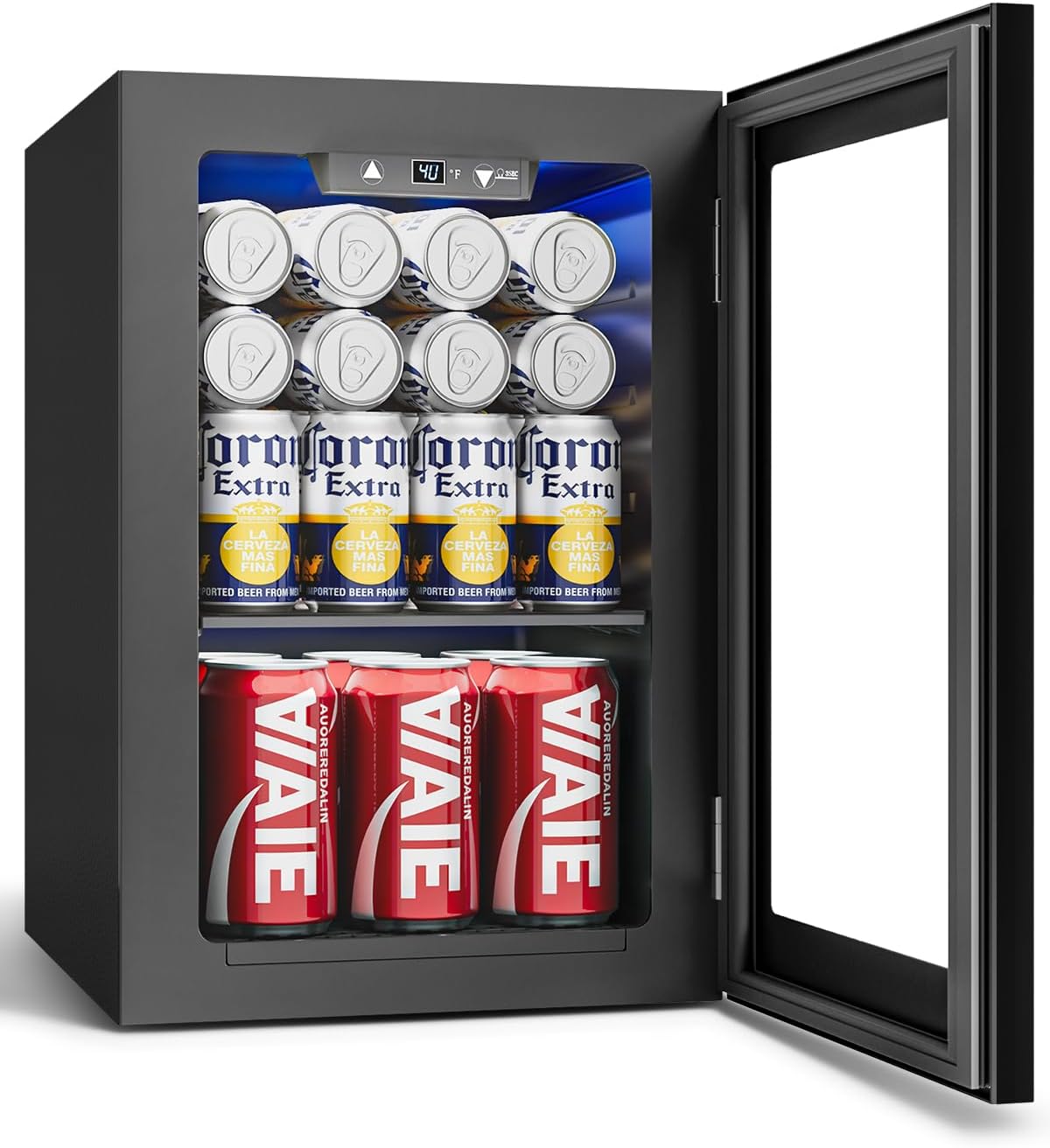
| Capacity | 0.6 cubic feet |
|---|---|
| Temperature range | 40-61°F (4-16°C) |
| Cooling method | Compressor |
| Power | 115 volts |
| Noise level | ≤38 dB |
This compact Feelfunn beverage refrigerator is designed to hold roughly 24 cans or a handful of wine bottles in tight spaces like dorms, offices, or home bars. It uses a compressor and a 3D circulating air system to deliver fast, even cooling across a 40 to 61°F range, and a removable shelf makes it simple to switch between cans and taller bottles. The digital touch controls and interior LED light are convenient for quick adjustments and visibility, while the sealed door and UV-protective finish help keep temperatures stable. At noise levels under 38 dB it is quiet enough for bedrooms and shared spaces, and the unit is freestanding with adjustable feet for uneven floors. Important limitations are its very small 0.6 cu ft capacity and manual defrost, so it is not suitable for large collections or long-term storage, and energy consumption is moderate. For buyers prioritizing a low-cost, space-saving drink cooler, this model offers practical features in a compact footprint.
Best for: Buyers looking for an inexpensive, space-saving beverage cooler for a dorm room, office, or small home bar who prioritize compact size and basic cooling features over large capacity.
Less Ideal for: Anyone who needs to store large numbers of drinks, requires a freezer compartment, or wants a no-maintenance unit for long-term bulk storage.
- Very compact footprint fits under desks and in small rooms
- Adjustable temperature control (40–61°F) for cans or wine
- Removable shelf allows flexible storage layouts
- Quiet operation rated ≤38 dB suitable for bedrooms
- Interior LED lighting and digital touch controls for convenience
- Only 0.6 cubic feet capacity limits quantity of beverages stored
- Manual defrost requires occasional maintenance
Verdict: A budget-friendly, ultra-compact beverage fridge that delivers adjustable, quiet cooling for small spaces and light drink storage.
hOmeLabs Beverage Refrigerator HME030065N

| Capacity | 3.2 cubic feet |
|---|---|
| Storage Capacity | 120 cans |
| Temperature Range | 34°F-50°F |
| Cooling Method | Compressor |
| Defrost System Type | Automatic |
This hOmeLabs beverage refrigerator is a freestanding, compressor-cooled mini fridge made for storing and displaying drinks in small spaces. It holds about 120 slim cans across three removable chrome wire shelves and offers a touch-button temperature control that ranges down to 34°F, so you can set consistent cooling for sodas, beer, or mixers. The reinforced glass door and interior LED light make it easy to find drinks without opening the door, and the door is reversible to suit placement. The unit uses a whisper-quiet compressor and automatic defrost to keep operation low-noise and low-maintenance, and adjustable feet help level it under a counter or beside furniture. Expect solid beverage cooling and flexible organization in dorm rooms, offices, or home bars, though its 3.2 cu ft capacity and compact footprint limit how many full-size bottles you can store. Energy consumption is listed, so buyers who track efficiency should factor that into long-term use.
Best for: Buyers who prioritize reliable, quiet cooling and want a purpose-built beverage fridge for home bars, offices, or dorms where consistent temperature and easy visibility matter.
Less Ideal for: Anyone needing large-capacity storage for full-size wine bottles or bulk beverage stock should consider a larger or differently configured refrigerator.
- 120-can capacity with three adjustable removable shelves for flexible organization
- Touch-button digital temperature control down to 34°F for consistent beverage chilling
- Reinforced glass door with interior LED light for clear display without frequent door openings
- Whisper-quiet compressor and automatic defrost for low-noise, low-maintenance operation
- Compact 3.2 cu ft capacity limits storage of larger bottles and bulk quantities
- Annual energy consumption is relatively high compared with smaller or more efficient models
Verdict: Choose this hOmeLabs beverage fridge if you want a dependable, quiet mini cooler that keeps a large stash of cans consistently chilled and on display.
EUHOMY BR013-110 Beverage Refrigerator

| Capacity | 3.2 cubic feet |
|---|---|
| Temperature range | 37°F to 61°F |
| Cooling method | Compressor |
| Shelves | 5 removable shelves |
| Defrost system | Frost Free |
The EUHOMY BR013-110 is a freestanding 3.2 cubic foot beverage fridge built for storing cans and bottles in a compact footprint. It uses a compressor cooling system with an internal fan for even circulation and a digital touchscreen that sets temperatures from 37°F to 61°F. Five removable shelves can be rearranged across five slots to hold cans, bottles, or wine, while the double-layer UV-blocking glass door and tight gasket help stabilize the internal climate. Practical touches include a reversible door, adjustable feet, an LED display, and a quiet operation claimed at about 36 dB. Energy use is modest at roughly 0.69 kWh per day. Limitations to note are its modest capacity if you need long-term wine storage or a full-size fridge replacement, and compressor units can produce some vibration and noise compared with thermoelectric models in ultra-quiet settings. For apartment bars, home offices, or game rooms it provides flexible, visible storage with precise temperature control, but it is not intended as a primary household refrigerator.
Best for: Buyers who want a compact, display-capable beverage fridge with precise temperature control and visible storage backed by many user reviews and steady performance expectations.
Less Ideal for: Avoid this unit if you need a full-size refrigerator replacement, long-term wine cellar conditions, or absolute near-silent operation in a bedroom-grade environment.
- 3.2 cu ft capacity fits up to about 130 standard cans for party-ready storage
- Digital touchscreen with 37°F–61°F range for precise beverage temperature control
- Compressor cooling plus circulation fan for consistent internal temperatures
- Five removable, adjustable shelves for flexible bottle and can layouts
- Reversible glass door with UV-blocking layer protects contents and lets you display drinks
- Not sized for long-term cellar-style wine aging or large household refrigeration needs
- Compressor-based cooling can cause more vibration and audible noise than some thermoelectric models
Verdict: If you want a compact, display-ready beverage fridge with precise digital control and flexible shelving, this EUHOMY model is a practical, well-reviewed choice.
EUHOMY BR013-110 Beverage Refrigerator

| Capacity | 3.2 cubic feet |
|---|---|
| Temperature range | 37°F to 61°F |
| Cooling method | Compressor |
| Shelves | 5 removable shelves |
| Installation type | Freestanding |
The EUHOMY BR013-110 is a compact beverage refrigerator sized to store cans and bottles for home bars, offices, or bedrooms. It uses a compressor cooling system with an internal circulation fan and a double-layer UV-blocking glass door to keep temperatures steady across the cabinet. Temperature is set via a touchscreen digital control with an LED readout and a range from 37°F to 61°F, which covers typical cold-drink and lightly chilled wine temperatures. Five removable wire shelves slide into five height positions so you can fit cans, bottles, or a few wine bottles and rearrange as needed. The unit is freestanding, has a reversible door and adjustable feet for placement flexibility, and runs quietly at around 36 dB while consuming roughly 0.69 kWh per day. Expect straightforward use with minimal maintenance, though the compressor design means it is bulkier and heavier than thermoelectric options. The fridge does not include a freezer compartment and its 3.2 cu ft capacity is best for personal or small-group use rather than large parties.
Best for: Buyers who prioritize steady, reliable cooling and an easy-to-use digital thermostat for everyday beverage storage in small shared spaces.
Less Ideal for: People who regularly need large-capacity refrigeration for big parties or require freezer storage should look for larger units or models with a freezer option.
- Compressor cooling with circulation fan for consistent, reliable temperatures
- Digital touchscreen with LED readout and 37°F–61°F range for precise chilling
- Five removable shelves that can be reconfigured to fit cans and bottles
- Reversible door and adjustable feet for flexible placement
- Quiet operation (~36 dB) suitable for bedrooms and offices
- No freezer compartment for ice or frozen storage
- 3.2 cu ft capacity may be small for large gatherings
Verdict: A dependable, compact compressor beverage fridge with precise digital control and flexible shelving ideal for steady everyday beverage storage.
Choosing the Right Mini Fridge for Beverages: Key Factors to Consider
Cooling Range and Consistency
A beverage-focused mini fridge should reach and hold temperatures that suit the drinks you keep. Beer, soda, and sparkling water often require different serving temperatures than wine or mixers, so a unit with a broad, stable temperature range matters.
Inconsistent cooling results in warm spots, slushy contents, or uneven shelf performance. Look for models with clear thermostat controls or digital settings and good insulation to reduce temperature fluctuation when the door is opened frequently. Reliable cooling reduces waste and keeps drinks at the desired serving condition.
Usable Capacity and Layout
Capacity numbers can be misleading if the interior layout is inefficient. For beverages, the way shelves, can racks, and door storage are arranged determines how many cans and bottles you can actually store and how easy they are to access.
Consider whether the unit has removable shelving, dedicated can dispensers, or flat storage for taller bottles. Measure the dimensions of the drinks you usually buy and compare them to the interior dimensions rather than relying solely on liters or cubic feet.
Noise and Placement
Mini fridges for beverages often live in rooms where quiet matters, such as bedrooms, offices, or entertainment areas. Compressor-based models generally cool faster and handle larger loads but can be louder. Thermoelectric designs are quieter but may struggle to maintain low temperatures in warm environments.
Evaluate the typical noise level for the placement you have in mind. Check whether the unit includes vibration damping and whether the manufacturer specifies decibel ratings. A quieter fridge improves comfort and makes the unit suitable for smaller shared spaces.
Energy Use and Efficiency
Because mini fridges run continuously, energy consumption affects operating cost and environmental impact. Efficiency is particularly important if the fridge will be on 24/7 or located in a living area where heat output matters.
Look for well-sealed doors, effective insulation, and efficient compressors. Some models offer eco modes or adaptive thermostats that lower power draw. Lower energy use helps keep electricity bills down and reduces the amount of heat the unit emits into the room.
Build Quality and Door Seal
A durable cabinet and a tight door seal are essential for long-term temperature control and reliability. A weak seal lets cold air escape and forces the compressor to run harder, which shortens component life and increases energy use.
Inspect hinge design, door materials, and whether the seal is replaceable. Units with solid build quality tend to resist dents and warping and maintain performance over time, making them more cost-effective long-term.
Convenience Features
Small features can make daily use noticeably better. Reversible doors allow flexible placement, adjustable shelves help accommodate varying bottle sizes, and interior lighting aids visibility in dim rooms.
Other useful conveniences include a front-facing temperature control, a locking door if you need security, and an included drip tray or defrost option for easier maintenance. Consider which conveniences will reduce friction in your routine.
Where to Put a Beverage Mini Fridge
Placement affects performance. Keep the fridge on a level surface away from direct sunlight, heating vents, or ovens to prevent the compressor from working overtime. Leave a few inches of clearance at the back and sides for airflow.
Consider proximity to where you actually consume drinks. A fridge in the entertainment area or home office increases convenience, but balance that with potential noise and heat output in the chosen room.
- Avoid placing on carpeted or uneven floors.
- Leave 2 to 4 inches clearance for ventilation.
- Avoid tight cabinets that trap heat.
Maximizing Interior Storage
Reconfigure shelves to fit standard drink sizes. Removing or flipping shelves creates flat storage for taller bottles or accommodates rows of cans. Use stackable can shelves or small organizers to prevent wasted vertical space.
Door shelves are best for slim bottles and single-serve containers. For bulk can storage, horizontal shelving or dedicated can racks make counting and retrieval easier.
- Store heavier items on lower shelves for stability.
- Use narrow bins to keep different drink types separated.
- Label or visually group items to speed access during gatherings.
Temperature Tips for Different Drinks
Set the thermostat a few degrees colder than your target serving temperature to account for the door openings and brief warm-up periods. Use an inexpensive fridge thermometer to verify actual internal temperatures.
Keep carbonated beverages upright if possible to limit agitation. For mixed-use fridges that hold both beer and sodas, find a middle-ground temperature or reserve a small section for beverages that require different serving temps.
- Sodas and light beers: slightly colder settings.
- Craft beers and ales: a touch warmer to preserve aroma.
- Bottled water: colder for refreshment on hot days.
Maintenance and Cleaning
Regular cleaning prevents odors and bacterial growth. Remove all items before wiping down interiors with a mild soap solution and rinsing. Pay attention to door gaskets and the drip tray if present.
Defrost or clean the condenser area according to the manufacturer's guidance. Keeping the coils and vents clear preserves efficiency and reduces noise from an overworked compressor.
- Wipe spills immediately to avoid staining.
- Check and replace door seals if they show gaps or cracks.
- Schedule an annual clean of vents and coils.
Balancing Capacity and Footprint
Decide whether you need a shallow countertop unit for quick access or a taller freestanding model that stores more beverages. Countertop units save floor space but limit tall bottle storage, while taller models provide larger total capacity but require a dedicated footprint.
Measure the intended location and compare it with usable interior dimensions rather than advertised volume. That ensures the unit fits both the space and the drinks you plan to store.
- Countertop: best for immediate reach and limited quantities.
- Freestanding: better for larger gatherings or bulk storage.
- Measure doors and clearances to ensure fit.
How We Chose the Best Mini Fridge for Beverages
We applied a practical set of editorial filters to identify compact refrigerators best suited to storing and serving beverages. First, we prioritized cooling consistency and temperature range because beverage fridges must reliably reach and maintain temperatures suitable for cans and bottles. Second, usable interior layout and shelving flexibility were used to assess how many standard drink formats a unit can hold and how easy it is to organize those items. Third, we considered noise level and energy efficiency, since these units often sit in living spaces or work areas where disturbance and ongoing power use matter. Fourth, build quality and door sealing were evaluated to judge long-term temperature stability and durability. Finally, convenience features such as reversible doors, front-access shelving, and simple temperature controls were included as tie-breakers. We excluded general-purpose mini fridges that lack beverage-focused layout or the ability to reach recommended serving temperatures. Units with unclear durability or poor customer support indicators were also omitted. The resulting list favors models that deliver steady cold, sensible capacity, and user-friendly operation for storing drinks.
Our full evaluation process is outlined in our review methodology.
FAQ
Can a mini fridge for beverages chill drinks as cold as a full-size fridge?
Often yes, but it depends on the model and its cooling method. Compressor-based mini fridges typically reach similar low temperatures as full-size refrigerators, while thermoelectric models may struggle in warm rooms. Verify the specified temperature range and use a thermometer to confirm performance.
How many cans can a typical beverage mini fridge hold?
Capacity varies widely by layout and size. Small countertop units may hold a few dozen cans, while taller models hold more. Compare usable interior dimensions and shelf arrangement rather than relying solely on volume numbers to estimate how many cans will fit.
Is a beverage mini fridge noisy?
Noise depends on the cooling system and build quality. Compressor units can produce periodic humming during cycles, while thermoelectric units are usually quieter. If noise is a concern, check decibel ratings or choose models with vibration-dampening design.
Do mini fridges use a lot of electricity?
Mini fridges generally use less power than full-size refrigerators but run continuously, so they still contribute to energy use. Models with efficient compressors, good insulation, and tight door seals use less energy. Choosing a unit with reasonable energy efficiency helps lower operating costs.
Can I store both cans and tall bottles in the same mini fridge?
Yes if the interior layout is flexible. Look for removable or adjustable shelves to create taller compartments for bottles while keeping other sections for cans. Some units include dedicated can racks that free up shelf space for taller items.
How often should I clean a beverage mini fridge?
Wipe spills immediately and perform a more thorough cleaning every 2 to 3 months. Clean door gaskets and empty the drip tray more frequently if you notice buildup. Regular maintenance preserves odor control and cooling efficiency.
Final Verdict
When choosing a mini fridge for beverages, prioritize cooling consistency, usable interior layout, and noise level based on where the unit will live. Tradeoffs are common: quieter, low-profile models may sacrifice the coldest temps or capacity, while larger compressor-based units typically offer better chilling at the cost of footprint and potential noise. Decide how many drinks you need to store, where the fridge will sit, and which convenience features matter most. Focusing on those priorities will lead to a confident selection that keeps your drinks cold and accessible for everyday use and entertaining.