
Note: This article contains affiliate links. If you click on these links and make a purchase, we may earn a small commission at no extra cost to you. This helps support our research and content. Read our full affiliate disclosure here.
Picking the right mini fridge for dorm rooms matters more than it sounds. You need a unit that fits a small room, runs quietly during late-night study sessions, and provides enough organized storage for snacks, beverages, and basic groceries. A poor choice leads to wasted space, higher electric bills, and a fridge that becomes more hassle than help. This guide covers seven shortlisted mini fridges that match common dorm needs. We evaluated each on capacity and layout, noise, energy use and running cost, and reliability for student life. Read on to see which features matter most and how they affect everyday dorm living.
Top Picks at a Glance
| Best Overall The best all-around choice for most situations | Frigidaire Retro Mini Fridge EFR331 |  |
| Best Quality Built to a higher standard if you want something more solid | Midea WHD-113FB1 Mini Fridge |  |
| Best Value The sweet spot between price and what you get | Feelfunn Beverage Refrigerator FWC008-11 | 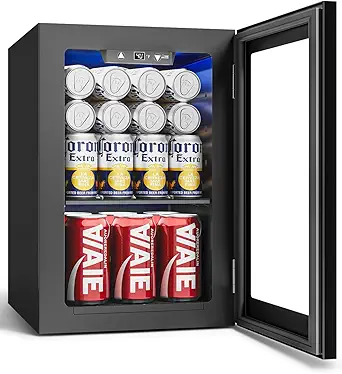 |
| Best Budget The cheapest option that still gets the job done reliably | Erivess Beverage Refrigerator YLG-HA209B |  |
| Top Rated A top-rated pick with lots of positive feedback | Upstreman BR321 3.2 Cu Ft Mini Fridge |  |
| Most Popular A crowd favorite that many people choose with confidence | Cooluli Classic 4L Mini Fridge |  |
| Best Seller A high-volume bestseller chosen again and again | Frostorm Mini Fridge BC-90 |  |
Frigidaire Retro Mini Fridge EFR331

| Capacity | 3.2 cubic feet |
|---|---|
| Freezer Capacity | 0.2 cubic feet |
| Cooling Method | Compressor |
| Defrost System Type | Manual |
| Installation Type | Freestanding |
This Frigidaire Retro mini fridge provides straightforward cold storage for a dorm room or small apartment, combining a 3.2 cu ft refrigerator with a 0.2 cu ft freezer compartment. It is typically used to hold beverages, snacks, and basic groceries and includes two adjustable interior shelves plus door storage that fits 2L bottles and cans. The writable eraser-board door is a novelty that doubles as a message surface for notes and personalization, while the reversible door and adjustable thermostat make placement and temperature control flexible. The compressor cooling method delivers reliable cooling versus thermoelectric units, and the manual defrost freezer keeps things simple though it will require occasional maintenance. Its compact freestanding form and glossy finish make it easy to tuck into a dorm corner, and the electronic lock adds basic security. Expect modest energy use and limited freezer capacity, so it is best as a secondary fridge rather than a primary kitchen unit.
Best for: Students or roommates who want a compact, reliable dorm fridge with a fun writable door and flexible interior storage for drinks and ready-to-eat items.
Less Ideal for: Households that need substantial frozen storage or a primary kitchen refrigerator should choose a larger unit with a bigger freezer.
- Writable eraser-board door for notes and personalization
- Compressor cooling for steady refrigeration performance
- Adjustable shelves and door storage accommodate bottles and cans
- Reversible door and adjustable thermostat improve placement flexibility
- Very small 0.2 cu ft freezer limits frozen storage
- Manual defrost freezer requires periodic maintenance
Verdict: A compact, compressor-cooled dorm fridge with an erasable message door that balances everyday storage and personality for small living spaces.
Midea WHD-113FB1 Mini Fridge

| Capacity | 3.1 cubic feet |
|---|---|
| Annual Energy Consumption | 270 kilowatt hours per year |
| Cooling Method | Compressor |
| Defrost System Type | Manual Defrost |
| Voltage | 120 volts |
The Midea WHD-113FB1 is a compact 3.1 cubic foot fridge with a top freezer that targets dorms, apartments, and offices where space and energy use matter. It cools with a compressor and inverter for steadier temperatures, offers a manual adjustable thermostat covering typical fridge and freezer ranges, and includes removable shelves, a crisper drawer, and an internal LED light for visibility. The reversible door and electronic lock add installation flexibility and security in shared spaces. Energy Star certification and a reported annual consumption of about 270 kWh make this model more economical to run than basic mini fridges. Trade-offs are its manual defrost freezer and modest freezer capacity, which limit long-term frozen storage, and the overall interior is compact compared with larger dorm-size units. Noise is listed around 45 dB, so it is generally quiet but not whisper-quiet. For someone prioritizing efficient, reliable cooling in a tight footprint, this unit covers the essentials without extra bells and whistles.
Best for: Buyers who want an efficient, straightforward compact refrigerator for a dorm room or small apartment where steady cooling and low operating cost matter most.
Less Ideal for: Users who need large freezer capacity, long-term frozen storage, or advanced features like automatic defrost or smart controls should look at larger or feature-rich models.
- Energy Star certified for lower annual energy use
- Inverter-equipped compressor for stable cooling
- Removable shelves and crisper drawer for flexible storage
- Reversible door and electronic lock for placement and security
- Freezer is small and uses manual defrost so it needs occasional maintenance
- Not designed for large frozen storage or extended freezer-only use
Verdict: A practical, energy-efficient mini fridge that delivers reliable cooling and low operating cost for dorms and small rooms.
Feelfunn Beverage Refrigerator FWC008-11
| Capacity | 0.6 cubic feet |
|---|---|
| Temperature range | 40-61°F (4-16°C) |
| Cooling method | Compressor |
| Noise level | ≤38 dB |
| Included components | Beverage Fridge, 1 Removable Shelves |
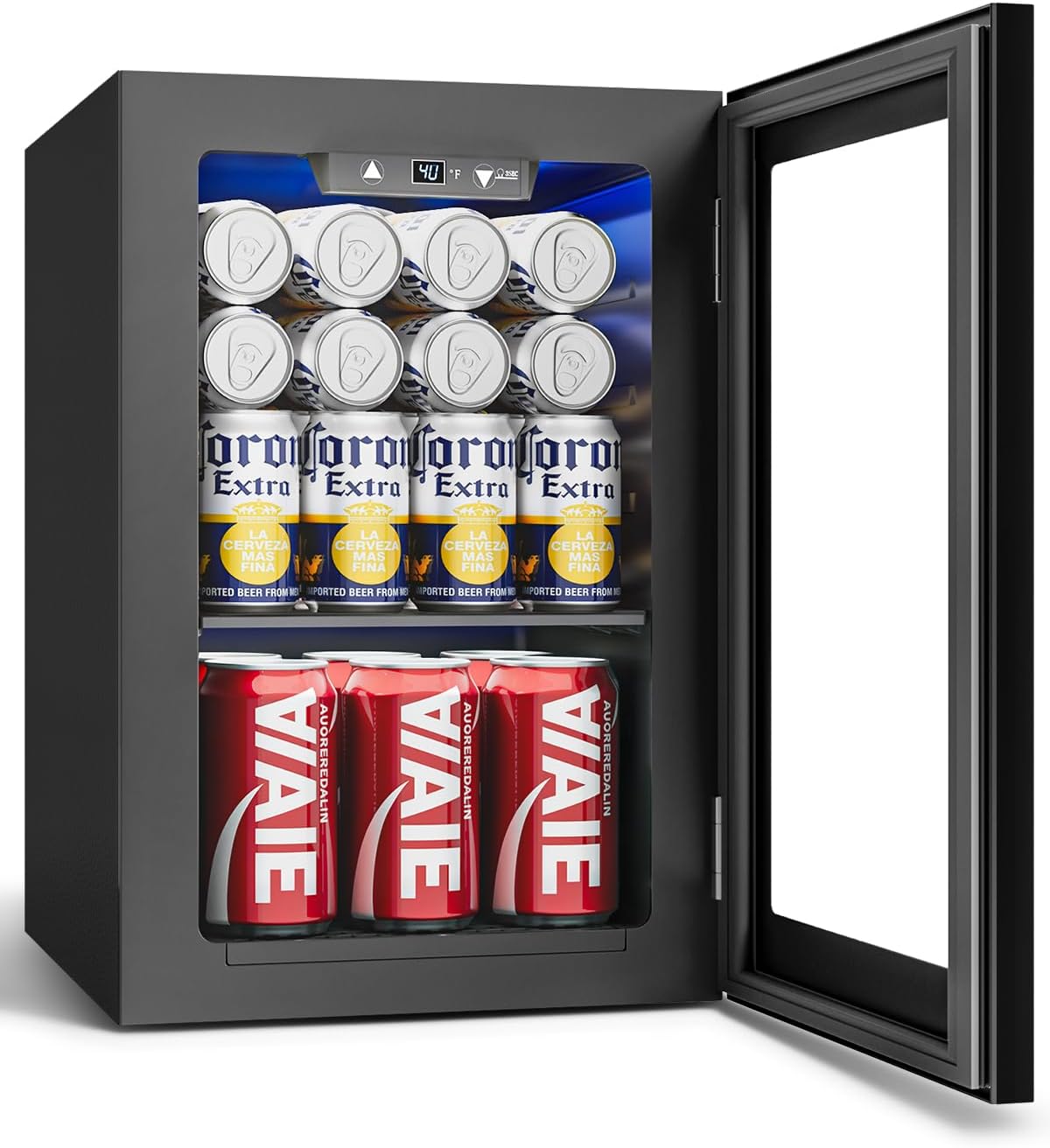
This Feelfunn mini beverage fridge is a compact, freestanding cooler designed for small spaces like dorm rooms and offices. It uses a compressor and a 3D circulating air system to deliver relatively fast, even cooling across a 40 to 61°F range controlled by a simple touch panel and LED display. The interior fits up to 24 cans or several wine bottles and includes one removable shelf for flexible layouts, plus soft blue LED lighting for visibility. Noise levels are low at 38 dB or less, so it can sit near a desk or bedside without being distracting. Practical features include adjustable feet for uneven floors, a UV-protective door with sealing strip to preserve temperature, and a manual defrost design that keeps the unit simple. Downsides are the small 0.6 cu.ft capacity that limits bulk storage and the manual defrost requirement, which needs occasional maintenance; annual energy consumption is listed and may be higher than some thermoelectric alternatives. For a dorm where space, quiet operation, and precise temperature control matter, this fridge covers the essentials cleanly.
Best for: Buyers who need a space-saving, quiet cooler for dorm rooms or small apartments and prioritize reliable, adjustable cooling over large capacity.
Less Ideal for: Anyone who needs to store large quantities of beverages, meal-sized items, or wants a frost-free, hands-off fridge for heavy daily use.
- Compact footprint fits tight spaces like desks or dorm corners
- Compressor cooling with adjustable 40–61°F range for reliable, even temperatures
- Quiet operation at ≤38 dB suitable for shared or sleeping areas
- Removable shelf and LED interior light for flexible organization and visibility
- Very limited 0.6 cu.ft capacity restricts how many cans or bottles you can store
- Manual defrost requires occasional user maintenance
Verdict: A very compact, quiet compressor mini-fridge that gives dorm residents precise temperature control in an extremely small footprint.
Erivess Beverage Refrigerator YLG-HA209B

| Capacity | 0.6 cubic feet |
|---|---|
| Holds | 24 Count |
| Cooling method | Compressor |
| Temperature range | 40-61℉ |
| Installation type | Freestanding/Countertop/Built-in |
This Erivess compact beverage refrigerator is a small, single-zone cooler made to keep drinks cold in tight spaces such as dorm rooms or small apartments. It holds about 24 standard cans and uses a compressor with a quiet fan for relatively fast, even cooling down to around 40°F, and a memory function that restores the preset temperature after power interruption. The unit is freestanding or countertop-installable and includes one removable shelf to help organize cans and a few bottles behind the acrylic front door. It is lightweight and energy conscious for its class, with low-noise operation and a modest annual energy consumption listed. The trade-offs are its very small internal volume — it is beverage-only and not suitable for fresh food — and the single temperature zone limits flexibility for different drink types. For buyers needing a simple, space-saving cooler that stays unobtrusive in a dorm or office, this model covers the basics without extra bells and whistles.
Best for: Students or renters who need an inexpensive, space-saving beverage cooler to keep drinks cold in a dorm room, small apartment, or office without fuss.
Less Ideal for: Anyone who needs to store fresh food, sizable quantities of beverages, or requires dual-temperature zones for different drink types should choose a larger or more feature-rich fridge.
- Compact footprint fits under counters or on a desk
- Holds approximately 24 standard cans, useful for single users or small groups
- Quiet compressor with small convection fan for steady cooling
- Removable shelf lets you rearrange storage for bottles or cans
- Memory function restores preset temperature after power loss
- Very limited internal capacity not suitable for food storage
- Single temperature zone cannot simultaneously chill items at different temperatures
Verdict: A budget-friendly, space-saving beverage cooler that reliably chills a modest number of drinks for dorms and small rooms.
Upstreman BR321 3.2 Cu Ft Mini Fridge

| Capacity | 3.2 cubic feet |
|---|---|
| Freezer Capacity | 0.3 cubic feet |
| Defrost System Type | Manual Defrost |
| Voltage | 115 volts |
| Annual Energy Consumption | 206 kwh |
The Upstreman BR321 is a straightforward compact fridge built around reliable, no-frills cooling for small spaces. It provides 3.2 cubic feet of total capacity with a 0.3 cu ft freezer, two adjustable glass shelves, a crisper drawer and three door shelves so you can store bottles, snacks, and small food containers in an organized way. Cooling is handled by a rotary scroll compressor with a five-level adjustable thermostat that ranges roughly from 32°F to 50°F, and the manual-defrost setup keeps the internal layout simple and easy to maintain. Practical touches include a reversible door, adjustable leveling feet, and a tight door seal that helps retain cold air. The unit is ETL listed, uses R-600A refrigerant, and is rated energy efficient for steady, low-noise operation at about 38 dB, which suits shared living spaces. Downsides are the manual defrost requirement and modest freezer capacity that cannot hold ice cubes or large frozen items, so it is better for chilled storage than heavy freezer use.
Best for: Students and renters who prioritize a dependable, compact refrigerator for daily chilled storage in dorm rooms or small apartments and want quiet, efficient operation without complicated features.
Less Ideal for: People who need significant freezer space or frequent frozen food storage should choose a larger refrigerator with an auto-defrost freezer compartment.
- Compact footprint that maximizes usable interior space for dorms and small rooms
- Adjustable thermostat with five temperature settings for flexible cooling
- Quiet compressor operation around 38 dB suitable for bedrooms or study areas
- Reversible door and adjustable leveling feet make installation adaptable to tight spaces
- Energy-efficient design and ETL listing for dependable, standards-compliant performance
- Freezer is small (0.3 cu ft) and not suitable for long-term freezing or ice cubes
- Manual defrost requires periodic maintenance to prevent frost buildup
Verdict: A reliable, energy-efficient mini fridge that delivers quiet, practical cooling and organized storage for dorms and small rooms.
Cooluli Classic 4L Mini Fridge

| Capacity | 4 liters |
|---|---|
| Cooling Method | Thermoelectric |
| Power Source | AC/DC/USB |
| Voltage | 110 volts |
| Certification | ETL |
The Cooluli Classic 4L is a compact thermo-electric cooler/warmer built for portability and short-term storage of drinks, skincare, medications and snacks. It cools roughly 20°–22°C below ambient and also switches to a warming mode that reaches about 65°C on the internal thermostat, so it works for chilled products or keeping items warm. The unit is lightweight, includes AC and DC cords plus a USB cable for powering from a 2A power bank, and uses a quiet semiconductor system that requires no refrigerants. Inside there are two small shelves and a single door shelf that help organize a few cans, jars or tubes but the 4‑liter capacity limits you to very small loads. It runs on 110V and is ETL listed, but because it is thermo-electric rather than compressor-based it will not reach refrigerator temperatures as quickly or perform as efficiently in very warm environments. The Classic is best where portability, low noise and alternate power options matter, and less suitable when you need larger capacity or rapid cooling for many perishables.
Best for: Buyers who prioritize a lightweight, quiet mini fridge for a dorm room, desk, or vehicle and value flexible power options and easy portability backed by many positive user reviews.
Less Ideal for: People who need to store large quantities of perishables, require fast/very cold refrigeration, or will use the fridge in consistently hot rooms.
- Very portable with a molded handle and lightweight design for dorms, cars, and desks
- Can both cool (about 20°–22°C below ambient) and warm (up to ~65°C) with a simple switch
- Multiple power options: AC, DC and USB allow use from outlets or a power bank
- Quiet, refrigerant-free thermo-electric operation that is energy efficient for small loads
- Only 4 liters of usable capacity, suitable for a few cans or skincare items only
- Thermo-electric cooling is slower and less effective in hot ambient conditions than a compressor fridge
Verdict: Choose the Cooluli Classic 4L when you need a quiet, highly portable mini fridge for skincare, snacks, or travel that can run from AC, DC or a USB power bank.
Frostorm Mini Fridge BC-90

| Capacity | 3.2 cubic feet |
|---|---|
| Freezer Capacity | 0.3 cubic feet |
| Defrost System Type | Automatic |
| Voltage | 115 |
The Frostorm BC-90 is a compact 3.2 cubic foot mini fridge with a 0.35 cu ft upright freezer built for small spaces like dorm rooms or offices. It cools via a simple mechanical thermostat with settings 1–5 and an internal freezer that can reach rough freezer temperatures suitable for ice and short-term frozen goods. The interior includes two adjustable shelves, door bins, and an included ice tray and scraper for flexible organization. Its reversible door and freestanding design make placement easy in tight layouts, while automatic defrost and ETL certification reduce maintenance and safety concerns. Energy use is modest at about 0.6 kWh per day, which helps keep running costs low. Limitations are the small freezer capacity and basic mechanical controls that lack precise digital temperature readouts, so it is best for everyday drinks, snacks, and light meal storage rather than long-term frozen storage or precision chilling. Assembly and cleaning are straightforward, and the one-year warranty provides added reassurance for risk-averse buyers.
Best for: Students or shared-space residents who want a reliable, low-maintenance dorm fridge that balances usable storage with simple controls and predictable energy use.
Less Ideal for: Anyone needing substantial freezer space or precise temperature control for long-term frozen items or specialty cooling tasks.
- Generous 3.2 cu ft interior for a dorm-sized fridge
- Separate upright freezer compartment for ice and short-term frozen items
- Reversible door for flexible placement in small rooms
- Automatic defrost and ETL certification simplify maintenance and safety
- Low daily energy use (~0.6 kWh/day) keeps operating costs down
- Freezer is small and not suitable for long-term frozen storage
- Mechanical thermostat lacks precise digital temperature control
Verdict: A practical, energy-efficient mini fridge with a usable freezer and simple, low-maintenance features that make it an easy choice for dorm rooms.
Choosing the Right Mini Fridge for Dorm Rooms: Key Factors to Consider
Size and Usable Capacity
Dorm rooms are tight on space, so the external footprint and internal usable capacity both matter. A fridge that looks big from the outside can have awkward shelving or thick insulation that reduces usable space. Measure the intended location first, including clearance for door swing and ventilation.
Think about the kinds of items you store regularly. Tall bottles require adjustable shelves or a dedicated door rack. If you plan to keep meal-prep containers, prioritize deeper compartments and removable shelves for flexibility.
Noise and Compressor Type
Noise level is a top concern in shared living. Compressor-driven models typically cool faster and maintain temperature better but can produce more noise when the compressor cycles. Thermoelectric or absorption units run quieter but may struggle in hotter room temperatures.
Check published dBA ratings when available and read usage notes about compressor cycling. A slightly less powerful but much quieter unit can be a better fit in a study-heavy environment.
Energy Use and Running Cost
A mini fridge runs continuously, so efficiency affects monthly electricity bills. Look for units with good insulation, efficient compressors, and an Energy Star rating where applicable. Higher initial efficiency often pays back over time through lower operating costs.
Also consider features that influence real-world energy use, such as automatic defrost versus manual defrost, and whether the fridge has multiple temperature zones. A model that keeps a stable temperature with less cycling typically draws less power overall.
Storage Layout and Accessibility
A flexible interior layout makes a small fridge more useful. Adjustable shelves, a small freezer compartment, door bins sized for bottles, and removable crisper drawers all increase utility. Shelving that is too narrow or fixed at one height can force inefficient stacking and wasted space.
Consider how you access the fridge throughout the day. Features like front-mounted temperature controls and reversible doors improve convenience in tight dorm layouts.
Temperature Control and Food Safety
Reliable temperature control keeps perishables safe and prevents spoilage. A fridge with a clear, easy-to-use thermostat and a reasonable temperature range allows you to switch between beverage storage and short-term food keeping. Fast cooldown and even temperature distribution are useful when you stock the unit after a grocery trip.
If the unit includes a small freezer, ensure the freezer compartment reaches sufficiently low temperatures for ice and frozen meals. Avoid fridges that advertise freezer space but do not freeze reliably.
Durability, Warranty, and Serviceability
A fridge that makes it through a full academic year without repair is ideal. Look for solid door seals, a sturdy hinge mechanism, and panels that resist dents and scratches. Availability of replacement parts and a clear warranty can save time and money if problems occur.
Serviceability also matters. Units with easily accessible condensers, removable shelves, and simple control panels are easier to maintain in a dorm setting where professional repair may be inconvenient.
Where to Place a Mini Fridge in a Dorm Room
Placement affects performance and convenience. Choose a flat, level surface with at least a few inches of clearance on the back and sides for ventilation. Avoid setting the fridge directly against heating sources or in direct sunlight, which forces the compressor to run harder.
Also think about accessibility. A top-shelf location or tucked-in corner may look tidy but can make loading groceries awkward. If you share the room, position the fridge where both roommates can reach it without blocking walkways.
- Keep about 2 to 3 inches clearance around vents for airflow
- Avoid carpeting directly under the fridge to prevent restricted airflow
- Position near an outlet to prevent extension-cord use, which can be a trip hazard
Understanding Freezer Compartments in Mini Fridges
Some mini fridges include a small freezer compartment suitable for ice trays and a frozen meal or two. These compartments vary widely in performance; a true freezer will reach and hold below-freezing temperatures while others only offer a cold shelf.
If you rely on frozen meals or need ice regularly, prioritize fridges with a dedicated insulated freezer rather than a mere cold pocket. Keep expectations realistic: mini freezers are small and may not perform like full-size freezers.
- Check whether the freezer has a door or flap to retain cold air
- Avoid placing warm items near the freezer compartment to reduce frost buildup
- Defrost as recommended to maintain efficiency
Maintaining Cleanliness and Preventing Odors
Regular cleaning keeps a dorm fridge hygienic and smelling fresh. Remove spoiled food promptly and wipe spills immediately to avoid lingering odors. A weekly quick inspection helps prevent small messes from becoming major cleaning tasks.
Use airtight containers for leftovers and consider a small tray or mat on the bottom shelf to catch drips. Baking soda placed in the fridge can absorb odors, but replace it regularly to keep it effective.
- Clean removable shelves in warm, soapy water
- Wipe door seals to ensure a tight closure
- Schedule a monthly deep clean and a quick weekly check
Transporting and Installing a Dorm Mini Fridge
Transporting a mini fridge safely prevents damage to the compressor and cabinet. Keep the unit upright during moves and avoid excessive tilting. If tilt is unavoidable, allow the fridge to sit unplugged upright for several hours before plugging in.
When installing, verify that the power outlet is on a stable circuit and avoid sharing the outlet with high-draw devices. Make sure the door hinge side works for your room layout; many mini fridges offer reversible doors, which adds flexibility.
- Allow several hours for oil to settle if the fridge was tilted during transport
- Confirm door swing does not block essential room areas
- Test temperature after setup to ensure the unit is cooling properly
Smart Features and Extras Worth Considering
Some mini fridges include extras such as adjustable thermostats with digital displays, energy-saving modes, or small interior LED lighting. These features can add convenience but may use slightly more power or add complexity.
Other useful extras include reversible doors, removable shelves, and small bottle racks. Decide which features will be genuinely helpful in daily dorm use rather than picking options that look good but add little practical value.
- Digital thermostats offer precise control but may be more fragile
- LED lights consume minimal energy and help find items at night
- Reversible doors improve placement flexibility in tight layouts
How We Chose the Best Mini Fridge for Dorm Rooms
We prioritized features and specs that have the biggest practical impact on dorm life. Core evaluation criteria included usable interior capacity and shelf layout because cramped or awkward storage defeats the purpose of a dorm fridge. Noise level and compressor type were treated as critical since late-night quiet is essential in shared rooms. Energy efficiency and estimated running cost were considered to limit utility impact on a student budget. We also assessed thermostat control and temperature range for safely storing both drinks and perishables. Finally, build quality and warranty coverage were factored in to judge likely durability across a school year. We excluded full-size refrigerators, beverage centers, and units intended exclusively for outdoor or garage use. Units with unconventional power requirements or that needed dedicated electrical upgrades were not considered. Our focus was on compact, dorm-appropriate mini fridges with standard household power, sensible internal layouts, and documented noise and efficiency specs. The shortlist reflects models that meet those filters and balance day-to-day convenience with low operating costs.
Our full evaluation process is outlined in our review methodology.
FAQ
How big of a mini fridge do I need for one person?
For a single student who stores drinks, snacks, and occasional meals, a unit between 2.5 and 4.5 cubic feet often suffices. If you plan to keep more fresh groceries or share the unit, step up to a larger capacity to avoid frequent restocking.
Are thermoelectric mini fridges good for dorm use?
Thermoelectric units are typically quieter and lighter, making them attractive for dorms. However, they are less effective at cooling in hot rooms and do not usually include a proper freezer. Consider your room temperature and whether you need frozen storage before choosing one.
Will a mini fridge raise my electricity bill a lot?
A modern, efficient mini fridge has a modest impact on monthly electricity use, but exact cost depends on the unit's efficiency and how often the compressor runs. Choosing an energy-efficient model and keeping the fridge in a cool, ventilated spot reduces running costs.
Can I put a mini fridge on carpet in a dorm?
Placing a fridge directly on thick carpet can restrict airflow to the condenser and cause overheating. If you must put it on carpet, use a firm, flat platform beneath the fridge to maintain proper ventilation and stability.
How often should I defrost or deep-clean a mini fridge?
Defrosting needs depend on whether the model has an automatic defrost function. Manual-defrost units typically need attention once every few months or when frost accumulates. A quick weekly wipe and a monthly deep clean will keep the interior sanitary and efficient.
Final Verdict
When choosing a mini fridge for dorm rooms, prioritize the features that match how you live and study. Size and usable interior layout determine daily convenience, while noise level and energy efficiency influence comfort and ongoing costs. Consider freezer needs and whether extras like reversible doors or digital controls will be genuinely useful. Balance capacity, quiet operation, and efficient running to match your space and habits. Pick the unit that best fits your room layout and storage patterns, and you will have a dependable compact fridge that makes dorm life easier.